
REVIEW · MOROCCO
Moroccan Cooking Class & Marrakech Market Visit with Chef Khmisa
Mint tea and tagine lessons in the Medina. This 3 hour experience guides you from the Bab Doukkala Mosque area into Chef Khmisa’s Moroccan workshops, with a souk ingredient run and a shared meal you actually cook.
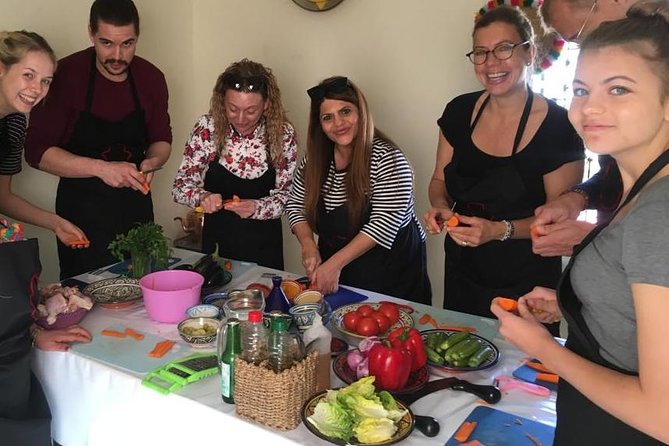
I love the small group setup, where you get real hands-on work instead of watching from the sidelines. I also like that the souk walk is planned around fresh groceries and your dietary needs before the cooking starts.
A possible drawback: if having recipes for later is a must, I’d plan to take notes during class, just in case follow-up recipes are not provided consistently.
In This Review
- Key Highlights at a Glance
- Medina Mint Tea to Home-Cooked Morocco: What This 3-Hour Class Feels Like
- Finding the Right Starting Point: Bab Doukkala Meeting Spot and Medina Reality
- Market Walk Through the Old Souk: How Ingredient Shopping Makes the Cooking Stick
- Khmisa Workshops and the Mint Tea Ritual: The Part That Sets the Tone
- Starter, Main, Dessert: What You Cook and Why It’s Designed for Real Learning
- Hands-On Teamwork: How to Get the Most Out of a Shared Class
- Lunch Included: Eating the Meal You Made (and Not Wasting the Best Part)
- Price and Value: Is $39.39 Worth It in Marrakech?
- Who This Class Is Best For (and Who Might Want Something Else)
- Notes to Make Before You Go Home: Recipes, Next Steps, and Practice
- Should You Book Chef Khmisa’s Moroccan Cooking Class?
- FAQ
- Where does the cooking class start?
- How long is the experience?
- Is lunch included?
- What language support is provided?
- Do I need hotel pickup or drop-off?
- Is the class shared with other people?
- Can I attend as a group or solo?
- Are vegetarian and vegan meals available?
- Are dietary restrictions and allergies handled?
- What is the cancellation policy?
Key Highlights at a Glance
- Small shared class (max 15) so you can participate and ask questions
- Souk shopping for fresh spices and ingredients away from the tourist strip
- Mint tea ritual before cooking to set the pace and traditions
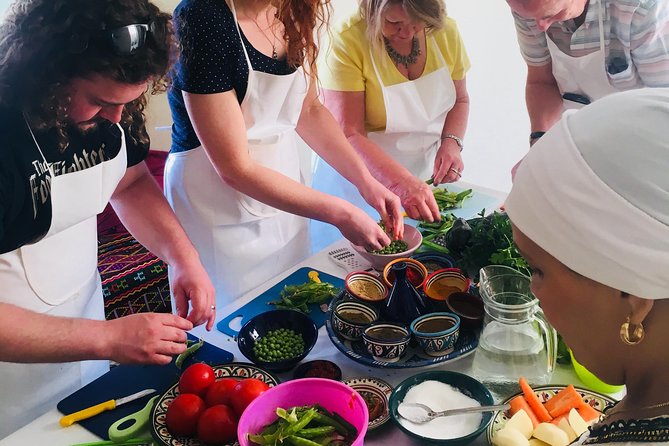
- Team-based cooking stations with everyone involved in prep
- Vegetarian and vegan options plus allergy and restriction checks
- Lunch is included, and you eat what you help make
Medina Mint Tea to Home-Cooked Morocco: What This 3-Hour Class Feels Like
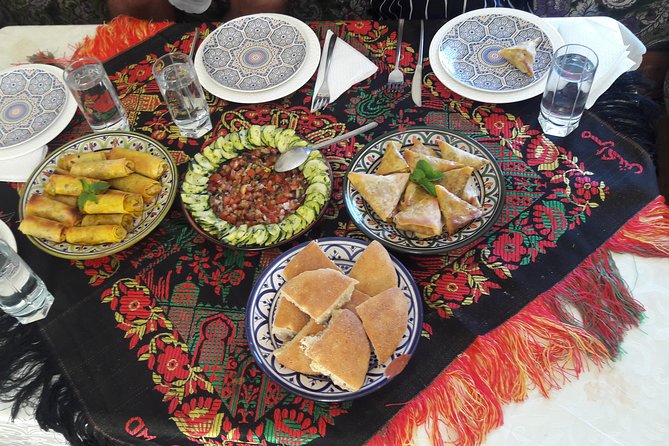
This is the kind of Marrakech experience that makes the food story click fast. You start with tradition, then you move into real cooking. The pace is relaxed but purposeful, and the structure is simple: you shop, you prep, you cook, then you sit down for lunch.
Chef Khmisa has been cooking Moroccan cuisine and pastry for 25 years, and you feel that confidence in the way the class is run. Kawtar supports you too, translating between languages and helping keep everything flowing smoothly. That matters more than you might think, because Moroccan cooking is all about small decisions: when spices bloom, how herbs are layered, how liquids are balanced.
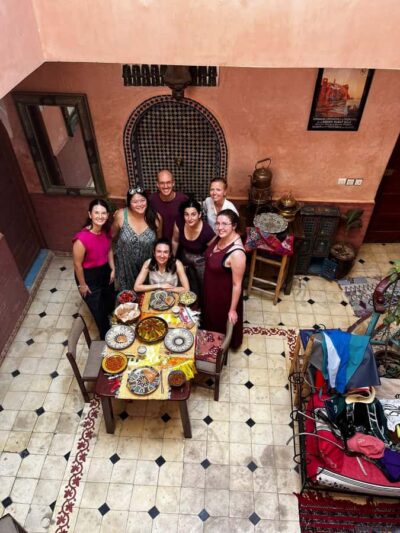
You also get a clear menu structure built around typical Moroccan comfort food. Expect starter, main course, and dessert, with time to taste everything after the work is done. And because it’s a shared session, you are not stuck in a solo bubble. You meet people, you pass ingredients, you compare notes on your chopping skills, and you leave with a plateful of memories.
Other walks built around buying
- Moroccan Cooking Class & Marrakech Market Visit with Chef Khmisa
★ 5.0 · 1,504 reviews - Shopping in the Souks of Marrakech Private Tour
★ 5.0 · 620 reviews - Souks Shopping Tours
★ 5.0 · 395 reviews - Marrakech Shopping Tours : Private Souks Tour
★ 5.0 · 345 reviews
Finding the Right Starting Point: Bab Doukkala Meeting Spot and Medina Reality
The meeting point is at Bab Doukkala Mosque (Mosquée Bab Doukkala), and the activity ends back at the same point. That round-trip setup is helpful in the Medina, where routes can feel maze-like if you are arriving on your own.
Practical tip: wear comfortable shoes. You are walking in the Medina for part of the experience, including the souk visit. It is not a long hike, but the surfaces can be uneven, and you will be happier if your feet are not annoyed.
Timing wise, the class runs about 3 hours. That means you should treat it like a focused half-afternoon. No need to schedule a big second plan immediately afterward, because you will be hungry from the shopping and the cooking, and you may want time to decompress.
Market Walk Through the Old Souk: How Ingredient Shopping Makes the Cooking Stick
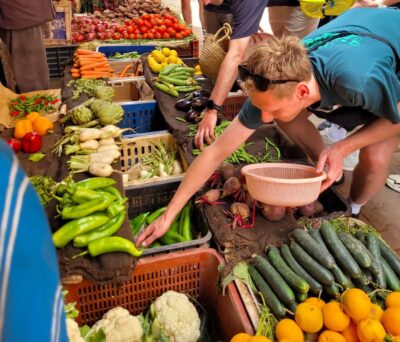
This class starts in the Medina and then shifts into the Old Souk area to buy fresh ingredients. The key detail here is that you go for the food, not for a photo tour. You walk through the market stalls, surrounded by spices and local trade, and the shopping is part of the cooking lesson.
Before anyone breaks out the spices, you discuss allergies and food restrictions. This is not just a formality. It shapes what gets purchased and how your dishes are handled. If you care about avoiding certain ingredients, this is your chance to say it clearly at the start.
Why the souk step is valuable: Moroccan cooking relies on flavor layers that begin long before the stove. Getting the right herbs, spices, and produce influences the final result. Even if you never cook Moroccan food at home, you come away with better instincts for how the cuisine builds flavor.
Also, the souk walk is described as being away from the most touristy side of Marrakech. That tends to make the experience feel more grounded and more “local life” than “performative sightseeing.”
Khmisa Workshops and the Mint Tea Ritual: The Part That Sets the Tone
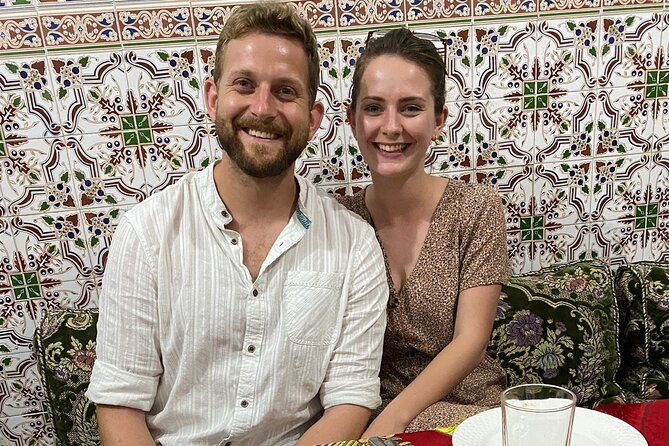
Once you return to the workshops, you are welcomed with traditional mint tea. This is not just a sip. It is the opening rhythm of the Moroccan hospitality style, and it gives you a moment to settle in.
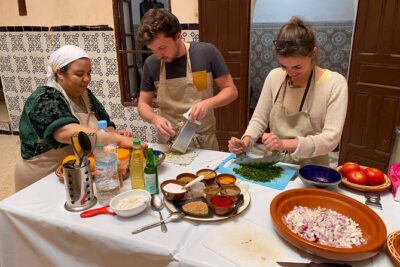
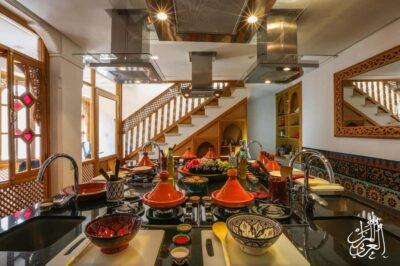
Khmisa’s place is described as a traditional Moroccan house in the heart of the Medina, so you are not in a modern cooking studio. The setting is part of the learning. You see how cooking fits into home life, including how workstations are set up for a shared class.
Then you learn the steps of the cooking ritual before the main session begins. The idea is to give you a framework, not just a list of tasks. When you understand the logic of how dishes come together, it is easier to recreate the technique later, even if exact recipes vary from household to household.
The class is also family and warm in tone, which matters because cooking can get chaotic in a group if the structure is unclear. Here, the structure is clear enough that you can participate without feeling rushed.
Starter, Main, Dessert: What You Cook and Why It’s Designed for Real Learning
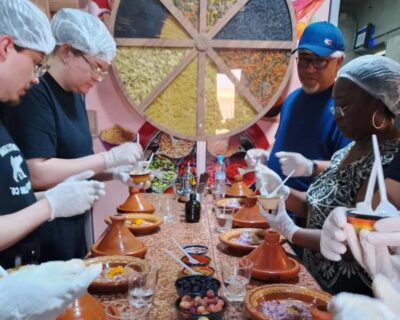
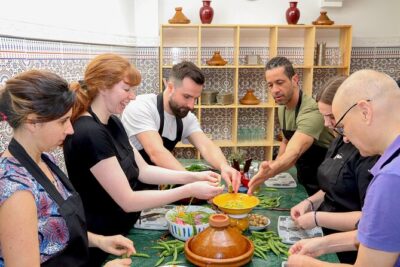
The menu is built around typical Moroccan dishes in three parts: starter, main course, and dessert. You will work as a team, and the class is designed so everyone gets involved in the prep.
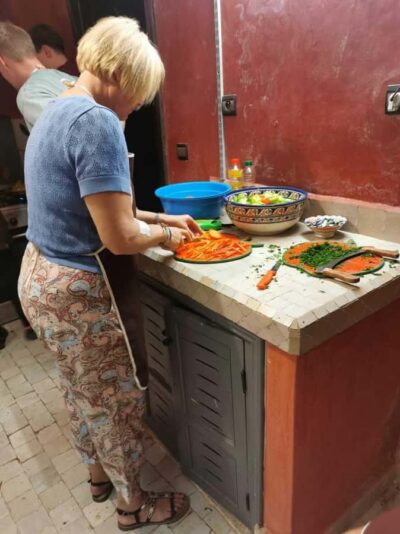
A big value point is that you are not just doing one simple task. You move through multiple steps across courses. That typically means chopping, mixing, seasoning, and assembling, depending on what your menu includes that day.
You also get dietary flexibility. Vegetarian and vegan options are offered, and the allergies and restrictions discussion happens before shopping. That reduces the risk of ending up with a “same meal, different garnish” situation. Instead, your meal plan can be adjusted around what you can actually eat.
One of the most useful things you learn is how Moroccan seasoning is handled. It is not only about using spices. It is about timing, balance, and layering. If you have only eaten Moroccan food on restaurant visits, this is where you understand why one tagine tastes different from another.
Hands-On Teamwork: How to Get the Most Out of a Shared Class
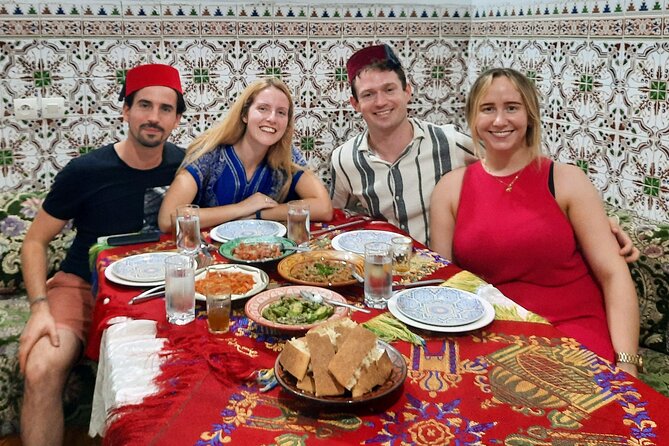
Because the class is shared, you will be cooking alongside other guests. That can be a fun social boost, but it can also be a practical challenge if you are not sure how to jump in. Here is how you can make it work in your favor:
- Ask questions early, especially about spices. If you learn what each spice does, your confidence grows fast.
- Jump into the physical tasks. The class works best when you do something with your hands, not just watch.
- If you have dietary restrictions, mention them again when you arrive at the workshops, not only at the start. It helps keep communication tight.
Reviews for this experience emphasize that everyone gets involved, including groups of around a dozen or more. That lines up with what you want in a cooking class: participation, not observation.
You can also attend individually or with a group. Private sessions are available on demand if you contact the provider directly. If you travel with kids, a partner who is nervous in kitchens, or a food-focused group that wants maximum attention, a private session can be worth considering.
More market mornings near Marrakech

Lunch Included: Eating the Meal You Made (and Not Wasting the Best Part)
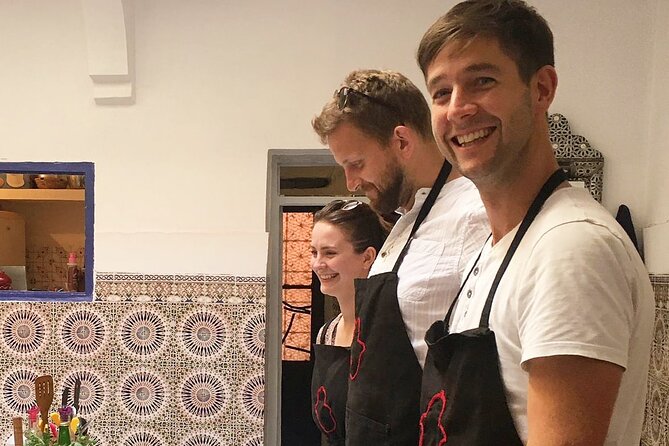
After cooking, you get time to taste what you prepared. Lunch is included, which makes the experience feel like more than a class. You are not paying for instruction only. You are paying for the full food moment too.
This matters in Marrakech, where meals can be easy to overspend on and hard to predict. Here, you know what you will eat before you arrive, and you see the ingredients come together. That makes the taste more meaningful because you understand what you contributed.
The included coffee and/or tea is a nice follow-through. It keeps the experience from turning into a rushed “cook and leave” situation. Instead, it ends with a calm meal break when the work has already been done.
Price and Value: Is $39.39 Worth It in Marrakech?
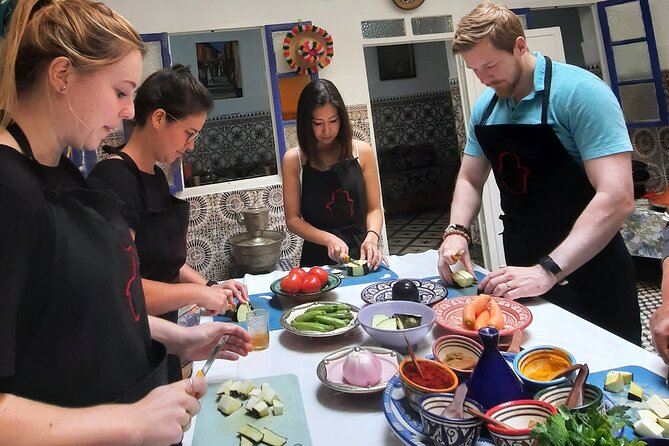
At $39.39 per person for about 3 hours, this class has a strong value feel if you look at what is actually included: lunch, mint tea, coffee and/or tea, and guidance from both a local French and English-speaking guide and Chef Khmisa.
In Marrakech, the Medina experience can get expensive fast when you stack tours and food stops. This is one bundled experience that includes:
- ingredient shopping time
- cooking instruction
- the meal itself
That is why it tends to feel like good value. You are not only learning cooking. You are turning that learning into an included lunch, so the money goes into food and experience at the same time.
The other value angle is group size. With a maximum of 15 travelers, you usually get more personal attention than you would in larger group activities. It also helps you get hands-on, which is where cooking classes deliver their main payoff.
Who This Class Is Best For (and Who Might Want Something Else)
I think this works best for:
- food-first travelers who want more than tasting
- couples and small groups who enjoy shared activities
- people who like learning through doing, not just listening
- anyone who wants a Moroccan meal that is vegetarian or vegan friendly
It might be less ideal if you want a silent, high-end culinary workshop with minimal interaction. Since it is shared and hands-on, it is social by design.
It is also a good choice if you want a structured way to experience the Medina. You get to walk the souk with a purpose, then you return to a home-like cooking space. That combination can feel safer and more efficient than wandering on your own with food questions.
Notes to Make Before You Go Home: Recipes, Next Steps, and Practice
One practical consideration: you may want recipes after the class, especially if your goal is to recreate the dishes later. I recommend taking notes during the steps you care about most, like spice blends, timing, and key technique points. Even if recipes are shared, writing them down helps you remember what mattered.
If you are planning to cook Moroccan food at home soon after your trip, focus on the technique rather than chasing exact measurements. Moroccan home cooking depends on what ingredients are available, and your success will come from understanding the logic you learn during prep.
Should You Book Chef Khmisa’s Moroccan Cooking Class?
Book it if you want an authentic Marrakech food experience that includes shopping, cooking, and lunch in one smooth package. The small group size, the souk ingredient walk, and the fact that vegetarian and vegan options are offered all add up to a class that feels genuinely useful.
Skip it if you only want a quick meal with minimal participation. This is not a passive tasting. It is hands-on by design, and you should expect to work and learn as a team.
If you are on the fence, I’d base your decision on one question: do you want to learn the why behind Moroccan flavor, or do you just want to eat? If you want the learning, Chef Khmisa and Kawtar make a strong case for booking.
FAQ
Where does the cooking class start?
The meeting point is at Bab Doukkala Mosque (Mosquée Bab Doukkala), Marrakech 40000, Morocco.
How long is the experience?
It lasts about 3 hours.
Is lunch included?
Yes. Lunch is included, along with coffee and/or tea.
What language support is provided?
There is a local French and English-speaking guide and Chef for the class.
Do I need hotel pickup or drop-off?
No. Hotel pickup and drop-off are not included.
Is the class shared with other people?
Yes. It is a shared session with a maximum of 15 travelers.
Can I attend as a group or solo?
You can come individually or with a group. Private sessions are available on demand if you contact the provider directly.
Are vegetarian and vegan meals available?
Yes, vegetarian and vegan options are available.
Are dietary restrictions and allergies handled?
Yes. You discuss food allergies and restrictions before going to the souk and before cooking.
What is the cancellation policy?
Free cancellation is available. You can cancel up to 24 hours in advance for a full refund. Less than 24 hours before start time is not refundable.
Benches, Wheels and Looms
- Half-Day Cooking Class with Local Chef Laila in Marrakech★ 5.0 · 952 reviews
- Marrakesh cooking class with chef Hassan – Local dishes★ 5.0 · 425 reviews
- Moroccan Cooking Workshop in Marrakech★ 5.0 · 407 reviews
- Cooking class with Chef Najla★ 5.0 · 369 reviews
Souk Mornings Elsewhere in Morocco
- Evening Marrakech: Gastronomic and Market Tour Inside the Medina★ 4.5 · 283 reviews
- Moroccan Cooking Class with Market Visit and Meal★ 5.0 · 196 reviews
- Marrakech Private Shopping in Berbers souks – Old market★ 5.0 · 28 reviews
- Moroccan Cooking Class with Market Visit and Meal★ 4.5 · 18 reviews
Walks Built Around Buying
- Shopping in the Souks of Marrakech Private Tour★ 5.0 · 620 reviews
- Souks Shopping Tours★ 5.0 · 395 reviews
- Marrakech Shopping Tours : Private Souks Tour★ 5.0 · 345 reviews
- Evening Marrakech: Gastronomic and Market Tour Inside the Medina★ 4.5 · 283 reviews
Added recently from around Marrakech


More Cooking Classes worth a look.
 ★ 4.6Marrakech: Moroccan Cooking Class with PickupFrom $311,862 reviews
 ★ 4.8Marrakech: Traditional Moroccan Cooking Class & Market VisitFrom $401,861 reviews
 ★ 5.0Marrakesh: Moroccan Dishes Cooking Class with a Local ChefFrom $471,615 reviews
 ★ 5.0Half-Day Cooking Class with Local Chef Laila in MarrakechFrom $34952 reviews
 ★ 4.9Marrakech: Moroccan Cooking Class with a Local FamilyFrom $33668 reviews
 ★ 4.8Marrakech: Moroccan Cuisine Cooking Class in Local HomeFrom $24508 reviews
 ★ 5.0Marrakech: Moroccan Cooking Workshop at La Maison ArabeFrom $35446 reviews
 ★ 5.0Marrakesh cooking class with chef Hassan – Local dishesFrom $34425 reviews
Where else this one sits