
REVIEW · MOROCCO
Moroccan Cooking Workshop in Marrakech
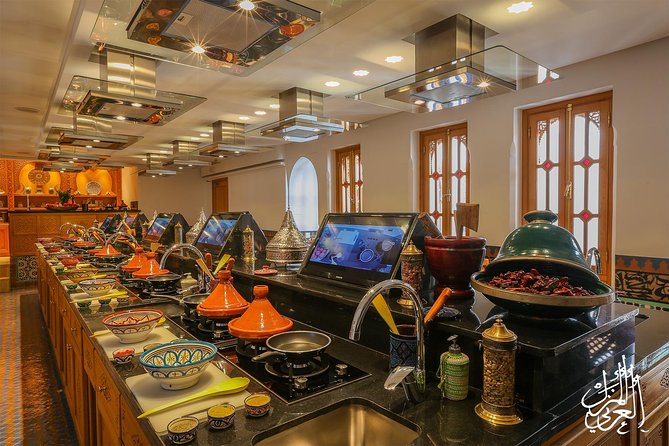
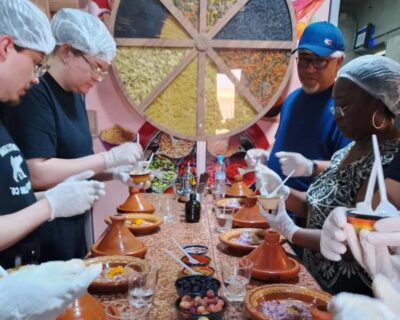
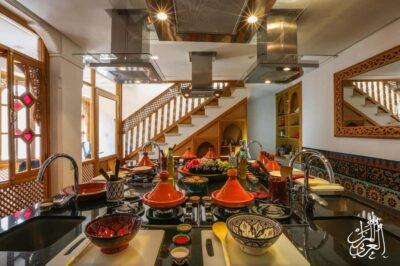
Spices in motion in a Marrakech kitchen. I love the hands-on cooking and the private workstations that make it feel personal, not rushed. The only drawback is timing, since this version is about one hour, so you will cook a focused set of dishes rather than a full multi-course marathon.
From the moment you arrive, the class is designed to be easy to follow. You get a friendly welcome with a French and/or English interpreter, then you jump into Moroccan tea rituals and a bread-making demo before the Dada leads the cooking.
A key heads-up: the class does not allow children under 12 for security reasons, and the booking does not include drinks or transportation. Still, with a max group size of 2 travelers and a tasting at the end, the value is strong if you want real skill, not just a meal.
In This Review
- Key Highlights You Should Care About
- Why This Marrakech Cooking Class Works Better Than a Meal
- Starting at La Maison Arabe, Then Getting Right Into the Ritual
- The Moroccan Tea Ceremony: More Than a Nice Start
- Moroccan Bread Demonstration: The Foundation Step
- Cooking With the Dada: What You Actually Learn in the Kitchen
- Tasting What You Made, Plus Optional Moroccan Wine
- Price and Value: $34.76 for Hands-On Technique
- Logistics That Actually Matter Once You’re in Marrakech
- Who This Workshop Suits Best
- Tips to Get the Most From Your One-Hour Session
- Should You Book the Moroccan Cooking Workshop in Marrakech?
- FAQ
- How long is the Moroccan cooking workshop in Marrakech?
- How much does it cost?
- Where does the class start?
- Is this a group class?
- What language support is available?
- What happens during the workshop?
- What is included in the price?
- Are drinks included?
- Do I need transportation to get there?
- Are children allowed?
Key Highlights You Should Care About
- Individual workstations so you cook with room and privacy
- Tea ceremony + Moroccan bread early on, so you understand the culture and the basics
- A Dada-led cooking session with real guidance step by step
- You eat what you make, plus food tasting afterward
- Optional Moroccan wine discovery for adults who want the full flavor arc
Why This Marrakech Cooking Class Works Better Than a Meal
If all you do in Marrakech is eat out, you get flavor, sure. But a cooking workshop adds a second layer, technique. You learn how Moroccan cooks build flavor with spices, how they balance sweet and savory, and how bread and tea fit into the rhythm of a day in Morocco.
What I like about this setup is that it is not a chaotic group demo. The class is built around your own workstation, which is a big deal when you’re trying to actually practice cutting, mixing, and seasoning. It also means questions are easier, because the instructor can guide you without hovering over a sea of elbows.
One more practical win: the group size is capped at 2 travelers. That usually translates into more attention, faster troubleshooting, and a better chance to learn why certain steps matter. You’re not just watching, you’re doing.
Other hands on sessions to sit in
- Moroccan Cooking Class & Marrakech Market Visit with Chef Khmisa
★ 5.0 · 1,504 reviews - Half-Day Cooking Class with Local Chef Laila in Marrakech
★ 5.0 · 952 reviews - Marrakesh cooking class with chef Hassan – Local dishes
★ 5.0 · 425 reviews - Moroccan Cooking Workshop in Marrakech
★ 5.0 · 407 reviews
Starting at La Maison Arabe, Then Getting Right Into the Ritual
Your meeting point is Hotel La Maison Arabe, 1 Derb Assehbi, Marrakesh 40000, Morocco. The activity ends back there, so you do not have to plan a complicated pickup or transfer.
Once you’re settled, the flow is simple and very Moroccan in its pacing. Expect a welcome with a French and/or English interpreter, then the class kicks off with a Moroccan tea moment. In Marrakech, mint tea is not just a drink. It is social. It signals hospitality. It also sets expectations for how the cooking class will move from ritual to action.
A smart move is to arrive with time to breathe before the kitchen starts working at full speed. One review tip stuck with me: get there early so you can have coffee, tea, or a cold drink at the hotel before class begins. It makes the whole experience feel calmer, especially if you’re coming in after walking the medina.
The Moroccan Tea Ceremony: More Than a Nice Start
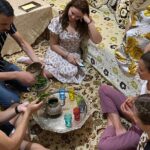
The class includes a Moroccan tea ceremony right up front. You will learn how to prepare it as part of the broader food culture. Even if you already drink mint tea at home, this is a different experience because the ceremony teaches you how Moroccan hosts present tea, not just how they make it taste good.
Why it matters for your cooking: tea rituals reinforce a theme you’ll keep seeing in Moroccan food, hospitality plus balance. Spices and sweetness show up in savory dishes too, and that mindset helps you cook with intention instead of guessing.
Moroccan Bread Demonstration: The Foundation Step
Before you start cooking your main dishes, there is a demonstration focused on making Moroccan bread. This is one of those steps that feels small on the schedule but huge for your understanding.
Bread matters in Moroccan meals because it is part of how you eat and how you share. If you learn how bread is made or handled, you stop thinking of the dish as just something served on a plate. It becomes something you build your meal around. Even if your class version is short, you’re still getting the “why” behind the meal format.
Cooking With the Dada: What You Actually Learn in the Kitchen
The heart of the workshop is the cooking class led by the Dada. The Dada concept is traditional, and in practice it means you get a strong teacher who runs the kitchen session with confidence.
What makes this class valuable is that you are not handed a vague task. You follow instructions using fresh local ingredients at your workstation. That matters because Moroccan cuisine is built on layering flavor. You’ll be working with spices, and you’ll see how the timing of steps affects taste.
Several reviews mention learning a lot about the spices used in Moroccan cooking, and that your tajine can end up tasting excellent because you know what you are doing instead of just copying a recipe. People also describe the class like a professional cooking show, with an organized flow and clear guidance.
You can expect to cook a set of dishes within the time window. Reviews mention a tajine as a standout result, along with a starter, side dish, and dessert depending on the session. The exact mix depends on the length option you choose, but the consistent theme is that you get multiple components, not only one plate.
Tasting What You Made, Plus Optional Moroccan Wine
After cooking, the experience includes food tasting. This is not an afterthought. It’s the moment where the session clicks, because you get to taste your own work and adjust your intuition for what Moroccan flavors should do.
If you’re the type who likes to understand pairing and nuance, there’s also an optional discovery of Moroccan wines. Even if you skip the wine, the tasting still gives you a reference point for what “done” tastes like.
One more detail: the included package lists lunch and afternoon tea as part of what’s provided. In other words, you’re not leaving hungry. You’re eating the results of your labor, plus more to round out the meal.
More classes that come with a kitchen

Price and Value: $34.76 for Hands-On Technique
At $34.76 per person, this class is priced like a short, focused experience. The key question is what “value” means to you.
If your goal is to simply sample Moroccan food, a restaurant meal may be cheaper. But if your goal is skill, confidence, and recipes you can reproduce, the price becomes more reasonable fast. You pay for instruction, ingredients, the tea ritual portion, and the tasting outcome.
Also, think about the group size. With a maximum of 2 travelers, your money tends to buy more personal attention. That is a major value driver because the teacher can help you troubleshoot specific steps. Reviews repeatedly highlight how helpful the staff and instructors are and how professional the setup feels.
So, this is a good deal if you want technique you can bring home, not just a photo and a full stomach.
Logistics That Actually Matter Once You’re in Marrakech
This workshop is close to public transportation, which helps if you are navigating the city on foot and taxis. Still, transportation to and from attractions is not included, so plan your route to Hotel La Maison Arabe ahead of time.
It is also a mobile ticket experience, so have your phone ready at check-in. Confirmation is typically received within 48 hours of booking, subject to availability, which is helpful if you are scheduling around riad check-ins and dinner plans.
Two more practical notes:
- Drinks are not included, so if you want water, tea, coffee beyond what’s included, or anything else, you will need to cover that separately.
- The class has a security rule: children under 12 are not permitted.
Who This Workshop Suits Best
This is the kind of class that fits a lot of travel styles.
- Food lovers who want to cook, not just eat. You’ll get real instruction and a tasting payoff.
- Solo travelers who want guided attention. With the max of 2 travelers, you’re less likely to feel like a spectator.
- Couples and small groups. The private workstation format works well for two people who want time together and space to learn.
- Guests short on time. The one-hour format is tight, so it’s great when you still want a high-impact activity.
It may not fit you if you want a long, slow, multi-dish culinary deep dive. This is focused, and that focus is exactly why it works as a holiday activity.
Tips to Get the Most From Your One-Hour Session
Here’s what I’d do to make the most of the limited time.
- Arrive early and enjoy the hotel tea or coffee before class. It helps you feel relaxed when the kitchen work starts.
- Pay attention when they explain the spices. When you understand what each spice is doing, you can recreate the dish better later.
- Watch the bread moment closely. Bread technique is often the step people skip when recreating Moroccan meals at home, but it changes the whole eating experience.
- If wine pairing interests you, consider the optional Moroccan wine discovery. It turns the tasting into more than taste alone.
And if you want to keep the experience going after class, keep your notes or ask for any recipe guidance available in your session. Some people mention picking up a recipe book, and that can be a nice way to cook again once you’re back home.
Should You Book the Moroccan Cooking Workshop in Marrakech?
Book it if you want a high-value, hands-on food experience with real instruction, a tasting payoff, and a kitchen setup built for learning at your own workstation. At $34.76, it’s also a smart splurge if you’re comparing it to paying for a meal plus a separate guided activity.
Skip it if you only want a typical restaurant dinner, or if you need drinks and transportation included in the price. Also consider your schedule. The one-hour version is great, but longer options exist if you want to cook more dishes. If you’re the type who loves learning every step, you might feel happier choosing the longer session when you can.
FAQ
How long is the Moroccan cooking workshop in Marrakech?
The duration is approximately 1 hour.
How much does it cost?
The price is $34.76 per person.
Where does the class start?
The meeting point is Hotel La Maison Arabe, 1 Derb Assehbi, Marrakesh 40000, Morocco.
Is this a group class?
The activity has a maximum of 2 travelers, and the format includes individual workstations.
What language support is available?
You’ll have a welcome with a French and/or English interpreter.
What happens during the workshop?
The course includes Moroccan tea, a demonstration of Moroccan bread, a cooking lesson led by the Dada, and then a tasting of what you prepared. Wine discovery may be available as an option.
What is included in the price?
Included items are afternoon tea, lunch, and food tasting, along with live commentary and live entertainment (as listed with the experience).
Are drinks included?
No. Drinks are not included.
Do I need transportation to get there?
Transportation to/from attractions is not included. The location is near public transportation.
Are children allowed?
Children under 12 years old are not permitted in the cooking classes for security reasons.
Classes That Come With a Kitchen
- Moroccan Cooking Class & Marrakech Market Visit with Chef Khmisa★ 5.0 · 1,504 reviews
- Half-Day Cooking Class with Local Chef Laila in Marrakech★ 5.0 · 952 reviews
- Marrakesh cooking class with chef Hassan – Local dishes★ 5.0 · 425 reviews
- Cooking class with Chef Najla★ 5.0 · 369 reviews
Benches, Wheels and Looms
- Moroccan Cooking Class & Marrakech Market Visit with Chef Khmisa★ 5.0 · 1,504 reviews
- Half-Day Cooking Class with Local Chef Laila in Marrakech★ 5.0 · 952 reviews
- Marrakesh cooking class with chef Hassan – Local dishes★ 5.0 · 425 reviews
- Cooking class with Chef Najla★ 5.0 · 369 reviews
Added recently from around Marrakech


More Cooking Classes worth a look.
 ★ 4.6Marrakech: Moroccan Cooking Class with PickupFrom $311,862 reviews
 ★ 4.8Marrakech: Traditional Moroccan Cooking Class & Market VisitFrom $401,861 reviews
 ★ 5.0Marrakesh: Moroccan Dishes Cooking Class with a Local ChefFrom $471,615 reviews
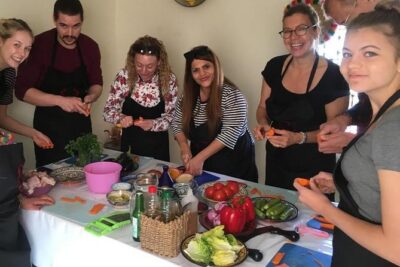 ★ 5.0Moroccan Cooking Class & Marrakech Market Visit with Chef KhmisaFrom $391,504 reviews
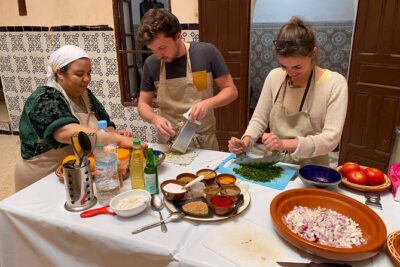 ★ 5.0Half-Day Cooking Class with Local Chef Laila in MarrakechFrom $34952 reviews
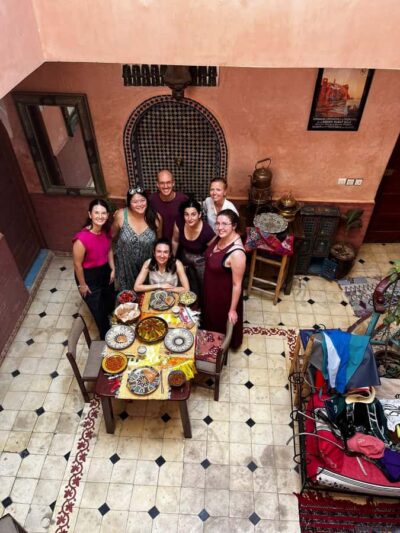 ★ 4.9Marrakech: Moroccan Cooking Class with a Local FamilyFrom $33668 reviews
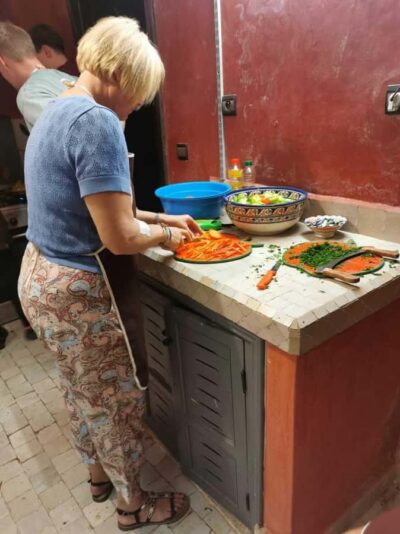 ★ 4.8Marrakech: Moroccan Cuisine Cooking Class in Local HomeFrom $24508 reviews
 ★ 5.0Marrakech: Moroccan Cooking Workshop at La Maison ArabeFrom $35446 reviews
Where else this one sits