
REVIEW · MOROCCO
Marrakech: Traditional Moroccan Cooking Class & Market Visit
Mint tea, then the souk. I love shopping with local chefs for fresh spices and produce in the Medina, and I love learning the Moroccan mint tea ritual the right way. One consideration: there is no hotel pickup, so you will need to make your own way to the meeting point.
This is a shared, hands-on class in an intimate riad setting, with a group size that’s often around 12 people. You cook as a team, then you eat what you made, and you get electronic recipes afterward so you can recreate it at home.
In This Review
- Key details that make this Marrakech class worth your time
- Why this Marrakech cooking class starts at the market, not the recipe book
- Khmisa Workshop in the Medina: warm hospitality, real participation
- Moroccan mint tea: the ritual you can actually repeat at home
- What you cook: starters, tagines, and Pastilla of Milk
- Spices and technique: the real lesson is how flavor gets built
- Eating what you made: the meal part is not an afterthought
- Price and value: how $40 per person makes sense
- Practical tips that make the experience easier
- What to bring
- What to expect about timing
- Comfort and food restrictions
- What’s not allowed
- Who should book this Marrakech cooking class
- Should you book the Marrakech Traditional Moroccan Cooking Class & Market Visit?
- FAQ
- What dishes are included in the class?
- Do I get mint tea and recipes?
- Is hotel pickup included?
- How long is the cooking class?
- What languages are available for the guide?
- Is this class suitable for wheelchair users?
Key details that make this Marrakech class worth your time
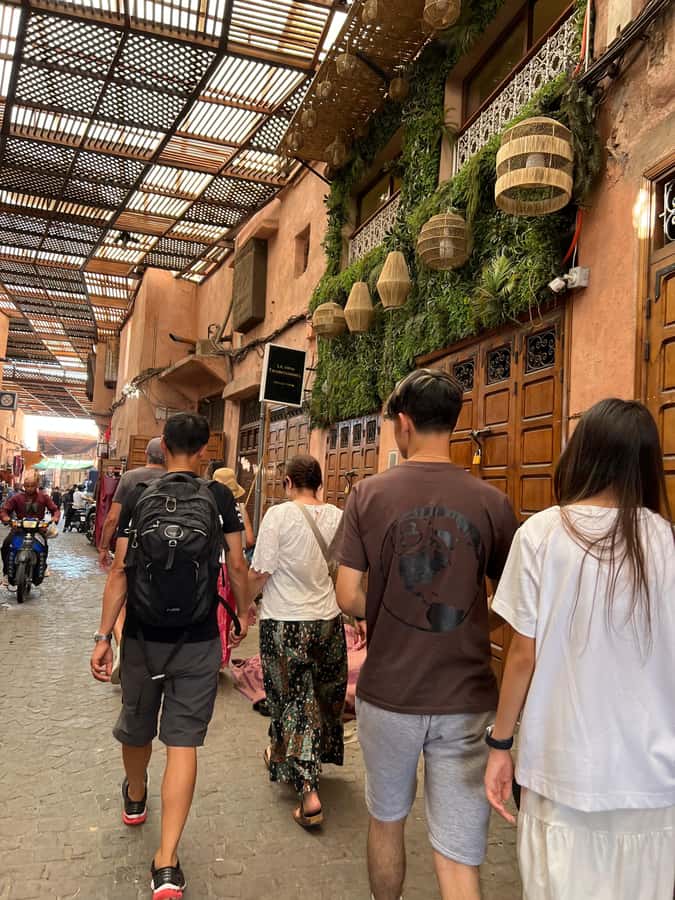
- Souk shopping with local cooks, focused on ingredients you can actually name and repeat later
- Mint tea ritual instruction, not just a quick pour over mint
- Hands-on team cooking, where everyone chops, seasons, and contributes
- A classic menu format with starters plus mains and a Pastilla of Milk dessert
- Take-home spice boost, with homemade spices you can buy before you go
- A small-group feel, with instruction available in English, French, or Arabic
Why this Marrakech cooking class starts at the market, not the recipe book
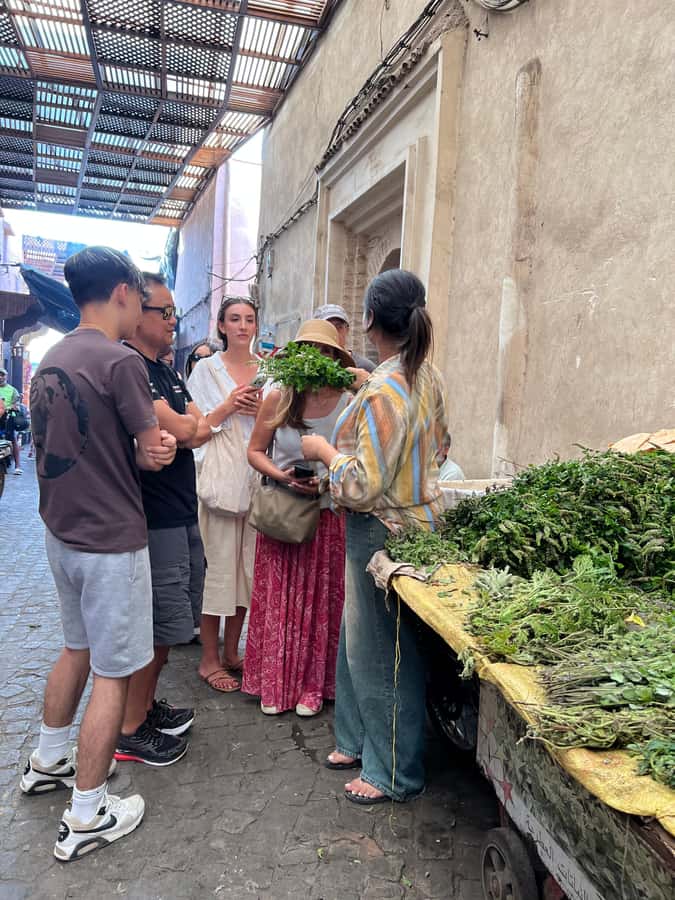
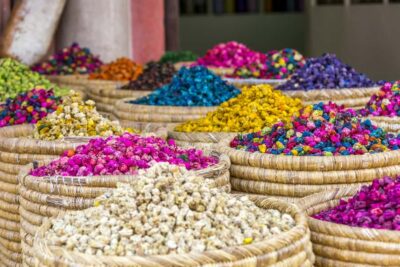
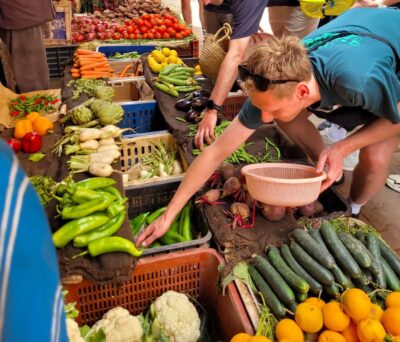
The smartest part of this experience is the order of things. You don’t begin with a printed menu and a guess. You begin with the souk, where ingredients live in their real environment, bright, fragrant, and very specific.
After you talk through any food allergies or restrictions, you head out for a short walk into the market area that’s away from the most touristic lanes. This matters because Moroccan cooking is about balance, not just heat. When you see jars of spices side by side, you start to understand how cooks build flavor.
You are guided by Moroccan hosts who are used to cooking for real people at home and for service. You’ll learn what to buy, what to look for, and how ingredients behave once they hit a hot pan or tagine. That makes the class feel practical, not like a performance.
Also, walking the souk together gives you an immediate cultural context. You’re not doing a checklist for souvenirs. You’re learning how everyday ingredients show up in everyday meals.
Other walks built around buying
- Marrakech: Traditional Moroccan Cooking Class & Market Visit
★ 4.8 · 1,861 reviews - Marrakech: Moroccan Cooking Class with Market Visit and Meal
★ 4.9 · 347 reviews - Marrakech: Exclusive Private Shopping Adventure in The souks
★ 4.9 · 77 reviews - Marrakech & Souk Shopping Tour.
★ 4.8 · 62 reviews
Khmisa Workshop in the Medina: warm hospitality, real participation
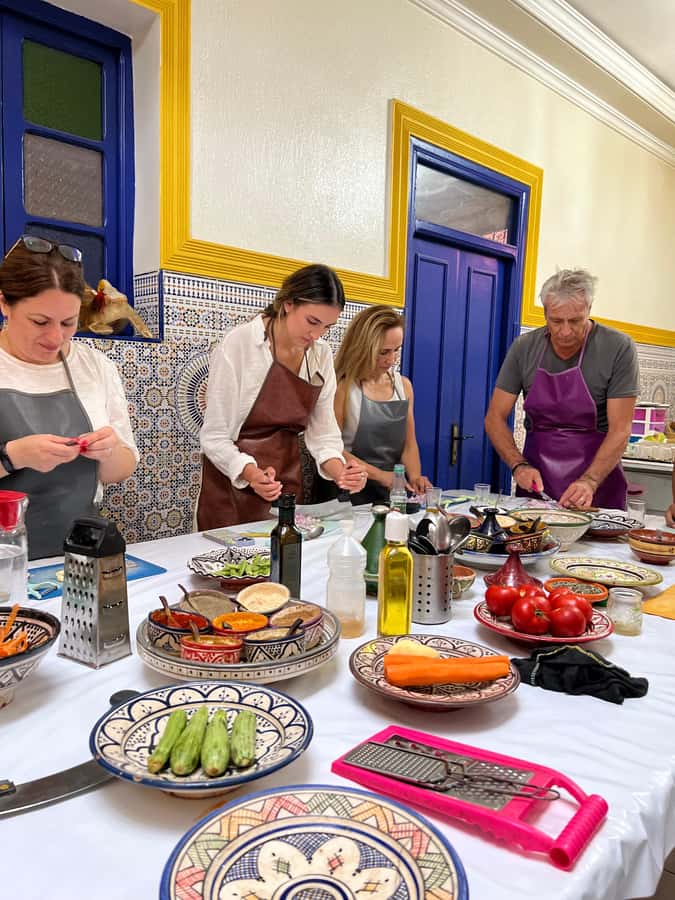
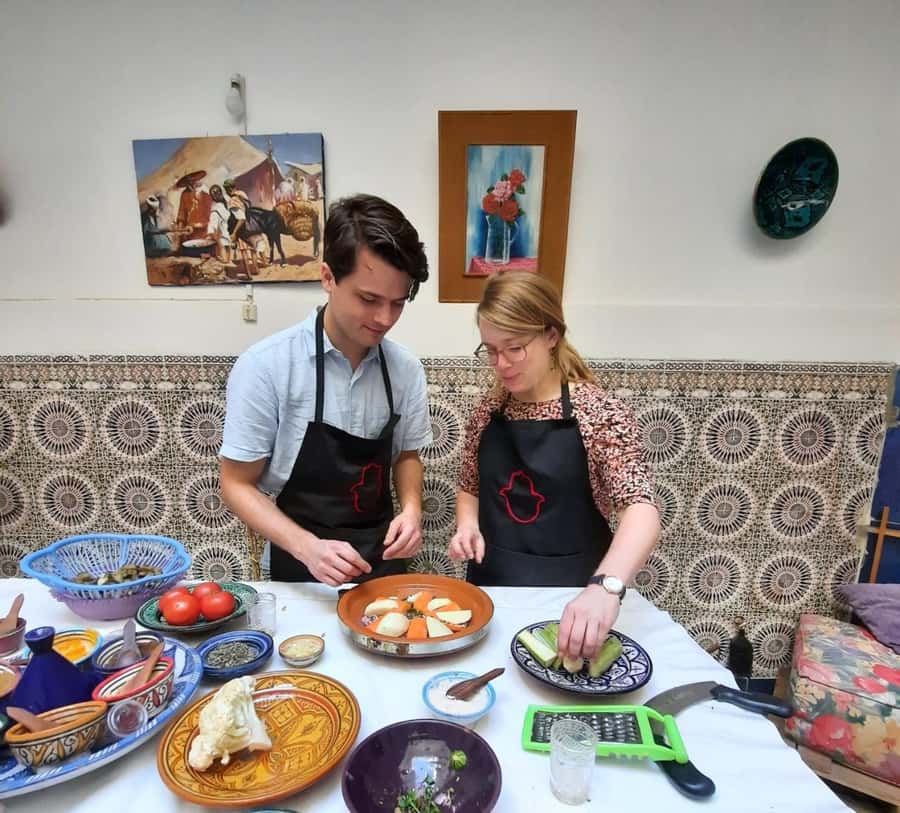
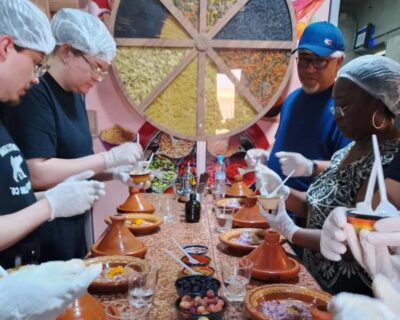
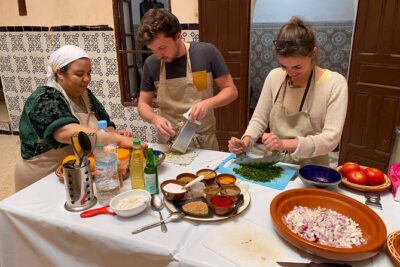
The cooking happens in an intimate riad in the heart of the Medina. This isn’t a giant cooking studio with rows of burners. It’s the kind of space where you end up working close to the person beside you, and you quickly stop feeling like you’re visiting a showroom.
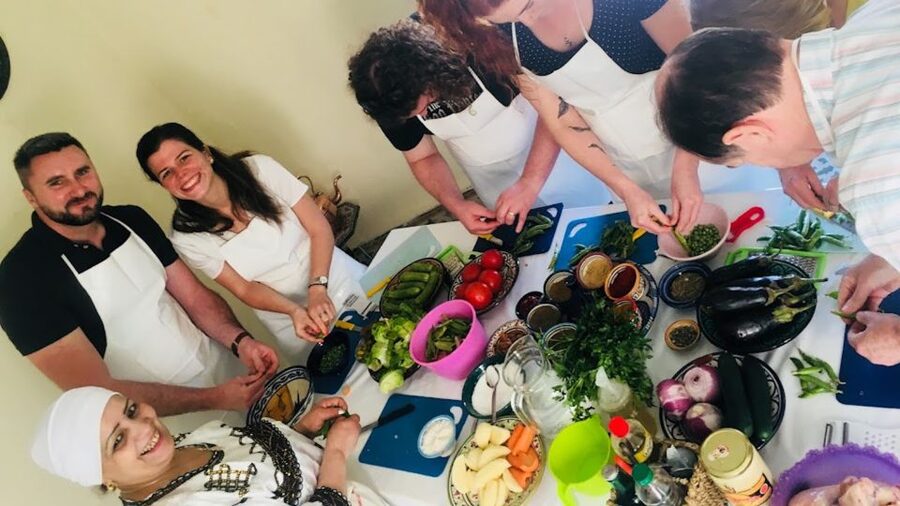
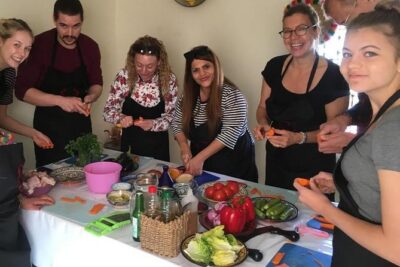
The class is built around teamwork. You don’t just watch while someone else does the chopping and pouring. You jump in, and the hosts guide you step by step as the dishes come together. That hands-on setup shows up again in the reviews, where people consistently highlight how the instructors keep the group involved, including teenagers and kids.
The vibe is family-run and welcoming. Names you might hear in different sessions include Kawtar and Khimsa, and you may also have extra help with translation depending on the group. One participant even mentioned Ilham helping with translation so the chef’s explanations landed clearly.
One more practical note: the class is not suitable for wheelchair users. Since it’s in the Medina and inside a riad setting, plan on steps or uneven ground around the area.
Moroccan mint tea: the ritual you can actually repeat at home
Mint tea is one of those travel details people think they already know. But the tea ritual taught here is more precise than steeping and stirring.
Before the cooking starts, you’re welcomed with traditional mint tea. Then your hosts walk you through the ritual process so you understand what makes it taste the way it does, and not just why it’s popular.
In Marrakech, mint tea is social, but it is also technique. The way mint and sugar combine, and the way the tea is prepared, affects the flavor balance you get in the cup. Once you’ve learned it properly, you’ll taste the difference immediately when you try to remake it later.
This is one reason the class lands well for people who love food but don’t want to leave with vague memories. You get a skill. You can use it at home with your own mint, sugar, and teapot.
And yes, it also buys you a little time to settle in. You start with tea, you see how the evening flows, then you move into the kitchen work with calmer brains and less jet lag energy.
What you cook: starters, tagines, and Pastilla of Milk
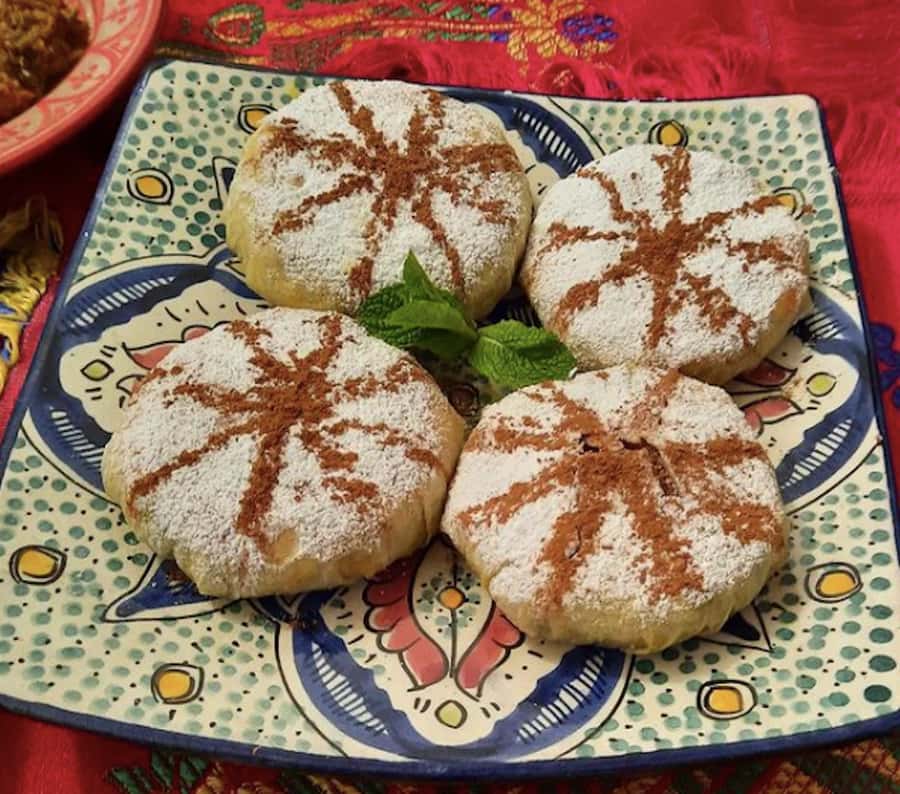
The menu is built around typical Moroccan dishes, usually 3 to 6 items, with a structure that commonly includes starters, main courses, and dessert. Pastilla of Milk is part of the dessert plan.
You can expect tagine work, and it’s common to make both a chicken tagine and a vegetarian tagine during the session. One review singled out making chicken tagine as a highlight, and people also call out how much they enjoyed learning the spice steps rather than just finishing a dish.
Here’s what makes the cooking portion genuinely useful for you:
- You learn how spices are layered, not dumped randomly.
- You get shown how to work with ingredients you actually bought in the souk.
- You understand why certain steps matter for texture and flavor.
A class like this often includes vegetable-forward starters and salads too. That’s a great fit if you want a broader picture of Moroccan meals beyond one famous main dish. Several people mentioned a good vegetarian range, which is a strong sign that the menu isn’t an afterthought.
Dessert being Pastilla of Milk is also a nice “souvenir you can eat.” It gives you something to recreate that feels unmistakably Moroccan, not just another pastry you could get anywhere.
Spices and technique: the real lesson is how flavor gets built
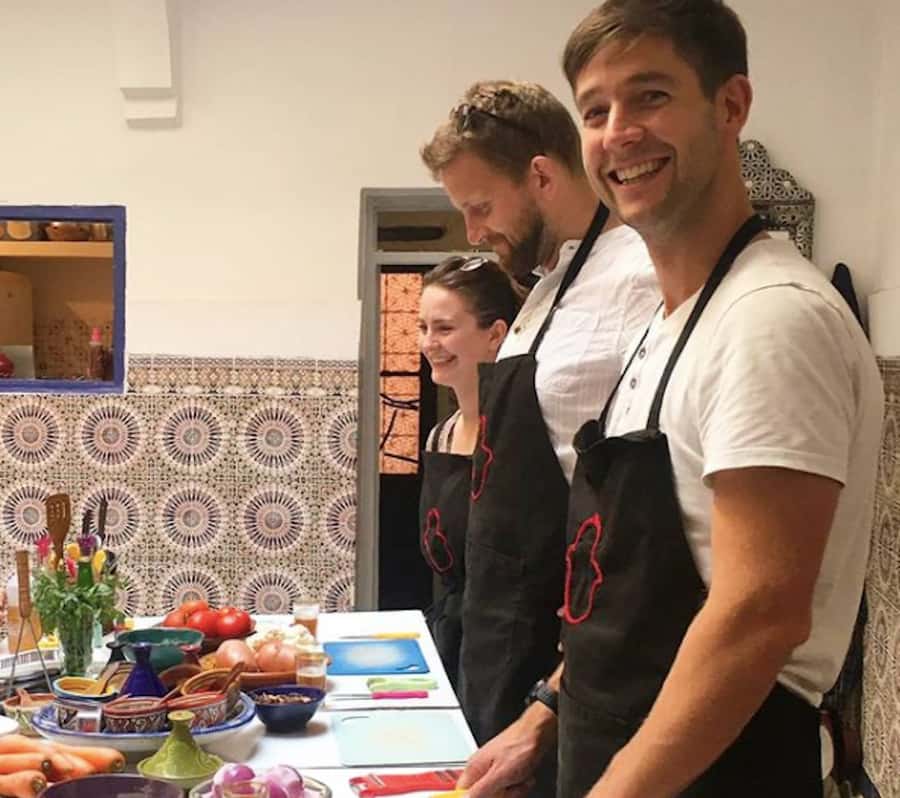
Moroccan cuisine can look complicated if you only see the final plated dish. In class, you break it down into a workflow: ingredients, seasoning decisions, and cooking steps.
The emphasis here is on authentic technique and spices, taught by Moroccan chefs and local women with years of cooking and catering experience. They aren’t just sharing recipes. They are sharing habits:
- how to judge seasoning by smell and feel
- how spices change when they heat up
- how to balance savory elements so they don’t become one-note
Because the market comes first, the spice lesson sticks. You aren’t learning from abstract labels. You’re linking the spice jars you bought to the dish you finish.
Another small detail that matters: the class is interactive, and the hosts keep you moving. You chop, you stir, you add spices, and you learn by doing. That also means the session doesn’t drag. People repeatedly describe it as fun and involving, with a clear rhythm.
Eating what you made: the meal part is not an afterthought
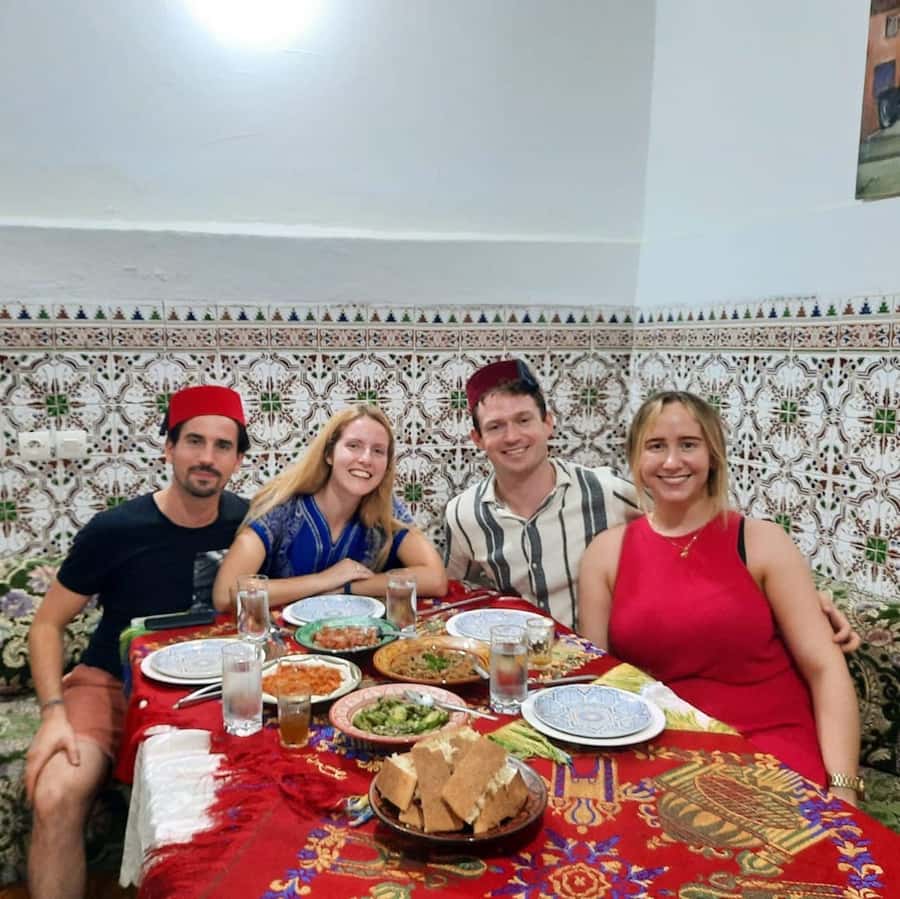
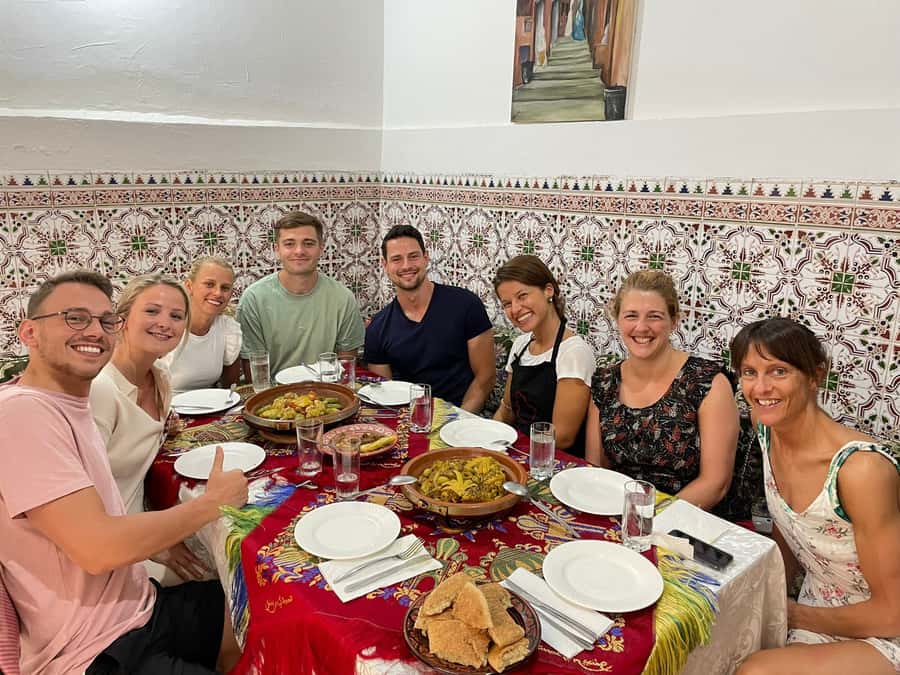
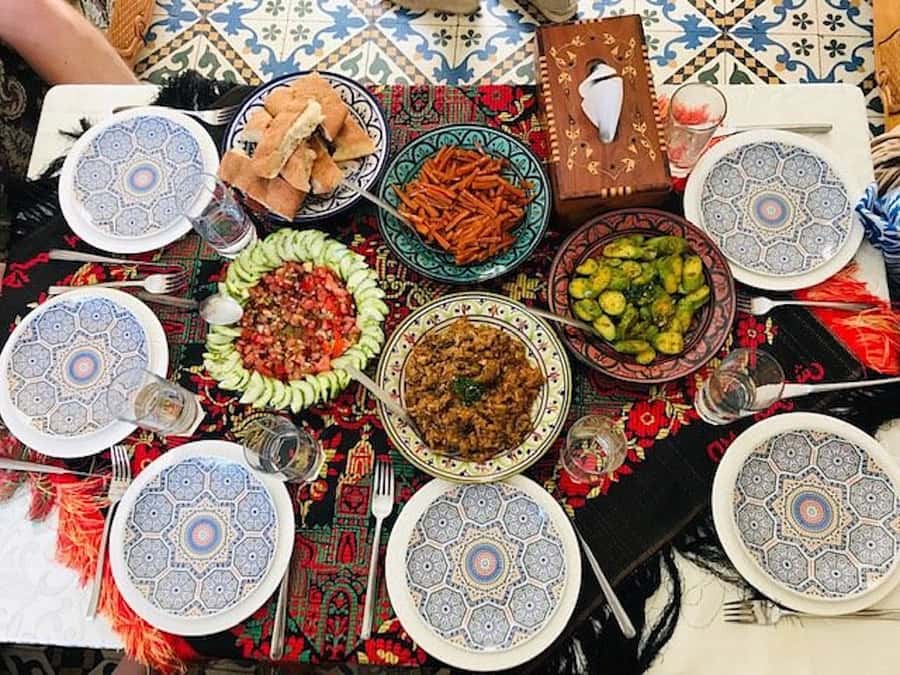
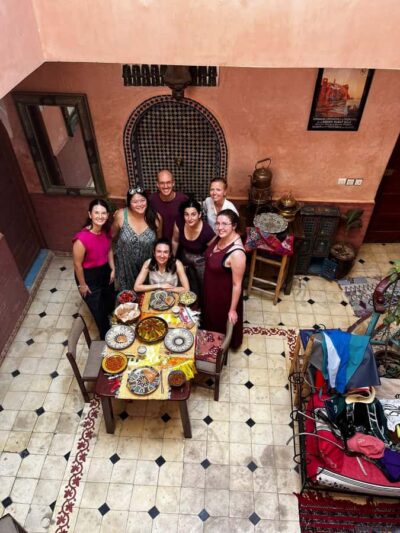
After cooking, you get time to taste everything as a group. You’re not rushed out right after the final pan comes off the stove. The setup encourages conversation while you eat, which helps the whole evening feel like you’re participating in someone’s home meal tradition.
This is also where the value becomes obvious. You’re paying for instruction, but you’re also paying for a proper meal, based on what you cooked together. It’s not a tiny tasting that disappears in two bites.
You may also have the chance to purchase fresh homemade spices before you leave. That’s a practical win. When you’re back home with the same spice blends, you can reproduce the flavor more reliably than if you only have one or two bottles in your pantry.
And yes, the food level is a big deal for people. Multiple participants described it as the best Moroccan meal they had during their time in the city, which is exactly what you want from a class that includes lunch or dinner.
More market mornings near Marrakesh
Price and value: how $40 per person makes sense
At about $40 per person, this class prices like a serious activity, not a cheap, rushed workshop. Here’s what you’re getting for that price, and why it feels fair:
- Market walk plus ingredient shopping with local chefs
- Moroccan tea ritual included
- A hands-on cooking session with guidance for a full menu
- All ingredients covered
- Lunch or dinner included
- Recipes sent afterward in electronic format
- Instruction and support in French, English, and Arabic
The missing piece is transport. There is no hotel pickup and drop-off, so you should factor in the time and cost to reach the Medina area.
Still, when you add up what you would otherwise spend on a proper meal, market shopping, and a guided cooking experience, the math works. It’s especially good value if you want both the cultural ingredient lesson and a meal you can actually eat, not just watch.
Practical tips that make the experience easier
Small details can change how smoothly your evening goes, so here’s what I’d plan around.
What to bring
- Comfortable shoes. The Medina has uneven spots, and you’ll be walking.
- A hair tie, if you have long hair, since you’ll be working near food and steam.
What to expect about timing
Some sessions may have small schedule changes. One participant noted a time adjustment from 10 am to 11 am. When you book, treat the day-of time as something to confirm the evening before.
Comfort and food restrictions
You’ll discuss your food allergies and restrictions before heading to the market. That’s a key point, because it affects what you buy and what you cook.
What’s not allowed
- No pets
- No smoking
- No alcohol and drugs
Who should book this Marrakech cooking class
This is a strong fit if you want to leave with skills, not just photos.
Book it if you:
- want a guided trip through the souk for spices and ingredients you can name later
- care about learning the mint tea ritual properly
- enjoy hands-on cooking, chopping, and seasoning
- want a menu that includes tagines and dessert, with vegetarian options
You might look for a different style of experience if:
- you need wheelchair accessibility, since it’s not suitable
- you prefer a more passive activity where you only watch
- you dislike markets and walking, even if the walk is short
Should you book the Marrakech Traditional Moroccan Cooking Class & Market Visit?
I think you should book this if you’re spending a few days in Marrakech and you want one experience that actually feeds you twice, once in the riad and again when you cook at home.
The best reason to choose it is simple. You buy ingredients in the souk first, then you cook with clear guidance from Moroccan chefs and local women, and you end the night with a meal you helped create. Add the mint tea ritual and the Pastilla of Milk dessert, and you get more than a cooking class. You get a repeatable flavor plan.
If you’re okay handling your own way to the Medina and bringing comfortable shoes, this is one of the more practical and satisfying food activities in Marrakech.
FAQ
What dishes are included in the class?
The menu is made up of typical Moroccan dishes, usually 3 to 6 items, including starters and main courses. Pastilla of Milk is included as the dessert.
Do I get mint tea and recipes?
Yes. You’ll have Moroccan tea, including learning the mint tea ritual, and you’ll receive electronic recipes afterward.
Is hotel pickup included?
No. Hotel pickup and drop-off are not included.
How long is the cooking class?
The cooking class portion is described as lasting about 2 hours and 30 minutes in at least one recent session.
What languages are available for the guide?
The guide and instruction are available in English, French, and Arabic.
Is this class suitable for wheelchair users?
No. It is not suitable for wheelchair users.
Benches, Wheels and Looms
- Marrakech: Moroccan Cooking Class with Pickup★ 4.6 · 1,862 reviews
- Marrakesh: Moroccan Dishes Cooking Class with a Local Chef★ 5.0 · 1,615 reviews
- Marrakech: Pottery Workshop with Moroccan Tea★ 4.8 · 756 reviews
- Marrakech: Moroccan Cooking Class with a Local Family★ 4.9 · 668 reviews
Souk Mornings Elsewhere in Morocco
- Marrakech: Moroccan Cooking Class with Market Visit and Meal★ 4.9 · 347 reviews
- Edgy 8 Dish Private, Fusion Cooking Class, Menu Plan, Market★ 4.9 · 31 reviews
Walks Built Around Buying
- Marrakech: Moroccan Cooking Class with Market Visit and Meal★ 4.9 · 347 reviews
- Marrakech: Exclusive Private Shopping Adventure in The souks★ 4.9 · 77 reviews
- Marrakech & Souk Shopping Tour.★ 4.8 · 62 reviews
- Marrakech: Hidden Souks Shopping Tour with Private Guide★ 4.1 · 53 reviews
Added recently from around Marrakesh


More Cooking Classes worth a look.
 ★ 4.6Marrakech: Moroccan Cooking Class with PickupFrom $311,862 reviews
 ★ 5.0Marrakesh: Moroccan Dishes Cooking Class with a Local ChefFrom $471,615 reviews
 ★ 5.0Moroccan Cooking Class & Marrakech Market Visit with Chef KhmisaFrom $391,504 reviews
 ★ 5.0Half-Day Cooking Class with Local Chef Laila in MarrakechFrom $34952 reviews
 ★ 4.9Marrakech: Moroccan Cooking Class with a Local FamilyFrom $33668 reviews
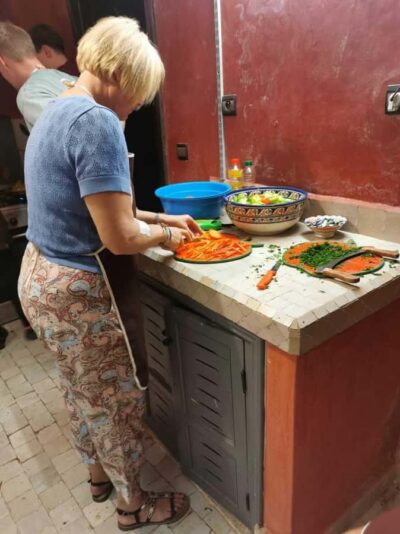 ★ 4.8Marrakech: Moroccan Cuisine Cooking Class in Local HomeFrom $24508 reviews
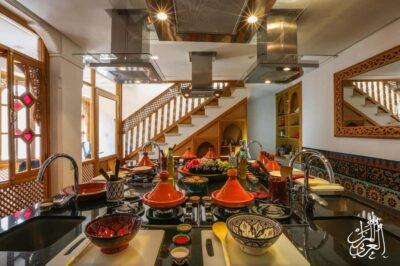 ★ 5.0Marrakech: Moroccan Cooking Workshop at La Maison ArabeFrom $35446 reviews
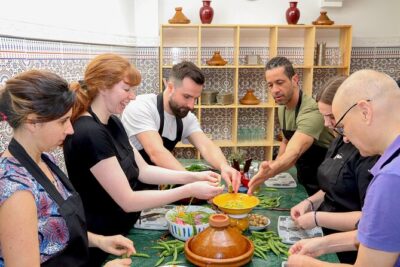 ★ 5.0Marrakesh cooking class with chef Hassan – Local dishesFrom $34425 reviews
Where else this one sits