
REVIEW · MOROCCO
Marrakesh: Moroccan Dishes Cooking Class with a Local Chef
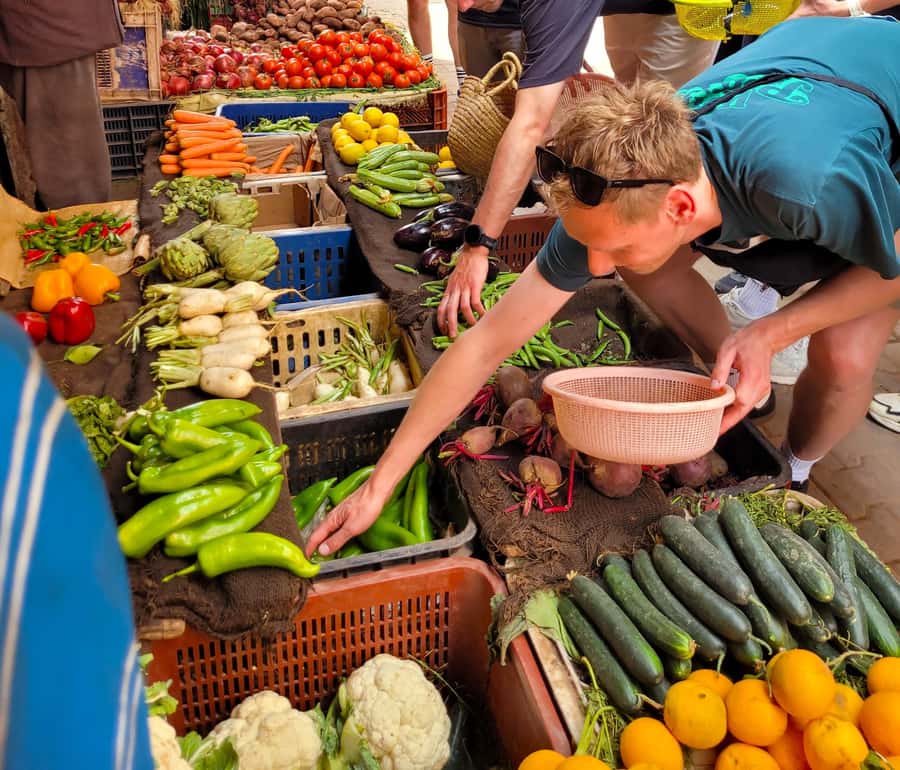
Mint tea first, then your tagine skills. In Marrakesh, this small-group class with chef Hassan takes you from a quick market run to a traditional mint tea ceremony, then into hands-on Moroccan cooking and a buffet meal.
What I like most is the way you do market shopping near the house before you cook, so you choose the vegetables and ingredients with your guide. I also like that you leave with recipes sent after the workshop, so you can actually recreate what you learned later.
One consideration: a few past groups found the work room chilly, even though it is an air-conditioned space, so pack a light layer.
In This Review
- Key things that make this class special
- From Pharmacie Bab Doukkala to the market in 15 minutes
- Mint tea ceremony with Hassan and Ahmed: set the tone
- The 4-hour cooking workshop: tagines, kefta, shakshouka, zaalouk
- What you will usually make
- How the class keeps you learning, not just producing
- Your Moroccan feast: how the buffet tasting works
- Spices at the end, recipes at home
- Is $47 worth it? Value, group size, and what you get
- Who should book, and who should think twice
- Should you book this Marrakesh cooking class with Hassan?
- FAQ
- Where is the meeting point for the cooking class?
- How long is the class?
- What dishes will we cook?
- Can the class handle dietary needs?
- Does the class offer English and French?
- Is hotel pickup and drop-off included?
- Is it suitable for wheelchair users or people with back problems?
Key things that make this class special
- A short market visit where you help pick the fresh ingredients for your dishes
- Mint tea made the traditional way, with a proper ceremony and time to chat
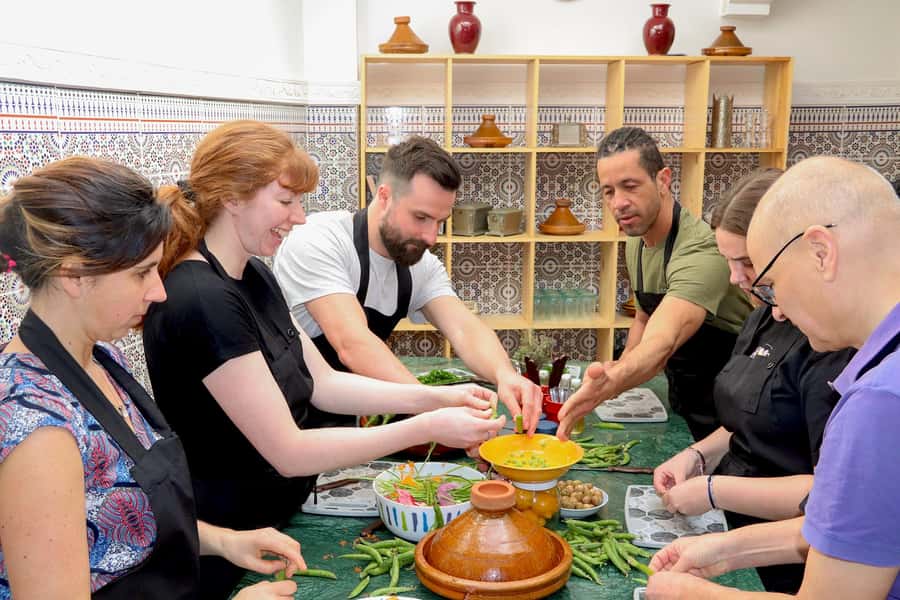
- Hands-on tagine technique with tasks split so everyone cooks, not just watches
- A multi-dish feast that usually lands around 6 dishes, depending on group size
- Recipes and spice shopping at the end so you can take the experience home
From Pharmacie Bab Doukkala to the market in 15 minutes
You start at Pharmacie Bab Doukkala. Put that exact name into Google Maps, because the meeting point matters for a smooth start.
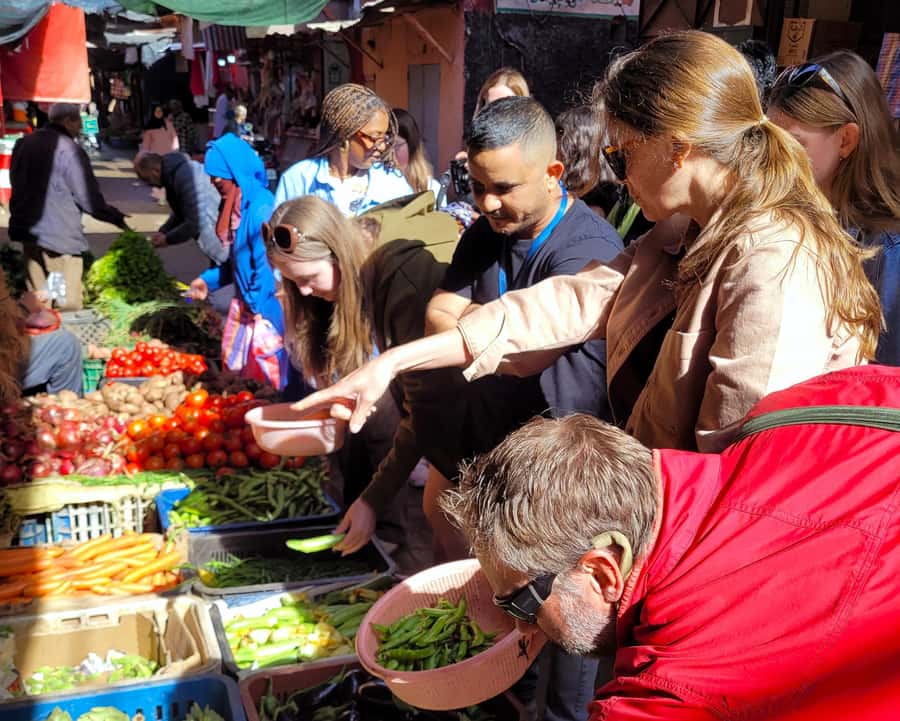
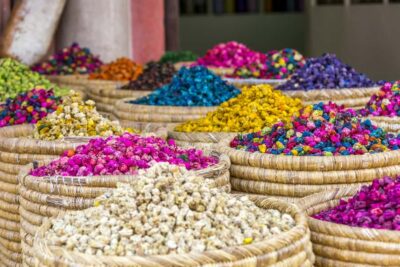
Then the pace is refreshingly practical. You head to a nearby local market for about 15 minutes to pick the vegetables and key ingredients you will cook with. This is not a long walking tour where you stand around for an hour. It is short, focused, and designed so you understand what goes into your food. In the market, you will typically be asked to contribute choices, which makes you feel part of the cooking team immediately.
Why this matters: Marrakesh food can feel mysterious until you see the ingredients in front of you. Once you pick what goes into your tagines and sides, the rest of the cooking stops feeling like a recipe sheet and starts feeling like you are learning a system you can repeat.
Other hands on sessions to sit in
- Marrakech: Traditional Moroccan Cooking Class & Market Visit
★ 4.8 · 1,861 reviews - Marrakesh: Moroccan Dishes Cooking Class with a Local Chef
★ 5.0 · 1,615 reviews - Marrakech: Pottery Workshop with Moroccan Tea
★ 4.8 · 756 reviews - Marrakech: Moroccan Cooking Class with a Local Family
★ 4.9 · 668 reviews
Mint tea ceremony with Hassan and Ahmed: set the tone
Next comes the tea ceremony, about 30 minutes. This is where you learn the traditional way of making Moroccan mint tea, and you get to slow down before the chopping begins.
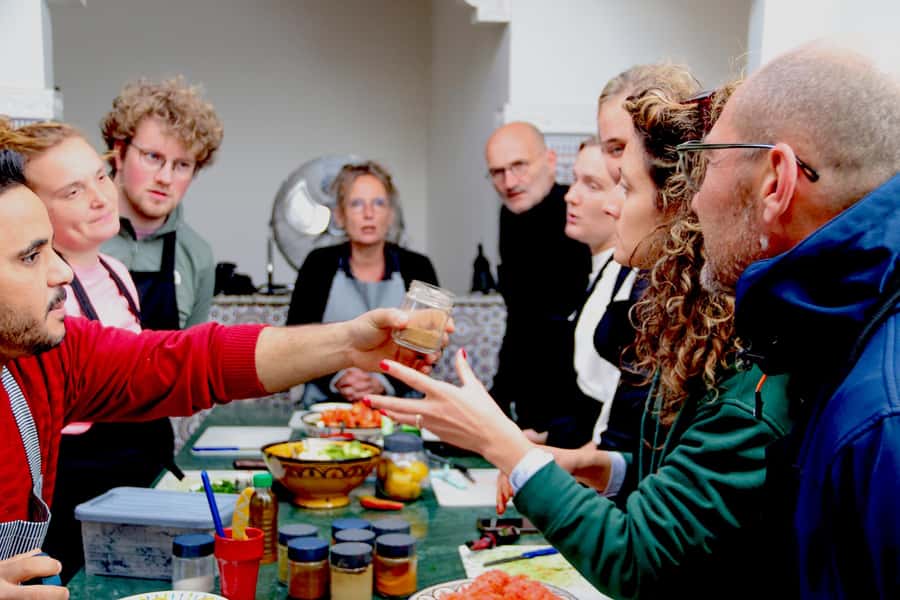
This part is also social in a good way. You drink tea while you get to know the group, and the hosts share cultural context along the way. Chef Hassan is often the main face here, with Ahmed also appearing as part of the team in many sessions. The overall vibe is warm and interactive, not stiff.
Practical tip: treat this tea time like a palate warm-up. Moroccan cooking often balances salty, sweet, and tangy notes. When you understand the tea ritual first, you are more ready to notice those flavor patterns as you cook.
The 4-hour cooking workshop: tagines, kefta, shakshouka, zaalouk
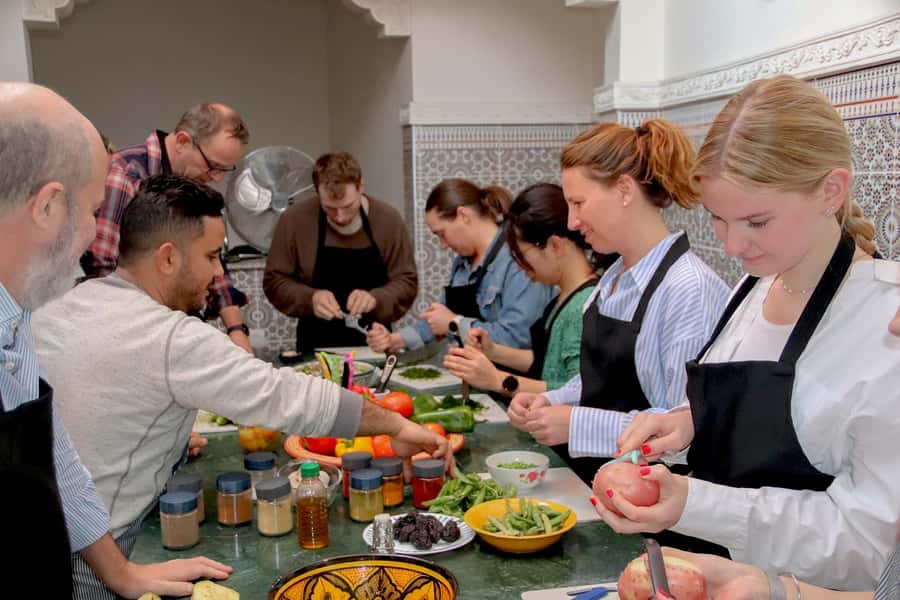
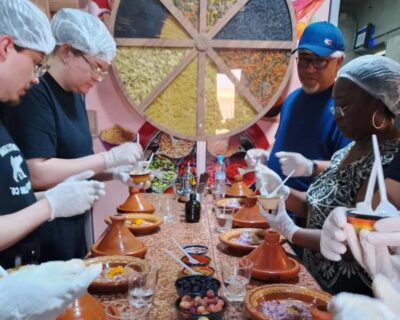
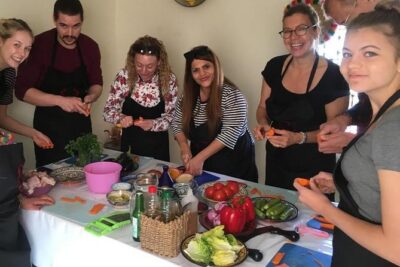
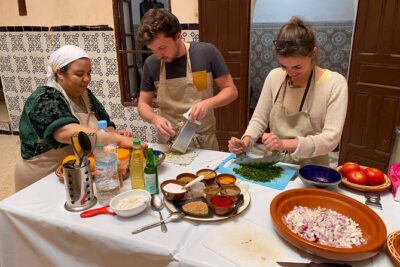
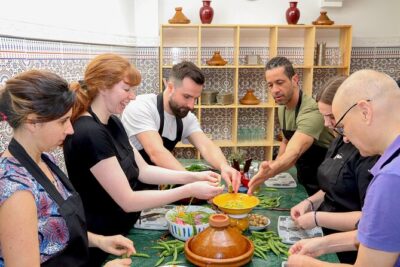
The cooking portion runs about 3.25 hours, and the best thing about the class format is how hands-on it is. Participants work together as one team, so you will not spend the whole session watching someone else cook. You get tasks like peeling, chopping, and seasoning, and you learn how the right spices create the right flavor profile.
What you will usually make
The class typically produces around 6 dishes in one session, depending on group size. Common dishes include:
- Beef with prunes tagine
- Chicken with preserved lemon tagine
- Vegetables tagine
- Meatballs with tomato sauce and eggs, called kefta
- Shakshouka, sweet peppers cooked in a saucy style
- Fried or grilled aubergine salad, called zaalouk
A big plus for real life: the dish list can be adjusted. If the group is small, the class may make fewer than 6 dishes, but the hosts ensure there is enough food and enough teamwork to still cover the key techniques. If you have dietary restrictions, the class can cook vegan, vegetarian, and gluten-free options, and they may add 1 or 2 side dishes depending on those needs.
How the class keeps you learning, not just producing
Even though you are making multiple dishes, the teaching stays connected. The focus is on technique: how ingredients are prepped, how seasoning is layered, and how tagine cooking changes the texture and taste. Because you are doing collective cooking, you end up seeing multiple spice combinations and learning what each one is trying to achieve.
This is also where you will hear cultural and food talk in depth. The hosts explain traditions and the story behind what you are cooking, so it is not just a culinary exercise. You are getting the “why,” not only the “how.”
Your Moroccan feast: how the buffet tasting works
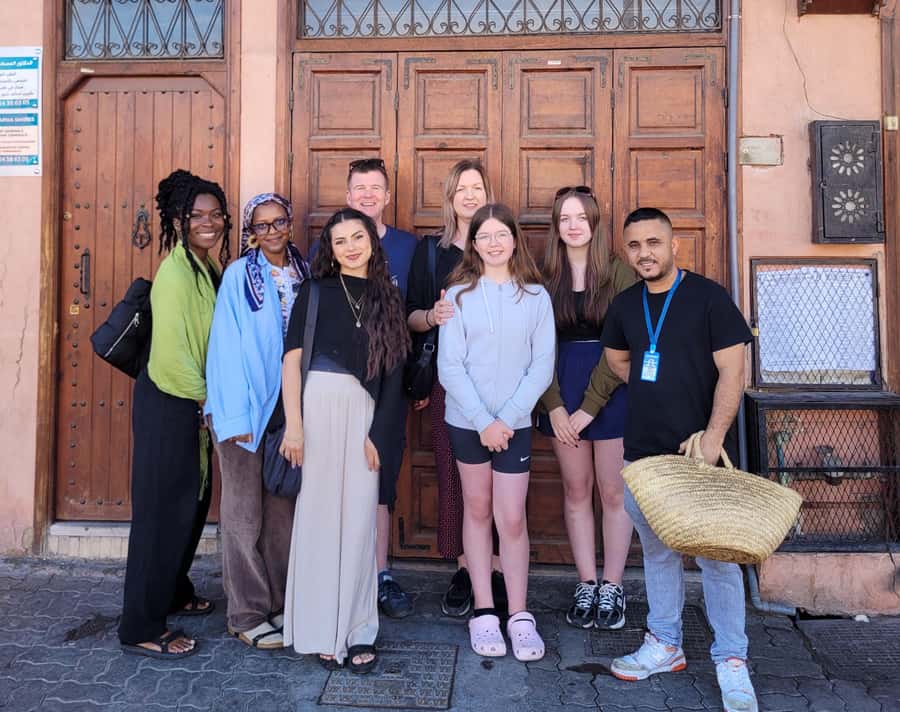
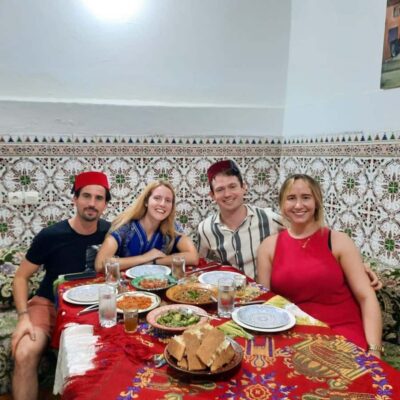
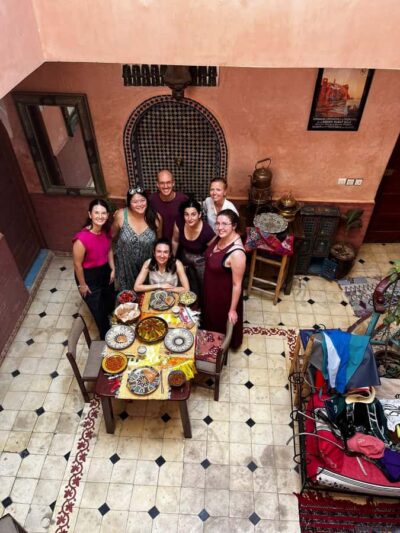
At the end, you eat what you cooked. It is served buffet-style, so you can sample from each dish rather than being limited to one plate.
This format is ideal for two reasons. First, Moroccan meals are meant to be shared, and a buffet tasting matches the spirit of the food. Second, the buffet helps you learn faster. If you can taste a prunes tagine next to chicken with preserved lemon, you start to understand how sweet and tangy flavors play off each other.
Also, because the dishes are often different in both ingredients and method, you can quickly spot which ones you want to reproduce later. The class usually feels like a proper Moroccan dinner, not a small demo.
Timing wise, everything runs about 4 hours from meeting time to the meal. Since you are on holiday, the class is designed to feel unhurried rather than rushed to the minute.
More classes that come with a kitchen
Spices at the end, recipes at home
When you finish eating, you will have the chance to buy spices from the workshop. This matters more than it sounds. Moroccan cooking relies on spice blends and seasoning decisions, and buying the spices locally is one of the easiest ways to keep the flavors close to what you learned.
Right after the class, you also get recipes. The information is shared online, and you will receive a link so you can follow the dishes later. That take-home piece is a major part of the value, because a cooking class is only useful if you can cook the results again.
Practical advice: if you plan to recreate your dishes at home, keep your spice purchases organized. Even a simple label like tagine spice blend or zaalouk spice makes your second attempt much easier.
Is $47 worth it? Value, group size, and what you get
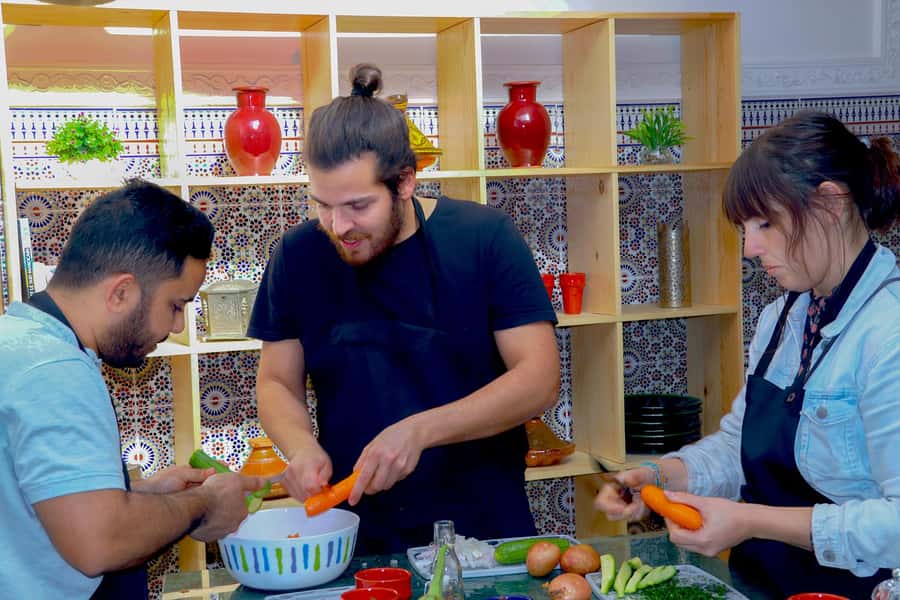
At $47 per person for a half-day experience, the value is strong when you look at what is included:
- Market visit for ingredients
- Tea and water
- Meal with bread at the end
- Apron
- Recipes sent after the workshop
- A small group setup
Group size is small, limited to 10 participants. The class maximum is typically 9, with the possibility of 10 in a couple of situations. That size matters because it supports the hands-on approach. You are more likely to get active tasks and clearer instruction when the room is not packed.
Also, you are not just paying for food. You are paying for technique, the spice logic behind Moroccan cooking, and the chance to cook multiple dishes in one sitting. Many people end up saying this is the best food they ate while in Marrakesh, which makes sense when you compare it to a single restaurant dish versus a whole menu of what you actually learned to cook.
Note: additional drinks are not included, and alcohol and drugs are not allowed.
One more practical booking note: cancellation is free up to 24 hours in advance for a full refund, and reserve now pay later is available.
Who should book, and who should think twice
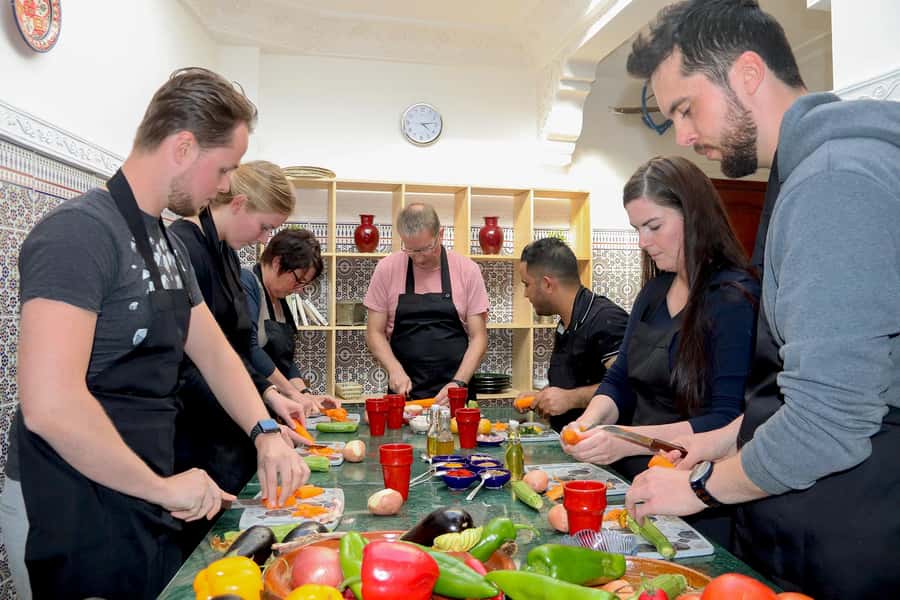
This class fits best if you want hands-on cooking and real context. It is also a strong choice if you like meeting other people because the tea ceremony and the shared work make it feel like a team dinner.
It can be a family-friendly option too. Kids are allowed as long as they are older than 6, and the group work helps children and adults stay engaged.
It is not for everyone:
- Not suitable for wheelchair users
- Not suitable for people with back problems
- Not allowed for pets
- Not suitable for onion or garlic allergies
If you have onion or garlic sensitivities, be cautious. Since the class is specifically noted as not suitable for those allergies, you should check directly before booking any Moroccan cooking experience.
Comfort-wise, pack a light layer. Even with an air-conditioned cooking area, some sessions run cool, and a sweater can save your afternoon.
Language note: the class is bilingual (English and French) when the group includes different languages, otherwise it is held in one language.
Should you book this Marrakesh cooking class with Hassan?
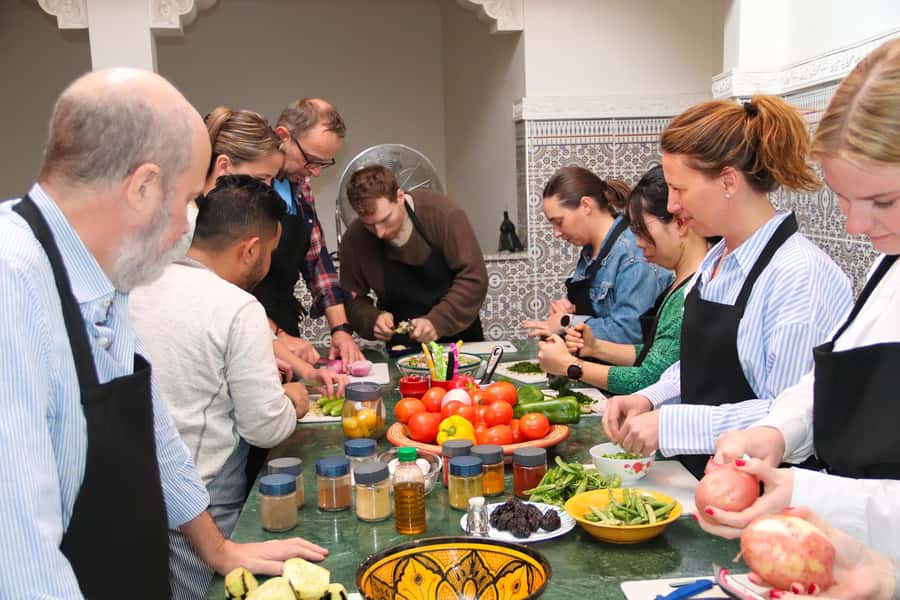
Yes, if you want a practical way to learn Moroccan flavors and techniques, this is one of the best formats in Marrakesh. You get the market ingredients, the mint tea ritual, and a full menu worth of cooking, usually around 6 dishes, with recipes afterward.
I would especially book it if you plan to eat tagines during your trip and want to understand what you are ordering. The more you know about preserved lemon, prunes, kefta, shakshouka, and zaalouk, the easier it becomes to pick the good stuff.
FAQ
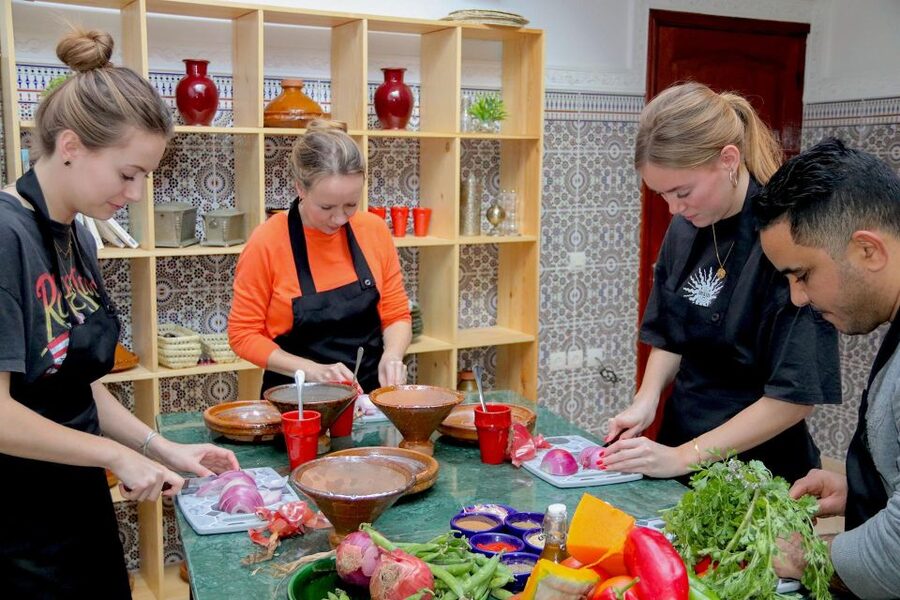
Where is the meeting point for the cooking class?
You meet at Pharmacie Bab Doukkala in Marrakesh. It is recommended you search for the exact pharmacy name in Google Maps.
How long is the class?
The class lasts about 4 hours total, from meeting time to when you eat.
What dishes will we cook?
Dishes usually include several Moroccan tagines and sides such as beef with prunes tagine, chicken with preserved lemon tagine, vegetables tagine, kefta (meatballs with tomato sauce and eggs), shakshouka (sweet peppers), and zaalouk (aubergine salad).
Can the class handle dietary needs?
Yes. The class can cook vegan, vegetarian, and gluten-free options. The specific side dishes may also change based on dietary restrictions and group size.
Does the class offer English and French?
Yes. The class is bilingual (English and French) when guests speak different languages, and it is held in one language when everyone speaks the same language.
Is hotel pickup and drop-off included?
No. Hotel pickup and drop-off are not included.
Is it suitable for wheelchair users or people with back problems?
No. The class is not suitable for wheelchair users or people with back problems.
If you tell me your travel dates and whether anyone in your group has onion or garlic allergies, I can help you decide if this is the right fit and suggest what to prioritize in the dishes.
Classes That Come With a Kitchen
- Marrakech: Moroccan Cooking Class with Pickup★ 4.6 · 1,862 reviews
- Marrakech: Traditional Moroccan Cooking Class & Market Visit★ 4.8 · 1,861 reviews
- Marrakech: Moroccan Cooking Class with a Local Family★ 4.9 · 668 reviews
- Marrakech: Moroccan Cuisine Cooking Class in Local Home★ 4.8 · 508 reviews
Benches, Wheels and Looms
- Marrakech: Moroccan Cooking Class with Pickup★ 4.6 · 1,862 reviews
- Marrakech: Traditional Moroccan Cooking Class & Market Visit★ 4.8 · 1,861 reviews
- Marrakech: Pottery Workshop with Moroccan Tea★ 4.8 · 756 reviews
- Marrakech: Moroccan Cooking Class with a Local Family★ 4.9 · 668 reviews
Added recently from around Marrakesh


More Cooking Classes worth a look.
 ★ 4.6Marrakech: Moroccan Cooking Class with PickupFrom $311,862 reviews
 ★ 4.8Marrakech: Traditional Moroccan Cooking Class & Market VisitFrom $401,861 reviews
 ★ 5.0Moroccan Cooking Class & Marrakech Market Visit with Chef KhmisaFrom $391,504 reviews
 ★ 5.0Half-Day Cooking Class with Local Chef Laila in MarrakechFrom $34952 reviews
 ★ 4.9Marrakech: Moroccan Cooking Class with a Local FamilyFrom $33668 reviews
 ★ 4.8Marrakech: Moroccan Cuisine Cooking Class in Local HomeFrom $24508 reviews
 ★ 5.0Marrakech: Moroccan Cooking Workshop at La Maison ArabeFrom $35446 reviews
 ★ 5.0Marrakesh cooking class with chef Hassan – Local dishesFrom $34425 reviews
Where else this one sits