
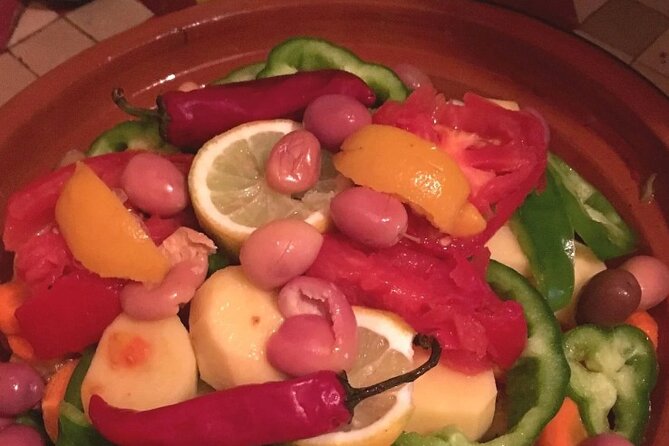
REVIEW · MOROCCO
Traditional Moroccan Cooking Class
Eat your way through Essaouira in four hours. This Traditional Moroccan Cooking Class pairs market shopping in the old medina with hands-on cooking in Chef Fatima’s home, so you go from spices to plate.
I love the market tips that make it easier to choose good vegetables and spices, and the chance to prepare favorites like tagine and aubergine salad. I also love the step-by-step couscous coaching, where you work side by side and then enjoy what you made with mint tea.
One thing to note: pastilla is not included, since it takes extra time to prepare.
In This Review
- Key highlights you will feel fast
- Essaouira’s market first, then Chef Fatima’s home kitchen
- Meeting at Bab Marrakech, then heading into old Essaouira
- Market shopping in Essaouira: what you’re really learning
- Cooking couscous, tagine, Harira, and Moroccan bread, step by step
- The mint tea rhythm: Berber hospitality and the payoff meal
- What you can actually use back home
- Price and logistics: is $39 worth it in Essaouira?
- Who this Moroccan cooking class suits best
- Should you book this Essaouira cooking class?
- FAQ
- Where does the Traditional Moroccan Cooking Class start?
- What time does the class begin?
- How long is the experience?
- How much does it cost?
- What Moroccan dishes will we learn to make?
- Is pastilla included in the class?
- Is this tour private?
- What is the cancellation policy?
Key highlights you will feel fast
- Old medina start with a market shopping focus, not a quick showroom stop
- Chef Fatima’s home cooking, taught with real guidance and patience
- Hands-on couscous, tagine, Harira, and Moroccan bread, cooked together
- Mint tea moments built in, including Berber mint tea with your meal
- Private group format, so you are not squeezed into a big crowd
- Pastilla excluded, which keeps the class to a tighter 4-hour flow
Essaouira’s market first, then Chef Fatima’s home kitchen
This is one of those Essaouira experiences that feels more like being invited into a household routine than attending a rigid class. You start in the old medina area, shop for fresh ingredients with Chef Fatima, then head to her home to cook and eat together.
The whole thing runs about 4 hours and includes a mobile ticket. It is also a private tour/activity, meaning only your group participates, which usually makes it easier to ask questions and actually cook, not just watch.
If you like food travel that has a clear “then we do this” rhythm, you will enjoy this. You also get the best kind of structure for learning, shopping first (so ingredients make sense), then cooking step by step.
Other hands on sessions to sit in
- Essaouira: Surf Lessons
★ 4.9 · 412 reviews - Kitesurfing Lessons in Essaouira Beach
★ 5.0 · 206 reviews - Group Kitesurfing lesson with a Local in Essaouira Morocco
★ 5.0 · 175 reviews - Surf Lesson with local surfer in Essaouira Morocco
★ 5.0 · 166 reviews
Meeting at Bab Marrakech, then heading into old Essaouira
You begin at Parking Bab Marrakech, Place Bab Marrakech, Essaouira 44000 at 9:30 am. The location is near public transportation, which matters in a place where walking is part of the deal and taxis can be a game of stop-and-go.
From there, the experience moves into the old medina, with the shopping phase linked to Place de l’Horloge. That matters because it puts you in the right atmosphere early. The old streets and market energy are not decoration. They set the stage for why you are buying ingredients the way locals do.
Timing is practical here. At 9:30 am, you are not doing this at the end of a tired day, so you still have energy to chop, stir, and taste your way through the process.
Market shopping in Essaouira: what you’re really learning
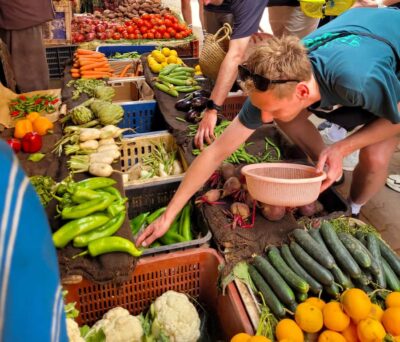
The market stop is not just “look around.” You explore the markets and buy fresh ingredients from locals, and Chef Fatima guides what to pick and why. This is where the experience earns its value.
Here’s what you will likely take away from the market part:
- how spices and herbs connect to the dishes you are making
- how to judge ingredients for freshness and flavor
- how a tagine or couscous improves when the base ingredients are actually good
Some participants note spice grinding and choosing key ingredients, including deciding elements for the main dish. Even if you are not selecting every ingredient, you will still get the logic behind the basket you carry.
Also, markets can be sensory overload. If you are the type who gets overwhelmed, don’t worry. This format gives you a job to do, so you can focus on the choices that matter instead of trying to memorize every stall.
Cooking couscous, tagine, Harira, and Moroccan bread, step by step
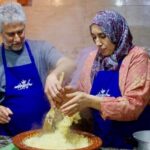
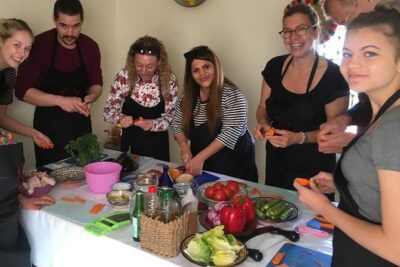
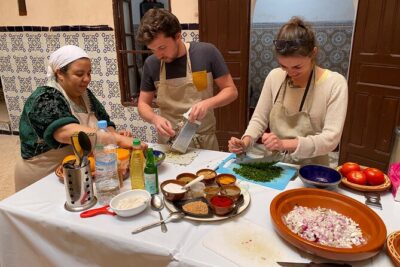
After the market, Chef Fatima welcomes you to her home with Moroccan mint tea. Then you get into the hands-on work: cooking together while she shows you how to build flavor and texture in Moroccan classics.
The experience focuses on:
- Couscous, taught step by step
- Tagines, including practical technique for how they come together
- Harira (Moroccan soup)
- Moroccan bread
You will be doing the cooking alongside her, not standing on the sidelines. That is one of the reasons this works so well for people who want a real takeaway recipe and not just a photo and a vague memory.
A key note: Pastilla is not included. The reason is simple, pastilla takes a lot of time to prepare, and this experience stays within its set 4-hour window. If pastilla is your must-make dish, plan another stop for that, and treat this class as your core couscous and tagine foundation.
The mint tea rhythm: Berber hospitality and the payoff meal
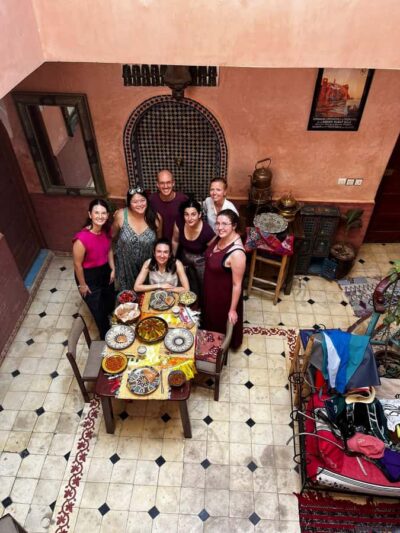
Moroccan cooking is never just about cooking. It is also about pauses, conversation, and tea. In this class, you get mint tea at the start, and you finish by appreciating your work and savoring your preparations with more Berber mint tea.
This matters for two reasons:
- You learn while cooking, but you confirm what you learned when you eat the results.
- The meal feels like part of the lesson, not an afterthought.
Some people also mention biscuits along with the tea. Either way, expect a relaxed pace once you are seated, because the point is to enjoy what you made, not rush out immediately.
One gentle reality check. A couple of people felt it was more like meal preparation than a long, technical cooking course. That can be true depending on your expectations. If you come wanting detailed chef-school instruction, you may want to look for a longer class. If you come wanting a fun, authentic hands-on experience, this hits the mark.
What you can actually use back home
I like cooking classes that give you usable habits, not just a printed recipe. This one is built for that. You learn recipes Chef Fatima learned from her grandmother, and you cook in a sequence that makes sense.
When you make Moroccan food later, you will remember:
- how ingredients are chosen at the market
- the order things go together (especially for couscous)
- the role spices play when they are fresh and measured
Even if your kitchen does not match Moroccan cookware, the method transfers. Couscous is mostly about timing and texture. Tagines are mostly about layering flavor and letting things simmer until they taste right. Harira is about warmth, balance, and getting the soup to feel cohesive, not watery.
And because you eat what you cook, you can judge what you did well and what you might adjust next time. That feedback loop is the secret ingredient many cooking lessons forget.
More classes that come with a kitchen
Price and logistics: is $39 worth it in Essaouira?
At $39 per person for about 4 hours, this is positioned as a high-value way to experience Moroccan cooking without spending a whole day. You also get a private format, which usually makes the per-person cost feel more fair, because the attention is geared to your group.
Value also comes from what is included in the flow:
- market time with guidance
- hands-on cooking in a home setting
- mint tea breaks, including Berber mint tea at the end
- classic dishes like couscous, tagine, Harira, and bread
One practical point: the experience says you buy fresh ingredients in the market. The tour price is for the experience, but ingredient spending can be something you should be prepared for as part of the market portion. If you want clarity before you go, message the operator when you book and ask how ingredient purchasing is handled.
Also note that it is commonly booked about 14 days in advance, which suggests popular dates fill up. If you are traveling during peak season or on a tight schedule, plan earlier.
Who this Moroccan cooking class suits best
This is ideal if you want:
- a real home-kitchen experience in Essaouira, not a tourist setup
- a market-to-table lesson centered on tagines and couscous
- a friendly group vibe with time to ask questions
- a private class where you are not competing for attention
It is especially good for couples, small groups, and anyone who likes learning by doing. Walking around the old medina and choosing ingredients with a local guide adds texture to the cooking itself.
Your possible mismatch is if you want a long, technical course, or if pastilla is your top goal. This format focuses on core dishes and keeps the schedule tight.
Should you book this Essaouira cooking class?
If you want a fun, authentic way to learn Moroccan cooking, I think it is a strong yes. You get the market experience, you cook together in Chef Fatima’s home, and you finish by eating what you made with mint tea.
Book it when you value:
- hands-on instruction
- classic dishes like couscous, tagine, Harira, and bread
- an intimate, private feel
Skip it (or pair it with another option) if pastilla is non-negotiable, or if you want a deeper, multi-session culinary course with lots of advanced technique.
FAQ
Where does the Traditional Moroccan Cooking Class start?
It starts at Parking Bab Marrakech, Place Bab Marrakech, Essaouira 44000, Morocco.
What time does the class begin?
The start time is 9:30 am.
How long is the experience?
It lasts about 4 hours.
How much does it cost?
The price is $39.00 per person.
What Moroccan dishes will we learn to make?
You will learn to cook Moroccan dishes such as tagines, couscous, Harira (Moroccan soup), and Moroccan bread. You also get Moroccan mint tea, and the experience includes a mint tea moment when you savor what you made.
Is pastilla included in the class?
No. Pastilla is not included because it takes a lot of time.
Is this tour private?
Yes. It is a private tour/activity, so only your group participates.
What is the cancellation policy?
You can cancel for a full refund up to 24 hours in advance of the experience start time. Free cancellation applies if you cancel at least 24 hours ahead. If it is canceled due to a minimum number of travelers not being met, you will be offered a different date or a full refund.
Classes That Come With a Kitchen
- l’Atelier – Moroccan Cooking Workshop in Essaouira★ 5.0 · 110 reviews
- Essaouira: Traditional Family Style Moroccan Cooking Class★ 5.0 · 58 reviews
- Traditional Moroccan and Berber cooking classes★ 5.0 · 40 reviews
- Essaouira Cooking Class★ 5.0 · 26 reviews
Benches, Wheels and Looms
- Essaouira: Surf Lessons★ 4.9 · 412 reviews
- Kitesurfing Lessons in Essaouira Beach★ 5.0 · 206 reviews
- Group Kitesurfing lesson with a Local in Essaouira Morocco★ 5.0 · 175 reviews
- Surf Lesson with local surfer in Essaouira Morocco★ 5.0 · 166 reviews
Added recently from around Essaouira


More Cooking Classes worth a look.
 ★ 4.6Marrakech: Moroccan Cooking Class with PickupFrom $311,862 reviews
 ★ 4.8Marrakech: Traditional Moroccan Cooking Class & Market VisitFrom $401,861 reviews
 ★ 5.0Marrakesh: Moroccan Dishes Cooking Class with a Local ChefFrom $471,615 reviews
 ★ 5.0Moroccan Cooking Class & Marrakech Market Visit with Chef KhmisaFrom $391,504 reviews
 ★ 5.0Half-Day Cooking Class with Local Chef Laila in MarrakechFrom $34952 reviews
 ★ 4.9Marrakech: Moroccan Cooking Class with a Local FamilyFrom $33668 reviews
 ★ 4.8Marrakech: Moroccan Cuisine Cooking Class in Local HomeFrom $24508 reviews
 ★ 5.0Marrakech: Moroccan Cooking Workshop at La Maison ArabeFrom $35446 reviews
Where else this one sits