
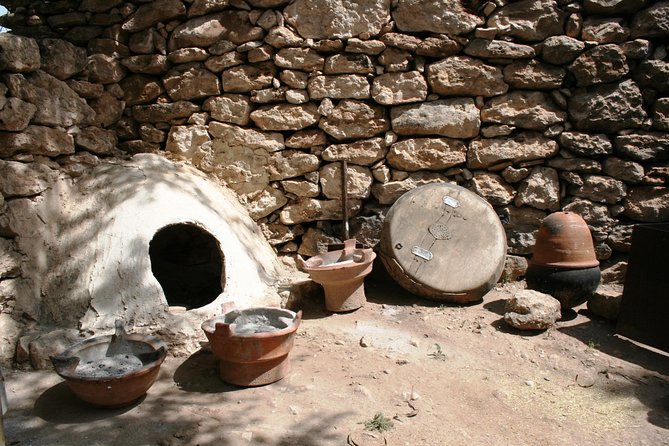
REVIEW · MARRAKECH
Berber Cooking Class at a Farm in the Countryside & shopping at a rural Souk.
Fire, stone, and bread in Berber country.
This 7-hour day takes you 35 km south of Essaouira into the Haha region, where you shop like locals and cook the kind of food built on barley, clay ovens, and slow-steamed couscous. You’ll see the ingredients come from the land, not a supermarket shelf, and you’ll learn the methods that shape the final taste.
What I love most is the hands-on bread and couscous part, where barley gets roasted over the fire and then ground on a stone mill before you bake and steam. I also like the way the menu stays tied to real place, with olive oil from the farm’s own trees and a vegetable-and-goat tagine flavored with Moroccan spices.
One thing to consider: this experience needs good weather, because lunch is served outside if possible, and the day runs in a rural area where the plan depends on conditions.
In This Review
- Key things to look forward to
- Haha hills, Essaouira area: why this setting matters
- Meeting point and timing: a full morning start with a countryside rhythm
- The rural souk stop: fresh ingredients, real daily staples, and better cooking memory
- Ecological farm kitchen: roast barley, grind stone-mill style, bake in clay
- Tagine time: vegetables, goat meat, spices, and farm olive oil
- Lunch outdoors, herb tea, and the Argan zone option
- Price and value: what $98.76 buys you in a 7-hour small group
- Style of teaching: calm, practical, and built around real steps
- Weather, clothing, and comfort tips you’ll be glad you followed
- Should you book this Berber cooking class and rural souk day?
Key things to look forward to
- Souk shopping first, so you start cooking with fresh produce, meat, eggs, honey, and the staples you actually use
- Roasted barley to semolina, guided by Khadija and Khadija, using a stone mill process you can see with your own eyes
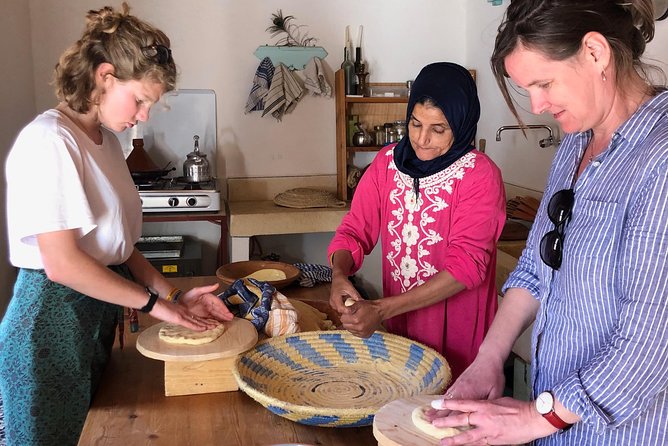
- Clay oven bread and clay-pot couscous, cooking methods that explain why the texture and flavor land where they should
- Tagine of vegetables and goat meat, made with Moroccan spices and olive oil from the farm
- Herb garden tea after lunch, a simple finish that feels genuinely local
- Optional Argan oil cooperative visit, with a taste of what the area is famous for and, quite possibly, goats in the trees
Haha hills, Essaouira area: why this setting matters
This tour is based in the Haha countryside, not in a restaurant kitchen. That difference changes the whole feel. You’re in a working landscape where Berbers cultivate crops and keep goats and sheep, and where ingredients connect back to farms and small local markets.
The emphasis on the farm and the souk is smart. In many cooking classes, you shop for ingredients after you already know what you’ll make. Here, you shop before cooking, so your brain links each ingredient to the dish you’ll be making later. You also learn what people consider everyday staples, not just what makes a great photo.
And there’s another cultural layer. The tour goes through the Argan zone area and may include a stop at an argan oil cooperative. Even if you skip that optional visit, the day still carries the sense that food and local crafts are part of the same economy, the same landscape, and the same daily routine.
Other medina and souk walks around Essaouira
- Essaouira: Sqala du Port, Medina Ramparts & Fish Market Tour
★ 4.7 · 212 reviews - Essaouira: Sqala du Port, Citadel, Fish Market & Medina Tour
★ 4.6 · 73 reviews - Essaouira Day Trip from Marrakech _ medina, old port
★ 4.8 · 66 reviews
Meeting point and timing: a full morning start with a countryside rhythm
You start in Essaouira at Labo Abdelkrim Khatabi d’Analyses Médicales, 287 Rue Oued El Makhazine. The start time is 9:00 am, and the day runs about 7 hours (approx.).
The itinerary is built like a smooth arc: market, farm cooking, meal, tea, then a possible argan detour. That matters because a “cooking class” can turn into a rushed checklist. Here, the time gap between shopping and cooking helps it feel like a real process, not just a demonstration.
Group size is capped at 8 travelers, which is an underrated detail. In small groups, you’re more likely to get direct attention from the women teaching the cooking and from the person guiding the flow of the day. You can ask questions without feeling like you’re interrupting.
You’ll receive a mobile ticket, and confirmation is sent within 48 hours of booking, subject to availability. Also, the day is marked as suitable for most travelers, and service animals are allowed.
The rural souk stop: fresh ingredients, real daily staples, and better cooking memory
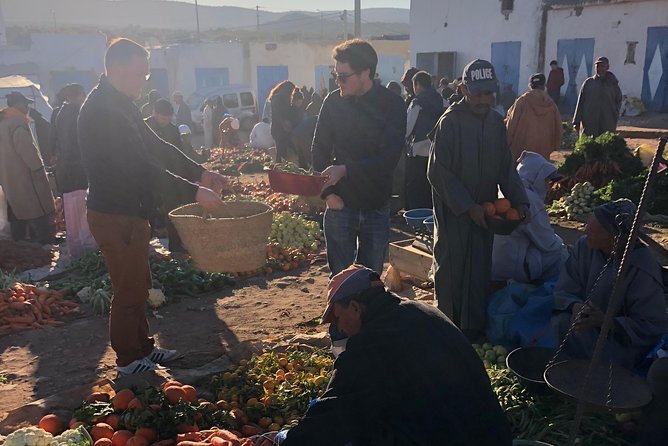
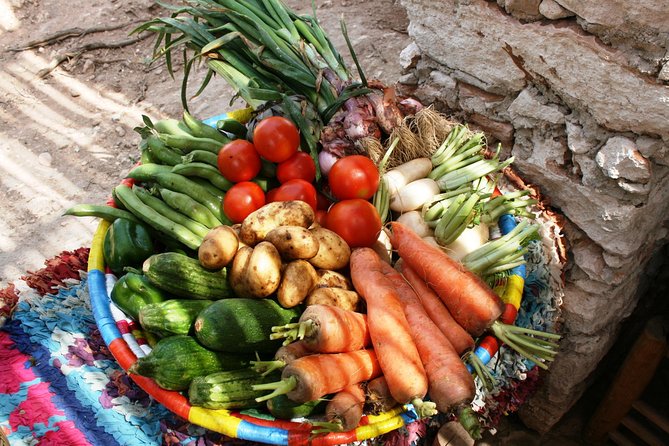
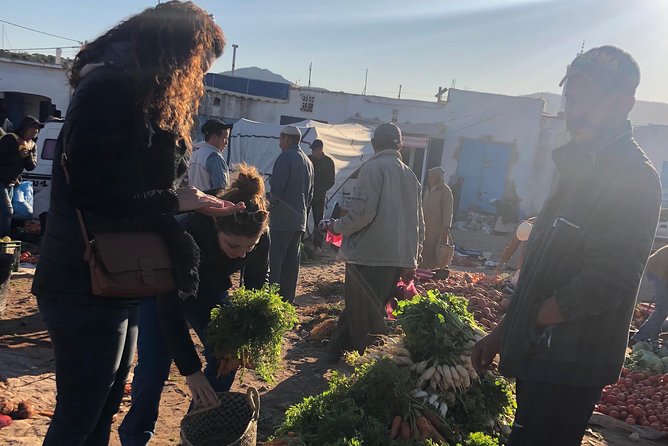
Before you even touch a clay oven, you’ll visit a local souk in the area. You’re not just looking around. You’re collecting the ingredients that power the recipes you’ll cook later: freshly harvested fruits and vegetables, plus meat, eggs, and honey.
I like this approach because the souk isn’t treated like a bonus activity. It’s part of the lesson. When you see produce at its peak and you understand that honey is a staple, you cook with more confidence. You also end up noticing flavors you might otherwise overlook, like how spices and olive oil work alongside sweet and earthy ingredients.
Practical tip: wear shoes you can stand in for a while. Souks are busy in their own way, even if the pace feels slower than big-city markets. Also, if you want to recreate the dishes later, pay attention to what ingredients look like and how they’re commonly used, not only how they taste in your spoon.
This stop also gives you context for the farm cooking. The day’s recipes are based on simple, everyday foods, not fancy ingredients flown in from somewhere else. That makes the class more useful when you get home and want to cook again.
Ecological farm kitchen: roast barley, grind stone-mill style, bake in clay
The main event happens at an ecological farm with an authentic Berber kitchen. The kitchen area is stocked with traditional items for food prep, and the teaching centers on techniques that shape texture.
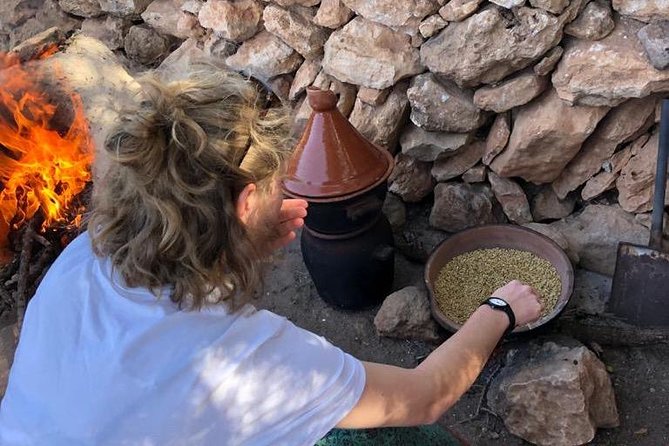
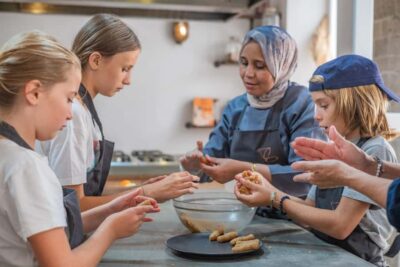
The star lesson is barley. Khadija and Khadija show you how they roast barley grains on the fire, then grind them in a stone mill to make flour and semolina. If you’ve ever used store-bought semolina, you know it works. But seeing the step-by-step process makes it feel less like magic and more like craft.
Then you move into two core cooking methods:
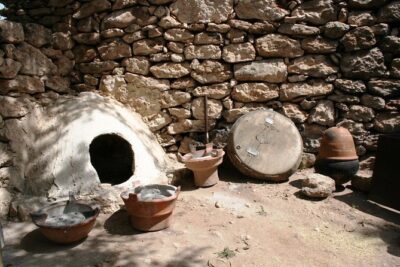
You’ll bake flat bread in a clay oven. Clay ovens hold heat differently than modern ovens, and the bread tends to come out with a distinct character. You’re not just learning a recipe. You’re learning how the heat and the cookware interact.
You’ll steam couscous in a traditional clay pot. Couscous can turn out dry or clumpy if the steaming is off. A traditional pot and method help keep the texture light and consistent, which is exactly what you want when the whole dish depends on the couscous being right.
This is also where the tour feels most authentic. The kitchen isn’t trying to look fancy or staged. It’s set up like a real workspace where the process is the point.
Tagine time: vegetables, goat meat, spices, and farm olive oil
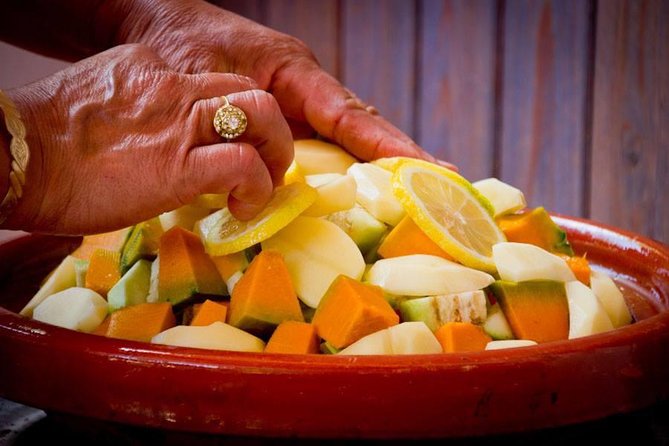
After the breads and couscous are in motion, you’ll learn to make a traditional tagine with vegetables and goat meat, flavored with Moroccan spices and olive oil derived from the olive trees growing on the farm.
The olive oil detail is more than a nice story. Farm-to-table oil tends to taste fresher and more present. Even if your home pantry oil is good, it’s helpful to understand that in this dish, the oil is part of the flavor architecture, not just a cooking medium.
A tagine is also a patience dish, even when it’s taught in a class format. The simmering and spice integration is how the flavors knit together. You’ll get the practical feel for what the spices do over time, which is useful if you plan to cook tagine at home later and want your spices to taste like more than a one-note powder.
Lunch outdoors, herb tea, and the Argan zone option
Depending on the weather, lunch is served outside if at all possible. That matters because the whole farm experience works best when you can enjoy the calm surroundings. You’re eating in a rural setting that feels like a break from schedules, not another stop in a tight city loop.
After lunch, you’ll enjoy tea infused with fresh herbs from the garden. Tea like this often tastes cleaner and more aromatic than dried herb tea, and it’s a nice end to a meal that leans on warm spices and slow cooking.
Then comes the Argan zone portion. You’ll be driving through the Argan area, and you have the option to visit an argan oil cooperative to learn how argan oil is produced. They also offer a taste of what the cooperative makes, which can help you connect the idea of argan as a global product to the local reality of how it’s made and used.
One more detail that’s worth noting: you’ll very likely see the famous goats in the trees on this part of the trip south of Essaouira. Even if you’ve seen photos before, seeing it in context makes it feel less like a trick and more like a working relationship with the land.
Other walks built around buying
Price and value: what $98.76 buys you in a 7-hour small group
At $98.76 per person for about 7 hours, this isn’t the cheapest activity in Essaouira. It also isn’t trying to be. The value comes from three things that are hard to fake:
First, you’re paying for a full cooking day, not a quick demo. The class includes breads, couscous steaming, and tagine prep, plus lunch and tea. That’s multiple cooking outcomes, which usually means the cost is more justified than a class where you only make one dish.
Second, the food sourcing is part of the price. You visit a rural souk for ingredients like produce, meat, eggs, and honey. That market stop adds real learning time and makes the cooking feel grounded.
Third, it’s a small group (maximum 8 travelers). Small groups cost more because you need more instruction time and more space. You’re also getting a stronger chance to talk directly with Khadija and Khadija as the teaching happens.
If you like food experiences that feel tied to place and you want actual skills you can repeat, this pricing can make sense. If you’re only after a light taste test and a short tour, you might find it too “hands-on” for your style.
Style of teaching: calm, practical, and built around real steps
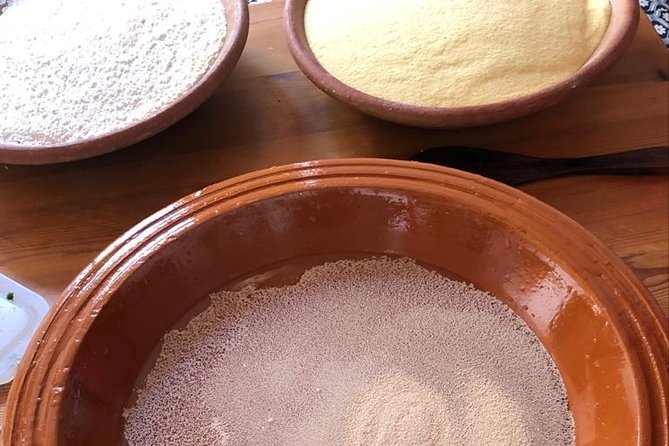
One reason people rate this so highly is the way the day runs like friends cooking together, not like a formal lecture. The key moments are physical tasks: roasting barley, grinding grain, baking bread in clay heat, and steaming couscous.
A practical plus, especially if you speak German: one review mentioned a German-speaking guide named Nicole guiding a wonderful day. Even if your day has a different language setup, the small-group format and the hands-on cooking method should still make it easier to follow.
This kind of class also helps you understand outcomes, not just ingredients. You learn what good dough should feel like, what steaming should accomplish, and what a properly seasoned tagine tastes like during the meal. That’s the difference between reading a recipe and actually understanding the method.
Weather, clothing, and comfort tips you’ll be glad you followed
Because lunch is served outside if possible and the experience is in rural countryside, plan like it’s an outdoor day. Bring or plan for sun protection. Wear comfortable clothes you do not mind getting warm in. You’ll be standing, moving, and likely spending time near cooking stations.
Also, the farm and cooking process are centered on heat and traditional tools. If you’re sensitive to smoke from open fire roasting, you might want to position yourself where the smell and smoke are manageable.
If you have dietary restrictions, I’d treat this as a day to communicate clearly when you confirm. The menu includes vegetables and goat meat, plus couscous and bread, so you’ll want to ensure it fits your needs before you go.
Should you book this Berber cooking class and rural souk day?
Book it if you want a food experience you can actually repeat, not just watch. The combination of souq shopping, barley-to-semolina work, clay oven bread, clay-pot couscous, and a goat meat tagine makes this one of those days where you learn the why behind the flavor.
Consider passing or switching plans if your schedule is tight and you hate outdoor time. The tour requires good weather, and the countryside setting means you are trading city convenience for real farm-and-market rhythm.
One more good reason to book: this is set up for small groups, so the day tends to feel personal. For me, that’s what turns a cooking class into a memory you keep, because you’re not just eating, you’re building skills.
If you’re in Essaouira and you want to spend your day with Berber cooking at its source, this is a strong choice.
Benches, Wheels and Looms
- Essaouira: Surf Lessons★ 4.9 · 412 reviews
- Kitesurfing Lessons in Essaouira Beach★ 5.0 · 206 reviews
- Group Kitesurfing lesson with a Local in Essaouira Morocco★ 5.0 · 175 reviews
- Surf Lesson with local surfer in Essaouira Morocco★ 5.0 · 166 reviews
Walks Built Around Buying
- Essaouira: Sqala du Port, Medina Ramparts & Fish Market Tour★ 4.7 · 212 reviews
- Essaouira: Sqala du Port, Citadel, Fish Market & Medina Tour★ 4.6 · 73 reviews
- The Sunday Market in Had Draa & Local Food Tasting.★ 5.0 · 33 reviews
Medinas, Souks and Kasbahs Elsewhere
- Essaouira: Sqala du Port, Medina Ramparts & Fish Market Tour★ 4.7 · 212 reviews
- Essaouira: Sqala du Port, Citadel, Fish Market & Medina Tour★ 4.6 · 73 reviews
- Essaouira Day Trip from Marrakech _ medina, old port★ 4.8 · 66 reviews
Added recently from around Essaouira
More Medina, Souk and Kasbah Walking Tours worth a look.
 ★ 4.7Marrakech: Bahia Palace, Saadian Tombs, Souk and Medina TourFrom $204,974 reviews
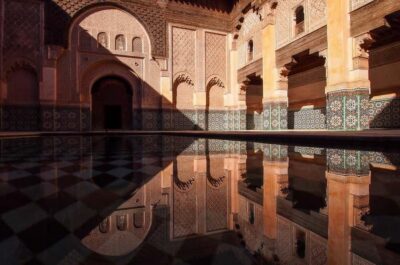 ★ 4.6Marrakech: Ben Youssef, Secret Garden, & Souks Walking TourFrom $202,802 reviews
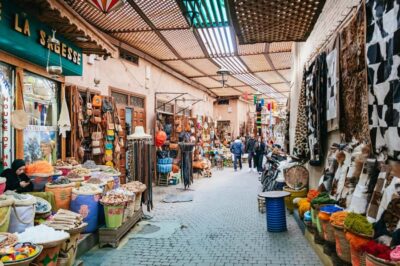 ★ 4.7Marrakech: Colorful Medina Souks Guided Walking TourFrom $202,470 reviews
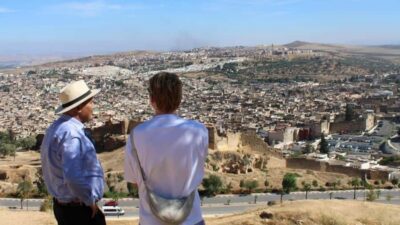 ★ 4.6Fez Medina Guided TourFrom $92,079 reviews
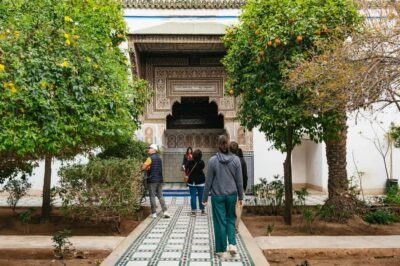 ★ 4.6Marrakech: Saadian Tombs & Bahia Palace, Medina Guided TourFrom $181,989 reviews
 ★ 4.6Fes: Museum, Al Attarine Madrasa & Tannery and Medina TourFrom $131,655 reviews
 ★ 3.8Marrakech Monuments & Souks 3-Hour TourFrom $231,540 reviews
 ★ 4.7Marrakech: Bahia Palace, Madrasa Ben Youssef and Medina TourFrom $191,347 reviews
Where else this one sits