
REVIEW · ESSAOUIRA
Essaouira: Moroccan pastry workshop
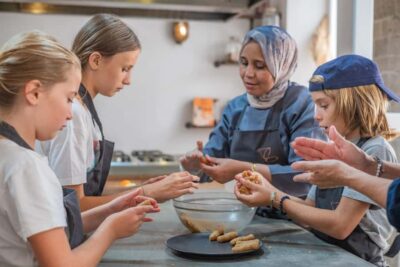
One afternoon in a Moroccan kitchen is usually noisy and chaotic, this one is different. You get hands-on practice making gazelle horns plus cakes with dried fruit and sesame seeds, and you also learn the mint tea ceremony while you taste what you made. I especially like the small-group size, it keeps the pace friendly and the coaching close. One possible drawback to plan for: you do not get hotel pickup, so you’ll need to reach the atelier on your own.
What I like most is the way the class blends cooking with a real Moroccan moment, the mint tea ceremony, and then turns it into tasting time. I also like that you leave with a box of pastries, not just notes, so the fun continues at home. If you’re visiting with kids, the workshop is not suitable for children under 8, so plan something else for younger travelers.
In This Review
- Key things to know before you go
- Inside l’Atelier Essaouira: a pastry class that feels personal
- The 3:30 pm schedule: what the 1 hour 45 minutes looks like
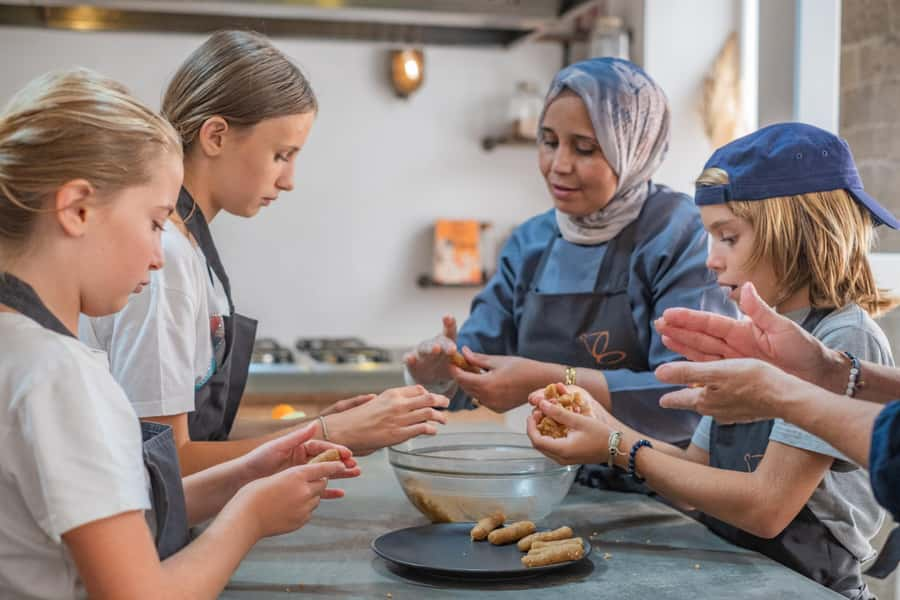
- Making gazelle horns
- Making cakes with dried fruit and sesame seeds
- Mint tea ceremony during tasting
- What you really learn: traditional methods, practical technique
- Tea, tasting, and why this part matters
- Languages and group size: how to make it work even if your French is rusty
- The value question: paying around $34 for two pastries and tea
- What you take home, and how to keep the pastries at their best
- Who should book this Moroccan pastry workshop
- Should you book l’Atelier Essaouira’s pastry workshop?
- FAQ
- What time does the workshop start?
- How long is the experience in total?
- What pastries will I make?
- Is the mint tea ceremony included?
- What language is the class taught in?
- How many people are in the group?
- Do I take anything home?
- Is hotel pickup included?
- Is this workshop suitable for children?
Key things to know before you go
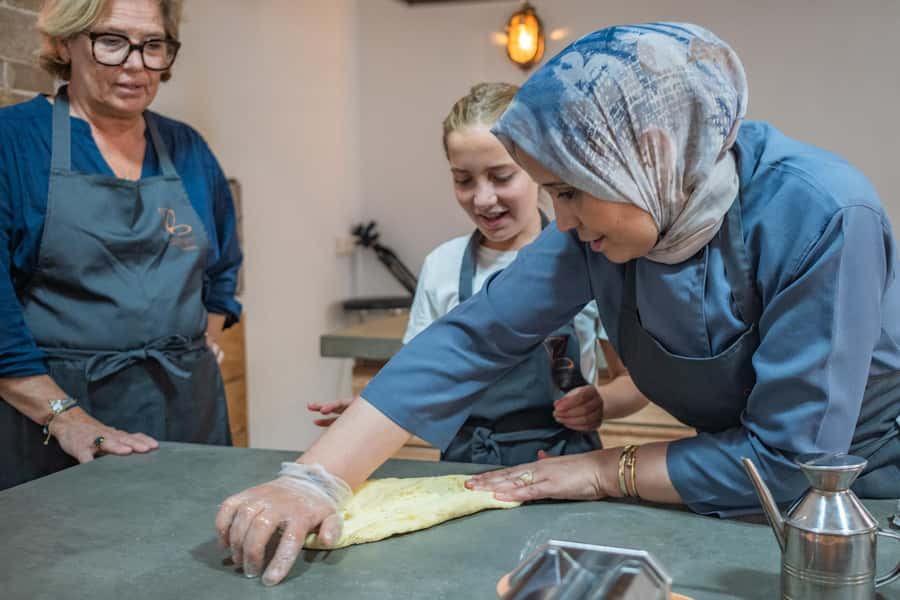
- Two pastries, not just watching: you make gazelle horns and cakes with dried fruit and sesame seeds.
- Mint tea ceremony included: you learn the ritual and taste alongside your creations.
- Small group of up to 9: more hands-on time and easier questions during the class.
- Recipes for later: you can find the recipes on the website after the workshop.
- Multi-language teaching: classes run in Arabic, French, and English depending on the group.
Inside l’Atelier Essaouira: a pastry class that feels personal
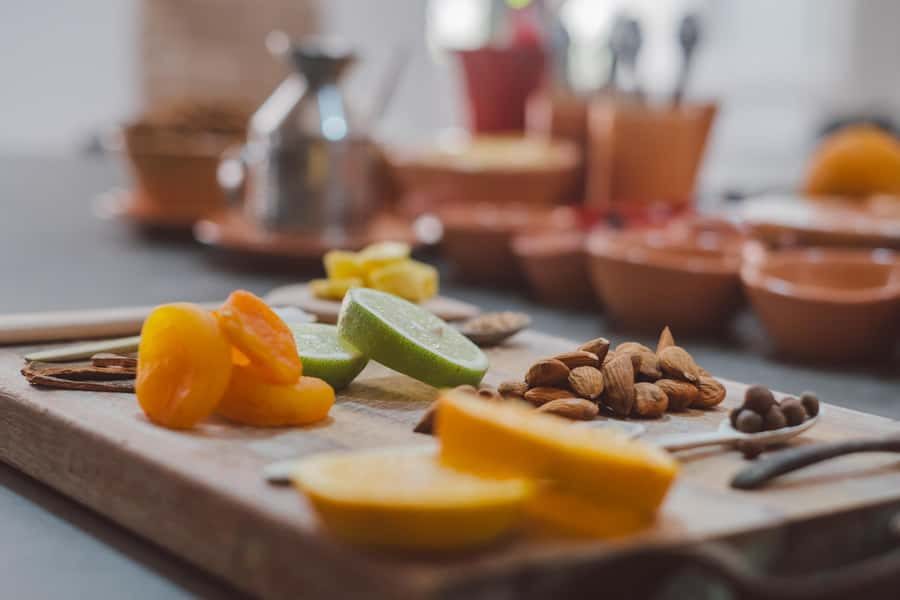
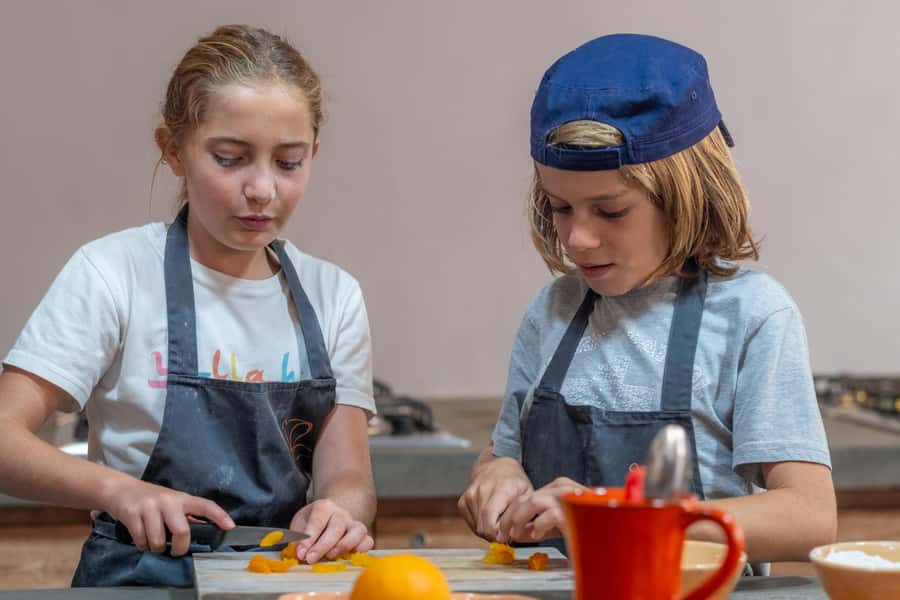
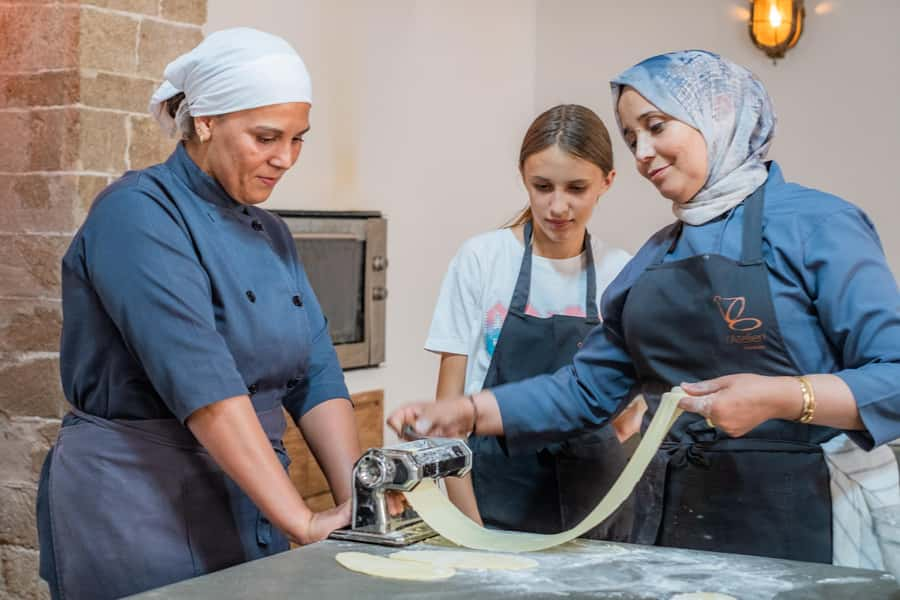
This workshop is built for people who want to do more than eat. From the start, the focus is on hands-on making using traditional methods, with fresh local ingredients. That matters because you can see what the dough should look like, how the shapes come together, and what changes when the mix is just right.
The setting is also part of the experience. People describe the atelier as pretty and the class as energetic, which is exactly what you want for a skill you’ve never practiced before. You’re not being lectured for two hours, you’re learning by doing, with help when you need it.
And because the group is capped at nine, you are unlikely to get lost in the crowd. You’ll get chances to ask, correct, and try again, which is how you end up with pastries you actually recognize as yours.
Other Essaouira runs worth reading
- Essaouira: Surf Lessons
★ 4.9 · 412 reviews - Essaouira Sand Dunes: Half Day Quad Bike Tour
★ 5.0 · 313 reviews - Essaouira Activities: Discover Essaouira by Quad
★ 5.0 · 274 reviews - From Essaouira: 1-Hour Horse Ride
★ 4.9 · 243 reviews
The 3:30 pm schedule: what the 1 hour 45 minutes looks like
The class starts at 3:30 pm and runs for about 1 hour and 45 minutes. The way it’s paced keeps you from feeling rushed, but it still moves steadily from learning to making to tasting.
Here’s the flow you can expect:
Making gazelle horns
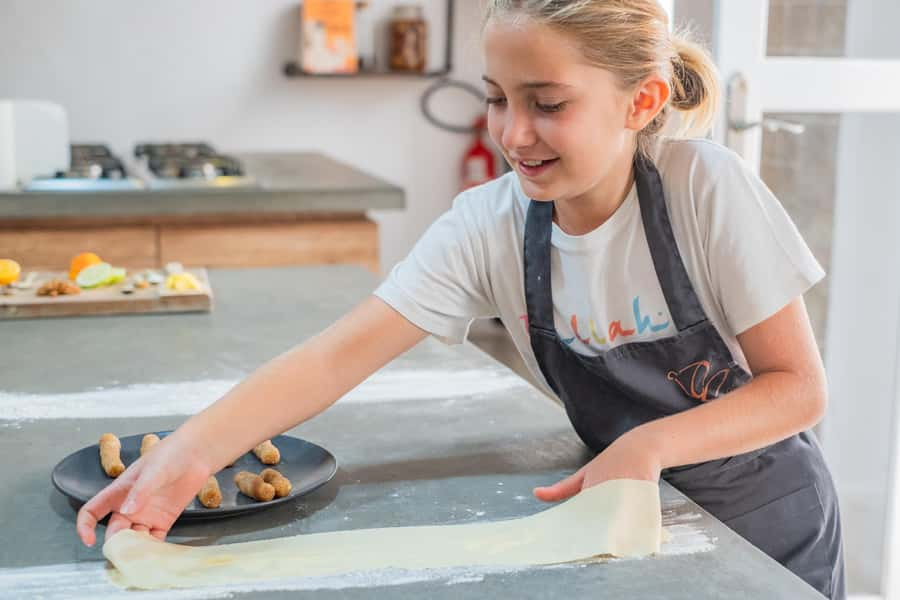
You’ll learn how to prepare gazelle horns as one of the two pastries. The session includes instruction from the professional team and time to work at your own place at the station. Since you’re also tasting later, you can pay attention now to what you’re doing, especially the steps that influence shape and texture.
Making cakes with dried fruit and sesame seeds
Next comes the second recipe: cakes with dried fruit and sesame seeds. This is useful because it gives you contrast in the skills you’re using. You’re not only repeating one technique, you’re learning how ingredients and texture work differently across two Moroccan sweets.
Mint tea ceremony during tasting
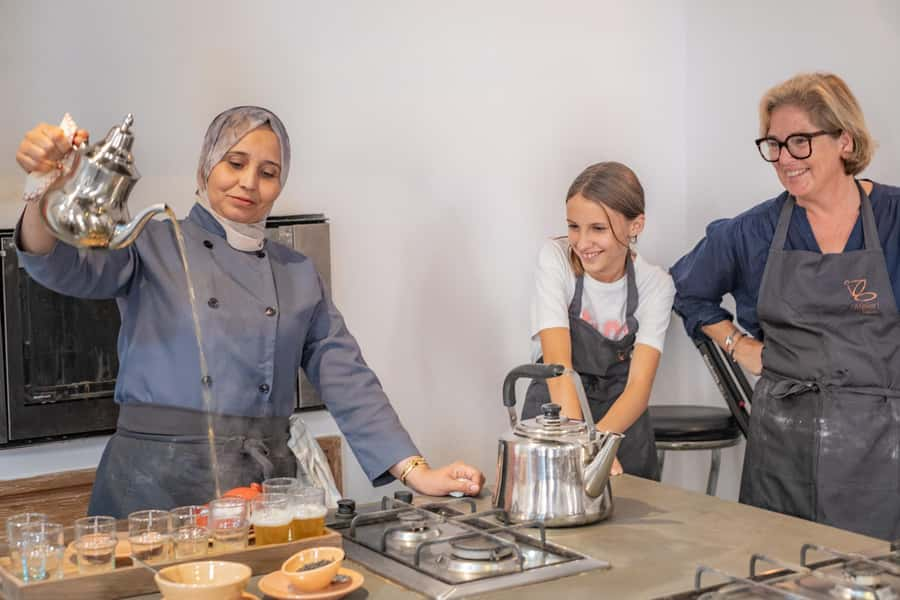
Then comes the part that makes the class feel like more than baking. You’ll be taught the mint tea ceremony, and you’ll do it while tasting what you baked. The timing is smart. Tea is not an afterthought here, it’s part of how you enjoy and understand what you made.
What you really learn: traditional methods, practical technique
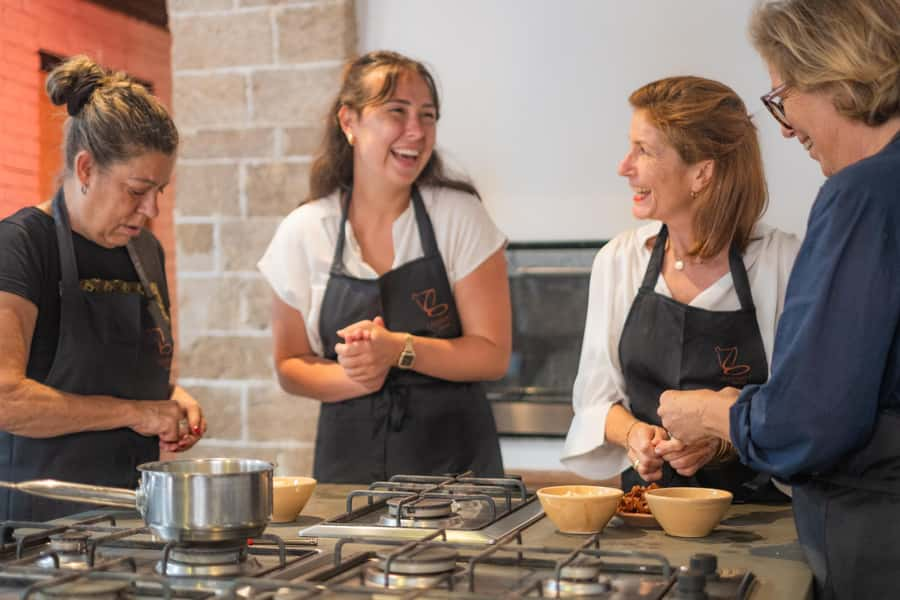
The workshop promises the art of Moroccan pastry making using traditional methods, and the class is set up so you can actually practice those methods. That means you’re not just collecting ingredients and following a vague recipe. You get feedback as you go, so you can adjust while the dough and mixtures are still workable.
What I find most valuable is learning the logic behind the process, even if you do not speak the same language as everyone in the room. The team works through the steps with instruction in Arabic, French, and/or English, so you can follow along and ask questions.
Also, you’re using fresh, local ingredients, which affects results. Even without deep kitchen science, you’ll notice how freshness and ingredient quality show up in smell, texture, and how the pastries hold up after baking.
Other hands on sessions to sit in



Tea, tasting, and why this part matters
A lot of cooking classes stop at the product. This one builds a full small ritual around tasting. You learn the mint tea ceremony and then share it while sampling your pastries.
Why it’s worth your attention: it turns the class into a Moroccan-style pause, not just a food checkpoint. It also gives you a chance to compare your own outcome to what you expected while it’s still fresh in your mind.
If you like experiences where you meet the culture through food habits, this is the part that delivers. You’re tasting with purpose, and you’re learning alongside the process rather than waiting until the end to enjoy anything.
Languages and group size: how to make it work even if your French is rusty
The workshop is taught in Arabic, French, and English. Some course content may be shown in its original language, but the important part is that instruction is available across those major languages. If you’re traveling and your French is imperfect, you’ll still have a clear path to understand what to do and why.
The group is also limited to 9 participants, which is a big deal for language access. Fewer people means instructors can catch confusion early, and you can ask questions without waiting for a long gap.
One more practical point: if you prefer calmer learning, the small size helps you focus. If you’re more social, this is also a good number because it’s easy to chat with people without the pressure of a large group tour.
The value question: paying around $34 for two pastries and tea
Pricing is listed at 300 dhs per person, which comes out to about $34. That might sound like a lot for a “class,” until you look at what you actually get:
- You make two types of Moroccan pastries
- You learn the mint tea ceremony
- You taste your own creations during the tea portion
- You leave with a box of cakes to keep eating at home
For me, the value comes from the hands-on output. You are not just learning theory or watching someone else cook. The take-home box is also real value because it extends the experience past the workshop and turns it into a payoff for the time you invested.
One small cost consideration: any extra consumption at the Atelier café is not included. If you plan to snack or drink beyond what’s part of the class, budget for it separately.
What you take home, and how to keep the pastries at their best
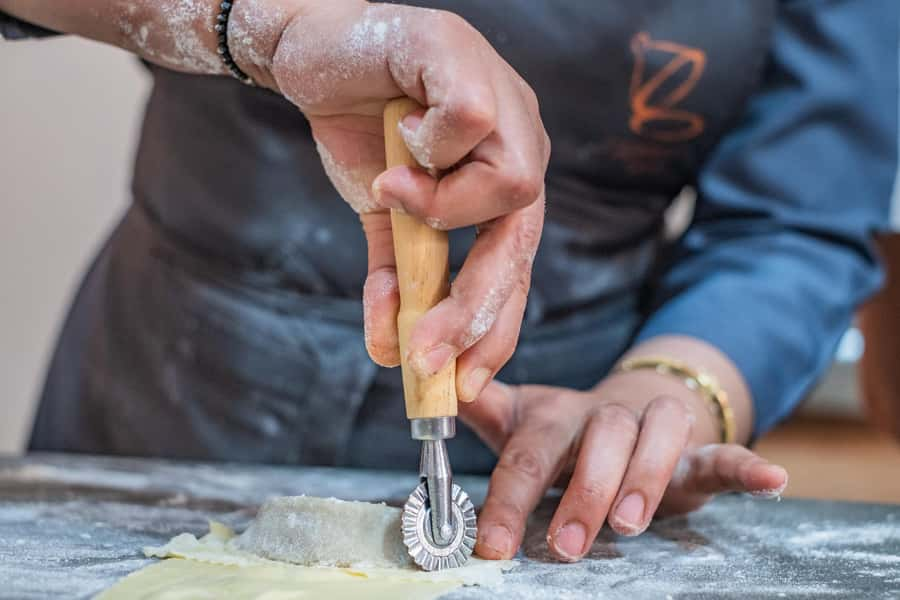
You finish the class with a box of cakes, meaning you can continue tasting later. That’s ideal if your schedule is full and you want a practical souvenir that also feels tasty.
Since the class ends with your pastries wrapped for home, plan your timing so you’re not stuck in the sun for too long right after. If you’re walking around after, keep the box secure and handle it like you would any baked goods you want to keep fresh.
Who should book this Moroccan pastry workshop
This is a strong fit if you:
- Want a hands-on cooking experience, not a passive food tour
- Like learning traditions through food, especially tea culture
- Prefer small groups where instructors can help you directly
- Enjoy activities you can repeat at home using the provided recipes
It’s not a great fit for families with small kids under 8. It also may not be ideal if you’re looking for a purely sightseeing-focused afternoon, because this is centered on baking and tea.
If you’re the kind of traveler who likes to take one real skill home, this workshop gives you something you can use again. You’ll have at least two distinct pastry techniques in your toolkit, plus the tea ritual as part of the memory.
Should you book l’Atelier Essaouira’s pastry workshop?
I’d book it if you want a focused, friendly class where you leave with edible proof of your work. The combination of two pastries, mint tea ceremony, and a take-home box makes it feel like more than a quick activity, and the small group size helps you learn without getting rushed.
Skip it if you can’t easily get to the atelier on your own, because pickup is not included. And if you’re traveling with children under 8, look for another option since this one isn’t suitable for them.
If your afternoon can handle a start at 3:30 pm, this is one of those experiences that makes Morocco feel close, not distant.
FAQ
What time does the workshop start?
The class starts at 3:30 p.m. and lasts about 1 hour and 45 minutes.
How long is the experience in total?
The experience duration is listed as about 2 hours, with the class itself running roughly 1 hour and 45 minutes.
What pastries will I make?
You will make two types of Moroccan pastries: gazelle horns and cakes with dried fruit and sesame seeds.
Is the mint tea ceremony included?
Yes. You will be taught the mint tea ceremony and share it while tasting the pastries you made.
What language is the class taught in?
The workshop is taught in Arabic, French, and English.
How many people are in the group?
It is a small group limited to 9 participants.
Do I take anything home?
Yes. At the end of the class, you leave with a box of cakes.
Is hotel pickup included?
No. Pick-up from your hotel is not included. Also, additional consumption at the Atelier café is not included in the price.
Is this workshop suitable for children?
It is not suitable for children under 8 years old.
Benches, Wheels and Looms
- Essaouira: Surf Lessons★ 4.9 · 412 reviews
- Kitesurfing Lessons in Essaouira Beach★ 5.0 · 206 reviews
- Group Kitesurfing lesson with a Local in Essaouira Morocco★ 5.0 · 175 reviews
- Surf Lesson with local surfer in Essaouira Morocco★ 5.0 · 166 reviews
Essaouira, Other Day Trips
- From Marrakech: Essaouira & Atlantic Coast Full-Day Trip★ 4.4 · 1,100 reviews
- Essaouira: Surf Lessons★ 4.9 · 412 reviews
- Essaouira Sand Dunes: Half Day Quad Bike Tour★ 5.0 · 313 reviews
- Essaouira Activities: Discover Essaouira by Quad★ 5.0 · 274 reviews
Added recently from around Essaouira


More Essaouira Day Trips worth a look.
 ★ 4.6From Marrakesh: Essaouira Full-Day TripFrom $208,137 reviews
 ★ 4.9From Marrakech: Small Group to Essaouira & Sekkala Day TripFrom $156,671 reviews
 ★ 4.3From Marrakech: Essaouira Day Tour with Optional ActivitiesFrom $215,125 reviews
 ★ 4.8From Marrakesh: Small Group To Essaouira With Opt ActivitiesFrom $102,633 reviews
 ★ 5.0From Marrakech To Essaouira Mogador Full Day Trip | Small-groupFrom $171,757 reviews
 ★ 4.7From Marrakech: Essaouira Day Trip with Beach ActivitiesFrom $111,620 reviews
 ★ 5.0Essaouira Day Trip from MarrakechFrom $241,480 reviews
 ★ 4.5Full Day Trip To Essaouira From MarrakechFrom $231,127 reviews
Where else this one sits