
REVIEW · MARRAKECH
Fez Medina Guided Tour
Fes can feel impossible, but a guide makes it workable. This tour threads you through the Fes Medina maze and into the city’s best-known stops, from leather work to the Medersa Bouaanania. I particularly like how the walk turns into a story trail, so the streets, courtyards, and crafts feel connected instead of random.
My second favorite part is the hands-on culture angle at artisan cooperatives. You’ll get to watch traditional making and shop craft with time to ask questions, then step away if you do not want to buy, which makes the whole experience feel more respectful and less salesy. The main consideration is that you are in for real walking and street time, plus entrance fees are not included, so plan on extra spending at certain sites.
In This Review
- Key Points I’d Prioritize
- Getting Oriented in the Fes Medina Maze
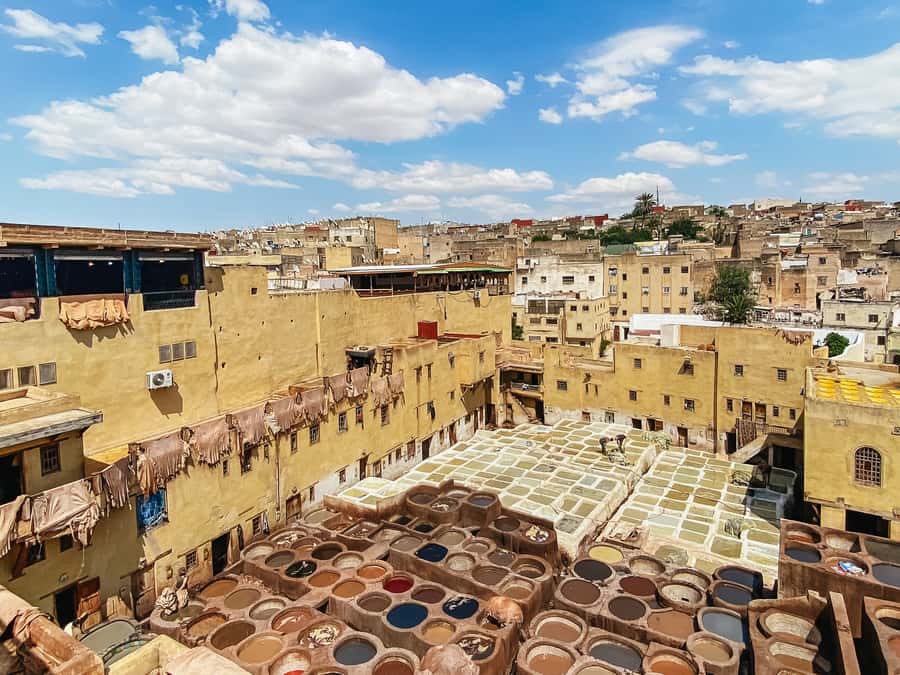
- Tanneries and Leather Work: What You Will Actually See
- Medersa Bouaanania and Mosque Courtyards That Set the Tone
- Nejjarine Museum and Fountain: Where the Tour Slows Down
- Batha Palace Museum: A Welcome Reset From the Streets
- Artisan Cooperatives: Craft, Observation, and the Art of Saying No
- Price and Time: Is $9 Good Value?
- Group Size, Languages, and How to Make It Work for You
- Who Should Book This Tour, and Who Might Prefer Something Else
- Should You Book the Fez Medina Guided Tour?
- FAQ
- How long is the Fez Medina Guided Tour?
- What are the main places included on the tour?
- Is hotel or riad pickup and drop-off included?
- Are entrance fees included in the tour price?
- What languages are the guides available in?
- What is the usual start time?
- Is cancellation free?
Key Points I’d Prioritize
- A guided route through the Medina maze so you do not waste hours just finding your way
- Tanneries and leather work for a clear look at a defining Fes craft
- Bouaanania Medersa and mosque areas for standout architecture and cultural context
- Nejjarine Museum and Fountain stops that slow the pace and add visual variety
- Artisan cooperatives instead of hard-sell shops, with polite “no” supported
- Professional guides with strong local ties, including names like Houda, Mousthapa, Jamal, and Kamal
Getting Oriented in the Fes Medina Maze
You start with pickup from your hotel or riad in Fes if you choose that option, then you meet your guide and get routed into the Medina. Tours usually begin around 09:00 AM, but the timing can shift to later in the morning or the afternoon, so check your specific start time when you book.
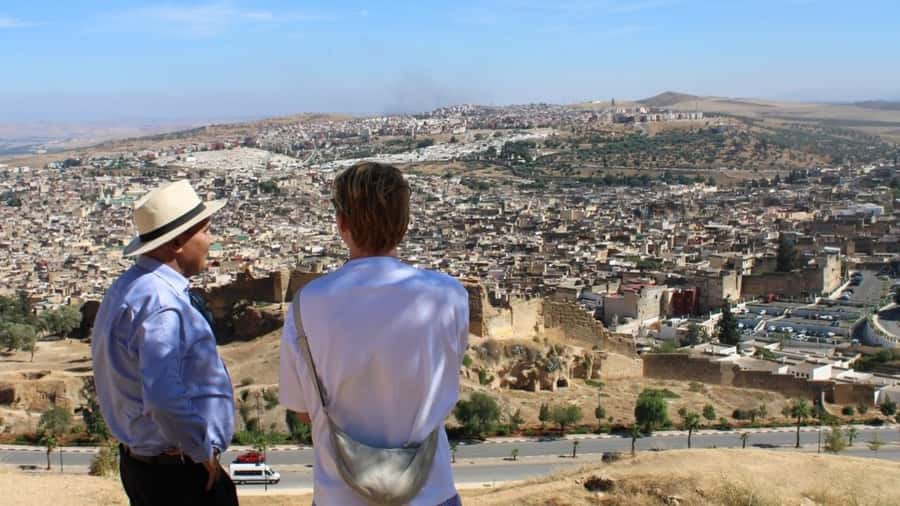
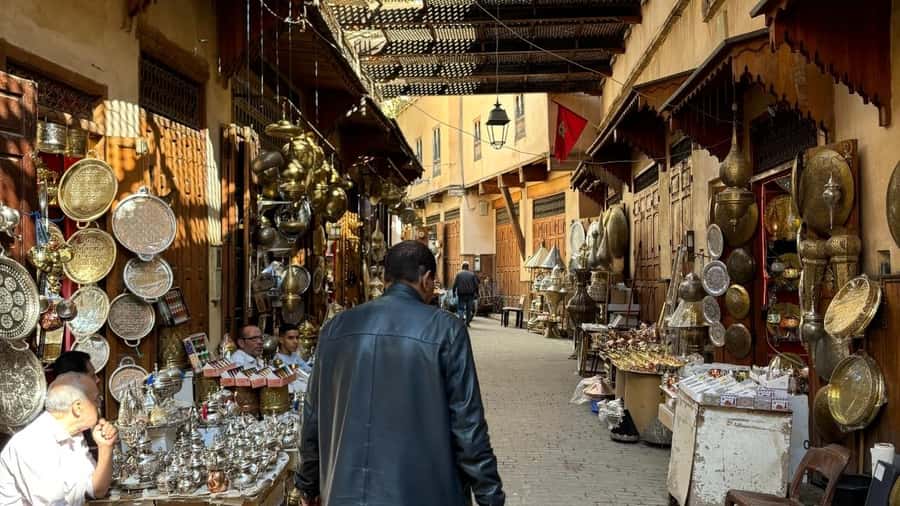
Here is the thing about Fes: the Medina is not designed for easy navigation. You will turn corners you cannot predict, climb narrow lanes that look identical, and suddenly end up in a courtyard that feels like it belongs to another world. With a guide, the trick is that you learn the logic of the place, not just the address. That means you spend your energy looking at what matters instead of constantly re-checking maps that struggle in this kind of street web.
Bring practical basics. Carry small change (dirhams), because some attractions, public toilets, and little snacks can require cash. Also pack tissues or hand sanitizer for restrooms that may not be well stocked, plus sunscreen and a reusable water bottle if the weather turns sunny. If you are prone to getting irritated by crowds or noise, give yourself permission to slow down and follow the rhythm your guide sets.
Other medina and souk walks around Fes
- Fez Medina Guided Tour
★ 4.6 · 2,079 reviews - Fes: Museum, Al Attarine Madrasa & Tannery and Medina Tour
★ 4.6 · 1,655 reviews - Fes: Royal Palace, Madrasa, Tannery & Souks and Medina Tour
★ 4.5 · 508 reviews - Fez: Guided Walking Tour of the Historic Medina
★ 5.0 · 359 reviews
Tanneries and Leather Work: What You Will Actually See
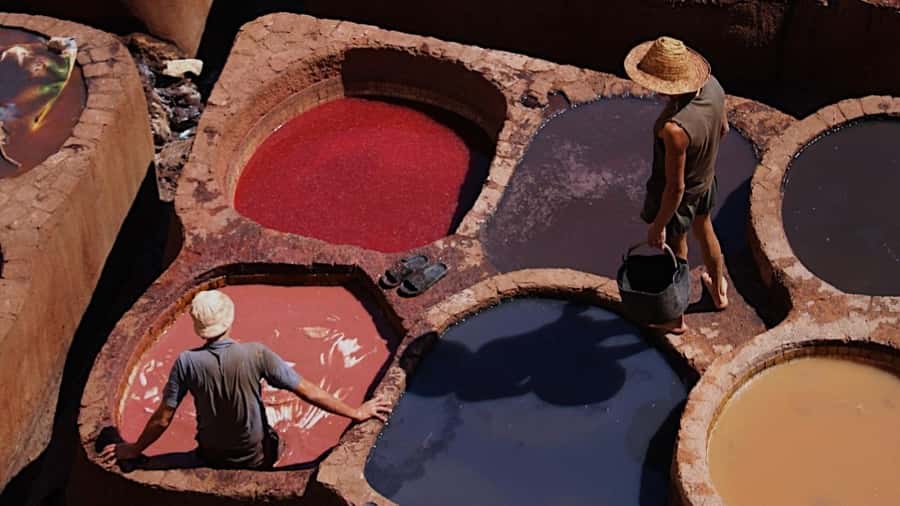
One of the headline stops is the tanneries, where you can witness leather work as it is practiced in Fes. Even if you have seen leather production elsewhere, the Medina setting changes your perspective. You are not just looking at a process, you are watching a craft tied directly to the city’s identity, right inside the fabric of daily life.
What should you focus on during the tannery portion? Ask your guide to point out what each step is trying to accomplish, then compare that to what you typically see in modern supply chains. Guides like Jamal, Kamal, and Mousthapa are known for linking craft to culture, so you get more than a quick photo stop.
A practical note: this part can feel intense because it is active, visual, and very real. Wear comfortable shoes and expect uneven or busy surfaces. You do not need to buy anything to enjoy it. If you want to move quickly, say so early. If you want to linger to understand details, your guide can usually adjust within reason.
Medersa Bouaanania and Mosque Courtyards That Set the Tone
The tour hits several big religious and architectural landmarks, including the Quaraouiyine Mosque and the Andalusian Mosque. These are foundational to understanding how Fes became a major center of learning and faith. The Quaraouiyine Mosque dates back to 859, founded by Fatima el Fihri, and the Andalusian Mosque dates to 860.
Important reality check: non-Muslims are not permitted to enter these mosques. That does not mean the stop is pointless. You can still appreciate the scale, the setting, and the way the surrounding streets funnel you toward the building’s presence. When you stand in the entry areas or adjacent viewpoints, your guide can explain what makes the architecture meaningful and how the city’s layout supports religious and academic life.
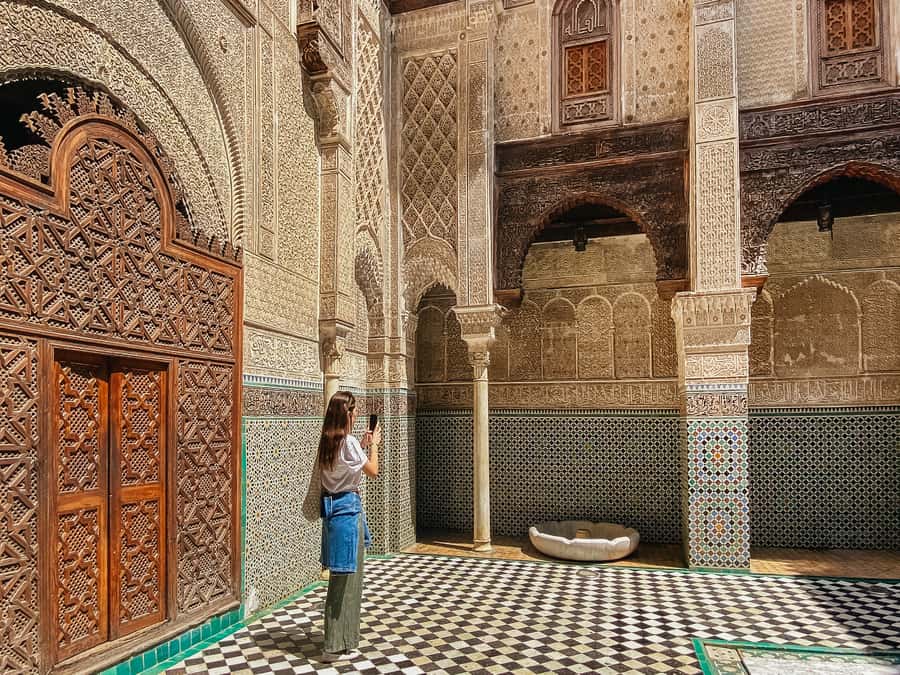
Next up is Bouaanania Medersa, from the 13th century. A medersa is not just a pretty building. It is a window into how education was designed, housed, and respected. You will likely notice patterns, materials, and a careful sense of form that feels intentional at every turn.
My advice: treat these stops as “culture anchors.” Instead of rushing from one photo to another, listen for how each building relates to the next. Guides such as Mustafa, Houda, and Mohammed are often praised for turning these structures into understandable stories, so you leave feeling like you grasp more than the basics.
Nejjarine Museum and Fountain: Where the Tour Slows Down
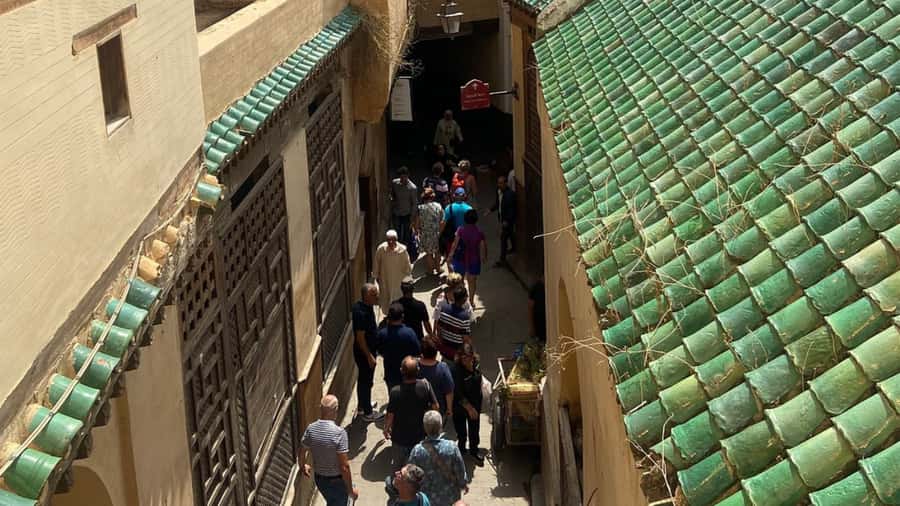
Not every highlight is a massive monument. Some of the best moments happen when you pause and let your eyes reset, and that is exactly what stops like the Nejjarine Fountain and the Nejjarine Museum of Wooden Arts and Crafts can do.
The fountain stop gives you a break from the tight-shop energy of the main lanes. It also acts like a visual waypoint, helping you mentally map where you are in the Medina. Your guide can connect it back to the surrounding craft life, since Fes often treats water access, workspaces, and community spaces as part of the same system.
Then you get the Nejjarine Museum, focused on wooden arts and crafts. This is a smart contrast to the tanneries and to the more visual crafts you might see in street markets. Woodwork is slower and more precise, and the museum setting helps you spot details you could miss if you were moving too quickly.
If you like museums but hate feeling rushed, this section tends to work well. Still, remember entrance fees are not included, so you may need to pay separately depending on the exact sites you enter.
Batha Palace Museum: A Welcome Reset From the Streets
After hours of narrow lanes, Fes gives you its version of a breather at the Batha Palace. This palace is now a museum of arts and traditions, which means it functions like a cultural pause button. You get a change of pace, open space, and a more reflective way to take in what you have seen so far.
Why does this matter for your enjoyment? Because a Medina tour can become a blur if you only collect sights. The Batha Palace museum helps you reorganize what you learned, turning visual impressions into something closer to understanding. You can see crafts and traditions not just as products, but as ideas passed through time.
One more plus: this kind of museum stop can give your legs a rest. You still keep moving, but you are not constantly navigating tight lanes and negotiating crowds.
Artisan Cooperatives: Craft, Observation, and the Art of Saying No
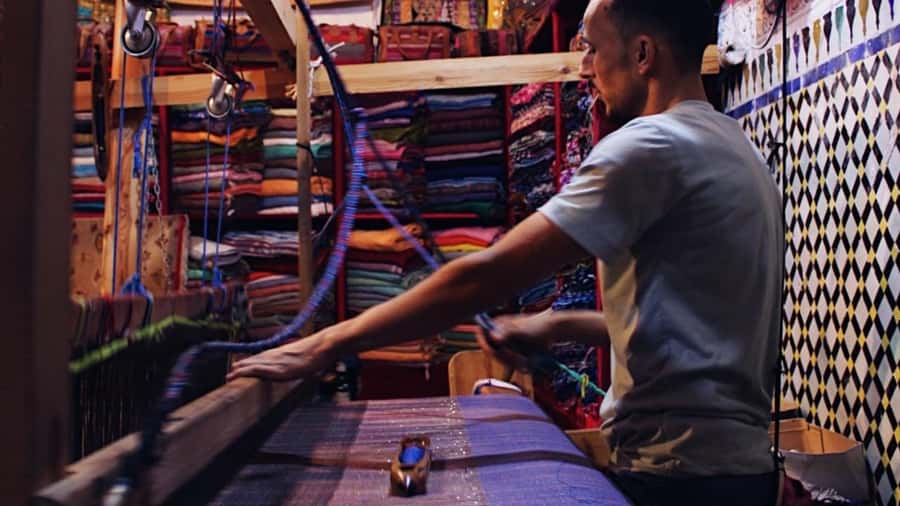
A core part of this tour is visits to artisan cooperatives where traditional crafts are showcased. Examples can include carpets, leather, or pottery, and the point is to show you how traditional work is done. The big win is that these are described as artisan cooperatives, not purely commercial shops. That means the tone should be more about demonstration and education than instant selling.
You still might be brought through spaces where prices are discussed. That is normal in Morocco, and it can help to know the rules of the road. Bargaining is expected in markets and shops, so keep it polite. Smile, be respectful, and do not feel pressured into buying. If someone asks repeatedly, you can politely decline and move on, and that is part of the process.
Guides with strong local connections often help here. People often praise guides like Kamal and Jamal for walking a careful line: they introduce you to the craft, explain what you are looking at, and keep it from turning into an uncomfortable sales pitch. That is the difference between watching a demonstration and getting trapped in a negotiation.
My practical suggestion: set your own goal for these stops. For example, decide you will only ask questions about one craft technique, or you will buy nothing even if you see something you like. When you go in with a plan, the cooperative visits feel easier and more rewarding.
More Fes medina walks, tanneries and all
Price and Time: Is $9 Good Value?
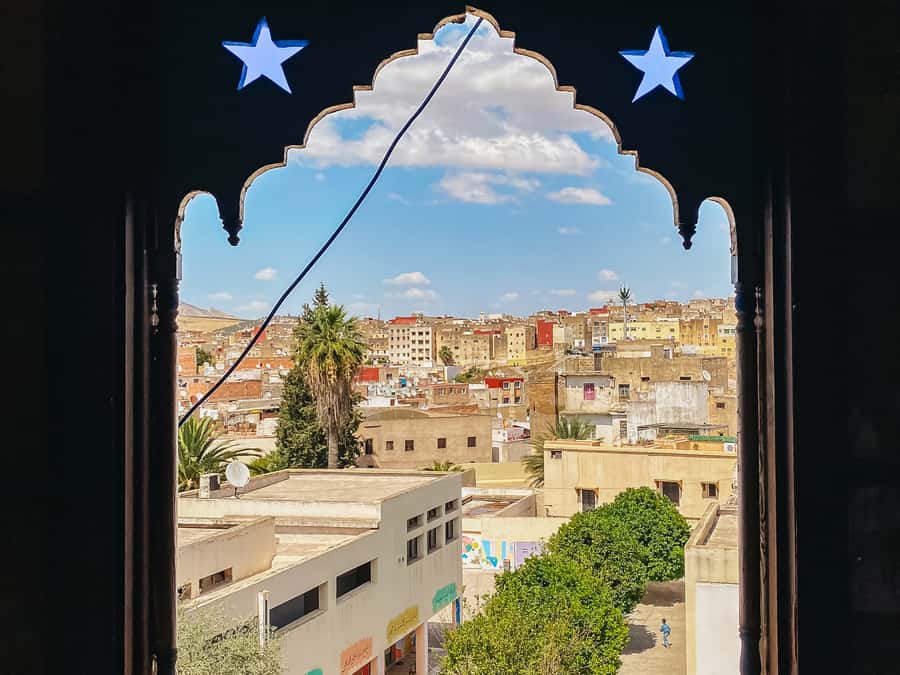
At around $9 per person, you are paying for one of the best bargains in sightseeing, as long as you understand what you are actually getting. The tour includes a professional guide and typically pickup and drop-off if you select it. That is a big deal in Fes because navigating the Medina without help can cost you time, energy, and patience.
What is not included matters too. Entrance fees are not included, and food and drinks are not included. That means the total cost is not just the $9. Still, even with entrance fees, the cost can stay reasonable because the biggest expense is usually the guide and the guided access to the right places in the right order.
Duration is listed as 210 minutes to 6 hours, which usually translates to a full morning or a major portion of a day. That time is not just “walking for walking’s sake.” It is time spent learning the city’s structure: learning where the medersas and mosques fit, how the museum stops reset your senses, and how the craft spaces connect back to everyday Fes life.
Group Size, Languages, and How to Make It Work for You
This tour can run as private or in a small group, which is a big quality lever. Small groups mean you spend more time asking questions and less time stuck behind someone who moves slowly or wants to stop constantly.
Language options are also a big advantage. The tour guide can be Spanish, English, French, Italian, or Arabic. If you are choosing between languages, pick the one where you can ask follow-up questions comfortably. Even a simple question like what a building functioned as, or how a craft step works, can turn a good tour into a standout one.
One more practical tip: the meeting point can vary depending on the option booked. When you confirm your booking, make sure you know exactly where to stand and how you will identify your guide. In the Medina, “we’ll meet near the main square” can quickly turn into confusion.
If you tend to get overwhelmed by city noise, pick a tour start time that matches your energy level. Morning starts around 09:00 AM often feel like less of a scramble later in the day.
Who Should Book This Tour, and Who Might Prefer Something Else
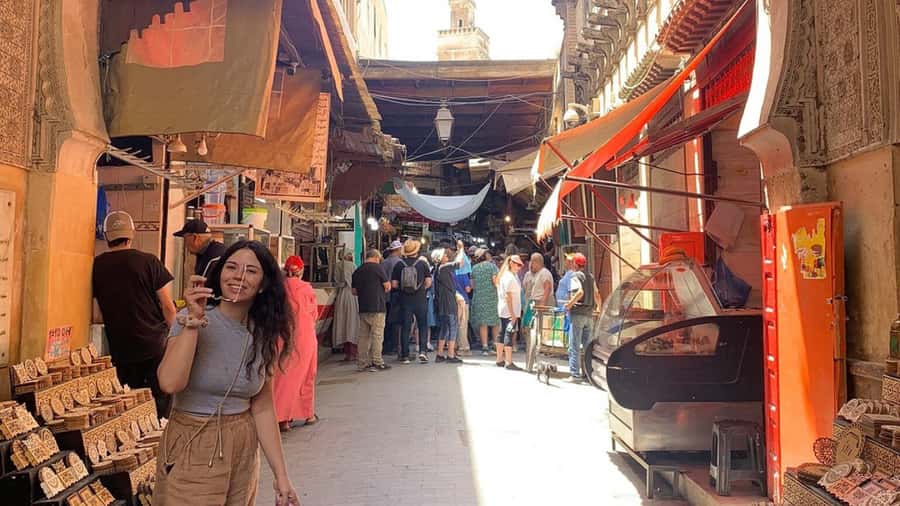
Book this tour if you want a fast but meaningful first look at Fes and you do not want to spend your day stressed about getting lost. It is especially helpful if you are short on time and want the major anchors, like the medersas and museum stops, plus the tanneries and craft co-ops.
I would also recommend it if you care about context. What makes Fes special is not just the architecture, it is how all these elements connect: learning spaces, religious spaces, and working spaces. Guides such as Houda, Mousthapa, Jamal, and Kamal are repeatedly praised for turning the maze into a readable story, and that matters when you are walking among dense local life.
Skip this tour if you dislike guided shopping stops entirely, even cooperative ones. You can observe and decline, but you will still be routed through craft-focused locations. Also skip it if long walking in tight streets is a no for your body that day.
Should You Book the Fez Medina Guided Tour?
If you want the smart way to experience the Medina, I think this is a strong choice. For the price, you get real guidance, access to key sights like Bouaanania Medersa, and craft-focused stops that help you understand what you are seeing instead of just checking boxes.
My call: book it if you want structure in a city that can otherwise swallow your time. If you love wandering solo and already feel confident finding your way, you could go without a guide. But if you are entering Fes for the first time, paying for a guide usually buys you something more valuable than savings: time, confidence, and a clearer sense of what the city is actually saying.
FAQ
How long is the Fez Medina Guided Tour?
The duration is listed as 210 minutes up to 6 hours.
What are the main places included on the tour?
The tour includes the Medina streets, tanneries, Medersa Bouaanania, the Nejjarine Museum of Wooden Arts and Crafts, the Nejjarine Fountain, and the Batha Palace (now a museum of arts and traditions). It also includes artisan cooperatives for traditional crafts.
Is hotel or riad pickup and drop-off included?
Pickup and drop-off are included if you select the pickup option.
Are entrance fees included in the tour price?
No. Entrance fees are not included.
What languages are the guides available in?
The guide can speak Spanish, English, French, Italian, and Arabic.
What is the usual start time?
Tours usually begin at 09:00 AM, though starting later in the morning or afternoon is possible depending on availability.
Is cancellation free?
Yes, free cancellation is offered up to 24 hours in advance for a full refund.
Fes Medina, More Walks
- Fes: Museum, Al Attarine Madrasa & Tannery and Medina Tour★ 4.6 · 1,655 reviews
- Fes: Royal Palace, Madrasa, Tannery & Souks and Medina Tour★ 4.5 · 508 reviews
- Fez Medina: Local Cultural Highlights Guided Tour★ 4.7 · 204 reviews
- Private Tour –In Old Medina of Fez with a Professional Guide★ 4.7 · 146 reviews
Medinas, Souks and Kasbahs Elsewhere
- Fes: Museum, Al Attarine Madrasa & Tannery and Medina Tour★ 4.6 · 1,655 reviews
- Explore Fes: Unforgettable Guided Walking Tour of the Medina★ 4.7 · 1,339 reviews
- Fes: Royal Palace, Madrasa, Tannery & Souks and Medina Tour★ 4.5 · 508 reviews
- Fez: Guided Walking Tour of the Historic Medina★ 5.0 · 359 reviews
Added recently from around Fes

More Medina, Souk and Kasbah Walking Tours worth a look.
 ★ 4.7Marrakech: Bahia Palace, Saadian Tombs, Souk and Medina TourFrom $204,974 reviews
 ★ 4.6Marrakech: Ben Youssef, Secret Garden, & Souks Walking TourFrom $202,802 reviews
 ★ 4.7Marrakech: Colorful Medina Souks Guided Walking TourFrom $202,470 reviews
 ★ 4.6Marrakech: Saadian Tombs & Bahia Palace, Medina Guided TourFrom $181,989 reviews
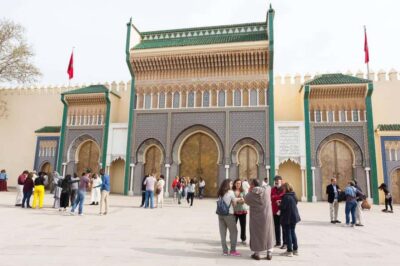 ★ 4.6Fes: Museum, Al Attarine Madrasa & Tannery and Medina TourFrom $131,655 reviews
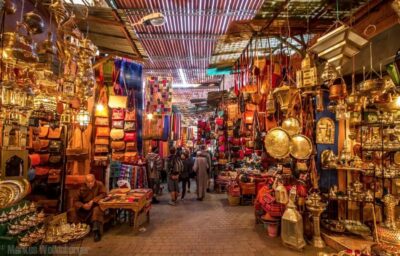 ★ 3.8Marrakech Monuments & Souks 3-Hour TourFrom $231,540 reviews
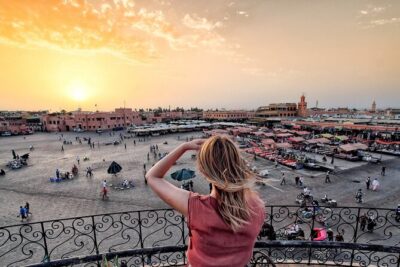 ★ 4.7Marrakech: Bahia Palace, Madrasa Ben Youssef and Medina TourFrom $191,347 reviews
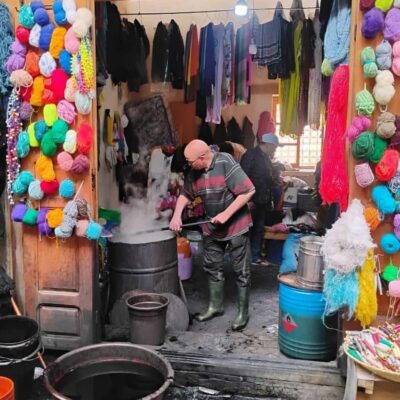 ★ 4.7Explore Fes: Unforgettable Guided Walking Tour of the MedinaFrom $151,339 reviews
Where else this one sits