
REVIEW · MOROCCO
Moroccan Cooking Class: Farm-to-Table Tagine
A farm cooking class outside Marrakech beats the usual city routine. You’ll make a Moroccan tagine using fresh, organic ingredients, then eat it with the people around you.
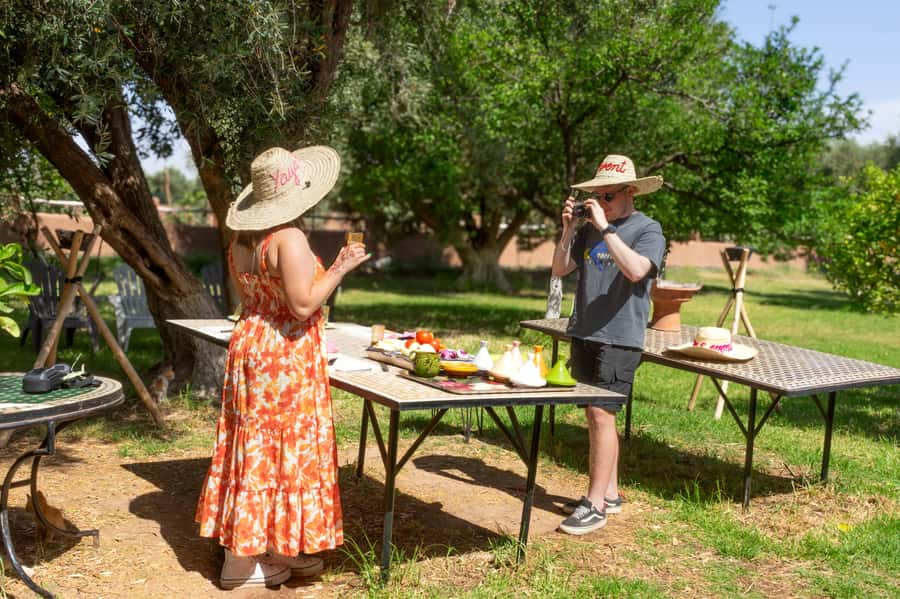
What makes it memorable is the rhythm: mint tea under the olive trees first, farm walk next, then hands-on cooking and a shared lunch you can actually taste.
I especially like the farm-to-table focus, where you’re not just learning recipes, you’re seeing where the produce grows. I also like the hands-on method, from choosing vegetables to grinding and layering spices until the tagine is simmering.
One consideration: it runs about 3 hours and you’ll be outdoors, so hot sun and walking on farm paths are part of the deal.
In This Review
- Key highlights to look for
- Why this tagine class feels different from the usual Marrakech activity
- How the 3-hour rhythm works, from tea to lunch
- 1) Pickup from Hotel Ali, then the trip to the farm
- 2) Welcome and mint tea under the olive trees
- 3) Ingredient intro, spice talk, and prep work
- 4) Cooking time, with the tagine simmering over heat
- 5) Farm walk during cooking
- 6) Taste stops before the main meal
- 7) Lunch at the communal table
- What you’ll cook: classic tagine method, practical skills you can use later
- Building the base, choosing vegetables, and layering spices
- Simmering and timing
- Vegetarian options and easy adjustments
- The farm walk and the animal encounters that make it feel real
- You’ll see seasonal produce up close
- You might meet horses and other animals
- Bread, olive oil, and side dishes: the easy taste lessons people remember
- Homemade bread and olive oil teach you balance
- Side dishes keep the meal from feeling repetitive
- Price and value: is $94 worth it for 3 hours?
- Who this tagine class is best for
- Great fit if you:
- Not a great fit if:
- Practical tips so your day runs smoothly
- What to bring
- How to show up
- What not to do
- What to ask your instructor before you start
- Should you book Moroccan Cooking Class: Farm-to-Table Tagine?
Key highlights to look for
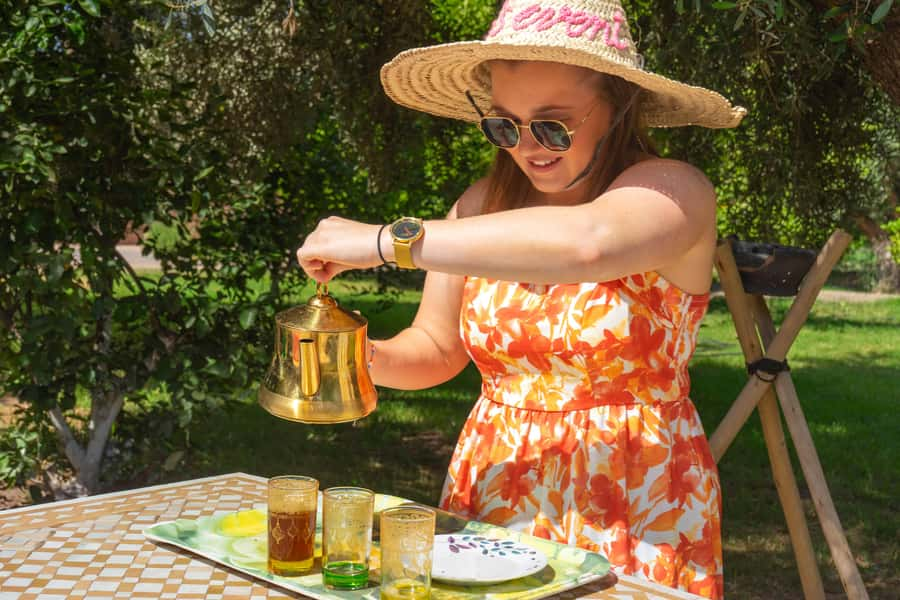
- Mint tea under the olive trees to start your day the Moroccan way
- Hands-on tagine cooking from scratch, not just watching
- Fresh, organic ingredients sourced from the farm’s seasonal produce
- A farm walk to see gardens and meet animals such as horses and donkeys (and sometimes peacocks)
- Lunch at a communal table with bread, olive oil, salads, olives, and fruit
Why this tagine class feels different from the usual Marrakech activity
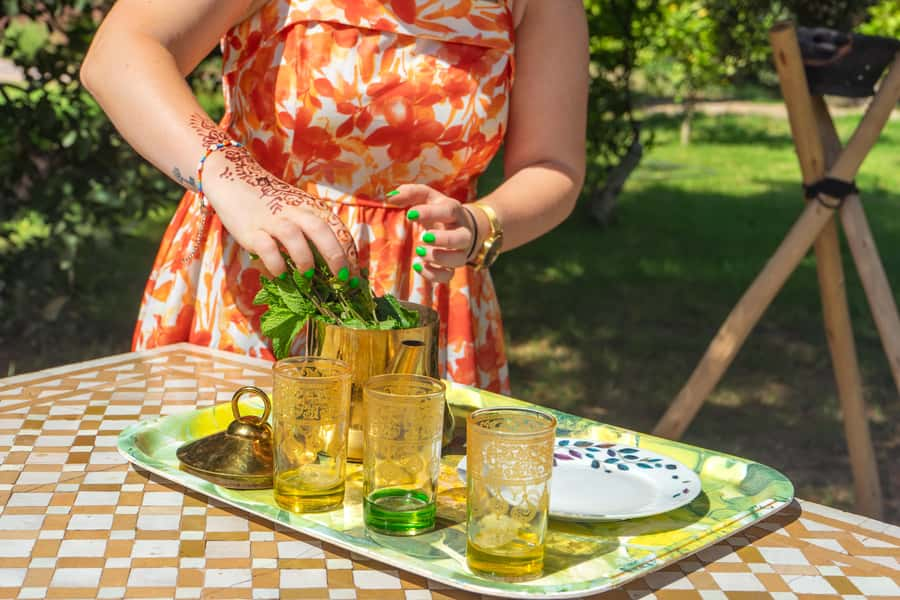
If you’re in Marrakech and doing all the usual things, it’s easy to burn out fast. This class gives you a clean break from the city. You get car transport to a working countryside farm outside Marrakech, then the day stays simple and calm: tea, cooking, and lunch.
The value is not just that the food is good. It’s that you learn the logic behind Moroccan flavors. Tagine is about timing and layering. It’s about what you do before the lid goes on. And it’s also about ingredients that taste like themselves, because they’re fresh and grown locally rather than pulled from a shelf.
The farm setting also helps you remember what you learned. When you’re standing near olive trees or looking at seasonal produce, spices make more sense. You start thinking about food like a system, not a recipe card.
Other hands on sessions to sit in
- Marrakech: Traditional Moroccan Cooking Class & Market Visit
★ 4.8 · 1,861 reviews - Marrakesh: Moroccan Dishes Cooking Class with a Local Chef
★ 5.0 · 1,615 reviews - Marrakech: Pottery Workshop with Moroccan Tea
★ 4.8 · 756 reviews - Marrakech: Moroccan Cooking Class with a Local Family
★ 4.9 · 668 reviews
How the 3-hour rhythm works, from tea to lunch
The class is designed to move at an easy pace, with you actively involved for most of it. Here’s the flow you can expect, and what each part means for you.
1) Pickup from Hotel Ali, then the trip to the farm
You meet at the front of Hotel Ali. Transportation to and from the farm is included, so you’re not juggling taxis or timing. In practice, pickup around a busy hotel area can be chaotic, so plan to arrive early. The activity asks you to be there about 15 minutes before the start time.
One small reality check from experience in the area: mobile reception can be spotty near meeting points, so if you’re relying on your phone, make sure you have your plans ready ahead of time.
2) Welcome and mint tea under the olive trees
Your start is a warm welcome plus Moroccan mint tea in a calm outdoor setting, typically among olive trees. This isn’t just a nice touch. It slows the day down and makes the meal you’re about to cook feel like part of farm life, not a performance.
If you like structure, this is where it begins. The instructor sets the mood, then moves into ingredients and techniques in a way that’s easy to follow in English or French.
3) Ingredient intro, spice talk, and prep work
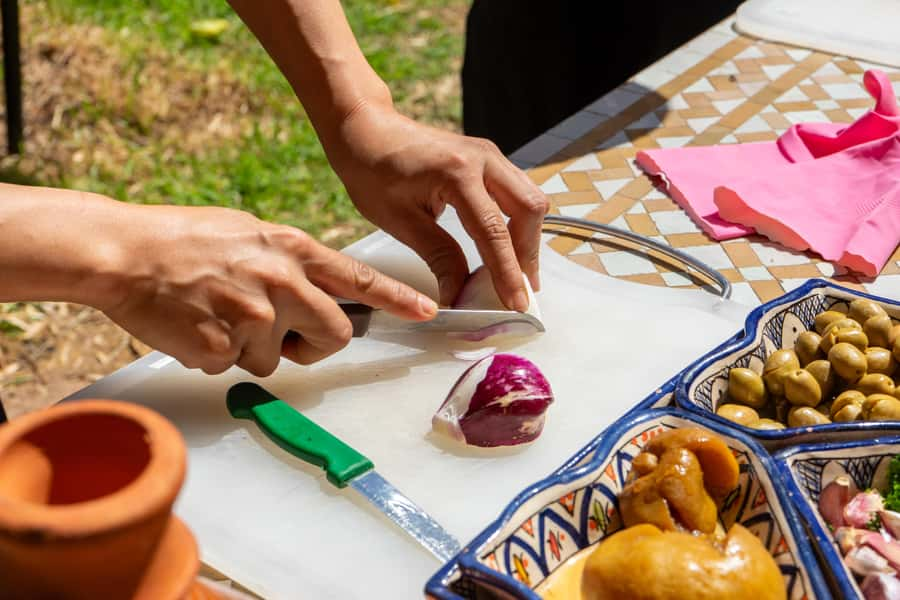
Before you cook, you get an introduction to what you’ll use and why. You’ll choose vegetables, you’ll work with spices, and you’ll learn the basic approach to building flavor layers.
This is the part that makes you leave with confidence. If you’ve ever made a tagine at home and felt it tasted flat, it’s usually because the spice and ingredient steps were rushed. Here, you’re taught the step-by-step flow.
4) Cooking time, with the tagine simmering over heat
Once your tagine is assembled, it simmers while you get a break to explore. Some groups cook a single tagine, while others may prepare two (for example, chicken and vegetable) depending on the group setup. Either way, the key is that you’re making decisions and doing the work yourself, not just adding ingredients at the end.
If you’re curious about flavor, watch the timing. The lesson is how heat turns dry spices fragrant and how the vegetables soften without losing character.
More classes that come with a kitchen


5) Farm walk during cooking
While the food cooks, you take a walk around the farm. This is where the farm-to-table theme becomes real. You’ll see organic gardens and seasonal produce, and you may also meet animals.
From what I’ve seen in similar farm classes in the area, the farm tour often includes sights like horses and donkeys, and in some cases you may notice other birds or animals on the grounds. The point is not a checklist. It’s that you get context for what ends up in your dish.
6) Taste stops before the main meal
You’ll enjoy a tasting of homemade bread plus olive oil and local side dishes. This works like a warm-up. You taste what the farm and kitchen are best at, then you sit down and eat what you cooked.
The bread and olive oil pairing is important. It’s a reminder that Moroccan flavor is not only about the tagine pot. It’s also about simple staples done with care.
7) Lunch at the communal table
Finally, you all gather to eat the tagine you prepared. Lunch includes fresh salads, olives, and fruit for dessert. This is where the experience locks in.
Even if you’re not a confident cook, you’ll probably feel proud here. You made it, you smell it simmering, and you eat it in a shared setting where the food is clearly the center of attention.
What you’ll cook: classic tagine method, practical skills you can use later
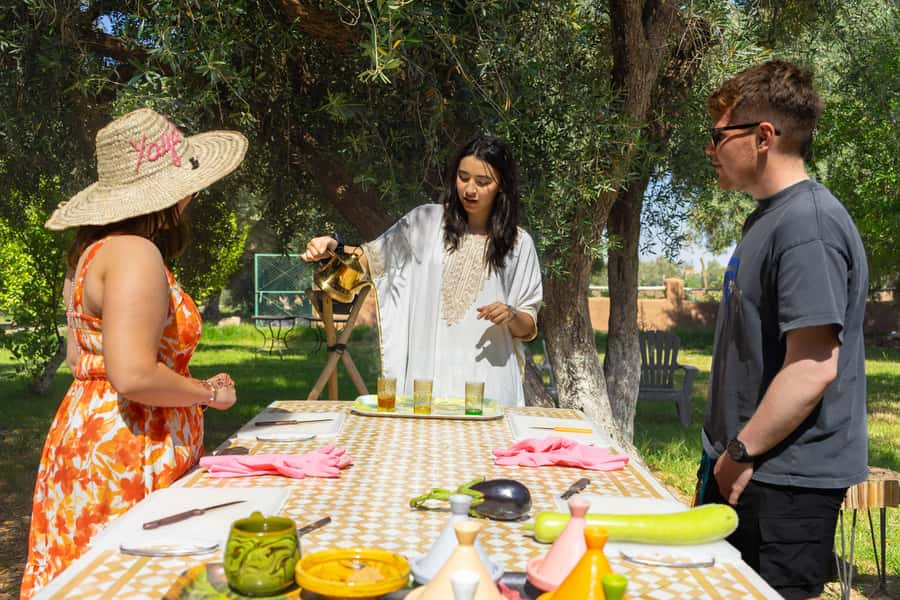
A tagine class can become either a vague food tour or a real cooking lesson. This one aims for the second option, because the structure forces you to participate.
Building the base, choosing vegetables, and layering spices
In many Moroccan kitchens, the flavor starts before the pot is sealed. You’ll pick vegetables and work with spices in a way that teaches you to think in layers.
You’re learning the logic behind Moroccan seasoning, including how spices behave when they get warmed and mixed. That matters because at home, people often dump spices in at the wrong time, then the food tastes weaker than it should.
Simmering and timing
Your tagine simmers over heat until ready. Simmer time is not optional. That’s where vegetables become tender, and where flavors blend.
If you want an at-home takeaway, focus on this: when you re-create it later, you need time, not just ingredients.
Vegetarian options and easy adjustments
The experience is friendly to different needs. Vegetarian and allergies have been handled in practice, and you may be able to adapt what you cook through the instructor.
If dietary concerns are part of your plan, send them ahead of time and be specific. The more direct you are, the easier it is for the instructor to prepare you.
The farm walk and the animal encounters that make it feel real
This is where the experience goes beyond cooking. The farm is active, seasonal, and run by a local family. That’s why you get the organic gardens and the sense of daily work behind the food.
You’ll see seasonal produce up close
Even if you don’t know every vegetable by name, it helps to see what’s in season. Moroccan cooking is seasonal by nature, and understanding that makes your own future cooking easier.
If you’re thinking about buying spices or ingredients in Marrakech afterward, you’ll start spotting what matters, not just what looks pretty in shops.
You might meet horses and other animals
Some classes happen on a horse farm, including racing horses, and you may see donkeys. In one described setting, peacocks also roam freely around the property.
This matters because it’s not a staged “tour stop.” It’s a working place. You’re learning within the real environment that feeds the kitchen.
Bread, olive oil, and side dishes: the easy taste lessons people remember
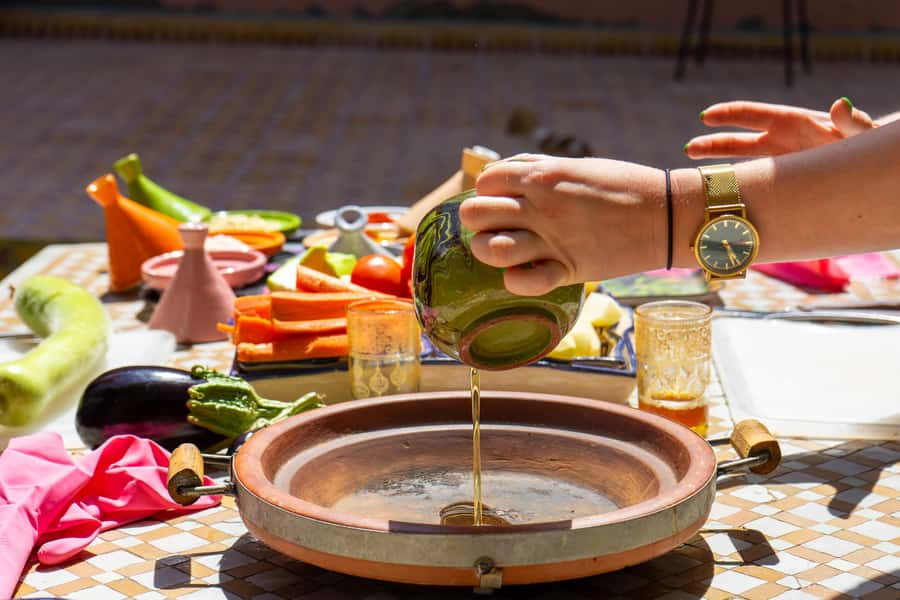
One reason this class works so well is that lunch isn’t only about the tagine. You also taste the supporting cast: homemade bread, olive oil, and local side dishes.
Homemade bread and olive oil teach you balance
Bread and olive oil are an ideal pairing because they show flavor clearly. If the oil tastes fresh, you’ll understand why Moroccan dishes often lean on simple, high-quality ingredients.
Side dishes keep the meal from feeling repetitive
The meal includes salads and olives, then fruit for dessert. That spread helps you understand Moroccan dining as a full table experience, not a single-pot lunch.
You’ll also get a better sense of portioning. At home, it’s easy to overshoot a heavy tagine and forget the lighter sides that make the flavors feel connected.
Price and value: is $94 worth it for 3 hours?
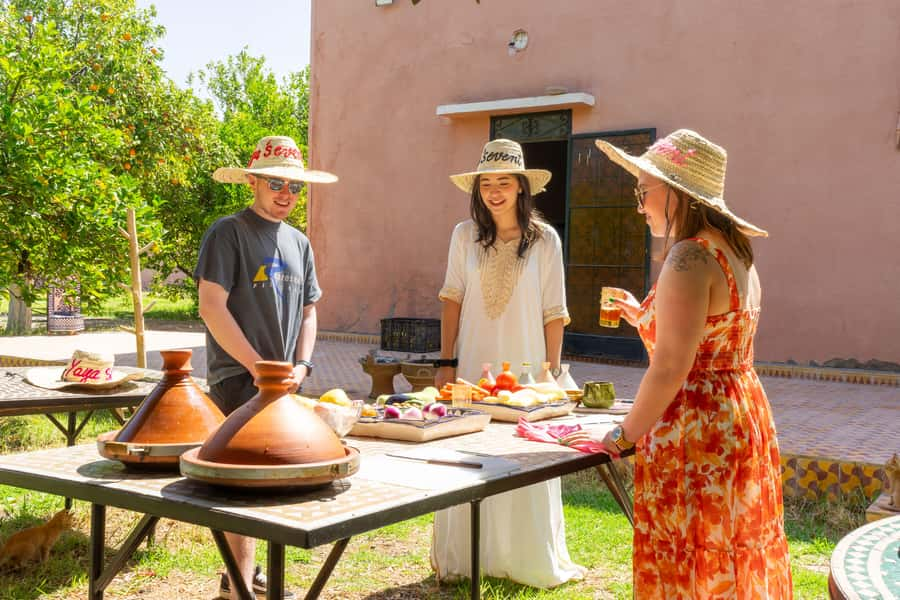
At $94 per person for about 3 hours, this isn’t a bargain-bin activity. It’s in the category of paid workshops, where you pay for labor, ingredients, and transportation.
Here’s why the value can still feel fair:
- Transportation is included, so you’re not adding taxi costs or time headaches
- You get fresh organic ingredients and a full lunch, not just cooking guidance
- You’re taught in English or French with a local instructor
- You leave with practical skills, which is what makes cooking classes worth it over one-and-done tastings
For context, the rating is high, with a 5 out of 5 score based on 50 reviews. That doesn’t guarantee your exact experience, but it does suggest consistent delivery of the basics: friendliness, organization, and good food.
If you want a memorable half-day that teaches more than it entertains, $94 starts to make sense.
Who this tagine class is best for
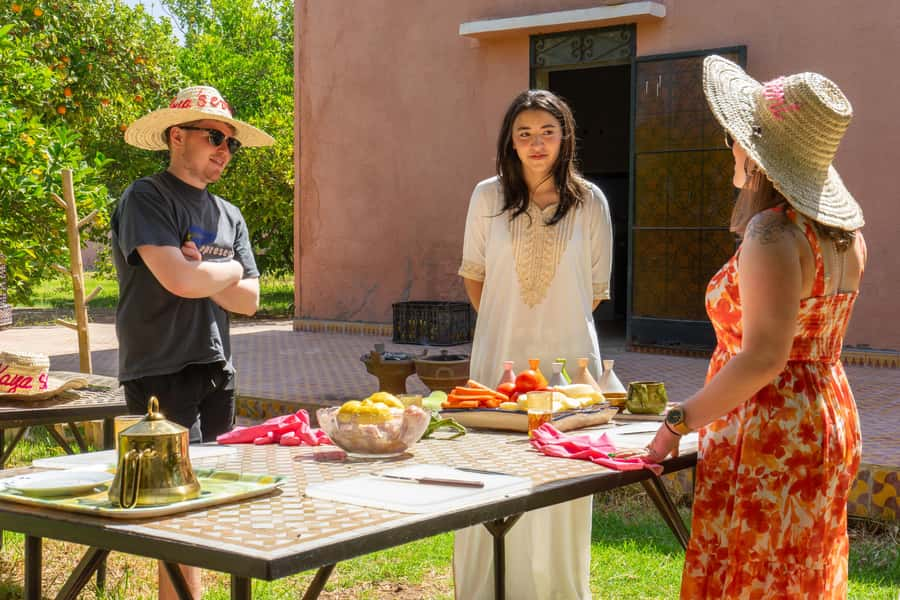
I think this class fits best when you want hands-on learning plus a break from city energy.
Great fit if you:
- Want a real cooking lesson with fresh ingredients, not a quick demo
- Prefer small groups or private-style attention
- Like outdoor time with olive trees and farm life
- Travel with kids or teens who can handle light walking and trying new foods
In fact, multiple families described the kids being surprisingly happy to participate. The instructor approach seems patient and clear, with step-by-step guidance that makes it easier for beginners.
Not a great fit if:
- You’re pregnant or need wheelchair access (it’s listed as not suitable for pregnant women and wheelchair users)
- You’re expecting a fully indoor, climate-controlled experience
- You can’t handle walking on farm paths
Practical tips so your day runs smoothly
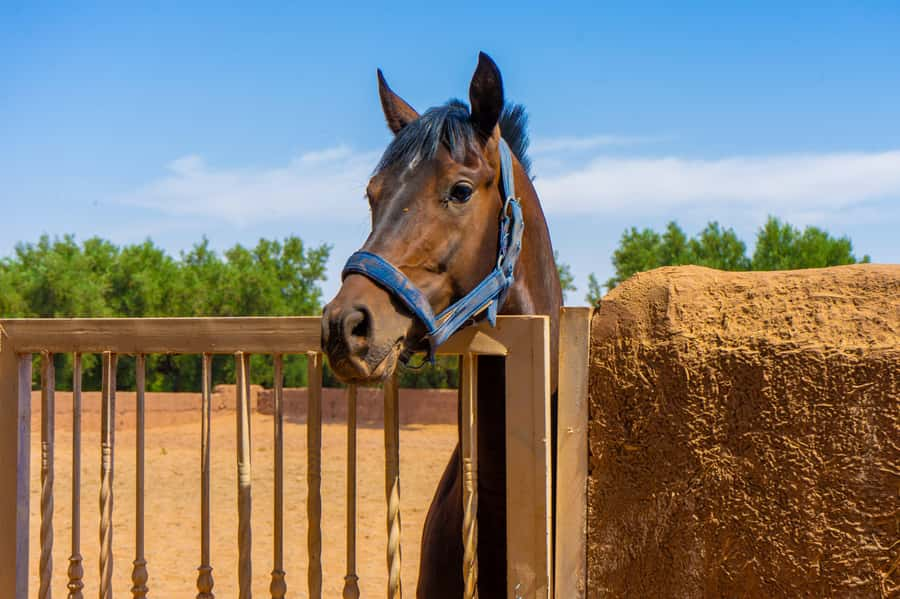
This is the kind of activity where small choices matter. A few practical things can make the difference between a relaxed lunch and a sweaty scramble.
What to bring
- A hat
- Sunscreen
- Water
- Comfortable clothes
- Comfortable shoes for farm walking
- A camera (recommended, since farm scenes are part of the memory)
How to show up
- Arrive about 15 minutes early at the meeting point in front of Hotel Ali
- If you don’t get good mobile reception, plan to meet at the correct time rather than relying on last-minute messages
What not to do
- No pets
- No smoking
What to ask your instructor before you start
You’ll get the most from the class if you go in with a couple of targeted questions. Even if the instructor is already planning for the group, you can help them adapt.
Consider asking:
- If your tagine will include chicken, vegetable, or both (some setups do two)
- How they handle vegetarian or allergies
- Whether they can share recipes after (some hosts have promised to provide recipes)
Should you book Moroccan Cooking Class: Farm-to-Table Tagine?
If you want one Marrakech activity that feels grounded, teaches real technique, and ends with a satisfying lunch, I’d book it. It’s a smart value when you consider the included transportation, the ingredient quality, and the fact that you cook your own food.
Book it especially if you’re tired of the city rush and you’d like a calmer rural reset. The olive grove setting, the communal meal, and the hands-on spice work are the big wins.
Skip it if mobility is an issue for you, or if you need an entirely indoor experience. Also, plan for sun and outdoor walking because the farm portion is part of the point.
If your main goal is an authentic Moroccan meal plus practical cooking skills you can reuse at home, this one is a strong match.
Classes That Come With a Kitchen
- Marrakech: Moroccan Cooking Class with Pickup★ 4.6 · 1,862 reviews
- Marrakech: Traditional Moroccan Cooking Class & Market Visit★ 4.8 · 1,861 reviews
- Marrakesh: Moroccan Dishes Cooking Class with a Local Chef★ 5.0 · 1,615 reviews
- Marrakech: Moroccan Cooking Class with a Local Family★ 4.9 · 668 reviews
Benches, Wheels and Looms
- Marrakech: Moroccan Cooking Class with Pickup★ 4.6 · 1,862 reviews
- Marrakech: Traditional Moroccan Cooking Class & Market Visit★ 4.8 · 1,861 reviews
- Marrakesh: Moroccan Dishes Cooking Class with a Local Chef★ 5.0 · 1,615 reviews
- Marrakech: Pottery Workshop with Moroccan Tea★ 4.8 · 756 reviews
Added recently from around Marrakesh



More Cooking Classes worth a look.
 ★ 4.6Marrakech: Moroccan Cooking Class with PickupFrom $311,862 reviews
 ★ 4.8Marrakech: Traditional Moroccan Cooking Class & Market VisitFrom $401,861 reviews
 ★ 5.0Marrakesh: Moroccan Dishes Cooking Class with a Local ChefFrom $471,615 reviews
 ★ 5.0Moroccan Cooking Class & Marrakech Market Visit with Chef KhmisaFrom $391,504 reviews
 ★ 5.0Half-Day Cooking Class with Local Chef Laila in MarrakechFrom $34952 reviews
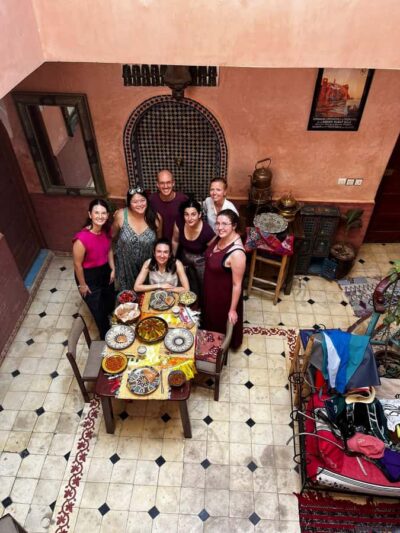 ★ 4.9Marrakech: Moroccan Cooking Class with a Local FamilyFrom $33668 reviews
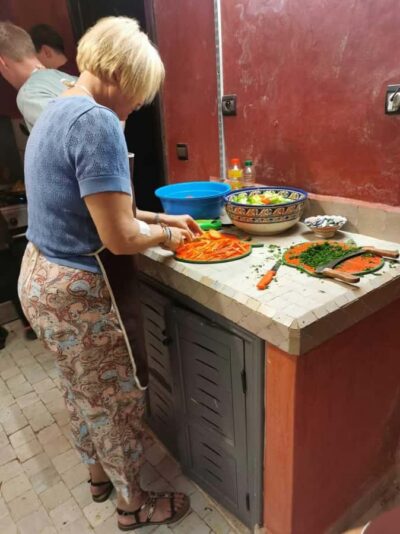 ★ 4.8Marrakech: Moroccan Cuisine Cooking Class in Local HomeFrom $24508 reviews
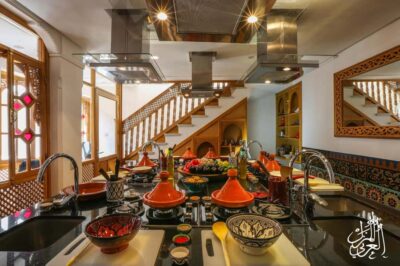 ★ 5.0Marrakech: Moroccan Cooking Workshop at La Maison ArabeFrom $35446 reviews
Where else this one sits