
REVIEW · MOROCCO
Marrakech: Moroccan Cooking Class for vegetarians and vegan
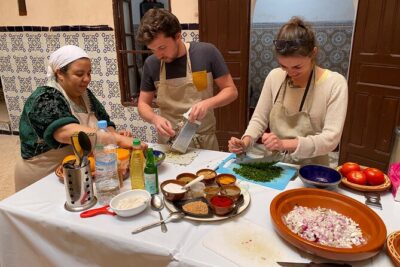
Tajines begin with a pinch of spices. I love that this class teaches Moroccan cooking for vegetarians and vegans inside an authentic family home in the Medina, not a bland demo kitchen. You get hands-on time, real ingredient explanations, and a meal you finish at the table, with the chef and family.
One possible drawback to plan for: the group may be mixed, with some people cooking meat, even when your food stays vegetarian or vegan.
In This Review
- Key takeaways
- Moroccan Vegetarian Cooking Class in Marrakech: What Makes It Worth Your Time
- Starting Point in the Medina: Next to Andalusia Restaurant
- The Welcome Ritual: Tea, Coffee, or Juice, Then Real Family Talk
- Spice Lesson That Actually Helps You Cook Later
- Cooking Starters: Moroccan Salads or Briwat
- Main Dish Time: Tajines, Couscous, and Tanjya
- Dessert Finish: A Sweet Ending to the Learning Loop
- Eating Together: Why the Best Meal Comes at the End
- Price and Value: $30 for Four Hours of Food Skill
- Who Should Book This Vegan-Friendly Class
- Small Things to Watch Before You Go
- The Chef Experience: Chef Fatima, With Yasser and English-Friendly Teaching
- Should You Book This Marrakech Moroccan Vegetarian Cooking Class?
- FAQ
- Where is the meeting point for the Marrakech cooking class?
- How early does the chef arrive?
- How long is the cooking class?
- What does the price include?
- Is transport included?
- Will vegetarians and vegans be catered for?
- What dishes do you cook during the class?
- What languages are available?
- Can I take photos during the lesson?
- Is there flexibility to cancel or delay payment?
Key takeaways
- Chef-led, family-home setting in the heart of the Medina, with tea and conversation before cooking
- Spice education you can use later, plus tips for choosing spices if you shop the souks
- Hands-on menu building, usually covering a starter, a main dish, and dessert
- Vegetarian, vegan, and allergy friendly (you will not be treated as an afterthought)
- Best meal energy, because you cook it and eat it while it is still hot
Moroccan Vegetarian Cooking Class in Marrakech: What Makes It Worth Your Time
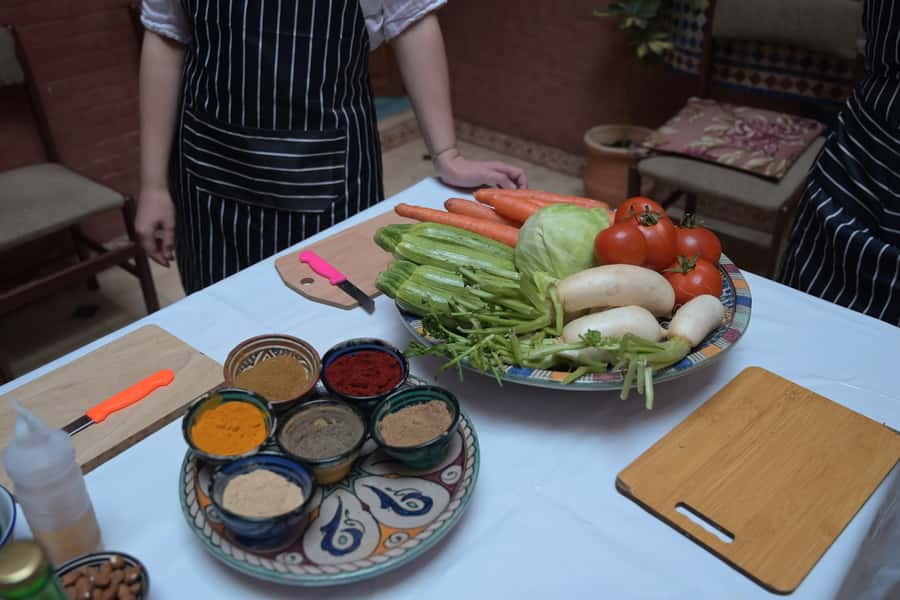
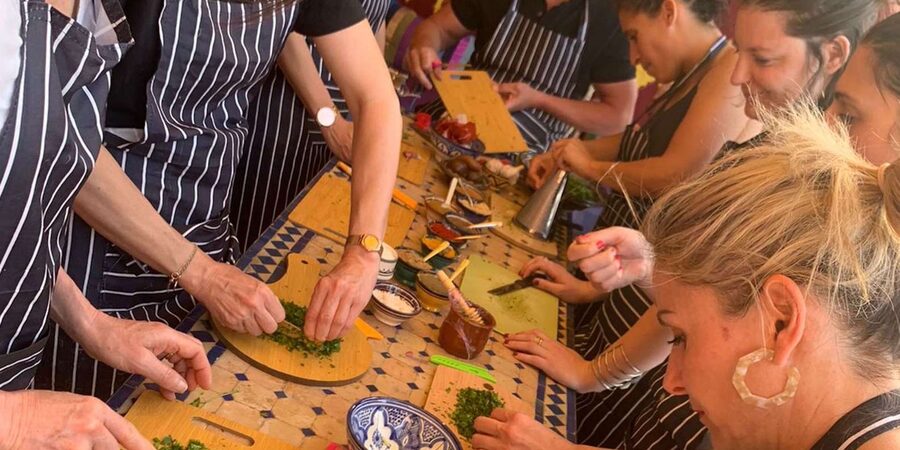
If you care about food, this is a very direct kind of Marrakech experience. You spend four hours learning Moroccan cooking from the person doing it day to day, then you eat what you made. This is not just about tasting spices. It is about understanding how and why they work together, and what you can actually recreate later at home.
The big win is the vegetarian and vegan focus. You are guided through traditional dishes like tajines, couscous, and other Moroccan mains, while the class keeps your meals aligned with your diet. The second big win is how personal it feels. You get welcomed into a real home, and you talk with the chef’s family over drinks before you touch a knife.
One thing to keep in mind: some classes may be mixed. That shows up in a review where some participants cooked meat, but the vegan and vegetarian dishes were handled in a way that let vegetarians and vegans stay focused. If you are strict, tell the chef clearly at the start.
Other hands on sessions to sit in
- Marrakech: Traditional Moroccan Cooking Class & Market Visit
★ 4.8 · 1,861 reviews - Marrakesh: Moroccan Dishes Cooking Class with a Local Chef
★ 5.0 · 1,615 reviews - Marrakech: Pottery Workshop with Moroccan Tea
★ 4.8 · 756 reviews - Marrakech: Moroccan Cooking Class with a Local Family
★ 4.9 · 668 reviews
Starting Point in the Medina: Next to Andalusia Restaurant
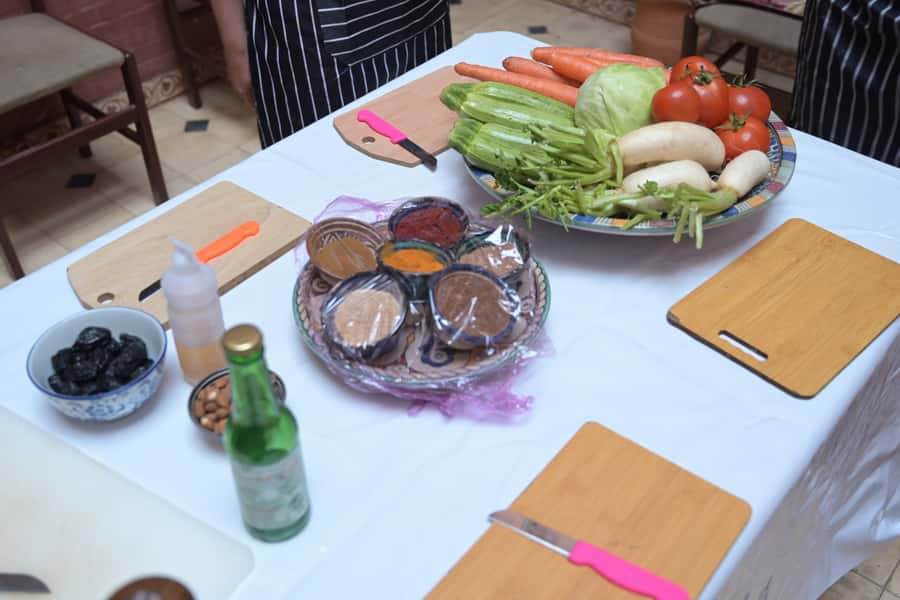
The meeting point is next to Andalusia restaurant, and the chef arrives early, waiting about 30 minutes before the start time. That matters in Marrakech. The Medina streets can feel like a maze when you first arrive, and finding the exact door is half the battle.
Here is how to make this part easier:
- Go early and be at the meeting point on time, since the chef is ready when you arrive.
- Take a screenshot of the meeting point in case your phone signal drops in the narrow lanes.
- If you taxi in, double-check where the taxi can drop you. The class does not include transport, so you will handle the final approach on your own.
Once you are guided to the house, you get a real change of pace from street-level Marrakech. You move from the bustle to a calmer home setting, which is where cooking lessons work best.
The Welcome Ritual: Tea, Coffee, or Juice, Then Real Family Talk
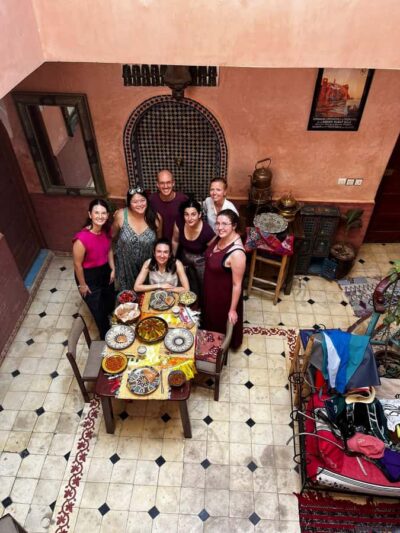
You do not just walk into a kitchen and start chopping. You are greeted with Moroccan tea, coffee, or juice, then you settle into conversation with the chef’s family.
This part is more than a nicety. It helps you understand Moroccan food in context. You learn how a typical family talks about meals, spices, and everyday cooking, instead of hearing it as a tourist script. When the cooking starts, the lesson feels grounded in real life.
It also sets you up for the spice talk that comes next. Moroccan cuisine has a reputation for complex flavor, and the chef treats spices as something you can learn, not just taste.
Spice Lesson That Actually Helps You Cook Later
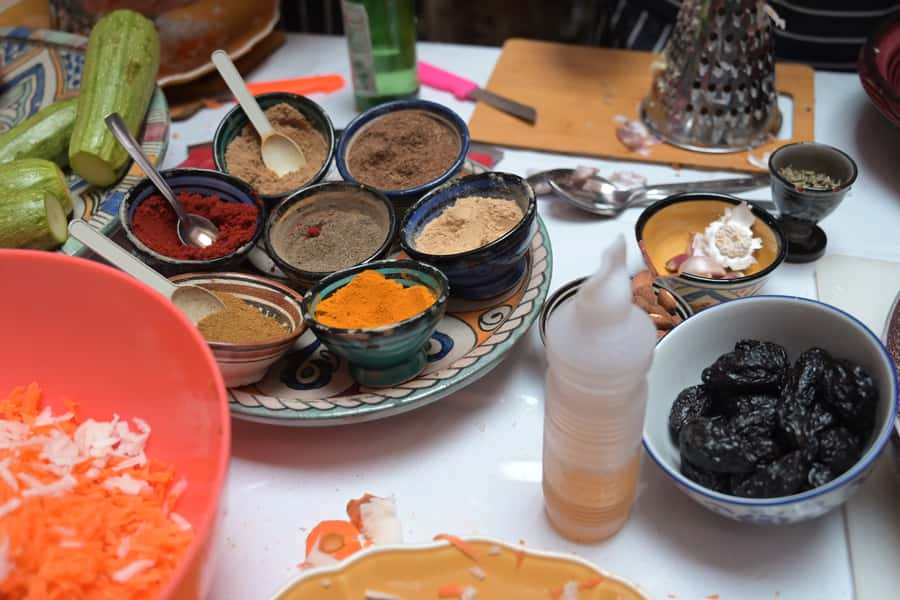
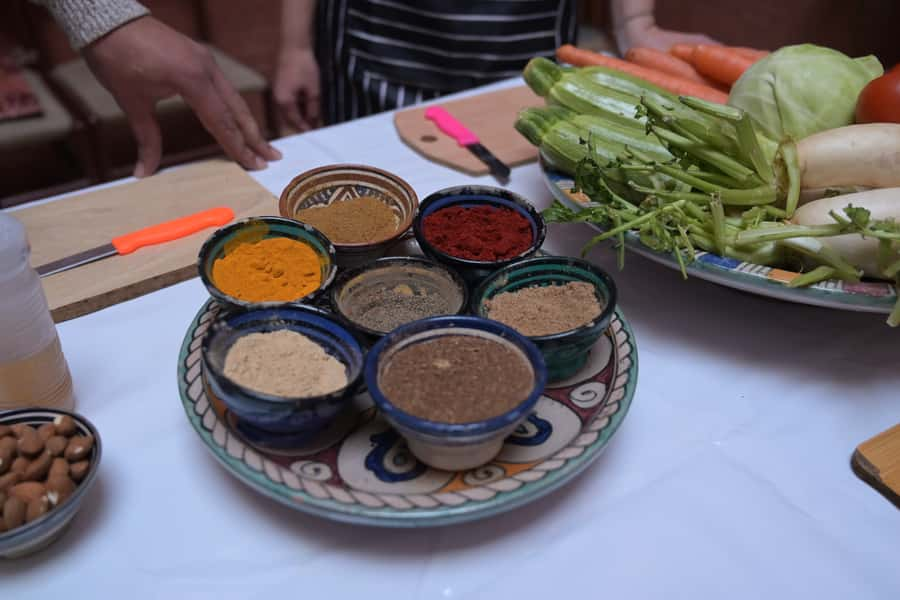
The class begins with an explanation of the spices you can taste in Moroccan food. You learn what each one contributes and how Moroccan cooks build flavor step by step. This is the part that makes the rest of the class useful beyond the meal.
A practical bonus: if you want to buy spices in the souks, the chef explains what to look for and how to choose. That means you can avoid the common tourist mistake of buying pretty-looking jars that do not match what you cooked.
A few details that show up in the way instructors teach:
- You get ingredient explanations while you cook, so nothing feels random.
- You are encouraged to take pictures if you want, which is great for remembering specific prep steps.
- Your instructor speaks French and English, and the experience includes an audio guide in English and French as well.
Tip for your end-of-trip planning: if you buy spices after the class, you will be able to match the flavors you learned to what you see in the souks. That turns shopping from guesswork into a mission.
Cooking Starters: Moroccan Salads or Briwat
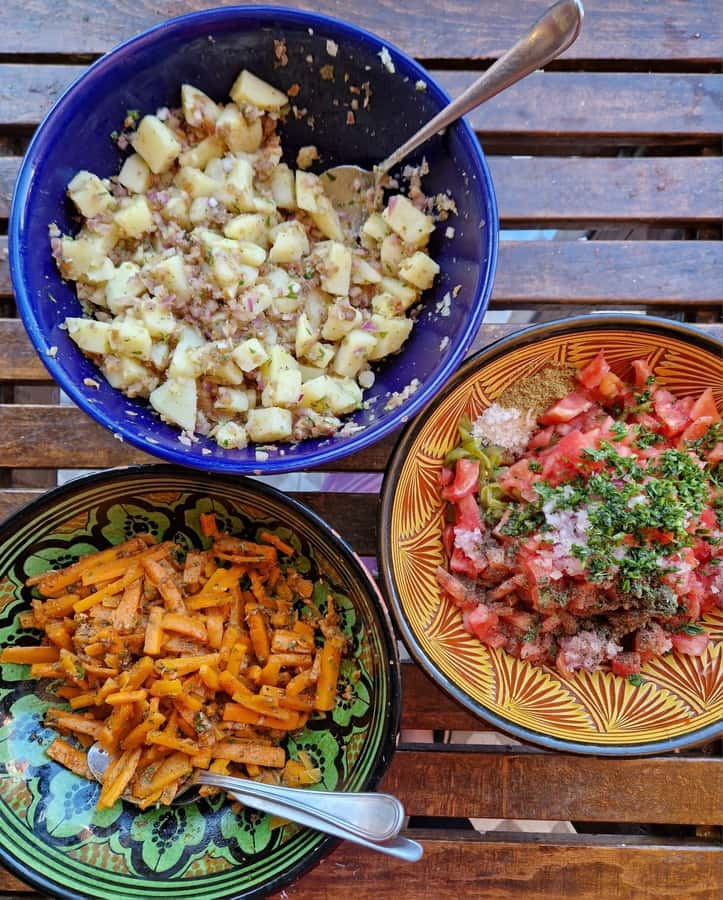
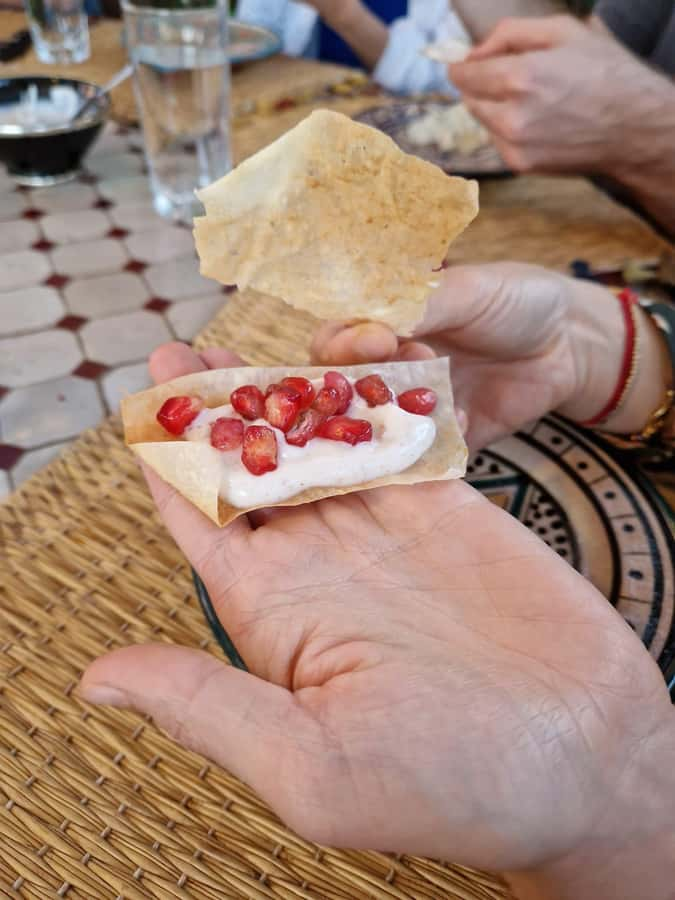
After the spice lesson, you move into the kitchen work. The class covers a starter, and the options are Moroccan salads or briwat.
This matters because Moroccan starters are where you see how texture and seasoning work together. Even if the main dish gets the spotlight, the starter teaches you the flavor logic early:
- Moroccan salads tend to be about balance, freshness, and seasoning.
- Briwat bring technique, wrapping, and crisp texture.
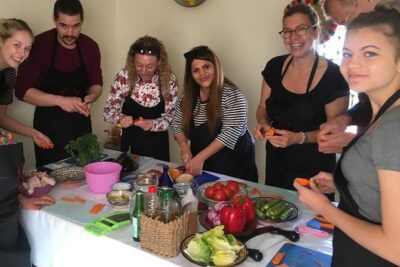
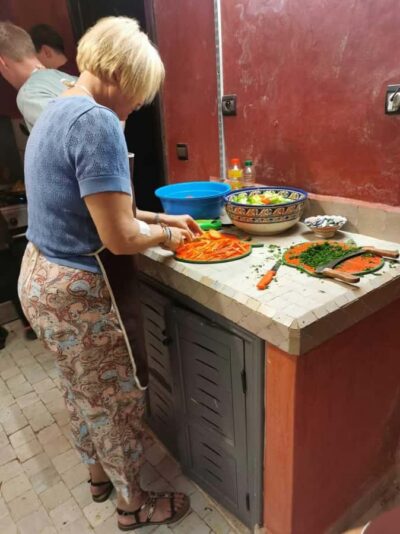
You will be involved in prep and cooking steps, not just watching from the sidelines. That hands-on approach is what makes people call it one of the best meals in Marrakech. You cannot fake effort. When you cook it yourself, you notice what changes flavor.
Main Dish Time: Tajines, Couscous, and Tanjya
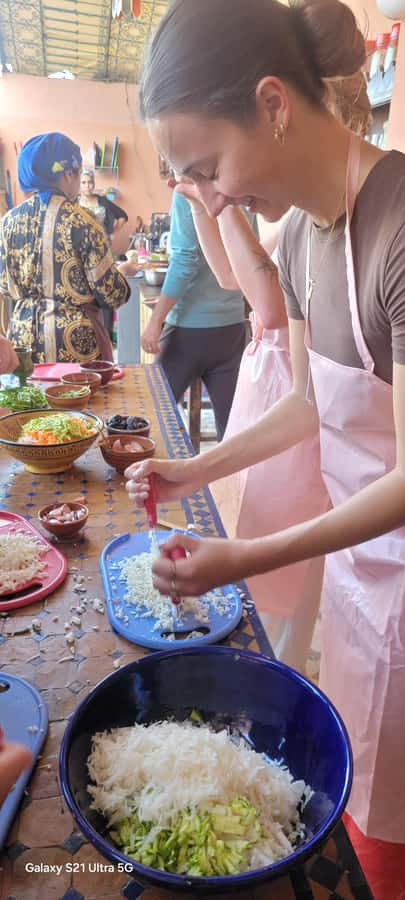
The main dish is where Moroccan cooking really shows its personality. In this class you can expect a choice among tajines, couscous, or tanjya.
Even without knowing which exact main you will make on your day, you can count on the lesson style:
- The chef suggests the menus.
- You get the ingredients and tools needed for the recipes.
- You learn how to use the spices in context, not as a lecture.
Why this is valuable for vegetarians and vegans: Moroccan cuisine is often framed as meat-focused, but the flavors are built around spice blends, vegetables, preserved ingredients, and cooking methods. A well-led vegetarian version can taste like Moroccan cooking, not a compromise.
One review note you should take seriously if you are vegan: some groups are mixed, meaning other participants may cook meat. The class can still keep your vegan or vegetarian dishes on track, but if you are extremely sensitive to cross-contact, confirm what the chef does in practice when you arrive.
More classes that come with a kitchen
Dessert Finish: A Sweet Ending to the Learning Loop
You also cook a Moroccan dessert. Dessert is included in the class flow, and it completes the training arc: savory spices, main dish technique, then a sweet finish with Moroccan flavor.
Most reviews describe the overall meal as excellent, but one person felt the dessert was a bit basic. That tells me something useful for your expectations. The dessert is part of the experience, but your biggest payoff is the starter and main dish skills, plus the meal you share with the family.
Eating Together: Why the Best Meal Comes at the End
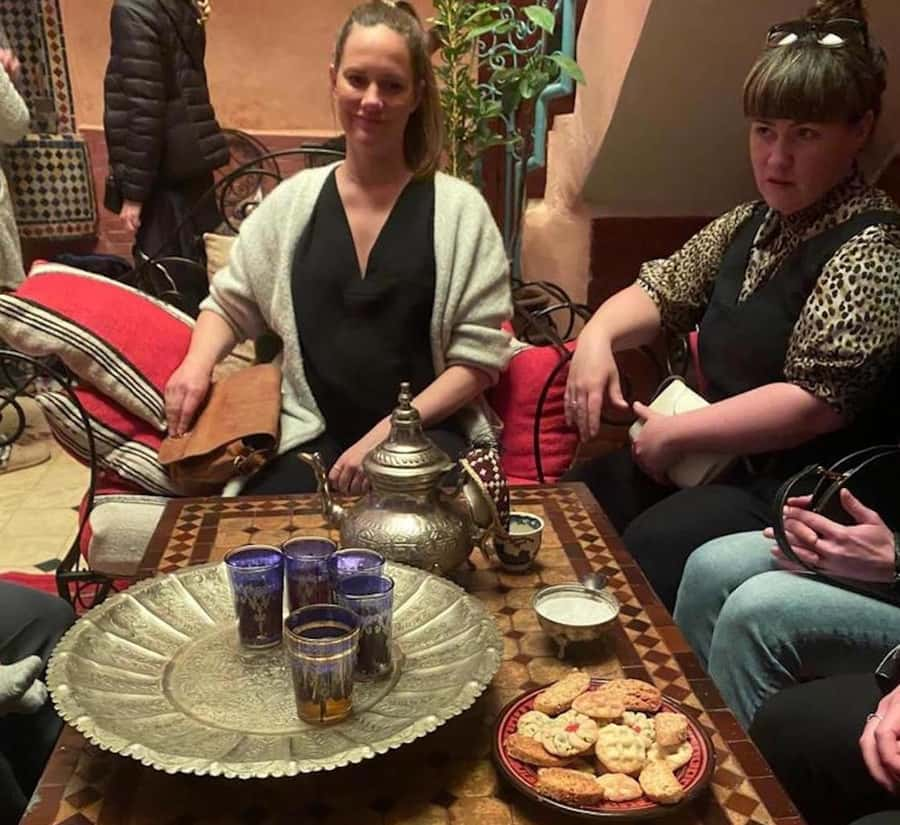
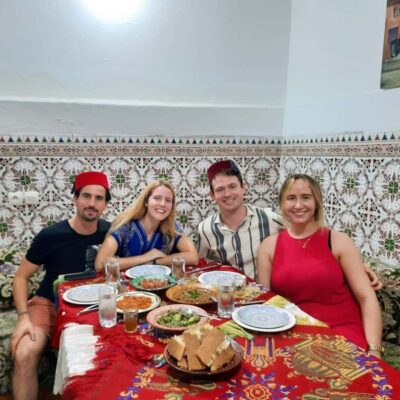
The meal is not served somewhere else. You eat the food you cooked, as part of the family meal setting. This is a big reason the class gets strong ratings.
Here is what you gain by eating at the end:
- You see how everything tastes when it is finally finished, not in pieces.
- The flavors make more sense because you worked through each step.
- You get to ask questions while the food is on the table, which is when teachers usually give their clearest explanations.
And since vegetarian, vegan, or allergy needs are handled during the lesson, you get a full plate, not a separate side-tray situation. One parent did this with a 12-year-old and said it turned into one of the best meals they ate in Marrakech, which tracks with the idea that kids and adults both enjoy learning by doing.
Price and Value: $30 for Four Hours of Food Skill
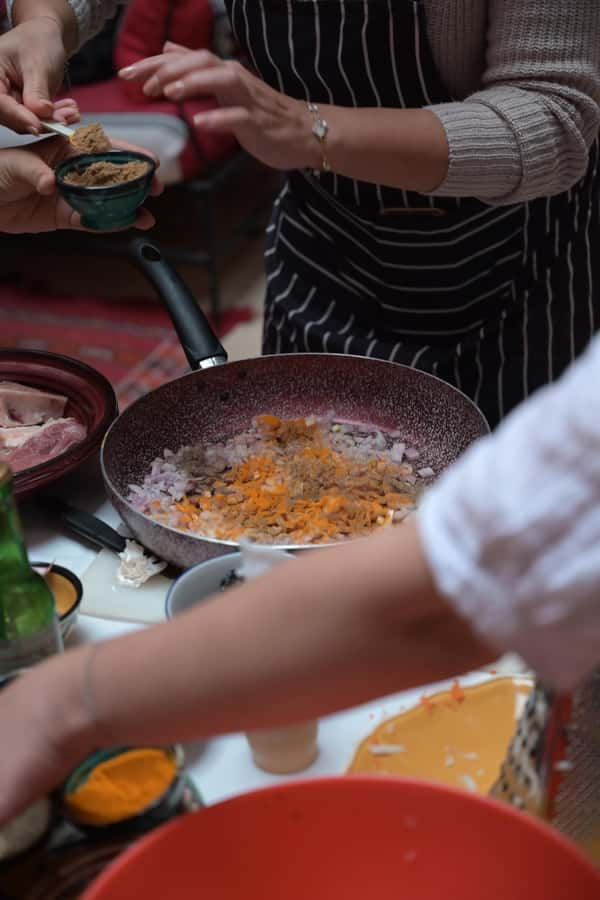
At $30 per person for a four-hour class, the value is strong on paper, and it makes sense in practice because the “product” is not just a meal. You are paying for:
- a cooking lesson
- drinks and cookies
- the ingredients for what you cook
- the meal you eat
- a gift at the end
In many Marrakech food experiences, you can easily spend more just for tasting. Here you get technique. You learn spice usage, you cook multiple components, and you leave with recipes. At least one instructor sent recipes and extra notes via WhatsApp, which is the kind of follow-up that helps you cook Moroccan food at home without guessing.
Also, four hours is the sweet spot for cooking classes. Shorter sessions can feel rushed, especially in a Medina setting where you are doing real steps and not just a quick demo.
Who Should Book This Vegan-Friendly Class
This is a great fit if you want:
- hands-on cooking, not a passive show
- vegetarian or vegan Moroccan food that still feels traditional
- a more personal Marrakech day, inside a family home
- a real learning focus on spices and technique
It is also a good choice for families. One review describes the class as fun and interactive for a parent and child, ending with no leftovers because everyone ate what they made.
If you use a wheelchair, the experience is listed as wheelchair accessible, so you can feel more confident about access than with many Medina locations.
Small Things to Watch Before You Go
A few practical considerations can help you have a smoother day:
- Meeting point location: next to Andalusia restaurant is clear, but the Medina streets can still be tricky. Arriving early helps because the chef waits about 30 minutes before the start time.
- Mixed group possibility: some classes may include people cooking meat. Your vegetarian or vegan meal can still be handled properly, but if cross-contact worries you, tell the chef directly.
- Dessert expectations: the meal is praised overall, but there is one note that dessert could be more exciting. If you are dessert-driven, keep your focus on the starter and main dish cooking skills.
The Chef Experience: Chef Fatima, With Yasser and English-Friendly Teaching
The experience is hosted as a cooking class with chef Fatima. In many sessions, her brother Yasser (also spelled Yasir in one note) is the instructor. That matters because multiple reviews highlight his patience and clear teaching in English.
Across the feedback, the teaching style follows a pattern:
- You participate in the steps.
- You get explanations that connect spices to cooking choices.
- You get tips you can use for cooking in general, not only for this one recipe.
If you care about food as culture, this chef-family approach is the heart of the class. The meal becomes more than a dish. It becomes a story you can taste.
Should You Book This Marrakech Moroccan Vegetarian Cooking Class?
Book it if you want a four-hour day that blends food technique, spice education, and real family hospitality. The price is reasonable for the time, the hands-on cooking, and the meal you eat. You also get specific dishes you can recognize from Moroccan cuisine, like tajines and couscous, rather than simplified versions.
Skip it or ask extra questions if you are very sensitive about group mixing, because the class can include participants cooking meat. Also, if dessert is your main goal, know that it is included but not universally praised as the standout.
If you want one Marrakech activity that feels practical and memorable, this is the kind of experience that sticks. You leave with recipes, a clearer sense of spices, and a meal you already know how to recreate.
FAQ
Where is the meeting point for the Marrakech cooking class?
The meeting point is next to Andalusia restaurant.
How early does the chef arrive?
The chef will be waiting about 30 minutes before the scheduled timing.
How long is the cooking class?
The duration is 4 hours.
What does the price include?
It includes drinks and cookies, the cooking lesson, and the meal. A gift is also offered at the end.
Is transport included?
No, transport is not included.
Will vegetarians and vegans be catered for?
Yes. Vegetarian, vegan, and allergies will not be a problem.
What dishes do you cook during the class?
You cook a starter (Moroccan salads or briwat), a main dish (such as tajines, couscous, or tanjya), and a Moroccan dessert.
What languages are available?
The instructor speaks French and English, and an audio guide is included in English and French.
Can I take photos during the lesson?
Yes, you can take pictures if you want.
Is there flexibility to cancel or delay payment?
There is free cancellation up to 24 hours in advance for a full refund. You can also reserve now and pay later.
Classes That Come With a Kitchen
- Marrakech: Moroccan Cooking Class with Pickup★ 4.6 · 1,862 reviews
- Marrakech: Traditional Moroccan Cooking Class & Market Visit★ 4.8 · 1,861 reviews
- Marrakesh: Moroccan Dishes Cooking Class with a Local Chef★ 5.0 · 1,615 reviews
- Marrakech: Moroccan Cooking Class with a Local Family★ 4.9 · 668 reviews
Benches, Wheels and Looms
- Marrakech: Moroccan Cooking Class with Pickup★ 4.6 · 1,862 reviews
- Marrakech: Traditional Moroccan Cooking Class & Market Visit★ 4.8 · 1,861 reviews
- Marrakesh: Moroccan Dishes Cooking Class with a Local Chef★ 5.0 · 1,615 reviews
- Marrakech: Pottery Workshop with Moroccan Tea★ 4.8 · 756 reviews
Added recently from around Marrakesh


More Cooking Classes worth a look.
 ★ 4.6Marrakech: Moroccan Cooking Class with PickupFrom $311,862 reviews
 ★ 4.8Marrakech: Traditional Moroccan Cooking Class & Market VisitFrom $401,861 reviews
 ★ 5.0Marrakesh: Moroccan Dishes Cooking Class with a Local ChefFrom $471,615 reviews
 ★ 5.0Moroccan Cooking Class & Marrakech Market Visit with Chef KhmisaFrom $391,504 reviews
 ★ 5.0Half-Day Cooking Class with Local Chef Laila in MarrakechFrom $34952 reviews
 ★ 4.9Marrakech: Moroccan Cooking Class with a Local FamilyFrom $33668 reviews
 ★ 4.8Marrakech: Moroccan Cuisine Cooking Class in Local HomeFrom $24508 reviews
 ★ 5.0Marrakech: Moroccan Cooking Workshop at La Maison ArabeFrom $35446 reviews
Where else this one sits