
REVIEW · MOROCCO
7-Day Imperial Cities – Private Group
Seven days, four imperial cities, one private team. You meet your driver at Casablanca airport or at your hotel, then move with a dedicated guide through Rabat, Fez, Meknes, and Marrakech, with admissions to Hassan II Mosque and Jemaa el-Fna built in. I especially like the private transportation and accommodation included in the price, and I like that the important entry tickets are handled so you can spend less time planning and more time looking around.
One possible drawback is that this is a fast-moving route, with long stretches of driving plus a big walking day in Fez, so you will want comfortable shoes and a flexible attitude about timing.
In This Review
- Quick highlights you will feel right away
- Price and what you actually get for $1,485 per person
- Private driver and guide, starting at Casablanca airport or hotel
- Casablanca and Hassan II Mosque, then Rabat’s Hassan Tower and Mohammed V Mausoleum
- Volubilis Roman ruins and Meknes’ imperial power in one motion
- Fez the old-city way, Mellah to palace doors and a pottery co-op
- Marrakech arrival in a riad medina, then Jemaa el-Fna after dark
- Koutoubia minaret, Bahia Palace, and a Berber apothecary stop
- A free day in Marrakech for museums, Majorelle Garden, and optional hammam time
- Your final leg back to Casablanca for departure flights
- Practical tips to get the most from this route
- Who this private group tour is best for
- Should you book this 7-Day Imperial Cities private group?
- FAQ
- How long is the 7-Day Imperial Cities private group tour?
- Where does the tour start and where does it end?
- What is included in the price?
- Are admissions to Hassan II Mosque, Volubilis, and Jemaa el-Fna included?
- Do I get my own guide for the whole trip?
- Is pick-up available from the airport or hotel?
- Is this tour truly private or do I join other people?
- Can children join the tour, and do they need to share a room?
Quick highlights you will feel right away
- Meet at the airport or your hotel, so you start without stress and wasted waiting time
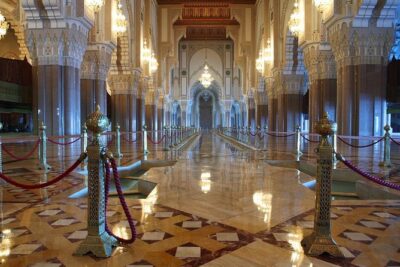
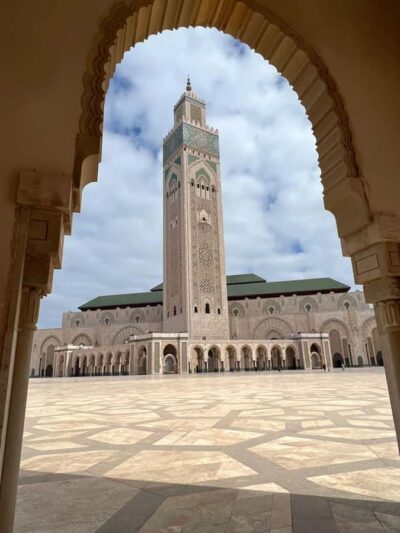
- Hassan II Mosque in Casablanca, where non-Muslims are allowed to enter and the scale is seriously impressive
- Volubilis Roman ruins, including mosaic floors that look different when the light and moisture are right
- Meknes and its Moulay Ismail legacy, from Bab Mansour to the Royal Stables
- A private guide in Fez and Marrakech, with stops that go beyond the obvious photos
Price and what you actually get for $1,485 per person
At $1,485 per person for about 7 days, this is not a budget-only trip. The value comes from what is included: six nights of double-occupancy accommodation, private transportation, a driver and professional guide, and the major admissions you would otherwise have to line up yourself. You also get breakfast (6), lunch, and bottled water, which quietly adds up when you are in cities where you might otherwise buy water repeatedly during long site days.
What is not included is also important: food and drinks beyond what is specified are on you. That means your real cost depends on how you eat, whether you snack in medina alleys, and what optional add-ons you choose in Marrakech. If you plan meals carefully and you treat this as a guided route with timed stops, the price feels fair.
Longer loops that take in several cities
- Rabat Imperial City Day Trip from Casablanca
★ 4.5 · 353 reviews - 10-days Private tour in Morocco: Sahara Desert + Imperial Cities
★ 5.0 · 279 reviews - 10 Day Desert Tour From Casablanca via the Imperial Cities
★ 5.0 · 254 reviews - 10D 9N Private Morocco Tour From Casablanca By Imperial Cities And South Desert
★ 5.0 · 156 reviews
Private driver and guide, starting at Casablanca airport or hotel
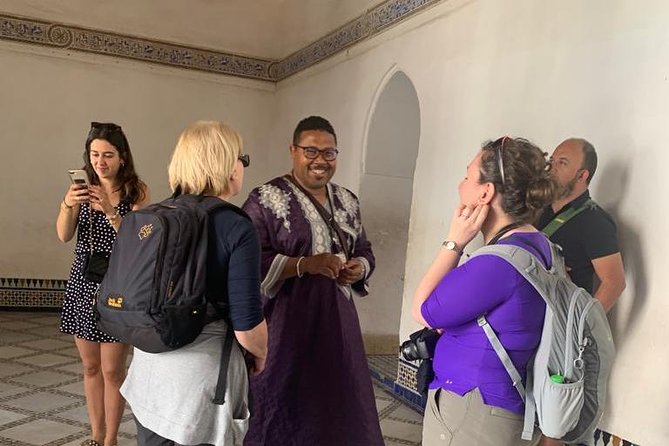
This is a true private group, capped at a maximum of 14 people, and it is “only your group.” You do not have to share your day with strangers while also trying to interpret directions in Arabic, French, and local signage at the same time. The guide travels with you throughout the route, and the company says you can tailor each day to your pace and energy levels, which matters when some days are more active than others.
Your day begins with a 9:00 am start, and you get meet-and-greet support either at Casablanca airport or your hotel, whichever is easiest. Practically, that means you can land, orient, and get moving without adding a second layer of local logistics to your first day.
Casablanca and Hassan II Mosque, then Rabat’s Hassan Tower and Mohammed V Mausoleum
Day 1 is built around two heavy hitters, and the order helps. First you arrive in Casablanca and go straight to Hassan II Mosque, a modern Moroccan landmark. It is described as the largest mosque in Morocco and the third largest in the world that non-Muslims are allowed to enter, and it can accommodate up to 105,000 people. You also learn that it was made by expert craftsmen from around the country, with many donating their work, so it is not just a photo stop, it is a story of collaboration.
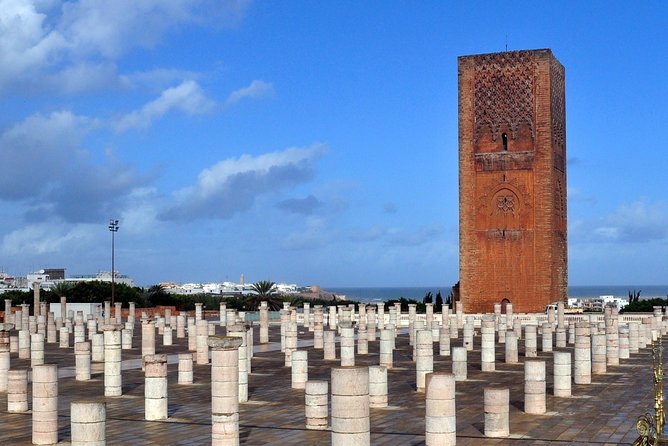
After Casablanca, you head to Rabat for the Hassan Tower. This is the famous unfinished minaret that began in 1199, commissioned by Abu Yusuf Yaqub al-Mansur. When the sultan died in 1199, the project was abandoned, leaving partial outer walls, 348 columns, and a half-finished minaret at about 140 feet instead of the intended 260 feet. Facing it is the Mohammed V Mausoleum, with tombs of Mohammed V, Hassan II, and Prince Abdallah, and it is noted as an Alaouite architectural masterpiece.
The best part of this day is how it teaches you to “read” Morocco’s architecture as a timeline. You go from a monumental modern masterpiece to a medieval plan that never finished, and you feel the contrast immediately.
Volubilis Roman ruins and Meknes’ imperial power in one motion
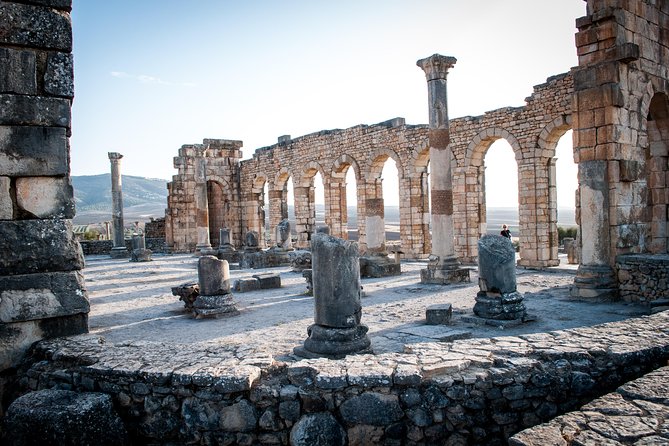
Day 2 starts with a classic route to Volubilis, the Roman ruins that date back to around 3 BCE. The guide takes you through a site that became the capital of the kingdom of Mauretania, then came under Roman rule in the 1st century CE, continuing until it fell to local tribes in 285. The remains you see include ancient structures still being excavated, plus the triumphal arch that still stands.
What you should look for at Volubilis are the mosaic floors. The notes say that several mosaic floors are still intact, and that they reveal vibrant colors when wet. That is a small detail, but it changes how you experience the site: you start thinking about the craftsmanship, not just the ruins.
Then you roll into Meknes, another imperial city tied tightly to Moulay Ismail. You will see Bab Mansour, built with marble columns stolen from nearby Volubilis, which is a neat connection between your Day 2 stops. You also visit the Royal Stables, once home to 12,000 horses, with each horse attended by a groom and enslaved workers to serve every need. The scale and the logistics can feel intense, but that is exactly the point of the place: it shows how power ran through infrastructure.
Finally, there is the Moulay Ismail Mausoleum, described as one of only three active Moroccan shrines where non-Muslims may enter. It ties the day back to the human side of imperial rule, and not just monuments.
Day 2 ends with travel onward to Fez in the afternoon, so you get another city without losing the momentum.
Fez the old-city way, Mellah to palace doors and a pottery co-op
Day 3 focuses on Fez with a private guide, and it is a long day designed for walking. The format is a walking tour with some transportation between sites, which helps you cover more ground without burning out too early.
You start at the royal palace, known for its seven golden doors, and the guide explains what the decoration means. Then you move to the Mellah, the Jewish quarter built next to the palace for protection. This is one of those stops where you learn to connect city planning to politics, and not only to aesthetics.
From there you go to Borj Sud, a former fortress and lookout where you can view Fez spread out below. The practical value is big: you can spot landmarks you would miss at street level because the skyline-blocking buildings hide so much.
You also stop at a pottery co-op to see how Fes pottery is made, plus the handcrafting behind the intricate mosaics that adorn a large part of Morocco. I like this kind of stop because it gives you a “how it’s made” bridge between what you see on walls and what you might actually buy later.
The only downside to Fez day is stamina. It is listed as up to 8 hours, so if you have any mobility limits, tell your guide early and ask where you can take breaks.
Marrakech arrival in a riad medina, then Jemaa el-Fna after dark
Day 4 is the transition south to Marrakech via highway. You check in to your riad in the medina, which is a huge part of why this route feels immersive without being chaotic. A riad typically keeps you close to the action, so you can go from settling in to exploring quickly, without another round of commuting.
There is also an optional mid-route stop in Rabat for lunch and sightseeing, such as the Kasbah Oudayah (entrance fee required). If you take it, you get extra context, but you also add time on the road, so it is a “trade-off” choice.
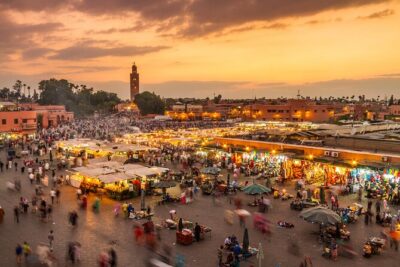
Once you reach Marrakech, the evening plan is simple and smart: head out to Jemaa el-Fna when the day cools down. The description points out that it comes alive with street performers as the sun goes down. This is one of those places where you can lose track of time because the atmosphere changes quickly, and the guide can help you decide what to watch versus what to skip.
If you are sensitive to crowds or loud music, go early in the evening rather than waiting until it peaks.


Koutoubia minaret, Bahia Palace, and a Berber apothecary stop
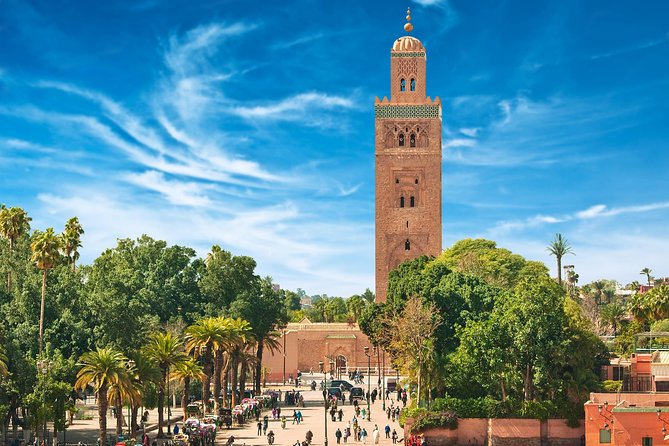
Day 5 is Marrakech with a private guide, and it leans into big monuments plus cultural texture. You visit the Koutoubia minaret, described as the tallest minaret in Marrakech. A key detail you should remember is that within the city walls, no building was allowed to be taller than the minaret at about 253 feet, so this is an example of how religion shaped the skyline.
Next is a stop at a Berber apothecary where you learn about medicinal uses of common spices and herbs. It may not be as flashy as the spice piles in the market, but it gives you a different angle on the same ingredients. You start understanding why people use what they use, not just how it looks in a souk.
Then you see the Bahia Palace, built in the late 19th century for the grand vizier, and named for his favorite wife. The palace rooms are described as set around a garden, and you get to walk through that idea of private power expressed through architecture.
This day is strong for photography, but it is also strong for education. You learn what to look for and why it was built that way.
A free day in Marrakech for museums, Majorelle Garden, and optional hammam time
Day 6 is left open, and that is a gift. You can use the day to explore at your speed, which is useful if Day 3 and Day 5 left you a bit sore. The options named include museums such as the Yves Saint Laurent Museum and the Berber Museum, plus the Majorelle Garden (entrance fees required).
If you want something hands-on, you can choose a traditional hammam experience. The description includes being covered in black beldi soap, scrubbed with a kessar mit to remove dead skin, and relaxing in a steam room. Since hammams cost extra, treat this as an optional comfort and reset, not a required part of the tour.
If you do not want tickets and schedules, you can also just explore the souks and people-watch from street-side cafes. With your guide not “on the clock,” you can wander, buy small gifts, and build your own Marrakech rhythm.
Your final leg back to Casablanca for departure flights
Day 7 is simpler. After breakfast, you return to Casablanca for your departure flight. This is exactly what you want at the end: less decision-making, less last-minute city navigation, and a straightforward wrap-up to an already full week.
It also means you end where you started, which helps if your flights have fixed timing.
Practical tips to get the most from this route
Here are the things I think will make your week smoother.
First, budget for extra meals and drinks. The tour includes lunch once and breakfast daily for 6 days, but it does not cover every meal. If you try to do everything on your own, costs can creep up, so pick the days where you will eat in guided stops versus those where you will eat cheaply.
Second, plan for walking in Fez and time in medinas. You will be on your feet for major parts of the route, especially the Fez day that runs up to 8 hours. Pack supportive footwear and keep water handy, even though bottled water is included.
Third, take your guide seriously about what to shop for. The pottery co-op in Fez and the apothecary stop in Marrakech both hint that buying with context is better than buying blind. If you do want souvenirs, ask what is worth it and what is tourist markup.
Lastly, if you need accessibility support, ask questions early. One account in the material highlights a wheelchair-supported traveler and a guide who helped manage the trip, which suggests the team can sometimes adapt with the right planning.
Who this private group tour is best for
This tour fits best if you want an efficient route through Morocco’s imperial cities without juggling transportation and ticket logistics yourself. It is also a good match for people who enjoy architecture, city planning, and cultural stops as much as they enjoy markets and street life.
It is especially suitable for:
- First-time Morocco visitors who want structure and a calm pace through major cities
- Couples or small groups who value private transportation and one guide handling connections
- Travelers who want a history-forward approach, from Roman ruins at Volubilis to imperial Meknes and palace-rich Marrakech
- Anyone who wants Marrakech evening energy, including Jemaa el-Fna, with a guide to help you navigate what you see
Should you book this 7-Day Imperial Cities private group?
If your goal is to cover Rabat, Fez, Meknes, and Marrakech in one week with admissions planned, comfortable internal logistics, and a dedicated guide who can answer questions as you walk, I think this is a solid booking. The value is strongest when you use the included meals and included tickets, and when you appreciate that this route is about city depth, not side quests.
I would reconsider if you hate long driving days or you want lots of free time every day. This trip gives you one true free day in Marrakech, but the other days are fairly scheduled, and Fez especially is a long walking block.
If you are the kind of person who likes learning as you go, watching craftsmanship at work in Fez, and then ending the week with Marrakech nights, this route is a very good fit.
FAQ
How long is the 7-Day Imperial Cities private group tour?
It runs for 7 days, with a start time of 9:00 am and a total duration of about 7 days.
Where does the tour start and where does it end?
You start in Casablanca, meeting your driver outside the airport or at your hotel, and you end by returning to Casablanca for your departure flight.
What is included in the price?
The tour includes 6 nights of accommodation (double occupancy), private transportation, a driver and professional guide, bottled water, breakfast for 6 days, lunch, and admissions for Hassan II Mosque, Volubilis, and Jemaa el-Fna, plus all taxes and handling charges.
Are admissions to Hassan II Mosque, Volubilis, and Jemaa el-Fna included?
Yes. Admission to Hassan II Mosque, Volubilis, and Jemaa el-Fna is included.
Do I get my own guide for the whole trip?
Yes. The guide is with you throughout the experience, and you also have a driver for private transportation.
Is pick-up available from the airport or hotel?
Yes. You can meet your driver at the airport or at your hotel, whichever is easiest.
Is this tour truly private or do I join other people?
It is private for your group only, with a maximum of 14 travelers per booking.
Can children join the tour, and do they need to share a room?
Children must be accompanied by an adult. The info also says children must share a room with an adult or youth.
Longer Routes Through the Country
- Rabat Imperial City Day Trip from Casablanca★ 4.5 · 353 reviews
- 10-days Private tour in Morocco: Sahara Desert + Imperial Cities★ 5.0 · 279 reviews
- 10 Day Desert Tour From Casablanca via the Imperial Cities★ 5.0 · 254 reviews
- 10D 9N Private Morocco Tour From Casablanca By Imperial Cities And South Desert★ 5.0 · 156 reviews
Added recently from around Casablanca
More Multi-Day Morocco Grand Tours worth a look.
 ★ 4.8From Marrakech: Imperial Cities of Morocco 3-Day TourFrom $331806 reviews
 ★ 4.5Rabat Imperial City Day Trip from CasablancaFrom $71353 reviews
 ★ 5.03-Days Trip from Marrakech to Chefchaouen via Imperial CitiesFrom $336352 reviews
 ★ 4.53-Days Morocco Desert Tour from Marrakech to MarzougaFrom $102352 reviews
 ★ 5.010-days Private tour in Morocco: Sahara Desert + Imperial CitiesFrom $2,954279 reviews
 ★ 5.010 Day Desert Tour From Casablanca via the Imperial CitiesFrom $1,394254 reviews
 ★ 5.07 days Tour from Tangier to Marrakech Morocco ToursFrom $1,349245 reviews
 ★ 5.010D 9N Private Morocco Tour From Casablanca By Imperial Cities And South DesertFrom $1,221156 reviews
Where else this one sits