
REVIEW · SAHARA
10-days Private tour in Morocco: Sahara Desert + Imperial Cities
Ten days can change your Morocco pace. What makes this trip stand out is the mix of Sahara overnight magic plus a deep, guided feel for the big cities, like Fes with a dedicated local guide. The one possible drawback is that the days include plenty of road time, so you should be ready for long car stretches between regions.
I also like that you get a real blend of structure and freedom, with guided sightseeing and room to wander on your own. In places like Fes, that matters, because the old lanes can feel like they have their own GPS system.
Your guide is often Hassan, and the driver you may work with is Achmed, which is a great pairing for a smooth trip. You are paying for private transportation and included stays, so the price feels more reasonable when you compare it to piecing Morocco together yourself.
In This Review
- Key highlights you will actually feel
- Private Morocco, but not random: how the pacing works
- Casablanca Mosque views, Rick’s Café stop, and the Rabat-Chefchaouen reset
- Fes and Meknes with context: Volubilis, imperial streets, then Medina Fes
- Cedar forests, Ziz Valley dates, and Erfoud fossils on the road to Merzouga
- Merzouga Sahara overnight: desert camp, camel ride, dunes, and music stops
- Todra Gorge rock walls and Dadès Valley calm after the Sahara
- Kasbah Road to Ouarzazate and Ait Ben Haddou, then Marrakech at Jamaa el-Fna
- Marrakech with a dedicated guide: Bahia Palace, Ben Youssef, Majorelle, YSL
- Price and logistics: where the value really comes from
- Who should book, and who should pass
- Should you book this private Morocco tour?
- FAQ
- Is this tour private?
- What does the price include?
- Are entrance tickets and museum fees included?
- What is included for the Sahara Desert portion?
- Where does the tour start and end?
- What is the cancellation policy?
Key highlights you will actually feel
- Overnight in the Sahara at Merzouga with a dedicated desert camp setup and time for sunset and stargazing
- A private Fes medina guide to help you navigate the old city streets with context, not just a map
- Imperial city hits in one arc: Rabat, Meknes, Volubilis, Fes, then on to Marrakech
- Todra Gorge and Dadès Valley for that classic Morocco contrast, huge rock walls plus green valley calm
- Real market time in Rissani, including the donkey market, plus music and culture in Khamlia
Private Morocco, but not random: how the pacing works
This tour is private, so you are not stuck following a group herd. Your pace is guided, but you are not locked into every minute. That is a big deal in Morocco, where some places move slowly on purpose, especially in medinas and markets.
The trip is also built around transportation that is included. That sounds basic until you look at the distances: you are hopping between coasts or cities, then into valleys and desert country. Having an air-conditioned vehicle and a private driver removes a lot of stress, especially in heat.
Value-wise, you are also buying in bulk. Your 4-star riads and hotels are included, plus the desert camp night, along with 9 breakfasts and 3 dinners. Entrance fees for monuments and museums are not included, so you will still budget a bit separately, but the big-ticket items are covered.
Other Sahara routes on our list
- 10-days Private tour in Morocco: Sahara Desert + Imperial Cities
★ 5.0 · 279 reviews - Morocco Tour from Casablanca to Sahara and Marrakech 5 days
★ 4.5 · 171 reviews - 8-Day Morocco Adventure: Imperial Cities & Sahara Desert Trek
★ 5.0 · 37 reviews - Morocco 11 Days Tour from Casablanca via Sahara Desert
★ 5.0 · 25 reviews
Casablanca Mosque views, Rick’s Café stop, and the Rabat-Chefchaouen reset
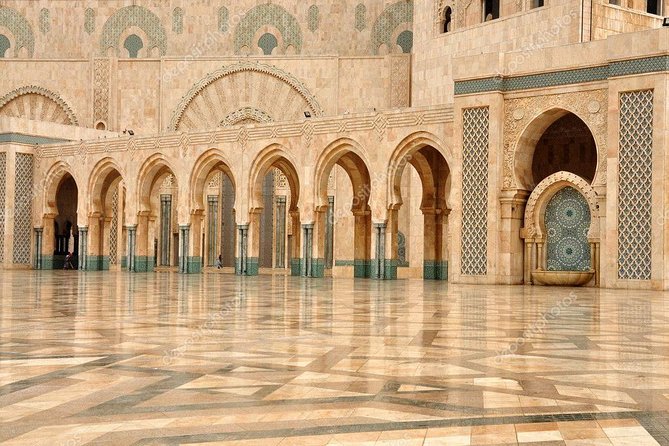
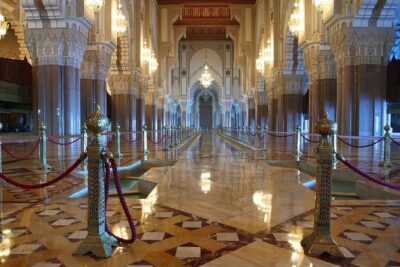
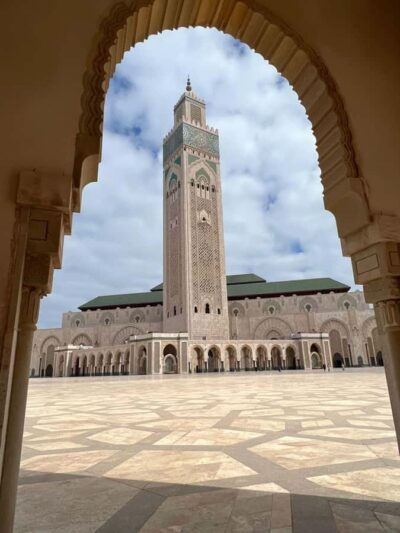
Your trip starts in Casablanca, with your guide meeting you at the airport. First stop is the Hassan II Mosque, one of Morocco’s headline sights and a rare mosque that non-Muslims can visit. Your guide walks you through the traditions and rituals, which helps you look beyond the architecture and understand what you are seeing.
From there, you can add a cinema-flavored detour: Rick’s Café. It is designed to recreate the famous bar vibe from the Casablanca movie, set in a courtyard-style mansion along the edges of the old Medina. Even if you are not a movie buff, it is a good place to slow down, get a cold drink, and get your bearings fast.
Then you head to Rabat, where the city feels calmer and more spaced out than Casablanca. You will see major monuments tied to Morocco’s modern era, including the Hassan Tower complex area, the Mausoleum of Mohammed V, and the Kasbah des Oudaias. The garden inside Kasbah Udaya is the kind of break that makes you remember this is not just a sightseeing sprint.
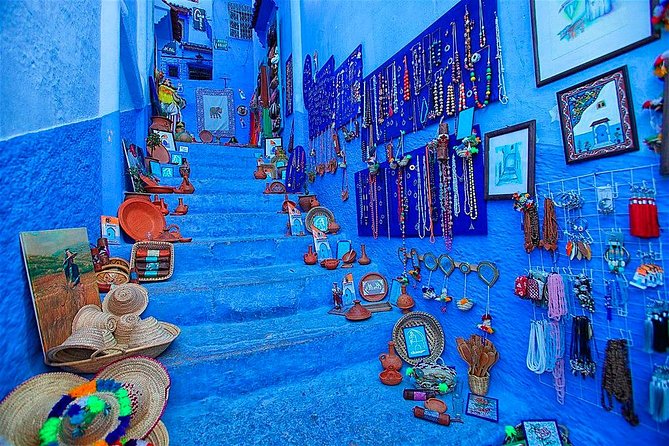
Later, you travel toward Chefchaouen, the famous blue city. You typically get a long chunk of time there, about 6 hours, which is key. A short visit feels like a photo stop. A longer stay lets you actually wander the lanes, see the handicrafts, and enjoy the slower rhythms by the hammam square.
One practical thing: Chefchaouen is photogenic, but that also means some lanes can feel busy. Your best move is to head out early, then take breaks when the light and crowds shift.
Fes and Meknes with context: Volubilis, imperial streets, then Medina Fes
Before Fes, you get a stop at Volubilis, the Roman ruins. This is one of those sites where your eyes quickly understand scale, even if you are not a Roman history person. Volubilis is described as one of the best-preserved Roman locations in North Africa outside Egypt, and seeing it in person makes that claim feel real.
In Meknes, you get the imperial flavor without the heavy stress of trying to figure out everything on your own. The city has the nickname Versailles of the Maghreb, and your visit focuses on the main highlights with a professional guide. It helps you connect the dots between Morocco’s different dynasties and how they shaped the cities.
Then you arrive in Fes with time in the soft afternoon light for a panoramic look. For dinner, there is a specific suggestion: Clock Café. It is known for a creative menu, including options like a camel hamburger, plus Moroccan specialties you might not find as easily elsewhere. It also leans into culture with storytelling and activities like Arabic calligraphy workshops, so it is a fun way to end an intense day.
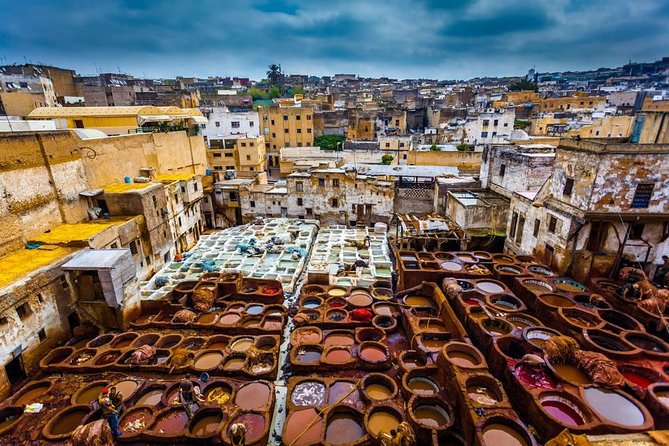
The big moment is Day 4’s private guided visit of Fes Medina. The old city is a World Heritage Site and often described as a labyrinth. With a dedicated local guide, you can visit major landmarks with real context, like palaces, Jewish quarters, and important institutions such as the Madrassa and the coranic school area. Without that guidance, you can still enjoy Fes, but you will likely miss why certain corners matter.
If you like walking but also like knowing what you are walking past, this is where the tour justifies itself.
Cedar forests, Ziz Valley dates, and Erfoud fossils on the road to Merzouga
Leaving Fes, the trip shifts from cities to nature, and that matters. You drive toward the cedar forests around Azrou and Ifrane, where the air feels cooler and the vibe changes from stone to trees. This is a good day to recharge your legs, plus it is a nice break from the medina intensity.
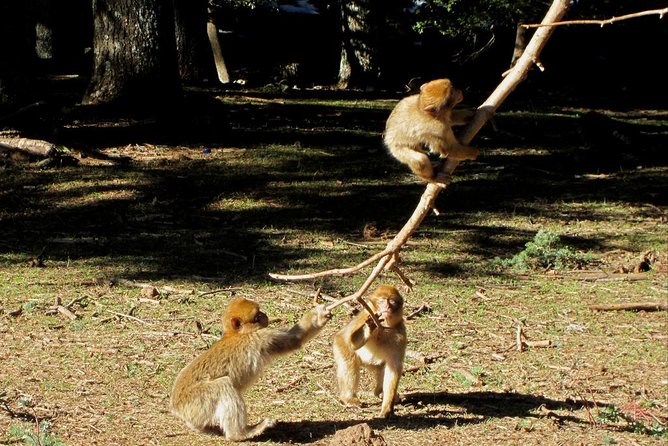
There can be a short stop in Midelt, a small town between the High and Middle Atlas. It is positioned for mountain views, and the route may pass typical forest animals like monkeys.
Next comes the Ziz Valley, a fertile area known for dates. You are encouraged to try the dates, and this is the kind of small, practical experience that makes Morocco feel real. It is not a souvenir only moment; it is taste-first.
Then you reach Erfoud, near fossil excavation sites. You may do a workshop to find and work with original fossils like trilobites. That is a fun angle because it connects the Sahara desert geology to something visual and tangible: the soil was shaped from much older marine life.
This is also the road phase where you need to accept that “transit days” are part of the experience here. The trade-off is huge: by the time you hit Merzouga, you are not just arriving, you are already feeling the desert shift.
Merzouga Sahara overnight: desert camp, camel ride, dunes, and music stops
Merzouga is the desert base for the tour, and you start with a welcome Moroccan tea. From there, the tour sets you up for both adventure and culture.
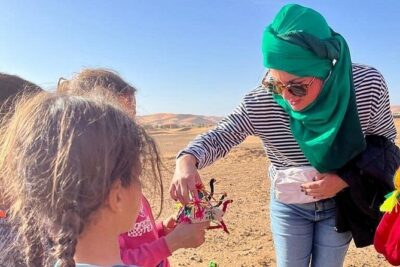
On Day 6, the desert gives you options. You can participate in activities that could include extreme sports, Moroccan cuisine workshops, or contact with nomads, plus learning through their music and traditions. Even if you do not choose the more intense options, the day still gives you a structure: you visit places tied to the desert way of life, then you return to the dunes for sunset.
Rissani is the next cultural stop. It is tied to the historic Tafilete region and sits on old caravan routes. The market and souk are described as very authentic, and you even get a donkey market. That is not a staged photo stop kind of thing. It is more like stepping into the machinery of trade that kept the desert alive for centuries.
Then you visit Khamlia, a village tied to Gnawa culture. You can enjoy music and learn about the lifestyle and traditions of the Gnawa people.
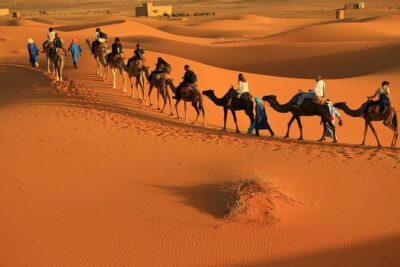
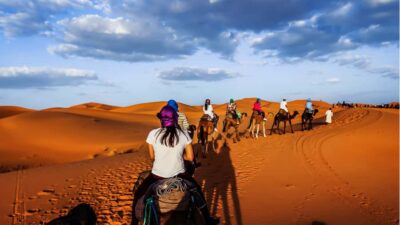
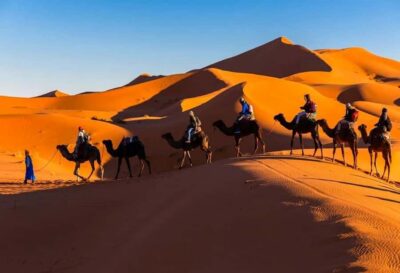
Back in Merzouga, the signature desert moment comes together: time on the dunes, camel ride for about an hour to reach oases, then watching sunset from a high dune. The dunes area is described as UNESCO world heritage, so it is not just “pretty desert,” it has real protection and significance.
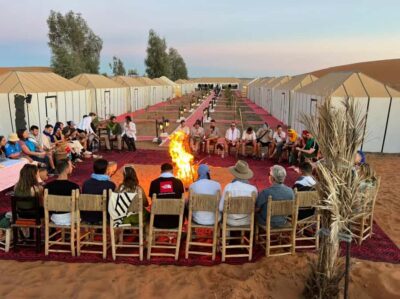
That night in the desert camp is the payoff. You get the feeling of scale, and the stars tend to look different when there is less city light. If you only do one thing in Morocco for the soul, this is the place.
Todra Gorge rock walls and Dadès Valley calm after the Sahara
After the desert night, you wake up with that cold early light that makes the open space feel sharp and quiet. There is time to climb to the top of a dune, which is one of those moments that works well before the crowds and before the day gets hot.
Then you move into the rocky drama of Todra Gorge. The gorges feature towering rock cliffs that reach about 600 meters high and are separated by around 10 meters in width. That width is what makes it feel tight and dramatic, and it also creates a natural passage where you can really feel how the valley channels wind and sound.
From there, you end in the Dadès Valley, which contrasts the desert with green calm. This is a good day for photos, but also for resting. Your eyes need a break after hours of watching dunes and desert tones.
Longer loops that take in several cities
Kasbah Road to Ouarzazate and Ait Ben Haddou, then Marrakech at Jamaa el-Fna
On Day 8, you shift into kasbah country via the Route of the One Thousand Kasbahs. This route is a string of smaller stops tied to old fortress architecture and caravan-era life, so the drive becomes part of the storytelling.
You can visit traditional villages in the Skoura area and around El Kelaa des M’Gouna. Kasbahs are described as an older form of castle, and that explanation helps because you start noticing defensive design, not just buildings.
Then you reach Ouarzazate, where you can discover sites like Kasba Taourirt. Ouarzazate also connects to modern film sets, and the tour uses that angle carefully to show how the landscape and architecture work on camera.
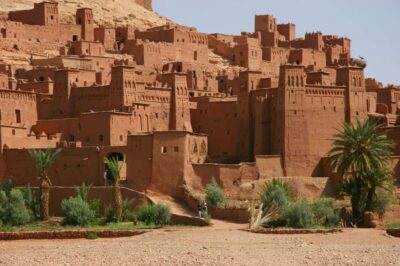
The highlight here is Ait Benhaddou, a UNESCO World Heritage site. It is described as the most important point on the kasbah route, with defensive purpose for caravans moving between the Sahara and Marrakesh. It is also still inhabited and used as a film set for productions like Gladiator and Game of Thrones.
That same day, you finish in Marrakech and get dinner at Jamaa el-Fna square. This is the place to eat street food like Tagine and couscous, with lots of stalls for sandwiches and teas. It is also where you see the mix of performers and everyday locals. If you want the full Morocco feel, this is a solid way to start Marrakech nights.
Marrakech with a dedicated guide: Bahia Palace, Ben Youssef, Majorelle, YSL
Marrakech gets a day with a guide or historian dedicated to the city. That is how you get more than a list of monuments. You learn what to look for in architecture and why certain places mattered to rulers, scholars, and artists.
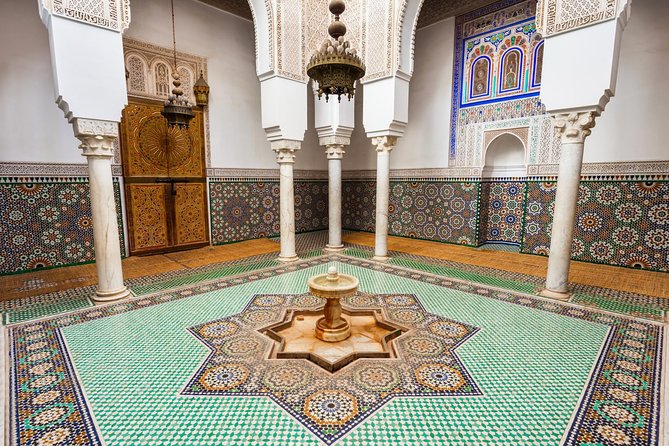
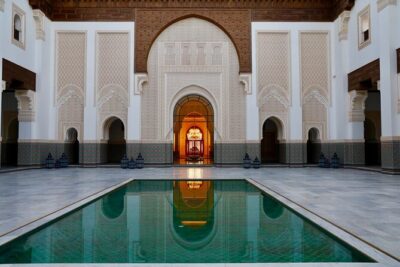
You can visit Bahia Palace, known for its 19th-century opulence, with an enormous garden, a central courtyard, and many decorated rooms built by artisans brought to Marrakech from Fez. Ben Youssef Medersa is another major stop. It is described as a 12th-century Islamic faculty that is now a museum, with interiors decorated in a way that rewards slow walking.
Other signature stops include Majorelle Gardens, the botanical garden associated with Yves Saint-Laurent and Pierre Bergé since 1980. It is a rare moment of organized calm in a city that moves fast. The tour also includes time at the Musee Yves Saint Laurent Marrakech, which focuses on the permanent collection and rotating exhibitions, plus the modern architecture of the museum building itself.
And yes, you will also see the Koutoubia Mosque, one of Marrakech’s most photographed monuments. It is built in the 12th century and compared to Seville’s Giralda and Hassan’s Tower in Rabat. Even if you do not enter, it helps you understand the city’s visual language.
Price and logistics: where the value really comes from
At $2,954.46 per person for 10 days, you are paying for a private system, not just sightseeing. That price covers air-conditioned vehicle transportation, private driving, and the bulk of lodging, including 4-star hotels/riads and a luxury desert tent camp. It also includes camel ride and three dinners, which you would otherwise have to arrange yourself.
What is not included is important: flights and entrance fees for museums and monuments. That means your budget needs a buffer for tickets at major sites like palaces, medersas, and gardens where admission applies.
For me, the value check looks like this: if you would otherwise spend money on multiple internal transfers, pay for separate local guides, and still struggle with timing, then private transport plus included stays is often the better deal.
Also remember, this tour is scheduled within a defined operating window, and it is typically booked about 75 days in advance on average. If your dates matter, you should plan early.
Who should book, and who should pass
This works especially well if you want a guided Morocco trip but still enjoy wandering on your own. It also suits people who want the Sahara without turning the desert night into a chaotic DIY project.
You should consider another style of travel if you hate long car days. This itinerary switches regions often, and Morocco distances add up. Also, if you want a mostly independent trip with minimal structure, a private tour like this may feel too organized.
Should you book this private Morocco tour?
I think you should book it if you want the major Morocco themes in one trip: imperial cities, a real desert overnight, and Marrakech with expert city context. The strongest part is how the tour turns “big sights” into moments you can understand, especially in Fes and the Sahara.
Book it if you are okay planning around entrance fees and bringing your own spending for extra meals and souvenirs. When you price it out, the included lodging, private transport, and the desert camp night do a lot of heavy lifting.
If you want, tell me your travel month and your comfort level with long drives, and I will help you decide if the pacing fits you.
FAQ
Is this tour private?
Yes. It is listed as a private tour or activity, so only your group participates.
What does the price include?
The tour includes air-conditioned vehicle transportation, private transportation, accommodations (4-star hotels/riads plus a luxury tent in the desert camp), camel ride, 9 breakfasts, and 3 dinners.
Are entrance tickets and museum fees included?
No. Entrance in museums and monuments is not included.
What is included for the Sahara Desert portion?
You get an overnight in the Sahara desert area near Merzouga in a luxury tent camp, plus a camel ride through the desert dunes and oases, with time for sunset and stargazing.
Where does the tour start and end?
The tour starts in Casablanca, with your guide meeting you at the Casablanca airport. At the end of the trip, you go to the airport to say goodbye.
What is the cancellation policy?
You can cancel for a full refund if you cancel up to 24 hours in advance. If you cancel less than 24 hours before the experience start time, the amount paid is not refunded.
Longer Routes Through the Country
- Rabat Imperial City Day Trip from Casablanca★ 4.5 · 353 reviews
- 10 Day Desert Tour From Casablanca via the Imperial Cities★ 5.0 · 254 reviews
- 10D 9N Private Morocco Tour From Casablanca By Imperial Cities And South Desert★ 5.0 · 156 reviews
- From Casablanca: Rabat Imperial City Day Trip★ 4.6 · 145 reviews
Sahara Routes, Read Together
- Morocco Tour from Casablanca to Sahara and Marrakech 5 days★ 4.5 · 171 reviews
- 7-days: Casablanca to Chefchaouen then Fes and Sahara Desert – Camel Trekking★ 5.0 · 53 reviews
- 8-Day Morocco Adventure: Imperial Cities & Sahara Desert Trek★ 5.0 · 37 reviews
- Morocco 11 Days Tour from Casablanca via Sahara Desert★ 5.0 · 25 reviews
Added recently from around Casablanca

More Sahara Desert Tours worth a look.
 ★ 4.9From Marrakech: 3-Day Merzouga and Sahara Desert TourFrom $13415,308 reviews
 ★ 5.03-Day Marrakech to Fes Sahara Desert Tour via MerzougaFrom $2206,546 reviews
 ★ 4.4From Marrakech: 2-Day Sahara Tour to Zagora & Ait Ben HaddouFrom $841,925 reviews
 ★ 4.8From Fez: Sahara Desert 2-Day Tour with Merzouga Camp StayFrom $1141,716 reviews
 ★ 4.8From Marrakech: 3-Day Sahara Tour with Private tent & MealsFrom $1021,652 reviews
 ★ 4.5From Marrakech: 3-Day Sahara Desert Adventure to FesFrom $1381,405 reviews
 ★ 4.7From Fes to Marrakech: 3-Day Sahara Desert Discovery TourFrom $1821,158 reviews
 ★ 4.8Marrakech: 3-Day Merzouga Sahara Desert Tour with Quad Ride669 reviews
Where else this one sits