
REVIEW · TANGIER
7 days Tour from Tangier to Marrakech Morocco Tours
Blue streets, desert drums, imperial cities. This 7-day Tangier-to-Marrakech trip strings together Chefchaouen, Fes, the Roman ruins at Volubilis, and a Sahara tent night, with hotel pickup at 8:00 am along the way. Imperial-city guidance helps you move through medinas without feeling like you’re guessing.
I especially like the rhythm of traditional riads for six nights, then a total change of pace in the desert camp. I also like that the Sahara night includes both camel riding and sandboarding, so it feels like an experience, not a rushed stop.
One possible drawback: the tour packs in a lot, so driving time is real. Expect early starts on multiple days and a slow High Atlas crossing near 2,300m.
In This Review
- Key things that make this tour worth your attention
- Why this Tangier to Marrakech route works (and where it can feel long)
- Day 1: Tangier pickup at 8:00 am, then Chefchaouen’s blue alleys
- Day 2: Volubilis Roman ruins, then Meknes walls and Bab el Mansour
- Day 3: Guided Fes el-Bali medina and souks, plus riad sleep
- Day 4: Ifrane and Azrou cedar forest, then Erfoud and the dunes
- Erg Chebbi night: camel sunset, sandboarding, and how the camp experience is staged
- Day 5: Rissani market, Todra Gorge, and the Dades Valley fig country
- Day 6: Ouarzazate kasbahs, Taourirt, Ait Benhaddou, and the High Atlas pass near 2,300m
- Day 7: Marrakech medina plan with Jemaa el-Fna, Saadian Tombs, Bahia Palace, and more
- Price and value: what $1,349.08 includes and why it can be a smart deal
- The guide factor: safe driving and organized stops in real life
- Who should book this tour, and who should think twice
- Should you book this Tangier to Marrakech 7-day tour?
- FAQ
- How long is the tour from Tangier to Marrakech?
- What is included in the Sahara desert experience?
- Are tours in Fes and Marrakech guided?
- Are entrance fees included?
- What kind of accommodation is included during the trip?
- What is the cancellation policy?
Key things that make this tour worth your attention
- Up to 17 people, so you get group energy without feeling lost in a crowd
- Hotel pickup and drop-off support, including convenient drop-offs around your Marrakech riad
- Chefchaouen + Fes + Marrakech as a focused route, so you see the big cultural hits in order
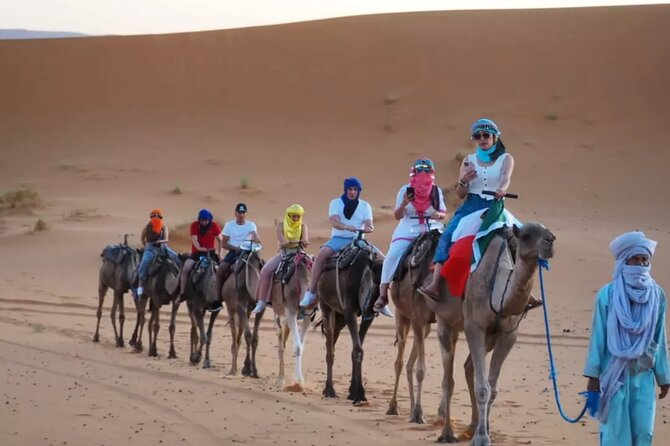
- Erg Chebbi dunes with a camel trek at sunset, plus sandboarding
- Six nights in traditional riads, giving you a more local base than standard hotels
- Guided medina time in Fes and Marrakech, which is where you’ll benefit most from a plan
Why this Tangier to Marrakech route works (and where it can feel long)
This is the kind of route that makes sense in Morocco because you’re not bouncing around randomly. You start on the coast at Tangier, head inland through Rif scenery to Chefchaouen, then work your way east and south toward the Sahara before turning back north for the imperial cities and Marrakech.
What makes it feel good is the balance. You get serious culture time in Fes and Marrakech medinas, plus natural scenery stops like the cedar forest with Barbary apes and dramatic canyon days. Then you switch gears hard for Erg Chebbi, where the dunes and desert camp take over the schedule.
The tradeoff is pacing. Even though the tour includes stops, you still spend plenty of time in an air-conditioned vehicle moving between regions. If you hate long drives, this may feel like a lot. If you’re okay with “see more by traveling more,” it’s a strong way to experience a huge chunk of the country in a week.
More Tangier, and the cape beyond it
- From Tangier: Chefchaouen Day Trip with Local Guide
★ 4.8 · 3,287 reviews - From Tangier: Cap Spartel and Hercules Cave with Camel Ride
★ 4.7 · 1,157 reviews - From Tangier: Special Day Trip to Chefchaouen and Tetouan
★ 4.6 · 816 reviews - Tangier: Hop-On Hop-Off Sightseeing Bus
★ 4.1 · 769 reviews
Day 1: Tangier pickup at 8:00 am, then Chefchaouen’s blue alleys
The day starts with a straightforward pickup at 8:00 am from near the Muraille de Tanger area. From there, you head into the Rif mountains toward Chefchaouen. This is a big part of why people love this route early, because the color and mood of Chefchaouen is unlike the rest of Morocco on your itinerary.
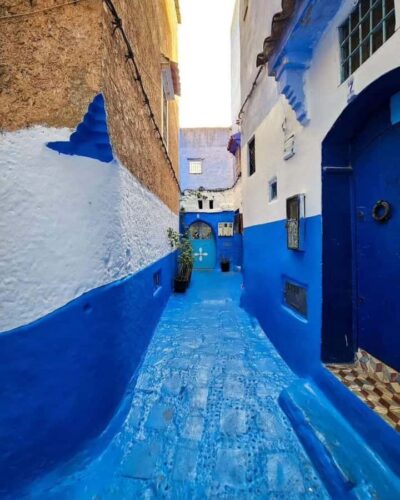
In Chefchaouen, you’ll spend time in the Medina, walking the blue streets and taking in the compact, hillside layout. The value here is that you’re not arriving at the end of the day and missing daylight. Starting early gives you better light for photos and more time to wander without rushing.
Small consideration: Chefchaouen days often mean lots of walking on uneven stone and tight lanes. Wear shoes that are fine for that. Also, lunches in Chefchaouen are not listed as included, so plan to cover your own meal.
Day 2: Volubilis Roman ruins, then Meknes walls and Bab el Mansour
After breakfast at the riad, the tour heads to Volubilis, one of Morocco’s best-preserved Roman sites. You get about an hour there. Entrance fees are not included, so budget for that if you want to go inside and fully enjoy the site.
Volubilis is the kind of stop that helps Morocco feel bigger than just its medinas. You see archaeology, columns, mosaics, and the scale of the Roman footprint on Moroccan soil. It’s also a good mental reset before the more “front door to front door” style of medinas you’ll hit next.
Then you move on to Meknes for a shorter visit, about 40 minutes. Here, the emphasis is on medina walls and major landmarks like Bab el Mansour and the tomb of Moulay Ismail. Since this segment is shorter, think of it as a focused taste rather than a deep dive.
By the end of Day 2, you go directly to Fes and spend the night there. That’s efficient, and it also means you’re not losing time by crisscrossing.
Day 3: Guided Fes el-Bali medina and souks, plus riad sleep
Day 3 is built around one of the most rewarding parts of Morocco for first-timers, Fes el-Bali. You get a guided tour of the medina and souks, lasting around four hours, with admission marked as included. This is the day you’re most likely to feel the difference between traveling with guidance and winging it.
In the old city, you’ll move through narrow cobbled streets, passing old mosques, and seeing Andalusian architecture details as you go. Fes is a sensory place, with lots of small turns, doors, and lanes that all look similar. A guide helps you keep your bearings fast.
You also sleep in a riad overnight, which matters. Riads put you inside the rhythm of the Medina rather than just beside it. It’s also practical for fatigue, because returning to a quieter inner courtyard is a relief after time in busy streets.
Lunch and dinner in Fes are not listed as included, so plan to eat on your own during those meals.
Day 4: Ifrane and Azrou cedar forest, then Erfoud and the dunes
This is a transition day. You start with the scenery, then end in the desert.
First stop is Ifrane, described as the Switzerland of Morocco. You get a short pause, about 30 minutes. It’s a nice break from the medinas, with a cooler feel and a more mountain-town vibe.
Next comes Azrou Cedar Forest, where you visit to observe Barbary apes. The stop is brief, around 15 minutes, but it’s one of those stops that feels simple and memorable. If you’re into nature, it’s a welcome pause before the Sahara takes over the schedule.
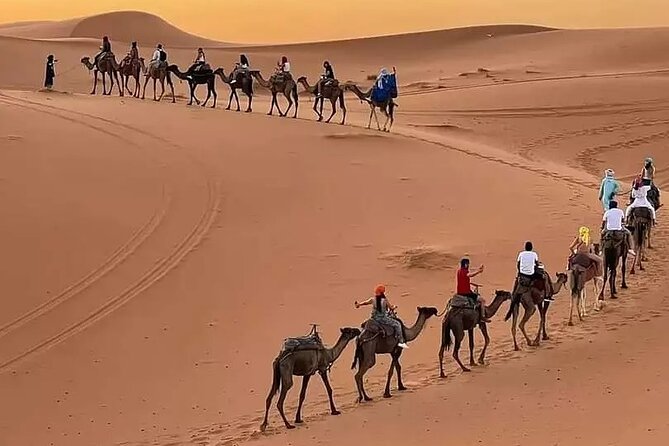
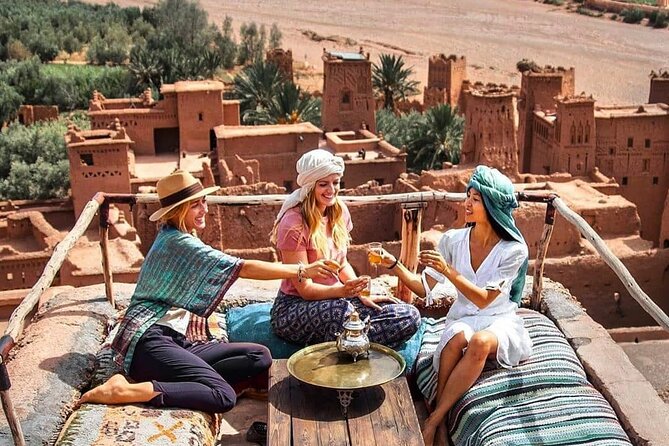
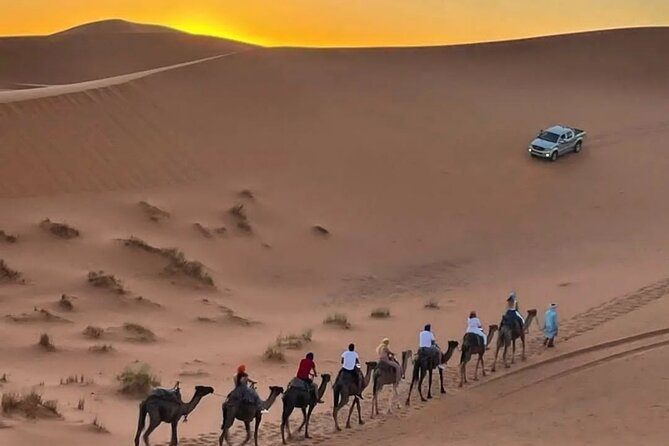
Then you move toward Erg Chebbi dunes, reaching the desert area via Erfoud. The day’s finale is where the tour really turns magical: your desert hotel is set up, dromedaries are ready, and you get an hour-long camel trek through the dunes to catch sunset.
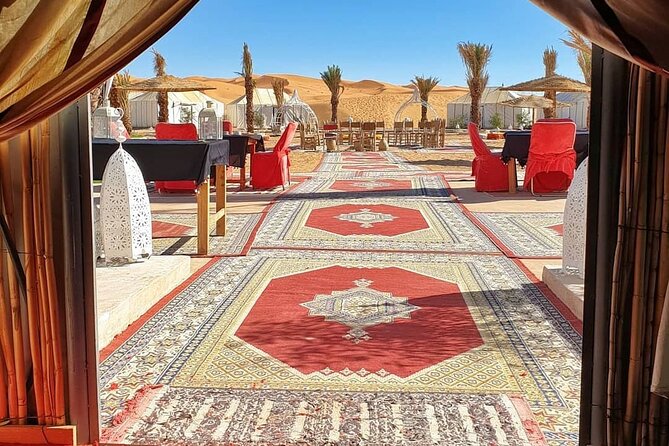
At night, you gather at camp for dinner and Moroccan tea, with drums and the sky turning into a sea of stars. You sleep in tents in a desert camp setup, listed as one night in a luxury tent.
Also worth knowing: the included details mention sandboarding. And there’s a 4×4 transfer option as an alternative to the camel ride, which is helpful if you prefer not to ride for the trek both ways.
Erg Chebbi night: camel sunset, sandboarding, and how the camp experience is staged

The Sahara part of this tour is carefully built. It’s not only about seeing dunes, it’s about sequencing.
You get:
- Camel ride at sunset for the classic dune color shift
- Sandboarding in the dunes for the action side
- A camp dinner and Moroccan tea with drumming
- Sleep in a luxury tent, so the night feels like lodging, not an improvised stop
This is one reason the trip works for many people. You’re not only standing around taking pictures. You’re doing something at each phase, and each phase has a different feel: warm desert light, then cool night air, then early movement again the next morning.
One practical note: you’ll be in desert conditions and that means dust. Pack smart for that. Bring something for your face and keep water accessible. You’re not told to do this in the itinerary, but it’s the kind of comfort upgrade that pays off instantly.
Longer loops that take in several cities

Day 5: Rissani market, Todra Gorge, and the Dades Valley fig country
Day 5 starts with the desert leaving you slowly. After a sunrise show, you return to the hotel, shower, and have breakfast. Then it’s time to head toward Rissani, where you’ll visit the market for about 40 minutes.
Rissani matters because it’s tied to older trade history and the region around Sijilmassa. Even without getting too academic, a market stop gives your day local texture. It’s also scheduled so you visit on market days such as Tuesday, Thursday, or Sunday, which makes it more likely you’ll see the town at full swing.
From Rissani, you work toward Todra Gorge. Along the way, you have time for a fossilized marble factory visit near Erfoud, then continue toward palm areas and groves, including Touroug and Tinjdad. Then you reach Todra Gorge, with lunch on site and an option for a recommended walk.
Todra Gorge is dramatic: a riverbed that formed vertical walls with serious scale. It’s a great “stretch your legs” break after desert and drive time.
You then continue toward Dades Valley, known for fig trees, and stop at the “monkey’s paws.” It’s a short stop, but it adds variety, and variety keeps a 7-day itinerary from feeling repetitive.
Day 6: Ouarzazate kasbahs, Taourirt, Ait Benhaddou, and the High Atlas pass near 2,300m
On Day 6, you start seeing Morocco’s southern architecture and film-set glamour.
You head toward Ouarzazate, passing through the Valley of Roses and stopping in Skoura to explore a palm grove. Then you spend time in Ouarzazate, where you can see or explore the Kasbah of Taourirt. If you’re a film fan, the route also includes the option to visit film studios, since many movies have been shot there.
Next you go to Ait Benhaddou, one of the largest kasbahs in southern Morocco. You get about an hour to walk the streets and climb toward viewpoints over the valley. This stop is popular for a reason. You’ll see the structure up close and understand why filmmakers keep coming back to this area.
Then the tour crosses the High Atlas mountains slowly, at a mountain pass around 2,300m, and you finally arrive in Marrakech. The day finishes with time to enjoy the energy of Jemaa el-Fna square.
This is another point where pacing matters. The driving here is part of the experience, but it’s also part of why the day can feel full. If you tend to get carsick, take it seriously. If you don’t, this is a great day to just watch the scenery unfold.
Day 7: Marrakech medina plan with Jemaa el-Fna, Saadian Tombs, Bahia Palace, and more
Your last day is a sightseeing-heavy day in Marrakech. You start with breakfast, then a guided tour focusing on the city’s major highlights.
The star is Jemaa el-Fna square, which takes up a lot of your time. It’s an atmosphere stop, with aromas, sounds, and nonstop motion in the square area.
From there you’ll also have time for:
- Saadian Tombs
- Koutoubia Mosque
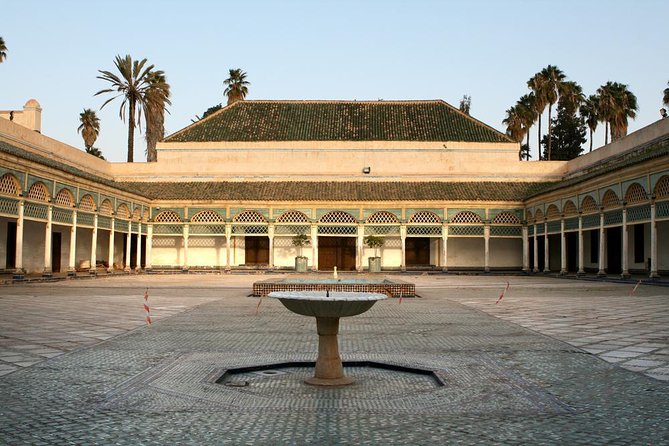
- Bahia Palace
- Walking in the medina
- A look through the Mellah, the old Jewish quarter
Admission is marked as not included, so plan on paying for any entry tickets you want to use.
The big advantage of having this planned for your final day is that Marrakech can overwhelm you. A guide helps you focus on the most worthwhile sights and keeps your schedule realistic.
And you’ll notice the contrast from the Sahara. In Marrakech, your day is about streets, courtyards, and markets again. You finish where many people want to be, because Jemaa el-Fna is the easiest place to remember what the trip brought you to.
Price and value: what $1,349.08 includes and why it can be a smart deal
At $1,349.08 per person for a 7-day package, the value depends on what you’d otherwise pay if you did this route on your own.
Here’s what you’re getting for your money:
- Air-conditioned vehicle for the long-distance sections
- A group cap of 17, which keeps it more personal than big coach tours
- Guided sightseeing in Fes and Marrakech
- Six nights of accommodation in traditional riads
- One night in a luxury desert tent camp
- Camel ride and sandboarding in the dunes
- Dinner (2) and breakfast (6)
The biggest value driver is lodging plus included meals. If you had to line up riads, desert camp stays, and a desert activity day yourself, the planning time and cost often add up fast. Also, the tour’s structure connects places in a way that reduces your own transfer headaches.
What’s not included is also clear: drinks and most lunches and dinners in Chefchaouen, Fes, and Marrakech. Entrance fees for specific sights like Volubilis and many Marrakech entries are not included. Tipping is optional.
My takeaway: if you like guided support and you want the Sahara night without dealing with separate booking, this price feels reasonable for what’s bundled. If you want full control and already know the exact sights and transport you want, then you might compare against a self-guided plan. But for a first time Morocco sweep, this is the kind of package that reduces friction.
The guide factor: safe driving and organized stops in real life
One thing that shows up strongly in feedback for this operator is the quality of the driver-guide team. Names like Rachid, Moha, and Ibrahim come up in excellent terms, especially for calm, confident driving and for coordinating ahead so you spend less time waiting around.
That matters more than people expect on a route like this. Morocco is full of turnoffs, small roads, and busy medinas. When your driver and guide handle timing and arrivals, you feel safer and your days run smoother.
You’ll also have an English and Spanish speaking driver/guide, which is a big plus for understanding what you’re seeing and making decisions in the moment.
Who should book this tour, and who should think twice
This tour is a great match if you want:
- A one-week route that covers Chefchaouen, Fes, the desert, and Marrakech
- Guided medina time where it really helps
- A genuine desert experience with camel sunset, sandboarding, and a camp night
- A plan that includes riads rather than only standard hotel rooms
Think twice if:
- You strongly dislike long driving days
- You prefer unstructured time and don’t want a guided itinerary
- You’re counting on meals being fully included. Several lunches and dinners are not included.
If you’re flexible and excited by variety, this route is the kind of trip that stays in your head for years.
Should you book this Tangier to Marrakech 7-day tour?
I’d book it if your main goal is to see Morocco’s big highlights in a tight week, with riads, Fes and Marrakech guidance, and a real Sahara camp night. The included desert activities and lodging reduce the heavy lifting of planning.
I wouldn’t book it if your travel style is slow and independent, or if you don’t want to spend lots of hours in transit. The itinerary is full, and that’s not a criticism. It’s just the deal.
If you’re choosing between “many separate bookings” and “one organized plan,” this one leans toward the organized side in a good way.
FAQ
How long is the tour from Tangier to Marrakech?
The tour is approximately 7 days.
What is included in the Sahara desert experience?
The package includes a camel ride, sandboarding in the dunes, one night in a luxury desert tent camp, and a 4×4 transfer alternative to camel riding from and to the camp. Dinner and breakfast are included as part of the overall meal plan.
Are tours in Fes and Marrakech guided?
Yes. The tour includes a guided sightseeing tour in Fes and Marrakech.
Are entrance fees included?
Entrance fees are not included for Volubilis, and admission is also marked as not included for Marrakech sightseeing items. Some activities are listed as free, but you should budget for paid entries and optional activities.
What kind of accommodation is included during the trip?
You get six nights of included accommodation in traditional riads, plus one night in a luxury tent in the desert camp.
What is the cancellation policy?
Free cancellation is available up to 24 hours in advance for a full refund.
Longer Routes Through the Country
- Tangier Full-Day Grand Tour★ 4.8 · 146 reviews
- 3 Days Morocco Private Tour from Tangier★ 5.0 · 21 reviews
- 10D Morocco Tour From Tangier By Imperial Cities And South Desert★ 5.0 · 21 reviews
Tangier and the Cape
- From Tangier: Chefchaouen Day Trip with Local Guide★ 4.8 · 3,287 reviews
- From Tangier: Cap Spartel and Hercules Cave with Camel Ride★ 4.7 · 1,157 reviews
- From Tangier: Special Day Trip to Chefchaouen and Tetouan★ 4.6 · 816 reviews
- Tangier: Hop-On Hop-Off Sightseeing Bus★ 4.1 · 769 reviews
Added recently from around Tangier

More Tangier, Cap Spartel and the Caves of Hercules worth a look.
 ★ 4.8From Tangier: Chefchaouen Day Trip with Local GuideFrom $383,287 reviews
 ★ 4.6From Tangier: Special Day Trip to Chefchaouen and TetouanFrom $60816 reviews
 ★ 3.8From Tarifa: Tangier Full-Day Trip with LunchFrom $135776 reviews
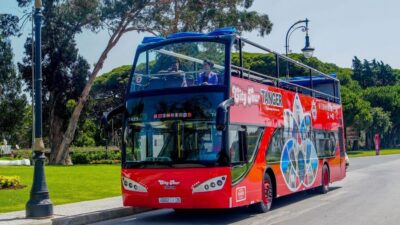 ★ 4.1Tangier: Hop-On Hop-Off Sightseeing BusFrom $15769 reviews
★ 5.0From Tangier: Chefchaouen Day Trip with Local GuideFrom $49632 reviews
★ 4.1Tangier: Hop-On Hop-Off Sightseeing BusFrom $15769 reviews
★ 5.0From Tangier: Chefchaouen Day Trip with Local GuideFrom $49632 reviews
 ★ 4.3From Tarifa: Tangier Day Trip with Lunch and FerryFrom $105631 reviews
 ★ 4.9Tangier: Sunset, Tea, Sweets, Camel Ride, and Hercules CavesFrom $37575 reviews
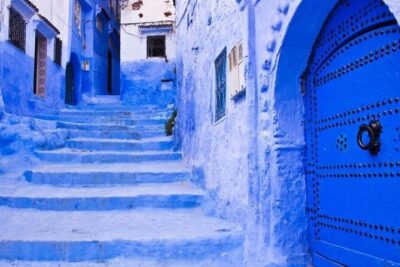 ★ 4.7From Tangier: Day Trip to Chefchaouen and Akchour WaterfallsFrom $74465 reviews