
REVIEW · TANGIER
10D Morocco Tour From Tangier By Imperial Cities And South Desert
Tangier to the Sahara in ten days is a serious change of pace. I love the way this trip stitches imperial cities together with a real desert night, plus you get local guides in Tangier, Fes, and Marrakech to help you read the medinas. One drawback to plan for: it is a lot of time on the road, and only some dinners are included, so your total food budget will be higher than you expect.
You’ll move from the Atlantic mood of Tangier to the blue streets of Chefchaouen, then into Fes and Morocco’s Roman past at Volubilis. After that, the itinerary leans hard into desert, kasbahs, and mountain valleys before ending in Marrakech’s main square. It works best if you can handle early starts and short walking days mixed with longer drives.
In This Review
- Key Highlights You Should Know Before You Go
- Tangier First Day: medina alleys, Portuguese fortress, and a corniche sunset
- Day Two: Caves of Hercules and Chefchaouen’s Blue City streets
- Chefchaouen to Fes: Volubilis ruins, imperial gates, and two big medinas
- Fes el Bali with a guide: tanneries, medrasas, and the art of getting lost
- Crossing the Middle Atlas: cedar forests, Barbary monkeys, and the road to Merzouga
- Erg Chebbi at sunset: camel ride, luxury camp comfort, and starry nights
- Day Six: Sahara sunrise plus Khemliya drumming and dancing
- Day Seven: Rissani market auction, Todra gorges, and Dades Valley kasbah views
- Ouarzazate film stops, Ait Ben Haddou UNESCO kasbah, then on to Marrakech
- Marrakech Day Nine: medina guide, palace stops, and Majorelle Garden time
- Last Day in Marrakech: how to use your final hours before departure
- Price and value: what $1,439.99 covers, and what you should budget
- Should you book this 10-day Morocco north-to-desert route?
- FAQ
- Where does the tour start?
- What is the destination at the end of the trip?
- How long is the tour?
- Is pickup and drop-off included?
- What desert activities are included?
- Are meals included?
- Are local guides included?
- Is Volubilis admission included?
- Is Jardin Majorelle included?
- What is the cancellation policy?
Key Highlights You Should Know Before You Go
- Blue City photos with a rooftop view in Chefchaouen, including time at Hotel Atlas
- Fes navigation help so you do not spend the day spinning in circles inside the medina
- Erg Chebbi camel ride plus a luxury night camp in a private tent with toilet and shower
- UNESCO Roman ruins at Volubilis with mosaics and heating systems still visible
- Kasbah stop at Ait Ben Haddou before rolling into Marrakech for square-side evening energy
- A practical meal plan: breakfast is covered, and only three dinners are included
Tangier First Day: medina alleys, Portuguese fortress, and a corniche sunset
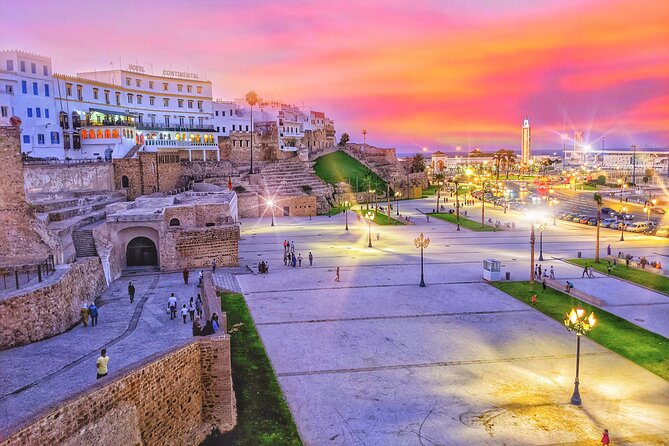
Tangier is a good place to start because it feels like Morocco at the edge of the world. After you meet your driver-guide and get to your hotel, I suggest you waste no time. Walk the medina first, because you learn faster on foot, and you’ll be looking for little anchors like the 15th-century Portuguese fortress.
If your arrival time allows, head to Zoco Chico square for an easy meal and people-watching. Then finish with the seafront promenade, the corniche. The goal on Day 1 is not to see everything, it is to get your bearings fast so the rest of the trip feels doable.
More Tangier, and the cape beyond it
- From Tangier: Chefchaouen Day Trip with Local Guide
★ 4.8 · 3,287 reviews - From Tangier: Cap Spartel and Hercules Cave with Camel Ride
★ 4.7 · 1,157 reviews - From Tangier: Special Day Trip to Chefchaouen and Tetouan
★ 4.6 · 816 reviews - Tangier: Hop-On Hop-Off Sightseeing Bus
★ 4.1 · 769 reviews
Day Two: Caves of Hercules and Chefchaouen’s Blue City streets
Start Day 2 with the local rhythm of Tangier. There’s an option to hire a guide for the kasbah area, walking in through the Bab Haha gate into the medina’s Dar Baroud neighborhood. If you like fortifications and views, this is one of the best ways to understand why Tangier developed the way it did.
Next comes the Caves of Hercules, just 20 minutes outside the city near Cape Spartel and the lighthouse area. Expect a cave complex where the opening faces the sea, and the shape is said to resemble Africa. It is a short, focused stop, and it helps you shift from city energy to “edge of the continent” scenery.
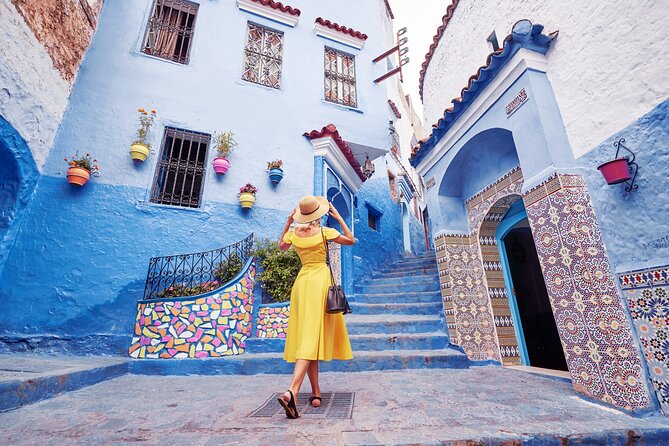
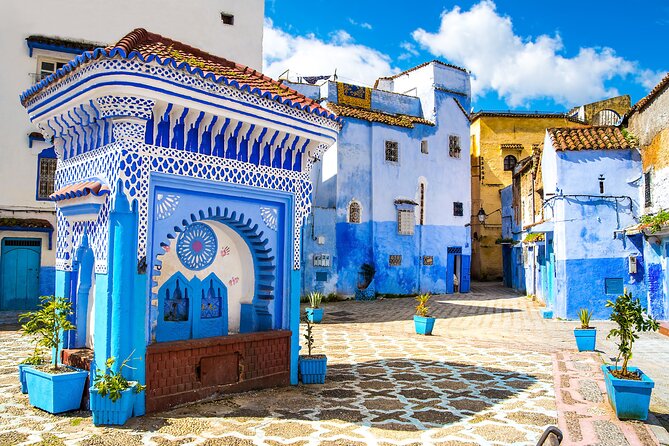
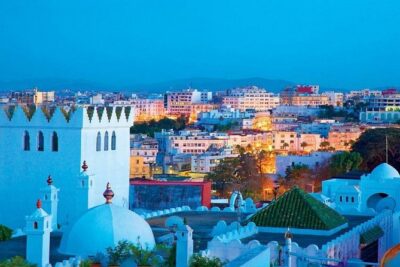
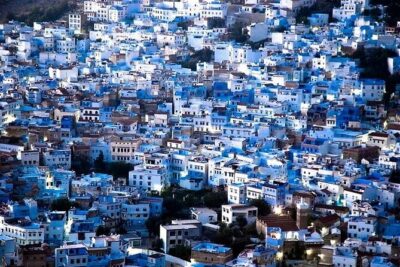
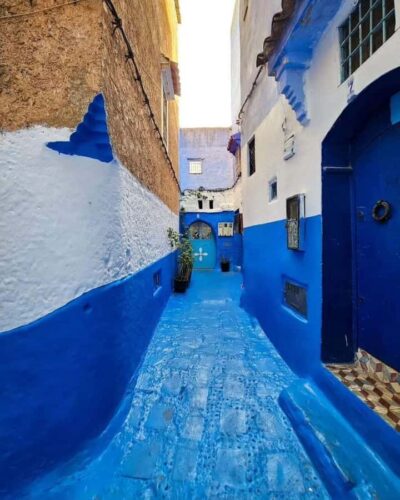
Then you drive to Chefchaouen in the Rif Mountains, and the look changes immediately. Chefchaouen’s narrow streets and blue-painted buildings create a maze feel, so you’ll enjoy it more if you move slowly. Plaza Outa el Hammam is a good lunch or café base, and you can pair it with a stop outside the walls to reach a rooftop panoramic viewpoint at Hotel Atlas.
Chefchaouen to Fes: Volubilis ruins, imperial gates, and two big medinas
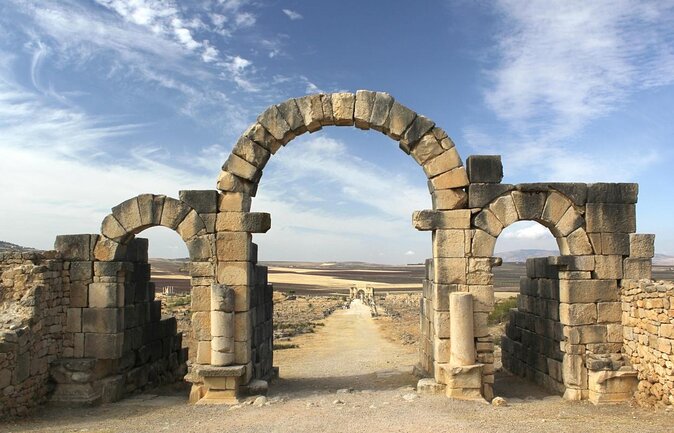
Leaving Chefchaouen early is smart, because Volubilis rewards quiet time. Volubilis is a UNESCO-protected Roman site and one of Morocco’s best-preserved Roman ruins. You’ll walk through merchant homes, temples, and mosaics that are still in place, and there are even heating systems visible. Plan on taking your time with details here, because it is not the kind of ruin where “one photo and done” works well.
After the ruins, you go toward Meknes and Fes. Meknes is smaller and less busy, so it makes sense as a breather before Fes. In Meknes’s Ville Impériale, you’ll see the Bab al-Mansour gate, the Mausoleum of Moulay Ismail, and the Royal Stables. If you still have energy, there are also medina stops and options like Bou Inania Madrasa and the Dar Jamaï Museum.
Then it’s onward to Fes. Before you enter, you can visit the Merenid Tombs for an all-encompassing view over historic Fes. It sets the stage for the next day, when the medina becomes a full contact sport in the best way.
Fes el Bali with a guide: tanneries, medrasas, and the art of getting lost
Fes is the oldest of Morocco’s imperial cities, and it does not play nice with casual wandering. Roads are narrow, winding, and steep. That sounds like a warning, but it is the point. With a guide for a half-day tour, you’ll learn your way faster and spend less time fighting dead ends.
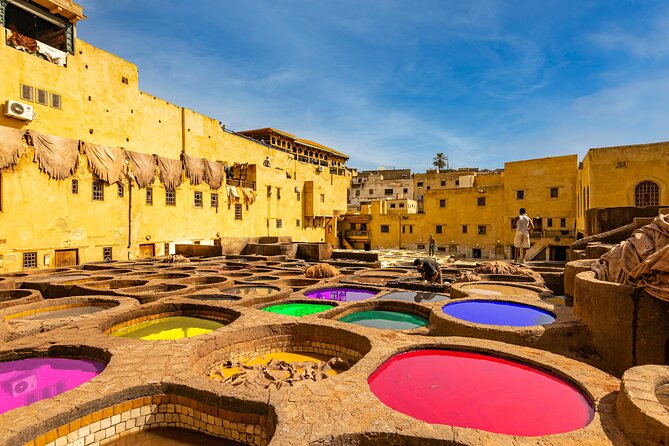
Start in Fes el Bali, with time in the souks. Even if you do not buy anything, you’ll see the range of wares, from spices to leather to ceramics. Then go to Chouara Tannery. Watching traditional leather work is fascinating, especially from a rooftop view, because it gives context for how the whole process fits together.
From there, you’ll be near Al-Qarawiyyin University, founded in 859 CE, alongside Al-Qarawiyyin Mosque. The mosque itself is open only to Muslims, but you may get glimpses of the decorated interior from appropriate vantage points. Keep going to madrasas like Al Attarine or Bou Inania, where the zellij tilework is the kind of craftsmanship that makes you slow down.
Finish with Bab Boujloud, the famous gate where the outside is blue and the inside is green. It leads you into Talâa Kebira, and then you can make your way toward museums like Musée Batha. The Mellah, the old Jewish quarter and cemetery, is also part of the route. The guide will help you pace it so the day stays rewarding, not exhausting.
Crossing the Middle Atlas: cedar forests, Barbary monkeys, and the road to Merzouga
Day 5 is a travel day with scenes. You head south from Fes toward Merzouga, and the drive crosses the Col du Zad pass at around 7,146 feet (2,178 m). Along the way you stop in the cedar forests of the Middle Atlas, where Barbary monkeys are a possible sighting. This is one of those moments where your camera will not be enough, because the whole setting feels cooler and more forested than what comes next.
Midelt is a lunch stop area, often called the apple city, so it is a natural break point before you keep climbing and dropping across passes. Then you enter the Ziz Valley and its palm clusters, passing ksars, fortified merchant houses built to protect valuable goods.
Erfoud comes after that. This is a market town known for fossils and artisan work. There is a stop at a local artisan collective where you can see how fossil-rich rock becomes crafted objects. Then you drive toward the Erg Chebbi dunes, a sea of shifting sand waves near Merzouga.
Erg Chebbi at sunset: camel ride, luxury camp comfort, and starry nights
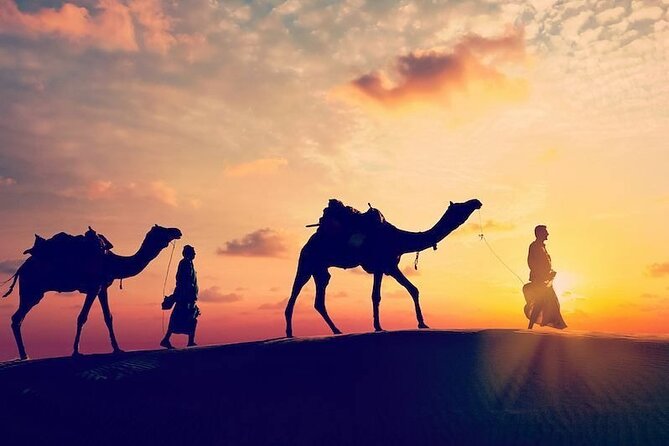
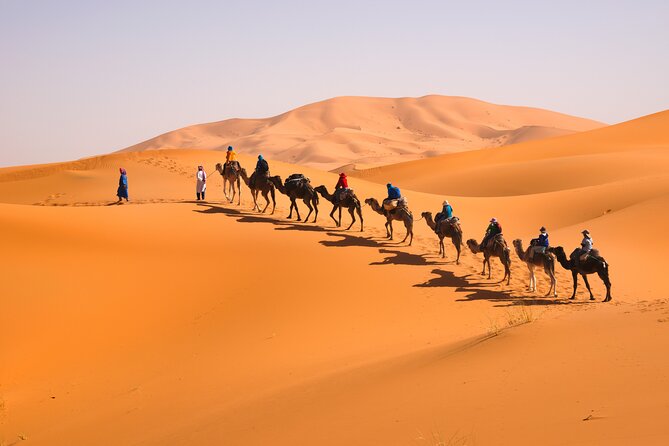
Once you reach the dunes near Merzouga, you shift from highway time to desert time. The camel ride takes you across the dunes to your prepared-for-you camp, arriving before sunset. Plan for the classic moment: you climb a dune to watch the light change, then return for dinner around camp.
Inside the camp setup, you’ll have a night in a bedouin-style tent. A key comfort detail is that this is described as a luxury night camp with a private tent that includes a toilet and shower, so you are not forced into the most basic desert setup. If you prefer modern comfort, there is an option to sleep at a hotel or auberge in Merzouga instead.
Entertainment is part of the evening: Berber music, campfire time, and a night sky you’ll remember long after the drive days. It helps to pack a light layer for nighttime, because deserts can cool down fast.
Longer loops that take in several cities
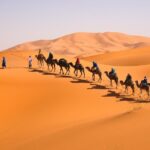
Day Six: Sahara sunrise plus Khemliya drumming and dancing
You wake early for sunrise at Erg Chebbi. This is one of the best uses of time on the whole route, because the dunes look different every minute. You’ll then spend the morning exploring more of the Sahara.
You can choose activities based on energy level. There’s a chance to rent a sandboard. You can join an Erg Chebbi tour, or take a quad ATV tour if that is your thing. If you want the slower version, there’s also a pool option to recover from the desert rhythm.
After the dunes, you visit Khemliya, a typical Saharan village. The people there are originally from Mali. Expect traditional drumming music and dancing, plus a short walk around the settlement so you’re not just watching from a distance.
Day Seven: Rissani market auction, Todra gorges, and Dades Valley kasbah views
Day 7 shifts from desert back to mountains and valleys. You stop in Rissani market, entering through its gate. Rissani is known for a livestock auction, and the market has its own smell and sound, especially if you’re close to where animals are staged.
A useful tip from the route details: look for the donkey parking lot. It’s one of those odd phrases that makes sense once you’re there, and it adds a memorable sense of place to the market time.
Then you drive toward Todra Valley with stops in villages like Millab, Tinjdad, and Toroug. Todra gorges is a dramatic stop, a narrow passage with near-vertical cliffs about 300 m high. If you like climbing culture or just want to stand in awe, this is the kind of place where you naturally slow down and look up. Lunch is in town, then you continue to Dades Valley.
In Dades Valley, you’ll sleep in a hotel overlooking the valley. You’ll also see rock formations locally called monkies fingers, plus mud kasbahs in the region. This is Morocco at its earthy best, built with materials that match the climate.
Ouarzazate film stops, Ait Ben Haddou UNESCO kasbah, then on to Marrakech
Day 8 brings big cultural set pieces. You enter Ouarzazate, a common stopping point on desert routes because it is more accessible than smaller towns. Ouarzazate is known for movie production, and you have an option to tour one of the movie studios. If you do, you’ll get an up-close look at props and sets. There’s also a stop at Musée du Cinema to learn about local film history.
Then comes Ait Ben Haddou, Morocco’s most famous kasbah and a UNESCO World Heritage site. The old ksour dates back to the 11th century and sat on the trans-Saharan trade route between Marrakesh, Ouarzazate, and the southern desert. Your free time here matters. You’ll want to walk through slowly and pick out the shapes, courtyards, and walls that made this place a filming favorite.
After lunch in the village, you drive to Marrakesh via the High Atlas Mountains, with views and Berber villages on the mountainsides. Arriving in Marrakech in the evening is perfect timing for Day 9, because you can then spend your energy on the medina and square.
Marrakech Day Nine: medina guide, palace stops, and Majorelle Garden time
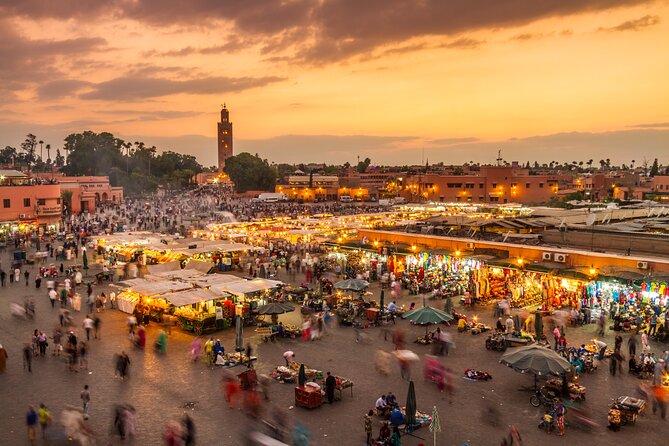
On Day 9, you get a local guide to walk through Marrakech’s old city, which is also UNESCO. This is where a guide earns their fee. The souks and alleys can feel like a maze, and the guide helps you see what matters, like shop types, neighborhood changes, and the flow of daily life.
After that medina time, you continue with another private tour focusing on major sights. You’ll visit Bahia Palace and El Badii Palace, plus the Saadian Tombs. Majorelle Gardens are also in the mix as an afternoon stop, and you should plan that the admission for the gardens is not included.
If you can, time your palace and tomb visits earlier in the afternoon, then use the gardens later when the light is softer. Marrakech is intense, and this pacing keeps the day from feeling like a checklist.
Last Day in Marrakech: how to use your final hours before departure
Day 10 is built for whatever your departure needs. You can do last-minute gift shopping, or revisit an attraction you want to linger over. There’s no forced schedule beyond your pickup timing.
Your driver helps you get to Marrakesh Menara Airport with enough time before your flight. If you have energy left, I recommend one last stroll through the medina edge, then turn in early. After ten days of motion, your best souvenir might be how well your feet recover.
Price and value: what $1,439.99 covers, and what you should budget
At $1,439.99 per person, this is not a budget-only trip. You are paying for transportation across a huge chunk of Morocco, plus planned stops, plus accommodations and guides in key cities.
Here’s what you are getting based on the included details:
- Pickup and drop-off from airport, hotel, or port
- 9 nights in hotels or traditional riads
- 9 breakfasts
- A desert adventure with camel ride and a luxury night camp with a private tent that includes toilet and shower
- Local licensed guides in Marrakech, Fes, and Tangier
- Bottled mineral water during touring
- Fuel for the vehicle
What you should budget for:
- Lunches and drinks are not included
- Only three dinners are included, while other dinners are listed as not included
- Tips are not included
- Entrance fees are not fully specified as included across the board, aside from specific ticket inclusions called out on the route
So the value question becomes simple. If you want to avoid the logistics headache of independent transport between Tangier, Fes, Merzouga, and Marrakech, and you want the desert night handled for you, the price starts to make sense fast. If you hate driving days and prefer total freedom to eat where you want every meal, then this price might feel steep.
Should you book this 10-day Morocco north-to-desert route?
I’d book this tour if you want a structured sweep of Morocco without the stress of planning every connection yourself. It is especially worth it for the combination of Volubilis, the imperial-city medinas, and the Erg Chebbi camel ride plus private luxury camp.
I’d think twice if you get cranky with packed schedules and long travel days. This route moves, and it moves often. Also, go in with the right meal mindset: breakfasts and some dinners are covered, but you should still plan to pay for lunch, drinks, and most dinners.
If that sounds like your style, you’ll likely love how the trip balances big cultural stops with real desert time, and ends with Marrakech square energy instead of dropping you off somewhere quiet and unfinished.
FAQ
Where does the tour start?
The tour starts in Tangier.
What is the destination at the end of the trip?
The tour ends with drop-off at Marrakesh Menara Airport.
How long is the tour?
It is listed as 10 days, approximately.
Is pickup and drop-off included?
Yes. Airport/hotel or port pickup and drop-off are included.
What desert activities are included?
You get a camel ride and a luxury night camp at Erg Chebbi, with a private tent that includes a toilet and shower.
Are meals included?
Breakfast is included for 9 days. Dinner is included for 3 days. Lunches and all drinks are not included, and additional dinners are listed as not included.
Are local guides included?
Yes. Fully licensed local guides are included in Marrakech, Fes, and Tangier Medina.
Is Volubilis admission included?
Yes. The Volubilis stop lists admission as included.
Is Jardin Majorelle included?
Majorelle Gardens are listed as not included in the admission.
What is the cancellation policy?
Free cancellation is available up to 24 hours in advance for a full refund. If you cancel within 24 hours, the amount paid is not refunded.
Longer Routes Through the Country
- 7 days Tour from Tangier to Marrakech Morocco Tours★ 5.0 · 245 reviews
- Tangier Full-Day Grand Tour★ 4.8 · 146 reviews
- 3 Days Morocco Private Tour from Tangier★ 5.0 · 21 reviews
Tangier and the Cape
- From Tangier: Chefchaouen Day Trip with Local Guide★ 4.8 · 3,287 reviews
- From Tangier: Cap Spartel and Hercules Cave with Camel Ride★ 4.7 · 1,157 reviews
- From Tangier: Special Day Trip to Chefchaouen and Tetouan★ 4.6 · 816 reviews
- Tangier: Hop-On Hop-Off Sightseeing Bus★ 4.1 · 769 reviews
Added recently from around Tangier
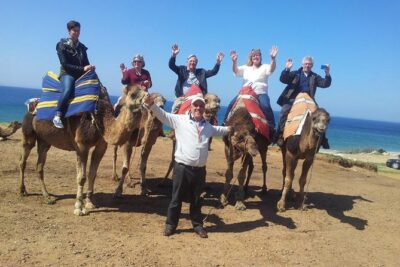
More Tangier, Cap Spartel and the Caves of Hercules worth a look.
 ★ 4.8From Tangier: Chefchaouen Day Trip with Local GuideFrom $383,287 reviews
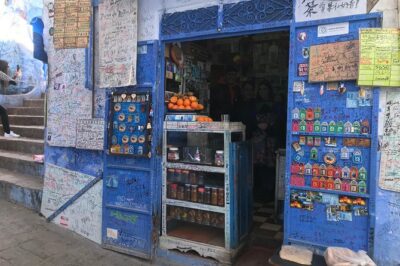 ★ 4.6From Tangier: Special Day Trip to Chefchaouen and TetouanFrom $60816 reviews
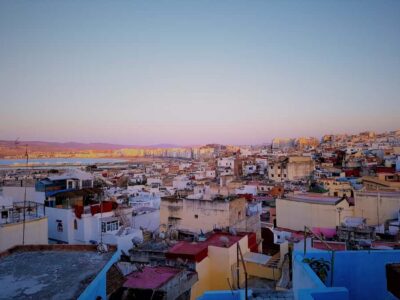 ★ 3.8From Tarifa: Tangier Full-Day Trip with LunchFrom $135776 reviews
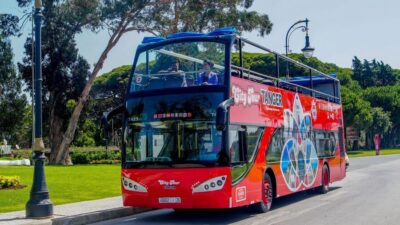 ★ 4.1Tangier: Hop-On Hop-Off Sightseeing BusFrom $15769 reviews
★ 5.0From Tangier: Chefchaouen Day Trip with Local GuideFrom $49632 reviews
 ★ 4.3From Tarifa: Tangier Day Trip with Lunch and FerryFrom $105631 reviews
 ★ 4.9Tangier: Sunset, Tea, Sweets, Camel Ride, and Hercules CavesFrom $37575 reviews
 ★ 4.7From Tangier: Day Trip to Chefchaouen and Akchour WaterfallsFrom $74465 reviews
Where else this one sits