
REVIEW · CASABLANCA
Morocco 9 Days Tour from Casablanca
Camels, kasbahs, and blue streets in 9 days. I love the hassle-free airport and hotel transfers plus the private-feeling guiding for a small group. My one main caution: monument tickets, lunches, and most dinners are not included, so plan extra spending if you want to snack and site-hop freely.
Expect a fast-moving, high-impact route with real variety, from the Erg Chebbi sunrise camel trek to long medina walking days. Morocco is an amazing place to travel, and this kind of trip is especially good when you want structure without losing the sense of wandering on your own.
In This Review
- Key Things I’d Make Sure You Notice
- Casablanca to Rabat: where the tour really starts paying off
- Chefchaouen blue alleys, timed so you can actually enjoy them
- Fes medina walking: the city that rewards good shoes
- The long road south: Ifrane, cedar forest, and desert clues
- Merzouga and Erg Chebbi: sunrise is the star
- Dades, Ouarzazate, and Ait-Ben-Haddou: kasbah views and film history
- Marrakech: medina sights plus breathing room in the souks
- Hotels, meals, and what your money is really buying
- Who this Morocco 9-day tour fits best
- Should you book this Morocco 9-day tour?
Key Things I’d Make Sure You Notice
- Airport pickup with a name sign at Mohamed V Airport, so you start calm instead of stressed
- Chefchaouen early access for quieter blue alley strolling and photo time
- Fes medina depth with stops that include the Royal Palace gate, Mellah, Al Qaraouine, and tanneries
- Cedar forest and Barbary apes on the road south, a great break from bus time
- Erg Chebbi sunrise on camel back, not just a daytime dune stop
- A small maximum group size (8), which helps the guide manage pacing in tight streets
Casablanca to Rabat: where the tour really starts paying off
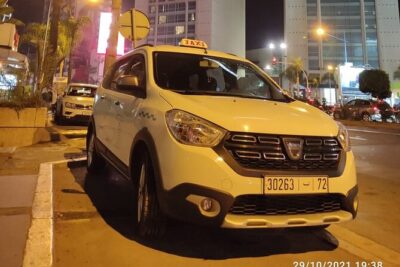
Casablanca can feel like a big, modern arrival point. This tour helps you get past that first-day fog fast. Your driver meets you at Mohamed V Airport with a sign for Morocco Sahara Desert Travel, then transfers you straight to your Casablanca hotel. That means you are not hunting for taxis with jet lag, no negotiating, no wrong turns.
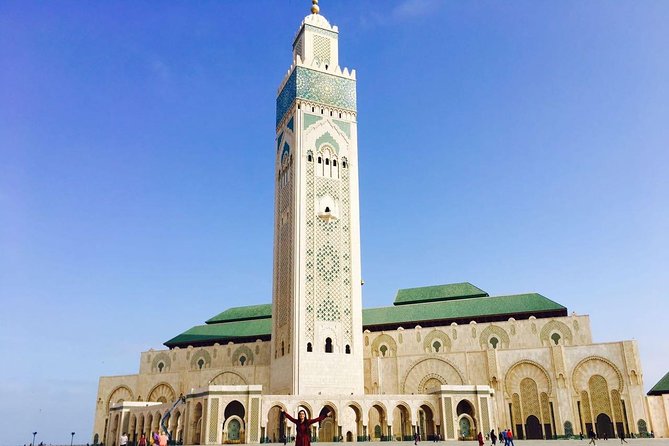
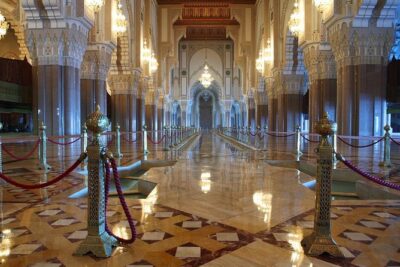
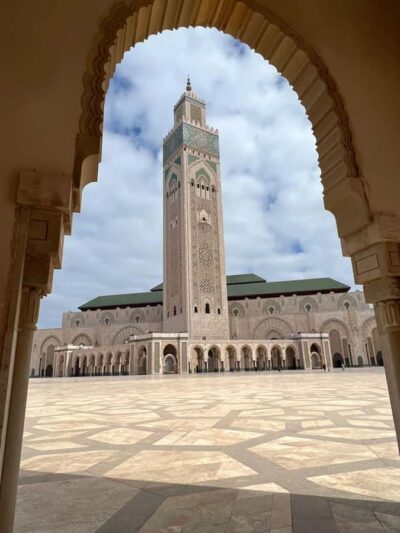
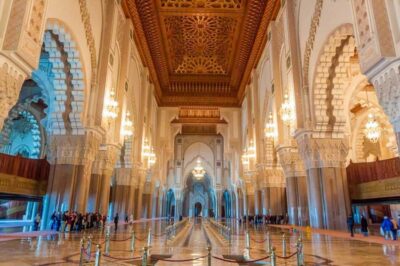
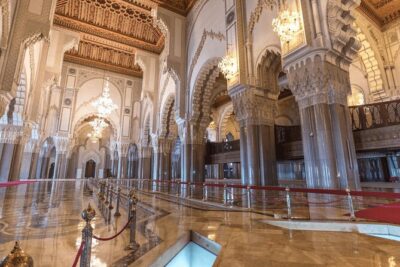
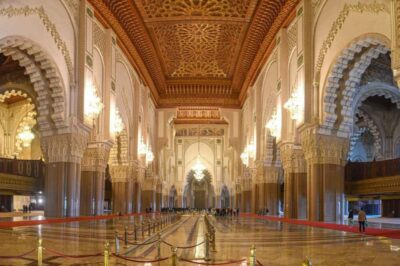
The next morning, the big draw is Hassan II Mosque. It’s the biggest mosque in Casablanca, and even if you only catch the essentials, it sets the tone for Morocco as a place where architecture, religion, and daily life all sit side by side. From there, you head toward Rabat, the capital, which gives you a nice contrast: less hustle than Casablanca, more stately.
In Rabat, you’re not just doing one photo stop. You visit several key sites including Hassan Tower, Bab Challah, the Mausoleum of Mohammed V, and the Oudaya Kasbah. Even if your time is limited, these are meaningful stops that help you understand Morocco beyond souks and dunes. You’ll also have a guide to point out what to look for, rather than you guessing your way through stone and gates.
A practical note for your expectations: the day moves. If you like slow sightseeing, you’ll want to reserve extra patience for the driving and the short time at each stop. If you like momentum, this is a strong start.
More of Casablanca, mosque visit included
- Casablanca: Hassan II Mosque Premium Tour with Entry Ticket
★ 4.5 · 2,971 reviews - Casablanca City Tour with Hassan II mosque ticket
★ 5.0 · 2,480 reviews - Casablanca: City Tour with Hassan II Mosque Entry Ticket
★ 4.6 · 1,137 reviews - Private Tour of Casablanca with Hassan II Mosque Entry Ticket
★ 5.0 · 1,102 reviews
Chefchaouen blue alleys, timed so you can actually enjoy them
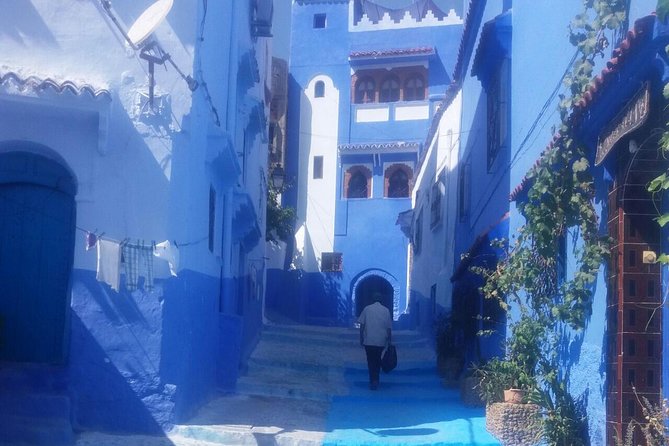
Chefchaouen is famous for a reason, but the difference between loving it and feeling rushed is timing. You get there early enough to walk the blue alleys inside the medina, take photos, and still leave time for local food. The route is built for people who want more than a quick drive-by.
You spend time in the central area around Outa el Hammam, where the kasbah has red walls and fortress features from the 15th century. You can also spot the octagonal minaret of the Great Mosque nearby. Those details matter because Chefchaouen is not only blue paint. It’s a working mountain town in the Rif Mountains with steep lanes, small workshops, and a daily rhythm you notice more when you’re there in the morning.
Later, you continue traveling onward to Fes. The good part here is that you don’t just see Chefchaouen and then immediately leave. You have the chance to wander, pause, and get a feel for how the medina works. That makes your photos look more like places you actually lived in, not like a checklist.
Fes medina walking: the city that rewards good shoes
Fes can intimidate people, and for good reason. It’s old, dense, and built for feet, not for big tour buses. This tour addresses that by doing a guided walk in the oldest parts, so you know where to go and what you’re looking at.
In the morning, you start in or near the Royal Palace gate area and move through core neighborhoods. You’ll visit the Jewish quarter and the Mellah, including mention of an early Mellah built during the 14th century. That’s a useful context stop because it helps you see the medina as layers of history, not one era.
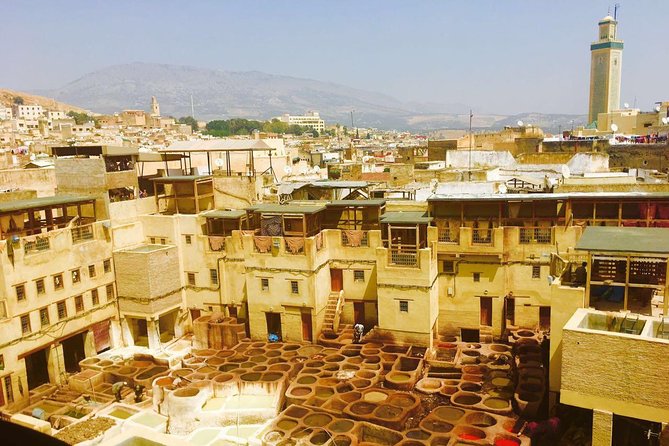
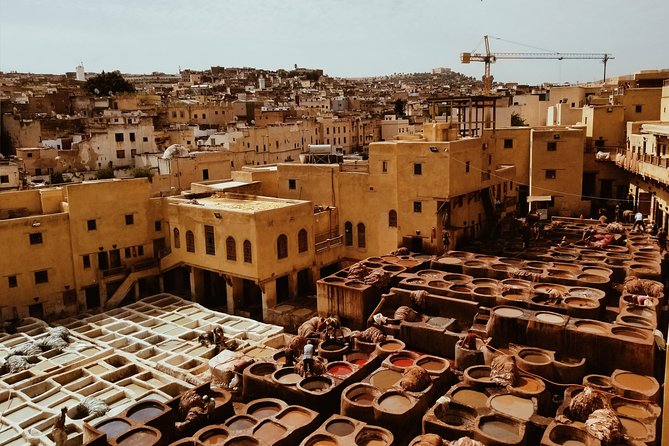
Then comes the big sensory hit: the Al Qaraouine University and the tanneries. Even if you are not into leather crafts, the tanneries are one of those stops that makes Fes feel real fast. You’ll also go by or near the Moulay Idriss mausoleum, which anchors the spiritual side of the city.
After lunch, you visit a tiles cooperative. That’s one of those stops that can feel optional on other tours, but here it fits the flow well. Handcrafts are part of how the medina survives, and tilework is a core Moroccan visual language. Finally, you get a panoramic view over the Medina of Fes. In Fes, that view is not a bonus. It’s how you get your bearings fast.
You’ll want to wear comfortable shoes for this part. Your physical fitness should be moderate, which matches the reality of cobbled lanes and lots of walking. If you plan to take photos, you’ll also want a small bag or crossbody so you can move easily.
The long road south: Ifrane, cedar forest, and desert clues
The drive from Fes toward Merzouga is not a simple highway transfer. It’s the fun part where Morocco’s geography changes in front of you.
You pass through Ifrane, often called the Switzerland of Morocco. That name is not meant literally, but it hints at the cooler, mountain-feeling vibe and the neat mountain-town look. Next is the cedar forest stop around Azrou in the Middle Atlas region. This is where you may see Barbary apes. It’s a nice break, and it breaks up the long drive with something living and unexpected.
From there you travel via Midelt for lunch (not included), then toward the Ziz Gorge and the Ziz Valley. You’ll stop at viewpoints along the way near Erfoud and Rissani. These are small, well-placed pauses that make the approach to the Sahara feel gradual instead of like a sudden switch.
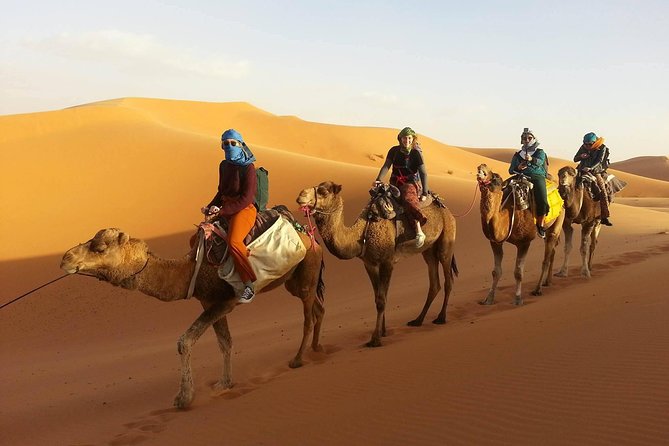
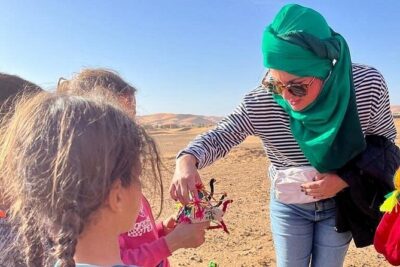
The key payoff is how you arrive at Merzouga. You get welcomed with a glass of mint tea on arrival, then you shift into desert mode with a camel ride to reach the camp for the night. If you’re thinking that a camel ride is just a gimmick, the way it’s timed matters. It’s not rushed at the last minute. It transitions you into the environment.
Merzouga and Erg Chebbi: sunrise is the star
The Sahara part of this trip is the heart. The guide wakes you early to watch sunrise, and then you do a camel trek back toward Merzouga. That early start is worth it. Erg Chebbi dunes change with the light, and being on camel back makes it feel slower and more connected than driving up and snapping photos from the roadside.
After sunrise, you return to Merzouga, then the route moves into rock and valleys. The day balances sand with stone: Todra Gorge and then the drive through Dades Valley.
If you care about photography, this is the part that usually wins people over. Todra Gorge is known for being the highest and narrowest gorges in Morocco, and the tight walls create that dramatic feeling right away. Then the drive through Dades Valley brings you to striking rock formations nicknamed monkey toes. It’s a small detail, but once you see them, you’ll understand why people use the name.
Overnight in the Dades Valley area is set up with a “nice hotel or riad overlooking the valley,” and in the included package you get dinner and breakfast there. That matters because after a full day of driving and walking, you want a real place to sit down and reset, not another rushed night.
Dades, Ouarzazate, and Ait-Ben-Haddou: kasbah views and film history
The Dades Valley morning continues the rhythm. After breakfast, you head toward Ouarzazate, with the route known as the way of the thousand kasbahs. Expect frequent photo stops opportunities along the way. These are not long excursions, but the scenery and the architecture style are a big part of why this trip feels richer than a “drive from city to city” itinerary.
You stop at Kalaat M’Gouna in the rose valley area. The optional part here is the rose cooperative, where you can purchase rosewater. Even if you don’t buy anything, it’s a good “between major sites” moment that adds local flavor to the transit day.
In Ouarzazate, you visit the Kasbah of Taourirt, a 19th-century palace setting with views over the rocky surroundings. It’s also connected with Morocco’s film culture, and the route includes time for the Cinema Museum if you choose to go. Nearby is the fortified red-earth style you’ll recognize later.
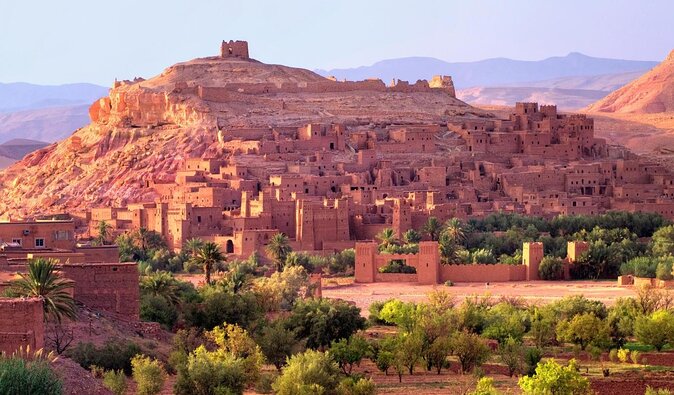
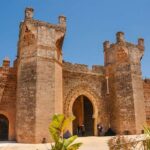
Then comes the big stop: Ksar of Ait-Ben-Haddou. It’s a classic example of traditional southern Moroccan architecture, a hilltop earthen walled village. The details matter here: it’s arranged as defensive collective housing with towers and a system of walls. The oldest construction mentioned is from the 17th century. Entrance fees are not included, so budget for it if you want to go inside every portion.
After Ait-Ben-Haddou, the day shifts again to mountains with Tizi n’Tichka Pass, at 2260 m. You get a chance to explore an argan oil production process by Berber women in a cooperative. Since argan oil exists only in Morocco, that stop gives you something practical to take home conceptually, even if you decide not to purchase.
Longer loops that take in several cities
Marrakech: medina sights plus breathing room in the souks
By the time you reach Marrakech, you’ve had days of medina walking, gorge views, and desert time. Marrakech can feel like a jump in intensity, so the itinerary wisely structures it with a core set of sights plus free time.
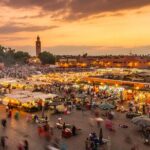
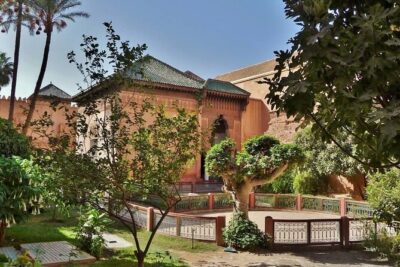
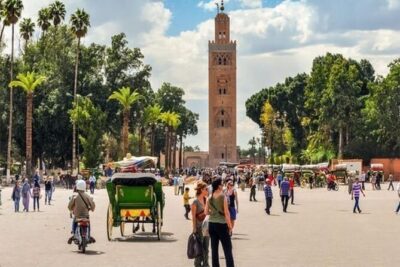
In Marrakech, you’ll see Place Ljamaa Lfna, the huge central square and main stage for street life. You also visit the Koutoubia Tower, plus major historic sites: the Saadian tombs and the Bahia Palace. These stops give you variety in architecture and design, not just street-level wandering.
After lunch at a local restaurant near the square, you walk through the souks, where you can see handicrafts. Your afternoon includes some free time to wonder around on your own. That’s important. Marrakech rewards curiosity, and having unstructured time gives you a chance to follow your own interests once the big landmarks are checked off.
If you like shopping, bring patience. If you don’t, still go. Souks are also about understanding craft traditions and how people move through the lanes.
Hotels, meals, and what your money is really buying
This tour runs as 8 nights of accommodation plus breakfast daily. You also get two included dinners and the camel ride. Everything else you eat is on your own: lunches, most dinners, drinks, and monument entrance fees are not included.
So is the price fair? At $2,268.13 per person for a 9-day loop that covers five cities, long-distance driving, a Sahara camel trek, and a small group size capped at 8, it can be strong value if you want the logistics handled. You are paying for transport time, guide time, and the built-in access the day-by-day route creates.
The flip side is simple: if you buy entrances, add lunch often, and eat dinners out, your final spending can rise. If you want to keep costs controlled, do it deliberately. Plan a quick lunch instead of a full sit-down meal most days. Bring water and small snacks, especially during driving days. Then use your money where you really care, like major entrance sites and one or two “sit and enjoy” meals in Marrakech or Fes.
As for lodging, the places mentioned in one set of notes are quite charming. For example, one traveler highlighted Hotel Mulino Gardens in Chefchaouen and Auberge Atlas Dades in the Dades Valley area. Even without naming every property, it’s a good sign when the stay quality is remembered, because you’re in transit enough that you want a comfortable place to reset.
One more logistics detail to keep in mind: this is listed as a private tour with undivided attention, but it still depends on the individual driver/guide day-of. One piece of practical advice I would not ignore is to confirm who your driver is assigned. There was a complaint about a driver named Aziz, and it suggests that communication matters as much as the itinerary.
Who this Morocco 9-day tour fits best
This is a strong match if you want a route that covers Casablanca, Rabat, Chefchaouen, Fes, Merzouga (Sahara), Dades, Ouarzazate/Ait-Ben-Haddou, and Marrakech without you having to plan every turn. It also works well for people who like structure but still want small pockets of free time, like in Chefchaouen and later in Marrakech.
You should think twice if:
- You dislike long driving days and constant scene changes
- You don’t want to budget extra for lunches, dinners, and monument tickets
- You have trouble with moderate walking in medinas and older streets
It’s also best for couples, friends, and small groups who want a personal guide experience rather than a big coach crowd.
Should you book this Morocco 9-day tour?
Yes, if your goal is big variety with clear highlights and you want pickup, hotel transfers, and guides handled. The combination of Fes medina walking, Todra and Dades gorges, Ait-Ben-Haddou architecture, and a real Sahara camel night is a lot to fit in, and this route does it with the right pacing at the key moments.
I’d book it with a couple mindset checks:
- Budget for monument entrance fees plus lunches and most dinners, so your money does not get a surprise mid-trip
- Pack for walking in medinas and bring comfort for long transit days
- Confirm the driver/guide assigned to your booking, since one unhappy experience was tied to a specific driver name
If you want an organized trip that still lets you feel Morocco up close, this one is worth serious consideration.
Longer Routes Through the Country
- Rabat Imperial City Day Trip from Casablanca★ 4.5 · 353 reviews
- 10-days Private tour in Morocco: Sahara Desert + Imperial Cities★ 5.0 · 279 reviews
- 10 Day Desert Tour From Casablanca via the Imperial Cities★ 5.0 · 254 reviews
- 10D 9N Private Morocco Tour From Casablanca By Imperial Cities And South Desert★ 5.0 · 156 reviews
Casablanca and the Mosque
- Casablanca: Hassan II Mosque Premium Tour with Entry Ticket★ 4.5 · 2,971 reviews
- Casablanca City Tour with Hassan II mosque ticket★ 5.0 · 2,480 reviews
- Casablanca: City Tour with Hassan II Mosque Entry Ticket★ 4.6 · 1,137 reviews
- Private Tour of Casablanca with Hassan II Mosque Entry Ticket★ 5.0 · 1,102 reviews
Added recently from around Casablanca
More Casablanca and the Hassan II Mosque worth a look.
 ★ 4.7From Marrakech: Casablanca Tour with Hassan II Mosque VisitFrom $284,756 reviews
 ★ 4.5Casablanca: Hassan II Mosque Premium Tour with Entry TicketFrom $162,971 reviews
 ★ 5.0Casablanca City Tour with Hassan II mosque ticketFrom $522,480 reviews
 ★ 4.8Casablanca Day Tour from Marrakech and Big Mosque VisitFrom $282,394 reviews
 ★ 4.6Casablanca: City Tour with Hassan II Mosque Entry TicketFrom $531,137 reviews
 ★ 5.0Private Tour of Casablanca with Hassan II Mosque Entry TicketFrom $521,102 reviews
 ★ 4.5Day Trip To Casablanca from MarrakechFrom $30972 reviews
 ★ 5.0Marrakech Day Trip with Camel Ride from CasablancaFrom $110740 reviews
Where else this one sits