
REVIEW · MOROCCO
Marrakech: Pottery Workshop
Clay and craft in Marrakech, in real time. This hands-on pottery session walks you through two core Moroccan techniques, wheel turning and molding, while you also see the workshop flow from clay prep to firing and glazing. I really like how you get practical guidance from the craftsman, not just a demo.
What I like most is the chance to work the clay myself, starting with how it is prepared and then shaping with the potter’s wheel. I also appreciate the mid-course break, where you slow down with Moroccan herbal tea and a plate of local pastry while the workshop keeps moving around you.
One consideration: at $93 for 4 hours, it is not a budget activity. If you want a long, guided visit of many sites, this workshop is time-focused on craft, so you are paying for instruction and making time rather than sightseeing.
In This Review
- Key things to know before you go
- First Contact in Jemaa el-Fna Medina: Where to Meet
- Inside the Workshop: Clay Prep and Workshop Rhythm
- Learning Moroccan Pottery Wheel Turning and Molding Techniques
- Wheel turning: precision with a rhythm
- Molding: shaping with structure
- What language support feels like in real life
- A Mid-Course Tea Break with Moroccan Cakes
- Watching Firing and Glazing: The Part People Skip
- The End of Class: Your Object, Photos, and the Surprise
- Price and Value for a 4-Hour Private Craft Session
- Practical Tips: What to Wear and How to Get the Most
- Should You Book This Marrakech Pottery Workshop?
- FAQ
- How long is the Marrakech pottery workshop?
- Where do I meet for the workshop?
- How much does it cost per person?
- Is the workshop a private group?
- What techniques will I learn?
- Is there a tea break during the workshop?
- Are water and refreshments included?
- What languages are offered for the instructor?
- What is included besides tea and food?
- Can I cancel for a refund, and do I pay immediately?
Key things to know before you go
- Two shaping methods, one clear lesson plan: wheel turning plus molding, so you understand the differences.
- You see the whole process: from clay preparation to firing and glazing, not just the fun part.
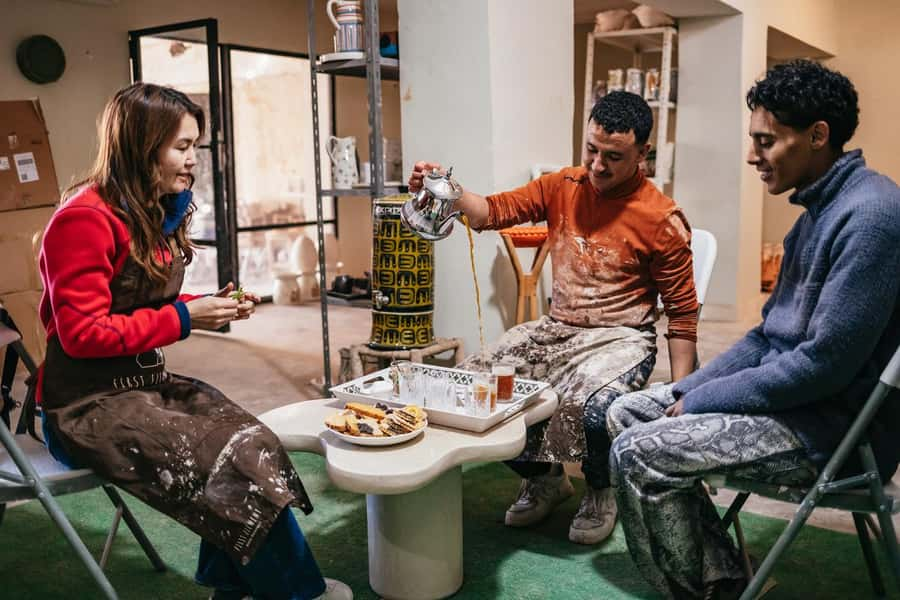
- A proper tea break halfway through: Moroccan herbal tea plus Moroccan cakes, in the middle of the work.
- Small, private-group vibe: you are not crammed into a huge crowd.
- Experienced craftsman instruction, multiple languages: English, French, Arabic support.
- Photo time included: photographing is part of what you get during the activity.
First Contact in Jemaa el-Fna Medina: Where to Meet
You start right in the heart of the Medina. The meeting point is the front of the post office in Jamaa el-Fna Square, so you do not have to guess your way into a hidden side street without help.
Plan to arrive a little early. Marrakech traffic and pedestrian flow can make timing feel fuzzy, and it helps to get oriented before the workshop start so you can settle in and focus.
Since this is a private group, you typically feel more like a working class with attention, not a mass tour. That matters here, because pottery is physical and hands-on, and you want time to get corrected on your technique.
Other benches to sit at and make something
- Marrakech: Pottery Workshop with Moroccan Tea
★ 4.8 · 756 reviews - Marrakech: Make Your Own Moroccan Zellige Mosaic Masterpiece
★ 4.8 · 103 reviews - Marrakech Medina Basket Embroidery Workshop
★ 4.9 · 69 reviews - Marrakech Hammam, Massage & Berber Carpet Weaving Workshop
★ 4.6 · 48 reviews
Inside the Workshop: Clay Prep and Workshop Rhythm
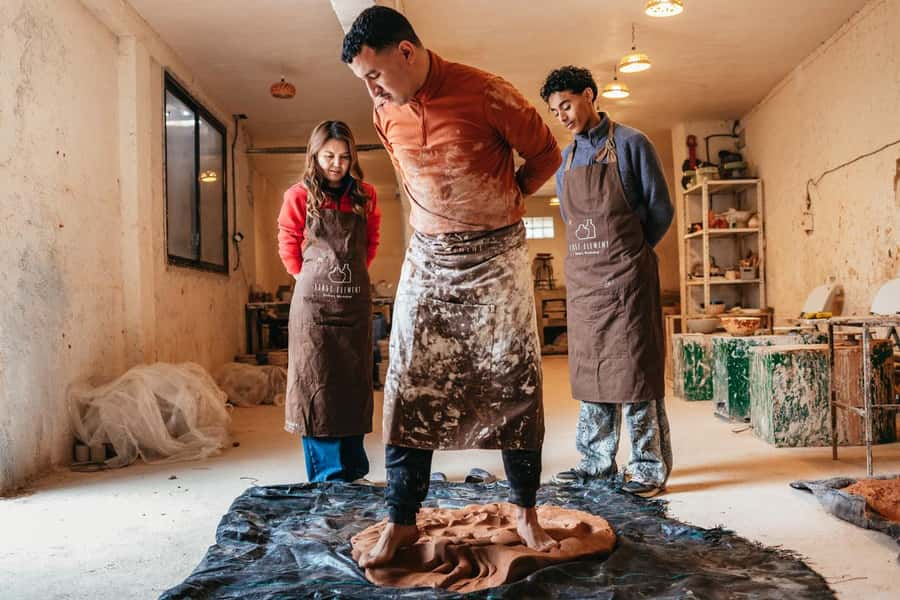
Once you are inside, the workshop moves in a sequence that makes sense. You do not jump straight to shaping. Instead, you get a look at the organization of the workspace, beginning with how the clay soil is prepared.
This matters because clay is not just clay. The quality and preparation affect everything that comes after. When you understand the material first, wheel work and molding suddenly feel more controllable.
You also get to observe how the workshop handles the later stages, including firing and glazing. Even if you do not personally fire everything, seeing how those steps fit into the workflow helps you understand why your shape can change from raw clay to a finished piece.
A practical note: wear comfortable clothes and shoes. You will be handling clay, and you will want fabric you can actually move in without babying.
Learning Moroccan Pottery Wheel Turning and Molding Techniques
This workshop is built around two methods, and that is the value. You get guidance on turning using the traditional potter’s wheel, then you also learn molding as another widely used approach in Morocco.
Wheel turning: precision with a rhythm
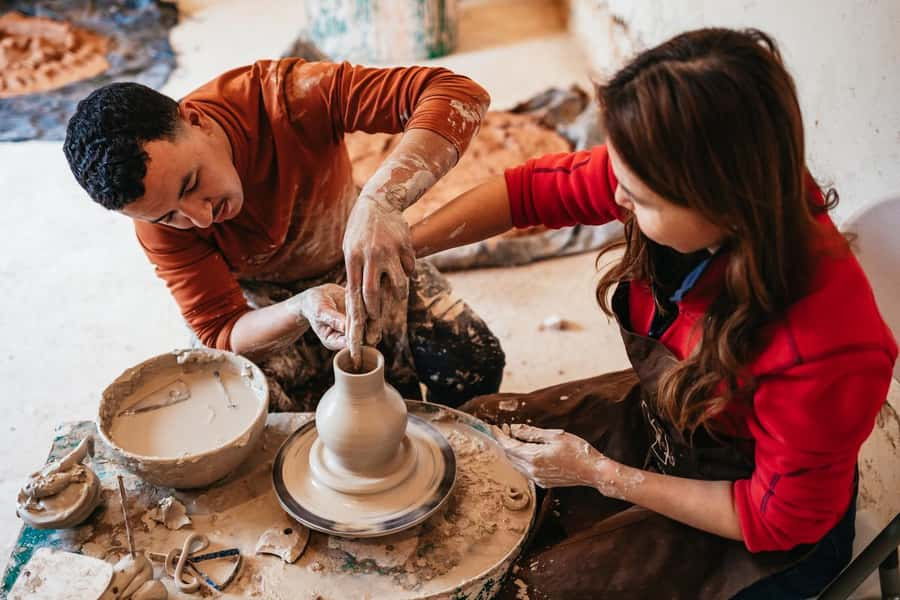
Wheel turning is where you get the feel for control. The turning technique depends on consistent hand pressure and timing. You are not just spinning a wheel and hoping for the best, you are learning how shaping happens while the clay is rotating.
If you like working with your hands and getting feedback fast, wheel turning is the part that clicks quickest. It is also the technique that makes your finished object look like it came from a real craft tradition, because the wheel naturally creates that form.
Molding: shaping with structure
Molding is different. Here, the emphasis is on forming the clay using a technique that gives structure without the same level of wheel-time control. You learn how molding changes the look and workflow of the piece.
Together, these two methods help you avoid the common pottery trap, which is thinking there is only one way to shape ceramics. By the end, you understand how Moroccan artisans choose techniques based on the object and the process.
What language support feels like in real life
The instructor support is listed in English, French, and Arabic. That means if you pick a language, you are not stuck with hand waving. In recent feedback, people highlighted the instructor and guide skills, including sessions where Tariq taught as a tutor and artist, and guidance from Wiam also made the whole thing smoother.
Other hands on sessions to sit in


A Mid-Course Tea Break with Moroccan Cakes
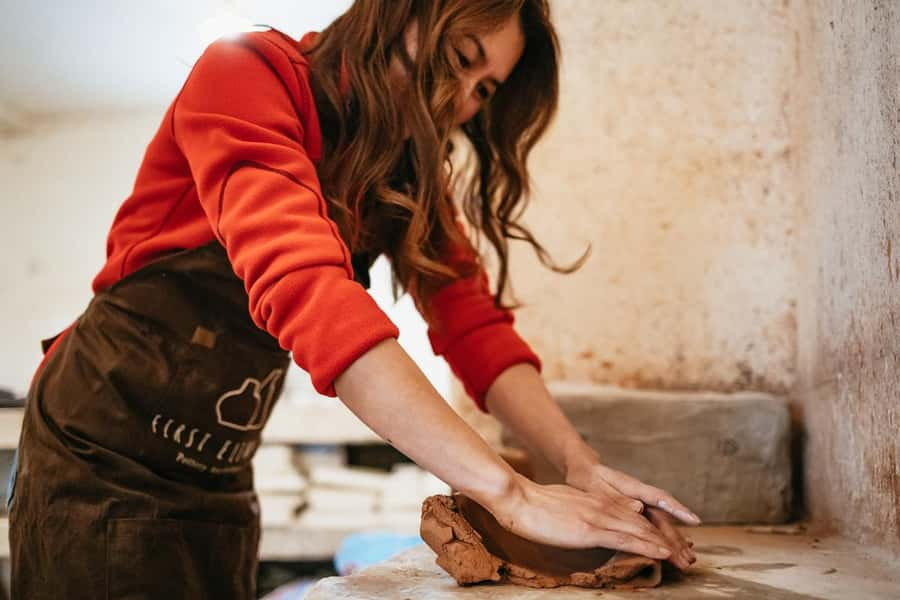
About midway through, you pause for a tea break. This is not a token snack. It is a real reset, herbal tea plus Moroccan cakes, eaten while the workshop continues around you.
This pause is one of the best ways to keep your energy up, because pottery work is surprisingly tiring in the arms and hands. You also get a moment to look around and take in how the craftsman organizes tools and materials without rushing to keep shaping.
If you are the type who gets bored in passive experiences, you will probably like this format more than you expect. You are still in a working environment, but the schedule gives you a chance to catch your breath and talk with the instructor in the language you chose.
Watching Firing and Glazing: The Part People Skip
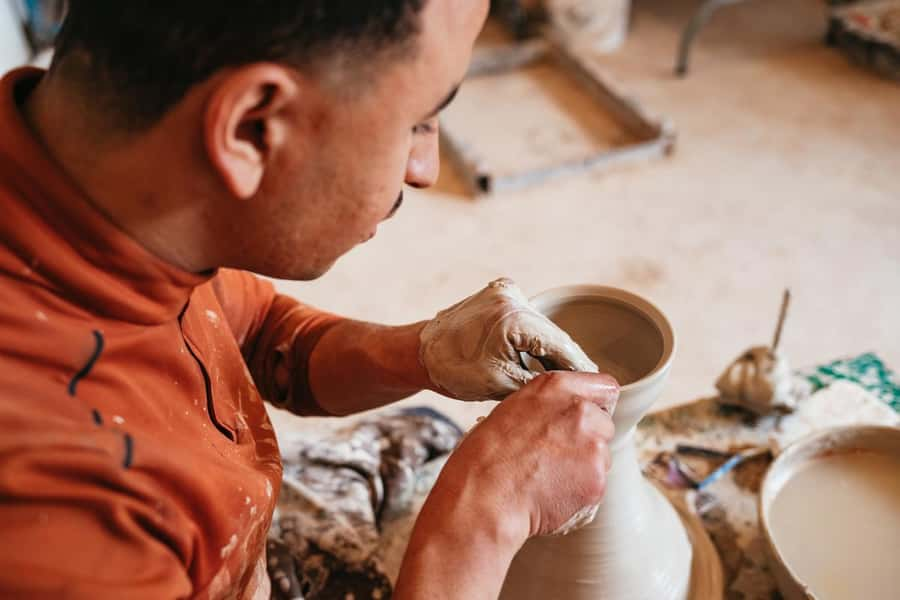
A lot of pottery experiences stop at shaping. This one includes you observing the path after shaping, from clay preparation through firing and glazing. That is a big deal if you want to understand the craft, not just make a souvenir.
Firing and glazing are where pottery becomes ceramic. The steps are not quick, and they explain why timing, drying, and surface preparation matter.
You also learn how the workshop organizes these steps, so you can connect your work to what happens next. Even if your hands do not do every single later action, understanding the sequence helps you appreciate why a finished piece looks the way it does.
And yes, this also explains why your final result takes time in craft spaces. It is not instant gratification, but it is honest about what ceramic making actually requires.
The End of Class: Your Object, Photos, and the Surprise
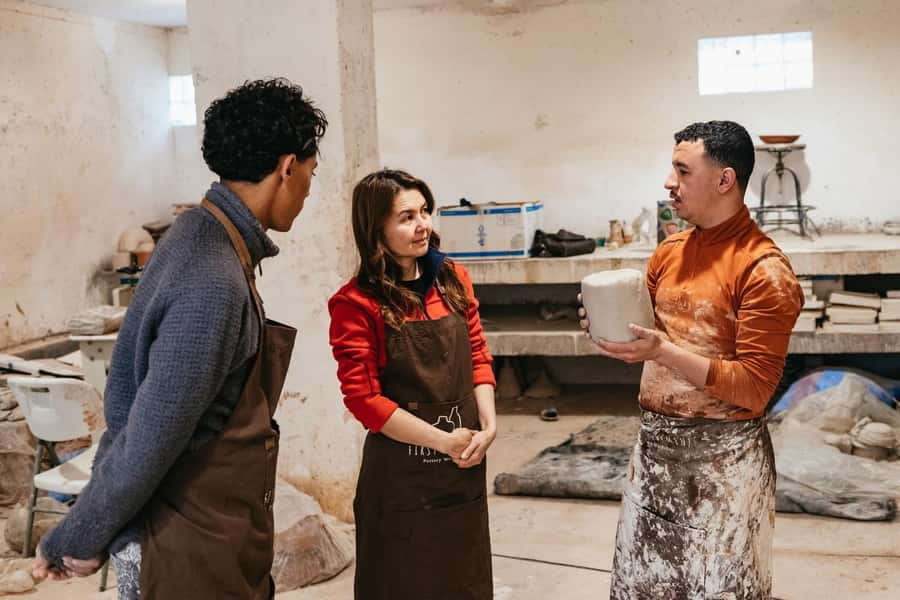
You are crafting your pottery object during the course, and photographing is included. That means you can document your progress and the workshop setting without worrying about extra fees or timing.
Many people also mention an end-of-class surprise. The exact nature is not spelled out here, but the repeated mention tells you the finish feels special, not like a hard stop once the wheel work is done.
If you are choosing this as an activity from your Marrakech time budget, think of it as a focused craft afternoon. You leave with more than pictures, you leave with a process in your head: how clay is prepared, how it is shaped, and what comes next.
Price and Value for a 4-Hour Private Craft Session
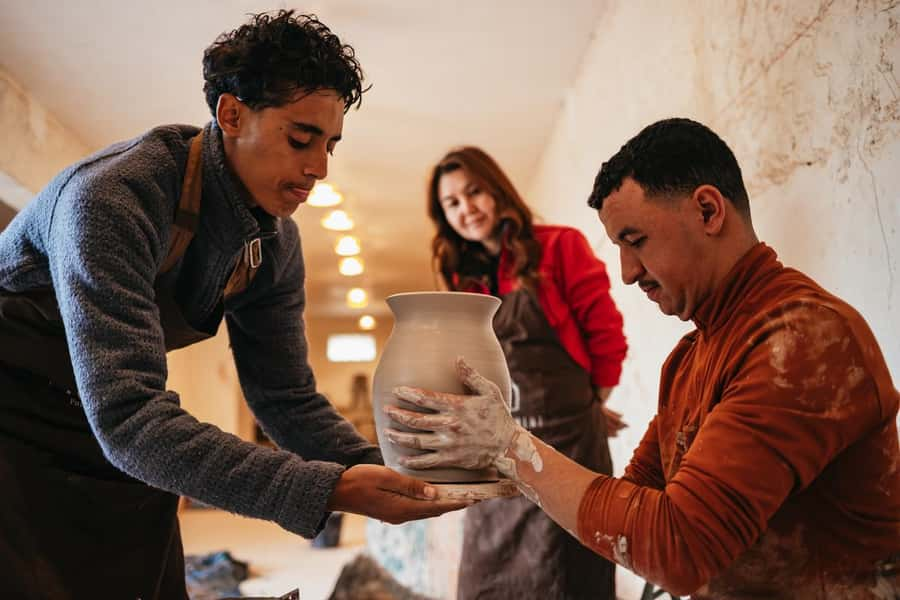
At $93 per person for 4 hours, the price is not low. But it is also not random. You are paying for structured craft instruction by an experienced craftsman, hands-on practice with both wheel turning and molding, and the workshop-wide view that includes firing and glazing.
The value jumps when you consider what is included. You get tea break, Moroccan pastry, water, and photographing. Those details may sound small, but they make it easier to stay comfortable through a tactile class where you are moving, washing hands, and staying engaged.
The only reason it might feel expensive is if you want pottery as a quick try. This course is more about learning the process than doing a 10-minute craft and calling it done. One piece of feedback captured this feeling too, with one reviewer saying it was fun and educational but a tad pricey for what you get.
For most people who want hands-on instruction and a real look at how artisans work, the price lands as fair.
Practical Tips: What to Wear and How to Get the Most
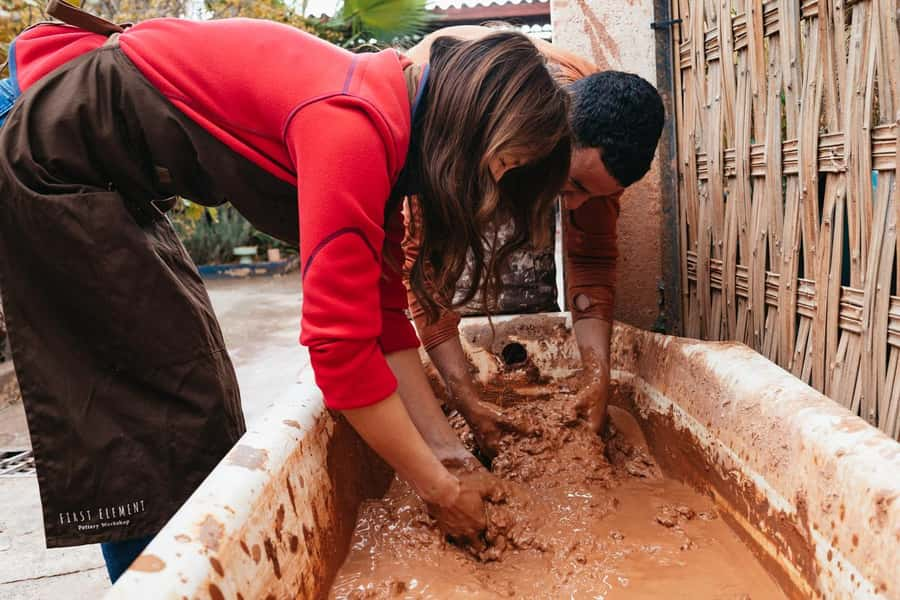
Pottery is messy by design. Wear comfortable clothes and shoes, because you will be bending, handling clay, and likely getting a bit of dust or residue on your outfit.
Bring a mindset for repeat mistakes. Wheel turning especially can feel awkward at first, then suddenly improve when you find the right rhythm. If you stay patient, the corrections make sense because you are learning by doing.
Also, choose your language option before you start. The instructor support is available in English, French, and Arabic, which is great because ceramic techniques benefit from clear explanations, not just demonstrations.
Finally, plan your schedule around this as a craft session, not a sightseeing block. You want time to feel relaxed during the tea break and let your hands enjoy the work.
Should You Book This Marrakech Pottery Workshop?
If you want a hands-on Marrakech experience that teaches real skills, I think you should book it. The strongest reasons are simple: you learn wheel turning and molding, you see the workflow from clay prep to firing and glazing, and you get a proper tea break with Moroccan pastry in the middle.
It also fits well if you prefer smaller group energy. The private group format helps the craftsman guide you without crowd pressure.
Skip it if you are only looking for a quick, cheap souvenir activity. At $93, you are paying for instruction and process. But if you like the idea of leaving with understanding, not just an item, this is a solid use of time in Marrakech.
FAQ
How long is the Marrakech pottery workshop?
It lasts 4 hours.
Where do I meet for the workshop?
Meet at the front of the post office in Medina Jamaa el Fna Square.
How much does it cost per person?
The price is $93 per person.
Is the workshop a private group?
Yes, it is listed as a private group.
What techniques will I learn?
You will learn the two main Moroccan shaping techniques, turning on a potter’s wheel and molding.
Is there a tea break during the workshop?
Yes. There is a tea break midway through the session, with Moroccan herbal tea and Moroccan pastry.
Are water and refreshments included?
Water is included, along with tea break items and Moroccan pastry.
What languages are offered for the instructor?
The instructor language support is English, French, and Arabic.
What is included besides tea and food?
Photographing is included, along with the guided instruction and the class experience.
Can I cancel for a refund, and do I pay immediately?
Cancellation is free up to 24 hours in advance for a full refund. You can also reserve now and pay later.
Benches, Wheels and Looms
- Marrakech: Moroccan Cooking Class with Pickup★ 4.6 · 1,862 reviews
- Marrakech: Traditional Moroccan Cooking Class & Market Visit★ 4.8 · 1,861 reviews
- Marrakesh: Moroccan Dishes Cooking Class with a Local Chef★ 5.0 · 1,615 reviews
- Marrakech: Pottery Workshop with Moroccan Tea★ 4.8 · 756 reviews
Sessions Where You Make Something
- Marrakech: Pottery Workshop with Moroccan Tea★ 4.8 · 756 reviews
- Marrakech: Make Your Own Moroccan Zellige Mosaic Masterpiece★ 4.8 · 103 reviews
- Marrakech Medina Basket Embroidery Workshop★ 4.9 · 69 reviews
- Marrakech Hammam, Massage & Berber Carpet Weaving Workshop★ 4.6 · 48 reviews
Added recently from around Marrakesh



More Moroccan Artisan Workshops worth a look.
 ★ 4.8Marrakech: Pottery Workshop with Moroccan TeaFrom $45756 reviews
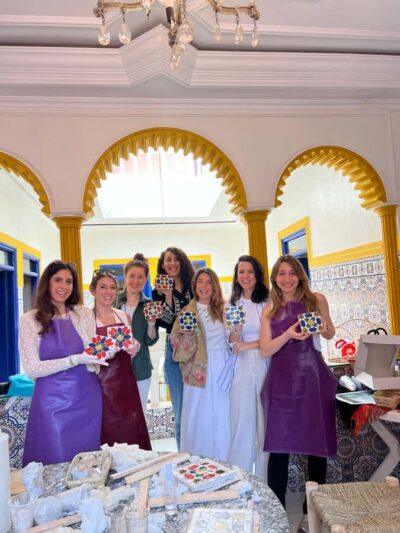 ★ 4.8Marrakech: Make Your Own Moroccan Zellige Mosaic MasterpieceFrom $42103 reviews
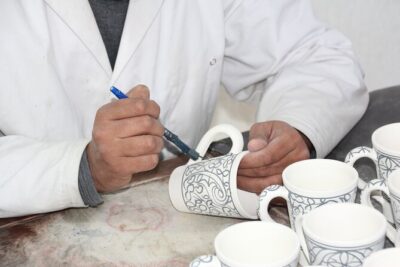 ★ 5.0Pottery and Mosaic Workshop in Fes Led by Local ArtisansFrom $4589 reviews
 ★ 5.0Fez cultural and handicraft tour half dayFrom $6980 reviews
 ★ 5.0Fez cultural and handicraft tour full dayFrom $5879 reviews
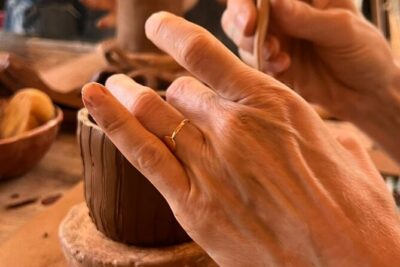 ★ 5.0Lamsaty Pottery Workshop with Moroccan TeaFrom $4075 reviews
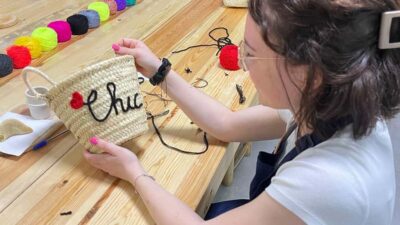 ★ 4.9Marrakech Medina Basket Embroidery WorkshopFrom $4369 reviews
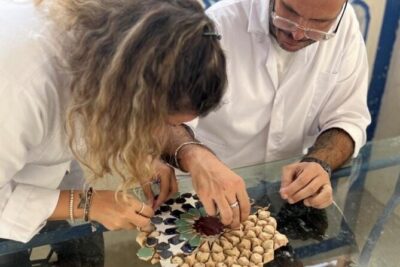 ★ 5.0Mosaic workshop in MarrakechFrom $6949 reviews
Where else this one sits