
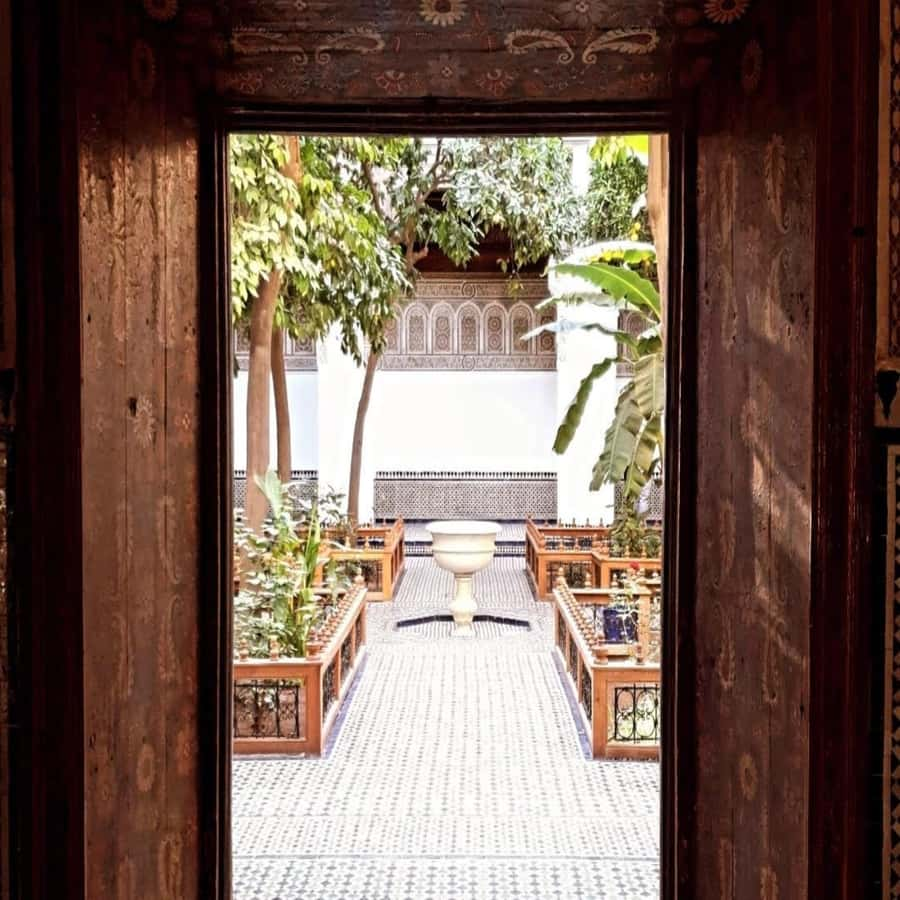
REVIEW · MARRAKECH
Marrakech: Guided Medina History & Culture Tour
Medina turns make more sense with Youssef. This guided Marrakech culture tour strings together the city’s most meaningful stops, with skip-the-line access to Bahia Palace and Ben Youssef, and plenty of time in local markets where daily life still feels real. I like the practical way it mixes monuments with the Mellah food scene and craft souks. One caution: at $65 for 4 hours, it can feel pricey if you already know the medina and just want free wandering.
Starting at the Koutoubia area and ending in Jemaa el-Fna, you get a tight loop through major sights, plus context that helps everything click. You’ll learn what you’re looking at, from zellij mosaic patterns to stucco inscriptions, and you’ll finish at the square when energy peaks. Expect a lot of walking, and it is not set up for wheelchair users, so comfortable shoes matter.
In This Review
- Key highlights I’d prioritize
- Meeting at Koutoubia’s tower: the smart way to start in the medina
- Koutoubia to the Mellah: Jewish heritage and a real food-market moment
- Bahia Palace skip-the-line: Andalusian riads, zellij, cedar, and carved meaning
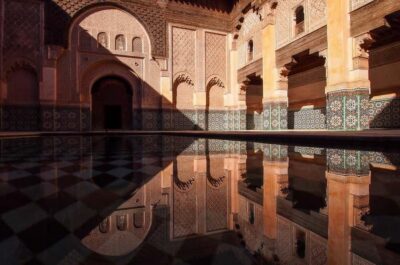
- Ben Youssef Medersa: prayer hall, ablutions room, and traditional education
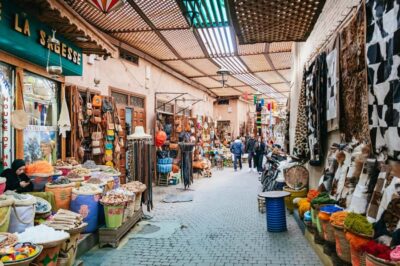
- Old souks and craft workshops: leather, metal, spices, and artisans at work
- Jemaa el-Fna finish: street performance energy after your heritage loop
- Price, walking pace, and who this 4-hour tour fits best
- Should you book the Marrakech Medina History & Culture Tour?
- FAQ
- Where is the meeting point for the tour?
- What time does the tour run?
- What is the price per person?
- What is included in the tour?
- Which language options are available?
- Does the tour include Bahia Palace and Ben Youssef Medersa?
- Where does the tour start and where does it end?
- Is the tour suitable for wheelchair users?
- What should I bring?
- Can I cancel and get a full refund?
- Is there an option to reserve without paying right away?
Key highlights I’d prioritize
- Skip-the-line entry to Bahia Palace and Ben Youssef Medersa, so your time stays focused.
- Koutoubia Mosque orientation, outside the monument, plus gardens and early-city landmarks.
- Mellah market stop for Moroccan Jewish heritage context and a look at everyday produce shopping.
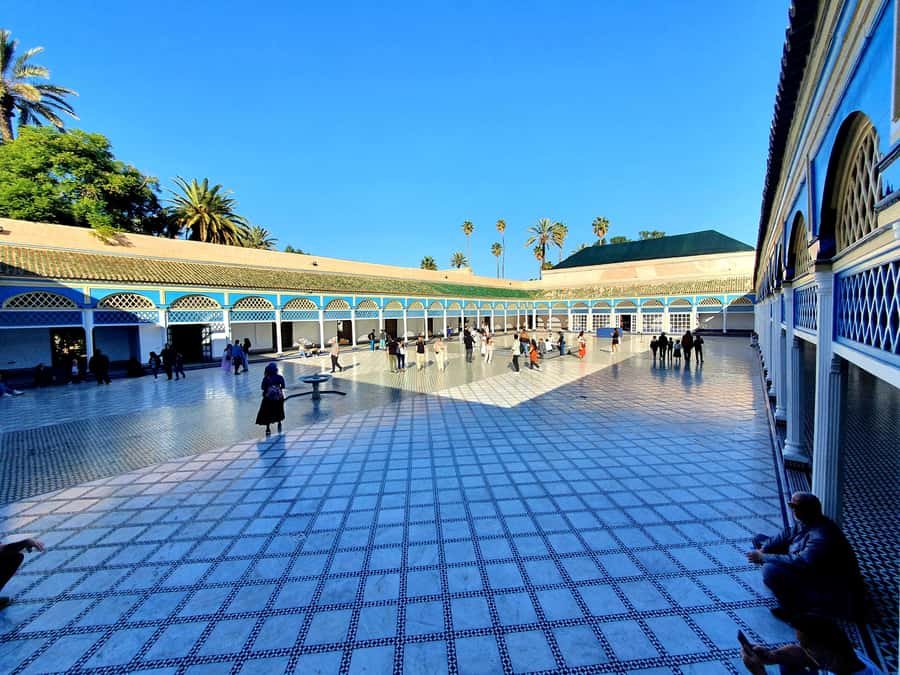
- Bahia Palace details, including Andalusian-style riads, cedar ceilings, carved stucco, and zellij.
- Hands-on craft energy in old souks, with hands at work and intense buying and selling.
- A guided finish at Jemaa el-Fna, where street performance and local bustle take over.
Meeting at Koutoubia’s tower: the smart way to start in the medina
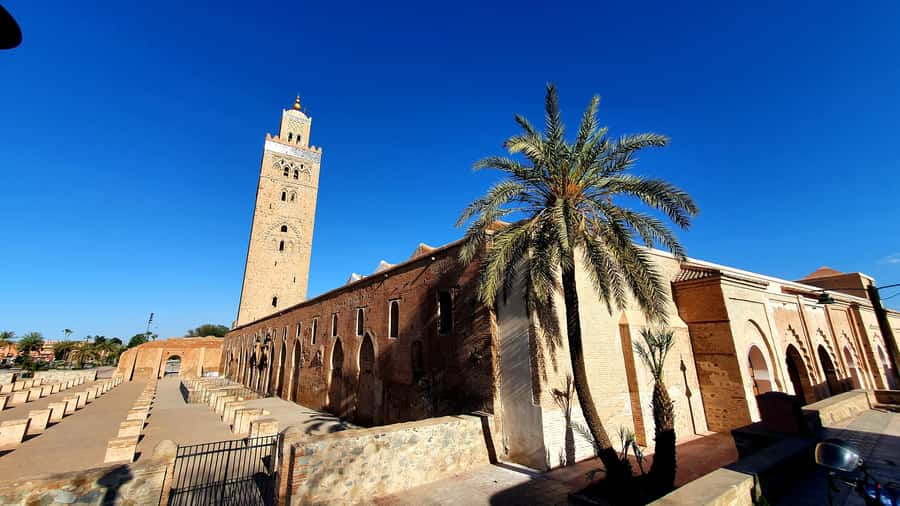
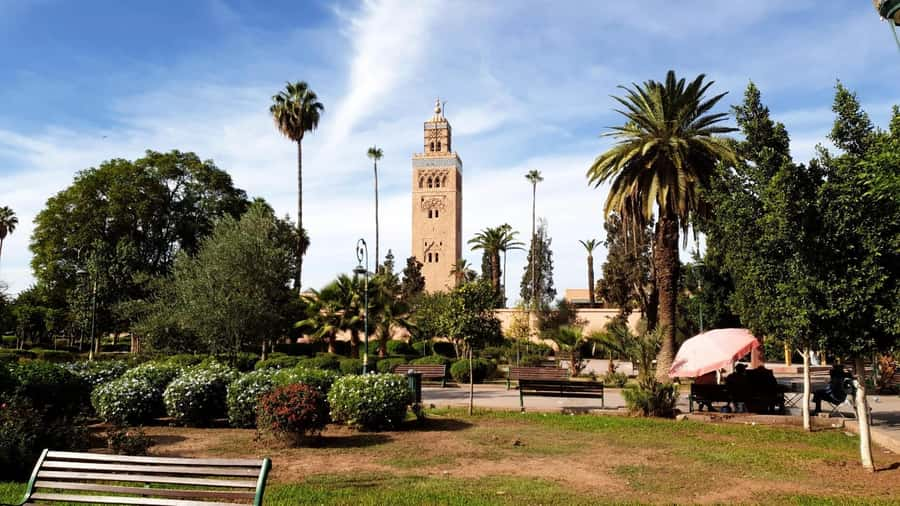
The tour begins at the little white mausoleum at the foot of the Koutoubia Mosque tower, on Mohamed 5th Boulevard. When you spot the guide wearing an official badge with a blue ribbon, you know you’re in the right place. This matters more than it sounds. Marrakesh’s medina can feel like a maze on day one, and starting with the Koutoubia area gives you a clear reference point.
From there, you stroll through the Koutoubia gardens while your guide sets the stage for the city’s early story. You do not go deep into the mosque interior, but you do get the important outside perspective. You’ll also learn about the area’s role in the city’s first road and entrance gate, which gives you a way to understand why certain routes and landmarks line up the way they do.
This opening phase works especially well if you’re doing Marrakech as a short trip. It helps you build mental maps fast, before the tour hands you off to the tighter streets and louder souks. It also keeps your camera ready, because the walk starts with an easy photo stop and scenic viewpoints along the way.
Other medina and souk walks around Marrakesh
- Marrakech: Bahia Palace, Saadian Tombs, Souk and Medina Tour
★ 4.7 · 4,974 reviews - Marrakech: Ben Youssef, Secret Garden, & Souks Walking Tour
★ 4.6 · 2,802 reviews - Marrakech: Colorful Medina Souks Guided Walking Tour
★ 4.7 · 2,470 reviews - Marrakech: Saadian Tombs & Bahia Palace, Medina Guided Tour
★ 4.6 · 1,989 reviews
Koutoubia to the Mellah: Jewish heritage and a real food-market moment
After the gardens and the Koutoubia orientation, the route turns into the medina on foot. You then head toward the Mellah, the historic Jewish quarter, with a stop built around Morocco’s Jewish heritage. This is one of those stops that improves how you read the city. Even if you do not remember every detail, you’ll start noticing how communities shaped neighborhoods and trade.
The tour includes a fresh-produce market stop in the Mellah area. You’ll see what people buy for daily cooking, and you’ll get a sense of why markets are social places, not just shopping stops. If you love food markets, this is where the tour becomes less about architecture and more about daily rhythm.
One practical note: market areas can be busy and crowded. Go with the mindset of watching hands, not only looking at stalls. If you want photos, keep them quick and respectful, since movement is constant. This is also a good segment to practice your bargaining instincts later, because you’re watching how everyday commerce actually plays out.
Bahia Palace skip-the-line: Andalusian riads, zellij, cedar, and carved meaning
Bahia Palace is the monument stop most people remember, and the skip-the-line access is a big deal. It protects the experience from the most common travel frustration: waiting. Instead, you get a guided visit that spends time on the palace’s design language, not just the big wow rooms.
You’ll have a break time included around this stop, which is welcome. After wandering streets and dense market areas, your brain needs a pause.
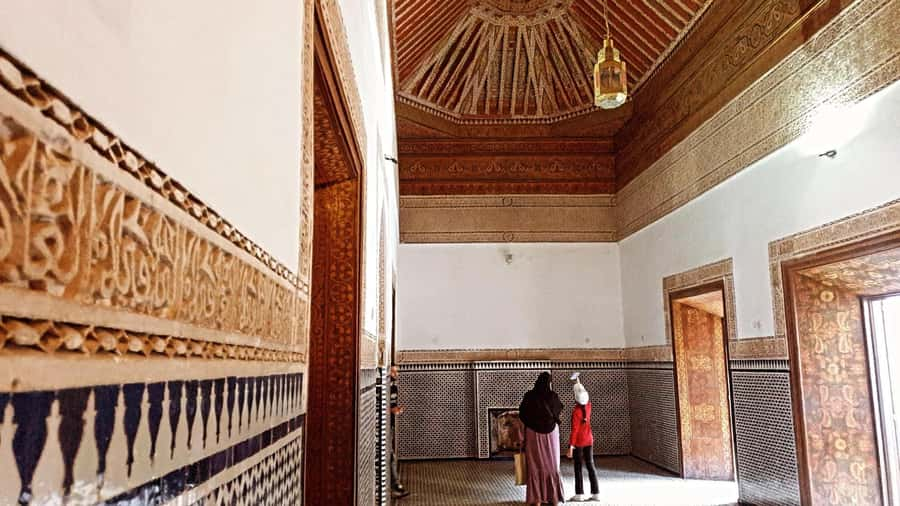
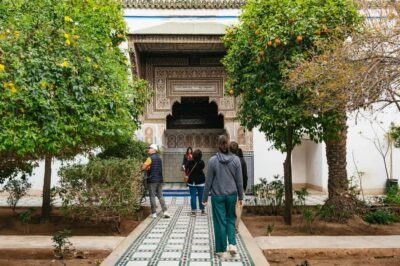
Inside Bahia Palace, expect a maze of Andalusian-style riads, gardens, patios, fountains, and reception rooms. The guide focuses on what makes this place visually distinct. Look for:
- zellij mosaics, especially the geometric patterns that appear again and again
- carved stucco with Arabic inscriptions
- cedar ceilings and ornate gatework with arabesque sculpting
This is more than decoration. When you learn how these patterns and materials connect to culture and craft, the palace stops feeling like a pretty museum and starts feeling like a statement of identity. The tour’s pace gives you time to walk, pause for photos, and still follow along with the story your guide is building.
A potential drawback here is sensory overload. Bahia Palace has lots of detail in a relatively concentrated space. If you’re the type who gets overstimulated indoors, take it slower than you think you need to. The guide is there to help you pick what to notice first.
Ben Youssef Medersa: prayer hall, ablutions room, and traditional education
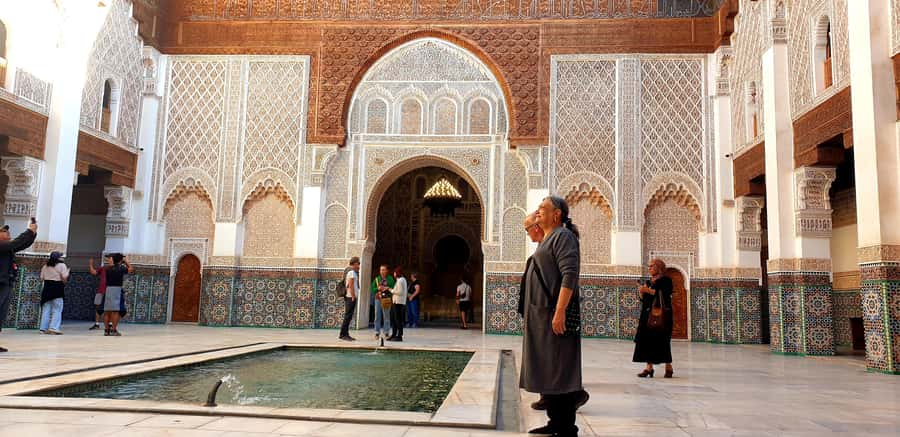
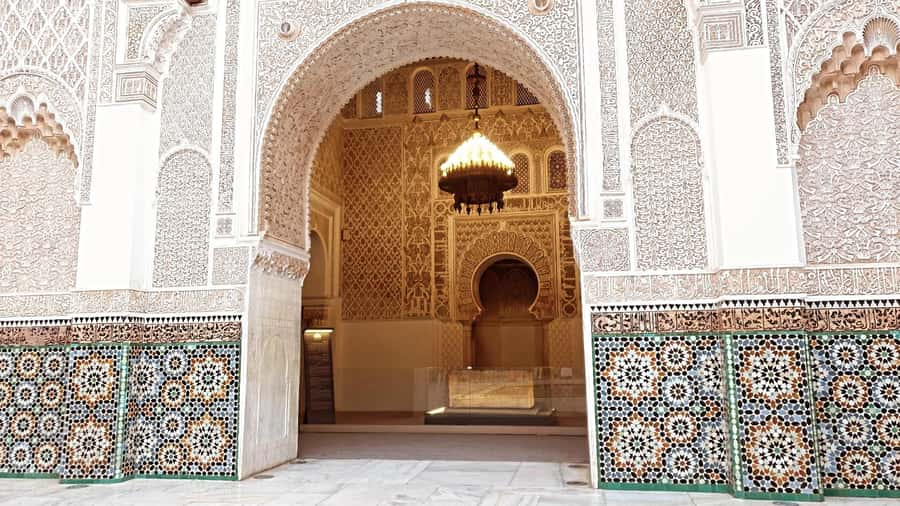
Ben Youssef Madrasa is the other skip-the-line anchor, and it’s the one that feels most personal. The building is a jewel of Arabo-Islamic art, but the tour experience leans into how people used the space. You’re not just looking at ornament. You’re learning how it supported daily practice and schooling.
The guided visit includes access to key areas such as the prayer hall, the ablutions room, and the students’ quarters. Your guide explains local Muslim practice and the traditional education system, which helps you understand the madrasa as a living institution rather than a historic site.
What I like about this stop is how it changes your perspective. After palace rooms, you shift from high-status display to education and devotion spaces. The same skill and artistic language you saw in carved stucco and mosaic work is still here, but the purpose is different. That contrast helps the whole medina story make sense.
If you’re sensitive to crowding, you might want to keep your expectations realistic. Madrasa interiors can feel tight because they are designed around movement and gathering. The good news is the tour framing keeps you from getting lost. You know where to look and what to expect next.
Old souks and craft workshops: leather, metal, spices, and artisans at work
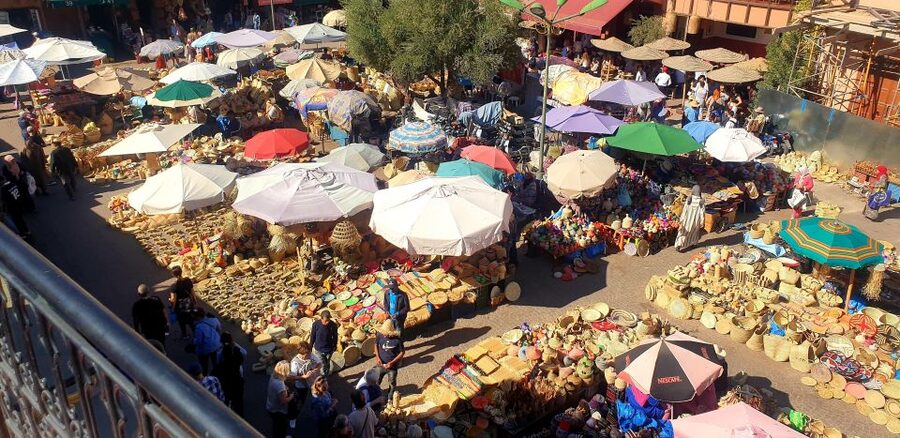
Once the tour moves past the formal heritage spaces, it turns into something more street-level. You head deeper into the old city streets to typical residential neighborhoods, where locals shop and handle everyday errands. This is where the tour stops feeling like a checklist and starts feeling like a day in Marrakesh.
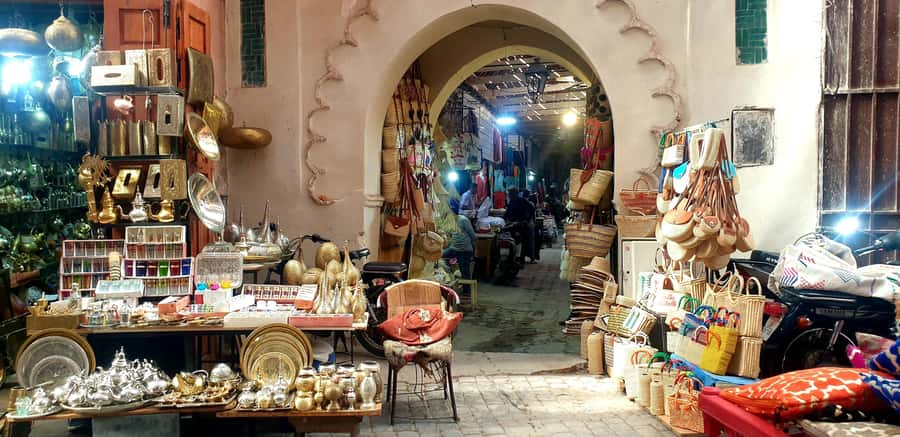
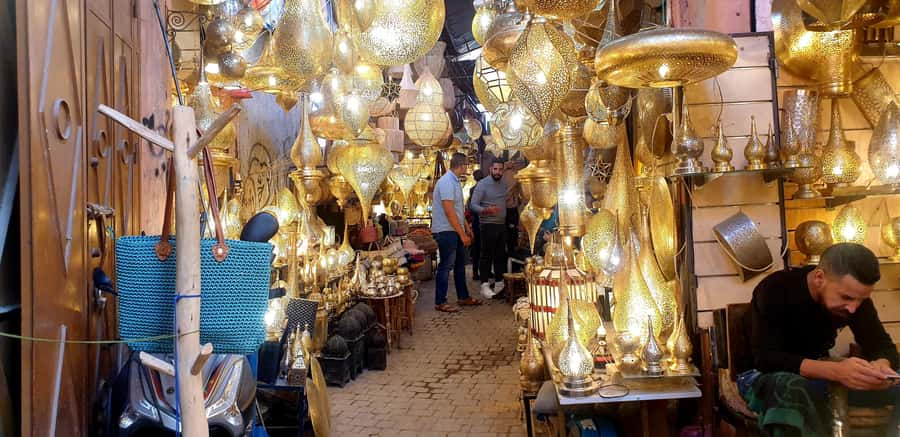
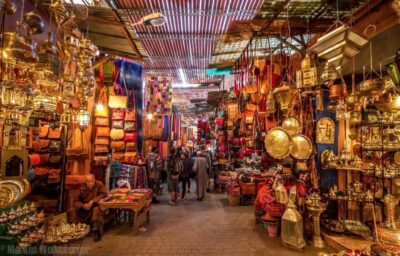
The itinerary then brings you to souk areas with workshops and craftsmen. You’ll see skills in motion, with activity connected to major trades such as leather, wood, silver, bronze, and copper. There’s also mention of noble materials being auctioned off to the highest bidders. Even if you are not trying to buy something, watching how the trade works teaches you how the city earns its reputation.
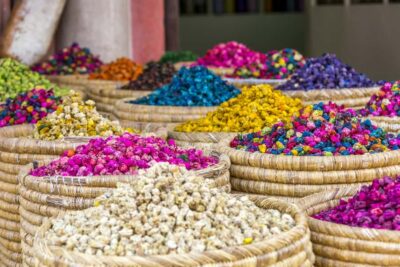
Next comes a discovery stop at the spices square. This is a sensory change: color, scent, and quick conversations. It’s also a great chance to pick out what you might actually bring home. If you buy spices, buy small first so you don’t end up with bags you never use.
Then you reach the Semmarine Souk, a showcase for Moroccan artisans. The tour also points out that international artists and designers have been coming here for decades, not just for souvenirs but for inspiration. That detail matters. It explains why some pieces feel both traditional and design-forward, and why you’ll see serious craft instead of mass-produced imitation.
You’ll have time for shopping at places along the route, including a short break in an old regional souk area (Regional food is included as part of the stop context). I suggest treating shopping as slow observation first, purchase second. Watch what’s made, then decide.
Jemaa el-Fna finish: street performance energy after your heritage loop
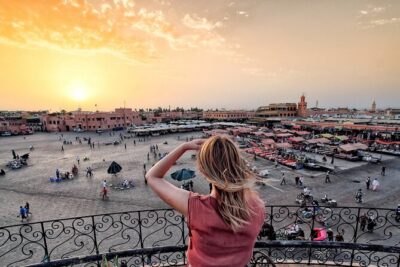
The tour ends at Jemaa el-Fna, the beating heart of Marrakech. This is not a quiet ending. Expect photo opportunities, a sightseeing moment, and a traditional dance show included near the finish.
Ending here is smart because it gives your brain a final payoff. You’ve just walked through heritage architecture, religious education spaces, and craft streets. Then you land in the place where performance, games, and public life fill the open air. It’s the medina’s social stage.
One practical tip: if you plan to eat afterward, keep a little flexibility. Jemaa el-Fna has lots of food choices, but the area can be busy. After four hours of guided focus, you might want a slower pace for your first meal outside the tour flow.
Other tours led by the history
Price, walking pace, and who this 4-hour tour fits best
At $65 per person for about four hours, you’re paying for three things: a guided narrative, skip-the-line access to two major sites, and a structured route through the medina. If you were doing Bahia Palace and Ben Youssef on your own, you’d likely spend time queuing and you’d miss the meaning behind what you’re seeing. The guide’s explanations are the value that turns those tickets into a story, not just a timed entry.
So is it good value? For most first-timers, yes. This tour covers the most demanding parts of planning: navigation through the medina and selecting which heritage sites deserve your attention. It also adds market and neighborhood texture so you don’t leave with only palace photos.
For repeat visitors, or if you love to wander with no structure, you may feel the price. One consideration that comes up with any medina history tour is your personal style. If you prefer to follow your nose and stop whenever you want, a fixed 4-hour itinerary may feel limiting.
Logistics and comfort are straightforward. Bring comfortable shoes. The tour is not suitable for wheelchair users. Expect walking in tight streets, and plan to keep your water break sensible. Bottled water is included, with 2 small bottles or 1 large per person, which helps you keep going without needing to hunt immediately.
Languages are English and French, and a private group is available if you want a quieter pace or more direct attention.
Should you book the Marrakech Medina History & Culture Tour?
Book it if you want a guided “how to read Marrakesh” experience in a short window. This tour is especially useful at the start of your trip because it gives you orientation around the Koutoubia area, then builds understanding through Mellah heritage context, palace architecture details, and madrasa education spaces. It also gives you enough souk time to feel the trade and craftsmanship instead of only seeing the most famous monuments.
Skip booking only if you already know the medina well, you hate structured walking routes, or you need full accessibility support. The walking is part of the point, and the tour is built for people who can comfortably move through the old city.
If you can handle that, this is a strong way to make your Marrakech days feel connected, not random.
FAQ
Where is the meeting point for the tour?
Meet at the little white mausoleum (dome) sitting at the foot of the Koutoubia Mosque tower, located on Mohamed 5th Boulevard. The guide will be waiting at the reserved time wearing an official badge with a blue ribbon.
What time does the tour run?
The tour duration is 4 hours. Starting times depend on availability.
What is the price per person?
The price is $65 per person.
What is included in the tour?
The tour includes services of a tour guide, skip-the-line entry to Bahia Palace and Ben Youssef Medersa, and bottled water (2 small or 1 large per person).
Which language options are available?
The live tour guide is available in English and French.
Does the tour include Bahia Palace and Ben Youssef Medersa?
Yes. Bahia Palace and Ben Youssef Medersa are both included, with skip-the-line entry and a guided tour of each.
Where does the tour start and where does it end?
It starts around the Koutoubia Mosque area, at the Kubba Fatima Zohra meeting point. It finishes at Jemaa el-Fnaa.
Is the tour suitable for wheelchair users?
No, it is not suitable for wheelchair users.
What should I bring?
Wear comfortable shoes.
Can I cancel and get a full refund?
Yes. Free cancellation is available up to 24 hours in advance for a full refund.
Is there an option to reserve without paying right away?
Yes. You can reserve now and pay later, keeping your travel plans flexible.
Tours Led by the History
- Marrakech: Historical Discovery Tour★ 4.1 · 87 reviews
- Marrakech: Day Trip to the Beautiful and Historic Essaouira★ 4.3 · 39 reviews
- From Marrakech: Essaouira Full day trip, beach and History★ 4.9 · 26 reviews
- Marrakech: Half-Day Guided Journey through History & Culture★ 4.3 · 20 reviews
Medinas, Souks and Kasbahs Elsewhere
- Marrakech: Bahia Palace, Saadian Tombs, Souk and Medina Tour★ 4.7 · 4,974 reviews
- Marrakech: Ben Youssef, Secret Garden, & Souks Walking Tour★ 4.6 · 2,802 reviews
- Marrakech: Colorful Medina Souks Guided Walking Tour★ 4.7 · 2,470 reviews
- Marrakech: Saadian Tombs & Bahia Palace, Medina Guided Tour★ 4.6 · 1,989 reviews
Added recently from around Marrakesh

More Medina, Souk and Kasbah Walking Tours worth a look.
 ★ 4.7Marrakech: Bahia Palace, Saadian Tombs, Souk and Medina TourFrom $204,974 reviews
 ★ 4.6Marrakech: Ben Youssef, Secret Garden, & Souks Walking TourFrom $202,802 reviews
 ★ 4.7Marrakech: Colorful Medina Souks Guided Walking TourFrom $202,470 reviews
 ★ 4.6Fez Medina Guided TourFrom $92,079 reviews
 ★ 4.6Marrakech: Saadian Tombs & Bahia Palace, Medina Guided TourFrom $181,989 reviews
 ★ 4.6Fes: Museum, Al Attarine Madrasa & Tannery and Medina TourFrom $131,655 reviews
 ★ 3.8Marrakech Monuments & Souks 3-Hour TourFrom $231,540 reviews
 ★ 4.7Marrakech: Bahia Palace, Madrasa Ben Youssef and Medina TourFrom $191,347 reviews
Where else this one sits