
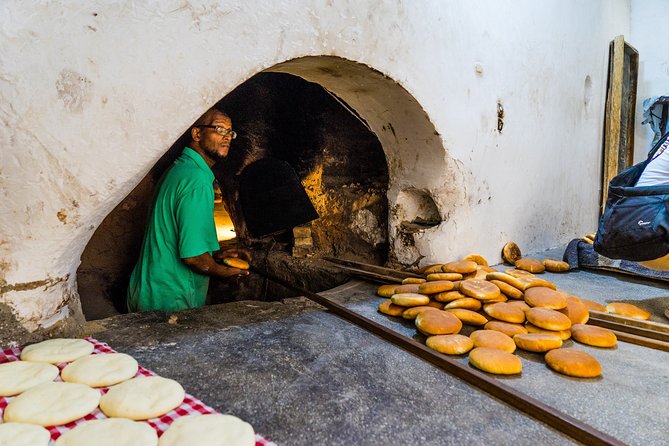
REVIEW · MOROCCO
Marrakech Food Tour
Follow your nose through Marrakech for a lesson in Moroccan eating. This medina-walk food tour pairs guided tastings with a two-course lunch or dinner near Jemaa el-Fna, so you understand what you are eating and why it matters. One thing to keep in mind is that if you visit during Ramadan, some stops can be limited and meal timing can shift.
You start at Riad Flamme d’Orient & Spa for fresh squeezed orange juice, then head through the souks and alleyways, where it is easy to get turned around without a guide. You also pass Rahba Kedima Square, the spice square, and you may stop in the old Jewish neighborhood if stalls and seasonal foods are available.
Plan for a few hours of walking. Bring comfy shoes and come with a light appetite, since you snack often before the main restaurant meal. Vegetarian options are available if you request them at booking, which makes this easier to plan than many food tours.
In This Review
- Key highlights to look for
- Entering the medina with a food-focused route
- Meeting point and the orange juice kickoff at Riad Flamme d’Orient & Spa
- Souks and alleyways: where you stop in the places you would miss
- Rahba Kedima Square, the spice square that wakes up your senses
- Old Jewish neighborhood stops and seasonal tastings
- The two-course lunch or dinner near Jemaa el-Fna
- What you will likely taste, from classics to sweets
- Guide style matters more than you think
- Price and value: why $80.26 can make sense
- Timing, group size, and how the day feels
- What to bring, and how to make tastings fun
- Who this Marrakech food tour fits best
- Should you book this Marrakech Food Tour?
Key highlights to look for
- Orange juice start at Riad Flamme d’Orient & Spa, a bright beginning before the eating starts
- Souks and alleyways with a guide, so you do not miss the smaller lanes and food corners
- Rahba Kedima spice square, built for smell first, then taste
- Seasonal tastings in the old Jewish neighborhood, depending on what is available
- A two-course lunch or dinner near Jemaa el-Fna, so you finish in a real local dining setting
- Small group size (max 15), which helps the guide keep an easy pace and answer questions
Entering the medina with a food-focused route

Marrakech can feel like sensory overload, especially in the medina. What I like about this tour is that it does not just throw you at the big sights and hope you find something good to eat. Instead, you move in an order that makes food make sense, with your guide pointing out what you are tasting and how the ingredients show up across Moroccan cooking.
I also like the pacing. You are not just eating one heavy dish and then calling it a day. You get multiple snack stops, then a full main meal, and the tour is long enough to feel like an actual experience, not a rushed checklist.
The only caution is timing and access. During Ramadan, the flow can change because some stops may not be available, and dinner might land at a different moment than you expect. If you are traveling in that season, go in with flexible expectations and ask questions when you book.
Other tasting walks through the food streets
- Authentic Moroccan Food Tour in Marrakech with Dinner
★ 5.0 · 1,423 reviews - The Original Marrakech Street Food Tour
★ 5.0 · 248 reviews - Marrakech Street Food Tour
★ 5.0 · 220 reviews - Medina Stories Marrakech Food Tour with 15+ Tastings
★ 5.0 · 158 reviews
Meeting point and the orange juice kickoff at Riad Flamme d’Orient & Spa
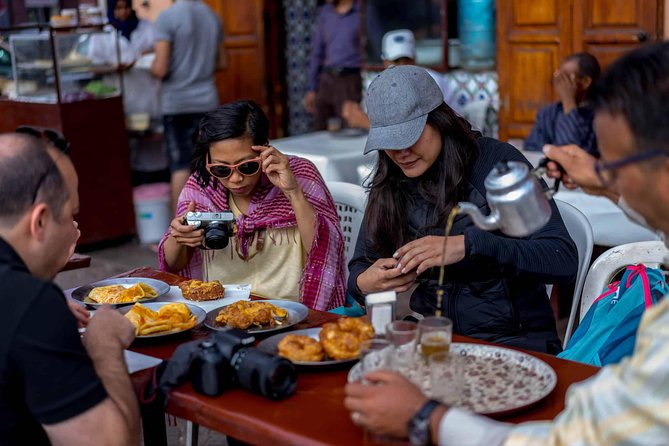
The tour begins back at a meeting point in Marrakech at the Post Maroc address (Post Maroc, 322 Saada, 4B Mhamid, Marrakech 40000). You’ll start with a stop at Riad Flamme d’Orient & Spa, where the first thing you taste is fresh squeezed orange juice.
This sounds small, but it is a smart start. Orange juice is a clean, familiar baseline flavor, and it also sets you up for the spiced tastes that come next. You are also getting your bearings early, which matters once you enter the maze-like streets.
Because the orange juice stop includes an admission ticket that is free, it keeps the experience simple. You do not have to think about extra fees or juggling cash right at the beginning.
Souks and alleyways: where you stop in the places you would miss
After the orange juice, you head out on foot through souks and old-town alleyways. This is one of the best parts of the day, because your guide helps you walk into the places that are hard to navigate on your own.
In practical terms, this means two things for you:
- You get better access to stalls and small food counters that would be easy to miss while you are trying to find your way.
- You get context as you go, so you are tasting with understanding, not guessing.
A good example from what people describe over and over is the way the tour takes you away from the main central feel of the city and into the lanes where locals actually grab snacks and sweets. If you want Marrakech food without the tourist-only routine, this section is doing the heavy lifting.
Comfort note: you are doing moderate walking. You do not need hiking boots, but you do want shoes that can handle uneven old-street surfaces without slowing you down.
Rahba Kedima Square, the spice square that wakes up your senses
Next you reach Rahba Kedima Square, often referred to as the spice square. This part of the tour is about more than pictures. You get the chance to see and smell the products connected to Moroccan cuisine.
Why it works: Moroccan cooking runs on layers, and spices are where those layers start. When you can smell things in place, you start recognizing common flavor families later during your meal. It also makes the snack stops more meaningful, because you are not just eating, you are learning how the flavors connect.
You usually spend around 20 minutes here, which is enough time to take in what is around you without turning it into a long lecture. Your guide’s job is to connect what you are smelling to what you will taste.
If you are the type who enjoys food science style questions, this is the part where you will have the easiest time asking why something tastes the way it does.
Old Jewish neighborhood stops and seasonal tastings
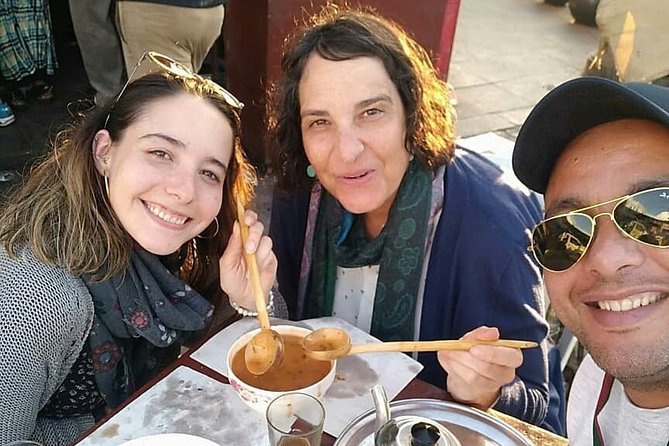
The tour then moves toward the old Jewish neighborhood. This portion of the experience is described as flexible, with some tasting possible depending on what stalls are available and what is in season.
I like this approach, because it makes the tour feel less like a script. Morocco changes by season and availability, and food tours that pretend the city is static can feel oddly disconnected from reality. Here, you are more likely to taste what is actually being sold that day.
Still, here is your planning consideration. If certain stalls are not operating, you might get fewer tastings than on another day. That is normal, and a good guide will steer you toward what is working and what is most worth trying in the moment.
If you have dietary needs, this is also where your advance request matters. Vegetarian options are available, but your guide still needs to know what you need before you reach the tasting areas.
The two-course lunch or dinner near Jemaa el-Fna
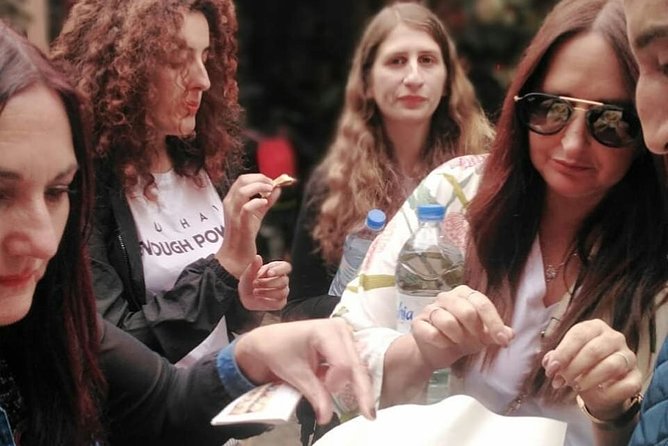
This is the payoff. Your main meal is served at a local restaurant near Jemaa el-Fna square, and it is a lunch or dinner depending on which time slot you choose. The meal is described as two-course, and it is paired with snacks along the way so you are not arriving hungry and confused.
A key detail for value: the tour includes the main meal plus snacks, plus coffee and/or tea, and bottled water. That means the final price covers the big ticket portion, not just a string of small bites.
Also, you’ll be eating with a local restaurant setting rather than a staged experience. People often point out that the restaurant stop feels like you are sharing space with real Marrakech diners, not just a food-tour bubble.
One drawback to note, again especially if you travel during Ramadan: meal timing and what you can realistically eat can shift. Some accounts note dinner could be harder to eat if the group’s schedule lands right after the fast is broken. If that season affects your plans, be prepared for the flow to be different, even if the food is still excellent.
Alcoholic drinks are not included, so if you want wine or cocktails with your meal, you will have to plan for that separately.
Other eating and drinking picks

What you will likely taste, from classics to sweets
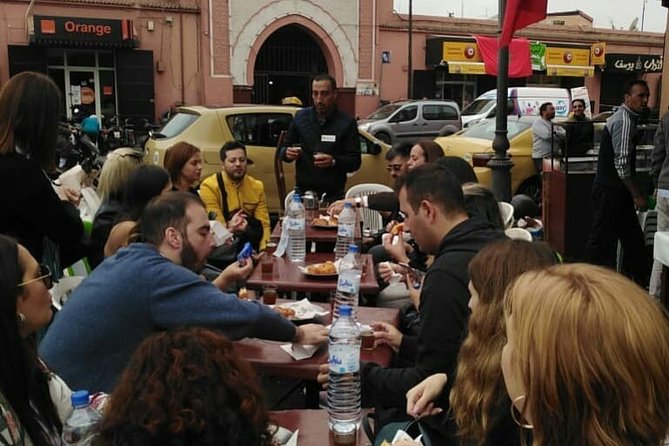
The tour is designed around Moroccan flavor markers, including spices, olives, nuts, biscuits, and dessert sweets, plus classic items you might recognize once you’ve smelled the ingredients earlier. You can also expect specialty products as you move through the souks and spice square area.
One reason this works for first-timers is that you get variety without feeling like you are on a food marathon. The snacks and tastings keep you sampling different textures and flavor styles, and then the restaurant meal ties it all together into a coherent course experience.
From what people highlight, you are likely to see interesting ingredient pairings and stand-out flavors like fruit and nut combinations. The point is not just to eat a lot, it is to taste combinations you cannot easily recreate at home without knowing the basics.
If you do one thing to improve your experience: do not eat a full meal right before you start. People keep giving the same advice, and it is practical. Come with an empty stomach or at least light appetite, and you will enjoy the tastings instead of pushing through them.
Guide style matters more than you think
This is a guide-led experience, and the guide quality is a big part of why the tour scores so well. People often mention guides like Chama, Sharma, Fatima, Souf, and Soufiane, and they praise the same things: clear explanations, a friendly attitude, and a sense of humor that keeps the walk from feeling like homework.
What you should expect from your guide, based on how the tour is described:
- They explain what you are eating and where it fits in Moroccan cuisine
- They manage the group pace so you get time to taste and ask questions
- They help you navigate the medina without feeling stressed
Even if you are not a food nerd, it is worth it. If you like culture through food, this tour gives you the language to understand the dishes you see in restaurants and markets later.
Price and value: why $80.26 can make sense
At about $80.26 per person, this is not a budget snack crawl. But it can be good value because you are paying for three core things:
- A guided walk through the medina, which is hard to self-navigate well once you want to find the right food stalls.
- A full main meal at a local restaurant near Jemaa el-Fna, plus snacks throughout.
- Extras that food tours often skip, like bottled water and coffee and/or tea, with all taxes included.
Also, this tour is typically booked around 45 days in advance on average. That suggests enough demand that people plan it intentionally, and that is usually a sign you are getting something steady and reliable, not a last-minute scramble.
Where the value can feel better: if you would otherwise pay for a restaurant meal plus a guided market walk, this bundles both. Where you might pause: if you are already planning to eat a lot on your own and only want one restaurant stop, you may feel it is more eating than you want.
Timing, group size, and how the day feels
The tour runs about 3 to 4 hours, in the afternoon or evening. Choose based on your energy and your hunger. If you like watching the city change, the evening option can feel more dramatic around Jemaa el-Fna. If you prefer to finish earlier and keep sightseeing time afterward, the afternoon option works well.
Group size is capped at 15 travelers, which keeps the experience from turning into a slow moving line. Small groups also help if you have dietary needs, because your guide can check in and manage what you are served.
You also get a mobile ticket. That helps on the practical side because you do not need to print anything.
One more practical point: the tour is near public transportation. If you are staying outside the medina, it is simpler to reach the start without a complicated logistics headache.
What to bring, and how to make tastings fun
For most people, the tour experience is best if you show up prepared for light to moderate walking and multiple tastings.
Bring:
- Comfy walking shoes
- A small pack of napkins, if you are like me and hate fumbling for them
- Your appetite, since the snacks stack up
Plan for:
- No alcohol included, so if that matters to your dinner plans, you will need to handle it at the restaurant
- Weather matters. The tour requires good weather, and if it is canceled due to poor weather you’ll be offered another date or a full refund
The tour also encourages you to advise any specific dietary requirements at booking. Vegetarian options exist, so it is worth mentioning early so the guide can plan accordingly.
Who this Marrakech food tour fits best
This tour is a strong match if you want Moroccan gastronomy with context, not just random eating. It works especially well for:
- First-time Marrakech visitors who feel overwhelmed in the medina
- Food lovers who want to understand how spices and ingredients show up in real dishes
- Travelers who like meeting local people through the food setting, not just museums
- Groups of friends or couples who want a small group experience with a guide who keeps it lively
It might be less ideal if:
- You hate walking through crowded alleys and prefer open, spread-out sightseeing
- You are extremely sensitive to food quantity, because there are snacks plus a full restaurant meal
- You need a strict schedule during Ramadan, because timing and stop availability can change
Should you book this Marrakech Food Tour?
I think you should book this tour if your main goal is Moroccan food done the practical way, with a guide who helps you move through the medina and understand what you are tasting. The combo of souks, Rahba Kedima spice square, and a real local restaurant meal near Jemaa el-Fna makes it feel like more than a single meal.
Book it now if:
- You want a guided food route you cannot easily recreate on your own
- You are happy to snack, then enjoy a two-course lunch or dinner
- You like the idea of finishing close to Jemaa el-Fna instead of far away
Skip it or consider a different plan if you want a low-footprint activity, or if your trip includes Ramadan and you strongly need exact dinner timing with minimal surprises.
If you do book, my best advice is simple: eat lightly beforehand, wear comfortable shoes, and tell the company about your dietary needs at booking. Then let the guide do what they are hired to do, steer you to the right flavors in the right order.
Eating and Drinking Picks
- 3-Day Tour to Merzouga Erg Chebbi with Food & Camel Trek★ 5.0 · 1,770 reviews
- Authentic Moroccan Food Tour in Marrakech with Dinner★ 5.0 · 1,423 reviews
- The Original Marrakech Street Food Tour★ 5.0 · 248 reviews
- Marrakech Street Food Tour★ 5.0 · 220 reviews
Food Walks and Tasting Stops
- Authentic Moroccan Food Tour in Marrakech with Dinner★ 5.0 · 1,423 reviews
- The Original Marrakech Street Food Tour★ 5.0 · 248 reviews
- Marrakech Street Food Tour★ 5.0 · 220 reviews
- Medina Stories Marrakech Food Tour with 15+ Tastings★ 5.0 · 158 reviews
Added recently from around Marrakech

More Moroccan Food Tours and Tastings worth a look.
 ★ 4.9Marrakech: Street Food Tour with a Local GuideFrom $343,119 reviews
 ★ 4.8Marrakech: Street Food Tour by NightFrom $432,838 reviews
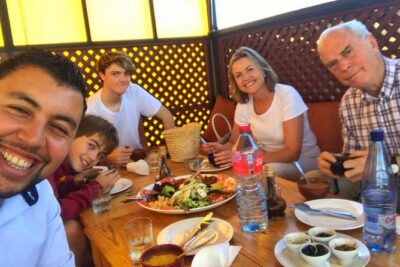 ★ 5.0Authentic Moroccan Food Tour in Marrakech with DinnerFrom $541,423 reviews
 ★ 4.8Marrakech: Moroccan Cuisine Cooking Class in Local HomeFrom $24508 reviews
 ★ 4.7Marrakech: Jemma El Fnaa Food Tour with DinnerFrom $46394 reviews
 ★ 4.8Marrakech: Authentic Moroccan Food Walking Tour & DinnerFrom $52261 reviews
 ★ 5.0The Original Marrakech Street Food TourFrom $80248 reviews
 ★ 5.0Marrakech Street Food TourFrom $64220 reviews
Where else this one sits