
REVIEW · MOROCCO
Flavors of Fez: Market visit, and a hands-on cooking class.
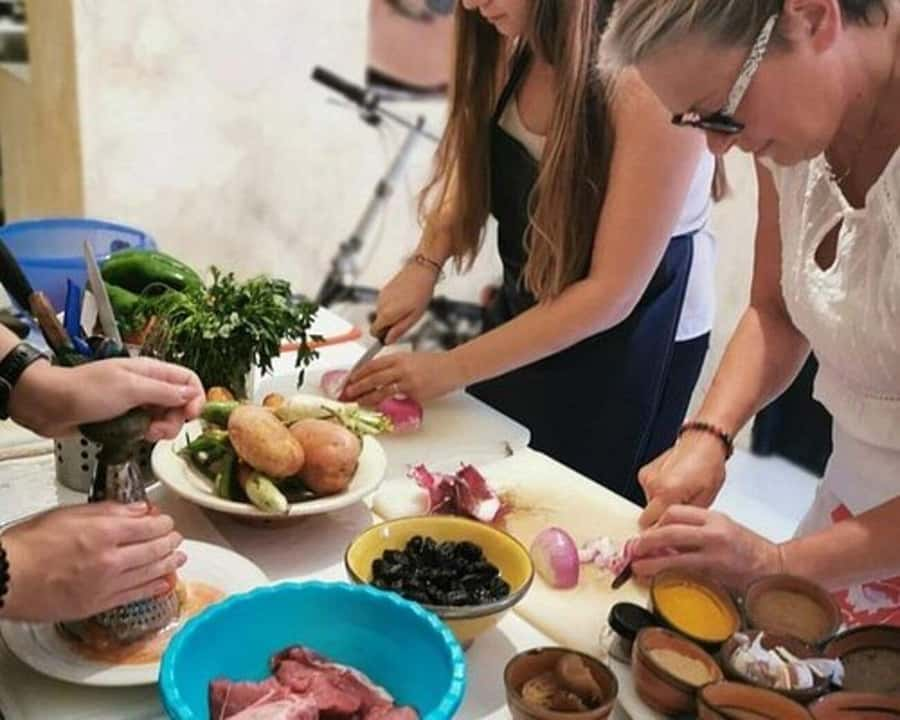
The Blue Gate is where dinner begins. You start near Blue Gate and spend the next few hours shopping for the right ingredients and cooking with a local family in Fez. I love how market shopping turns into real cooking choices, not just sightseeing.
I also like that this stays small and practical, with groups from 1 to 10. In the kitchen, hosts such as Kenza and Doha’s family teach Moroccan techniques like spice blending and tagine basics, and you often end up making dishes like kefta tajine and zaalouk.
One thing to consider: you do need comfortable shoes, because you’ll be moving through the Medina on foot. If you want alcohol with dinner, plan ahead, since alcohol is not included.
In This Review
- Key highlights at a glance
- Why the market visit matters in Fez
- Finding the Blue Gate meeting point without stress
- Market visit: choosing ingredients like a local
- From the Medina home to the communal table
- Cooking class: spice blending and tagine technique, hands-on
- What dishes you might cook, and why that choice is good
- Price and value: does $56 buy enough?
- Who should book this cooking class in Fez
- Practical tips before you go
- Should you book Flavors of Fez?
- FAQ
- How long is the Flavors of Fez experience?
- Where is the meeting point near the Medina?
- Is hotel pickup and drop-off included?
- What does the price of $56 per person cover?
- Are alcoholic drinks included?
- Is this cooking class suitable for children?
Key highlights at a glance
- Meet at the Blue Gate with blue and green tile details, plus an easy location cue near Banque Societe Generale
- Shop for your own dish with guided help picking fresh ingredients
- Learn spice blending and core Moroccan methods with hands-on teaching
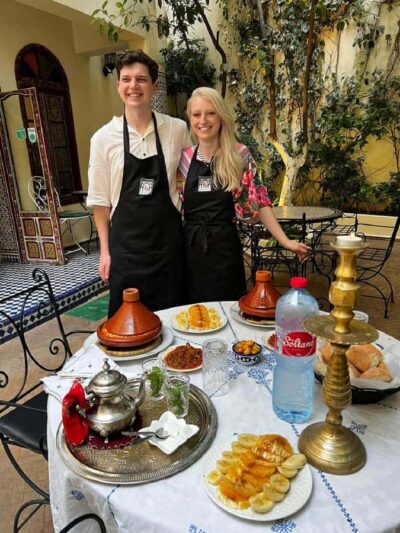
- Cook, then eat together at a family-style table in a Medina home
- Small group size (1 to 10) keeps the class interactive
- English or French hosting plus an English audio guide
Why the market visit matters in Fez
Food in Fez makes more sense once you see where ingredients come from. This experience starts with a guided market visit where you select the ingredients for the dish you’ll cook, guided step by step. That means you’re not just looking. You’re deciding what goes into your meal based on freshness and what the market offers that day.
I like that the market part is treated like the start of the cooking lesson. You’ll learn what to look for, how Moroccan cooking relies on herbs, produce, and spices, and how all of that connects to the final taste. Reviews back this up with comments about choosing produce, learning how the shopping process links directly to the cooking, and leaving with a clearer sense of how locals build dinner.
Another smart part is how this shapes your expectations for the kitchen. When you’ve already selected the ingredients, the cooking feels purposeful. Instead of following instructions blindly, you understand why you’re grating, slicing, seasoning, and building flavors in a certain order.
Other tasting walks through the food streets
- Fez: Foodie tour in the old Medina
★ 4.7 · 27 reviews
Finding the Blue Gate meeting point without stress
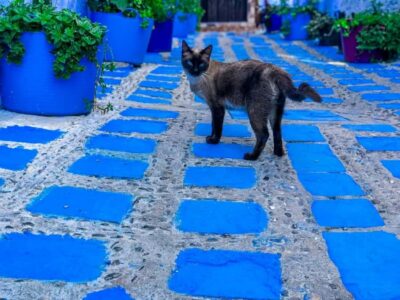
Meeting is near The Blue Gate, one of the main entrances to the Medina. The practical tip here is visual: the outside has eye-catching blue tiles and the inside has green tiles. If you’re getting dropped off at the Medina, use that as your anchor so you do not waste time wandering.
You’ll wait on the right side just outside the gate, near Banque Societe Generale. If you get turned around, you can also meet at any main gate of the Medina, but for me the Blue Gate is the easiest way to keep it simple.
This is where the tour design helps. You’re not trying to navigate the Medina on your own first. You have a specific location, plus the guide or greeter in English or French. And since there’s mention of a separate entrance for skipping a line, expect the group to move in a more controlled way than typical walk-in crowds.
Quick prep tip: wear shoes you can stand and walk in for a few hours. Tight lanes and uneven surfaces are part of Medina life, and the tour schedule assumes you’ll be comfortable moving.
Market visit: choosing ingredients like a local
The market visit is not a lecture. It’s a guided shopping session where you pick ingredients for your chosen dish. The experience description is clear on this connection: you start at a home next to the Blue Gate, then you head into the market and come back ready to cook.
In reviews, people mention being guided to vendors for vegetables, meat, herbs, bread, and other supplies. That matters because Moroccan cooking depends on layers of flavor, and those layers start at the market. If the produce is right, the whole dish tastes right.
You may also be able to influence what you cook. Several reviews describe the host asking what participants wanted to make, then planning the market shopping around that. That’s a big value add, because it lets you steer toward your taste, not just whatever is on offer.
A small but memorable detail from reviews: people mention buying cinnamon for personal use, and learning practical tips while shopping. Even if you never cook at home with the same spices, that kind of hands-on guidance helps you understand Moroccan pantry logic.
From the Medina home to the communal table
After shopping, the group returns to the Medina home. The tour info describes the setting as a comfortable home near the Blue Gate, with a warm, family atmosphere. That’s not just branding. Multiple reviews point out that families and multiple generations are involved, and the experience includes real conversation, not only cooking.
What you’re really buying with this part of the experience is access and context. You get to see how Moroccan meals happen at home, how the kitchen rhythm works, and how people eat together. You also get a better sense of why tagine and related dishes taste the way they do, because you see how the ingredients are handled and timed.
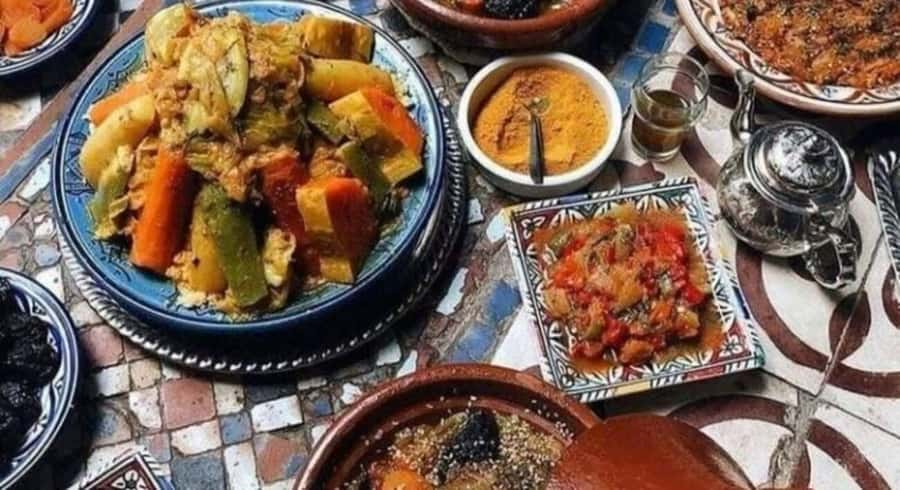
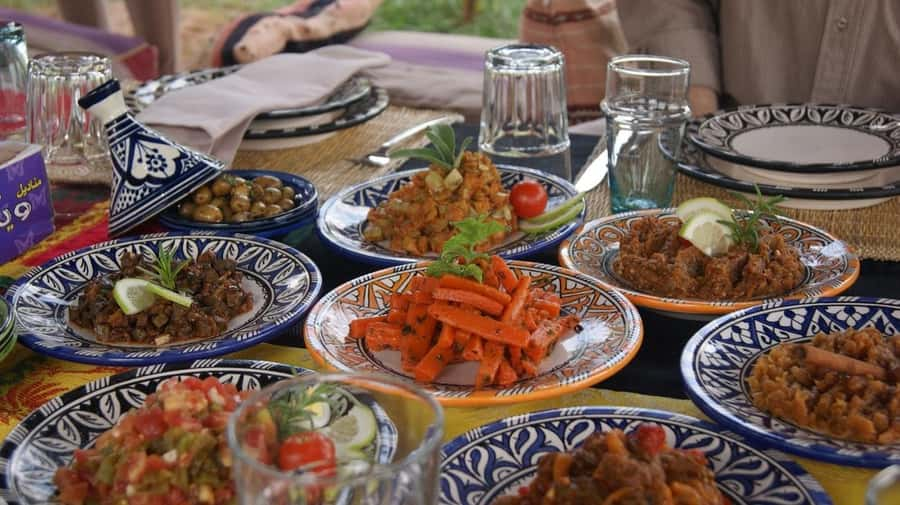
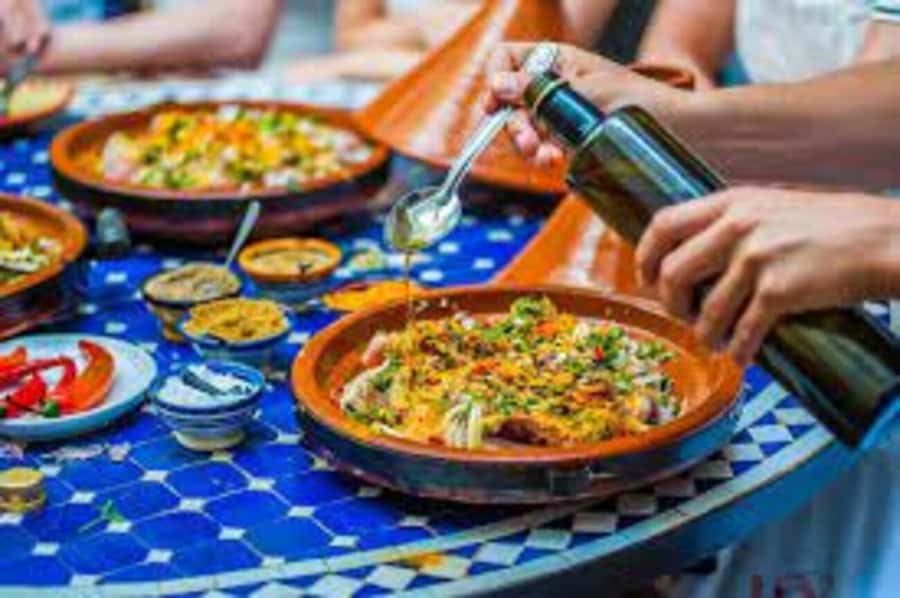
The experience ends with a shared feast at the communal table. Reviews describe the food as incredibly tasty, with dishes like kefta tajine and zaalouk showing up again and again as highlights. Other reviews mention beef and prune tagine and a soft salad made with eggplant, capsicum, and tomato. The takeaway for you is simple: you’re going to eat something you actually helped build, not just watch a dish appear.
If you like cultural moments in between courses, you’re likely to enjoy this. People mention warm hospitality, being made comfortable at the table, and spending extra time chatting because the conversation is part of the evening.
Cooking class: spice blending and tagine technique, hands-on
This class is built around active participation. You’re taught essential techniques and the art of spice blending, then you cook your dish step by step. The key word here is hands-on. You should expect tasks, not just observation.
Several reviews call out specific learning moments, like knife skills for grating vegetables and learning how to use more of the whole vegetable rather than wasting it. That’s exactly the kind of practical skill that transfers to your own kitchen later.
You’ll also see how Moroccan cooking uses timing and texture. Tagine dishes rely on seasoning and layering, and zaalouk is all about getting the vegetables to the right softness. People mention plenty of time for you to work through the recipe yourself, with demonstrations plus hands-on teaching.
Another detail you’ll probably notice: mint tea often shows up early. One review explicitly mentions starting with refreshing mint tea before cooking. Even if yours does not, tea is part of the home hospitality culture that’s repeatedly referenced in feedback, and it helps the class feel like a family moment rather than a rushed cooking show.
For many people, the biggest emotional payoff is how welcoming the hosts are. Reviews mention guides like Kenza and Doha, along with their family members, teaching with patience and warmth. You’ll likely feel comfortable asking questions in English or French, and that Q&A turns the kitchen into a real learning space.
What dishes you might cook, and why that choice is good
The tour includes selecting the ingredients for the chosen dish, and reviews describe a few common favorites. Kefta tajine is one of the most frequently mentioned recipes. Zaalouk is another. People also mention beef and prune tagine, plus Moroccan salad.
Here’s why that matters for your planning. These dishes are emblematic Moroccan food, but they also teach different skills. A kefta tajine helps you understand how seasoned ground meat forms into a cohesive texture. Zaalouk teaches vegetable softness and flavor blending. A tagine with prunes or other add-ins gives you a sense of sweet-salty balance that Moroccan cuisine can do so well.
If you have dietary preferences, the best move is to ask early what you can make. The experience description and multiple reviews suggest the host can match the menu to your interest. Even if you end up cooking something classic, you still get to make it your own by being part of ingredient selection.





Price and value: does $56 buy enough?
At $56 per person for about 4 hours, this is not a budget street-food snack. But you also aren’t just paying for food. You’re paying for a full experience: hotel pickup and drop-off, a guided market visit, hands-on teaching, and expert guidance. The small group format (1 to 10) also supports the value, because you get more personal attention than you would in a large crowd event.
Think of it as three connected services in one: local shopping guidance, cooking instruction, and a sit-down meal. Many tours bundle one or two of those. This bundles all three, and that’s where the price starts to feel fair.
Also note what is not included. Alcoholic drinks are not included, so if you plan to budget for beverages, keep that in mind. On the upside, mint tea is often mentioned in reviews, and tea fits the local setting.
One more value point: the tour includes English audio guidance and hosts who speak English or French. That helps you follow what’s happening even if your cooking vocabulary in Moroccan Arabic or French terms is limited. You will still get the main actions clearly guided.
Who should book this cooking class in Fez
I’d point this at you if you want more than Medina photos. If you like food with a story and you enjoy learning skills you can repeat later, this is a strong match.
It’s also a good choice if you prefer smaller group dynamics. With a maximum group size of 10, the class can stay interactive. Reviews mention multiple generations in the home and a feeling of being treated like family, which is hard to recreate in large group formats.
On the other hand, this is not for everyone. The tour is not suitable for children under 8. If you’re traveling with little kids, you’ll need to look for something else that fits their attention span and comfort level. And if you hate walking in tight lanes, plan for it. The experience includes the Medina and a home setting, so you should be ready to move.
Practical tips before you go
Bring comfortable shoes. That’s the main requirement, and it’s not an afterthought. The experience moves between the Blue Gate area, the market, and the home in the Medina, and the floor can be uneven.
Decide in advance if you want a specific dish. The experience is built around shopping for the chosen dish, and reviews suggest you can influence what you cook. Asking for what you want will shape your market shopping route and your final meal.
If you travel with an appetite for conversation, lean into it. Many reviews highlight extended chatting and cultural guidance beyond the cooking. People mention recommendations for hammams, restaurants, and day trips from the hosts, based on their own experiences.
Finally, remember the rules. Pets are not allowed, and alcohol and drugs are not allowed. It’s a home-based activity, so the setting stays respectful and calm.
Should you book Flavors of Fez?
Book it if you want a hands-on Moroccan cooking lesson that starts at the market and ends with you eating what you made. The market ingredient selection, the tagine and zaalouk style dishes, and the family-home setting are the core reasons it works, and they show up clearly in high ratings.
Skip it if you want a quick, low-effort activity or you cannot handle walking in the Medina. Also think twice if alcohol is important to your dining plan, since it is not included.
If you’re on the fence, here’s the simplest decision rule: if you love the idea of shopping, cooking, and learning practical techniques with real people in Fez, this is a strong choice for your time.
FAQ
How long is the Flavors of Fez experience?
It runs for about 4 hours.
Where is the meeting point near the Medina?
Meet at The Blue Gate. You should wait on the right side next to Banque Societe Generale, just outside the gate. You can also pick it up from any main gate of the Medina.
Is hotel pickup and drop-off included?
Yes. Hotel pickup and drop-off are included.
What does the price of $56 per person cover?
The price includes the market visit with guided ingredient shopping, hands-on teaching, expert guidance, hotel pickup and drop-off, and an English audio guide. It also mentions a separate entrance to skip the line.
Are alcoholic drinks included?
No. Alcoholic drinks are not included.
Is this cooking class suitable for children?
No. It is not suitable for children under 8 years.
Food Walks and Tasting Stops
- Fez: Foodie tour in the old Medina★ 4.7 · 27 reviews
Added recently from around Fes


More Moroccan Food Tours and Tastings worth a look.
 ★ 4.9Marrakech: Street Food Tour with a Local GuideFrom $343,119 reviews
 ★ 4.8Marrakech: Street Food Tour by NightFrom $432,838 reviews
 ★ 5.0Authentic Moroccan Food Tour in Marrakech with DinnerFrom $541,423 reviews
 ★ 4.8Marrakech: Moroccan Cuisine Cooking Class in Local HomeFrom $24508 reviews
 ★ 4.7Marrakech: Jemma El Fnaa Food Tour with DinnerFrom $46394 reviews
 ★ 4.8Marrakech: Authentic Moroccan Food Walking Tour & DinnerFrom $52261 reviews
 ★ 5.0The Original Marrakech Street Food TourFrom $80248 reviews
 ★ 5.0Marrakech Street Food TourFrom $64220 reviews
Where else this one sits