
REVIEW · MARRAKECH
Fes: Attarine Madrasa, Museum, Tannery, Souk and Medina Tour
Fes turns a walk into a lesson. I love the mix of UNESCO-listed alleyways and the craft beauty of Al Attarine Madrasa, and I love how the guide keeps the day moving with clear stories. One drawback to plan for: you are on foot for a good chunk of the tour.
For around $12, you get a licensed local guide, skip-the-line access for selected stops, and time to look around at your own pace. It is a smart way to see the big highlights without spending your whole day guessing directions in a city that really is built like a maze.
In This Review
- Key highlights worth planning around
- Entering Fes by Bab Bou Jeloud (and why a guide matters)
- Al Attarine Madrasa: Marinid design you can still read with your eyes
- Karaouine Mosque and University area: seeing the legacy from the outside
- Nejjarine Fondouk and the Museum of Wooden Arts & Crafts
- Chouara Tannery: what you actually see (and how to get the best view)
- Nejjarine Fondouk back-to-back with the Medina lanes
- Souk Sabaghine and Souk El Attarine: shop for context, not just stuff
- Hammam Seffarine coppersmith lanes: hearing craft at work
- Pottery and zellige tilework workshop: why Fes art looks different up close
- Free time stops: use them well (and avoid getting worn out)
- Price and pacing: does $12 feel fair for 4 hours?
- Who this tour suits best
- Final call: should you book this Fes medina tour?
- FAQ
- How long is the Fes Attarine Madrasa, Museum, Tannery, Souk and Medina Tour?
- What is the price per person?
- Where do I meet the guide?
- Is pickup from my riad included?
- Are tickets for Al Attarine Madrasa included?
- Are tickets for the Museum of Wooden Arts & Crafts included?
- Does the tour include Chouara Tannery?
- What else do we see besides the main monuments?
- What should I bring for the tour?
- What languages is the guide available in?
- Is food or transportation included?
Key highlights worth planning around
- Bab Bou Jeloud entry moment: the Blue Gate gives you an instant orientation to Medina life
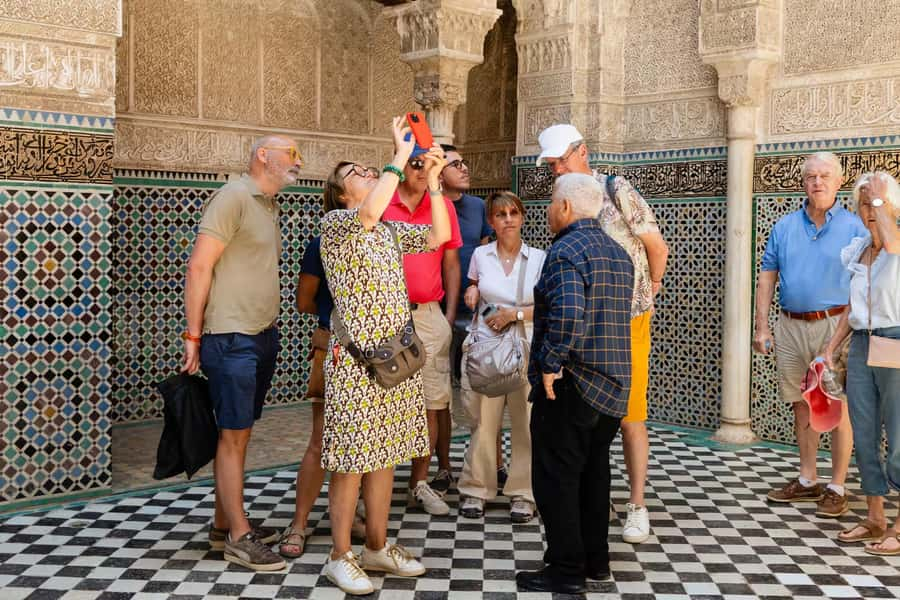
- Al Attarine Madrasa (14th century): zellige tilework, cedarwood carving, and Marinid-era details
- Karaouine area stops: a photo stop and exterior look at one of the world’s oldest centers of learning
- Chouara Tannery views: watch leather dyeing work from a terrace, using natural dyes
- Caravanserai wood crafts at Nejjarine: the wooden-arts museum inside a restored structure
- Souks with practical variety: textiles, spices/perfumes, copperwork at Hammam Seffarine, plus pottery and zellige tilework
Entering Fes by Bab Bou Jeloud (and why a guide matters)
Your day starts at Hotel Batha in the middle of things, then you move toward Bab Bou Jeloud, the famous Blue Gate. Think of this as more than a landmark. It is where you go from modern street logic to Medina rhythm, the kind where streets twist and your sense of direction needs a reset.
I like tours that do not just rush from one photo spot to the next. Here, you get an actual guided introduction, so when you later see the souks and workshops, you understand what you are looking at and why it exists. The best guides for this route, the kind praised by name in past tours like Houssine or Amin, are good at explaining practical details, not just dates.
Also, plan for foot time. Even at a relaxed pace, this is a walking tour through narrow lanes. Bring shoes you would wear for a long day on sidewalks, not for a casual stroll.
Other medina and souk walks around Fes
- Fez Medina Guided Tour
★ 4.6 · 2,079 reviews - Fes: Museum, Al Attarine Madrasa & Tannery and Medina Tour
★ 4.6 · 1,655 reviews - Fes: Royal Palace, Madrasa, Tannery & Souks and Medina Tour
★ 4.5 · 508 reviews - Fez: Guided Walking Tour of the Historic Medina
★ 5.0 · 359 reviews
Al Attarine Madrasa: Marinid design you can still read with your eyes
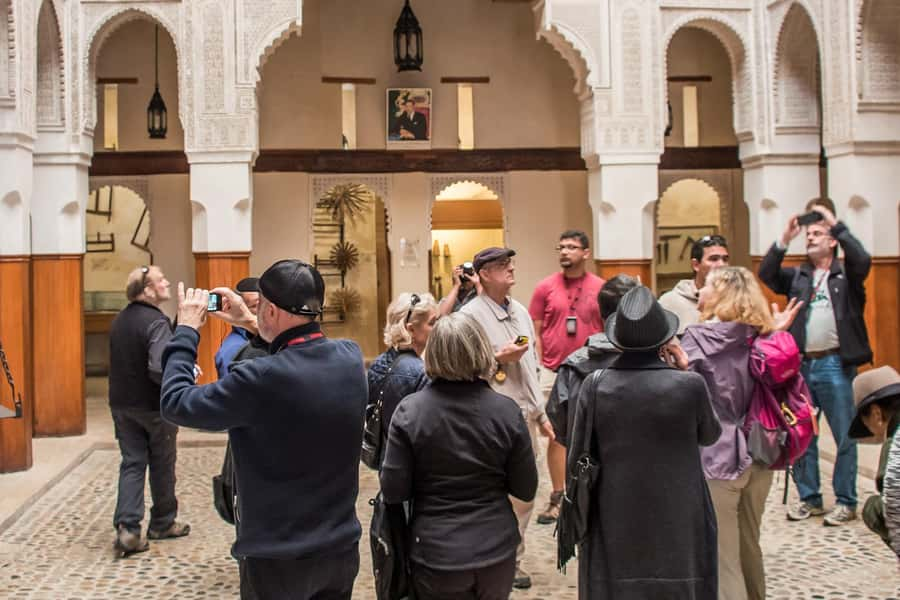
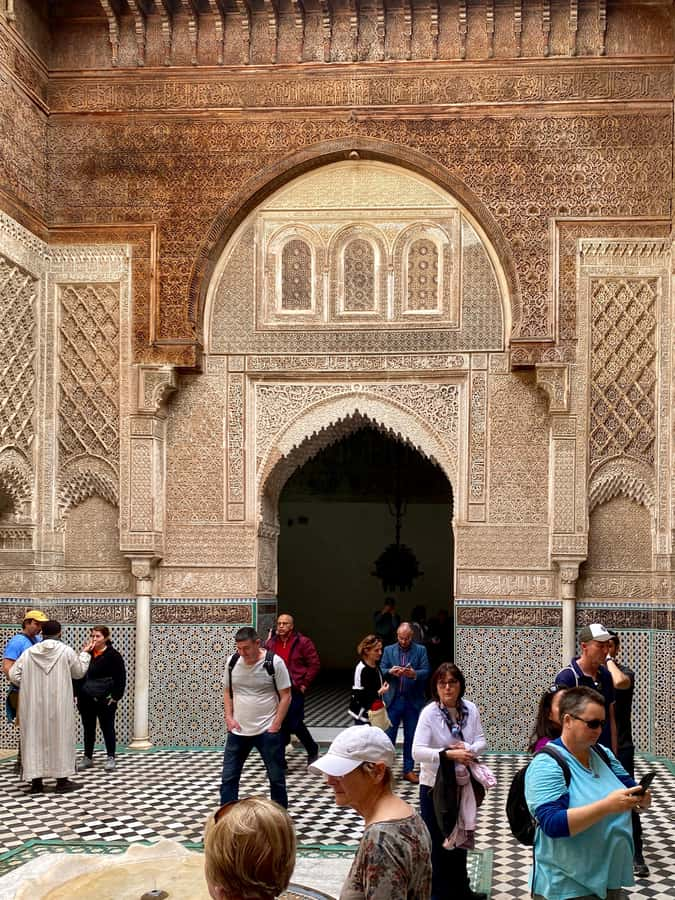
The Al Attarine Madrasa is one of those places where the building teaches you how Fes thinks about art, study, and craft. You get a photo stop and a guided visit plus free time, which is perfect. First you see it with the guide’s context, then you get a quiet minute to look at shapes and surfaces without feeling rushed.
What makes this madrasa special is the balance of detail and order. The zellige tilework draws your eye across walls, while carved cedarwood adds a warm, tactile feel to an otherwise stone-heavy setting. The marble columns add another layer, making it clear this was not built for show alone.
One practical thing: entry tickets are extra (20 MAD per adult). I see this as normal for Morocco monument visits, but it is still worth budgeting. If you want to make the day feel like a good value, start the tour ready to pay these small site fees so you do not feel nickel-and-dimed later.
Karaouine Mosque and University area: seeing the legacy from the outside
Next comes a Karaouine moment, with a photo stop and exterior look at the mosque and university area. Even from outside, the place signals importance. The green-tiled rooftops and monumental doors make it hard to miss that this was, and still is, a learning hub with serious standing.
What I find useful here is that the guide’s explanation ties the site to the big idea of old learning networks, not just “a famous building.” The university is said to have been founded in 859 by Fatima al-Fihri. Whether you are a “dates person” or not, knowing the origin helps you understand why the surrounding neighborhood feels built around scholarship and routine.
Like many medina monuments, entry and exact on-site access depend on how your visit is arranged that day. In the core tour, the emphasis here is an exterior visit, so you should be prepared to get photos and context rather than assume it is a long inside-only stop.
Nejjarine Fondouk and the Museum of Wooden Arts & Crafts
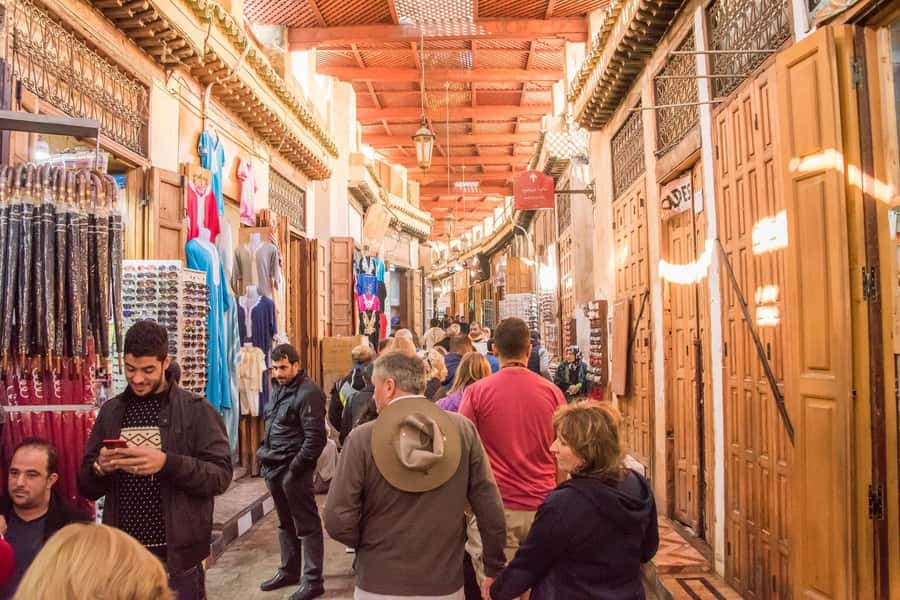
One stop I really like for this route is Nejjarine Fondouk, home to the Museum of Wooden Arts & Crafts. You get guided time plus free time, and that free time is where this museum shines. Woodwork is all about close viewing, and you cannot do that if you are constantly moving.
The museum is housed in a restored caravanserai, which matters more than it sounds. A caravanserai was a place for travelers to rest and trade, so the setting fits the subject. You can feel the logic: people came through Fes, and artisans responded with work meant to last and impress.
What you look for during your visit:
- wood carving and marquetry details
- antique furniture examples
- the kind of craftsmanship that feels practical and decorative at the same time
As with the madrasa, entry tickets are extra (20 MAD per adult). If you are trying to keep the day cost-effective, I suggest treating these two ticketed stops as the “core art” part of the tour. The rest of the tour is streets, views, and craft culture, which is where the guide’s navigation really pays off.
Chouara Tannery: what you actually see (and how to get the best view)
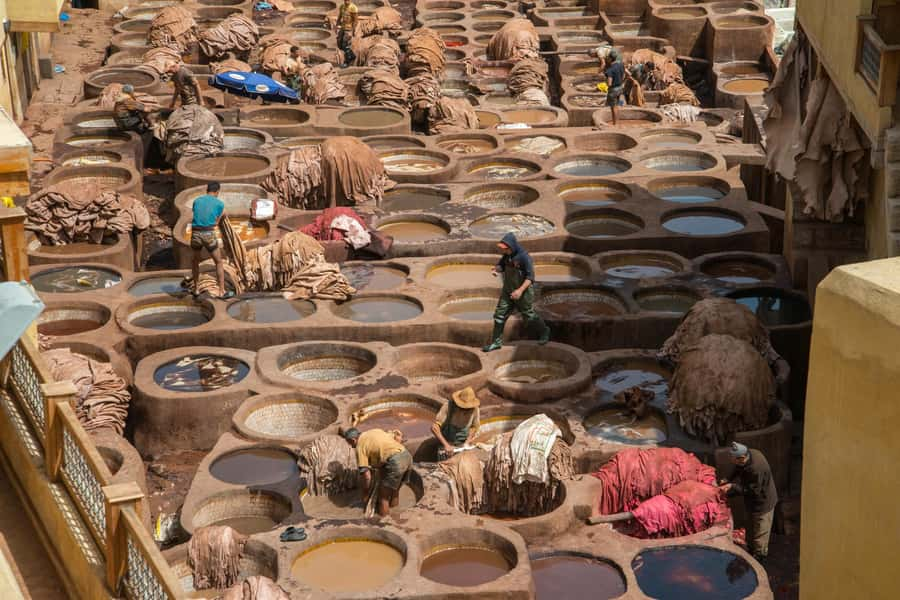
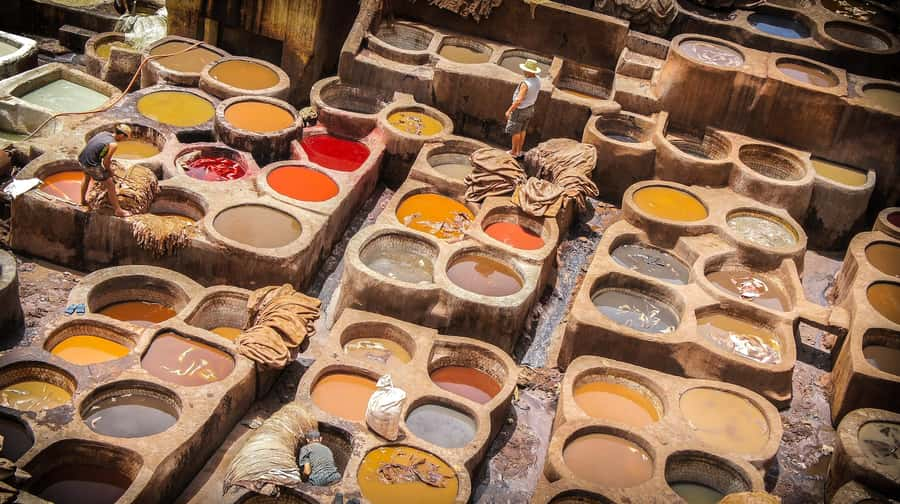
Then you reach Chouara Tannery, one of Fes’s most famous work-and-craft sites. Here the goal is to watch the dyeing process, not to pretend it is a clean museum experience. You have a photo stop and a guided look, often with time from a panoramic terrace where you can see the dye pits and the steps happening below.
A key detail for your expectations: leather dyeing here is described as happening since the 11th century, using natural dyes such as saffron and indigo. That is the sort of fact that sounds “old” until you see the method and realize how much the process depends on repetition, care, and trained hands.
A few practical notes for you:
- Bring water and take shade breaks if you need them
- Have cash ready for any craft items if you shop nearby
- Keep sunglasses on, the light can be strong around terraces
Also, leather work comes with strong odors. The tour timing and how close you get can vary, so do not plan this stop right before a long evening out. Give yourself time to reset afterward.
Nejjarine Fondouk back-to-back with the Medina lanes
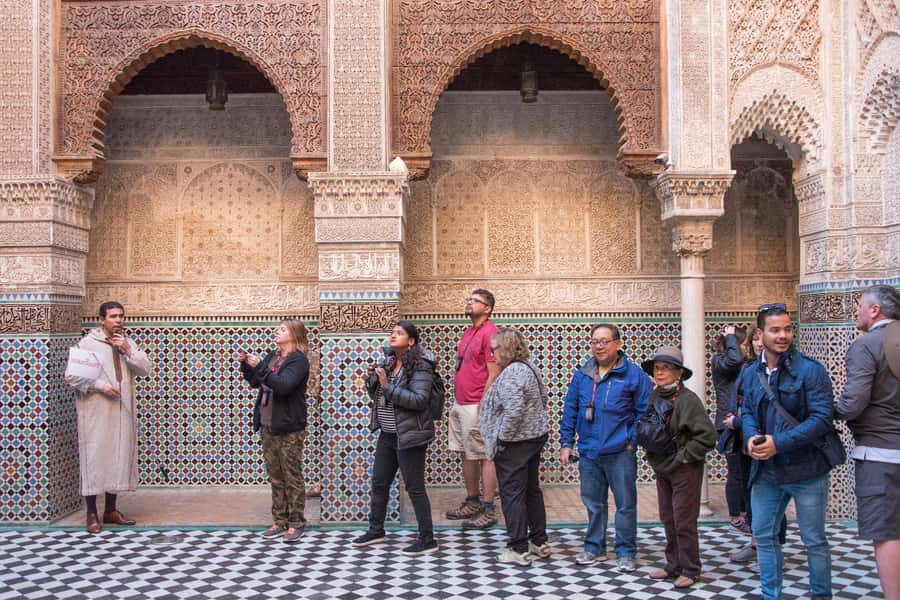
After the tannery and museum, the route keeps you in Medina mode: photo stops, guided explanation, then free time to wander. One reason this works well for first-time visitors is that it stops you from “touring” with blinders.
Instead, you are learning how areas connect. You move from the craft-and-trade zones into streets where you notice materials, smells, and sounds you would otherwise ignore. The day becomes about understanding how Fes functions as a working city, not only as an old-photo set.
Some of the best guide feedback I have seen for this kind of day is how well they handle pacing. People also mention patient explanations and clear navigation through the tight lanes. If you end up with a guide like Mouanis or Reda, you are likely to get that same mix of practical directions and story time.
More Fes medina walks, tanneries and all
Souk Sabaghine and Souk El Attarine: shop for context, not just stuff
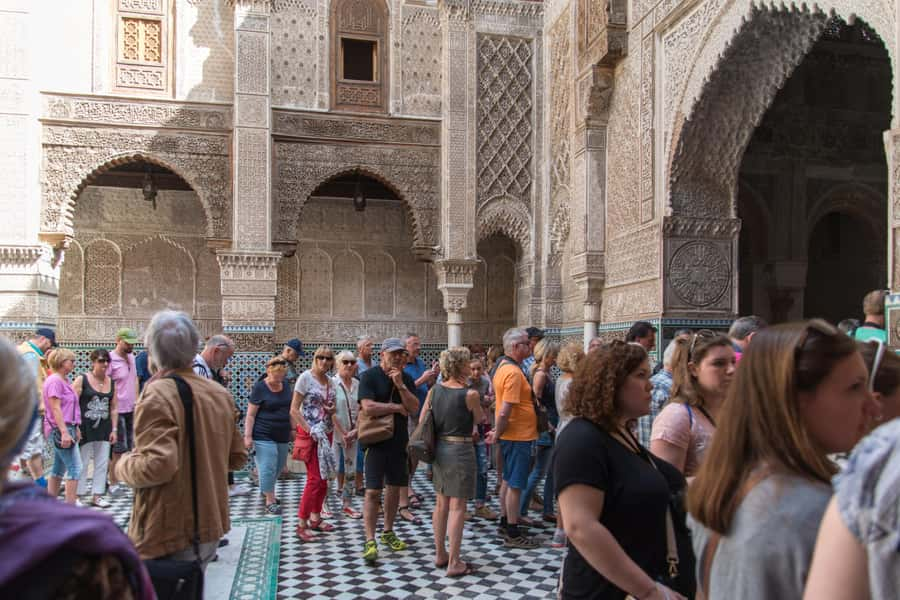
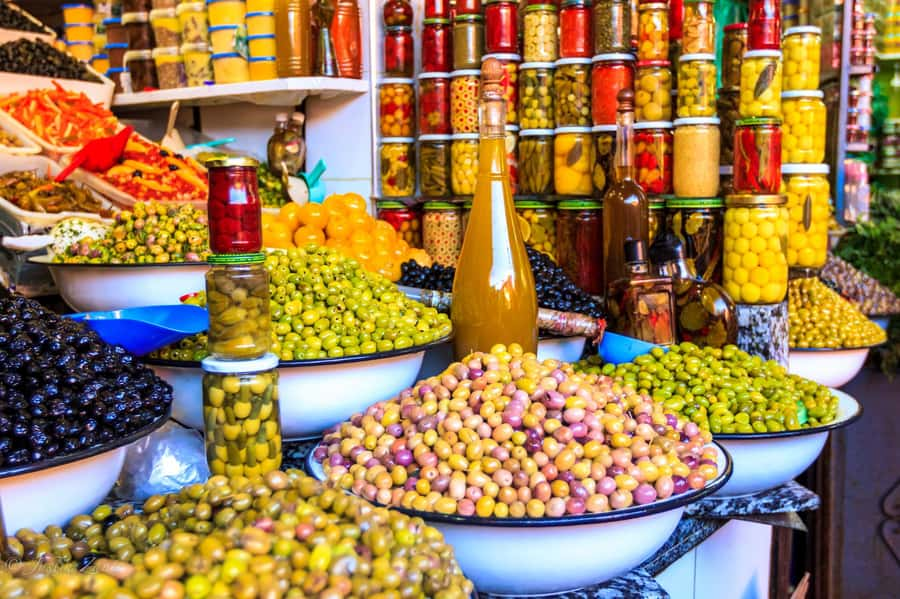
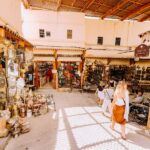
Now for the souks, where you can either feel overwhelmed or feel in control. This tour aims for control. You visit specific areas tied to trades, including Souk Sabaghine for handwoven textiles and traditional fabrics, and Souk El Attarine for spices, perfumes, and herbal remedies.
This is where a guide can change the whole experience. Without one, you might buy something and still wonder what you actually bought and why it costs what it costs. With a guide, you learn what to look for and how to tell the difference between “tourist shelf” and “workplace product.”
Also, you get a reminder that shopping happens in spots built for commerce. You might see opportunities for textiles, leather goods, and small craft items at a few points. Based on past guide performance, the tone is usually respectful, with encouragement to browse rather than pressure to buy. Still, you should treat every shop stop like a choice. If you are done, say no thank you and keep moving.
Hammam Seffarine coppersmith lanes: hearing craft at work
Right near the souks you may also see Hammam Seffarine, known for metalworking, with the rhythmic hammering of coppersmiths. This is one of those sensory details that makes a guided tour feel real.
It is not just history. It is a live soundtrack. Even if you cannot follow every technique, you can follow the logic: tools, repetition, and skilled rhythm. In a place like Fes, that kind of living craft is part of what people mean when they say the city feels older than its buildings.
If you want the best experience here, do not just take a photo from a distance. Look for small details, like the way metal shapes, tools, and workflow fit together.
Pottery and zellige tilework workshop: why Fes art looks different up close
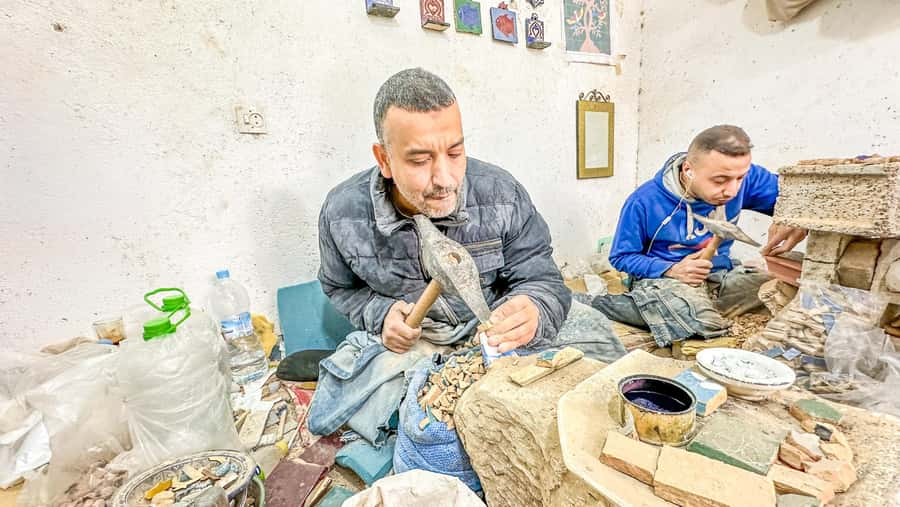
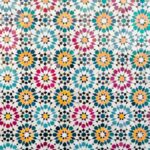
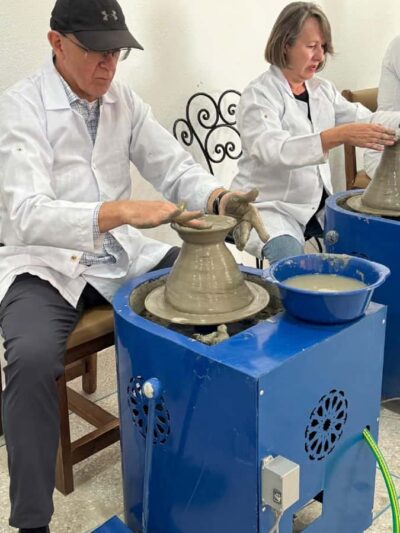
One of the smartest inclusions on this tour is time at a pottery and zellige tilework workshop. This is not a generic souvenir stop. The craft matters because zellige is one of the signature arts of Morocco, made from precisely cut tiles that form mosaic patterns.
During your visit, you can often see how artisans shape clay and decorate ceramics, then how tiles get cut for mosaic design. That hands-on visual is important. When you later see tiles on a fountain, palace, or mosque, you will recognize how the pattern is built, not just that it looks pretty.
This also helps you understand why the madrasa felt so impressive. It is the same tile language, repeated across different building types over centuries.
Free time stops: use them well (and avoid getting worn out)
The tour includes free time at multiple monuments and the Medina segment, and I think that is a big part of why the experience gets strong ratings. The guided portion gives you context. The free portion gives you agency.
Here is how I would use it:
- In museums, use free time for close viewing, not for sprinting to the last room
- In the Medina lanes, use free time for photos, quick shopping, and a slow look at materials
- When you need a breather, step aside from the main flow, then rejoin the group when you are ready
One consideration: free time can also mean you might drift if your group pace is fast. To avoid that, keep a mental landmark in mind, like a visible archway, shop sign, or corner, then regroup at the agreed meeting point.
Price and pacing: does $12 feel fair for 4 hours?
At $12 per person for about 210 minutes (around 4 hours), I think the value can be excellent, especially if you factor in what you get beyond sightseeing. You have a licensed local guide, skip-the-line access for selected monuments, and free time inside key stops. You also get a WhatsApp reminder with the guide name, meeting point, and helpful tips the day before.
You still pay extra for two main entry tickets: Madrasa Al Attarine (20 MAD per adult) and the Museum of Wooden Arts & Crafts at Nejjarine (20 MAD per adult). Transportation and food are also not included. So your total day cost depends on your personal choices and how you handle drinks and snacks.
Still, for a day that covers multiple major sites, a tannery viewing, and several craft-and-souk neighborhoods, this price makes sense. The guide saves you time, and in Fes, time is money because getting lost can cost you hours.
Who this tour suits best
This is a great fit if:
- you want a guided route through the Medina without getting turned around
- you care about how craft connects to daily life
- you want a mix of architecture, museum viewing, and working trades
It may be less ideal if:
- you expect a mostly indoor itinerary (this is walking heavy)
- you struggle with standing and moving through narrow lanes for long periods
Also, there is a note about wheelchair accessibility, but there is also a statement that it is not suitable for people with mobility impairments. In practice, the Medina route is where limitations show up. If mobility is a concern, it is worth confirming details directly with the provider before you commit.
Final call: should you book this Fes medina tour?
If this is your first time in Fes and you want the iconic highlights without wasting half your day finding your way, I would book it. The best part is not any single monument. It is the way the day links big landmarks like Al Attarine Madrasa with working craft like Chouara Tannery and the souks that keep the city’s economy moving.
Go in with the right mindset. Wear comfortable shoes, bring water, and be ready to smell and see real work, not staged tourism. If you do that, you will leave with a much clearer sense of how Fes functions, and why people keep coming back.
FAQ
How long is the Fes Attarine Madrasa, Museum, Tannery, Souk and Medina Tour?
It lasts about 210 minutes, which is roughly 4 hours.
What is the price per person?
The price is listed as $12 per person.
Where do I meet the guide?
The guide waits in front of Hotel Batha, Ave de La Liberte, Fes.
Is pickup from my riad included?
Pickup from your riad in the Medina is included for the private option only. If you stay outside the Medina, you meet at Hotel Batha.
Are tickets for Al Attarine Madrasa included?
No. Entry tickets for Madrasa Al Attarine are 20 MAD per adult.
Are tickets for the Museum of Wooden Arts & Crafts included?
No. Entry tickets for Nejjarine Museum of Wooden Arts & Crafts are 20 MAD per adult.
Does the tour include Chouara Tannery?
Yes. You visit the Chouara Tannery, with photo time and guided time, plus viewing from the terrace area.
What else do we see besides the main monuments?
You also see the Mosque and University Karaouiyne area, Nejjarine Fondouk, the Medina of Fes, souks (including Souk Sabaghine and Souk El Attarine), and you may include time connected to pottery and zellige tilework.
What should I bring for the tour?
Bring comfortable shoes, sunglasses, a sun hat, water, and cash.
What languages is the guide available in?
The live tour guide is available in English and French.
Is food or transportation included?
No. Transportation and food and drinks are not included.
Museums and Timed Tickets
- Fes: Museum, Al Attarine Madrasa & Tannery and Medina Tour★ 4.6 · 1,655 reviews
Fes Medina, More Walks
- Fez Medina Guided Tour★ 4.6 · 2,079 reviews
- Fes: Museum, Al Attarine Madrasa & Tannery and Medina Tour★ 4.6 · 1,655 reviews
- Fes: Royal Palace, Madrasa, Tannery & Souks and Medina Tour★ 4.5 · 508 reviews
- Fez Medina: Local Cultural Highlights Guided Tour★ 4.7 · 204 reviews
Medinas, Souks and Kasbahs Elsewhere
- Fez Medina Guided Tour★ 4.6 · 2,079 reviews
- Fes: Museum, Al Attarine Madrasa & Tannery and Medina Tour★ 4.6 · 1,655 reviews
- Explore Fes: Unforgettable Guided Walking Tour of the Medina★ 4.7 · 1,339 reviews
- Fes: Royal Palace, Madrasa, Tannery & Souks and Medina Tour★ 4.5 · 508 reviews
Added recently from around Fes

More Medina, Souk and Kasbah Walking Tours worth a look.
 ★ 4.7Marrakech: Bahia Palace, Saadian Tombs, Souk and Medina TourFrom $204,974 reviews
 ★ 4.6Marrakech: Ben Youssef, Secret Garden, & Souks Walking TourFrom $202,802 reviews
 ★ 4.7Marrakech: Colorful Medina Souks Guided Walking TourFrom $202,470 reviews
 ★ 4.6Fez Medina Guided TourFrom $92,079 reviews
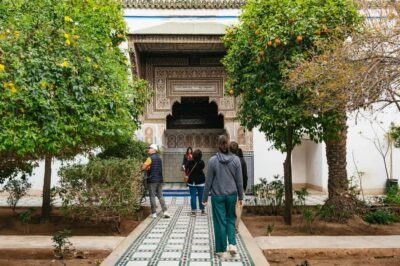 ★ 4.6Marrakech: Saadian Tombs & Bahia Palace, Medina Guided TourFrom $181,989 reviews
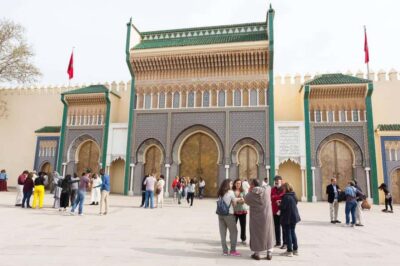 ★ 4.6Fes: Museum, Al Attarine Madrasa & Tannery and Medina TourFrom $131,655 reviews
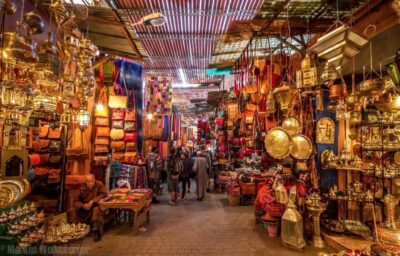 ★ 3.8Marrakech Monuments & Souks 3-Hour TourFrom $231,540 reviews
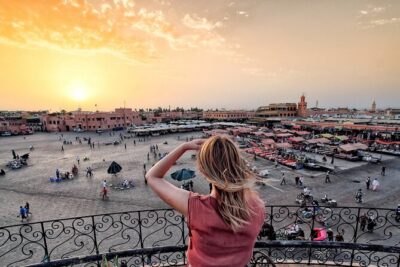 ★ 4.7Marrakech: Bahia Palace, Madrasa Ben Youssef and Medina TourFrom $191,347 reviews
Where else this one sits