
REVIEW · CASABLANCA
15 Days Morocco Private Grand Tour From North To South Starting From Casablanca
Morocco can feel huge. This route keeps it manageable while still giving you the wow moments. You’ll move from Casablanca’s Hassan II Mosque through Rabat and the Atlantic coast, then down to the Sahara with one luxury night camp under the stars.
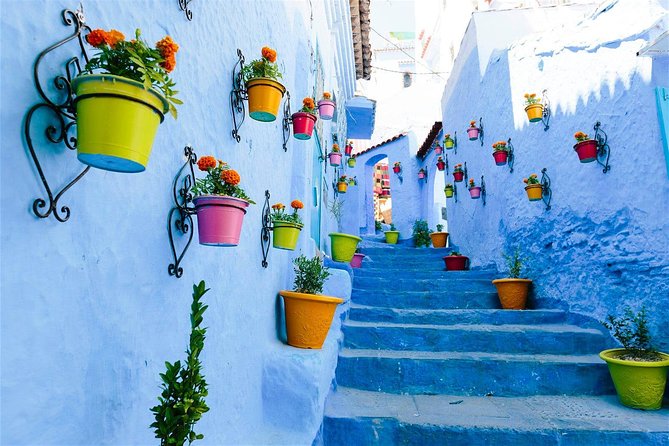
I especially like the way the itinerary mixes big landmarks with everyday places. You get imperial-city medinas, Roman ruins at Volubilis, and the blue streets of Chefchaouen, but you also get markets, artisans, and city squares. One thing to consider is that this is a fast-moving 15 days. You’ll spend a lot of time in the car, and a few meals are on your own.
A private format helps. You’re not juggling group timing, and you can ask your driver to adjust small moments when possible. I’d treat it like a guided greatest-hits tour with smart pacing, not a slow, stay-in-one-place trip.
In This Review
- Key highlights you’ll feel fast
- Price and what you’re really paying for
- Casablanca to Rabat to Asilah: Morocco’s Atlantic intro
- Tangier, Tetouan, and Chefchaouen: the blue lanes effect
- Chefchaouen to Akchour: Rif waterfalls and a hiker’s day
- Volubilis, Moulay Idriss, Meknes, and Fes: imperial cities with real texture
- The Sahara jump: Ifrane, Midelt, Ziz Valley, and Merzouga dunes
- Merzouga day: sunrise, nomads, mines, and desert music
- Todra, Dades, and Ait Benhaddou: kasbah country and iconic cliffs
- Marrakech Medina with a private guide, plus Jemaa el-Fnaa after dark
- Essaouira on the Atlantic: argan forests, harbor life, and fort walls
- Safi, El Jadida, and a Casablanca finisher
- Who this tour suits best (and who should think twice)
- FAQ
- Is this tour private or shared?
- Does the price include pick up and drop off?
- What meals are included?
- Do you have a desert camel ride?
- Which places will I see in Morocco?
- Will I have local guides in the medinas?
- What is not included in the tour cost?
- Should you book this 15-day north-to-south tour?
Key highlights you’ll feel fast
- Hassan II Mosque access: one of Morocco’s few mosques where non-Muslims can enter
- Blue city mornings in Chefchaouen: sunrise time plus quieter alleys beyond the main tourist pull
- UNESCO stops that actually matter: Volubilis Roman ruins and the UNESCO old medina circuit
- The Sahara night, done comfortably: a private luxury desert camp tent with toilet and shower plus camel ride
- A real desert-to-dunes day: tea with nomads, Merzouga area visits, and stops linked to old routes
- Local guides in Fes and Marrakech Medina: guided context where it counts most
Price and what you’re really paying for
The trip runs about $1,825.27 per person for 15 days. On paper, that can look steep until you break down what’s included: air-conditioned transport, private transportation, 14 nights of lodging (hotels or traditional riads), 15 breakfasts, and three dinners. You also get a desert adventure with camel ride plus a luxury night camp where your tent includes a toilet and shower. That last piece alone often changes the feel of Morocco travel, because the Sahara night becomes part comfort, part spectacle.
You’re also paying for the way the route stitches the country together. North to south, you hit the major cities most people chase one at a time. Here, you get sequence: ocean cities first, mountain towns next, then deserts and kasbah country, then Marrakech, then the Atlantic coast back toward Casablanca.
The main value trade-off is time. This is not a trip where you linger all day in one place. If you want slow, this itinerary may feel packed. If you want the broad Morocco picture with guided support, it’s built for you.
More of Casablanca, mosque visit included
- Casablanca: Hassan II Mosque Premium Tour with Entry Ticket
★ 4.5 · 2,971 reviews - Casablanca City Tour with Hassan II mosque ticket
★ 5.0 · 2,480 reviews - Casablanca: City Tour with Hassan II Mosque Entry Ticket
★ 4.6 · 1,137 reviews - Private Tour of Casablanca with Hassan II Mosque Entry Ticket
★ 5.0 · 1,102 reviews
Casablanca to Rabat to Asilah: Morocco’s Atlantic intro
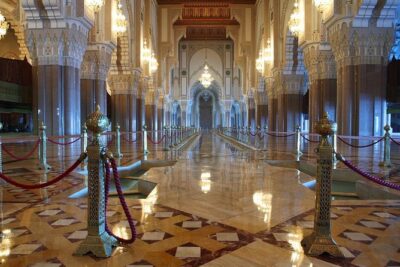
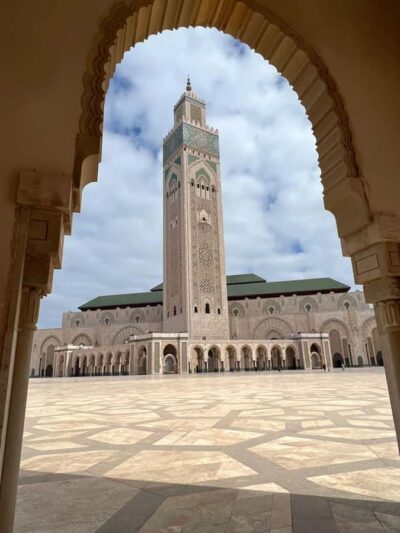
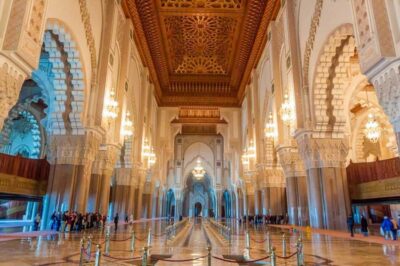
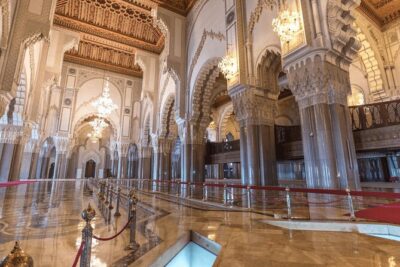
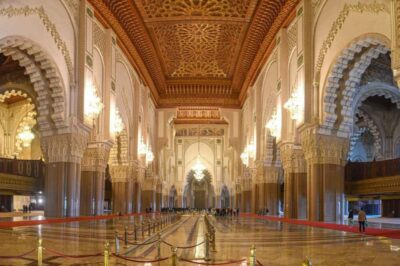
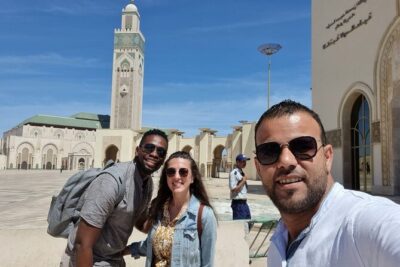
Your journey starts in Casablanca. The first stop is Hassan II Mosque, inaugurated in 1993 and built dramatically on a rock outcrop reaching into the Atlantic. It’s famous for a very tall minaret, and it’s also known for visitor access, including entry for non-Muslims. That means your first day is not just sightseeing from outside. You can step inside and see Moroccan and Islamic artisanship up close, guided.
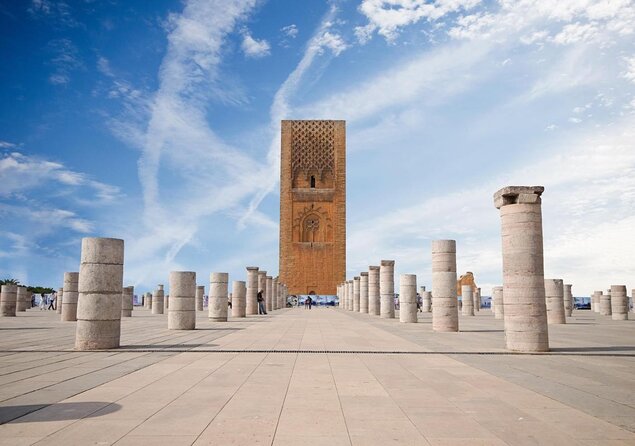
Then you head toward Rabat. You’ll tour Chellah Necropolis, with Roman and Islamic ruins, and you’ll move through the Kasbah des Oudaias into Rabat’s older core. The Andalusian Gardens are a calm counterpoint to the ruins and stone. Finally, you see Hassan Tower, the unfinished minaret project, plus the Mausoleum of Mohamed V.
Asilah is a nice shift in mood. It’s a fortified Atlantic medina with Portuguese-era traces still visible in the ramparts and the Raisuni Palace. The key benefit here is contrast. Big cities can blur together. Asilah feels compact and easy to absorb without feeling rushed.
Possible drawback: this early stretch is about orientation. If you’re dreaming of the Sahara first, you’ll get an ocean and history warm-up instead.
Tangier, Tetouan, and Chefchaouen: the blue lanes effect
From Casablanca and Rabat, the trip continues north to Tangier, Morocco’s Europe-facing gateway. You can self-walk the Tangier Kasbah area because it’s small and signposted, starting from Bab Haha and through Place du Mechouar. If you have energy, Cap Spartel and the Cave of Hercules are options near the city, with about an hour if you do the cave properly, then time for Atlantic views.
Tetouan is your next stop on the way into Chefchaouen. It sits at the foot of the Rif Mountains and has an ancient medina linked to UNESCO status. The big advantage: it’s a palate cleanser before the famous blue city.
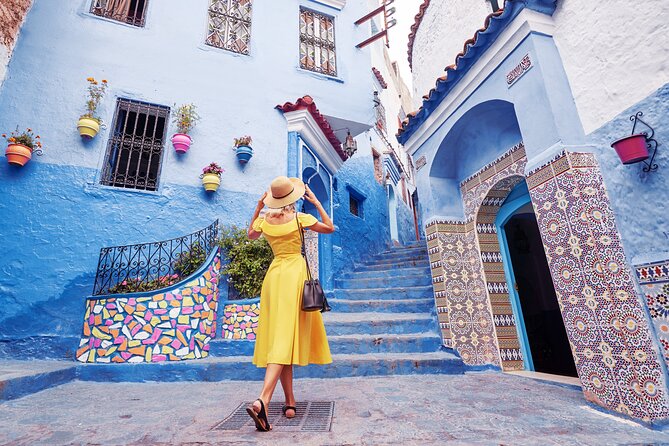
Chefchaouen is the headline. You check in to a riad or hotel and explore at your own pace after that. Outa el Hammam is the main square where you can watch life happen while you get your bearings in the medina.
If you want the best Chefchaouen experience, wake up early. Sunrise views are possible from the nearby Spanish mosque area. Later, you can keep wandering into the less touristy lanes where daily routines feel closer to the surface.
A practical note: shops in Chefchaouen often don’t open until around 10 am, so the morning is yours. If you prefer late starts, plan your day so you still get at least one calm hour before the streets get busier.
Chefchaouen to Akchour: Rif waterfalls and a hiker’s day
Day trips from Chefchaouen are where the region turns from pretty to physical. One of the best options here is Cascades d’Akchour in the Rif Mountains. You’re hiking among cedar trees, then aiming for the waterfall. You can also pass smaller falls along the route. Depending on weather and water levels, it can be refreshing enough that you’ll see people take dips.
For photos, the route includes the idea of God’s Bridge, a natural rock formation. You can view it from a steep path below or follow the canyon approach to see it from a different angle. Either way, you’ll come back to Chefchaouen with a very different kind of satisfaction than medina wandering.
Back in town, you’ll have time to return to the market area for fresh fruit, then people-watch around the streets. Dinner is flexible and you’ll get a relaxed evening before the next travel day.
Consideration: bring shoes you trust on uneven paths. The Rif is beautiful, but it’s not a manicured walkway.
Volubilis, Moulay Idriss, Meknes, and Fes: imperial cities with real texture
This stretch is built for people who like layers. You’re traveling from the north toward Fes, but you’re not doing it in one straight line.
At Volubilis, you get Morocco’s best-preserved Roman ruins. Think mosaics, merchant homes, and Roman-era structures you can actually walk around and understand. It’s UNESCO, and the feel is different from the medina world. You’re stepping into an older Morocco that still leaves its details on the ground. Guides may be available on site if you want extra context.
Moulay Idriss is next. It looks from a distance like a sitting camel, and it’s a spiritual center founded in the late 700s, tied to the Idrisid dynasty. It also has the only round minaret in Morocco, which is the kind of detail you remember later when other cities blur.
Meknes is a slightly gentler medina than Fes. It’s prosperous, with palaces and gardens and big gates. Bab al-Mansour is the star for many people, along with the Mausoleum of Moulay Ismail and the Royal Stables. One neat detail: some palace materials came from Volubilis, so you may see Roman columns reused in unexpected ways.
Then you arrive in Fes, one of Morocco’s four imperial cities, and one of the toughest to do without help. This tour includes a local guide in the Fes medina, which matters. Fes el-Bali has the oldest medina quarters, and Fes el-Jdid is the newer side, but the city is still a maze. Your guided flow helps you hit the key spots without spending hours just figuring out direction.
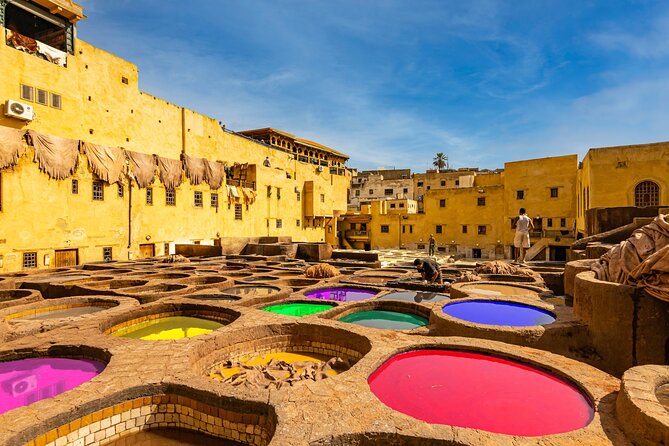
You’ll tour along Talâa Kebira, see the Chouara Tannery, and climb to a rooftop leather shop for a view of the men at work. You’ll also visit Al-Qarawiyyin University, one of the oldest in the world, plus the Al Attarine Madrasa for Moroccan craft detail.
Possible drawback: Fes is intense. If you get sensory overload easily, plan breaks. Your riad return in the late afternoon is a real reset.
The Sahara jump: Ifrane, Midelt, Ziz Valley, and Merzouga dunes
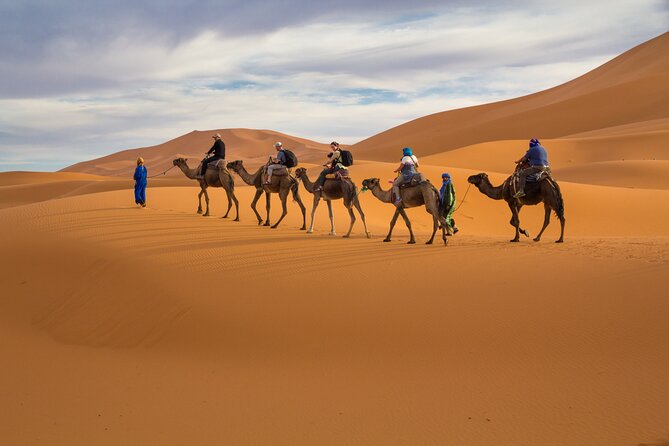
Day 8 is a big travel day in both distance and scenery. You start crossing the Middle Atlas through Azrou and cedar forests, where you might see Barbary macaques in the Cedre Gouraud Forest area. Then you pass through Midelt, known as Morocco’s Apple City, on a high plateau where orchards survive thanks to the Moulouya River.
From there, you follow the Ziz Valley, an important branch of the old Saharan Trade Route. You start noticing ksars, fortified houses built to protect goods moving through the region.
As you near Merzouga and Erg Chebbi, the Sahara signs turn obvious. The dunes move with the wind, and you’ll see signs of how people adapt the landscape for farms and water. Along the way, you may notice older water-mining methods that predate modern pumps.
Then comes the desert camp setup. If you ride a camel, you arrive near sunset, which is when the dunes turn cinematic. You’ll climb to watch the light shift across sand, then return for dinner and the night in a traditional setting.
Longer loops that take in several cities
Merzouga day: sunrise, nomads, mines, and desert music
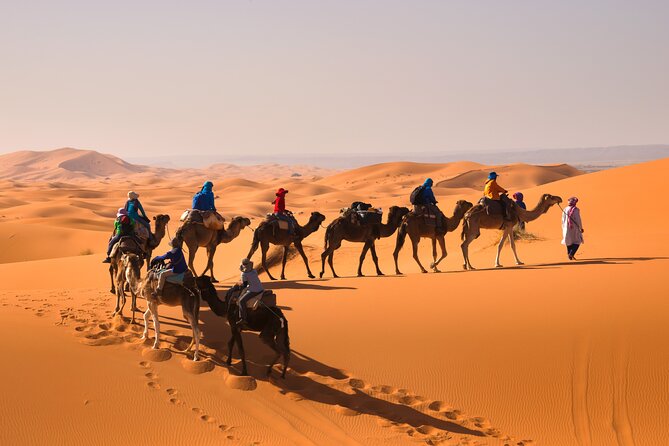
The next day is a full desert experience rather than just a quick dune visit. If you’re an early riser, sunrise over the sand dunes is a real payoff.
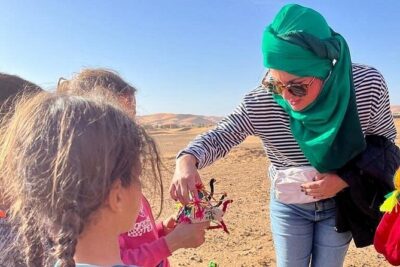
After breakfast, you head out to explore different parts of the Merzouga desert. You may visit the lake of Merzouga, a spot where exotic birds live. Then the tour moves to the desert interior where nomads and their animals maintain traditional rhythms. You share tea with them, which is more meaningful when you treat it like a conversation, not a photo session.
You also visit areas tied to the past, including routes used by the Paris Dakar rally. There’s a stop at the Mifis mines, once exploited by France. Then you head to Khamlia village, home to black Berber communities originally from Mali and Niger. Music and dancing can be part of the experience there, and it’s one of those cultural moments that makes the dunes feel like a living place, not just a backdrop.
Consideration: this day is active. The desert is beautiful, but you’ll want hydration and a light layer for temperature shifts.
Todra, Dades, and Ait Benhaddou: kasbah country and iconic cliffs
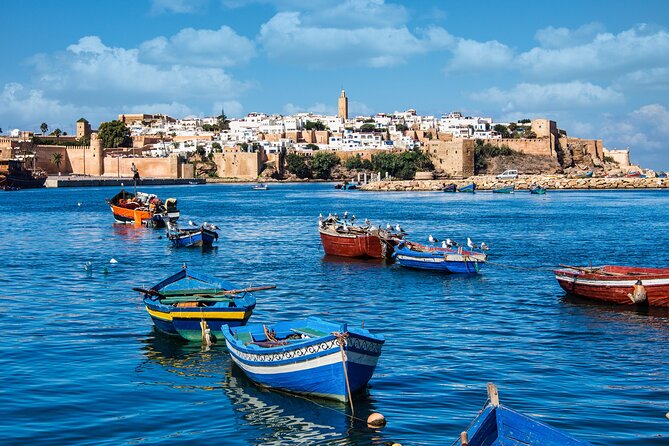
After leaving the dunes, the tour follows the caravan-to-cities thread. In Rissani, you can visit a souk if the timing matches market days, which run on Tuesdays, Thursdays, and Sundays. If you catch it, this is where caravan routes feel real, because the market is the meeting point.
Then you go toward Erfoud and Fossiles d’Erfoud. This region is known for fossil mining and artisan fossil work. You can stop at a local artisan collective where you learn about the kinds of fossils found here and watch the process of turning fossil-rich rock into objects.
Todra comes next. The Todra gorges are dramatic, with narrow vertical passages and cliffs rising around 300 meters high. If you like climbing culture, you’ll see why it’s a draw for people who plan trips around rock faces.
From Todra, you reach Dades valley and the mud kasbah scenery. There are also famous rock formations locals call monkies fingers. The day typically ends with dinner and a restful night in the valley area.
Then you travel onward into Ouarzazate region. You stop at Rose town, El Kalaa Mgouna, where rose petals are picked in spring and processed into rosewater and exported for perfume. The tour timing suggests the rose festival is in May, so you’ll learn the context even if your dates do not match the peak bloom.
You pass kasbah country toward Ouarzazate, nicknamed Hollywood of Africa for its major cinema studios in Morocco. Finally, you visit Ait Benhaddou, a UNESCO World Heritage site and one of the most filmed kasbahs in the country. You get free time to explore and lunch in the village.
Practical advice: Ait Benhaddou is one of those places where you’ll see it in movies, then reality feels better than the screen. Wear sun protection and take your time with the viewpoints.
Marrakech Medina with a private guide, plus Jemaa el-Fnaa after dark
Marrakech is where the medina atmosphere ramps up. The tour includes a local private guide in the Bahia Palace and broader Medina area, so you’re not just walking, you’re learning the logic of the streets.
You start with Bahia Palace, then continue through lively souks and maze-like alleys. Your guide’s stories tie neighborhoods like the Mellah into the bigger picture. It’s the kind of tour structure that helps you understand what you’re seeing instead of just collecting sights.
In the afternoon, you broaden the scope to places like Bahia and El Badii Palaces and the Saadian Tombs. Then you reach Majorelle Gardens, a famous garden retreat created by Jacques Majorelle and later inhabited by Yves Saint Laurent. It’s a visual pause from the medina rush.
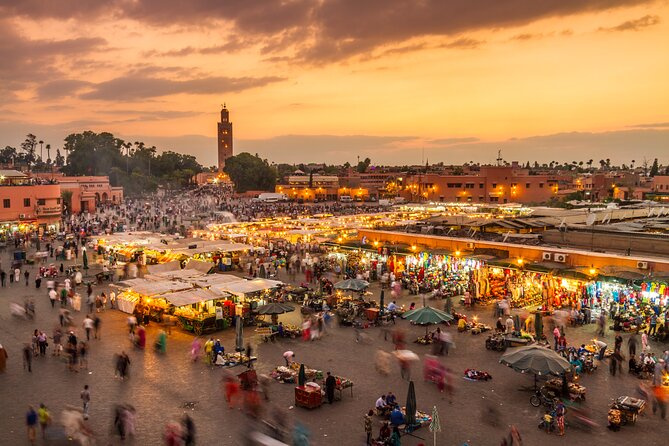
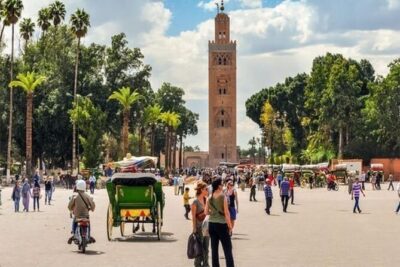
By evening, Jemaa el-Fnaa comes alive with musicians, storytellers, acrobats, dancers, and even snake charmers. Food stalls fill the square, and you can pick a snack or a full meal. If you’d rather watch from above, cafés overlooking the square give you that people-watching comfort without stepping into the busiest crowd flow.
Consideration: Marrakech evenings can be loud and crowded. If you prefer calm, plan a break during the day so night energy feels like a choice, not a requirement.
Essaouira on the Atlantic: argan forests, harbor life, and fort walls
From Marrakech, you head west to Essaouira, a laid-back Atlantic port city. The drive takes you through rolling plains and endemic argan forests. If you’re lucky, you might see goats grazing in argan trees, a sight tied to how locals adapt to where grass is limited.
There’s also an option to stop at an Argan Oil Cooperative. This is practical because argan oil is expensive and famous, so seeing how extraction works helps you understand what you’re paying for later.
In Essaouira, you stroll the harbor where fishermen sell fresh fish from traditional blue boats. You’ll photograph the fortified harbor Scala and the monumental Bab al Mersa, meaning Door of the Port. Then you explore the UNESCO old se area, keeping it tied to the water and the working life.
What you’ll like here: Essaouira is a change in speed. It’s easier to enjoy than the big medina scenes, and it gives you a calm landing after Morocco’s more intense interiors.
Safi, El Jadida, and a Casablanca finisher
On your way back to Casablanca, you get two worthwhile Atlantic stops that many travelers skip.
Safi is known for pottery and ceramics. You’ll visit Ksar el Bahr, the castle of the Sea built in the 1500s, then walk up for ocean and port views. The best part is how directly it connects craft, coast, and history in one compact visit.
El Jadida is next. You’ll tour the Portuguese cistern, often described as hauntingly beautiful, then walk the ramparts. You can also visit the Church of the Assumption.
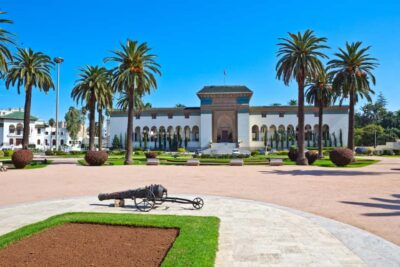
Finally, you arrive back in Casablanca and do a final taste of city life. You’ll explore the old medina, then stroll the Boulevard de la Corniche. If you want a playful pop-culture moment, you can stop at Rick’s Café for a bite inspired by the classic Casablanca film.
Your trip ends with a drive to the airport.
Who this tour suits best (and who should think twice)
This tour fits best if you want a guided Morocco overview with real structure. You’ll likely enjoy it if you like medinas but don’t want to get stuck lost, if you want both the Sahara and the imperial cities in one stretch, and if you appreciate guided context where cities are complex.
It’s also a good match for families or mixed-age groups who want less planning and more done-for-you logistics. One standout from a family perspective is that having a strong driver/guide matters, and a driver named Khalil is singled out as fantastic for helping the trip run smoothly.
Think twice if you hate long drives. This itinerary moves often, especially around the Sahara approach and the interior kasbah loop. Also, note that some admissions for major sights are not listed as included, and not all meals are included, so you’ll still have some spending flexibility to plan.
FAQ
Is this tour private or shared?
It is described as a private tour, meaning only your group will participate.
Does the price include pick up and drop off?
Yes. Airport arrival and departure or hotel pickup and drop-off are included.
What meals are included?
Breakfast is included for 15 days. Dinner is included for 3 days. Other meals are not listed as included and drinks are not included.
Do you have a desert camel ride?
Yes. The desert adventure includes a camel ride and one night in a luxury desert camp with a private tent that has a toilet and shower.
Which places will I see in Morocco?
You’ll visit Casablanca, Rabat, Asilah, Tangier, Tetouan, Chefchaouen, Volubilis, Moulay Idriss, Meknes, Fes, Ifrane, Midelt, Merzouga desert area, Rissani, Erfoud, Todra valley, Dades valley, Ouarzazate area and Ait Benhaddou, Marrakech, Essaouira, Safi, El Jadida, and end back in Casablanca.
Will I have local guides in the medinas?
Yes. Local city guide service is included in Fes and Marrakech Medina.
What is not included in the tour cost?
Tips for the driver, local guides, and hotel and restaurant staff are not included. Also not included are meals not listed on the itinerary and all drinks, plus personal expenses.
Should you book this 15-day north-to-south tour?
If your goal is to see a lot of Morocco without doing the heavy planning, I think this one is a strong booking choice. The mix of imperial cities, Roman ruins at Volubilis, the blue-city magic of Chefchaouen, and the Sahara night camp gives you big variety for the money.
I’d book it when you want structure and you’re comfortable with travel days. If you prefer lots of downtime, or you want to repeat one city for days, you might feel rushed. But if you want Morocco’s top themes in one clean route, this itinerary is designed for exactly that.
Longer Routes Through the Country
- Rabat Imperial City Day Trip from Casablanca★ 4.5 · 353 reviews
- 10-days Private tour in Morocco: Sahara Desert + Imperial Cities★ 5.0 · 279 reviews
- 10 Day Desert Tour From Casablanca via the Imperial Cities★ 5.0 · 254 reviews
- 10D 9N Private Morocco Tour From Casablanca By Imperial Cities And South Desert★ 5.0 · 156 reviews
Casablanca and the Mosque
- Casablanca: Hassan II Mosque Premium Tour with Entry Ticket★ 4.5 · 2,971 reviews
- Casablanca City Tour with Hassan II mosque ticket★ 5.0 · 2,480 reviews
- Casablanca: City Tour with Hassan II Mosque Entry Ticket★ 4.6 · 1,137 reviews
- Private Tour of Casablanca with Hassan II Mosque Entry Ticket★ 5.0 · 1,102 reviews
Added recently from around Casablanca

More Casablanca and the Hassan II Mosque worth a look.
 ★ 4.7From Marrakech: Casablanca Tour with Hassan II Mosque VisitFrom $284,756 reviews
 ★ 4.5Casablanca: Hassan II Mosque Premium Tour with Entry TicketFrom $162,971 reviews
 ★ 5.0Casablanca City Tour with Hassan II mosque ticketFrom $522,480 reviews
 ★ 4.8Casablanca Day Tour from Marrakech and Big Mosque VisitFrom $282,394 reviews
 ★ 4.6Casablanca: City Tour with Hassan II Mosque Entry TicketFrom $531,137 reviews
 ★ 5.0Private Tour of Casablanca with Hassan II Mosque Entry TicketFrom $521,102 reviews
 ★ 4.5Day Trip To Casablanca from MarrakechFrom $30972 reviews
 ★ 5.0Marrakech Day Trip with Camel Ride from CasablancaFrom $110740 reviews
Where else this one sits