
REVIEW · MOROCCO
Discovery of Moroccan Culinary Heritage, History and Secrets
Spice lessons in a real riad kitchen, in two hours. This experience pairs hands-on cooking with a quick look at the food-making culture behind Moroccan staples, from bread to herbs and beyond. I especially like the 34-station teaching kitchen setup, and the fact you get a guided bread oven and herbalist-area visit before you start cooking.
The main consideration is that language and drink details may not always match what you expect, so if you care about English specifically or want coffee and bottled water covered without surprises, ask right at the start. Also note that alcoholic beverages are not included, even though Moroccan wine shows up as an optional part of the tasting.
In This Review
- Key things you’ll notice
- Moroccan Culinary Arts Museum, the riad kitchen, and why this feels hands-on
- First contact in the riad: reception, interpreter, and a quick menu map
- Bread making demo and the oven visit: where Moroccan flavor starts
- Spice dosing secrets: what you’re really learning in the first kitchen moments
- Cooking class with the Dada: tajines, couscous, and practical station work
- Moroccan tea ceremony, terrace tasting, and the wine question
- Museum time: seeing tools, tables, and the food logic behind the displays
- Lunch, coffee or tea, and what’s actually included
- Price and value: $69.79 for a teaching kitchen plus museum access
- Who should book this class, and who might want a different format
- Should you book this Moroccan cooking and culinary museum experience?
- FAQ
- Where does the experience start and end?
- How long is the experience?
- What is the price per person?
- What’s included in the ticket?
- Are alcoholic beverages included?
- Do you get to visit the bread oven and a spice area?
- Do you learn how to make bread?
- Is there a tea ceremony?
- Is the cooking class taught in English or French?
- What are the cancellation terms?
Key things you’ll notice
- 34 kitchen stations keep the class moving and feeling practical
- Bread making and oven visit show you what makes Moroccan bread different
- A Dada (traditional cook) teaches spice dosing and cooking methods
- Moroccan tea ceremony adds a calm, social rhythm after the cooking work
- Terrace serving lets you eat what you made without rushing
- Museum add-on turns recipes into food history and tools you can see
Moroccan Culinary Arts Museum, the riad kitchen, and why this feels hands-on
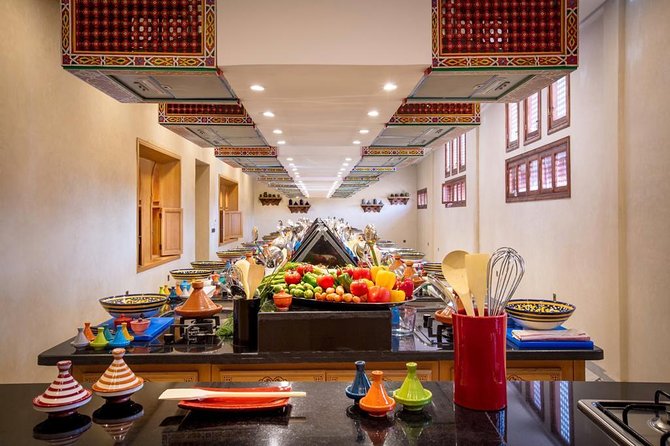
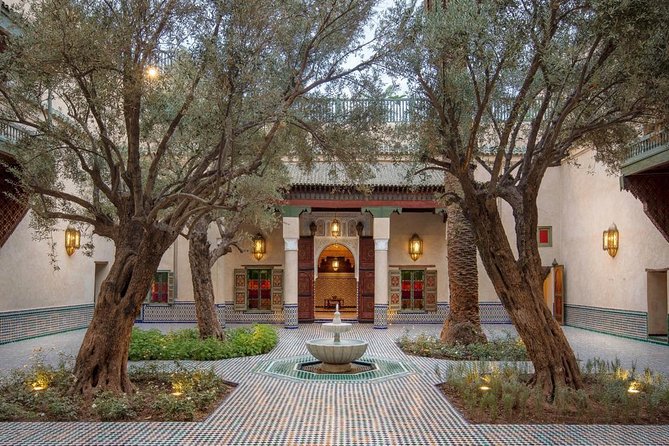
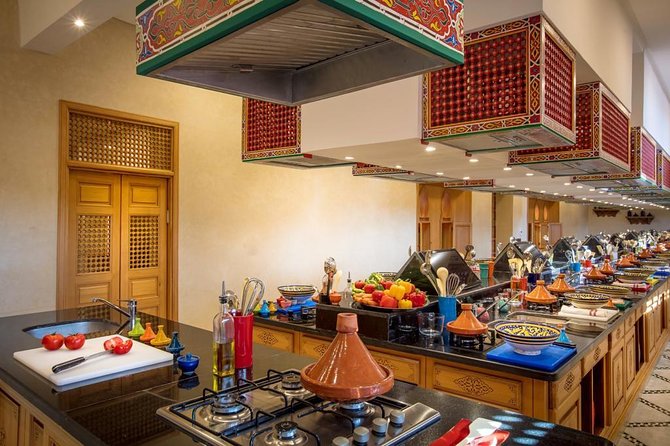
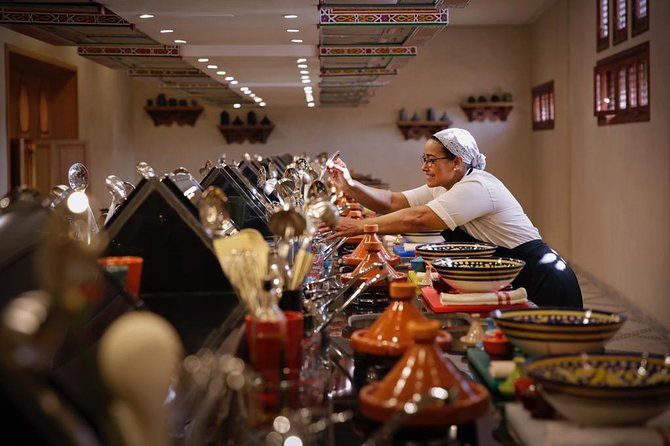
This is not a big, impersonal cooking show. The experience takes place in and around the Moroccan Culinary Arts Museum, inside a restored riad feel, with reception on the second floor and a teaching kitchen designed for stations. That station setup matters. When you cook at a shared station system, you spend less time waiting and more time learning the steps that actually change flavor.
You’ll also get a living-room style intro space, so the day starts with context, not just aprons and ingredients. That pre-course orientation is useful if you want to understand why certain spices are used, and how timing works in Moroccan home cooking.
One more detail I like: the museum side and the cooking side connect. You do not just learn a dish. You learn the “why” behind staples, especially bread and the herbs people use to flavor daily food. In Marrakech, where menus can feel touristified, that connection is a win.
First contact in the riad: reception, interpreter, and a quick menu map
The class starts at the Moroccan Culinary Arts Museum on Rue Riad Zitoun el Jdid, in the Marrakesh 40000 area. From there, you’re received by staff and guided by a French or English interpreter. In practice, that means you should expect clear instruction, plus enough translation to follow spice dosing and cooking steps without guessing.
In some visits, a staff member named Younes has been mentioned as welcoming and guiding guests well. That kind of on-the-ground attention helps, especially when you are switching from “tour mode” into “kitchen mode.”
Before you cook, you get an introduction to the course and a map of what comes next. The day is built around a few core beats: bread making and the bread oven, a spice-focused herbal visit, cooking with the Dada, then tea and eating on the terrace. If you like having a plan, you’ll appreciate how compact the flow is.
Bread making demo and the oven visit: where Moroccan flavor starts
If you only remember one Moroccan bread lesson, make it this one. The experience includes a Moroccan bread making demonstration, plus a visit to the bread oven area and a herbalist stop connected to where spices come from.
Why this is valuable: Moroccan bread is not just a side dish. It affects how you eat, how you scoop tagine sauces, and how meals feel. Learning bread basics also gives you a mental framework for the rest of the cooking. You start to see that Moroccan cuisine relies on technique and timing, not just spice blends.
You’ll also get a look at how herbs and spices travel from local sourcing to kitchen use. The goal is to help you notice what smells right in the moment, not just what sounds exotic on a menu. That’s especially useful if you’ve ever tried to recreate a Moroccan dish at home and ended up using the wrong balance of spices.
Spice dosing secrets: what you’re really learning in the first kitchen moments
The cooking begins with a focus on how to dose spices, plus baking and cooking tricks taught by a traditional cook, the Dada. This is where Moroccan cooking becomes less mysterious.
You’re not just adding flavor. You’re timing it. Some spices bloom better with heat, while others are happier when added with intention. The way the lesson is structured around dosing is a reminder that Moroccan food works because proportions and sequence are consistent, even when recipes vary by region or household.
A station-based class also makes it easier to learn by doing. When you can compare your results to what’s happening at the station next to yours, you pick up small corrections faster. That is a big reason people say this course is well organized and professional grade.
Cooking class with the Dada: tajines, couscous, and practical station work
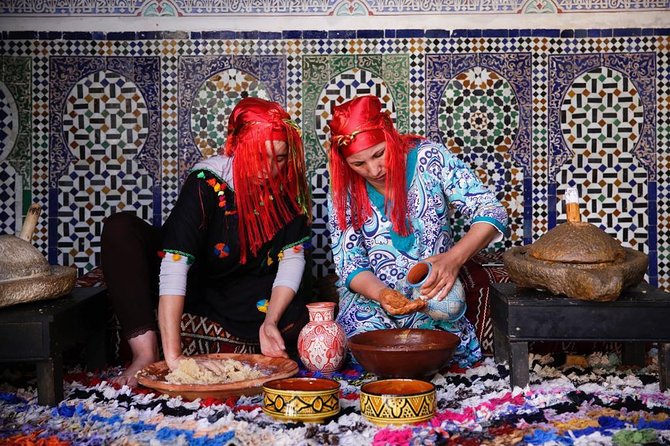
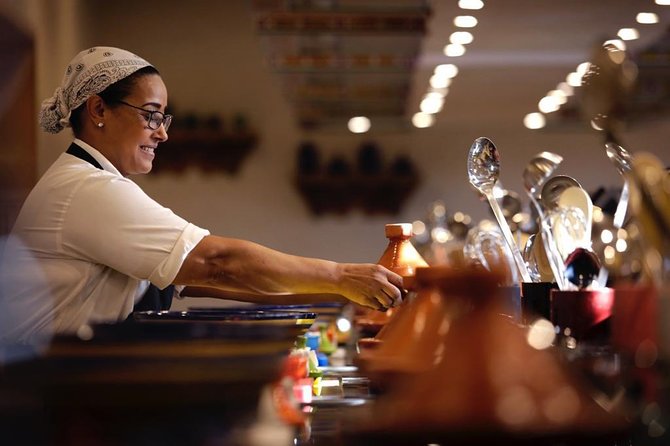
Expect to cook Moroccan staples with guidance in the riad kitchen. The experience highlights tajines and couscous, plus other techniques that show how Moroccan dishes come together.
What makes a Dada-led class different from many “tour kitchen” experiences is the teaching style. A traditional cook tends to explain the logic behind steps, like when to adjust seasoning, what to watch for in texture, and how the heat should behave in Moroccan cooking methods.
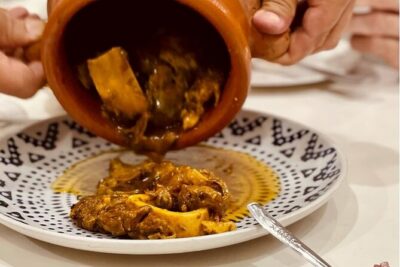
Some guests have described making items such as chicken tajine and even covering multiple courses. Your exact menu can depend on the class run, but the structure stays the same: you’ll prepare dishes and then eat what you made. For readers, that “you cook it, then you taste it” loop is the fastest path to real learning.
One practical note: group size is limited to a maximum of 34 travelers. That number lines up with the kitchen station count, so you’re not swallowed by a crowd. It also means the class should keep rhythm, rather than turning into a long waiting game.
Moroccan tea ceremony, terrace tasting, and the wine question
After cooking, you’ll take part in a Moroccan tea ceremony. That part is more than polite ritual. It resets the pace after time at the stove and gives you a chance to ask questions while everyone stays comfortable.
Then you’ll enjoy dishes you prepared on the terrace. This is where the experience becomes emotionally satisfying. Cooking classes can sometimes feel like schoolwork. Eating your own food right there turns it into a meal, not an assignment.
Now the alcohol detail: the experience mentions wines from Morocco alongside the terrace meal, and it also lists an optional tasting of prepared dishes with discovery of Moroccan wines. At the same time, alcoholic beverages are listed as not included. So if wine matters to you, treat it like an add-on and confirm what is included with your selected option.
Museum time: seeing tools, tables, and the food logic behind the displays
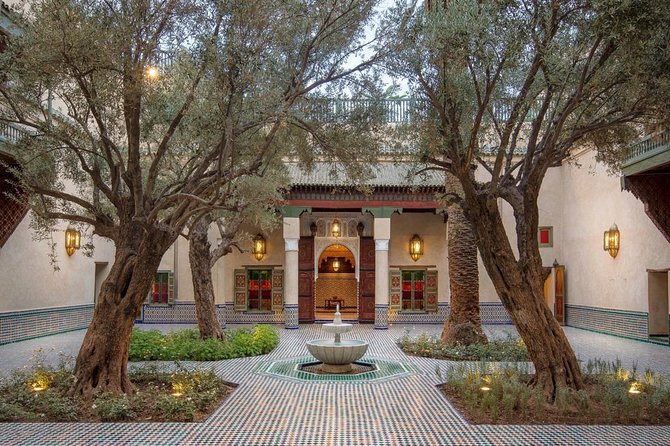
After the cooking elements, the experience continues with visiting the museum of Moroccan culinary art. The museum is located in a beautiful riad setting, and it has been described as close to the Bahia Palace area, so it’s easy to connect your visit with other sights.
What you’re looking at is the “how” and “why” of Moroccan food: traditional recipes and cooking methods shown through displays, plus visuals and artifacts that help you understand what you just practiced in the kitchen. A station kitchen gives you technique. The museum gives you perspective.
A balanced caution: not every display style will feel equally exciting to everyone. Some people love exploring the building and courtyards more than the exhibition details. Even so, that architecture connection is real value. If you like wandering through spaces with authentic materials and quiet atmosphere, you’ll probably enjoy the museum even if you skim parts of the exhibits.
Lunch, coffee or tea, and what’s actually included
Your ticket includes lunch, coffee and/or tea, and bottled water. That matters because many cooking classes in Marrakech are priced like experiences, then try to charge for basic drinks during the meal.
Still, do not assume. One reported hiccup involved bottled water and drink expectations not matching the plan. So if you’re the type who hates surprises, I’d do this simple thing: at reception, ask what is definitely included with your meal portion. It usually takes seconds and saves frustration.
If coffee and tea are included for your group schedule, you’ll appreciate how smoothly the class wraps into eating. And since you’ll likely work around warm food and spices, a proper tea break helps you reset your senses.
Price and value: $69.79 for a teaching kitchen plus museum access
At $69.79 per person for about 2 hours, this sits in the mid-range of Marrakech food experiences. The value comes from two things working together.
First, you get a real teaching kitchen with a 34-station setup, not a single demo where you watch and hope for questions. That matters for learning. You practice, you adjust, and you taste what you helped make.
Second, the museum component adds context. You leave with a stronger understanding of Moroccan food traditions, not just a single recipe you can try at home.
So who does this value fit? If you’re a foodie, or even just someone who likes understanding what you’re eating, the mix of hands-on cooking plus a culinary museum is a good deal. If you only want one dish and have zero interest in bread, spice sourcing, or food history, you might find it a lot of content for a short 2-hour window.
Who should book this class, and who might want a different format
This works best for:
- Food lovers who want to learn the steps behind tajines and couscous
- Travelers who like small-group learning and station-based instruction
- People who enjoy museum time when it connects directly to what they just did
It might be less ideal if:
- You want a long, slow cooking day with lots of resting and sightseeing
- You are very picky about language. Interpreter support is offered, but some schedules may end up being less consistent than you expected
- You only care about tasting and not about cooking at stations
If you’re coming from the Bahia Palace area, this also pairs nicely. You can treat it as a food-focused counterpart to the palace sightseeing: one side is architecture and history, the other side is food technique and practical culture.
Should you book this Moroccan cooking and culinary museum experience?
I’d book it if you want a structured way to understand Moroccan cuisine in a short time. The station kitchen, the bread oven and herbal stop, and the combination of cooking plus museum context make this more than a quick meal. You end up with technique you can repeat, plus a clearer sense of how Moroccan flavors get built.
Before you go, do two quick checks:
- Confirm English or French instruction for your session if language matters to you
- Ask what drinks are included versus optional, especially around coffee, bottled water, and Moroccan wine
If those boxes are clear, you’ll get a tidy, flavorful Marrakech highlight that feels practical, not touristy.
FAQ
Where does the experience start and end?
It starts at the Moroccan Culinary Arts Museum, Rue Riad Zitoun el Jdid, Marrakesh 40000, Morocco. It ends back at the same meeting point.
How long is the experience?
The duration is approximately 2 hours.
What is the price per person?
The price is $69.79 per person.
What’s included in the ticket?
The ticket includes bottled water, lunch, and coffee and/or tea.
Are alcoholic beverages included?
No. Alcoholic beverages are listed as not included, even though Moroccan wines are mentioned as part of an optional tasting.
Do you get to visit the bread oven and a spice area?
Yes. The experience includes a visit to the bread oven and to a herbalist of the district where spices come from.
Do you learn how to make bread?
Yes. There is a Moroccan bread making demonstration.
Is there a tea ceremony?
Yes. A Moroccan tea ceremony is part of the experience.
Is the cooking class taught in English or French?
You are met with a French or English interpreter, based on the session.
What are the cancellation terms?
Cancellation is free up to 24 hours in advance for a full refund. If you cancel less than 24 hours before the start time, the amount paid is not refunded.
More Moroccan Food Tours and Tastings worth a look.
 ★ 4.9Marrakech: Street Food Tour with a Local GuideFrom $343,119 reviews
 ★ 4.8Marrakech: Street Food Tour by NightFrom $432,838 reviews
 ★ 5.0Authentic Moroccan Food Tour in Marrakech with DinnerFrom $541,423 reviews
 ★ 4.8Marrakech: Moroccan Cuisine Cooking Class in Local HomeFrom $24508 reviews
 ★ 4.7Marrakech: Jemma El Fnaa Food Tour with DinnerFrom $46394 reviews
 ★ 4.8Marrakech: Authentic Moroccan Food Walking Tour & DinnerFrom $52261 reviews
 ★ 5.0The Original Marrakech Street Food TourFrom $80248 reviews
 ★ 5.0Marrakech Street Food TourFrom $64220 reviews
Where else this one sits