
REVIEW · MOROCCO
Discover Fes: Culture, handicraft & Hidden Treasures
Colors start at Bab Boujloud. In this Fes Medina guided walk, you move through UNESCO World Heritage sights, busy souk lanes, and working craft stops over about four hours.
I really like the human touch here. Local guides such as Abdoul, Mouanis, and Azdine are known for guiding you through the medina in a way that feels practical, with answers to questions and help getting unstuck when the streets get tight. I also enjoy the balance of monuments and hands-on crafts, especially the color show at Chouara Tannery and the ceramic work around Bab Boujloud.
One consideration: some stops have 20 DH entrance fees, and entry to a few religious sites can be restricted for non-Muslims. Also, the route covers a lot, so if you want slow, deep lectures at every wall, this is more “see and understand” than “study for hours.”
In This Review
- Key highlights you will feel on the walk
- Price and time: a focused half-day in Fes
- Bab Boujloud ceramics: where your eyes get their first lesson
- Bou Inania Medersa: Marinid architecture plus a paid ticket
- Museo Nejjarine: a museum break inside an old funduq
- Medina of Fez: the walk you came for
- Religious stops with real access rules
- Chouara Tannery: leather dyes and sensory overload done right
- Al-Attarine Madrasa: tilework and another 20 DH entrance
- What makes the guided part work (and why the guide matters)
- A note on pace and depth: what to expect from a 4-hour loop
- Who should book this tour
- Should you book Discover Fes: Culture, Handicraft & Hidden Treasures?
Key highlights you will feel on the walk
- Bab Boujloud color and ceramic work kick things off in a big way, right at a famous gate
- Bou Inania Medersa and Al-Attarine Madrasa offer ornate tilework, with entrance fees not included
- Museo Nejjarine sits inside a funduq setting, mixing architecture and a quiet museum break
- Chouara Tannery shows the leather-dye process and the eye-catching color system
- Small group size (up to 12) keeps the pace personal enough to ask questions
- Short side moments in the medina help you notice details you would miss on your own
Price and time: a focused half-day in Fes
At $18 per person for a 4-hour guided tour, the headline value is that you are paying for a local guide plus coffee or tea, not for a pile of ticketed attractions. Several big sights on the route are free to enter with the guide, while a few others require a 20 DH entrance fee paid on the spot.
This tour is designed for walking, not riding. Four hours can sound short until you picture the Medina of Fez, where every turn changes the scene, the smell, and the sound. If you hate getting your bearings in narrow streets, this is exactly the kind of tour that helps you feel calm instead of lost.
The group limit (up to 12 travelers) also matters. In a place like the medina, smaller groups mean fewer bottlenecks at doorways and a better chance your guide can actually talk to you instead of only herding the group.
Other benches to sit at and make something
- Fez cultural and handicraft tour half day
★ 5.0 · 80 reviews - Fez cultural and handicraft tour full day
★ 5.0 · 79 reviews - Fez Guided Tour of Artisans and Handicrafts Full-Day Private Tour
★ 5.0 · 42 reviews - Discover Fes: Culture, handicraft & Hidden Treasures
★ 5.0 · 33 reviews
Bab Boujloud ceramics: where your eyes get their first lesson
You start at Bab Boujloud, the gateway famous for its green and blue ceramic decoration. It is the kind of entrance that instantly tells you Fez is a city of craft, not just sightseeing.
A nice add-on here is the nearby ceramic factory, where you can see skilled artisans at work. The value is not just photos. Seeing the process helps you understand why the medina’s buildings and tiles look the way they do, later on in the tour when you are staring at mosaics and door patterns.
The stop is short, about 15 minutes, so come ready to look up. The best details are in the archways and the surfaces, not at street level.
Bou Inania Medersa: Marinid architecture plus a paid ticket
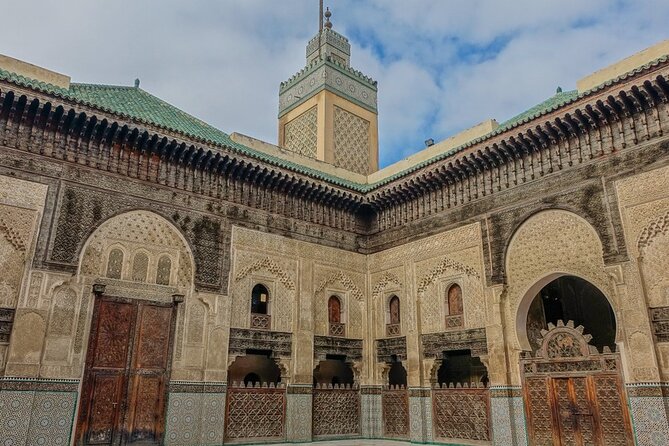
Next is Bou Inania Medersa, associated with the Marinid dynasty and founded in the 14th century. Even in a brief stop, you get a real sense of how Fez connects education, religion, and design.
This is one of the stops with an entrance fee: 20 DH per person, not included. That matters for budgeting, but it also signals something practical. Places like this are kept in good order because visitors pay to support entry, so you are not fighting “closed” or “under construction” chaos as much.
Your time here is about 25 minutes. That is usually enough to see the standout architectural features and get a guided explanation, without turning it into a museum-day slog.
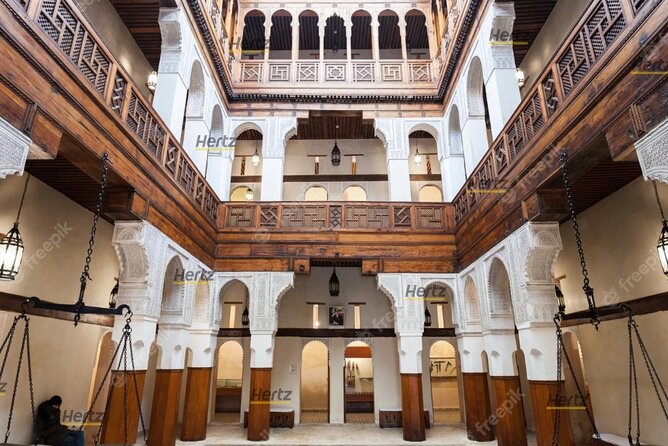
Museo Nejjarine: a museum break inside an old funduq
At Museo Nejjarine you explore the Funduq al-Najjarin, a funduq setting that feels quieter than the street outside. You are paying 20 DH per person, not included, and it is worth treating this like your reset stop.
What I like about this part of the route is the shift in tone. Instead of chasing movement in the souks, you get a calmer space to focus on craft and architecture. The museum is described as a showcase for riad-style architecture and Moroccan craftsmanship, which means you are not just looking at objects, you are also learning how Moroccan buildings are shaped to work with light, courtyards, and daily life.
Expect around 25 minutes here. It is long enough to actually notice details, but short enough to keep your energy for the later walking and the tannery stop.
Medina of Fez: the walk you came for
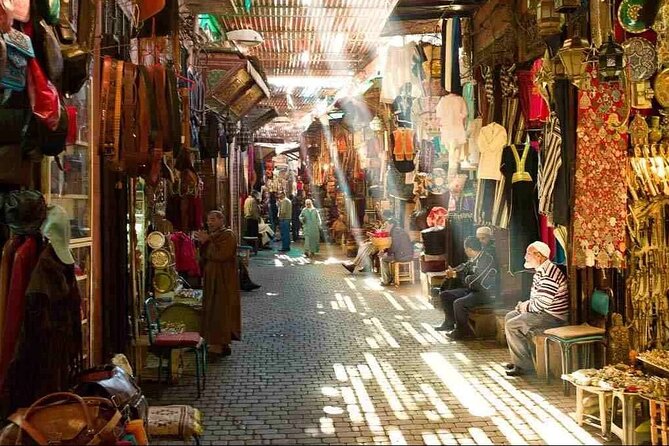
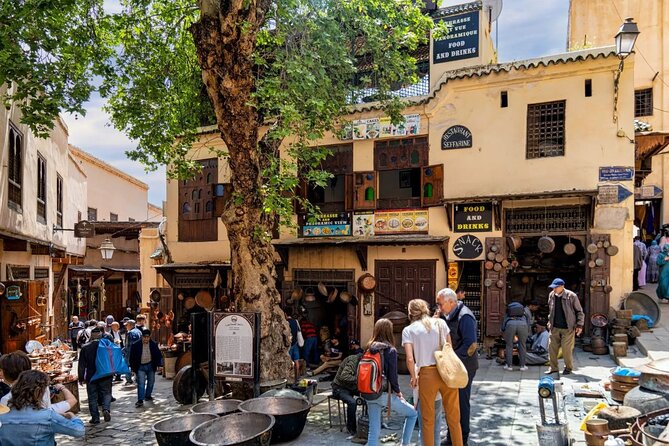
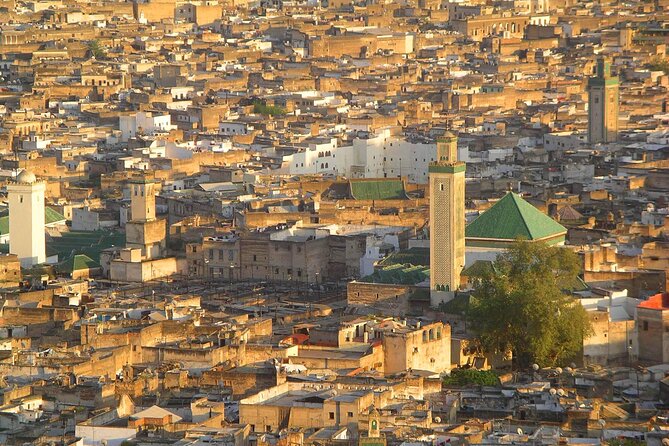
This is the heart of the experience: the Medina of Fez, walking through lanes and souks where craft and commerce mix at street level. Your guide helps you interpret what you are seeing, including intricate mosaic work and ornate wooden doors that you would likely miss if you are simply sightseeing by momentum.
The tour keeps it moving, with about 1 hour dedicated to wandering the medina. That hour is the sweet spot for many people: you see enough to understand the pattern, but you still feel like you are part of the city instead of only passing through it.
A practical tip mindset: during this stretch, do not only look at what feels important. Look for repetition. Door styles, tile colors, and workshop signs follow recognizable rhythms, and once you spot those rhythms, the medina becomes easier to navigate and way more interesting.
Religious stops with real access rules
Fez is not shy about its religious landmarks, and this tour includes a few that may involve access limits depending on your faith and what you are allowed to enter.
At the Zaouia of Moulay Idriss II, the sanctuary linked to the revered founder of Fez is included, but the information you get makes it clear that access may be restricted for non-Muslims. Even when entry is limited, the guide’s role is to frame the site’s meaning so you are not only looking at architecture without context.
Later, you have the Mosque and University of al-Qarawiyyin area (also tied to Kairaouine Mosque and the Andalusian Mosque). Entry is noted as limited to Muslims, so if you are not Muslim, plan for an exterior-focused visit plus explanation rather than full interior access. This is common for major religious sites, but it is good to know in advance so you do not feel surprised mid-route.
There is also Sidi Ahmed Al-Tijani Zawiya, described as a shrine with a spiritual atmosphere. Like the others, entry can be restricted, but you still get the guide’s explanation of the tradition behind it.
The upside of including these stops is that you understand Fez as a living place, not only a postcard machine. The downside is timing and access: you may not get to go inside every structure, so your experience depends on what is open to you that day.



Chouara Tannery: leather dyes and sensory overload done right
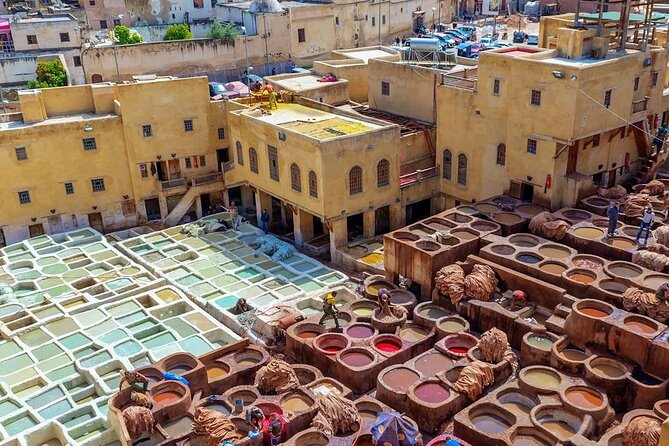
Then comes Chouara Tannery, one of the most famous craft demonstrations in Fez. You get about 25 minutes here, with free admission noted, and you can watch the long-running process of leather tanning.
The key thing is the visual side. You see vibrant hues of dyed leather laid out to dry, which makes the tannery more than just a technical craft. It becomes a color study, and your guide helps you make sense of what you are seeing.
Yes, there will likely be strong smells, noise, and lots of activity. If you are sensitive, you might want to focus on quick scanning and listening, then rotate to the viewpoint your guide indicates. The best approach is to treat it like a demonstration, not a museum exhibit. Observe, ask, and move when you need a break.
Al-Attarine Madrasa: tilework and another 20 DH entrance
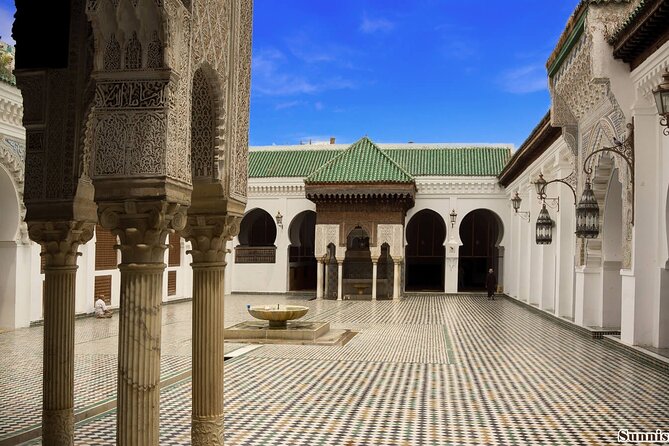
Another medersa stop is Al-Attarine Madrasa, about 25 minutes. This one is described as calm and centered on learning, tucked among the noise of the surrounding souks.
You should budget for entrance here too: 20 DH per person, not included. The reason it is worth paying is simple: medersas like this are built around detail. The tiles and design elements are not random decoration. They are part of the learning environment and the visual identity of the school.
If you only have limited time in Fez, I like that this tour gives you two medersa experiences instead of forcing just one. You can compare the styles and appreciate how design communicates values in different ways.
What makes the guided part work (and why the guide matters)
A big reason people recommend this kind of walk is that the guide keeps the medina from becoming chaos. The route is packed with places that are obvious once you know the pattern, and invisible if you do not.
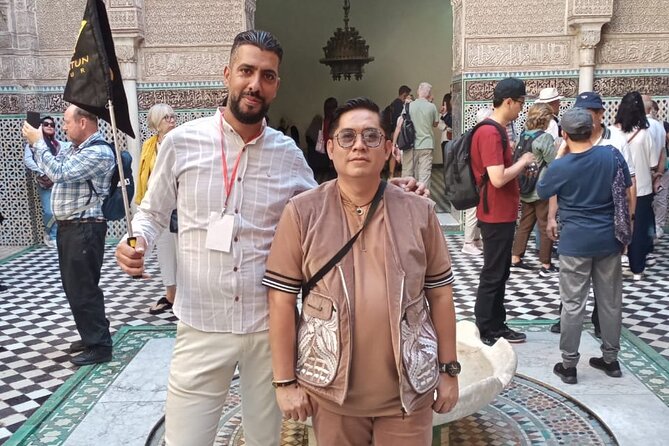
In particular, guides like Abdoul, Mouanis, and Azdine are highlighted for being friendly and for answering questions instead of rushing you along. That is not small stuff. When you ask why a door is built a certain way, or what a craft workshop actually produces, the medina stops being a series of backgrounds.
Also, artisan shops and demonstrations are part of the story here. You can expect pauses where the guide helps you understand products such as spices and oils, not just buy them. One of the best habits is to ask the guide what to look for, then ask what a typical use is in daily Moroccan life. It turns shopping pressure into cultural context.
A note on pace and depth: what to expect from a 4-hour loop
This tour covers a lot of territory. Some people may feel that the stops are broad and fast, with “here it is, now on to the next place” energy. That does not mean it is low quality. It means the format is about getting oriented and seeing key parts of the medina rather than doing a deep academic seminar.
If you want maximum depth, use this tour as your foundation. Ask for the one or two topics you care most about, then plan follow-up time on your own the next day to focus.
If you prefer a steady itinerary with guidance and no decision fatigue, the structure is a plus. In a maze-like place, knowing your next turn is calming.
Who should book this tour
This is a great fit if you:
- want a guided walk through the Medina of Fez without spending your whole trip getting lost
- like seeing crafts in action, including tannery and nearby ceramic work
- appreciate a mix of architecture, learning-focused sites, and working souks
- prefer a small group setting so you can ask questions
It is less ideal if:
- you have a strong need for lots of interior access at religious sites, because several entries are limited to Muslims and some access may be restricted for non-Muslims
- you hate shopping-area detours or long pauses at artisan stops, since craft demonstrations and shop visits are part of how the tour makes sense
Should you book Discover Fes: Culture, Handicraft & Hidden Treasures?
I would book it if your goal is orientation plus highlights, in about four hours, with a guide who helps you read what you see. At $18, you get more than just a checklist: you get coffee or tea, local guidance, and a structured route through the medina’s biggest “learn what you are looking at” moments.
Before you book, do two things. First, plan your budget for the 20 DH entrances at the paid stops. Second, be realistic about access limits at religious sites so you feel prepared instead of disappointed.
If you like practical sightseeing, this is a strong choice for getting your footing in Fes el Bali fast, then deciding what to explore longer on your own.
Sessions Where You Make Something
- Pottery and Mosaic Workshop in Fes Led by Local Artisans★ 5.0 · 89 reviews
- Fez cultural and handicraft tour half day★ 5.0 · 80 reviews
- Fez cultural and handicraft tour full day★ 5.0 · 79 reviews
- Fez Guided Tour of Artisans and Handicrafts Full-Day Private Tour★ 5.0 · 42 reviews
Added recently from around Fez

More Moroccan Artisan Workshops worth a look.
 ★ 4.8Marrakech: Pottery Workshop with Moroccan TeaFrom $45756 reviews
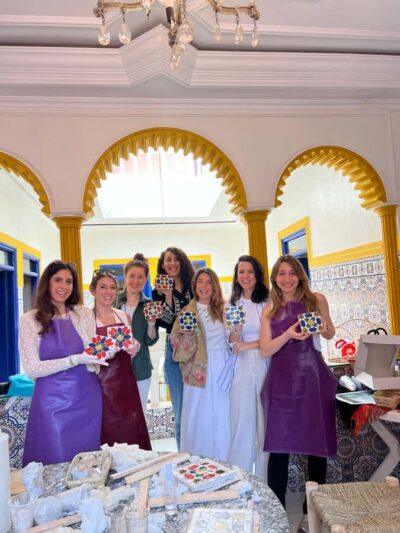 ★ 4.8Marrakech: Make Your Own Moroccan Zellige Mosaic MasterpieceFrom $42103 reviews
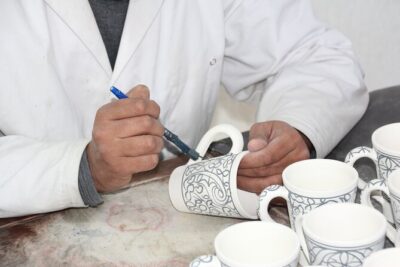 ★ 5.0Pottery and Mosaic Workshop in Fes Led by Local ArtisansFrom $4589 reviews
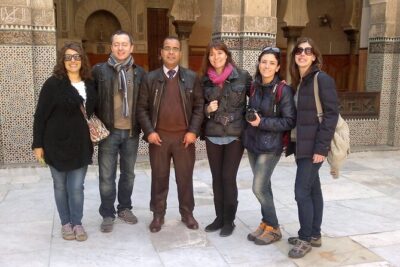 ★ 5.0Fez cultural and handicraft tour half dayFrom $6980 reviews
 ★ 5.0Fez cultural and handicraft tour full dayFrom $5879 reviews
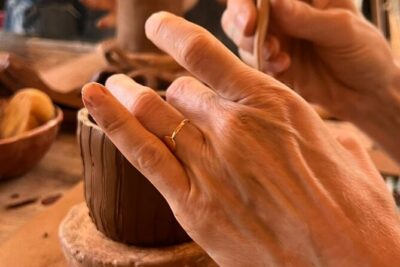 ★ 5.0Lamsaty Pottery Workshop with Moroccan TeaFrom $4075 reviews
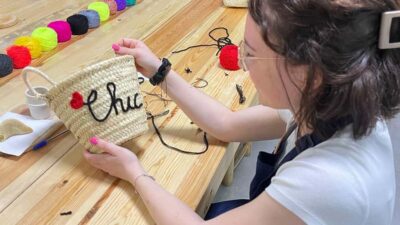 ★ 4.9Marrakech Medina Basket Embroidery WorkshopFrom $4369 reviews
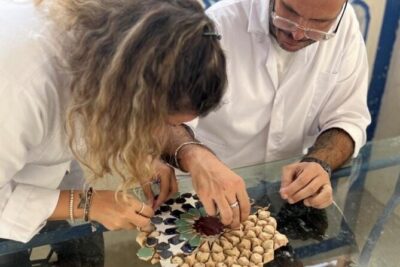 ★ 5.0Mosaic workshop in MarrakechFrom $6949 reviews
Where else this one sits