
REVIEW · MOROCCO
4-Day, 3-Night Marrakech to Marrakech Desert tour
Desert dawn starts on day one. This 4-day private ride threads the High Atlas pass to Ait Benhaddou, then pushes on to Todgha Gorge and Erg Chebbi dunes for a camel sunset and overnight camp. I like that the trip is structured but not rushed, with comfort built in, even during big driving days. One thing to consider: you spend a lot of time in the vehicle, because the route covers a serious chunk of southern Morocco.
You also get real value for what you pay, since air-conditioned private transportation and most meals are included, plus multiple accommodation stops. You get 3 breakfasts and 3 dinners included, which matters when you are far from major restaurants. The biggest downside is that lunch is not included, so you will want to plan for extra spending there.
The guide setup is another plus. The English-speaking driver, often identified as Ismail Naceur in guest feedback, gets praised for being calm, on-time, and good at adapting the pace, including for families. Just remember Morocco can be brutally hot in July and August, so timing affects comfort fast.
In This Review
- Key highlights you should care about
- Marrakech to Marrakech Desert: what you are really signing up for
- Morning departure from Marrakech and the High Atlas reality check
- Ait Benhaddou, Kasbahs, and why this place hits differently
- Skoura, the Valley of Roses, and Dades Valley as your mountain transition
- Todgha Gorge: your active break before you reach the dunes
- Erg Chebbi and Merzouga: camel sunset and a real desert night
- Sahara sunrise, shower and breakfast, then the souks of Rissani
- Telouet, Kasbah el Glaoui, and crossing back to Marrakech
- Price and value: $464.41 is either a steal or a question mark
- What you get day to day: the comfort and meal rhythm
- Who should book, and who should think twice
- Weather note and planning for a smooth desert night
- The guide factor: why Ismail is more than a driver
- Should you book this Marrakech to Marrakech desert tour?
Key highlights you should care about
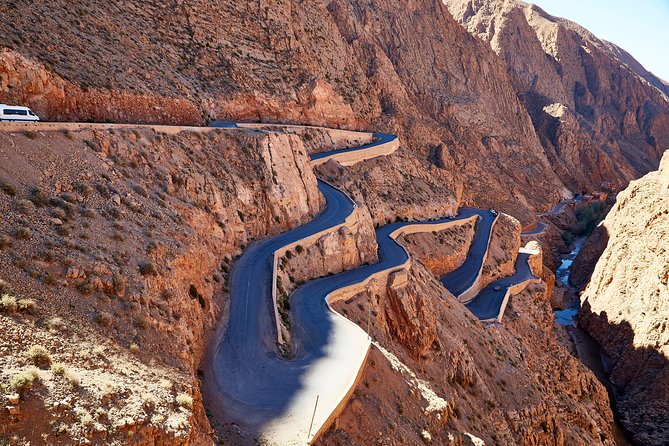
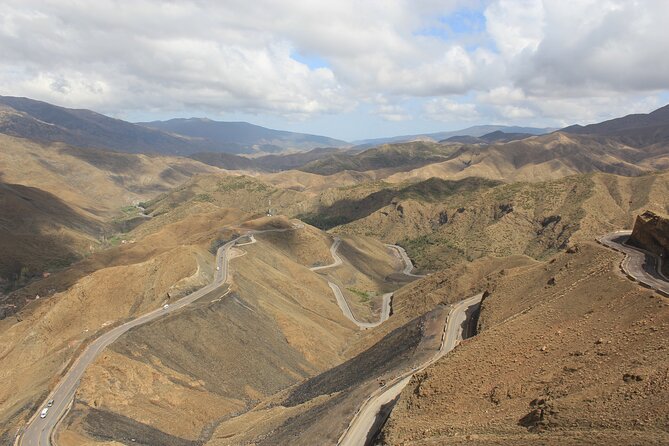
- Tizi n’Tichka crossing: dramatic High Atlas views en route to Ait Benhaddou
- Ait Benhaddou and Kasbah culture: fortified ksar stops with film-set energy
- Todgha Gorge hike time: a canyon walk that stretches your legs
- Erg Chebbi camel sunset (optional SUV skip): 1.5 hour camel ride, then camp under stars
- Deluxe camp with private ensuite: camp comfort is not an afterthought
- Ismail-style guiding: English skills, flexibility, and good humor show up repeatedly
Marrakech to Marrakech Desert: what you are really signing up for
This is not a sit-and-smile day trip to the desert. It is a multi-day route that trades extra cities for deeper variety. You start in Marrakech, cross the High Atlas, hit two of Morocco’s most dramatic stops (Ait Benhaddou and Erg Chebbi), and then come back the same way, with a detour through Telouet and its Kasbah el Glaoui.
If you like Morocco in layers, this itinerary fits. Marrakech gives you energy and a starting point. Then the mountains take over. Fortified villages, palm groves, and canyon walks break up the drive before you reach the sand. By the third night, you are not just visiting the desert, you are living inside the timing of it.
Other things that only run after dark
- Agafay Desert: Dinner + Show with Quad Bike & Sunset Camel Ride
★ 4.5 · 2,669 reviews - Marrakech Desert Tour & Sunset Camel Ride with Dinner Show
★ 5.0 · 1,694 reviews - Agafay Desert Sunset, Camel Ride and Dinner from Marrakech
★ 4.5 · 701 reviews - Marrakesh: Sunset Dinner in Agafay Desert with Show & Transfers
★ 4.5 · 612 reviews
Morning departure from Marrakech and the High Atlas reality check
Your day starts at 8:00 am from Hôtel Restaurant Café de France near Jamaa el-Fna. That early start is useful. It gives you daylight for the High Atlas crossing, including the climb over Tizi n’Tichka, at about 2260 m.
Here is what I like about this setup. You get a smooth day-one arc, not a vague “sometime in the afternoon” schedule. And an early start means you are less likely to feel trapped by late check-ins when the route is long.
Practical note: this is still a driving tour. Expect long stretches where the scenery changes slowly. It can feel like “hours in the car,” even with comfort. In the feedback, the guide and driver role comes up a lot, because their pacing and attitude can make or break those long days. If you tend to get restless on road trips, plan ahead with water and something to keep your eyes busy.
Ait Benhaddou, Kasbahs, and why this place hits differently
Ait Benhaddou is the Moroccan “fortified village” that people remember. You will pass through by way of the route over the High Atlas, and you will also return for a visit on the way back. That second visit matters. The first time you see it, you are in transit mode. The second time, you can slow down and absorb more.
What you are seeing is a ksar, with Kasbah structures built for defense and endurance. And yes, Ait Benhaddou has served as a film set, so there is a familiar feeling to it even if you do not know the name until you arrive.
What to do while you are there:
- Walk and look for the different levels and tight corners. The geometry is the point.
- Take a breath and notice how the settlement hugs the land. It is not random, it is built to survive.
- If you like photos, this is one of the best stops on the whole circuit, because the walls and towers create instant framing.
Possible drawback: this is one of those stops where you might want more time than you get. The tour keeps the days moving, so you have to enjoy it in focused bursts rather than lingering for hours.
Skoura, the Valley of Roses, and Dades Valley as your mountain transition
After Ait Benhaddou, you continue toward Dades through Ouarzazate, stopping around places like the Skoura palm grove and the Valley of the Roses. This is a smart move for the itinerary. It softens the big mountain crossing with gardens and village scenery, giving your brain a reset before the next canyon day.
You sleep in the Dades area after day one. That matters because it breaks up the drive into manageable segments. Instead of pushing straight to the desert, you build a rhythm: mountain, ksar, palms and roses, then gorge country.
This night is also where Morocco starts to feel more personal. The Berber village roads and the valley settlements change the pace. You are not only watching sights, you are moving through living places.
Todgha Gorge: your active break before you reach the dunes
Day two turns adventurous. After breakfast, you visit Dades Gorges via the road of 1000 Kasbahs, with colorful Berber villages along the way. Then you head to Tinghir for its palm grove, and from there to Todgha Gorge.
Todgha is a favorite for hikers. The tour includes a hike along the canyon area, which rises to roughly 300 m above sea level based on the route notes. Even if you are not a “hiker,” this is a good way to stretch your legs without needing full-day trekking logistics.
What to expect at Todgha:
- A guided feel, with enough time to walk the canyon line and take in the towering rock shapes.
- A shift from road views to foot views, so you feel like you actually stopped, not just passed through.
One consideration: canyon walks are still walks. Wear shoes you trust. If you have knee issues or you dislike uneven surfaces, go slowly and ask your driver to pace you.
Erg Chebbi and Merzouga: camel sunset and a real desert night
Then the desert arrives. You reach Erg Chebbi dunes in the Merzouga Sahara area, and you get time for lunch on the way before the real experience begins.
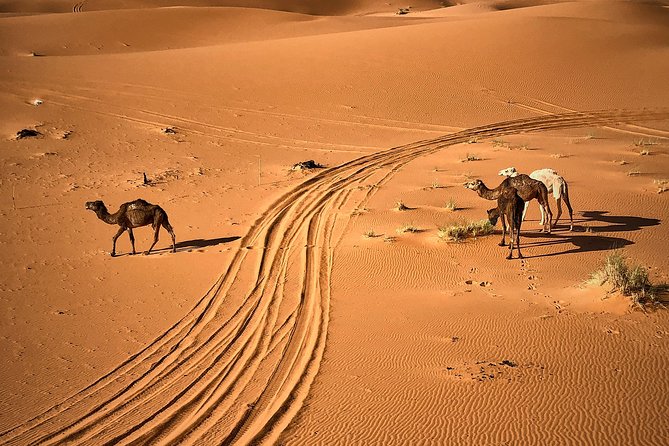
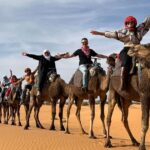
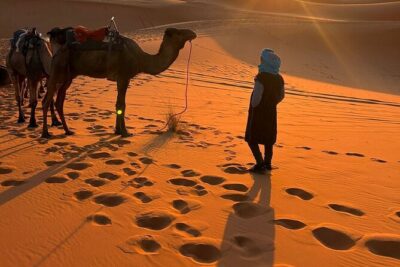
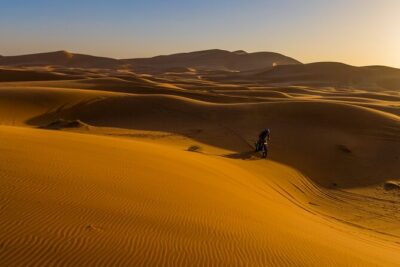
The tour includes a camel ride of about 1.5 hours to watch the sunset and then continue to the camp. This is the part people picture when they think of the Sahara. But the details are what make it work for many travelers: the ride lines up with sunset, and the overnight is organized rather than improvised.
Two big comfort notes:
- There is a possibility to skip the camel ride and go by SUV to the camp. If camels are a deal-breaker for you, this option can save the day.
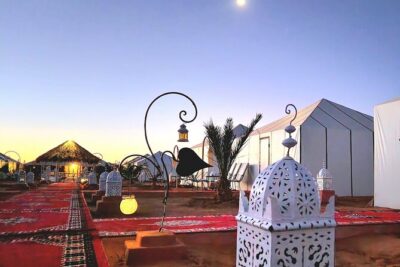
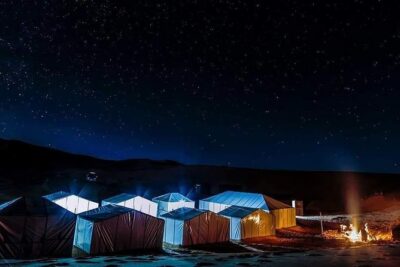
- The overnight is in a deluxe camp, with private tents and ensuite bathrooms with shower facilities. That is a major difference versus bare-bones desert camping.
You sleep under nomadic tents or outside under the stars, depending on how you are set up at the camp that night. Either way, you get that core Sahara feeling, which is wide skies, silence, and time that moves slower.
Sahara sunrise, shower and breakfast, then the souks of Rissani
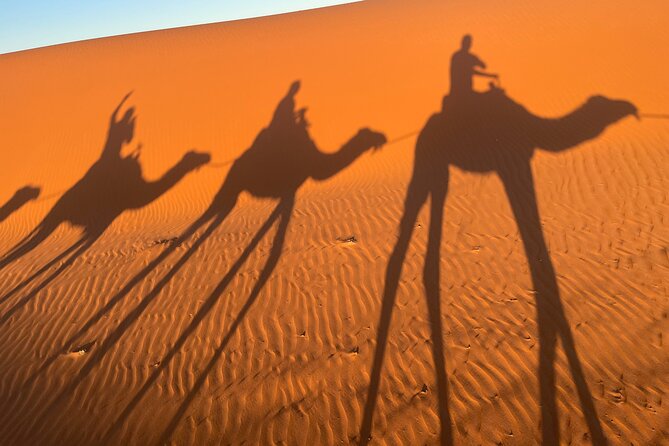
Morning on day three starts with a dune climb for sunrise. You then return, get the camels back, and head to a more comfortable breakfast setup. The ride back from the dunes is followed by a shower and breakfast at the hotel.
This matters more than you might think. Desert experiences can be exhausting. Having a shower and a proper breakfast after sunrise keeps the experience from turning into a full-body slog.
After that, you continue toward Ouarzazate through Rissani. Rissani is known for its traditional souks, noted in the route as among the largest in southern Morocco. You get time to stop and visit.
What I like about this portion is that it adds texture. You go from sand and stars to a market atmosphere. Even a short visit helps you remember the desert is not only scenery. It is part of trade routes and daily life.
Then you continue through the Draa Valley, with millions of palm trees noted along the way, and you reach Ouarzazate in the afternoon.
Telouet, Kasbah el Glaoui, and crossing back to Marrakech
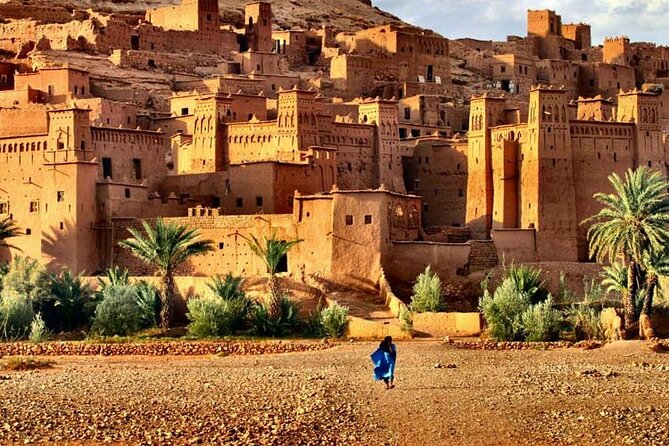
On the final day, you move back toward Ait Benhaddou and visit it as a World Heritage site again. This second round is useful if you like to compare how your brain absorbs a place when you are not rushing.
After that, you continue to Marrakech with a detour through Telouet, a traditional Berber village in the High Atlas. You visit Kasbah el Glaoui and then cross the High Atlas again for the return drive.
This return route is part of the value. You see the “on the road” Morocco twice, from two directions. You also get more than one ksar moment, not just a single quick photo stop.
The tour ends back at the same meeting point in Marrakech, Hôtel Restaurant Café de France, so you are not stuck with an end-point scramble.
Price and value: $464.41 is either a steal or a question mark
At $464.41 per person for a 4-day, 3-night private desert trip, the value depends on what you expect to pay on your own.
Here is what is included, in plain terms:
- Private transportation in an air-conditioned vehicle
- Overnight accommodations across 3 nights, including an overnight deluxe camp with private tents and ensuite bathrooms plus shower
- Camel trekking in the desert, plus the option to skip the camel ride by SUV
- English-speaking driver
- Flexible stops and pauses
- 3 breakfasts and 3 dinners
Lunch is not included, and extra drinks during included meals are not included.
So why does the price feel reasonable? Because desert travel is rarely cheap once you break it down: you need the right vehicle, desert camp logistics, camel coordination, and at least some meals to keep the schedule stable. Doing it yourself often turns into a patchwork of bookings and extra transport fees.
The question mark is time and pace. If you want tons of free time in each town and you hate long road days, you may feel the trade-off. But if you want Morocco’s big highlights in one organized sweep, this is the kind of price where it starts to look like a good deal fast.
What you get day to day: the comfort and meal rhythm
This is a comfort-forward itinerary for its category. The tour includes air-conditioned private transport, plus accommodations across three nights, which means you are sleeping in more than one area instead of bouncing endlessly in a single base.
Meals are also thoughtfully built into the schedule:
- Breakfast included 3 times
- Dinner included 3 times
- Lunch is on you
Even if you are not a picky eater, it helps that you do not have to solve meal planning every day. It keeps the driving schedule predictable, which is key when you are aiming for sunrise dune time.
Also, there is a vegetarian option available if you advise at booking, and the driver is English speaking.
Who should book, and who should think twice
This trip is a strong match for:
- People who want a private tour experience, not a group squeeze
- Travelers who like road-trip variety and do not mind long drives for better scenery
- Families, since guiding and pacing have been described as adaptable
- Desert lovers who want camel sunset plus a night camp with real hygiene facilities
Think twice if:
- You dislike long travel days and prefer short hops
- You are booking during the hottest stretch, since July and August are described as extremely hot and temperatures can be unbearable even for adults
- You cannot be flexible about weather, because the tour requires good weather, and poor weather can trigger a different date or a full refund
Weather note and planning for a smooth desert night
This experience requires good weather. If it is canceled due to poor weather, you get offered a different date or a full refund.
That matters because desert operations depend on conditions. It is not just about comfort. It is also about how smoothly the dunes and timing work.
If you can choose your month, plan around heat. The route notes are blunt about July and August.
The guide factor: why Ismail is more than a driver
One of the clearest themes from the feedback is the role of Ismail Naceur, the English-speaking driver and guide. People consistently connect the experience quality to his care, flexibility, and humor. In real life terms, that means:
- Your long drives can feel less like transport and more like part of the day
- Stops can be handled without you feeling rushed
- The tone stays friendly and supportive, including for families
In a perfect world, a desert trip is half scenery and half human comfort. This one leans toward the human side.
Should you book this Marrakech to Marrakech desert tour?
If your goal is to hit the High Atlas, Ait Benhaddou, Todgha Gorge, and Erg Chebbi dunes in one organized 4-day circuit, I think this is an easy yes. The included comfort, private transport, and the deluxe camp setup with ensuite bathroom and shower make the desert night feel practical, not just romantic.
Book it if you like structure, you do not mind a lot of time on the road, and you want the big Morocco highlights without juggling extra bookings. If heat is a concern, avoid July and August. And if camels are a no-go, remember there is an SUV option to still reach the camp.
If you want a desert experience that is organized, comfortable, and rich in variety, this one earns a spot on your shortlist.
What Runs After Dark
- Agafay Desert: Dinner + Show with Quad Bike & Sunset Camel Ride★ 4.5 · 2,669 reviews
- Marrakech Desert Tour & Sunset Camel Ride with Dinner Show★ 5.0 · 1,694 reviews
- Agafay Desert Sunset, Camel Ride and Dinner from Marrakech★ 4.5 · 701 reviews
- Marrakesh: Sunset Dinner in Agafay Desert with Show & Transfers★ 4.5 · 612 reviews
Added recently from around Marrakech
More 4-Day Experiences worth a look.
 ★ 5.0From Marrakech 4 Days Tour To Morocco Sahara DesertFrom $220553 reviews
 ★ 4.5Agadir/Taghazout/Port: Sahara Desert 4×4 Day Trip with LunchFrom $49438 reviews
 ★ 4.8From Marrakech: Merzouga 4 Day Luxury Tour w/ Optional QuadFrom $229332 reviews
 ★ 4.8From Marrakesh: 4-Day Private Atlas Mountains & Desert TourFrom $452197 reviews
 ★ 5.04 Days Desert Tour From Marrakech to Fes via Merzouga DunesFrom $568169 reviews
 ★ 5.0Marrakech to Merzouga: 4 Day Adventure with 2 Nights in DesertFrom $300162 reviews
 ★ 5.04 Day Desert Tour from Marrakech to Fes via Merzouga Sahara (Erg Chebbi)From $756155 reviews
 ★ 5.04 Days Desert Safari Tour from Marrakech to MerzougaFrom $579145 reviews
Where else this one sits