
REVIEW · MERZOUGA
Marrakech to Merzouga Desert 3-Day via the High Atlas Mountains
Camel tracks and Atlas gorges, all in three days. This overland route from Marrakech packs the big Moroccan hits into a tight schedule: High Atlas Tizi n’Tichka mountain views, UNESCO Ait Ben Haddou, then down to Erg Chebbi dunes for a camel ride, sandboarding, and a night at a Berber camp where the stars are the headline.
What I like most is how the days are structured so you get variety without feeling rushed at every stop. You also get dinners and breakfasts included, plus a camel ride and sandboarding that would cost real money if you tried to piece it together yourself. The one trade-off is the schedule is long and starts early, and your desert sleep is in a tent camp setup, not a hotel bed.
In This Review
- Key highlights at a glance
- Hitting the High Atlas early: Tizi n’Tichka to Ait Ben Haddou
- Ouarzazate and Atlas Studios: quick photos, big scale
- Roses valley timing and Dades viewpoints on the way to Tinghir
- Todra Gorge with locals, then Erfoud and Merzouga dunes
- Camel ride, sandboarding, and a Berber camp night under stars
- Day 3: breakfast, roses valley lunch stop, and returning over Tizi n’Tichka
- Value and practical expectations for $127.45
- The guide factor: names you might meet and the kind of help that matters
- Who should book this Merzouga tour, and who should think twice
- Should you book Morocco Tour Experience for Marrakech to Merzouga?
- FAQ
- How much does the Marrakech to Merzouga 3-day tour cost?
- How long is the trip?
- When do pickups start?
- What’s included in the price?
- What is not included?
- Where do you sleep overnight?
- How large are the groups?
- Is free cancellation available?
- Should I bring a lunch budget?
Key highlights at a glance
- High Atlas photography stops at Tizi n’Tichka (about 2,260 m)
- UNESCO Ait Ben Haddou kasbah village, plus film-set trivia
- Todra Gorge with locals at the Tourist Information & Experience Center
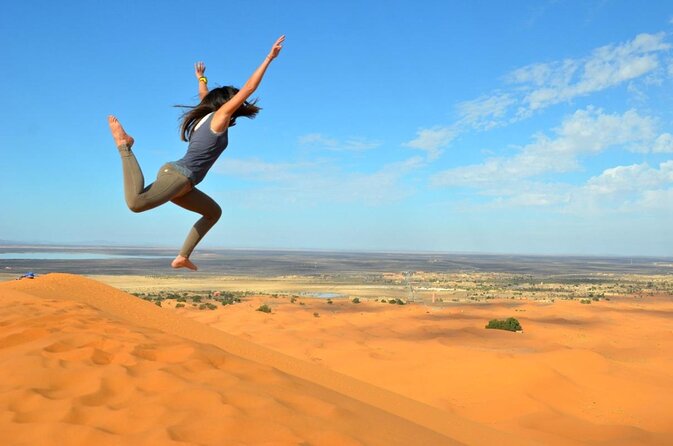
- Erg Chebbi dunes in Merzouga for camel riding and sandboarding
- Berber camp overnight with dinner and breakfast included
- Small group max 17 travelers, with an air-conditioned vehicle
Hitting the High Atlas early: Tizi n’Tichka to Ait Ben Haddou
Day 1 begins bright and early, with a start time listed at 7:30 am, meeting your driver and then leaving Marrakech around 8:00 am. You’ll be in an air-conditioned vehicle, which matters once the day heats up and you’re bouncing between towns and viewpoints.
The first real payoff is the ride up to Tizi n’Tichka. You stop near the top for photos, and it’s the kind of view that makes the rest of the trip make sense. This is a mountain pass that defines the geography, and seeing it from the roadside gives you a quick feeling for why Morocco’s interior can look so dramatic.
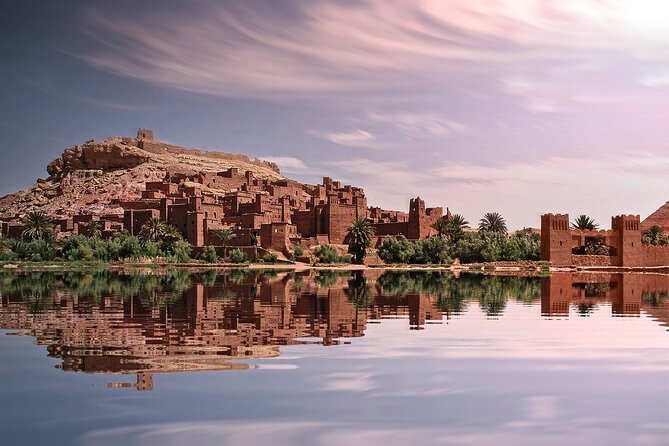
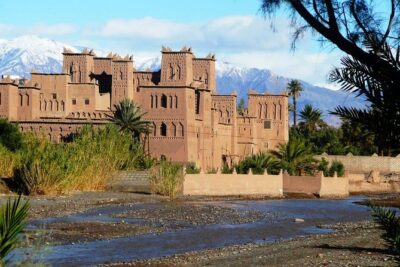
Next comes Ait Ben Haddou, the UNESCO-listed fortified village that also became a backdrop for major Hollywood epics. You’ll cross the river separating the kasbah from the main road and then have around two hours to walk through the village at an easy pace. The movie connection is a fun way to anchor what you’re looking at, since the architecture is doing the heavy lifting: layered earthen walls, packed-in streets, and the kind of shape that reads instantly as “historic fortress.”
One practical note: this stop is popular. Even without getting into crowds drama, you’ll enjoy it more if you wear shoes you can walk in comfortably, because you’ll be on uneven village surfaces.
Compare the other Erg Chebbi runs we wrote up
- 3 Days Desert Tour From Marrakech To Merzouga Dunes & Camel Trek
★ 5.0 · 10,125 reviews - 3-Day Marrakech to Merzouga Desert Tour: Camel Rides & Overnights
★ 5.0 · 8,734 reviews - 3-Day Marrakech to Fes Sahara Desert Tour via Merzouga
★ 5.0 · 6,546 reviews - 3-Day Tour to Merzouga Erg Chebbi with Food & Camel Trek
★ 5.0 · 1,770 reviews
Ouarzazate and Atlas Studios: quick photos, big scale
After Ait Ben Haddou, the day continues through the area many people associate with film production. You get a short photo stop in Ouarzazate, specifically for a view related to Atlas Studios.
This part is brief by design. You’re not there to tour a soundstage, you’re there to see how this region has turned its scenery into a global production backdrop. The value for me is the contrast: you move from a centuries-old kasbah village into a town that now sells its “old world” look to filmmakers.
If you like your travel with a mix of history and practical reality, this little stop hits the sweet spot. If you’re expecting a long, structured museum-style visit, you might feel it’s too quick, but the itinerary keeps you moving toward the mountains and valley stops ahead.
Roses valley timing and Dades viewpoints on the way to Tinghir
As you head toward the Dades area, you’ll make a break in El Kelaa M’gouna. This is tied to the rose valley and the rose-oil economy, with rose picking in April and a roses festival in the first week of May. You might also find local associations selling cosmetics made with rose oil.
Even if you’re not traveling during festival season, the stop still gives you a change of scenery and a chance to stretch. Think of it as a short reset, not a full day excursion.
Then you’ll do panoramic viewpoint stops along the route through the Dades Valley, before ending the day in Tinghir. Overnight is listed at hotel Bougafer Tinghir, Luxury Riad Dades, or a similar property. Since your desert day starts early, this hotel night matters more than you might think. It’s where you rest up before the big Erg Chebbi dunes day.
Todra Gorge with locals, then Erfoud and Merzouga dunes
Day 2 starts after breakfast, with a visit to Todra Gorge. The itinerary frames this as discovering the gorge with locals at a Tourist Information & Experience Center, and you’ll also see the grove of Todgha. The timing is about one hour.
This kind of stop is useful because it gives you a guided lens quickly. You’re looking at a gorge and a green area in the same breath, and that combination helps you understand why this area is more than just a road to the Sahara. It’s a reminder that Morocco’s desert routes are actually built on layers of scenery.
Then you drive toward Erfoud, described as the capital of fossils, passing through Tinejdad and Berber villages. This is one of those “travel days” segments where the real activity is the changing texture of the land. You’ll also head onward toward Merzouga and the Erg Chebbi dunes.
Eventually, the vehicle segment ends and the desert experience begins. That shift is worth anticipating: you go from roads and towns to a dune world where everything feels slower and more open.
Camel ride, sandboarding, and a Berber camp night under stars
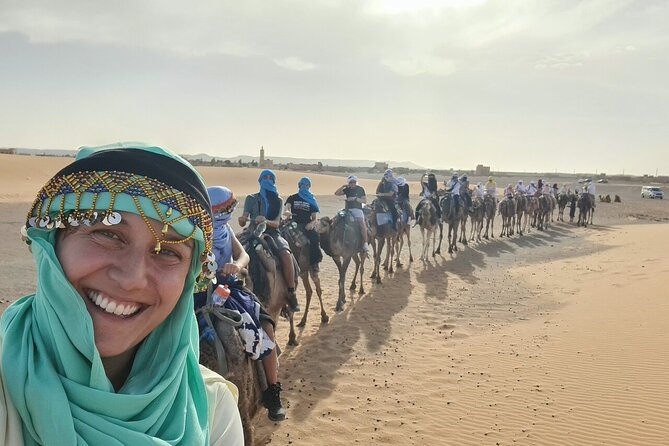
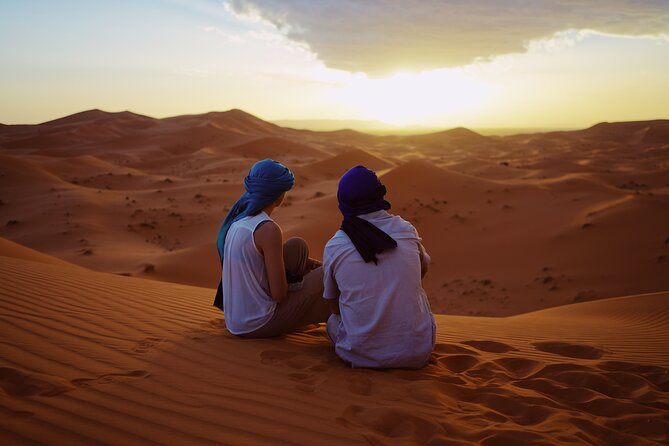
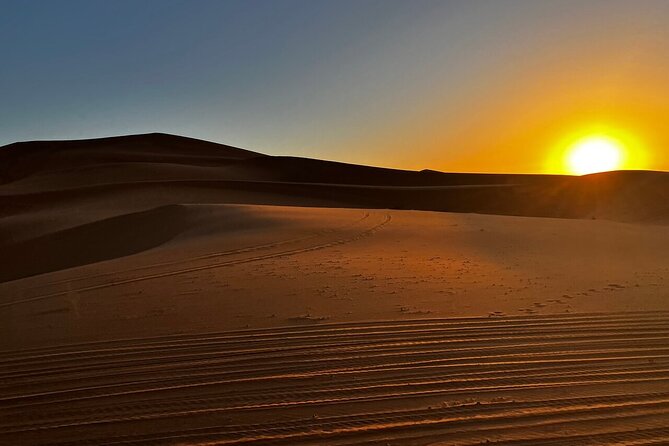
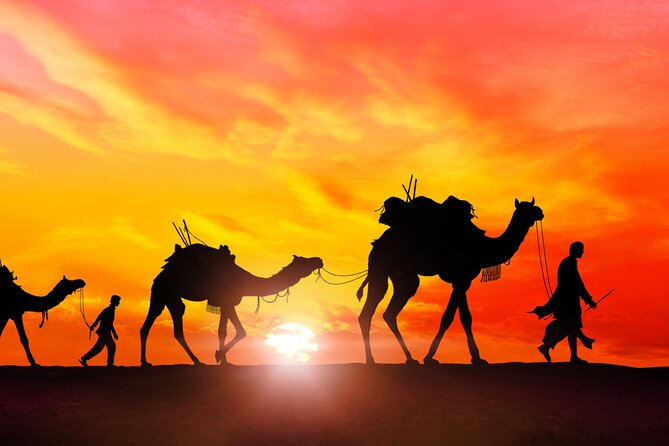
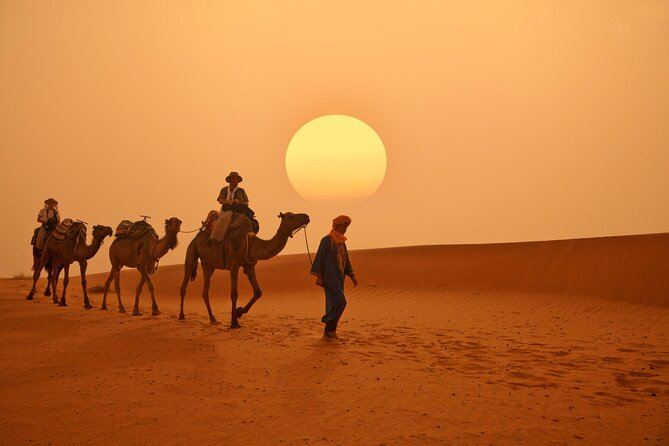
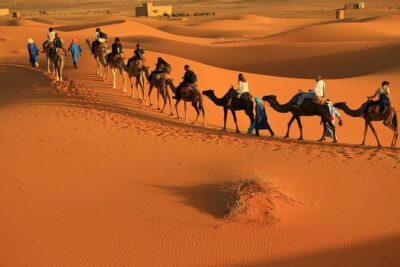
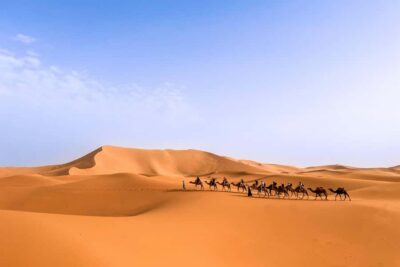
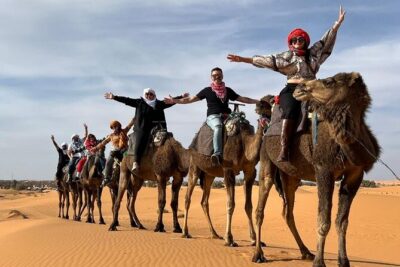
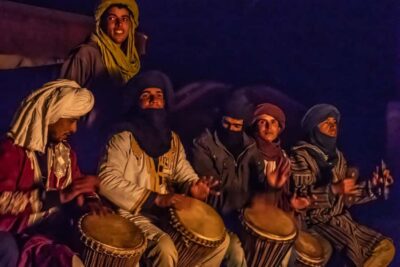
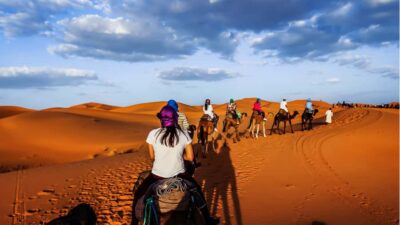
In Merzouga, you’ll leave the vehicle and start a camel ride in the middle of the dunes. This is when the Sahara stops feeling like a destination and starts feeling like a place. You’ll spend the night in nomad tents in the big dunes, described as a Berber camp overnight in a bivouac setup.
Two things to know from how this trip is built. First, your trip includes the desert meal rhythm, with dinner and overnight included. Second, you’re going for atmosphere, not luxury-room convenience. One reason people rave about these nights is the contrast: daytime adventure, then silence, then the night sky.
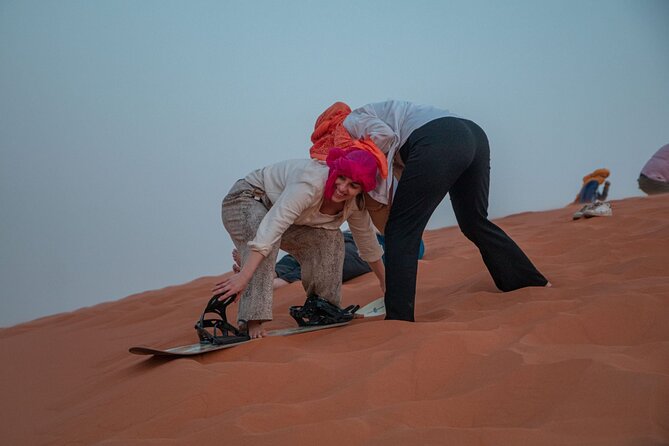
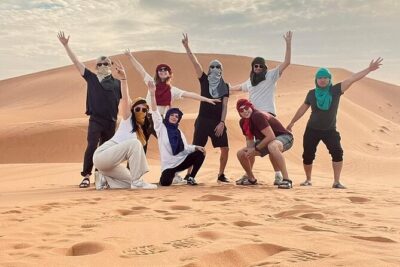
Your itinerary also includes sandboarding, so you’re not only doing the “sit and watch dunes” version of Merzouga. Sandboarding changes your relationship with the dunes from sightseeing to action. If you’re even slightly interested in trying it, this is the day to do it, since you’ll be already set up in the dune area.
From the way the guides and camp setup are described, the operator emphasizes comfort for the camp experience, including cleanliness and amenities relative to the setting. That means you can focus on sleep and stars instead of dealing with chaos.
Day 3: breakfast, roses valley lunch stop, and returning over Tizi n’Tichka
Day 3 begins with an early breakfast, and then you drive back toward the main road. You’ll meet your driver again and continue toward Kelaat Mgouna for a lunch stop in the roses valley area, with about one hour scheduled there.
Lunch itself is not listed as included, so plan to pay for your meal on your own. The upside is that you can choose what fits your taste, rather than being locked into a set meal when you’re ready for a break.
After that, you pass through Ouarzazate again, and then you return over Tizi n’Tichka. Getting the pass twice on the same itinerary is actually helpful. You’ll notice different light on the mountain road, and you’ll better understand how the valleys connect.
Finally, you return to Marrakech, with a drop-off at your accommodation at the end of service.
Other ways up into the Atlas
Value and practical expectations for $127.45
At $127.45 per person for an approximately three-day trip, the key question is what you’re paying for. You’re not just paying for a taxi. You’re paying for transportation across big distances, an included overnight in the desert camp area, camel ride, sandboarding, and two dinners plus two breakfasts.
That bundle is where the value comes from. If you tried to assemble just the transport plus camel ride plus desert camp, you’d likely find the price rises quickly. Here, the operator folds most of the must-do costs into one ticket.
The most obvious “not included” item is lunch and beverages on the way. In other words, you’ll want to budget for at least one lunch and drinks, depending on what you eat and how much you sip during road stops.
Also, the group size is capped at 17 travelers, which usually helps with pacing. Your stops are scheduled, and the vehicle stays coordinated. You also get a mobile ticket and pickup offered, which tends to reduce the hassle on the Marrakech side.
The guide factor: names you might meet and the kind of help that matters
A lot of Morocco desert trips succeed or fail based on how the guide handles people. The strong pattern here is guides that stay attentive, flexible with requests, and quick to troubleshoot small problems.
For example, you may meet guides such as Mohammad, described as accommodating for family needs, including traveling with a young child. You might also meet Youssef in a role that focuses on looking out for everyone step by step, including keeping a family comfortable. Other names show up for a similar approach, including Hakim, Hesham, Hamza, Iddir, and Simo.
What does that mean for you? It usually means clearer communication at stops, smoother timing, and someone who understands when to pause so people can use the restroom or buy a small item. One review-style detail that’s useful, even if it’s not guaranteed, is the idea of quick help requests being taken seriously, like stopping when someone needs a pharmacy item.
If you prefer a trip where the logistics feel handled, this is a big part of the value.
Who should book this Merzouga tour, and who should think twice
This tour is a strong match if you want a ready-made Morocco overland itinerary that mixes mountains, kasbah history, gorge scenery, and desert dunes without you managing directions day by day. It’s also a decent fit for solo travelers and for groups, since the schedule is structured and the max size is capped.
It’s also friendly to families, with at least one example of a family traveling with a four-year-old and getting guide support.
You might think twice if you dislike long driving days. Day 2 includes a major road segment before you reach the dunes, and Day 3 includes another full return over mountain pass. Also, if you only want hotel comfort, the Berber camp overnight in nomad tents may feel like too much. The camp seems designed to be comfortable, but it is still a camping style setup.
Should you book Morocco Tour Experience for Marrakech to Merzouga?
If your priority is value and a tightly packed “highlights route” that actually ends with an authentic desert night, this is a good booking. You get the mountain pass views, UNESCO kasbah time, Todra Gorge, and then the Sahara experience with camel ride and sandboarding, plus meals included.
I would book if you’re comfortable with early mornings, road time, and a tent camp overnight. I would skip if you want a slow, boutique pace or if your definition of camping is a deal-breaker.
FAQ
How much does the Marrakech to Merzouga 3-day tour cost?
The price listed is $127.45 per person.
How long is the trip?
It runs for about 3 days.
When do pickups start?
The start time is listed as 7:30 am.
What’s included in the price?
Included features are a camel ride, sandboarding, an air-conditioned vehicle, dinner (2) and breakfast (2).
What is not included?
Lunch and beverage on the way are not included.
Where do you sleep overnight?
You’ll have an overnight in a Berber desert camp with nomad tents in the Merzouga dunes area.
How large are the groups?
The maximum group size is 17 travelers.
Is free cancellation available?
Yes. You can cancel up to 24 hours in advance for a full refund.
Should I bring a lunch budget?
Yes. The itinerary has lunch stops, but lunch is not listed as included, so you’ll want money set aside.
Higher Into the Atlas
- Berber villages : Atlas Mountains Day Hike from Marrakech★ 5.0 · 14,007 reviews
- Atlas Mountains & 5 Valleys Tour from Marrakech – All inclusive –★ 5.0 · 2,913 reviews
- Atlas Mountains, Berber Villages and Three Valleys all inclusive★ 5.0 · 2,471 reviews
- Atlas Mountains Hot Air Balloon Ride from Marrakech with Berber Breakfast and Desert Camel Experience★ 5.0 · 2,123 reviews
Erg Chebbi, Other Departures
- 3 Days Desert Tour From Marrakech To Merzouga Dunes & Camel Trek★ 5.0 · 10,125 reviews
- 3-Day Marrakech to Merzouga Desert Tour: Camel Rides & Overnights★ 5.0 · 8,734 reviews
- 3-Day Marrakech to Fes Sahara Desert Tour via Merzouga★ 5.0 · 6,546 reviews
- 3-Day Tour to Merzouga Erg Chebbi with Food & Camel Trek★ 5.0 · 1,770 reviews
Added recently from around Marrakech
More Merzouga and Erg Chebbi Desert Tours worth a look.
 ★ 4.9From Marrakech: 3-Day Merzouga and Sahara Desert TourFrom $13415,308 reviews
 ★ 4.7From Marrakech: Merzouga 3-Day Desert Safari with FoodFrom $12212,232 reviews
 ★ 5.03 Days Desert Tour From Marrakech To Merzouga Dunes & Camel TrekFrom $11510,125 reviews
 ★ 5.03-Day Marrakech to Merzouga Desert Tour: Camel Rides & OvernightsFrom $1158,734 reviews
 ★ 5.03-Day Marrakech to Fes Sahara Desert Tour via MerzougaFrom $2206,546 reviews
 ★ 4.6Marrakech: 3-Day Merzouga Desert Experience Camel & MealsFrom $1136,252 reviews
 ★ 5.03-Day Tour to Merzouga Erg Chebbi with Food & Camel TrekFrom $1331,770 reviews
 ★ 4.8From Fez: Sahara Desert 2-Day Tour with Merzouga Camp StayFrom $1141,716 reviews
Where else this one sits