
REVIEW · AIT BEN HADDOU
Marrakech: Day-Trip to UNESCO Kasbahs and Ouarzazate Tour
A long drive, then true Morocco magic. This day trip strings together High Atlas passes and UNESCO kasbahs, with a stop in film-famous Aït Ben Haddou along the way. I like that it’s not just scenery, you also get local context for how these fortified towns worked, and why they became major movie backdrops. The main trade-off is time, this is a 12-hour day with lots of road sitting, so it helps to bring a good attitude and plan for an early start.
I also like the way the tour handles comfort and flow. You get hotel pickup and drop-off in Marrakech, transport in an air-conditioned minivan or 4-wheel drive, and you’re with a professional driver/guide. Local guidance at the UNESCO site means you are not wandering blind, and the road portion can feel far less stressful when the driver is calm and attentive, like the kind of care praised with drivers such as Ghasan and Charaf.
One more thing to consider before you book: the day includes a walking portion at Aït Ben Haddou, so you’ll want comfortable shoes and (ideally) sports shoes. The sun and altitude can add up too, so pack sunglasses and a sun hat, even if you think you will only be outside for short stops.
In This Review
- Key highlights you should care about
- Why the Marrakech to Ouarzazate route feels like a movie set
- Price and value: what $141 per person buys you
- Early start to Marrakech hotel pickup, then settle in for the road
- Climbing the High Atlas via Tizi n’Tichka Pass (2,260 meters)
- Aït Ben Haddou UNESCO Kasbah: how to make the most of the walking
- Taourirt’s Kasbah and the Cinema Museum in Ouarzazate
- Studio time and mint tea in the Atlas valley
- Timing, comfort, and what to pack for a smooth 12-hour day
- Who this tour suits best, and who should skip it
- Should you book this Marrakech to Ouarzazate kasbah and cinema tour?
- FAQ
- How long is the Marrakech to UNESCO kasbahs and Ouarzazate tour?
- What is included in the price, and what is not?
- Do I need to pay for Aït Ben Haddou entrance?
- What languages is the live guide available in?
- Where are you picking people up in Marrakech?
- Is lunch provided during the tour?
- Is this tour suitable for people with mobility impairments?
- What should I bring and wear?
Key highlights you should care about
- Tizi n’Tichka Pass at 2,260 meters: big altitude and dramatic switchbacks, built into the route.
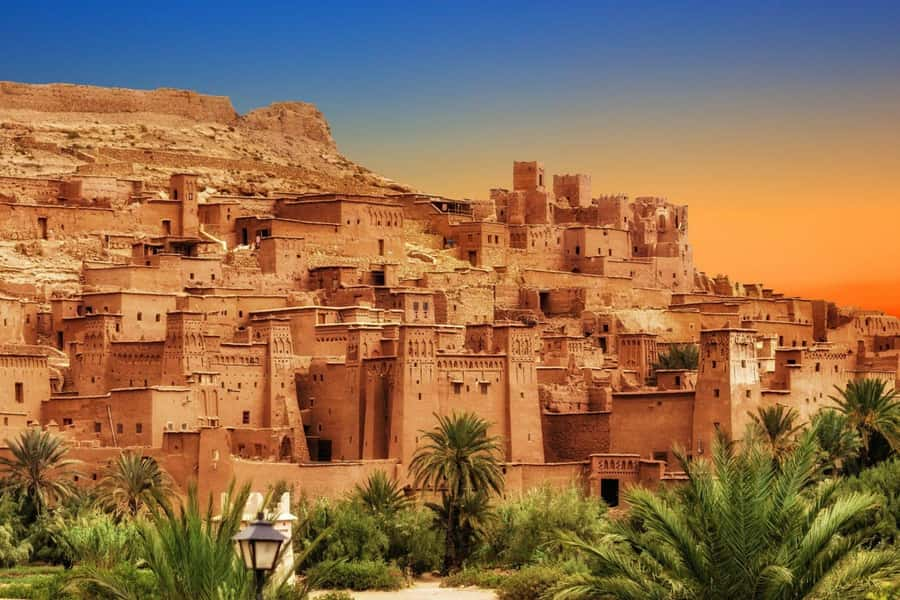
- UNESCO Aït Ben Haddou Kasbah: you get more than photos, you’ll learn how the fortified town is laid out.
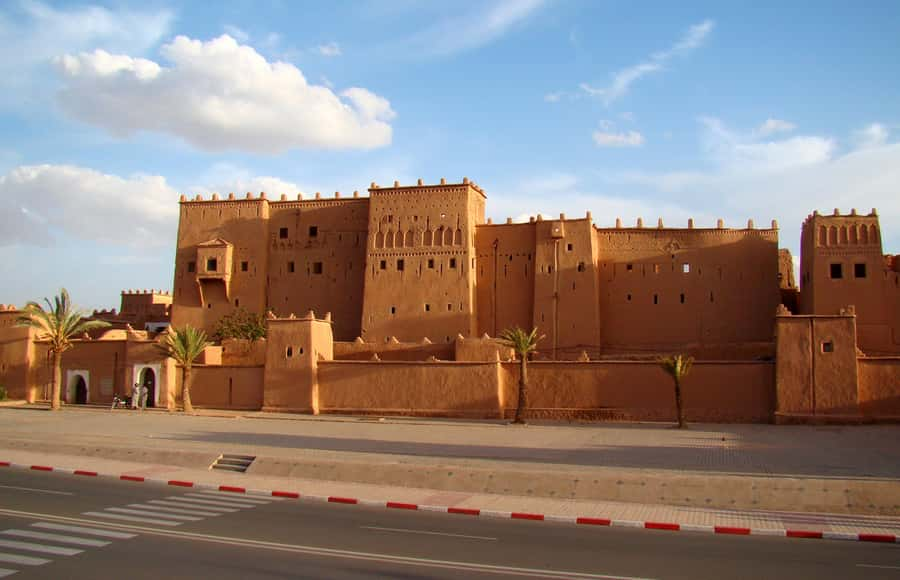
- Taourirt’s Kasbah in Ouarzazate: a classic 17th-century structure that shows how local power and design worked.
- Cinema Museum and studio stops: you see why this area became a go-to filming location.
- Mint tea and Atlas valley time: a chance to slow down between the main monuments.
- A private-group feel: your pace, pickup location, and stops tend to feel more tailored than a big bus.
Why the Marrakech to Ouarzazate route feels like a movie set
This trip is built around one idea: Morocco’s southern scenery changes fast, and the roads let you see that shift in a single day. You start in Marrakech, then you head through the High Atlas before you cross Tizi n’Tichka, and eventually you arrive in Ouarzazate, a place long associated with international film production.
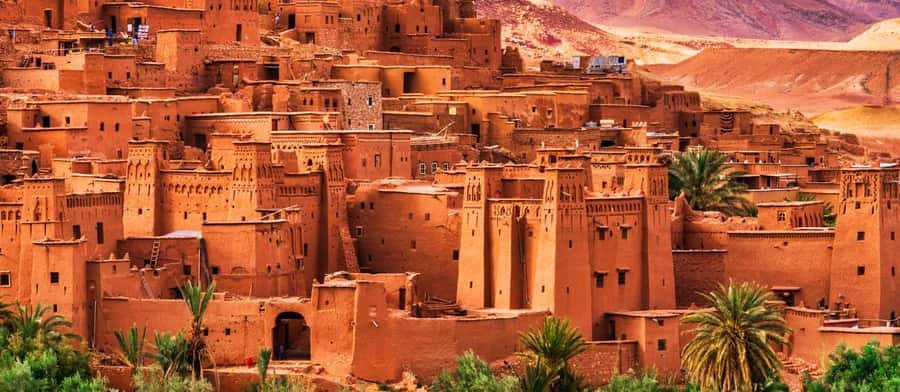
That matters because the region looks good in a frame, but it also reads like a real living landscape. Kasbahs are not random ruins dropped into the sand, they’re linked to water, agriculture, and protection. Once you learn that fortified cities were practical tools, Aït Ben Haddou stops feeling like a postcard and starts feeling like a system that made sense.
The Hollywood connection is fun, but the real value is that you get two lenses at once: the artistic one (how filmmakers use the area) and the cultural one (how people historically built and used these spaces). It’s also a smart way to experience a lot without the hassle of sorting transport, timing, and local guides on your own.
Further along the kasbah road
- From Marrakech: Day Trip to Ouarzazate and Ait Benhaddou
★ 4.7 · 9,447 reviews - From Marrakech: Ouarzazate & Ait Benhaddou Guided Day Trip
★ 4.9 · 3,829 reviews - From Marrakech: 2-Day Sahara Tour to Zagora & Ait Ben Haddou
★ 4.4 · 1,925 reviews - Marrakech/Ouarzazate: 2-Day Desert with Camel, 4×4 & Meals
★ 4.6 · 926 reviews
Price and value: what $141 per person buys you
At $141 per person for a 12-hour day, the value depends on what you’d otherwise have to arrange yourself. This price includes the essentials that usually add up on day trips: hotel pickup and drop-off, a professional driver/guide, and transport by air-conditioned minivan or 4-wheel drive, plus fuel and bottled water during the ride.
It also includes a local guide for the UNESCO visit to Aït Ben Haddou, which is important. Entrance fees and lunch are not included, so you’ll still budget for those, but having a local guide at the main heritage stop is often the difference between a quick look and a meaningful visit.
If you are traveling with someone else, the “private group” aspect can also feel like a better deal than it looks at first glance. You are paying for speed and stress reduction: fewer logistics, fewer transfer problems, and a driver who can keep the day moving.
If you only care about the final photo location and you’re comfortable driving and navigating independently, you might find cheaper options. But for most people, the included transport, guidance, and long-distance comfort are what make this day trip worth it.
Early start to Marrakech hotel pickup, then settle in for the road
Expect an early departure. The tour leaves from your accommodation in Marrakech and picks you up from the old town area and the closest available parking in the medina. That detail matters because medina streets are not always friendly to big vehicles, so pickup location can shape how smooth your morning feels.
You’ll ride in an air-conditioned minivan or 4-wheel drive. For a long day with multiple turns, stops, and altitude changes, that comfort isn’t a luxury. It’s practical. The vehicle also makes the pass and the long stretches feel more manageable, especially if you don’t want to worry about parking, route planning, or road timing.
Bring layers if you can. Even though you’ll be in warm Morocco most of the day, high-altitude driving can feel cooler than you expect, and you’ll be switching between sun and shade. Also bring something small to keep you hydrated, because you get mineral water during the trip, but you’ll likely want to sip throughout.
Climbing the High Atlas via Tizi n’Tichka Pass (2,260 meters)
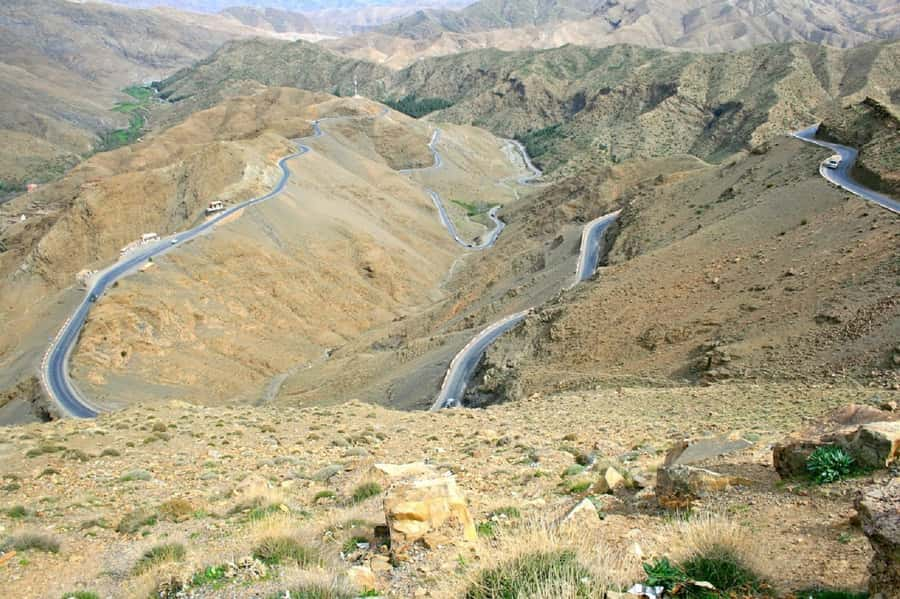
The star of the drive is the Tizi n’Tichka Pass, listed at 2,260 meters, the highest road crossing in Morocco. That’s not just trivia. It affects what you feel in the car: the air can feel sharper, the light changes quickly, and the views keep expanding as you climb.
This is also where the drive earns its keep. The route connects Marrakech to the southern Saharan regions, and Ouarzazate becomes the natural crossroads town. So instead of treating the pass like a mere transfer, the day frames it as part of the experience.
What you’ll likely notice:
- Switchback scenery that keeps shifting angle as you gain height
- Views that open up as the road climbs
- A sense of distance, because you are traveling from lush mountain zones toward the drier southern side of Morocco
Practical tip: sunglasses help a lot here. The sun hits the road and the rock surfaces hard, and you’ll want your eyes to stay comfortable. If you get car-sick, ask about sitting positions before you leave, and consider bringing motion-sickness basics.
Aït Ben Haddou UNESCO Kasbah: how to make the most of the walking
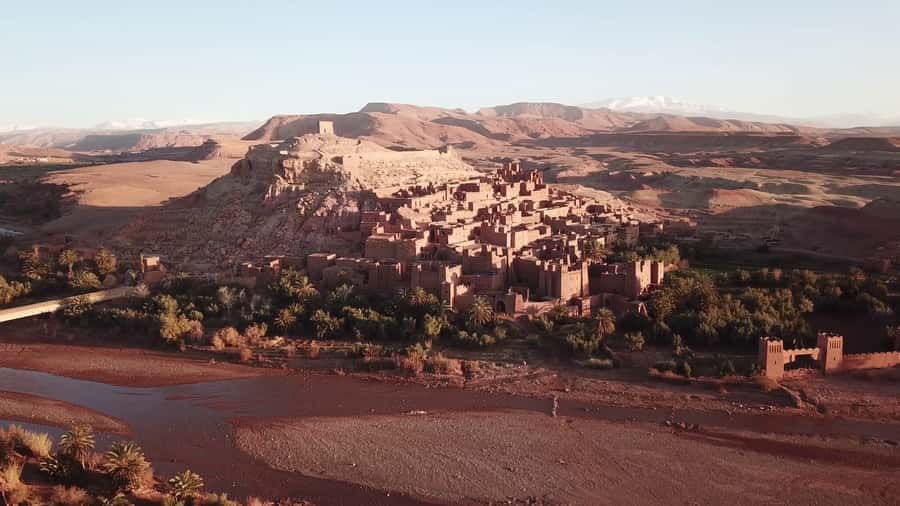
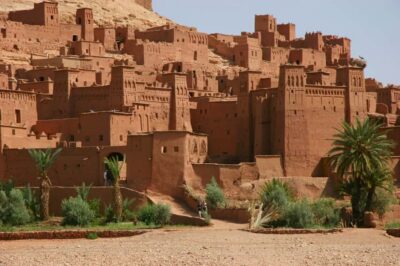
Aït Ben Haddou is a UNESCO World Heritage Site, and it’s easy to see why it became a film favorite. The kasbah is a fortified village type of architecture, with walls and design meant to help the community defend itself and organize daily life.
This stop is usually the emotional anchor of the day. It’s a place where scale and materials matter. Kasbah walls, narrow passages, and the way spaces are arranged can be hard to understand in photos. On foot, you start to get the logic: where people might move, where they might gather, and how the settlement holds together visually.
The tour also includes a local guide specifically for the UNESCO visit. That’s your advantage, because the guide can explain what you’re seeing in plain terms instead of leaving you with vague “it’s old” answers.
Film-fan trivia can be fun here too, but treat it like a bonus layer: Aït Ben Haddou has appeared as a backdrop for films including Lawrence of Arabia, The Mummy, Gladiator, Babel, and many others listed in the tour’s context. Knowing that can help you recognize why the angles and textures work on screen.
One caution: the tour notes a walking tour at Aït Ben Haddou, so wear shoes that can handle uneven ground and a bit of climbing. The advice is sports shoes for the walking tour. You’ll be glad you did not choose sneakers with no grip or flimsy soles.
Taourirt’s Kasbah and the Cinema Museum in Ouarzazate
After the pass and Aït Ben Haddou, the day shifts gears. Ouarzazate has that in-between feeling, not quite desert town, not quite mountain city. It’s built around caravan-era routes, and later it became a film base because the scenery offers lots of “worlds” without requiring travel between continents.
Your next heritage stop is Taourirt’s Kasbah, described as built in the 17th century. A kasbah like this isn’t just about exterior walls, it’s about how architecture stacks power into space. When you look closely, you can start to see how a fortress can also function like a home, a storage area, and a political statement all at once.
Then comes the cinema museum, a practical way to connect the dots between what you saw at Aït Ben Haddou and what you are about to see in Ouarzazate. Even if you’re not a movie buff, it helps you understand the behind-the-scenes side: location scouting, set design choices, and why the region’s textures work so well for filmmakers.
This is also where the day becomes a “two-track” experience. You’re not just learning about local culture and history, you’re also learning how international productions borrow the region’s visual identity.
Studio time and mint tea in the Atlas valley
In Ouarzazate, you’ll visit the cinema studios, then you’ll have lunch at a local restaurant. Lunch is not included, so plan on budgeting for it, and if you have food allergies, you’ll want to communicate carefully once you’re there. After lunch, the tour provides free time that you can use for a mint tea and to enjoy views of the green valley and High Atlas peaks.
That free time is not filler. It’s a way to reset after heritage walking and studio viewing. It also lets you look at the terrain without the pressure of a guide pointing out the next stop.
In this Atlas-to-Sahara transition zone, the idea is that kasbahs and small settlements cluster where water and crops allow life to continue. The tour description emphasizes how Berber villages use water from the Atlas to support small agriculture and animals, with kasbahs forming part of that system. Even if you only spend a short time looking, it helps you interpret what you see.
Practical tip: use the free time to drink water, cool down, and take a breath. The day ends with the drive back to Marrakech, so you want to arrive in the late afternoon without feeling wiped out.
Timing, comfort, and what to pack for a smooth 12-hour day
This is a full-day outing, listed at 12 hours, so you should plan your comfort strategy like you would for a road trip, not a city stroll.
Bring:
- Comfortable shoes (and ideally sports shoes for the Aït Ben Haddou walking)
- Sunglasses for the bright road and pass views
- A sun hat for sun-heavy outdoor time
- Water snacks if you personally like having extra between stops (water is included, lunch is not)
You might want to pack light layers too. High Atlas driving can shift temperatures, and you’ll be in a vehicle with air-conditioning.
Know the limits:
- The tour is not suitable for people with mobility impairments, likely because of the walking at Aït Ben Haddou and uneven kasbah ground.
- Pets are not allowed.
For many people, the biggest discomfort is not the walking itself, it’s the long day. So choose your mental pace. Expect to do less, see more, and enjoy the ride.
Who this tour suits best, and who should skip it
This day trip is a strong fit if you want:
- One organized day that combines UNESCO heritage with film-related sights
- A comfortable way to cross the High Atlas without arranging your own transport
- A private-group feel, where pickup and pacing feel smoother than large group tours
It’s also a good choice if you like learning something practical. The kasbahs are not only photogenic, they also teach you how fortified architecture relates to water, community life, and protection.
Skip it or reconsider if:
- You hate long car days and prefer short, low-movement sightseeing
- You need barrier-free access, because the kasbah walking is not described as suitable for mobility impairments
- You want a long, slow lunch and lots of roaming at your own pace, since the day is structured around key stops
Should you book this Marrakech to Ouarzazate kasbah and cinema tour?
I’d book it if you’re the type of traveler who likes connections. This tour links the mountain drive, the UNESCO fortified city, and the movie studio world into one coherent story. If you want the practical advantage of pickup, air-conditioned transport, and a local guide at Aït Ben Haddou, it saves you time and reduces stress.
I’d think twice if you’re sensitive to road time or you’re expecting a leisurely half-day. This is a 12-hour commitment, with a walking component and plenty of sun.
If you fit the “see a lot, learn as you go, travel comfortably” profile, this is a very solid day trip value for Morocco’s south.
FAQ
How long is the Marrakech to UNESCO kasbahs and Ouarzazate tour?
It runs for about 12 hours.
What is included in the price, and what is not?
Included are a professional driver/guide, hotel pickup and drop-off, air-conditioned minivan or 4-wheel drive, fuel, mineral water during the trip, and a local guide for the UNESCO Kasbah visit. Entrance fees and lunch are not included.
Do I need to pay for Aït Ben Haddou entrance?
Entrance fees are not included, so you should expect to pay them separately.
What languages is the live guide available in?
The live tour guide is available in English and French.
Where are you picking people up in Marrakech?
Pickup is included from your hotel in the old town and from the closest parking spot in the medina.
Is lunch provided during the tour?
Lunch is not included.
Is this tour suitable for people with mobility impairments?
No, it is not suitable for people with mobility impairments.
What should I bring and wear?
Bring comfortable shoes, sunglasses, and a sun hat. You are also advised to bring sports shoes for the walking tour at Aït Ben Haddou.
Along the Kasbah Road
- From Marrakech: Day Trip to Ouarzazate and Ait Benhaddou★ 4.7 · 9,447 reviews
- From Marrakech: Ouarzazate & Ait Benhaddou Guided Day Trip★ 4.9 · 3,829 reviews
- From Marrakech: 2-Day Sahara Tour to Zagora & Ait Ben Haddou★ 4.4 · 1,925 reviews
- Marrakech/Ouarzazate: 2-Day Desert with Camel, 4×4 & Meals★ 4.6 · 926 reviews
Added recently from around Marrakesh

More Ouarzazate, Ait Ben Haddou and the Kasbah Road worth a look.
 ★ 4.7From Marrakech: Day Trip to Ouarzazate and Ait BenhaddouFrom $219,447 reviews
 ★ 4.9From Marrakech: Ouarzazate & Ait Benhaddou Guided Day TripFrom $203,829 reviews
 ★ 4.4From Marrakech: 2-Day Sahara Tour to Zagora & Ait Ben HaddouFrom $841,925 reviews
 ★ 4.5Ouarzazate One Day Trip from MarrakechFrom $281,817 reviews
 ★ 4.6Marrakech/Ouarzazate: 2-Day Desert with Camel, 4×4 & MealsFrom $99926 reviews
 ★ 4.8From Marrakech: Ouarzazate, Ait Ben Haddou & Atlas StudiosFrom $30869 reviews
 ★ 4.6From Marrakech: Ait Benhaddou and Atlas Mountains Day TripFrom $75476 reviews
★ 4.7From Marrakech: Ouarzazate & Ait Benhaddou Guided Day TripFrom $26461 reviews
Where else this one sits