
REVIEW · MOROCCO
Marrakech: Cultural Bicycle Tour with Pastry and Tea
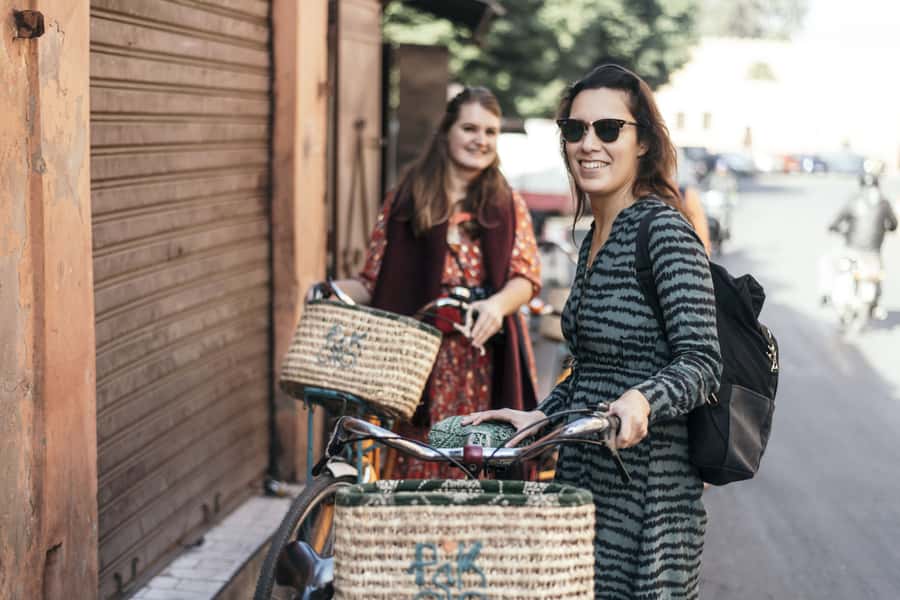
Bike through Marrakech, past the postcards. In three hours you get a local-led circuit that mixes clay-oven bread with zellige tiles, plus hammam culture and palace gardens.
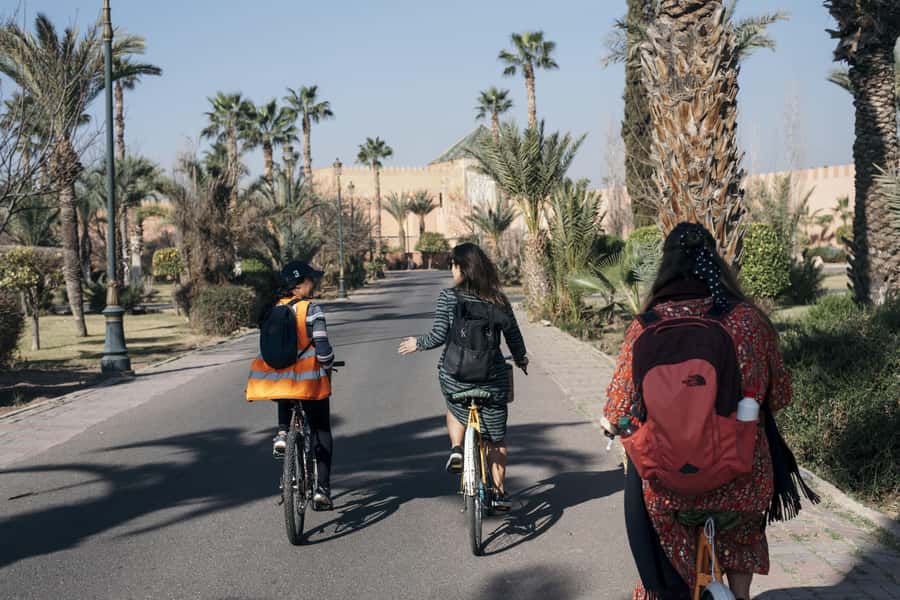
I especially love the way this ride points you toward everyday Morocco, not just the famous backdrops. I also like the social angle, since the guides are trained Moroccan youth who explain daily life as they ride with you, like Ayoub, Rabab, Hamid, Khalil, and Yassir.
The one real consideration is skill and nerve: the first stretch through narrow lanes can feel intense, so you need to be road-aware and a confident cyclist. Marrakech traffic is organized chaos, and you will share space with mopeds, carts, and pedestrians.
In This Review
- Key things I’d clock before you go
- Why this 3-hour Marrakech bike ride feels different
- Starting at Pikala Bikes, getting your bearings fast
- Bread in a clay oven: why this stop hits harder than you expect
- Zawiya of Sidi Bel Abbas: photo-stop history in a small window
- Zellige tiles in the real workshop: craft that looks like magic
- Royal Palace gardens, Dar El-Makhzen: architecture seen from public space
- Hammam tradition: the social side of a public bathhouse
- Place des Ferblantiers and مشور البراني: breaks that feel like the city
- Koutoubia Mosque and the Church of the Holy Martyrs: two faiths, one route
- Pushing through Marrakech traffic, the skill factor you should respect
- From the old medina to Gueliz and Hivernage: the modern side of Marrakech
- Pikala Cafe: pastry, mint tea, and the end-of-ride reward
- Price and value at $34 for 3 hours
- Who should book this tour, and who might skip it
- Should you book it?
- FAQ
- How long is the Marrakech Cultural Bicycle Tour with Pastry and Tea?
- Where is the meeting point?
- Is hotel pickup included?
- What is included in the tour price?
- What languages are the guides?
- Do I need to be a confident cyclist?
- Is there free cancellation?
Key things I’d clock before you go
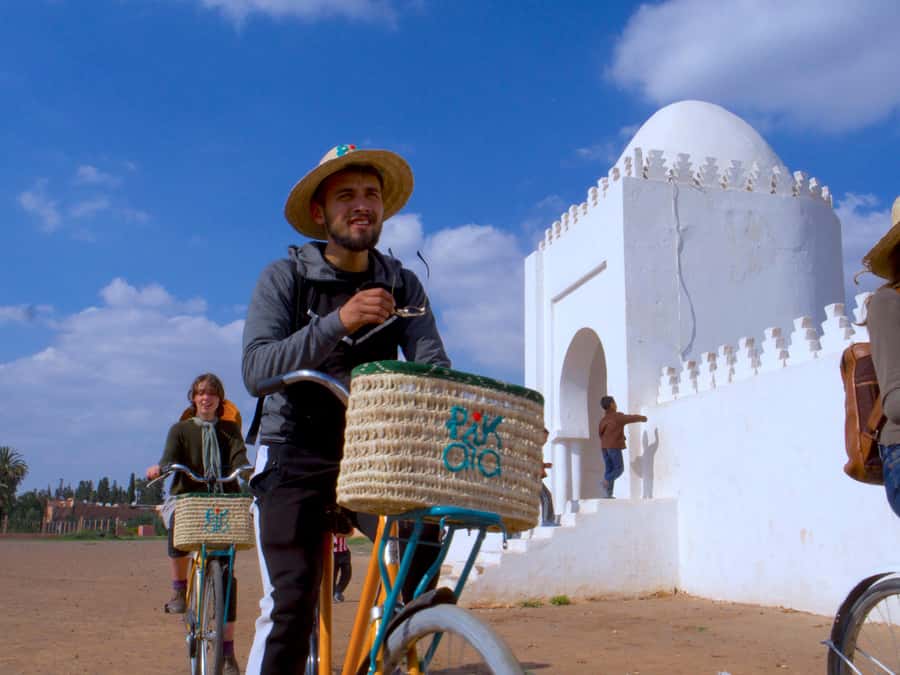
- Clay-oven bakery time where bread is more than fuel, it is culture
- Zellige tile workshop meeting artisans and learning the craft behind Morocco’s mosaics
- Dar El-Makhzen gardens from outside for a royal vibe without needing special access
- Hammam traditions explained as social ritual, not just a stop on a checklist
- Old Medina to modern boulevards riding into Gueliz and Hivernage for contrast
- Pastries, mint tea, and coffee included so you end the ride happy, not hangry
Why this 3-hour Marrakech bike ride feels different
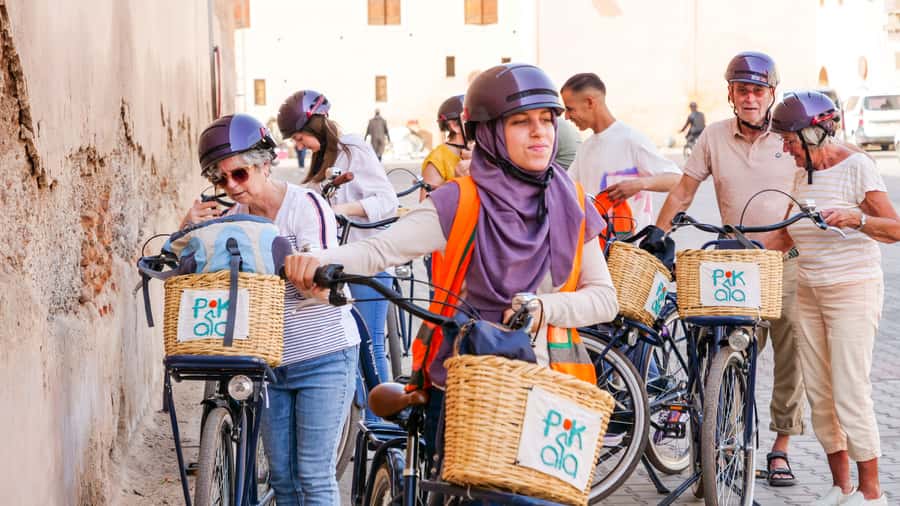
Marrakech can be overwhelming at street level. This tour is built to slow you down in the right way, with a bike route that keeps moving but still gives you time at each stop. You trade the usual “see it, snap it, leave it” rhythm for conversations about how people live, work, pray, and snack.
You also get a nice range in a short window. One part of the tour focuses on Morocco’s craft traditions, from bread to mosaics. Another part shows the city’s modern side with wider streets and cafés, so you see Marrakech as a living place, not only a museum.
And there’s a practical bonus: at 3 hours, it fits easily into a busy arrival day or a morning planning session, before the heat and crowds fully take over.
Weighing the options? These are the Marrakesh trips readers open next.
- Marrakech: Agafay Desert Sunset, Camel Ride, and Dinner Show
★ 4.6 · 35,119 reviews - From Marrakech: Ouzoud Waterfalls Guided Hike and Boat Trip
★ 4.7 · 33,630 reviews - Marrakech: Agafay Desert Quad & Camel Rides with Dinner Show
★ 4.8 · 27,382 reviews - Marrakech: Agafay Desert Quad Biking Tour with Dinner-Show
★ 4.8 · 16,569 reviews
Starting at Pikala Bikes, getting your bearings fast
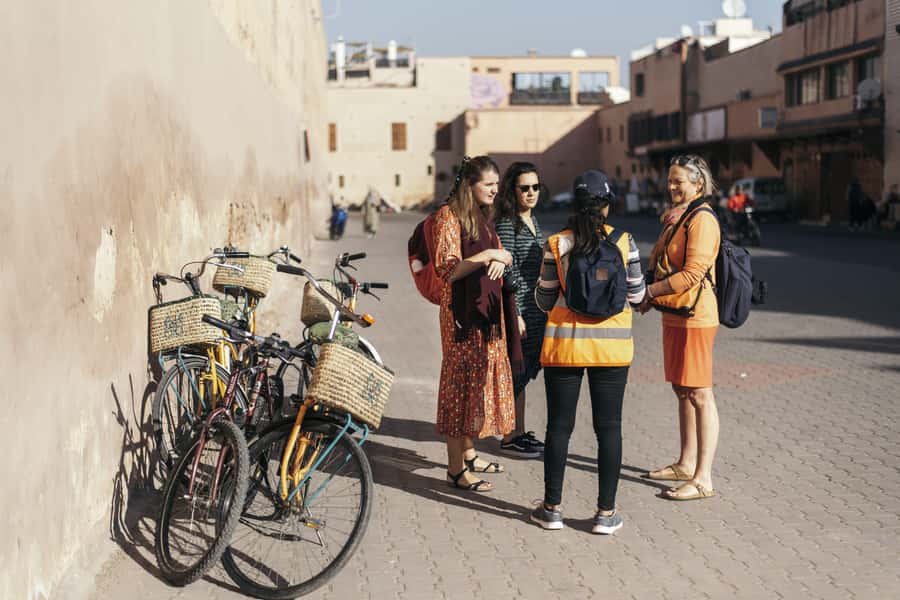
Your ride starts at Pikala Bikes headquarter. This matters because it sets the tone: you are not just dropped into the medina and told to figure it out. You meet up with the crew, get your bike sorted, and then you head toward the first historic stops.
A few details that show up again and again in people’s experience:
- The bikes are solid and can feel a bit heavy when you first push off
- The saddles are described as comfortable, which helps when you are negotiating stop-and-go streets
- Your guides actively manage the group, including keeping everyone together for crossings
It is also worth knowing that cycling in the medina is not speed cycling. You are riding flat terrain with regular short pauses, so the main challenge is awareness: watching for mopeds, pedestrians, and carts, and adjusting your line without panicking.
If you are anxious, you can handle it. Go slow the first 15 to 30 minutes. Once you see how the group moves, you start to relax into it.
Bread in a clay oven: why this stop hits harder than you expect
One of the most memorable parts is the traditional bakery visit. You step inside a local place, watch bread baked in a clay oven, and then taste fresh Moroccan bread.
What I love about this stop is that it is not a “food selfie” moment. Bread here is daily life. It shows up at home, in routines, and in the rhythm of the neighborhood. When your guide talks about why bread matters culturally, the smell of hot dough stops being just a nice background detail and becomes the whole point.
And yes, you also get real food value. The tour includes water and fruits, and later you get juices plus Moroccan pastries. That makes the bread tasting feel like a planned part of the journey, not a random snack you pay for separately.
Zawiya of Sidi Bel Abbas: photo-stop history in a small window
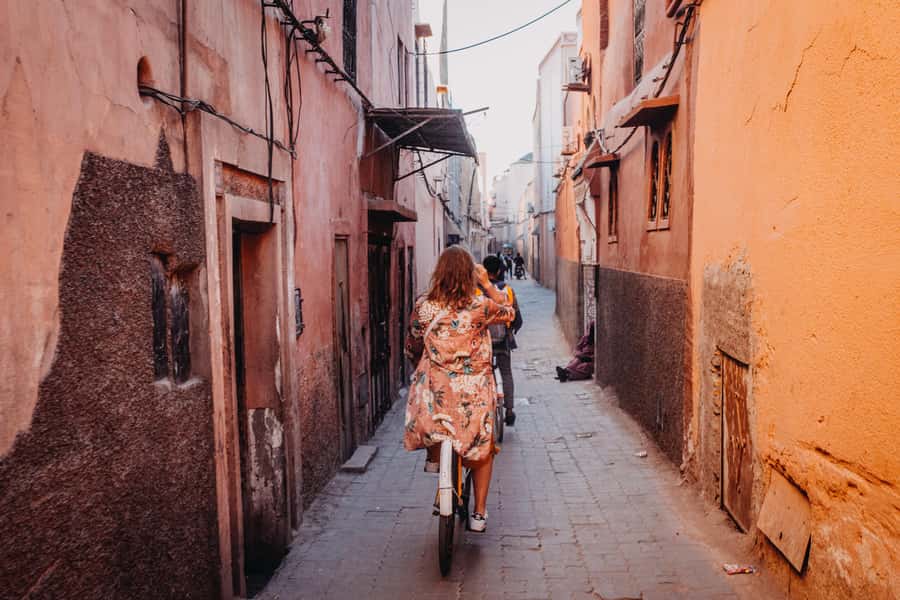
Early on, you stop at the Zawiya of Sidi Bel Abbas for about 15 minutes. This is built for quick orientation: photos, a look around, and then back on the bike.
These kinds of stops are useful because they train your eye. You start noticing how religious spaces sit inside the street fabric, how walls, doorways, and courtyards shape movement, and how people live close to landmark architecture. You do not need a museum ticket to feel the city’s layers.
One caution: in these older areas, walkways can narrow and people can bunch up. Stay alert, listen for your guide’s cues, and be ready to stop if the street gets crowded.
Zellige tiles in the real workshop: craft that looks like magic
Moroccan zellige is famous for a reason. On this tour, you meet artisans and see firsthand how the tiles are made, along with the art and history behind them.
This is one of the stops I’d prioritize if you want to understand what you are seeing later in Marrakech. When you see how zellige patterns are formed and how artisans keep the tradition alive, those geometric walls in palaces and mosques stop looking like decoration and start looking like engineering plus artistry.
It is also a great contrast to the bakery. Bread is daily comfort you eat. Zellige is daily beauty you live with at the scale of architecture. Together, they give you a fuller picture of Moroccan craftsmanship.
Practical note: workshop stops can involve small spaces. Wear clothes that let you move comfortably, and keep an eye on your bike when the group forms up.
Royal Palace gardens, Dar El-Makhzen: architecture seen from public space
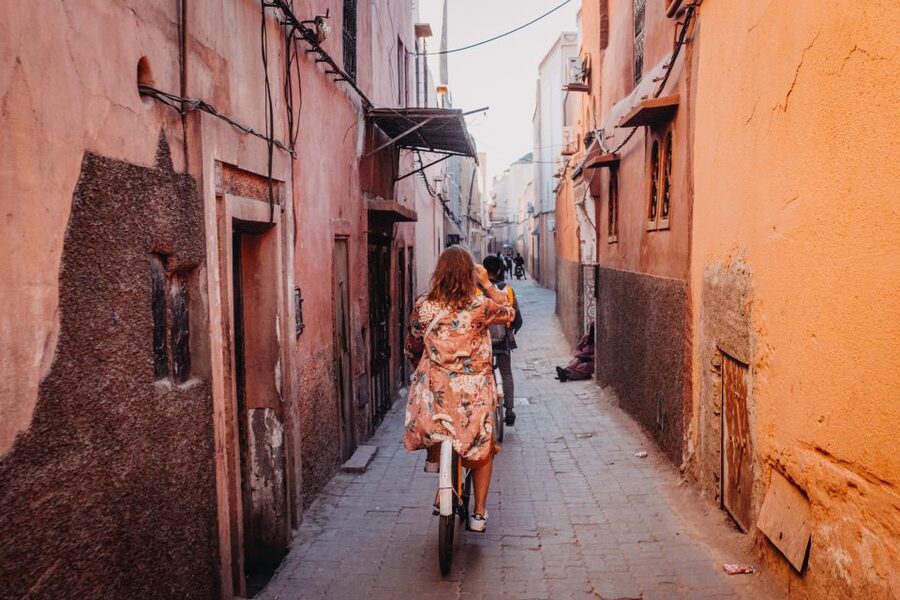
You also admire the Royal Palace area by passing by the public gardens surrounding Dar El-Makhzen. You do not need to go inside to feel the impact. From the outside, you get a sense of the scale, layout, and formal style that signals royal importance.
This is a smart approach for travelers who want context without extra stress. It gives you a connection to Morocco’s monarchy and history through visible architecture and your guide’s explanation, while keeping the tour rhythm moving.
Also, gardens are a nice mental reset. If you have been in tight alleyways, this kind of open space makes the rest of the bike ride feel easier.
Hammam tradition: the social side of a public bathhouse
Another culture highlight is a traditional hammam visit. The focus is on rituals, traditions, and the social role hammam plays in daily Moroccan life.
The value here is how your guide frames it. A hammam is not only about bathing. It is a community rhythm, a place where routine and social life overlap. Learning that context changes how you interpret what you are seeing, even if you only experience part of the setting.
What to do before you go: wear comfortable, casual clothes and follow your guide’s instructions. If you are unsure about what to bring, you might want to ask ahead of time, but the tour info you have here emphasizes casual clothing and comfort.
Place des Ferblantiers and مشور البراني: breaks that feel like the city
You get breaks with free time at Place des Ferblantiers (around 20 minutes) and at مشور البراني (about 15 minutes). These stops are where the tour breathes, and where you can actually feel the everyday pace of Marrakech.
Place des Ferblantiers is a good example of the tour’s approach: scenic views on the way, then a pause long enough to stretch your legs, regroup, and take in the street life around you. It also helps your cycling mind. When you cycle through dense areas, your attention stays high. Breaks let you come back to the street with better focus.
For مشور البراني, the same idea applies, plus photo opportunities. If you like pictures, these minutes matter because they give you breathing room to step off and look around without rushing back to the pedals.
Koutoubia Mosque and the Church of the Holy Martyrs: two faiths, one route
You pass by Koutoubia Mosque for sightseeing (about 10 minutes). Even from the outside, Koutoubia is a visual anchor in the city. This stop gives you landmark perspective without turning the tour into a long walk.
Later, you have a photo stop connected to the Church of the Holy Martyrs. You also get scenic views on the way for about 10 minutes. I like these kinds of mixed landmarks because they remind you Marrakech is not one-note. It is a layered city where different communities have shaped the urban landscape.
Keep your expectations realistic: these are quick stops, not full guided religious lectures. You are on a bike route, so the goal is orientation and context, then back to the street.
Pushing through Marrakech traffic, the skill factor you should respect
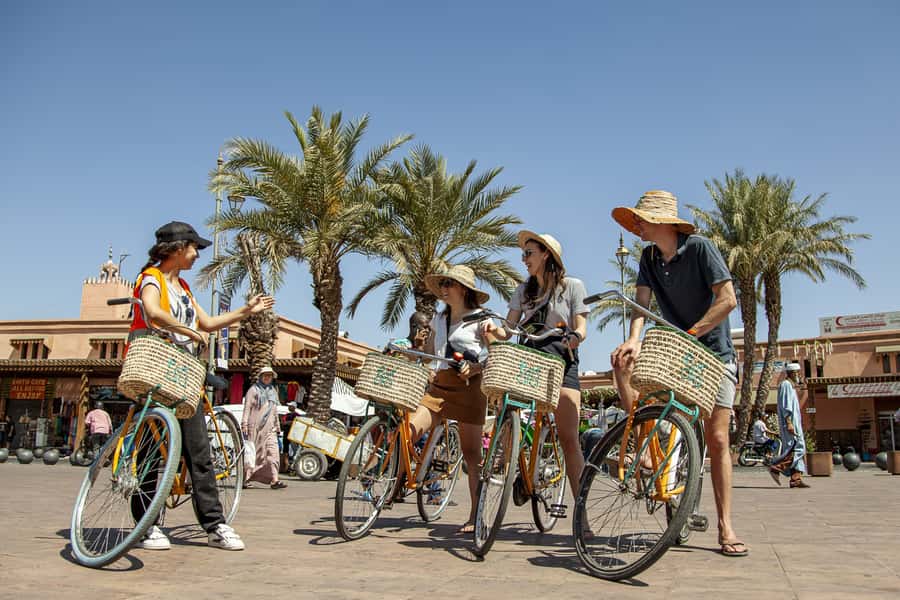
Let me say the quiet part out loud: the ride through medina streets can be a bit hairy at first. People specifically note the need for road awareness and confident cycling. You share space with mopeds, donkeys, cart traffic, and pedestrians who do not follow our traffic rules.
Here is how to make it work without stress:
- Start slow for the first hour. It is where most people feel the jolt
- Keep your line predictable. Sudden moves confuse everyone
- Watch for your guide’s signals and keep your distance from the rider ahead
The good news is that the guides are attentive about keeping the group safe and together. People mention guides turning around to check everyone is there, and making sure crossings happen as a unit.
If you are a brand-new cyclist, consider building confidence first, or look for a different style of tour. If you can ride steadily and you can stay calm in crowded streets, you will likely have a blast.
From the old medina to Gueliz and Hivernage: the modern side of Marrakech
After you’ve absorbed the older layers, you cycle through modern Marrakech, often described as Gueliz and Hivernage. This is the contrast section: wide boulevards, trendier cafés, and luxury hotels.
I like this part because it stops Marrakech from feeling like a set of scenes. It shows you how the city functions when it is not focused on tourism. You start connecting the dots between old neighborhoods and modern life, and that helps your next day make more sense.
This is also where your confidence can climb. After medina narrow lanes, wider roads feel like a relief. Still, stay attentive, especially around intersections.
Pikala Cafe: pastry, mint tea, and the end-of-ride reward
At the end, you roll back to Pikala and then head to Pikala Cafe for coffee or tea and local snacks. You get about 20 minutes here.
This stop is more than an afterthought. It is your chance to compare what you just learned about bread, mosaics, and hammam culture with what you taste. It also gives you time to ask questions while you are not moving.
People also mention enjoying spiced cookies and mint lemonade, which makes this feel like a real break in the middle of the day rather than a token treat.
Price and value at $34 for 3 hours
At $34 per person for a roughly 3-hour cultural bicycle tour, you are paying for three things at once:
- A guided route that takes you off the usual tourist loops
- Multiple culture stops with built-in access, including free entrances to local locations
- Included refreshments, like water and fruits, juices, Moroccan pastries, and tea or coffee at Pikala Cafe
You also get something harder to measure: local insight. The social mission of training Moroccan youth shows up in the way guides explain the city as everyday life, not only as old buildings.
So for many visitors, this feels like a good deal because it compresses several “learning moments” into one outing and keeps costs down on things you would otherwise pay for separately.
Who should book this tour, and who might skip it
This tour is a great fit if you want:
- A short, high-value introduction to Marrakech
- Culture stops beyond the busiest souk strip
- A fun, guided way to learn how the city works at street level
- Enough confidence to ride safely with traffic and crowds
It might not be your best match if:
- You are not comfortable cycling in crowded areas
- You hate feeling like you must constantly pay attention to vehicles and pedestrians
- You cannot manage changing directions quickly in tight lanes
If you are unsure, ask yourself one question: can you ride at a steady pace while staying calm in chaos? If yes, you will probably love it.
Should you book it?
I’d book this if you want an active morning that teaches you how Marrakech works day to day. The bread-in-a-clay-oven moment, the zellige craft, the hammam cultural framing, and the blend of medina and modern streets make it feel more like a guided walk with extra motion.
Skip it if you need a slow, car-free sightseeing day. This ride is not difficult by distance, but it does ask for confidence on the roads.
If you do book, pack light, wear comfortable casual clothing (watch long skirts or dresses), and go into the first hour with a calm mindset. You’ll be rewarded with the kind of Marrakech you cannot get from standing still.
FAQ
How long is the Marrakech Cultural Bicycle Tour with Pastry and Tea?
The tour lasts 3 hours.
Where is the meeting point?
You meet at the Pikala Bikes headquarter.
Is hotel pickup included?
No, hotel pickup and drop-off are not included.
What is included in the tour price?
Water and fruits are included. The tour also includes juices and Moroccan pastries at a cultural cafe, sunscreen, and free entrance to the local stops.
What languages are the guides?
The live tour guide is available in English and French.
Do I need to be a confident cyclist?
The route includes narrow alleys and busy streets, so you should be confident and road-aware, especially during the first part of the ride through the medina.
Is there free cancellation?
Yes. You can cancel up to 24 hours in advance for a full refund.
Added recently from around Marrakesh

More Tours worth a look.
 ★ 4.8Marrakech: Agafay Desert Quad Biking Tour with Dinner-ShowFrom $2116,569 reviews
 ★ 4.9From Marrakech: 3-Day Merzouga and Sahara Desert TourFrom $13415,308 reviews
 ★ 4.8Marrakech: Quad Bike Tour to Palm Oasis and Jbilat DesertFrom $1511,831 reviews
 ★ 5.03 Days Desert Tour From Marrakech To Merzouga Dunes & Camel TrekFrom $11510,125 reviews
 ★ 4.6From Marrakech: Ouzoud Waterfalls Guided Tour & Boat RideFrom $189,802 reviews
 ★ 5.03-Day Marrakech to Merzouga Desert Tour: Camel Rides & OvernightsFrom $1158,734 reviews
 ★ 4.8Marrakesh: Desert & Mountain Tour with Camel Ride & LunchFrom $227,513 reviews
 ★ 5.03-Day Marrakech to Fes Sahara Desert Tour via MerzougaFrom $2206,546 reviews