
REVIEW · MARRAKECH
Marrakech City Tour a walking adventure
Marrakech makes more sense on foot. This 4-hour city walk strings together the big-name sights and the everyday neighborhoods of the Medina, with a licensed guide who shares what you are actually looking at, not just dates on a sign. I like that the group pace keeps you moving, but still gives you time to ask questions and connect the dots between landmarks.
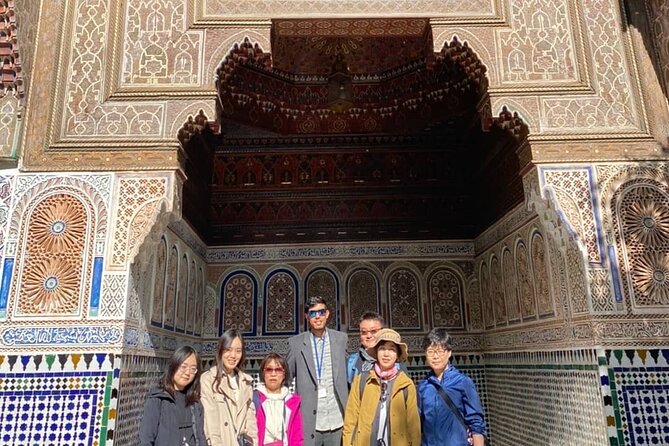
I also love that the route covers different sides of Marrakech, from Mellah (the historic Jewish quarter) to Ben Youssef (a 14th-century school with more than 100 rooms). One thing to plan for, though, is cost of entries: Bahia Palace and Ben Youssef Madrasa are not included, so budget extra on top of the $26 tour price.
In This Review
- Key things to know before you start
- Why this 4-hour walking format works in Marrakech
- Price and value: what you pay, what you get, what you add
- Meeting at Koutoubia: the easy start that helps you orient
- Kasbah Mosque area on the way to Bahia Palace
- Mellah: understanding Marrakech’s Jewish quarter in one focused stop
- Bahia Palace: the interior experience you should plan to pay for
- Souk Semmarine: artisans and the food market part of the old Medina
- Medersa Ben Youssef: 14th-century learning, scale, and the courtyard centerpiece
- Jemaa el-Fnaa at the end: UNESCO-listed street energy with snake charmers and monkeys
- The guide experience: why Said’s approach elevates the whole walk
- Practical tips to get the most from this walking route
- Who should book this tour
- Should you book this Marrakech City Tour a Walking Adventure?
Key things to know before you start
- Small group size (max 15) makes it easier to keep up and get answers as you walk.
- Multiple free stops (Koutoubia area, Mellah square, Souk Semmarine, Jemaa el-Fnaa) help you see a lot without extra tickets.
- Two major paid sights are the only real add-on costs: Bahia Palace and Ben Youssef Madrasa.
- A 12th-century to 14th-century timeline shows up through Koutoubia, the Kasbah Mosque area, and Ben Youssef.
- Jemaa el-Fnaa ends the tour at UNESCO-listed street theater with snake charmers and monkeys.
Why this 4-hour walking format works in Marrakech
Marrakech is one of those cities where a map alone can’t teach you the logic of the streets. This tour is built around walking, with short, focused stops that help you orient yourself quickly and understand why places matter. You get enough time to actually see what is in front of you, without turning the day into a sprint.
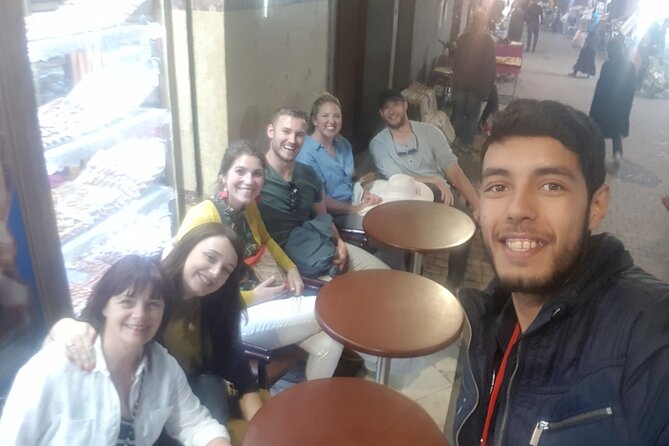
The group stays small, up to 15 people, which I find is the difference between a tour that feels like a lecture and one that feels like a guided street conversation. You are not stuck waiting on the back of the group for every turn, and your guide can respond when you ask something off-script.
And for me, the best part is the pacing of the walk itself. You start with a landmark you can spot from far away, then move into neighborhood layers, then into markets, then finish at Jemaa el-Fnaa. That shape keeps the tour from feeling like a checklist.
More half days across the city
- Marrakech City Tour: Private Custom-Made
★ 4.5 · 596 reviews - Marrakech City Tour by Abdel : Morning & Afternoon Options
★ 5.0 · 332 reviews - Marrakech City Highlights Half-Day Tour
★ 4.5 · 313 reviews - Medina of Marrakech Walking Tour
★ 4.0 · 300 reviews
Price and value: what you pay, what you get, what you add
The tour price is $26 per person for about 4 hours, and it includes a licensed guide who speaks your language. That is the core value here. The guide is what connects Koutoubia, Mellah, the souks, and the palace and madrasa into one story you can carry after the tour.
Most stops are free at the point of viewing, so you are not constantly pulling out tickets. The main extra expenses are the paid entrances:
- Bahia Palace: 100 MAD (not included)
- Medersa Ben Youssef: 50 MAD (not included)
In other words, you are paying a fair amount for the guide and the walking route, then paying entry for the two biggest interior experiences. If you plan to visit Bahia Palace and Ben Youssef anyway, this can feel like a good deal because the rest of the route helps you get your bearings and understand how the sights relate to each other.
Meeting at Koutoubia: the easy start that helps you orient
The tour begins next to Koutoubia Mosque in Marrakech. The timing is about 30 minutes, and the stop is free at the viewing point. This matters because Koutoubia is one of those 12th-century anchors that gives you a real reference point for where you are in the city.
Even if you have seen photos, standing near the mosque with a guide talking through its stories helps you understand what you are looking at. The guide’s job here is practical: help you place the monument in context, so when you move through the winding lanes later, you are not completely lost.
If you prefer tours where the first 10 minutes set the stage instead of rushing straight into crowds, this opening works well.
Kasbah Mosque area on the way to Bahia Palace
From Koutoubia, you continue on foot toward Bahia Palace, and the tour includes a walk-by of the Kasbah Mosque, another historical building dating back to the 12th century.
This is a smart “transition stop.” It gives you a moment to slow down and absorb architecture and place names as you head toward the palace. You also get a sense of neighborhood shifts while you are still fresh, which can make the later souk segment feel more connected rather than random.
Mellah: understanding Marrakech’s Jewish quarter in one focused stop
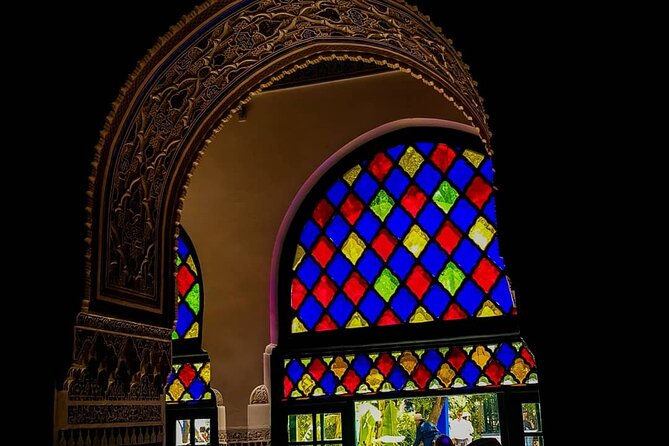
Next comes Mellah, historically the Jewish neighborhood where Jewish people used to live. You spend around 20 minutes with a stop in the main square, and your guide shares facts and stories about the community in Marrakech and Morocco.
What makes this stop valuable is that it broadens Marrakech beyond the classic postcard version. Marrakech is not just one culture layered on top of another. It is multiple communities with their own spaces, traditions, and histories, and Mellah is one of the clearest places to see that.
Because the stop is short, you should arrive ready to listen. Take the names and the storyline your guide provides, and use it to interpret what you pass later in the city. A quick stop can still pay off, as long as the guide gives you a lens.
Bahia Palace: the interior experience you should plan to pay for
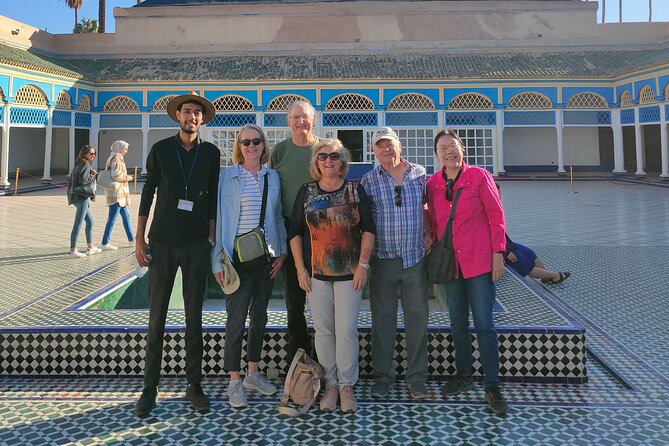
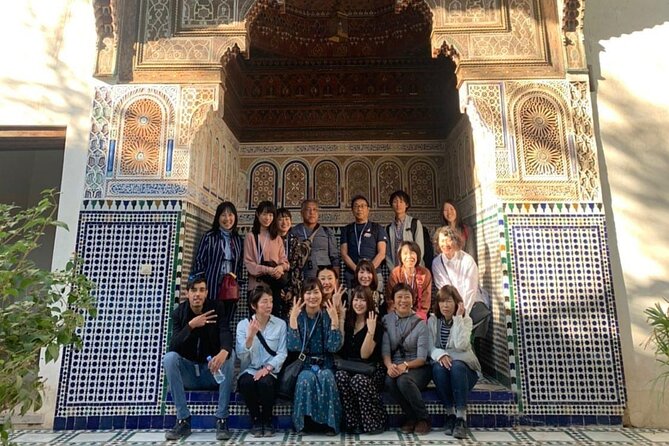
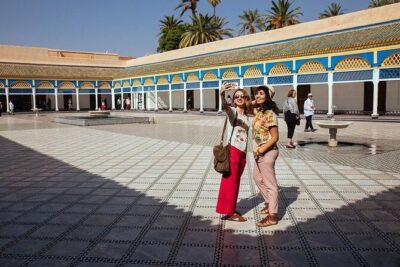
Bahia Palace is one of Marrakech’s standout monuments, and the tour gives you about 50 minutes there. The important detail: entrance is not included, and it costs 100 MAD.
This is the tour’s main “ticketed” highlight, so treat it like the crown jewel of your route. When a tour includes a timed block like this, you know you are not just walking past a wall and hoping for the best. You get enough time to understand the layout and appreciate the palace’s story, without feeling rushed the second you step inside.
Practical tip: if you do not want your budget to get messy, set aside your entrance money before you start. Bahia Palace is the larger entry cost on this itinerary, so plan for that in advance.
Other walks at about this pace

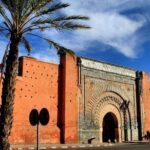
Souk Semmarine: artisans and the food market part of the old Medina
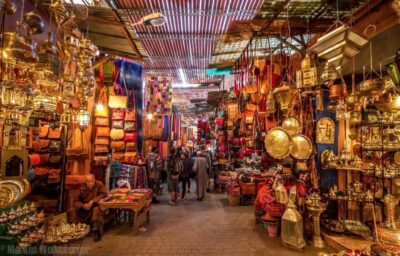
After the palace, you move into Souk Semmarine, spending about 45 minutes walking through the old Medina market. This stop is free at the viewing and walking level, and it focuses on artisans as well as the local food market.
This is where the tour becomes more sensory. You see the working side of the city, not just its monuments. Even if you do not plan to buy anything, it helps to walk through with a guide because you can tell the difference between tourist clutter and real craft zones.
A good way to use this segment: look first, then ask questions if something catches your eye. The guide can help you understand what you are seeing, and that is usually more satisfying than trying to bargain your way through stalls.
Also, markets can be crowded, so keep your pace flexible. The tour works best if you do not fight the flow.
Medersa Ben Youssef: 14th-century learning, scale, and the courtyard centerpiece
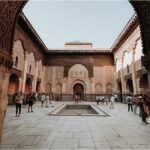
The tour then heads to Medersa Ben Youssef, a 14th-century school. It is timed at about 30 minutes, and entrance is not included. The entry fee is 50 MAD.
What makes Ben Youssef especially compelling is the scale your guide highlights: it was once the largest Islamic school in North Africa, with more than 100 rooms, plus a mosque and a fountain in the middle. That combination of size and centerpiece layout is the kind of detail that makes a short visit feel meaningful.
This is also a good stop for your questions. If you have ever wondered how learning worked in a place like this, the guide can connect the architecture to daily life and spiritual routine. The fountain in the middle is a key visual reference point, so watch for it, then let your guide explain why it is central.
If you think you will only pick one paid interior visit, I would still recommend both Bahia Palace and Ben Youssef, because they show different Marrakech strengths: court life versus scholarship.
Jemaa el-Fnaa at the end: UNESCO-listed street energy with snake charmers and monkeys
The tour finishes at Jemaa el-Fnaa, the main square in Marrakech. Along the way, you get a short walk, about 10 minutes through the market if it is open, then you cross the busiest square in Marrakech for a guided look. The guided time at the square is about 25 minutes, and the viewing is free.
Your guide explains why Jemaa el-Fnaa is UNESCO-listed, and you are likely to encounter the signature street moments like snake charmers and monkeys. This is the part of the tour that helps you understand Marrakech as performance and gathering, not just sightseeing.
Timing note: Jemaa el-Fnaa has a rhythm, so if you want memorable photos, you should be ready to move with the crowd and not expect a perfect, quiet moment. The tour gives you guided context first, which makes the chaos easier to interpret.
The guide experience: why Said’s approach elevates the whole walk
One reason this tour gets glowing feedback is the way the guide shows up prepared. In particular, Said stands out in the reviews for being punctual and easy to spot, and for answering questions with energy. That matters because Marrakech throws a lot at you fast: history, crafts, language, and street life all at once.
If you get a guide who is willing to field questions, you leave with more than photos. You leave with names, story threads, and a basic understanding of how to navigate the city after the tour.
So when you are booking, pay attention to the language match and plan to ask at least a couple of questions. This kind of walking tour is at its best when you treat it like a conversation, not a slideshow.
Practical tips to get the most from this walking route
This is a walking adventure across multiple neighborhoods, so your comfort matters.
- Wear comfortable shoes you trust on uneven streets.
- Bring a way to pay for the two entrance fees (Bahia Palace and Ben Youssef).
- Keep your phone charged for the mobile ticket.
- Have water on hand if you tend to get thirsty while walking.
Also, go in with a flexible mindset. Marrakech street navigation is part of the experience, and the tour’s job is to keep you oriented as you move through it.
Who should book this tour
This tour is a great fit if you want:
- A guided orientation to the Medina without spending the whole day trapped in museums
- A route that mixes monuments, neighborhoods, and markets
- A small group pace, not a mass-group shuffle
You might skip this one if you prefer long, slow visits inside places where you can roam independently for hours. This tour is built for movement and context, not total free time.
Should you book this Marrakech City Tour a Walking Adventure?
Yes, if you want to get your bearings fast and leave with a clear story of the city. The $26 price works because you are paying for a licensed guide and a route that hits Koutoubia, Mellah, Souk Semmarine, and two major interior sites. The fact that only Bahia Palace and Ben Youssef require extra entrance fees makes budgeting easier than tours that stack multiple paid stops.
If you are the kind of traveler who likes asking questions and learning through walking, book it. If you are sensitive to crowds or want maximum time inside buildings, consider whether you need a more museum-heavy day. For most people, though, this is a strong way to start understanding Marrakech in a single half-day.
City Days Around Marrakech
- Marrakech: Private Guided Half-Day City Tour★ 5.0 · 1,249 reviews
- Marrakech Historical and Cultural Tour – Half Day City Tour★ 4.5 · 1,180 reviews
- Marrakech City Tour: Private Custom-Made★ 4.5 · 596 reviews
- Highlights of Marrakech: Private Half-Day City Tour★ 5.0 · 478 reviews
Walks at About This Pace
- Marrakech: Medina Souks Guided Walking Tour★ 4.5 · 381 reviews
- Medina of Marrakech Walking Tour★ 4.0 · 300 reviews
- Medina Walking Tour Secrets★ 5.0 · 245 reviews
- Guided walking tour in Marrakech Medina and Souks★ 5.0 · 210 reviews
Half Days Across Marrakech
- Marrakech City Tour: Private Custom-Made★ 4.5 · 596 reviews
- Marrakech City Tour by Abdel : Morning & Afternoon Options★ 5.0 · 332 reviews
- Marrakech City Highlights Half-Day Tour★ 4.5 · 313 reviews
- Medina of Marrakech Walking Tour★ 4.0 · 300 reviews
Added recently from around Marrakech

More Marrakech City Highlights Tours worth a look.
 ★ 3.8Marrakech Monuments & Souks 3-Hour TourFrom $231,540 reviews
 ★ 5.0Marrakech City Tour by Abdel : Morning & Afternoon OptionsFrom $30332 reviews
 ★ 4.5Marrakech City Highlights Half-Day TourFrom $29313 reviews
 ★ 4.0Medina of Marrakech Walking TourFrom $65300 reviews
 ★ 4.9Marrakech: Glide Through the Red City on an EcoScooter Tour!From $28279 reviews
 ★ 3.5Full Day Marrakesh City Tour including Local LunchFrom $73267 reviews
 ★ 5.0Historical Marrakech Walking TourFrom $44198 reviews
 ★ 5.0Marrakech City Tour with private vehicle: Half or Full Day tourFrom $70191 reviews
Where else this one sits