
REVIEW · MOROCCO
Marrakech 3-Hour Walking Tour
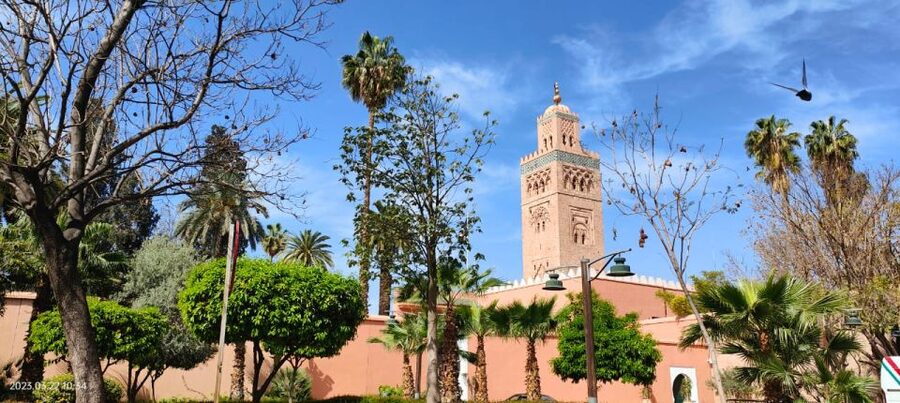
Marrakech moves fast, even on foot. This 3-hour walking tour is a smart way to hit the big landmarks and still end up in the old medina lanes where daily life happens. I especially like the stop at Koutoubia Mosque, plus the guided walk that pushes you through the souks toward Jemaa el Fna Square.
Here’s the main thing to consider: Bahia Palace and the Saadian Tombs have entrance fees that are not included, and you should also be ready for the medina to involve some sales pressure and tight timing.
In This Review
- Key things to know before you go
- Koutoubia Mosque: Marrakech’s landmark minaret and quick context
- Bahia Palace: spotting royal power in architecture
- Saadian Tombs: why a 1917 discovery still draws crowds
- Walking the old Jewish quarter and the medina maze
- Jemaa el Fna Square: ending in the busiest show in town
- Price and logistics: when $82 is a good deal, and when to watch it
- What to bring, what to expect, and how to make it pleasant
- Who this tour suits best
- Should you book this Marrakech 3-hour walking tour?
Key things to know before you go
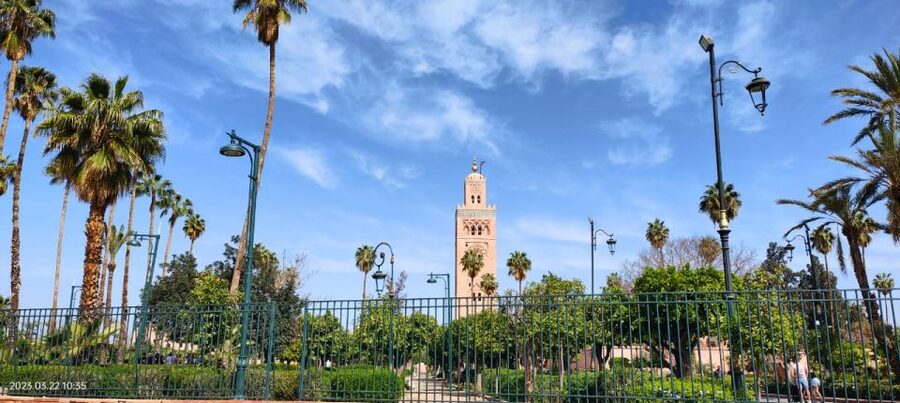
- Koutoubia Mosque landmark: you’ll see Marrakech’s famous 12th-century minaret, about 69 meters tall, and learn the basics of Islam and the five pillars.
- Bahia Palace, royal scale: a 19th-century palace with about 160 rooms, built over 15 years, where details tell you how wealth was displayed.
- Saadian Tombs, ornate rooms: dating to the 17th century, discovered in 1917, with decorated ceilings that reward slow looking.
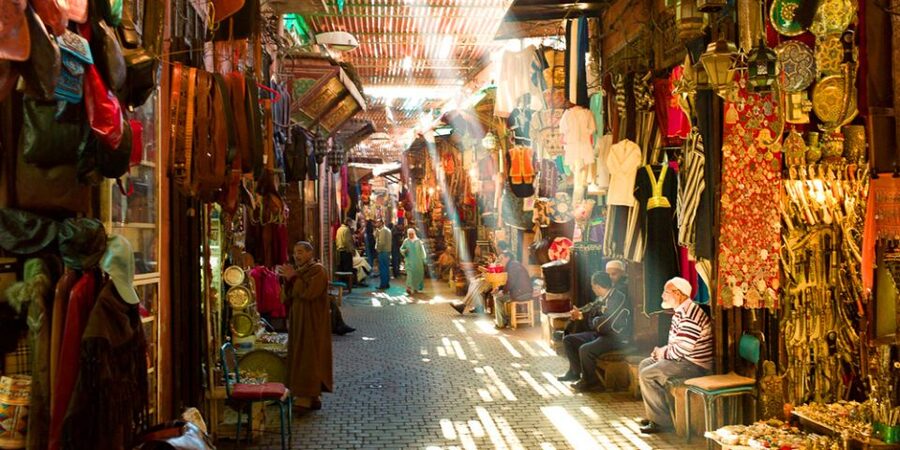
- Old medina lanes: you’ll walk past spice shops, artisan workshops, and art galleries, guided through the maze.
- Jemaa el Fna finale: the tour ends in the main square where storytellers, musicians, orange juice sellers, and henna artists compete for your attention.
- Pick-up only outside the Medina: transport includes an air-conditioned vehicle, but pick-up and drop-off are only at hotels outside the Medina.
Koutoubia Mosque: Marrakech’s landmark minaret and quick context
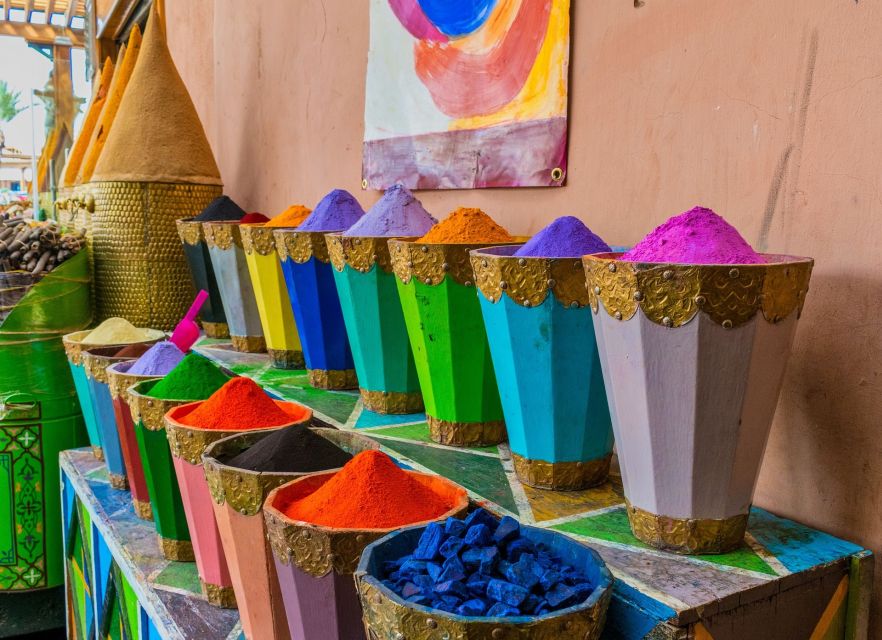
Your day starts with a meet-up at your hotel or riad, then a short drive to La Koutobia Mosque, also known as Koutoubia. This matters because Marrakech’s medina can be confusing even when you think you’re good at directions. Getting dropped at the right spot at the start saves real time, especially on a 3-hour schedule.
Outside the mosque, your guide sets the scene with Islam basics and how worship works in everyday life. You’ll hear about the five pillars and get a practical sense of what Muslims do day-to-day. If you’ve ever wondered what you’re looking at when you see a mosque, this stop turns the architecture into something you can interpret, not just photograph.
Look up at the minaret. That 69-meter height is the visual anchor of Marrakech, so even if you forget details, your brain will remember the skyline moment. Also, plan for sun. This is Morocco, and the open area around the mosque can feel bright and hot quickly. Comfortable shoes help here, but sunscreen and a hat do the heavy lifting.
Other walks at about this pace
- Marrakech: Ben Youssef, Secret Garden, & Souks Walking Tour
★ 4.6 · 2,802 reviews - Marrakech: Colorful Medina Souks Guided Walking Tour
★ 4.7 · 2,470 reviews - Marrakech: Medina by Night Walking Tour with Moroccan Tea
★ 4.6 · 586 reviews - Marrakech: Authentic Moroccan Food Walking Tour & Dinner
★ 4.8 · 261 reviews
Bahia Palace: spotting royal power in architecture
After Koutoubia, the tour continues to Bahia Palace, a 19th-century monument tied to the wealth of Moroccan royalty. The guide will frame it as more than a pretty stop. With a structure that took about 15 years to build and includes roughly 160 rooms, Bahia Palace is a lesson in how space and design were used to signal status.
What you’ll like here is the variety of textures, patterns, and how corridors and courtyards shape movement. Even when your time is limited, the palace layout tends to make you slow down without being told. You’re not just ticking off a site. You’re seeing how architecture organizes daily life in a royal context.
A practical note: Bahia Palace entrance fees are not included. So if you’re budgeting tightly, it’s worth setting aside money before you start the tour. If you like to avoid surprises, keep some small cash on you just in case the situation calls for it.
Saadian Tombs: why a 1917 discovery still draws crowds
A short walk from Bahia Palace brings you to the Saadian dynasty tombs. These date to the 17th century and were discovered in 1917. That combination, old and newly uncovered, helps explain why this stop often feels like a sudden shift from everyday medina noise into something quieter and more ceremonial.
The key draw is the decoration. The rooms and ceilings are ornately finished, and the craftsmanship is the point. You’ll get the best out of this stop if you give your eyes time to adjust. In bright Morocco sunlight, rich interior decoration can feel muted until you slow down. Your guide’s job is to help you notice what you might miss on your own, like the ways surfaces are patterned and how the space communicates respect.
Just like Bahia Palace, Saadian Tombs entrance fees are not included. Build that into your value math for the day.
Walking the old Jewish quarter and the medina maze
One of the strongest parts of this tour is how it transitions from formal monuments into the working city around them. From the tombs area, you move into the oldest parts of the medina. This is where the tour’s promise really becomes practical: you get a guide to navigate the maze-like streets so you’re not spending half your effort searching for the next turn.
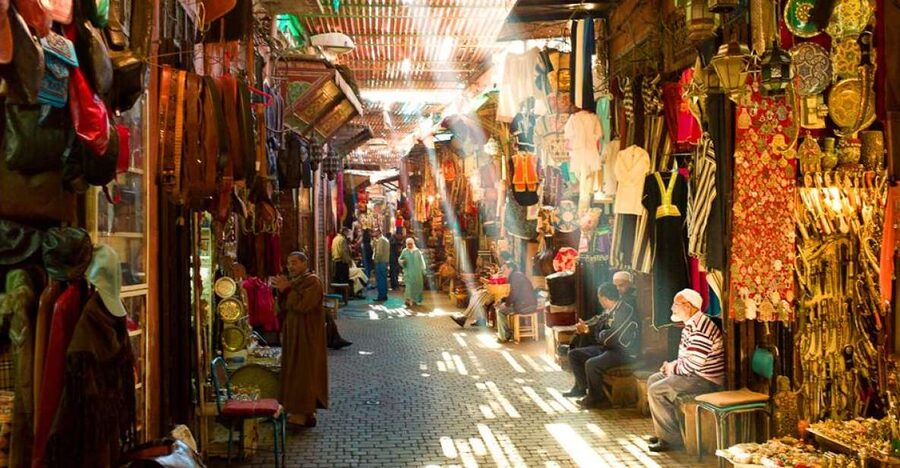
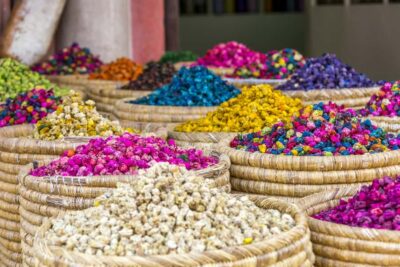
Your walk typically includes stops or passing looks at spice shops, artisan workshops, and art galleries. That’s not just scenery. It’s your window into how goods and craft are part of neighborhood life. Even when you don’t buy anything, it’s useful to see how products are arranged, how shopkeepers label items, and how sales happen in such narrow spaces.
Here’s the drawback to plan for: the medina can be pull-and-pressure territory. The good news is that a guide can help you keep moving and avoid getting stuck in the wrong place for too long. The not-so-good news is that some guided tours can include time spent in shops. If you’re the type who hates sales pitches, keep your expectations calm. You can also set the tone with your guide early, something like: you’re happy to look, but you want the walking and monuments to be the priority.
Also, this tour is not suitable for wheelchair users. Uneven streets and crowding are the likely reasons, and there’s no promise of step-free routes.
Jemaa el Fna Square: ending in the busiest show in town
The tour ends at Jemaa el Fna Square, described as the most famous square in Africa. Even if you’ve seen photos, it’s different in real life because the square is constantly changing. You’ll find storytellers, snake charmers, musicians, orange juice sellers, and henna tattoo artists, all trying to get your attention at the same time.
What you do here is up to you. If you want the full sensory effect, stay a bit and watch how performers interact with visitors. If you want photos, do it quickly and respectfully, since the square can become crowded fast. The simplest rule is to treat it like a live street performance, not a museum exhibit.
You’ll also get a useful tip: bring some 10 or 20 dirham notes if you plan to take photos of entertainers in the square. Having small bills keeps things smooth when you’re in the moment. It’s also a good way to avoid awkward searching while everyone is watching.
Price and logistics: when $82 is a good deal, and when to watch it
At $82 per person for a 3-hour experience, this tour can be good value if you care about efficient guiding and want to see multiple major sights without fighting the medina alone. The price also includes a licensed guide and an air-conditioned vehicle for the short transfers.
But here’s where your money gets real: entrance fees are not included for Bahia Palace and the Saadian Tombs. So the final cost depends on what you pay at the gates. If you’re booking on a budget, add those fees early in your plan.
The other value factor is match to the promised stops. This tour is designed to cover Koutoubia Mosque, Bahia Palace, Saadian Tombs, then finish in Jemaa el Fna. However, I’ve picked up enough caution from past experiences to recommend you confirm the exact sequence when you meet your guide. If your day depends on seeing Bahia Palace and the Saadian Tombs, ask clearly that those are included in the timeline you’re getting.
Finally, pick-up and drop-off only happen at hotels located outside the Medina. If you’re staying inside, plan on transportation you control, or you may have to adjust. This is one of those details that can make a tour feel smooth or annoying, depending on where your riad is located.



What to bring, what to expect, and how to make it pleasant
This tour is straightforward, but Marrakech in warm weather is not subtle. Your best gear choices are the boring ones.
Bring:
- Passport or ID card
- Comfortable shoes (you’ll be walking)
- Sunglasses and a sun hat
Wear:
- Light layers, because you may switch between shaded lanes and full sun
Small strategy:
- If you want photos in Jemaa el Fna, have small bills ready
- Keep your phone and camera accessible but not in a way that blocks your walk
And one more expectation: you’ll be in a working city. Medinas are not quiet. Conversations, shop calls, and street activity are part of the experience.
Who this tour suits best
This is the right pick if you:
- Want a guided orientation to Marrakech fast
- Like mixing major monuments with everyday streets
- Prefer not to navigate the medina maze on your own
It’s less ideal if you:
- Have very limited mobility or need step-free access
- Hate the feeling of timed shopping stops and want a purely monument-based day
- Are extremely schedule-sensitive, since the square at the end can take more time than you think
If your goal is to understand the city’s layout and religious culture basics through real places, this format works well. You get Koutoubia as a spiritual and architectural anchor, palaces and tombs for power and craft, and the square for street life.
Should you book this Marrakech 3-hour walking tour?
If you’re comfortable paying a guide to keep you moving, and you’re okay with an extra budget for entrance fees to Bahia Palace and the Saadian Tombs, I think this tour can be a solid way to see the essentials in a short window.
My booking advice is simple:
- Confirm Bahia Palace and Saadian Tombs are part of your day when you start.
- If you dislike shopping stops, tell your guide early so the walking time stays focused.
- Plan your expectations for Jemaa el Fna: it’s lively and crowded, so your enjoyment will depend on how you handle street energy.
If you tick those boxes, you’re set up for a Marrakech experience that feels like a guided route through both famous sites and the streets around them.
Walks at About This Pace
- Marrakech: Ben Youssef, Secret Garden, & Souks Walking Tour★ 4.6 · 2,802 reviews
- Marrakech: Colorful Medina Souks Guided Walking Tour★ 4.7 · 2,470 reviews
- Marrakech: Medina by Night Walking Tour with Moroccan Tea★ 4.6 · 586 reviews
- Marrakech: Authentic Moroccan Food Walking Tour & Dinner★ 4.8 · 261 reviews
Added recently from around Marrakesh




More Walking Tours worth a look.
 ★ 4.6Marrakech: Ben Youssef, Secret Garden, & Souks Walking TourFrom $202,802 reviews
 ★ 4.7Marrakech: Colorful Medina Souks Guided Walking TourFrom $202,470 reviews
 ★ 4.7Explore Fes: Unforgettable Guided Walking Tour of the MedinaFrom $151,339 reviews
 ★ 4.6Marrakech: Medina by Night Walking Tour with Moroccan TeaFrom $27586 reviews
 ★ 5.0Exclusive Fez Medina Walking Tour with Private GuideFrom $35392 reviews
 ★ 4.5Marrakech: Medina Souks Guided Walking TourFrom $25381 reviews
 ★ 5.0Fez: Guided Walking Tour of the Historic MedinaFrom $22359 reviews
 ★ 4.0Medina of Marrakech Walking TourFrom $65300 reviews
Where else this one sits