
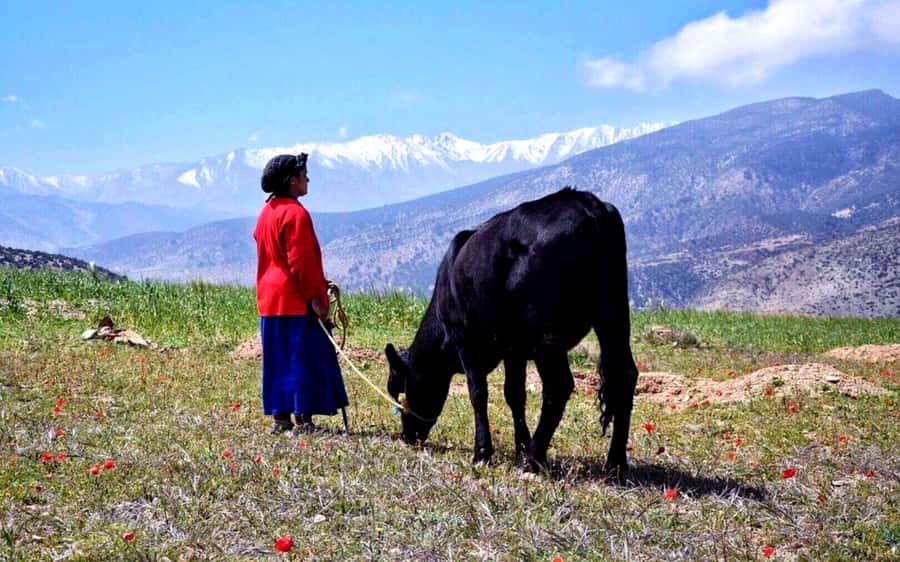
REVIEW · MOROCCO
Marrakech: 2-Day Atlas Villages Trekking Tour
Morning light in the Atlas changes everything. This 2-day trek from Marrakech mixes village walking with real local stops like Tinmel School, an argan cooperative visit, and henna engraving before your night in the mountains. I especially like how you get three hike choices and how the schedule includes meaningful craft and family moments, not just photo stops. The main thing to consider is that you will be walking daily (up to 4 hours), so plan for uneven paths and a slower pace.
What makes this tour work well is its practical flow: you start with a guided drive out of Marrakech, then you hike and eat with Amazigh families, and you sleep in a mountain setting instead of racing back the same day. You might even be guided by familiar names that show up often on this route, like Mustapha, Rabia, Ali, Youssef, Marwan, Lasan, or Lahcen, depending on your dates and guide assignments. One possible drawback: the tour is not suitable for people with heart problems, and the walking can be too much if you want mostly flat, easy strolling.
In This Review
- Key points worth weighing before you go
- Why this 2-day Atlas villages trek feels more real than a rushed day tour
- Day 1: Marrakech to Oued Akoundiss, with Molay Ibrahim argan stops and optional camel time
- Tinmel School and the walk through High Atlas villages toward Ijoukak
- Riad night in the mountains: where the trek feels worth it
- Day 2: the Agoundiss Valley gorge hike, plus views that justify two days
- How hard is it, really? Walking time, terrain, and energy planning
- Craft and culture stops you will actually remember
- Price and value: what $106 buys you in the real world
- Practical tips so your trek day goes smoothly
- Who should book, and who should skip
- Should you book this 2-day Atlas villages trekking tour?
- FAQ
- How long is the walking each day?
- What is included in the 2-day experience?
- Do I have a choice for hiking?
- Is the camel ride or horse ride included?
- What languages are the guides available in?
- Is alcohol included?
- What should I bring with me?
Key points worth weighing before you go
- 1 to 4 hours of walking per day gives you real control over effort
- Tinmel School (12th century) is a standout culture stop, not just scenic scenery
- Argan cooperative, pottery, and women’s carpet craft add substance to the village visits
- Henna engraving at the end of the trek makes the experience feel personal
- Camel ride or horseback time (30 minutes) is built in without eating your whole day
- Food plus one night in a mountain riad means less planning on your side
Why this 2-day Atlas villages trek feels more real than a rushed day tour
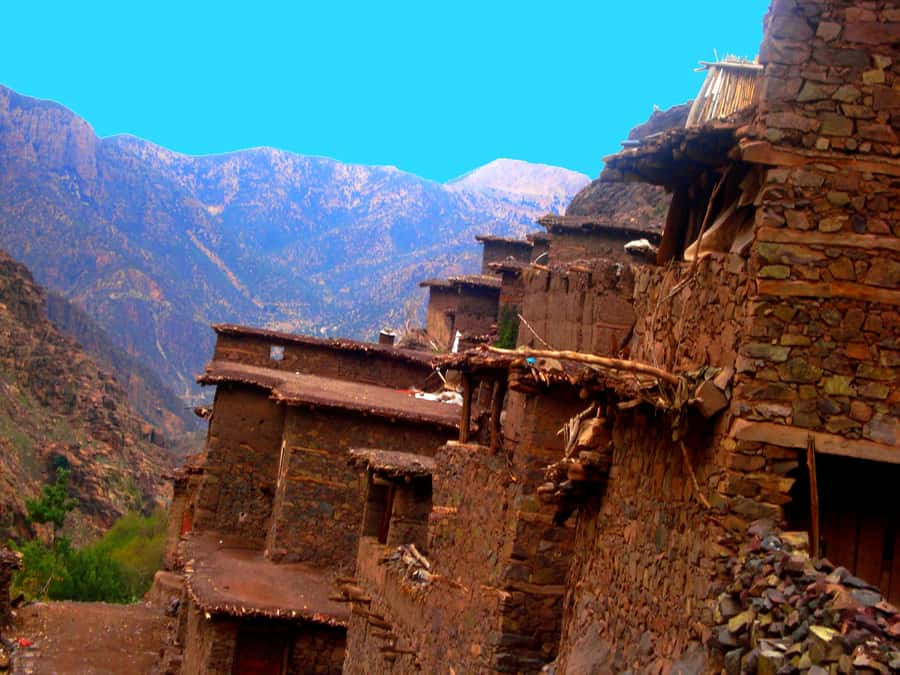
Two days is the sweet spot for the High Atlas. One day can feel like a long car ride followed by a short walk. Two days lets you actually slow down: you hike with a guide, share meals in village settings, and sleep in the mountains so the whole thing feels connected instead of chopped into snapshots.
I also like that the trip is clearly structured around Amazigh life. You are not only seeing villages from outside. You are visiting a women’s cooperative, learning how argan products connect to local livelihoods, and doing small, hands-on activities like henna engraving. Even the choice of hikes matters because it matches how you want to experience the valleys.
The other practical win is that you are not left to figure out logistics. Transport from your hotel, a guide, food, and a riad night are all included, which keeps this trek from turning into a math problem.
Other routes with some height in them
- From Marrakech: Ouzoud Waterfalls Guided Hike and Boat Trip
★ 4.7 · 33,630 reviews - From Marrakech: Atlas Mountains Full-Day Hiking Trip w Lunch
★ 4.8 · 7,417 reviews - Marrakech: Ourika Valley Trip with Waterfall Hike
★ 4.6 · 6,792 reviews - Marrakech: ourika valley lunch & guided hike to waterfalls
★ 4.9 · 3,737 reviews
Day 1: Marrakech to Oued Akoundiss, with Molay Ibrahim argan stops and optional camel time
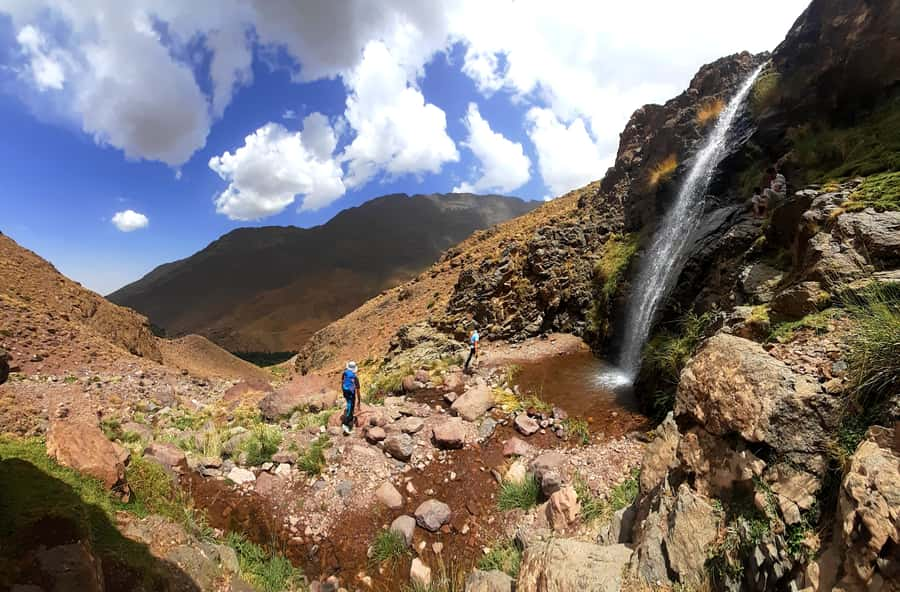
Day 1 begins with a hotel pickup in Marrakech and a roughly 2.5-hour air-conditioned drive into the Atlas region. After about an hour on the road, you make a few stops that help you ease into the day rather than sprinting straight into the mountains. One stop includes memorial-style photo moments in older village areas, which is a simple way to understand how people mark place and memory in Morocco.
Then you head to the women’s cooperative in the village of Molay Ibrahim, about 45 km from Marrakech. This is where you slow down for tea, and you get to taste and learn about argan products. Argan oil is famous, but the real value here is seeing how the cooperative connects the tree to local work. It turns a product you buy in Marrakech into something you can picture.
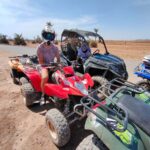
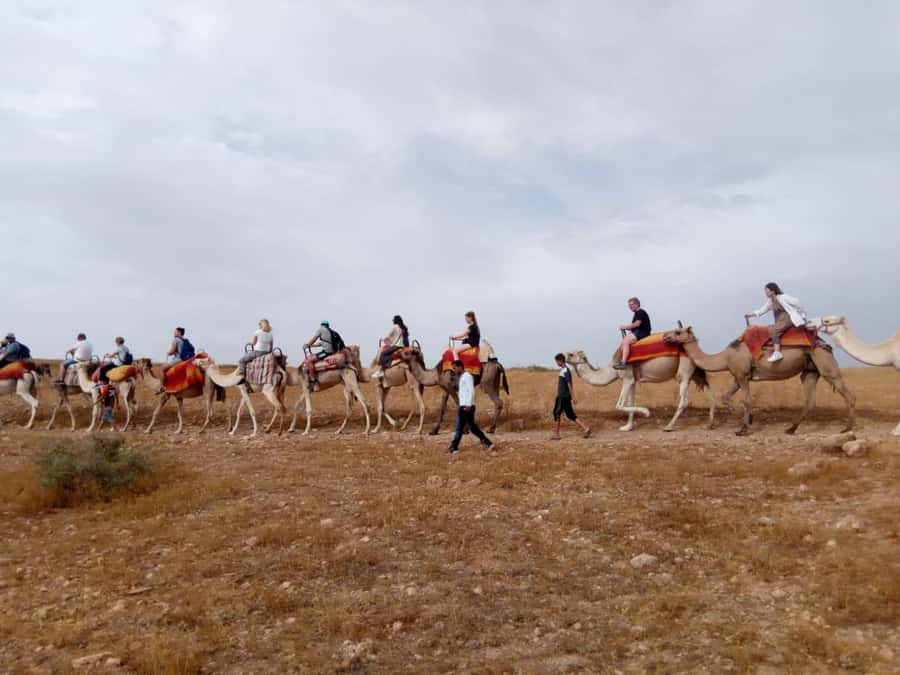
You also have an optional stop of about 45 minutes for camel riding or horseback riding. This is the kind of activity that can be either a fun break or an energy drain, depending on your comfort level. If you are sensitive to heights or long time in a saddle, treat this as optional for a reason.
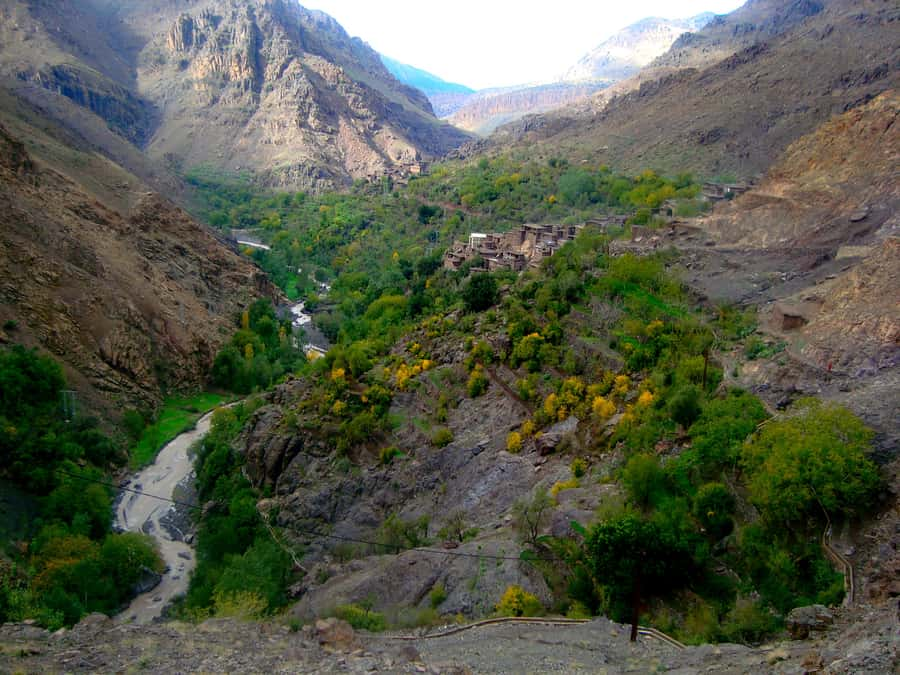
After that, the drive becomes part of the experience. You pass remote villages and mountainside valleys, with picture stops along the way. The route tends to feel varied enough that the morning does not blur into one long stretch.
Tinmel School and the walk through High Atlas villages toward Ijoukak
Once you reach Oued Akoundiss, the day shifts from road travel to cultural time. A major stop here is Tinmel School, built in the 12th century. Even if you do not consider yourself a monument person, this kind of site gives context. It anchors your trek in the fact that these valleys have held important communities for a very long time.
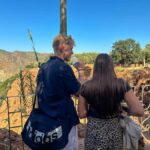
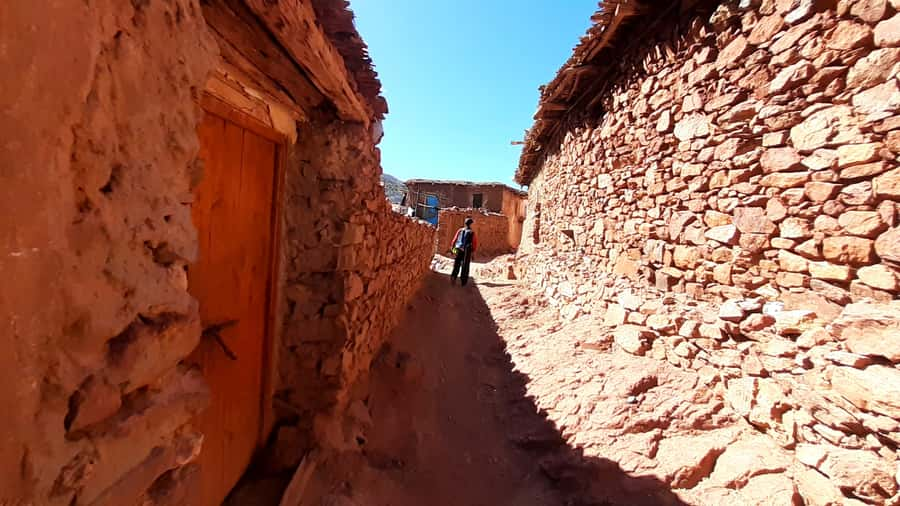
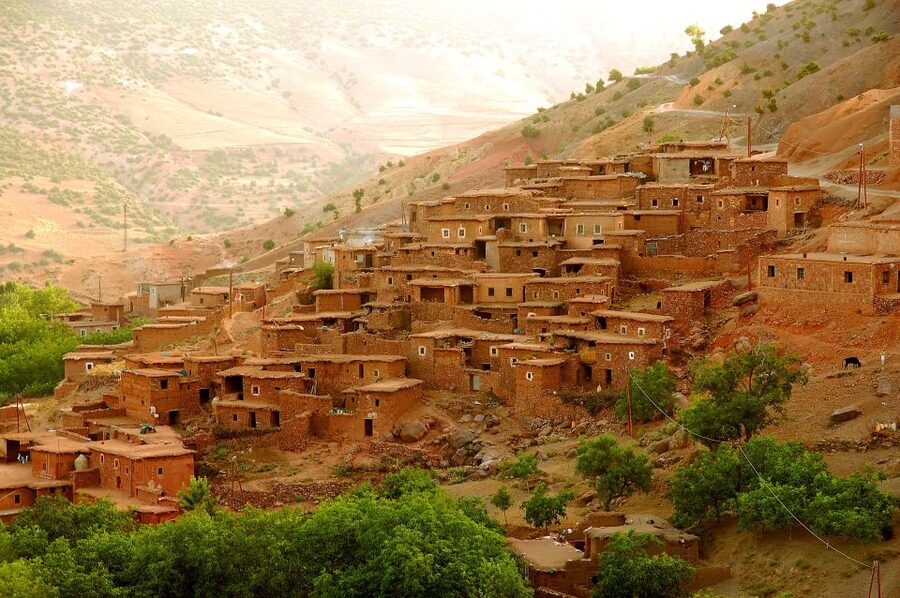
After Tinmel, you start walking through remote High Atlas villages. This is not a performance trek where everyone stays in one line and moves on quickly. The whole point is to see old houses and walk among villages in a Berber style setting, with the guide helping you make sense of what you are seeing. Expect Amazigh hospitality, plus Moroccan food that fits what people actually eat day to day in these areas.
You then move toward Ijoukak for lunch. The tour includes a terrace lunch with a Berber family, and this is one of those moments that changes the feel of the trip. Sitting down to a meal in a village setting is slower and more human than eating at a restaurant with a view.
After lunch, the day continues with short drives through smaller village areas with dirt houses and wide views. You pass fields like barley, corn, and vegetables, and you see almond and walnut trees around the farms. This is Morocco at valley scale, where you understand the landscape as something people work with, not something you just point at.
Riad night in the mountains: where the trek feels worth it

Your first night is in a mountain riad, listed as Riad Atlas Mountains. It is not there to be fancy for the sake of it. It is there so you can actually rest between hiking days and enjoy the calm that comes with being away from Marrakech.
Dinner and breakfast are included, and the tour includes water, tea, and coffee throughout the day. That matters more than it sounds, because trekking days go faster when you are constantly checking what you can buy and where.
This night is also where the experience gets more personal. Henna engraving is included, and you will also meet locals as part of the village visit rhythm. In past experiences on this route, the guide style often makes a difference, and names that come up often include Rabia, Ali, Youssef, and Marwan. The common thread: guides who explain what you are seeing and keep the day flexible when options pop up.
Wifi may be weak depending on where you sleep, and that is not a tragedy. One of the underrated parts of this trip is being forced to look up, talk more, and let the mountain evening do the entertaining.
Day 2: the Agoundiss Valley gorge hike, plus views that justify two days
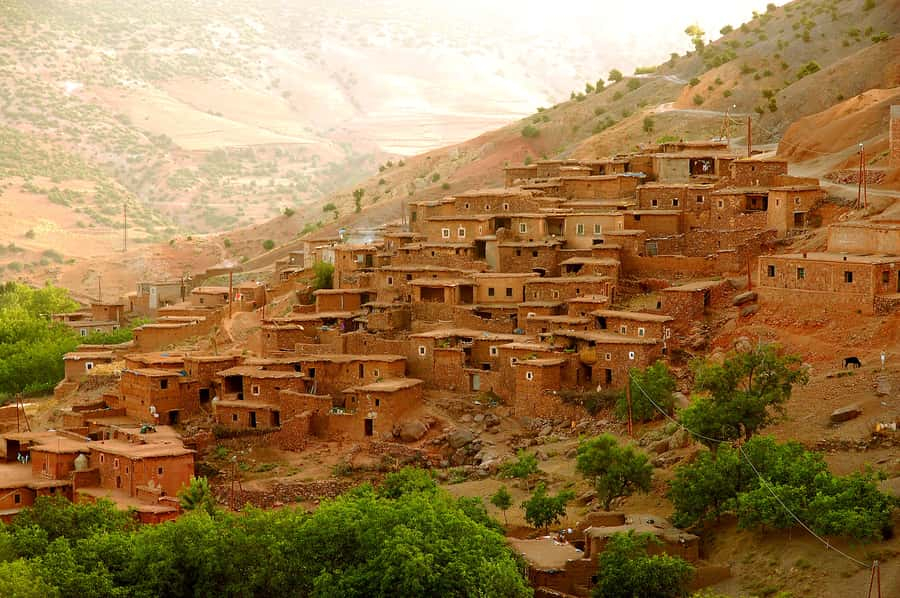
Day 2 starts with breakfast on a rooftop with mountain views. Then you head out for a hike in the gorge of the Agoundiss Valley. The trekking time is typically 3 to 4 hours with a guide, depending on your chosen pace and hike option.
This is where your choices from the start pay off. The tour is designed with 1 to 4 hours of walking per day in mind, so it is not built as one-size-fits-all suffering. If you pick a shorter option on Day 1, Day 2 is often the day that gives you deeper time in the valleys.
During the hike, you pass through Amazigh villages and see how people live along the slopes and in valley settings. Your guide helps you connect the physical geography with daily life, like how farming areas sit alongside homes and how valley paths shape movement.
If you want hands-on culture rather than nonstop walking, this is the day where the tour rhythm tends to balance both, based on the included craft activities. You also have the structure that most activities are optional, and can be canceled if you do not want every extra stop. That flexibility is a real quality-of-life feature on a trip like this.
You return to Marrakech in the evening. Some itineraries tend to land closer to early evening, but the key point is that you are not spending Day 2 driving all day and calling it a hike.
How hard is it, really? Walking time, terrain, and energy planning
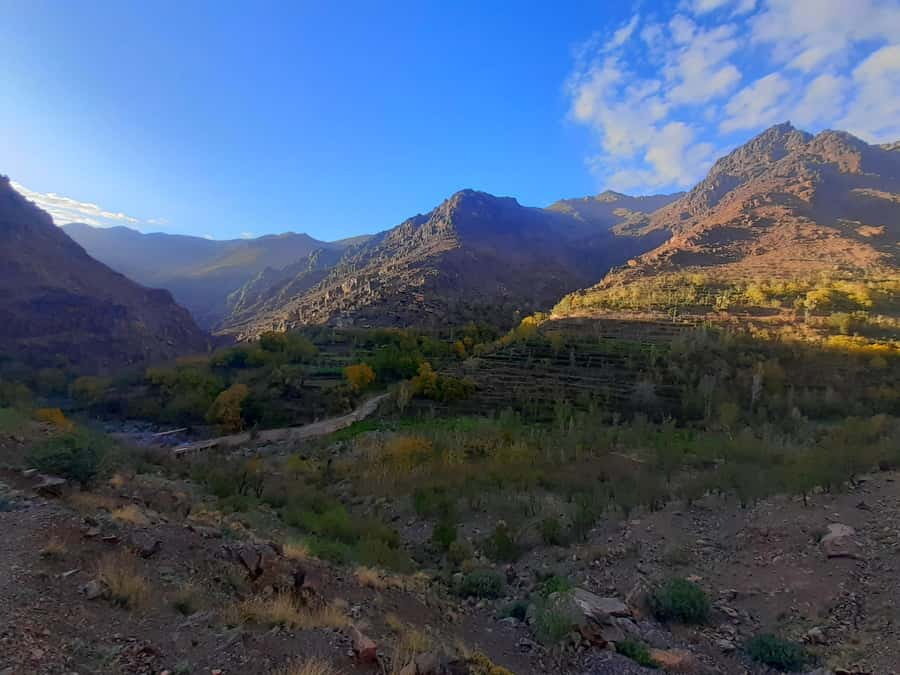
The tour includes walking excursions with 1 hour to 4 hours on foot per day based on your choice. That gives you a lot of control, but you still need to be honest with yourself about footwear and stamina.
The walking is through valleys and villages in the High Atlas. That usually means uneven ground, changes in path width, and some time where you feel every step in your legs. If you like hiking, you will find this rewarding. If you only do flat city walks, you may want the shorter hike option.
One more practical note: the tour includes a camel ride or horseback ride for about 30 minutes. If you choose the ride, plan for the physical awkwardness of sitting that way, even if you are not riding for hours.
If you are thinking about dietary needs, the tour does include all food (breakfast, lunch, dinner), plus tea, coffee, and water. But the exact menu details are not spelled out here, so treat it as included Moroccan meals rather than a guaranteed Western-style offering.
Craft and culture stops you will actually remember
This tour is not only about views. It is built around the idea that work and daily tradition are part of what you came to see.
You start with argan education through a women’s cooperative in Molay Ibrahim. You drink Moroccan tea, taste argan products, and learn about the tree’s role in local livelihoods. That is a better use of time than buying souvenirs first and hoping you learn later.
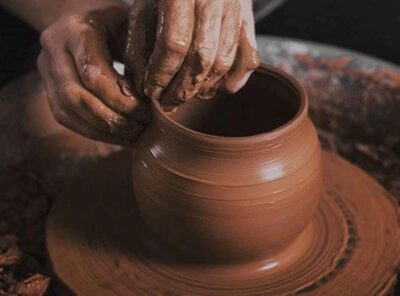
Then there are other craft-related activities tied to local life, including pottery visits and women’s carpet cooperative experiences. The tour also includes henna engraving, and some activities like henna engraving or local craft-making are structured so you can participate rather than just watch.
Finally, you get a lunch with a Berber family in Ijoukak. That is the moment that turns cultural stops into a shared experience, especially when you have a guide explaining what you are noticing.
Price and value: what $106 buys you in the real world
At about $106 per person for a 2-day trek, the value is mainly in bundling. You are not paying separately for hotel night, most meals, an English/French/Spanish/Arabic guide, round-trip hotel transport, entrance tickets and visits, and included activities like camel riding and henna engraving. For Morocco tours, those add up fast when you book them piece by piece.
The value gets even clearer because the overnight is not in the city. One night in the Atlas region gives you time for morning and evening in the mountains, and that is typically where the emotional payoff comes from: less rushing, more quiet, and walking that feels connected to where you sleep.
You do not have to budget for tips inside the price. Tips are not included, and alcohol is not included, which is normal for Morocco touring. If you drink alcohol, plan for that extra cost outside the tour price.
Practical tips so your trek day goes smoothly
What to pack is simple:
- Passport or ID card
- Sunglasses
- Camera
A few on-the-ground tips help more than you might expect:
- Wear shoes with decent grip. Even if you choose a shorter hike, paths can be rocky and uneven.
- Bring water discipline in your head. The tour includes water and tea, but you still feel thirst in mountain valleys.
- If you are heat sensitive, plan your pace. Morning to midday can feel warm even when the mountains look cool.
Also remember that your pickup timing matters. You are told to wait in the hotel lobby about 15 minutes before scheduled pickup time, and you receive a message about your departure date day before.
Who should book, and who should skip
This tour suits you if you want:
- Guided time in Amazigh villages
- A true overnight in the mountains, not just a day trip
- A choice of hike lengths
- Included meals and a riad night so you can travel lightly
It is less suitable if:
- You have heart problems, because the tour is listed as not suitable
- You want a mostly flat, low-effort walking plan
- You hate sitting through drives. There is driving on both days, though it is part of reaching remote village areas.
Should you book this 2-day Atlas villages trekking tour?
I think you should book it if your ideal Morocco trip includes actual mountain village time, guided walking, and hands-on moments like argan cooperative visits and henna engraving. Two days is the right rhythm here, because you get to rest between hikes and eat in settings that feel connected to the places you walk through.
If you want a very easy hike, or you cannot handle uneven paths, consider a shorter hike option (when offered) or a different type of tour. This one is at its best when you are willing to trade a little comfort for real mountain life and valleys that slow your day down.
FAQ
How long is the walking each day?
The walking is flexible by choice, with 1 hour to 4 hours on foot per day.
What is included in the 2-day experience?
Transport from and to your hotel, a guide, 1 night in a riad in the Atlas Mountains, all meals (breakfast, lunch, dinner), water, tea, and coffee, a camel ride or horseback ride (30 minutes), entrance tickets and visits, air-conditioned vehicle transport, and henna engraving with local visits.
Do I have a choice for hiking?
Yes. The tour offers a choice of three hike options, and walking time is described as 1 to 4 hours per day based on the client’s selection.
Is the camel ride or horse ride included?
Yes. The tour includes a 30-minute camel ride or a horseback ride.
What languages are the guides available in?
The guide is available in English, French, Arabic, and Spanish.
Is alcohol included?
No. Alcohol is not included.
What should I bring with me?
Bring your passport or ID card, sunglasses, and a camera.
Routes With Some Height
- From Marrakech: Ouzoud Waterfalls Guided Hike and Boat Trip★ 4.7 · 33,630 reviews
- From Marrakech: Atlas Mountains Full-Day Hiking Trip w Lunch★ 4.8 · 7,417 reviews
- Marrakech: Ourika Valley Trip with Waterfall Hike★ 4.6 · 6,792 reviews
- Marrakech: ourika valley lunch & guided hike to waterfalls★ 4.9 · 3,737 reviews
Added recently from around Marrakesh
More Hiking & Trekking worth a look.
 ★ 4.7From Marrakech: Ouzoud Waterfalls Guided Hike and Boat TripFrom $1733,630 reviews
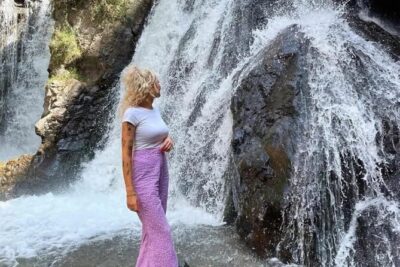 ★ 5.0Berber villages : Atlas Mountains Day Hike from MarrakechFrom $1514,007 reviews
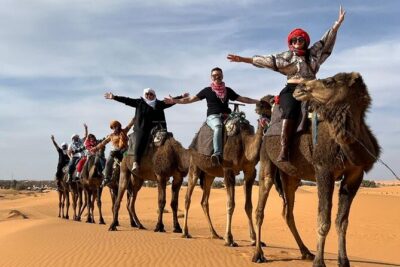 ★ 5.03 Days Desert Tour From Marrakech To Merzouga Dunes & Camel TrekFrom $11510,125 reviews
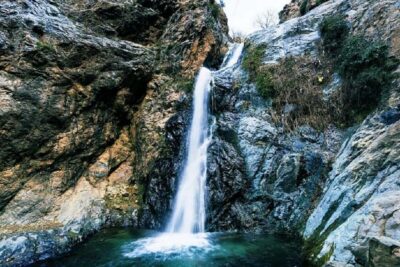 ★ 4.8From Marrakech: Atlas Mountains Full-Day Hiking Trip w LunchFrom $267,417 reviews
 ★ 4.6Marrakech: Ourika Valley Trip with Waterfall HikeFrom $146,792 reviews
 ★ 4.9Marrakech: Ourika Valley Trip with Waterfall Hike & LunchFrom $115,303 reviews
 ★ 4.9Marrakech: ourika valley lunch & guided hike to waterfallsFrom $123,737 reviews
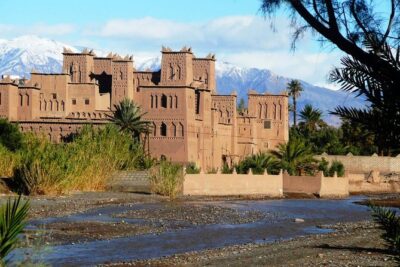 ★ 5.03-Day Tour to Merzouga Erg Chebbi with Food & Camel TrekFrom $1331,770 reviews
Where else this one sits