REVIEW · MOROCCO
Hidden Sights of Marrakech:
Marrakech has secret routes, and you can walk them. This 3 to 4 hour morning stroll skips the postcard circuit and threads through the Medina’s everyday corners, from ancient gates to baking ovens and craft lanes.
Medina streets can feel like a maze, but the guide keeps the walk logical.
I love two things most: the food-and-workshop stops that show how locals actually make, cook, and trade, and the way the guide helps you understand what you are seeing without getting lost in it. You also get bottled water, which sounds small until you hit the heat and standing in spice air.
One consideration: this is not a tour of big-ticket monuments. Some moments are short, quick turns through narrow lanes, so you need patience and good walking shoes.
In This Review
- Key things that make this tour worth your time
- Why This Half-Day Walk Works in Marrakech’s Medina
- Meeting at Jemaa el-Fna: The Start Point You Need to Find Once
- Bab Ftouh to the Medina Gate Lanes: Getting Oriented Fast
- Mouassine Bakery and the Smell Test: Local Food Without the Performance
- El Mouassine Mosque: A Quiet History Lesson in Plain Sight
- Foundouk Sarsar Caravan Inn: How Traders Moved Before Cars
- Sidi Abdelaziz Tabaa Mausoleum and the Saints of Marrakech
- The Tangia Cooking Oven Stop: Smell the Tradition, Slow the Pace
- Talaa Souk: A Specific Market Detail You Will Remember
- Souk Haddadine: Blacksmith Workshops and Metal Work in Motion
- Rahba Kedima Square and Spice Air: Where Color Meets Scent
- Souk Semmarine and the Rhythm of the Busiest Lane
- Jemaa el-Fnaa Finale: Performers, Music, and the City’s Stage
- Price, Group Size, and What You Really Get for $39
- How to Prepare So You Enjoy Every Stop
- Who This Tour Fits Best, and Who Might Want Something Else
- Should You Book Hidden Sights of Marrakech?
- FAQ
- What time does the tour start?
- Where do I meet the guide?
- How long is the Hidden Sights of Marrakech experience?
- How much is the tour?
- What is included in the $39 price?
- Is food or lunch included?
- Are entrance tickets included for the stops?
- Can I cancel and get a full refund?
Key things that make this tour worth your time
- Small group size (max 6) keeps the pace friendly and questions easy
- Free entry stops at each listed sight means fewer surprise fees
- Tangia oven experience connects you to a real local cooking tradition
- Caravan inn and mausoleum visits add depth beyond souk shopping
- Souks for real trades like blacksmith workshops and spice market lanes
- Finish at Jemaa el-Fna so you end where the energy of the city makes sense
Why This Half-Day Walk Works in Marrakech’s Medina
If you only hit the famous sights, Marrakech can start to feel like a theme park. The real city is in the routes people take every day, the side streets where smells drift out of doorways, and the small spaces where trades have been practiced for generations.
This tour is built for that kind of wandering. You walk on foot where cars cannot go, then you stop often enough to actually learn what you are looking at. It is the difference between seeing Marrakech and understanding how it runs.
You also get a time advantage. Starting in the late morning window helps you catch the Medina before it turns into full-on chaos around the main square.
Weighing the options? These are the Marrakech trips readers open next.
- Berber villages : Atlas Mountains Day Hike from Marrakech
★ 5.0 · 14,007 reviews - 3 Days Desert Tour From Marrakech To Merzouga Dunes & Camel Trek
★ 5.0 · 10,125 reviews - 3-Day Marrakech to Merzouga Desert Tour: Camel Rides & Overnights
★ 5.0 · 8,734 reviews - 3-Day Marrakech to Fes Sahara Desert Tour via Merzouga
★ 5.0 · 6,546 reviews
Meeting at Jemaa el-Fna: The Start Point You Need to Find Once
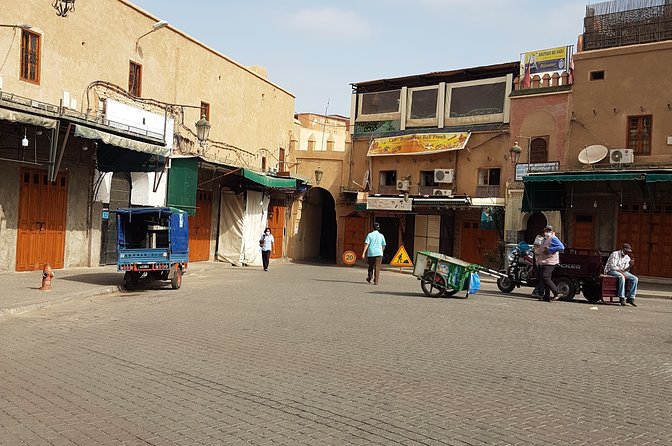
The tour begins at Argana Café Restaurant, in the big square Jamaa el-Fna area (Number 18, Znikat Rahba). The practical win here is simple: you do not need a taxi relay system or a complicated pickup plan. You locate one clear meeting spot, then you are good.
You start at 10:00 am, and the experience returns to the same meeting point at the end. That matters. The Medina is famous for direction confusion. Finishing back at the square helps you avoid the classic problem of ending a tour and still feeling stranded.
It is also useful for photos and timing. After you finish, you are already positioned to continue on your own, whether you head toward the souks again or take a break.
Bab Ftouh to the Medina Gate Lanes: Getting Oriented Fast
The first stop is Bab Ftouh, one of Marrakech’s oldest interior gates and a classic souk entrance. This is where you get your bearings. A gate is not just a wall, it is a hint. It tells you which routes matter and where movement naturally flows.
From there, the walk starts to open up into the Medina’s human scale. You are not just passing architecture. You are passing daily life. That is why foot travel feels right here.
Mouassine Bakery and the Smell Test: Local Food Without the Performance
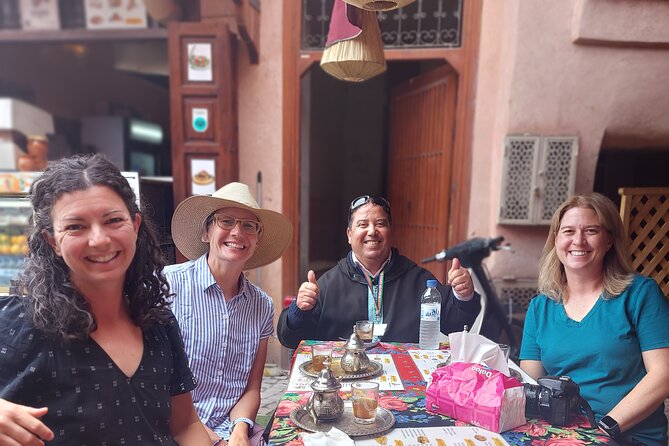
Next comes Mouassine, where you visit a local bakery. This is one of those stops that sounds simple, but it does real work. Bread, pastries, and ovens pull you into the rhythm of the neighborhood because the process is visible and the smells are immediate.
I like this stop because it nudges you to look beyond souvenirs. If you are the kind of person who wants to eat your way through a city, this is a smart early anchor. Even if you do not buy anything on the spot, you learn what to seek out later.
You will also notice how the guide handles the market space. In past experiences with guides like Azim and Mohamed, the focus stays on helping you read value and avoid overpaying just because something is presented loudly.
El Mouassine Mosque: A Quiet History Lesson in Plain Sight
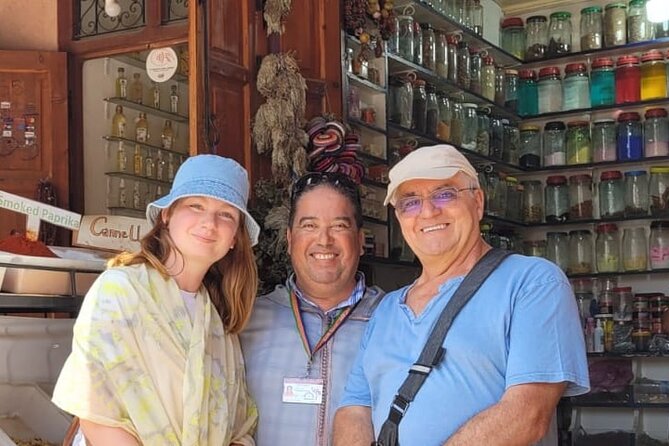
You then visit the El Mouassine Mosque, described as one of the older mosques of Marrakech, dating back to the 16th century. The stop includes context about how this area once functioned as a residential quarter connected to Moroccan Jewish life.
What I like here is the pacing. You are not staring at a plaque. You are walking within the real urban fabric, so the story attaches to place.
One practical tip: mosques require respectful behavior. If you are unsure about clothing or footwear expectations, follow what your guide says right there, in the moment.
Foundouk Sarsar Caravan Inn: How Traders Moved Before Cars
At Foundouk Sarsar, you visit a caravan inn, known as one of the older ones in Marrakech. This kind of stop changes how you interpret the souks. You start thinking less about stalls and more about routes, storage, lodging, and logistics.
Caravan inns were built for movement. People needed places to rest, trade, and secure goods. Once you understand that, the alley layout feels purposeful, not random.
It is also a nice contrast. After the open air feel of market streets, an older inn style stop gives you a break in scale, even if you still stay surrounded by activity.




Sidi Abdelaziz Tabaa Mausoleum and the Saints of Marrakech
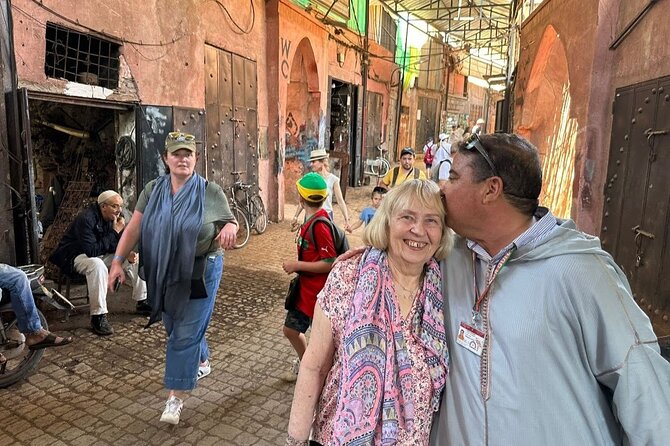
Next is the Mausoleum of Sidi Abdel Aziz Tabaa, tied to one of the seven saints of Marrakech. This is a spiritual and cultural layer, and it helps explain why certain areas hold meaning beyond commerce.
Even if you are not religious, these stops matter because they show how faith, community, and craft life overlap in the Medina. For a lot of visitors, this is where the city stops being a collection of landmarks and becomes a lived place.
The Tangia Cooking Oven Stop: Smell the Tradition, Slow the Pace
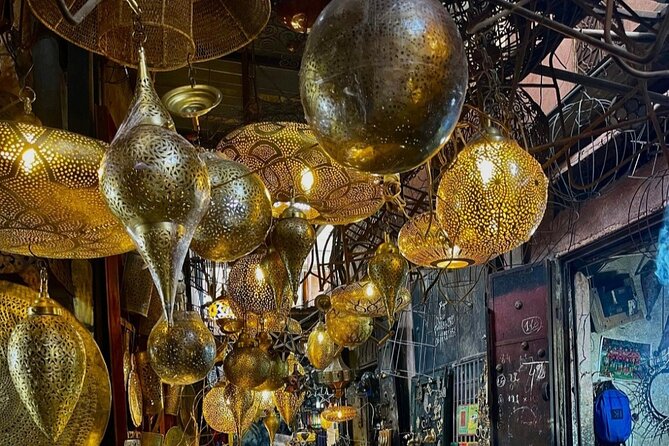
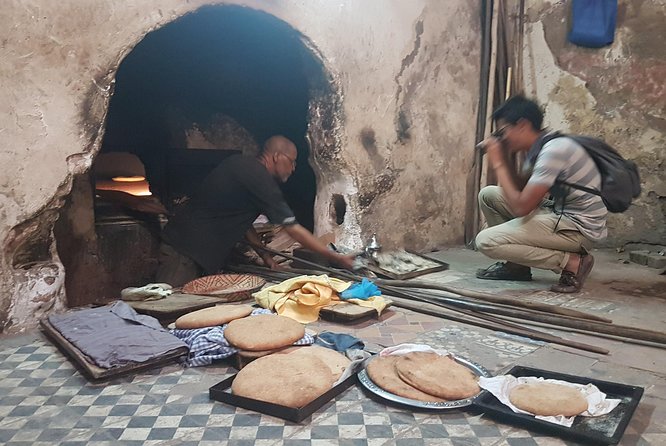
One of the most memorable practical moments is the Route Sidi Abdelaziz stop, where you see a cooking oven used for Tangia. Locals bring dishes to be slowly cooked there, and you learn why the method matters.
I like this stop because it is not abstract. It is food technology. Slow cooking changes texture and flavor, and the oven is part of the neighborhood cooking system rather than a single household appliance.
If you have any interest in eating like a local, this is the moment to ask how Tangia is served and when you can find it later in your trip. The guide often shares “how to order” type guidance during the walk.
Talaa Souk: A Specific Market Detail You Will Remember
You also visit Talaa, described as a souk where an auction of leader skins still takes place, apart from Friday. This is exactly the kind of detail that makes the Medina feel real. It is not generic shopping. It is a specific market function with a cultural rhythm.
Keep your expectations grounded here. This is not a museum-style explanation. You see a working street and you learn what it historically connects to. You might feel uncomfortable if animal products are involved in a way you dislike. If that is you, tell your guide and they will likely help steer you through respectfully.
Souk Haddadine: Blacksmith Workshops and Metal Work in Motion
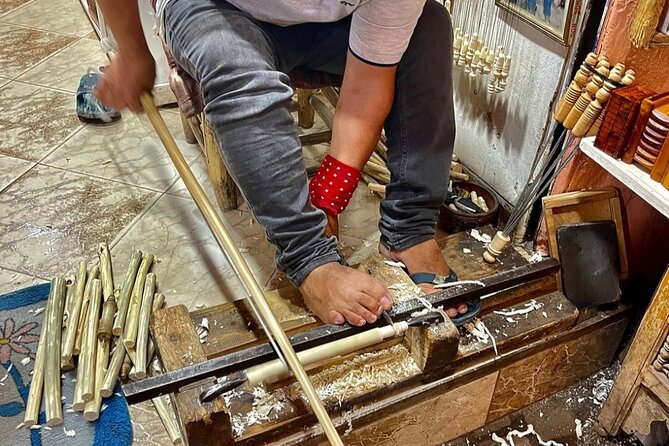
Then you move into Souk Haddadine, where you walk through the workshops of blacksmiths. This stop is one of the best for people who like crafts and want to see skill in action.
It also creates a better shopping instinct. When you see the labor behind metal work, it becomes easier to judge quality rather than just price tags. One of the clearest takeaways from guided experiences in Marrakech is that the market can be negotiated smartly, and a good guide helps you recognize fair pricing and when a quote is padded.
Rahba Kedima Square and Spice Air: Where Color Meets Scent
At Rahba Kedima Square, you visit a spice market area, described as Place des épices. The focus is on the fragrances of fresh spices, and visiting a local stall is optional.
This is a great stop for sensory learning. You start noticing that spices are not just bright piles. They are ingredients with different aromas and uses, and they connect to the food you will eat later.
If you are sensitive to strong smells, you might keep your head slightly turned when you pass the most concentrated displays. It is totally fine.
Souk Semmarine and the Rhythm of the Busiest Lane
Souk Semmarine is described as the most famous and busiest section of the souks. This is where you feel the scale shift back into the main market gravity. The narrow lanes get packed, and it can be hard to slow down unless your guide is pacing you carefully.
For me, this is an important final lesson: the Medina is not always quiet and calm. The key is having someone who knows where to walk at what speed so you get the story without getting swallowed.
Jemaa el-Fnaa Finale: Performers, Music, and the City’s Stage
The tour ends at Jemaa el-Fnaa, where you will see public performances such as snake charmers, musicians, storytellers, and more. This is the perfect finish because it ties together what you just learned.
You now know why this square pulls people in. It is not random street theater. It is the social engine of the city, the place where history, commerce, and entertainment all collide in one public space.
Also, by the time you reach the square, you are not just wandering. You are already oriented, which makes the evening feel less like chaos and more like choice.
Price, Group Size, and What You Really Get for $39
At $39 per person for about 3 to 4 hours, the value is in three places.
First, you are paying for structure in a complex maze. Marrakech’s Medina can swallow time fast. A small group of up to 6 travelers keeps the guide from racing ahead and gives you room to stop, ask, and understand.
Second, you get bottled water included. Hydration is not a luxury here. It is a comfort and a safety factor on hot days and busy streets.
Third, the stops listed include sights with free admission. That is important because it reduces the “nickel and dime” feeling that can happen on walking tours where entrances pile up.
The only thing not included is food and drinks, including lunch. So think of this as a cultural and sensory tour, not a meal tour. If you want lunch, plan a place after the walk ends.
How to Prepare So You Enjoy Every Stop
This is a moderate walking experience, so set yourself up.
Wear comfortable, grippy shoes. The Medina streets are uneven, and you will spend real time standing and turning in narrow areas. Pack light so you can move freely, especially if you end up stopping for spice displays or craft workshops.
If you care about shopping, go in with two rules: look with patience, and listen to your guide’s price instincts. Guides like Mohamed and Azim are known for helping you understand when a price is too high, and that makes the difference between a fun souvenir hunt and an expensive regret.
Also, keep a respectful mindset for places of worship and mausoleums. The guide will set the tone, but your job is to follow it.
Who This Tour Fits Best, and Who Might Want Something Else
This tour is ideal for you if you:
- want a guided way to navigate the Medina without getting hopelessly lost
- like food culture, ovens, and the practical side of daily life
- enjoy crafts, workshops, and markets where the work is visible
- are visiting for the first time and want a smarter game plan
You might consider something else if you:
- want a lot of major monument time, like long museum-style visits
- dislike crowded streets and prefer quieter sightseeing
- expect major “secret” attractions that feel like hidden doors, not a hidden route through real neighborhoods
That small expectation adjustment is key. Here, the “hidden” part is about local lanes, less tourist-first positioning, and the stories attached to ordinary places.
Should You Book Hidden Sights of Marrakech?
Yes, if your goal is to get oriented fast and see Marrakech as a working city, not just a photo list. For $39, you get a guided loop that covers gates, bakeries, mosques, caravan inns, a tangia oven stop, mausoleum context, craft souks, and a finish at Jemaa el-Fnaa. It is a strong use of a half day, especially when you will explore on your own afterward.
If you do book, do one thing before you start: decide you will enjoy the walk as the point. The value is in the route, the pace, and the small moments of everyday life that you would not stumble into confidently by yourself.
FAQ
What time does the tour start?
The start time is 10:00 am.
Where do I meet the guide?
You meet at Argana Café Restaurant in the Jamaa el-Fna area, Number 18, Znikat Rahba, Marrakech 40000, Morocco.
How long is the Hidden Sights of Marrakech experience?
It lasts 3 to 4 hours.
How much is the tour?
The price is $39.00 per person.
What is included in the $39 price?
The tour includes bottled water and a local guide plus a professional guide.
Is food or lunch included?
No. Food and drinks and lunch are not included.
Are entrance tickets included for the stops?
For the sights listed, the admission is marked free, and there is no admission ticket fee noted for each stop.
Can I cancel and get a full refund?
Yes, you can cancel for a full refund if you cancel at least 24 hours in advance of the experience start time.