
REVIEW · MOROCCO
Hidden historical sites at Medieval City of Fez
Fez medina can swallow hours fast. This tour keeps you moving through Fes el Bali with Mouanis guiding you to lesser-seen historical corners and live craft work. You get a mix of faith sites, education landmarks, and working industries, all tied together into one easy walking plan.
I like that the stops are practical and time-friendly, with brief visits like al-Qarawiyyin and Moulay Idriss II that still give real context. I also love the crafts focus, especially when you watch artisans at work and learn the difference between Arab and Berber carpet styles.
One consideration: a couple of sights have admissions that are not included, and you should expect a lot of walking on the medina’s car-free streets.
In This Review
- Key highlights you should care about
- Fez el Bali, car-free and 9,400 streets, why a guide matters
- al-Qarawiyyin Mosque and University: faith plus scholarship, in under an hour
- Nejjarine Museum at the funduq al-Najjarin: why wood matters in Fez
- Cherratin Madrasa (Ras al-Cherratine): rope makers and the Alawi era
- Zaouia of Moulay Idriss II: Fez’s origin story, not just a tomb
- Chouara Tannery: seeing the city’s older work live
- Berber carpet workshop: learning what to compare, not just what to buy
- Fes el Bali UNESCO: connecting the big monuments into one walking story
- Sidi Ahmed al-Tijani Zawiya: Sufi culture in a short pause
- Price and logistics: how the math works for a private Fez medina day
- How to get the most from the tour, before you step into Fez’s maze
- Who this Fez medina tour fits best
- Should you book this Fez medina tour with Mouanis?
- FAQ
- How much is the tour for a group?
- How long does the tour last?
- What time does the tour start?
- Where do we meet and where does the tour end?
- Is this tour private?
- What’s included in the price?
- Are attraction admissions included?
- Can I cancel for a full refund?
- When will I receive confirmation after booking?
Key highlights you should care about
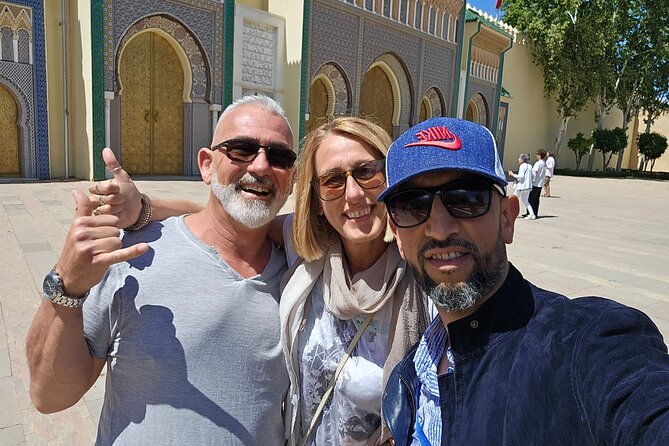
- Small private group (up to 6): less waiting, easier navigation, more time for questions.
- Mouanis in English and locally based: you get smooth routing through the medina maze.
- Crafts with real process: see how wood, textiles, and other handmade items are made.
- Most major stops are free: several shrines and landmark areas are listed with free admission.
- A working-industry stop: Chouara Tannery shows Fez beyond monuments.
- UNESCO time built in: Fes el Bali is included so the day has a clear payoff.
Fez el Bali, car-free and 9,400 streets, why a guide matters
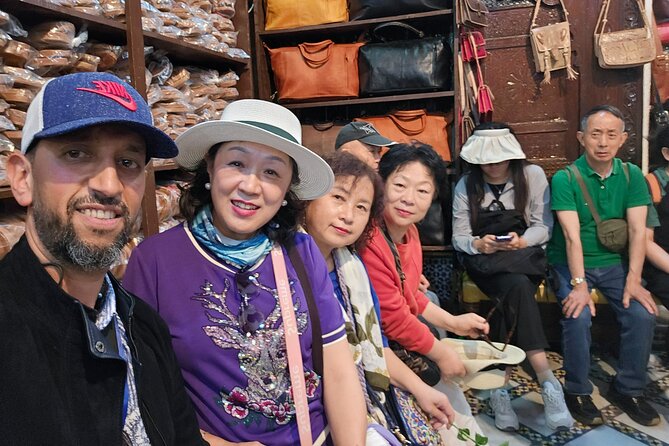
Fez medina is one of those places that can feel both magical and exhausting in the same hour. It is car-free, packed with narrow alleys, and big enough to make casual wandering time-consuming. The scale is huge, with thousands of streets and alleyways, and that is exactly why a guided route pays off.
This tour is built for a half-day feel, around 3 to 4 hours, starting at 10:30 am. It is priced per group (up to 6 people), which is a big deal in a medina where private guidance can otherwise get pricey fast. And because it is private, you are not stuck matching someone else’s pace. That also helps when the streets tighten up or when you want to linger near a craft display.
You will also get a simple modern touch: a mobile ticket, plus bottled water included. The tour meets at 8 Rue Sidi El Khiyat, Fes 30110, and ends near Rue Talaa Sghira (listed as 3269+V44). So it is not a do-si-do back to the same corner, which matters in Fez where the fastest route is rarely a straight line.
Finally, the tone here is grounded. This is not about rushing through photo stops. It is about moving efficiently so you can actually notice what makes Fez what it is: education, devotion, and crafts, all in close quarters.
More city days around Fez
- Day Trip to Chefchaouen the blue city
★ 4.0 · 187 reviews - Full Day Tour The Blue City , CHEFCHAOUEN on small-group
★ 4.5 · 101 reviews - Full-Day Tour to the Blue City Chefchaouen on Small-Group
★ 4.5 · 77 reviews - A day in the chefchaouen blue city
★ 4.5 · 64 reviews
al-Qarawiyyin Mosque and University: faith plus scholarship, in under an hour
Your day starts with the Mosque and University of al-Qarawiyyin. The site matters because this is not just a pretty building. It connects to the founding story of one of the Islamic world’s major learning centers.
Al-Qarawiyyin began as a mosque founded by Fatima al-Fihri in 857 to 859, then grew into a leading spiritual and educational hub during the Islamic Golden Age. Even if your visit is short, that timeline gives you a lens for what you are seeing. This is the kind of place where details like design, layout, and religious purpose all reinforce the idea of learning as part of daily life.
The tour keeps the stop tight, around 10 minutes, and the admission ticket here is free. That combination works well for most people: you get the big-name context without it turning into a long sit-down when you still have half a city to cover.
Practical tip: keep your expectations realistic. In active religious spaces, respect comes first. Move calmly, follow any guidance, and let your questions be simple and direct.
Nejjarine Museum at the funduq al-Najjarin: why wood matters in Fez
Next comes Nejjarine Museum of Wooden Arts & Crafts, inside Funduq al-Najjarin (also known as Fondouk el-Nejjarine). A funduq is a traditional caravanserai, basically an inn for merchants. In this case, the name points to the carpenters, the people whose work shaped the city’s trade identity.
The visit is listed at about 30 minutes, and admission is not included for this stop. That is worth flagging, because you may want to budget a little extra cash up front rather than hoping every site is free.
What you should get from this museum stop is value in a very Fez way: a chance to see craftsmanship explained through materials and form. Wood is not just decoration here. It is part of how people built furniture, doors, counters, and the visual rhythm of the medina. If you care about making, not just buying, this is a smart pause in the day.
The best way to use this stop: look at construction details and ask how pieces are made, then carry that “how” back to the street. That is when the rest of your tour starts clicking.
Cherratin Madrasa (Ras al-Cherratine): rope makers and the Alawi era
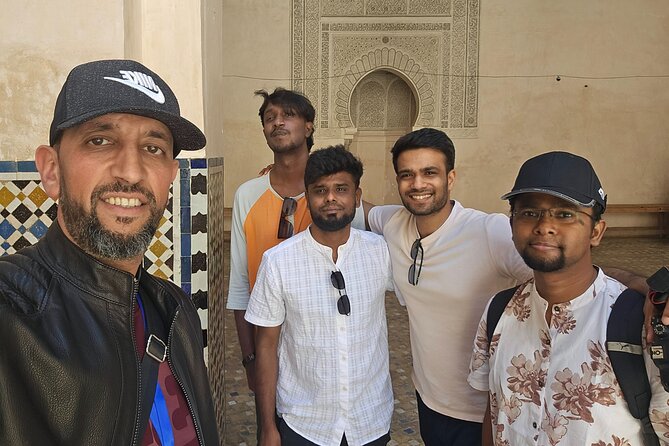
After the wood focus, the tour turns to education and religious architecture with Cherratin Madrasa, also connected to the names Er-Rachidia Madrasa or Ras al-Cherratine Madrasa.
This madrasa is tied to the year 1670, built by the Alawi sultan Moulay al-Rashid. The title you will hear, “rope makers,” is especially interesting because it hints at a working world. It suggests how professions and community life sat alongside religious study.
The stop is about 20 minutes, and admissions are listed as not included. So again, you will want to expect a small extra cost for this part of the day.
How to get the most out of a short madrasa stop: don’t treat it like a quick exterior. Notice the way the space is meant for learning and movement, and listen for simple explanations rather than trying to “master” architecture in 20 minutes. Fez rewards attention, not speed.
Zaouia of Moulay Idriss II: Fez’s origin story, not just a tomb
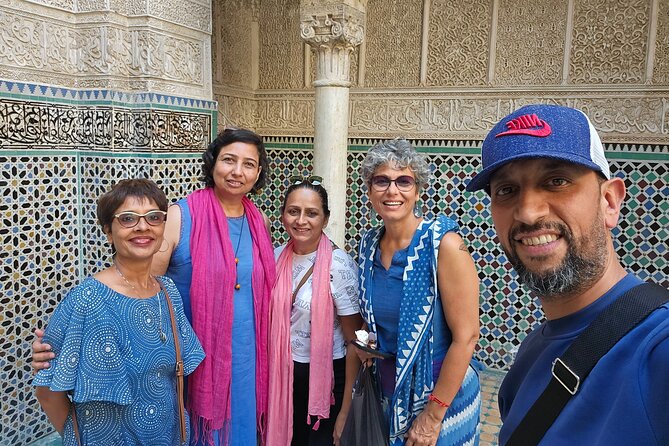
Then you get the historical anchor of the city: the Zaouia of Moulay Idriss II. A zawiya is an Islamic shrine and religious complex, and this one contains the tomb of Idris II, also known as Moulay Idriss II. He ruled from 807 to 828, and is considered the main founder of Fez.
This is a 10 minute stop and is listed as free. The short length is intentional. It gives you the origin story, then keeps you from losing momentum in a city where momentum is everything.
Even in a brief visit, you can sense why this shrine is important. It ties the medina’s scale and identity to a founder figure, and it explains why Fez feels like more than a collection of old buildings. It is a city with spiritual continuity.
Practical note: since this is a shrine area, dress and behavior matter. Keep things respectful and quiet, especially if you spot people praying or gathering.
Chouara Tannery: seeing the city’s older work live
Next is Chouara Tannery, listed as the largest tannery in the city and one of the oldest. It is located in Fes el Bali near the Saffarin Madrasa, close to the Oued Fes (also known as Oued Bou Khrareb).
This is a 30 minute stop, and admission is listed as free.
If you only visit palaces and museums, you miss a huge part of Fez. The tannery pulls you back into everyday history, where craft and labor are the real engines of the old city. You will be surrounded by a working industry with a sensory edge. Smell and noise can be intense, so come ready.
What I find useful here is the “why” that a guide can add. Instead of treating the tannery like a photo scene, you get help connecting it to Fez’s identity as a craft center and trading hub.
Small reality check: if you are sensitive to strong odors, plan your expectations. You can still enjoy the visit, but you may want to keep the time focused and avoid lingering too long at the peak sensory moments.
Other tours led by the history


Berber carpet workshop: learning what to compare, not just what to buy
Carpet shopping in Fez can be fun or frustrating, depending on whether you know what you are looking at. This stop aims to fix the frustration.
The tour includes a Berber Carpet Shop where you are supposed to witness the creative process and learn the difference between Arab and Berber carpets. The visit is listed at 30 minutes and is free.
This is where value shows up if you like making sense of what you see. A guide’s job is not only navigation. It is also translation: turning “nice carpet” into “here is why this looks different.” That helps you shop with confidence, and it also helps you avoid paying extra simply because you lack the basic comparison points.
One practical tip for this kind of workshop stop: set a mindset before you go. If your goal is to buy, decide your budget range early. If your goal is just to learn, tell yourself you are there for the process, not the sales pressure.
Fes el Bali UNESCO: connecting the big monuments into one walking story
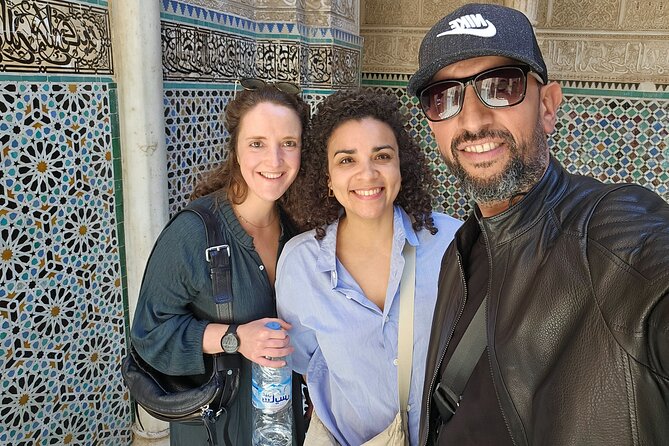
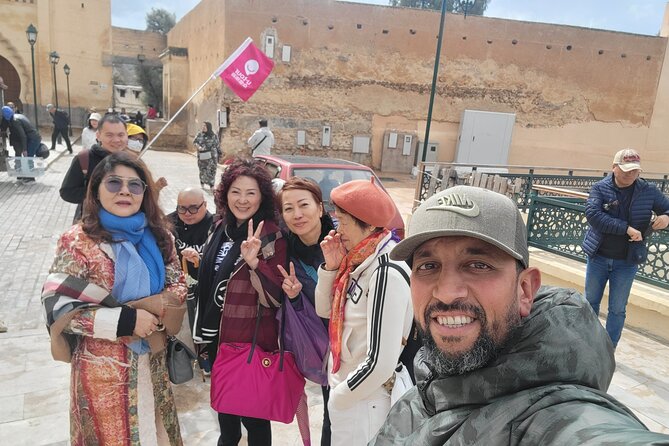
The heart of your walk is time inside Fes el Bali, the oldest walled part of Fez and a UNESCO World Heritage site. The listing states it was founded as the capital of the Idrisid dynasty between 789 and 808 AD. UNESCO listed Medina of Fez in 1981.
This part is about 1 hour and has free admission.
Why this stop is not just filler: once you have seen a university, a shrine, a craft inn, a madrasa, and a working tannery, the UNESCO “big picture” makes more sense. You can start linking the dots. The medina is not a random pile of old stones. It is an organized historical system where education, trade, worship, and labor all overlap.
At this stage, your guide’s navigation helps again. Fez can feel like you are always circling back. With a planned route, you get to experience the scale without losing yourself completely.
Sidi Ahmed al-Tijani Zawiya: Sufi culture in a short pause
To close the spiritual loop, the itinerary includes Sidi Ahmed Al-Tijani Zawiya. This is a Sufi zawiya, a religious complex used for education and commemoration.
The stop is listed at 10 minutes and has free admission.
This is a good placement late in the day. After the sensory work of the tannery and the sales energy of shops, a short shrine stop helps your brain reset. It also rounds out the city’s identity beyond “old buildings,” and reminds you that the medina is still a living spiritual place.
If you want an experience that feels balanced, this stop helps you get it without stretching the tour too long.
Price and logistics: how the math works for a private Fez medina day
Let’s talk money in a straightforward way. The price is $29.04 per group for up to 6 people. That is a low, practical structure, especially when your day includes multiple stops and a guide who helps you get around quickly.
What is included:
- Bottled water
What is not included:
- Restaurants (listed as 15 USD to 25 USD)
- Parking fees (2 USD)
- Attractions admission fees (2 USD)
- Cafes (listed at 1.5 USD)
- Transport fees (20 USD)
And two specific sites are marked as admission not included:
- Nejjarine Museum of Wooden Arts & Crafts
- Cherratin Medersa
So the value question becomes simple. If you pay for a guide, you still want to keep most of the day’s main sites free or low-cost. This tour does that by stacking many free admission stops, then using the paid-entry sites as focused craft and education moments rather than turning the day into a ticket-heavy marathon.
Also note the format: it is a private tour/activity, meaning only your group participates. In a medina, that usually improves comfort and flow. You can ask questions, slow down, or speed up without worrying about regrouping a big crowd.
Timing matters too. The tour starts at 10:30 am and runs 3 to 4 hours. That is enough time to see meaningful sites, but not so long that you are exhausted before you can eat or shop later.
How to get the most from the tour, before you step into Fez’s maze
Here is how I’d prepare if you want this day to feel smooth, not stressful.
First, wear shoes you can trust. You are on a walking route through a car-free medina with lots of alleyways. Even if the stops are short, the movement between them adds up.
Second, plan for small cash spending. Admissions are not included at two key stops, and the listing also notes small attraction admission fees. Add a budget for a cafe and you will avoid the awkward, I hope I have enough money moments.
Third, come with one goal besides sightseeing. Maybe you want to understand Fez’s craft economy. Maybe you want to feel the city’s spiritual timeline from al-Qarawiyyin to Idriss II. When you walk in with that focus, each stop becomes more than a box checked.
Finally, use the group size advantage. With up to 6 people, it is easier to hear explanations and ask direct questions. If you have a specific interest, say it early to Mouanis so he can lean into it during the route.
Who this Fez medina tour fits best
This tour is a great fit if you:
- Want hidden-feeling historical sites without getting lost
- Care about craft process, not just the end product
- Prefer a private group flow over joining a larger group
- Like the mix of faith sites, education landmarks, and working industries
It might be less ideal if you:
- Hate walking or you want very long time at a single museum
- Plan to skip religious sites altogether
- You do not want any extra spending on admissions not included
Should you book this Fez medina tour with Mouanis?
If you want a 3 to 4 hour Fez day that blends major history with live craft observation, this is a smart choice. The group size is small, the structure keeps you from wasting time, and many stops are free, which improves the value.
I’d book it especially if you want practical navigation and a local perspective. Mouanis is described as locally based, fluent in English, and able to cut through the medina’s chaos without turning the day into a lecture. The result is a route where you can actually enjoy what Fez is: education, shrines, trade, and hands-on making, all in one walk.
FAQ
How much is the tour for a group?
The price is $29.04 per group, up to 6 people.
How long does the tour last?
The tour lasts about 3 to 4 hours.
What time does the tour start?
The listed start time is 10:30 am.
Where do we meet and where does the tour end?
Meeting point: 8 Rue Sidi El Khiyat, Fes 30110, Morocco.
End point: 3269+V44, Rue Talaa Sghira, Fès, Morocco.
Is this tour private?
Yes. Only your group participates.
What’s included in the price?
Bottled water is included.
Are attraction admissions included?
Some admissions are not included. Specifically, tickets are not included for the Nejjarine Museum of Wooden Arts & Crafts and Cherratin Medersa. Other listed stops are marked as free admission. The tour also notes small attraction admission fees that are not included.
Can I cancel for a full refund?
Yes, free cancellation is available. You can cancel up to 24 hours in advance for a full refund. If you cancel less than 24 hours before the start time, the amount paid is not refunded.
When will I receive confirmation after booking?
Confirmation is received within 48 hours of booking, subject to availability.
Tours Led by the History
- Full-day Historical Meknes Volubilis and Moulay Idriss Tour★ 4.5 · 196 reviews
- Discover the secrets of the Medina of Fez: guided cultural tour (private)★ 5.0 · 68 reviews
- History and culture with Fes Medina private tour guide★ 5.0 · 56 reviews
- Wonderful Day Tour in Fes: A Historical and Cultural Guided Trip★ 5.0 · 53 reviews
City Days Around Fez
- Private Half-Day Tour of the Authentic City of Fez★ 5.0 · 199 reviews
- Day Trip to Chefchaouen the blue city★ 4.0 · 187 reviews
- Full Day Tour The Blue City , CHEFCHAOUEN on small-group★ 4.5 · 101 reviews
- Full-Day Tour to the Blue City Chefchaouen on Small-Group★ 4.5 · 77 reviews
Added recently from around Fez

More City Tours worth a look.
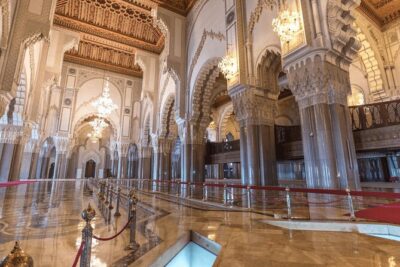 ★ 5.0Casablanca City Tour with Hassan II mosque ticketFrom $522,480 reviews
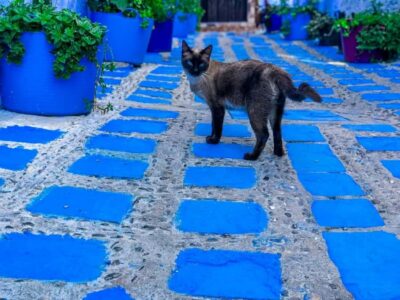 ★ 4.6Blue City magic: Affordable Day Trip from Fez to ChefchaouenFrom $221,960 reviews
 ★ 5.0Marrakech: Private Guided Half-Day City TourFrom $391,249 reviews
 ★ 4.5Marrakech Historical and Cultural Tour – Half Day City TourFrom $301,180 reviews
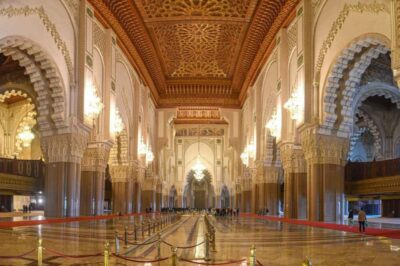 ★ 4.6Casablanca: City Tour with Hassan II Mosque Entry TicketFrom $531,137 reviews
 ★ 4.5Casablanca: Hassan II Mosque & City Highlights TourFrom $41573 reviews
★ 5.0Casablanca: Hassan II Mosque & City Highlights TourFrom $40526 reviews
 ★ 5.0Highlights of Marrakech: Private Half-Day City TourFrom $86478 reviews
Where else this one sits