
REVIEW · ATLAS MOUNTAINS
From Marrakesh: 2-Day Mount Toubkal Trek
Toubkal makes altitude feel personal. This 2-day Mount Toubkal trek out of Marrakesh threads through Imlil and the Toubkal summit at 4,167 m, with stops at villages like Aremd and the shrine of Sidi Chamarouch. I especially like how the route mixes mountain walking with real Berber village culture, and I also like that the whole thing runs as a small group capped at 10.
One thing to factor in, though: the summit is weather-dependent. In winter or rough conditions, you may not reach the top and could end up doing the Imlil area instead.
In This Review
- Key highlights before you go
- From Marrakesh to Imlil: the transfer that turns a trip into a trek
- Imlil, Aremd, and Mizane Valley: where the trek earns its soul
- Sidi Chamarouch and the first real climb above the snow line
- Toubkal Refuge: meals, sleep reality, and the mental reset
- Summit morning on Toubkal: early start, scree, and 360-degree motivation
- Gear, altitude, and winter rules that can change the plan
- What you pay for: value of the included meals, refuge, and local guidance
- Guides make the difference: the caring leadership behind the best outcomes
- If the summit changes: how this trek adapts in real mountain weather
- Who should book this 2-day Toubkal trek from Marrakesh
- Should you book Click Excursions, the 2-day Mount Toubkal trek?
- FAQ
- How high is Mount Toubkal on this trek?
- Where does the trek start, and do you pick up from Marrakesh?
- Where do I sleep overnight?
- Are meals included during the 2 days?
- What is included in the price besides the guide?
- What trekking gear should I bring?
- Do I need crampons or ice picks in winter?
- How big is the group?
- Is Wi-Fi included?
- What happens if weather conditions are not good enough for the summit?
Key highlights before you go
- Scenic Marrakesh-to-Imlil transfer so you start hiking already oriented in the High Atlas
- Sidi Chamarouch shrine stop gives the day more meaning than just climbing
- Day 1 ascent to Toubkal Refuge along mule tracks and above the snow line
- Day 2 southern circle summit route with early starts and views that keep you motivated
- 360-degree panorama from Toubkal over the Marrakech Plain, High Atlas, Anti-Atlas, and toward the Sahara
- Guides who manage pace and safety (Imlil to summit, plus real support when people struggle)
From Marrakesh to Imlil: the transfer that turns a trip into a trek
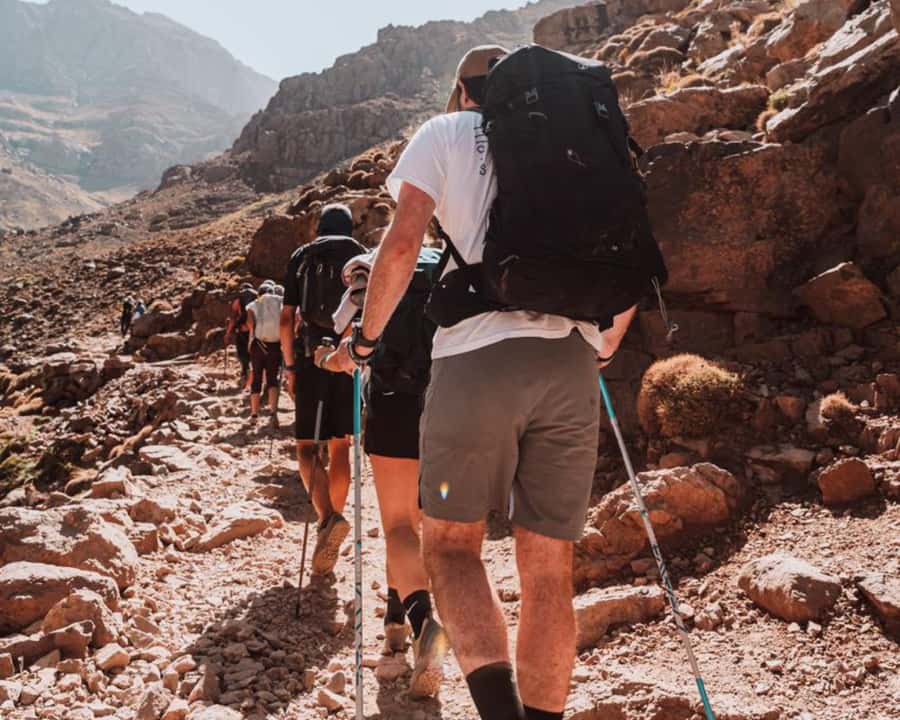
The best part of starting this Toubkal trek is that you are not dropped into confusion. You’ll get picked up from your hotel or riad in Marrakesh, then ride out toward Imlil, the usual gateway to the High Atlas.
This ride matters more than it sounds. In a short 2-day trip, getting to the trailhead smoothly means you can save your energy for the climb, not for logistics. If your riad is hard to reach by car, you’ll use a nearby meeting point, and you’ll get those pickup details by email the day before (usually by late afternoon). Plan to be ready 5 to 10 minutes early.
Also, the group stays small, so you’re not stuck in a slow-moving crowd. A calm start is part of why people finish strong, even when the second day asks a lot of your legs.
Other ways up into the Atlas
- Marrakech: Atlas Mountains, Ourika Valley, Waterfall & Lunch
★ 4.8 · 15,834 reviews - From Marrakech: Atlas Mountains Full-Day Hiking Trip w Lunch
★ 4.8 · 7,417 reviews - From Marrakech: Atlas Mountains Day Trip with Camel Ride
★ 4.8 · 4,709 reviews - Marrakesh: Ourika Valley & Atlas Mountains, Day Trip + Lunch
★ 4.9 · 1,865 reviews
Imlil, Aremd, and Mizane Valley: where the trek earns its soul
Imlil is more than a starting village. It’s the place where the trek turns from a physical task into a journey through mountain life. You’ll tour Imlil first, then head toward Aremd and along the Ait Mizane Valley, which is where you start feeling the rhythm of the region.
Aremd is one of those stops that feels simple but real. You’re not just passing through scenery. You’re walking through the living geography of the High Atlas: stone houses, narrow paths, and the kind of mule-track trail that tells you locals have used these routes for generations.
The Mizane Valley adds breathing space too. When your body starts to tighten up, wide views and valley walking can break the grind into something more manageable. I like this structure because it prevents day one from feeling like nonstop suffering.
Sidi Chamarouch and the first real climb above the snow line
After you’ve worked your way along the valley paths, you’ll reach the shrine of Sidi Chamarouch. Even if you’re not the type to chase religious sites, this stop gives you a reset point. It also helps explain why these mountains matter to the people who live near them.
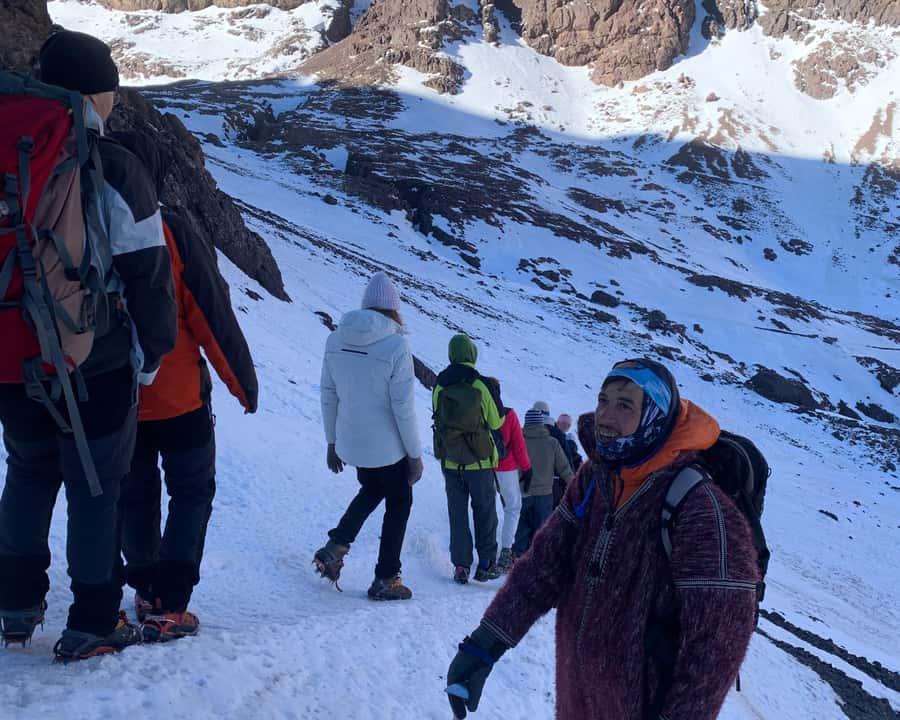
From there, the walking starts to feel more “mountain trek.” You’ll follow mule tracks into higher, rockier terrain, steadily climbing above the snow line. This is where a guided trek becomes practical. A local mountain guide keeps you on the right lines, manages footing on uneven ground, and helps your pace stay realistic.
You’ll also hear the mountains before you fully see them. There’s a shift in wind and temperature as altitude changes, and you’ll feel it most on this part of day one. Build your effort gradually here, because you’ll need it later when you reach the Toubkal Refuge for the night.
Toubkal Refuge: meals, sleep reality, and the mental reset
Day one ends at the Toubkal Refuge, where you’ll stay for one night. This is a working mountain refuge, not a hotel. What you get is the essentials done well: a warm base, and meals that keep your energy up for a summit attempt.
The included meals are a big deal on this trip. Many people say the food is plentiful and tastes local and satisfying. You’ll get all meals during the trek, with soft drinks not included.
Sleep is where expectations need to be realistic. Some hikers have noted that the refuge sleep can be basic, and one reviewer recommended bringing earplugs. I’d take that seriously. When you’re woken early for summit morning, poor sleep can make even a good guide feel like extra pressure.
The refuge night is also a mental reset. You’re not “done” when you sit down to eat. You’re preparing, gear-checking, and getting your head right for the early climb the next day.
Summit morning on Toubkal: early start, scree, and 360-degree motivation
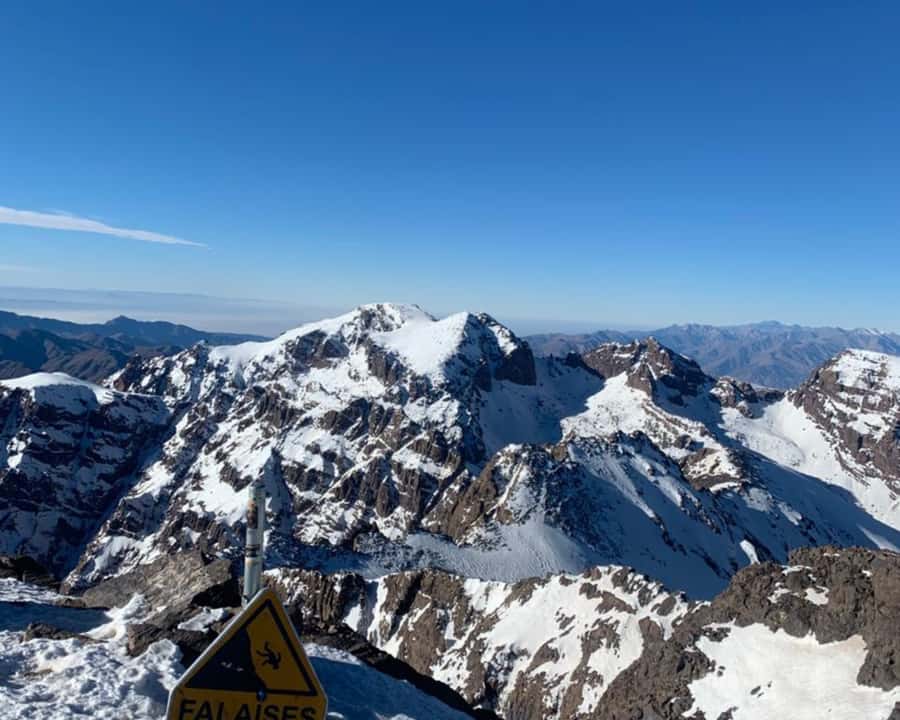
Day two follows the southern circle route. The climb is not described as an all-out steep wall the whole time, but it can still feel hard because of scree, altitude changes, and the sheer time spent above 3,000 meters.
You should expect an early start. One review mentioned a very early wakeup around 4am in the dark for the final push, which is common for summit day routes where timing matters. Even if your start time is different, be ready for a cold, early beginning.
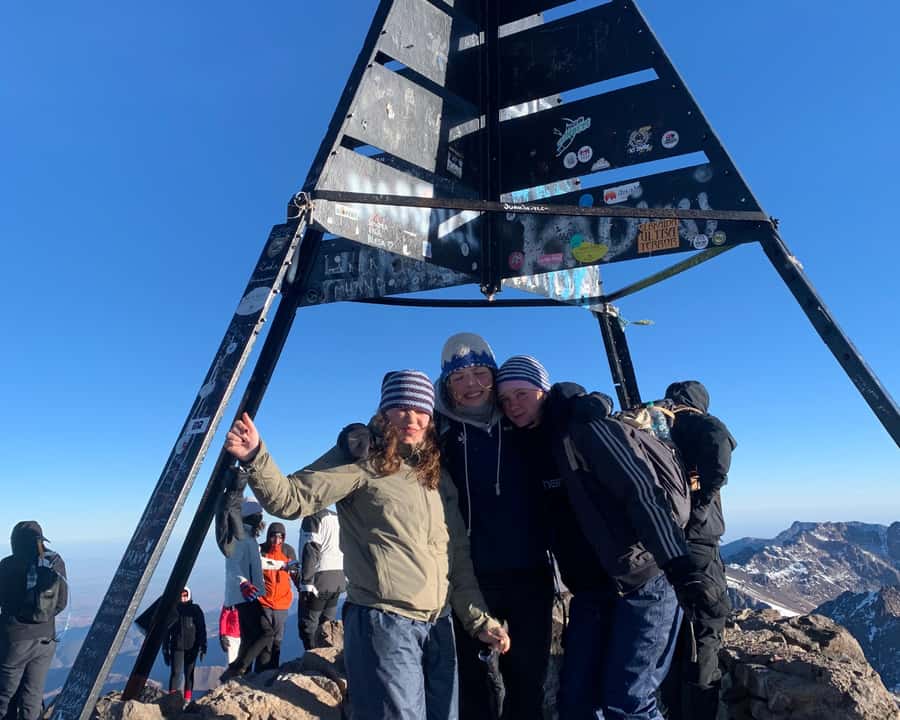
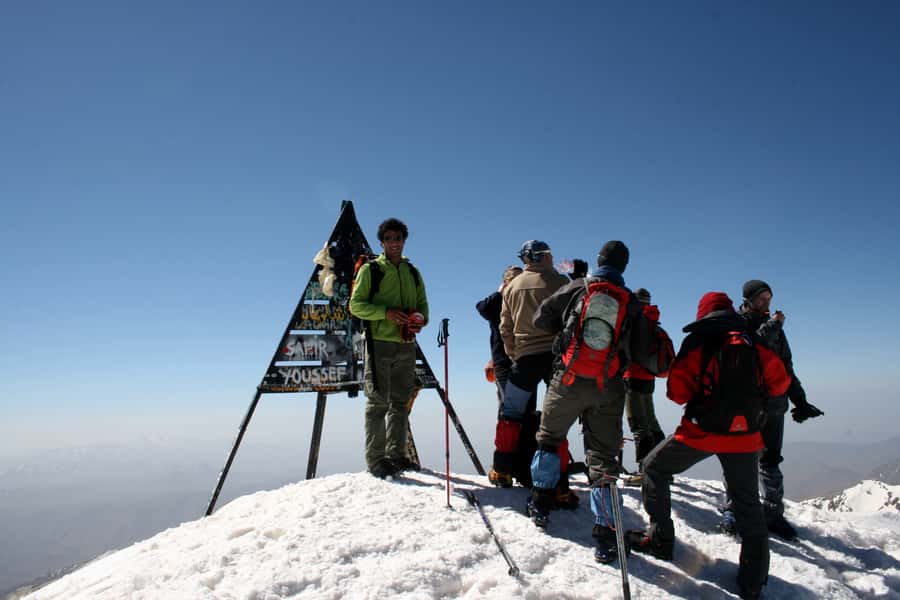
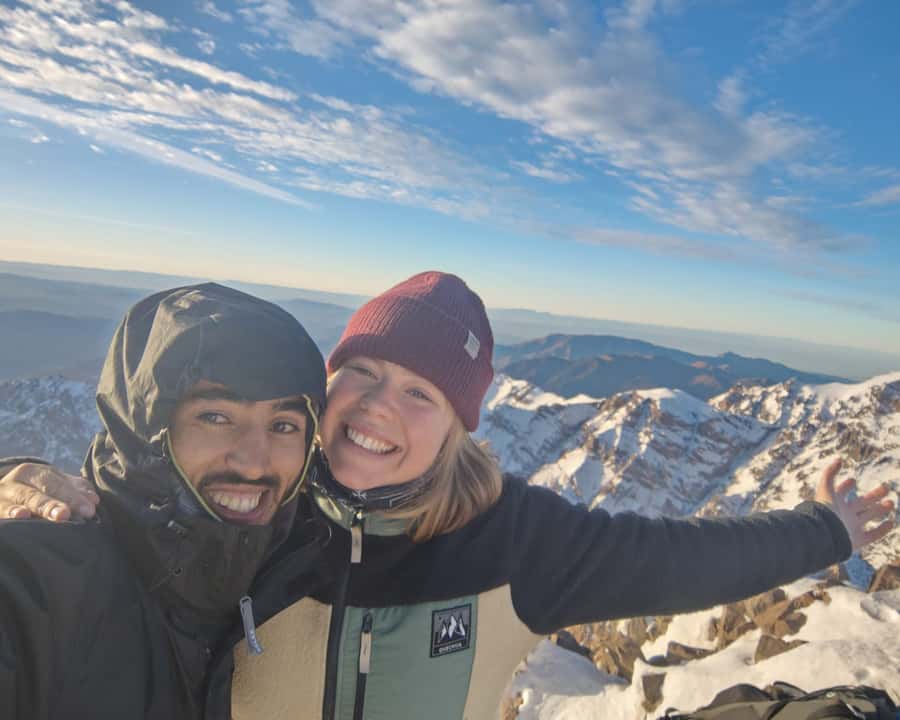
When the summit finally arrives at 4,167 meters, this is the payoff: panoramic 360-degree views. From the top, you can see the Marrakech Plain and the High Atlas to the north. In the south, you can look out toward the Anti-Atlas and even in the direction of the Sahara Desert. It’s the kind of view that makes you stop thinking about each aching step and start noticing the bigger picture.
Then it’s down. You’ll trek back to Imlil and return to Marrakesh. Downhill feels easier on paper. In practice, the mountain still asks for your balance and knee control, especially after a summit.
Gear, altitude, and winter rules that can change the plan
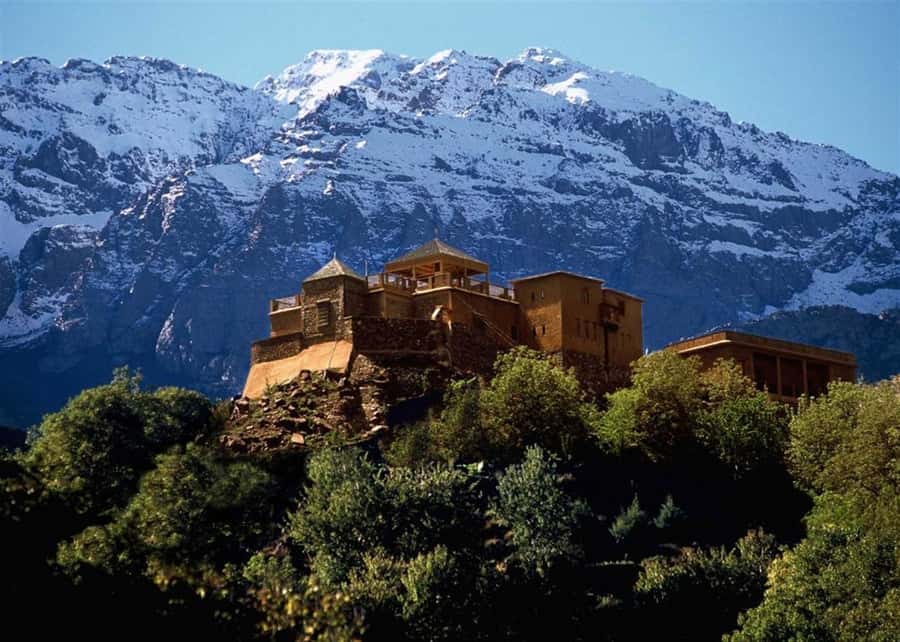
This trek is doable for many fit hikers, but it is not casual. Your guide will help, yet your body still has to handle altitude. You’re hiking in the High Atlas, and you’ll reach a true summit altitude.
Bring trekking gear and hiking shoes. If you forgot something, equipment rental is available on site. In winter, snow can mean you need crampons and ice picks, and you can rent them there as well. Your guide will help you use the equipment if conditions require it.
One more practical tip: consider altitude support. A reviewer specifically suggested getting altitude medication in Marrakesh, so if that’s part of your routine, plan to handle it before you start hiking.
And here’s the real mindset advice: assume the mountain can be slow or difficult on specific sections, especially with scree. If you push too hard early, you pay for it later. Let the guide set the pace, take breaks when suggested, and treat slow progress as smart progress.
Other routes with some height in them

What you pay for: value of the included meals, refuge, and local guidance
At $125 per person for a 2-day Mount Toubkal trek, the value is mostly in what’s handled for you. You get:
- a local mountain guide
- transport to and from Imlil
- 1 night in Toubkal Refuge
- all meals
- Wi-Fi
That’s a lot to pack into a short itinerary. A trekking guide is not just “company.” They manage route finding, pacing, and safety decisions when weather changes. Transport saves you from trying to solve rural logistics on your own. The refuge stay and meals remove the biggest headache for a summit schedule.
Soft drinks are not included, so you’ll likely want to budget a little extra for what you drink beyond the provided meals. Also, bring snacks if you like extra calories during climbs. Several reviews mention snack stops and food purchases along the way, so having your own backup can reduce stress.
Guides make the difference: the caring leadership behind the best outcomes
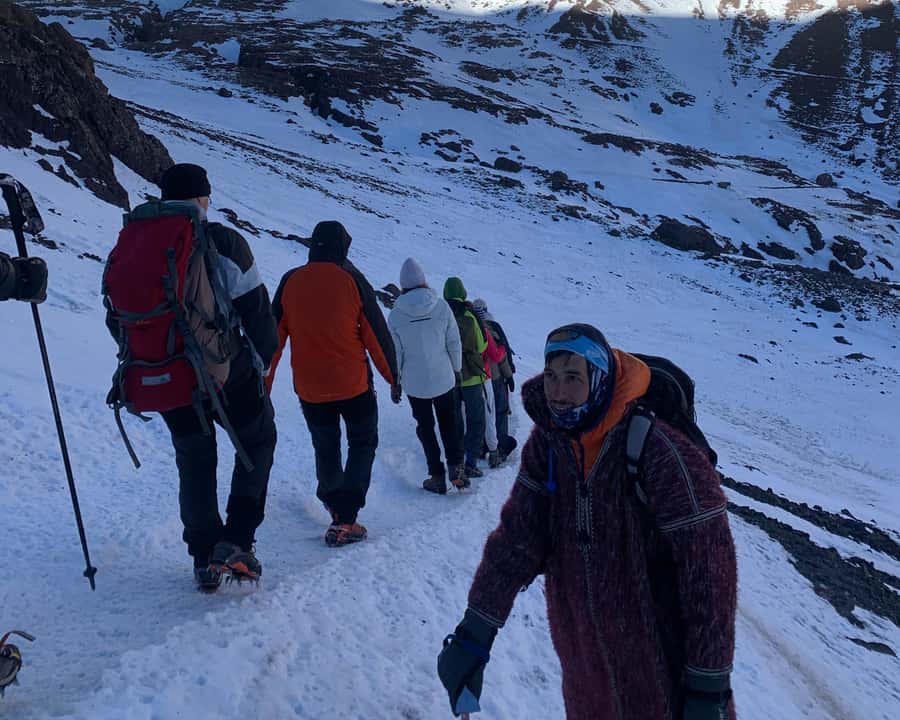
This trip runs on guide skill and emotional steadiness as much as physical guidance. In the feedback, I saw a consistent pattern: guides keep people safe, adjust pace, and handle problems without panic.
Names that came up repeatedly include Mustafa (also spelled Moustfa), Raschid, Kamal, Mohamed, Ahmed, Hassan, Jamal, Kamel, and Ayoub for the driver. People praised guides for:
- staying close when someone struggled
- managing snow safely and keeping everyone moving as a group
- helping with last-meter challenges so you don’t spiral into fear
- handling curveballs like illness, weather, or even route closures
One review stood out for me on the human side. A hiker who felt ill on day one wanted to turn back, and the guide walked down with them and organized a taxi. That’s not a small detail. It’s why a guided trek matters when things don’t go perfectly.
If you’re counting on a specific language, note that the operator lists English, French, Spanish, and Arabic. Still, I’d consider asking in advance if language comfort is critical for you, since one group reported a tougher time with English.
If the summit changes: how this trek adapts in real mountain weather
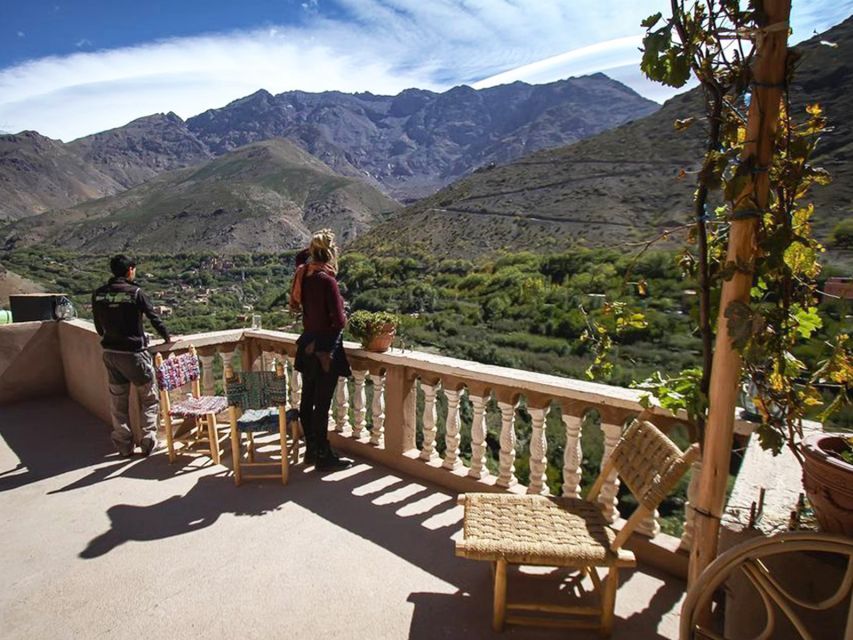
A summit attempt is always a gamble with conditions. The operator states that if the weather is not good enough to hike Toubkal, you may only visit Imlil.
In practice, that adaptability shows up in how your guide handles the plan. For example, one review mentioned police restrictions on reaching the summit after an incident on the mountain the day before. The group pivoted and did a hike around Imlil and then climbed a different mountain closer to 2,600 meters the next day.
So the takeaway is simple: you should book this trek for the mountain experience, not only for a guaranteed summit photo. If you’re flexible, you’ll still get a memorable High Atlas hike even when Toubkal is off the table.
Who should book this 2-day Toubkal trek from Marrakesh
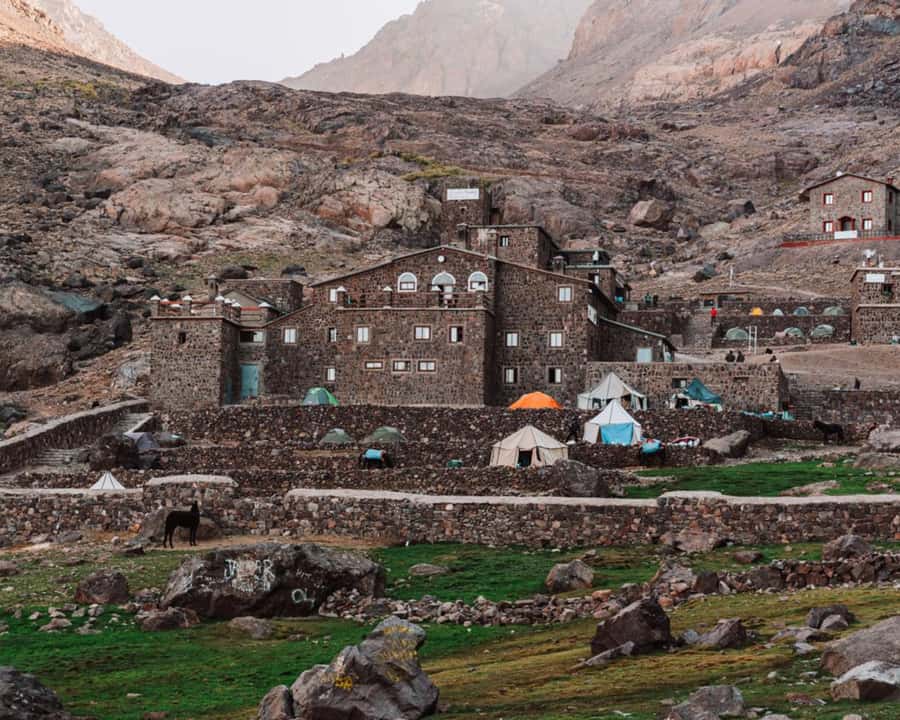
This trek is best for people who want a real summit experience in a short time, without planning the logistics. You’ll like it if:
- you’re comfortable hiking uphill for hours on uneven ground
- you can handle early mornings and cold air at altitude
- you want a guided route that prioritizes safety
- you enjoy village culture as part of the walk, not just a background detail
It’s also great for solo travelers who want companionship and structure. The group limit keeps it intimate, and guides are used to pacing mixed abilities.
If you hate uncertainty, or if you want guaranteed hiking to the exact summit no matter what, you’ll need to think carefully. Even with excellent guides, mountain weather can change everything.
Should you book Click Excursions, the 2-day Mount Toubkal trek?
I think you should book this trek if your priority is a guided, small-group Mount Toubkal experience that includes transport, meals, refuge sleep, and local leadership, all with the payoff of 360-degree summit views.
I wouldn’t book it only if you want a guaranteed summit regardless of conditions, or if you’re not prepared for altitude and early starts. Bring proper shoes, plan for winter gear if needed, and accept that the best trek days are often the ones where you stay calm and follow the guide.
If that sounds like your style of travel, this is strong value for the money and a very solid way to experience the High Atlas beyond Marrakesh.
FAQ
How high is Mount Toubkal on this trek?
The summit point is Mount Toubkal at 4,167 meters.
Where does the trek start, and do you pick up from Marrakesh?
You’ll be picked up from your hotel or riad in Marrakesh. If your riad is not accessible by car, you’ll use a nearby meeting point just a short walk away.
Where do I sleep overnight?
You’ll stay for one night at the Toubkal Refuge.
Are meals included during the 2 days?
Yes. All meals are included in the trek package.
What is included in the price besides the guide?
Transport to and from Imlil Village, 1 night at Toubkal Refuge, all meals, and Wi-Fi are included. Soft drinks are not included.
What trekking gear should I bring?
You should bring trekking gear and hiking shoes. If you don’t have the equipment, you can rent it there.
Do I need crampons or ice picks in winter?
In winter, when there is snow, crampons and ice picks may be required. You can rent them there and your guide will help if needed.
How big is the group?
The group is small and limited to 10 participants.
Is Wi-Fi included?
Yes, Wi-Fi is included.
What happens if weather conditions are not good enough for the summit?
If the weather is not good enough to hike Toubkal, you can only visit Imlil.
Routes With Some Height
- From Marrakech: Ouzoud Waterfalls Guided Hike and Boat Trip★ 4.7 · 33,630 reviews
- From Marrakech: Atlas Mountains Full-Day Hiking Trip w Lunch★ 4.8 · 7,417 reviews
- Marrakech: Ourika Valley Trip with Waterfall Hike★ 4.6 · 6,792 reviews
- Marrakech: ourika valley lunch & guided hike to waterfalls★ 4.9 · 3,737 reviews
Higher Into the Atlas
- Marrakech: Atlas Mountains, Ourika Valley, Waterfall & Lunch★ 4.8 · 15,834 reviews
- From Marrakech: Atlas Mountains Full-Day Hiking Trip w Lunch★ 4.8 · 7,417 reviews
- From Marrakech: Atlas Mountains Day Trip with Camel Ride★ 4.8 · 4,709 reviews
- Marrakesh: Ourika Valley & Atlas Mountains, Day Trip + Lunch★ 4.9 · 1,865 reviews
Added recently from around Marrakesh
More Atlas Mountains and Berber Village Trips worth a look.
 ★ 4.8Marrakech: Atlas Mountains, Ourika Valley, Waterfall & LunchFrom $1615,834 reviews
 ★ 5.0Berber villages : Atlas Mountains Day Hike from MarrakechFrom $1514,007 reviews
 ★ 4.9Marrakesh: Ourika Waterfalls, Atlas Mountains, Guide + LunchFrom $179,986 reviews
 ★ 4.8From Marrakech: Atlas Mountains Full-Day Hiking Trip w LunchFrom $267,417 reviews
 ★ 4.8Marrakech: Atlas Mountains & Agafay Desert Tour w Camel RideFrom $145,080 reviews
 ★ 4.8From Marrakech: Atlas Mountains Day Trip with Camel RideFrom $174,709 reviews
 ★ 4.9Marrakech: Atlas Mountains, Waterfalls, Ourika Valley +LunchFrom $113,544 reviews
 ★ 5.0Atlas Mountains & 5 Valleys Tour from Marrakech – All inclusive –From $912,913 reviews
Where else this one sits