REVIEW · MOROCCO
Cycling Adventure in Marrakech
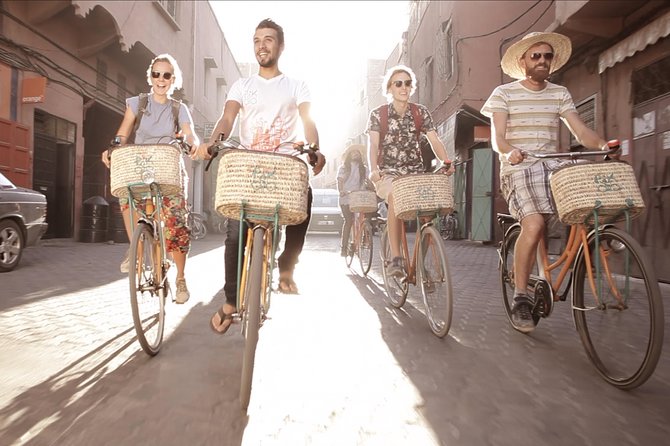
Marrakech feels different when you pedal through it. This Pikala bike tour mixes classic landmarks with everyday neighborhoods, led by trained young Moroccan guides who talk about family life, religion, and modern changes. You get a guided route through the Medina and into Gueliz, plus stops that actually let you interact with the city.
What I like most is the human side of the experience. Guides like Yasser, Hamit, Kaula, Zouhair, and Khawla are repeatedly praised for sharing stories from their own childhood and explaining how daily life works, not just pointing at monuments. I also really like the food and daily-life pacing, with bakery time, juice and sweets, and a traditional bathhouse visit that makes Morocco feel personal, not staged.
One thing to consider: this is not a relaxed cruise. The streets can feel chaotic, bikes have mixed feedback in a few cases, and at least one review is blunt that it is not for the faint hearted. If you are not confident in traffic, or if your bike comfort is a big deal, think twice.
In This Review
- Quick hits before you go
- Getting Your Bearings on a Bike in Marrakech
- Pikala Bikes and Why the Social Mission Matters
- Price and Time, and Why It’s Such Good Value
- Where You Start, and How the 3 Hours Typically Flow
- The Heart of the Ride, Medina Streets and Key Landmarks
- Gueliz Contrast, a Breather Between Old and New
- The Bakery Stop and Why It’s More Than a Snack
- Cafe Clock for Juice and Sweets, a Real Cross-Cultural Pause
- Hammam Time, Seeing Ritual and Respect Up Close
- Market Power, Second-Hand Chaos, and How to Enjoy It
- The Tomb of One of the Seven Saints, Closing With Meaning
- Bikes, Traffic, and Your Comfort Level in the Medina
- Who Should Book This Pikala Bike Tour?
- Should You Book This Cycling Adventure in Marrakech?
- FAQ
- How long is the Marrakech bike tour?
- How much does the tour cost?
- Where does the tour start and end?
- Are there morning or afternoon departures?
- What is included during the tour?
- What kind of group size should I expect?
- Is the bike tour suitable for most people?
- What is the cancellation policy?
Quick hits before you go
- Local Pikala-trained guides: young guides help you understand daily life, not just sights.
- Medina to Gueliz contrast: narrow, hectic lanes then a calmer, newer part of town.
- Everyday stops: public bakery, hammam, market time, and the Cafe Clock break.
- Landmark shortcuts with context: you pass Koutoubia, Kasbah, and Agdal gardens without turning it into a museum sprint.
- Small group size: up to 20 travelers, which keeps questions possible and the ride controlled.
- Snack-and-water rhythm: bottled water and included juice and sweets help keep momentum.
Getting Your Bearings on a Bike in Marrakech
Marrakech is famous for its medina, but it is also famous for being tight, loud, and full of moving parts. A bike tour changes your speed of understanding. On foot, you stop to read every sign and dodge every cart. On a bike, you keep rolling, and the city starts to make patterns.
This ride is built around that idea. You start in the historic core and move through the city’s different “moods,” including the Medina and the newer neighborhood Gueliz. It is still sightseeing, but the goal is to show you how people actually move through their day.
The route is guided, with frequent stops for photos and conversation. That matters because the medina is not just pretty, it is practical. You’ll learn why certain streets are used, what people are doing, and how daily routines shape what you see.
Weighing the options? These are the Marrakech trips readers open next.
- Berber villages : Atlas Mountains Day Hike from Marrakech
★ 5.0 · 14,007 reviews - 3 Days Desert Tour From Marrakech To Merzouga Dunes & Camel Trek
★ 5.0 · 10,125 reviews - 3-Day Marrakech to Merzouga Desert Tour: Camel Rides & Overnights
★ 5.0 · 8,734 reviews - 3-Day Marrakech to Fes Sahara Desert Tour via Merzouga
★ 5.0 · 6,546 reviews
Pikala Bikes and Why the Social Mission Matters
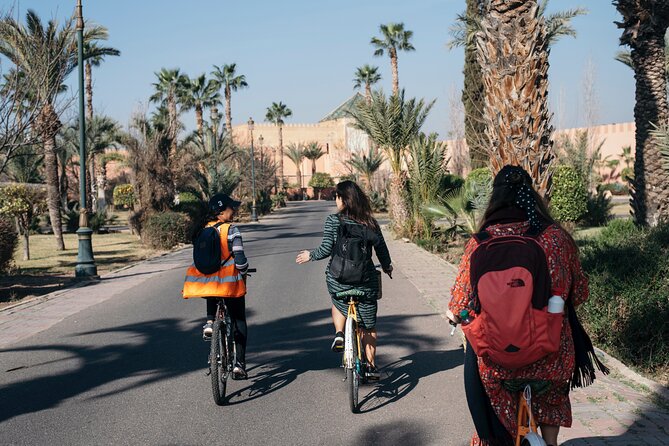
This tour is run by Pikala, a local non-profit project. The guides are local young Moroccans who are trained by Pikala, and they talk with you as you ride. That is a key difference from the usual “guide voice plus photos” format.
The tour’s focus is big-picture human context. You are not only hearing facts about buildings. You’re hearing how family matters, how religion shows up in everyday life, and what modernization looks like from the inside. It is the kind of explanation that helps you decode what you are seeing, especially if your previous experience in Morocco was mostly markets and hotels.
And yes, supporting a social project is part of the value here. When you choose an activity like this, your money is tied to training and community work, not just a sightseeing product.
Price and Time, and Why It’s Such Good Value
At $33.28 per person, for about 3 hours, this is priced like a real local activity rather than a luxury tour. The time is also sensible. Marrakech can wear you down. Three hours gives you a strong slice of the city without turning the day into a marathon.
You also get more than “ride plus guide.” The tour includes bottled water, and it includes juice and sweets at the cross-cultural Cafe Clock stop. Those small inclusions matter in Marrakech, where a long walk plus heat plus navigating can get expensive fast.
Finally, the group cap of 20 travelers helps. Bigger groups usually mean less talk time and more waiting. Here, the pace is fast enough to feel like an adventure, but structured enough that you can still ask questions.
Where You Start, and How the 3 Hours Typically Flow
You meet at 29 Rue Riad Laarous, Marrakesh 40000 and you ride, then return to the same meeting point. The start location is noted as near public transportation, which makes it easier to plug into your day whether you’re staying in the old city or over toward Gueliz.
Departure is offered in either the morning or afternoon, so you can match the ride to your energy level. In general, morning feels cooler and less chaotic, while afternoons can be more lively. Choose based on what you handle best.
The ride itself is structured with repeated stops. Expect frequent photo moments, plus moments where your guide will slow the group so you can talk and ask questions. That’s why the 3 hours doesn’t feel like a rush. It feels like a guided walk with wheels.
The Heart of the Ride, Medina Streets and Key Landmarks
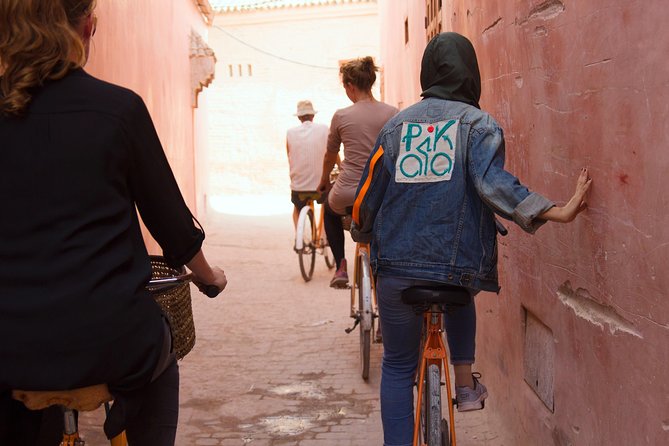
The Medina is where the tour earns its keep. You’ll cycle through the historic city center, where the streets are narrow and the vibe is intensely local. This is where you feel the real Marrakech momentum, and it’s also where your guide’s role gets most important.
On the way, you pass major city landmarks such as Koutoubia, Kasbah, and the Agdal gardens area. Even if you do not spend a long time inside each spot, passing them with local context helps. You’re not just seeing shapes on a skyline. You’re learning why these places matter and how they connect to the city’s layout.
Just be ready for the practical reality of riding in the Medina. It is crowded. People step out. Cars and bikes share space. Your guide keeps things moving, but you still need to stay alert and ride with the group.
Gueliz Contrast, a Breather Between Old and New
After the medina lanes, the tour continues through Gueliz, Marrakech’s newer side. This is where the city starts to feel less maze-like. The contrast is part of the point.
In Gueliz, it’s easier to see how the city has expanded and how everyday life changes when you leave the old center. You may also find that the ride becomes less “stop and dodge” and more “keep a steady rhythm.”
This contrast is one of the most praised parts of the experience. People love getting the old city intensity, then enjoying a smoother stretch that lets you actually focus on the scenery and conversations.



The Bakery Stop and Why It’s More Than a Snack
One of the best parts of this tour is the stop at a local public bakery. This isn’t just about eating. It is about watching daily life in action.
Food culture in Marrakech is deeply tied to routine. Watching bread and baked goods being made, and seeing how people treat snacks as part of the day, helps you understand the city’s pace. It also gives you a comfortable, real-world break during the ride.
If you’re used to “tourist meals,” this stop will feel refreshingly normal. You get to taste something, then move on, instead of turning one snack into a full dining event.
Cafe Clock for Juice and Sweets, a Real Cross-Cultural Pause
Mid-ride, you stop at Cafe Clock, where juice and sweets are included. The reviews talk about this stop as a highlight, and I get why.
It’s a reset point. You catch your breath, sit with the group, and get time to reflect on what you just saw in the medina. It’s also a social pause that does not feel forced, because you’re still in motion and the tour still feels like an outing, not a lecture.
Even better, Cafe Clock is described as cross-cultural in how it frames the experience. That fits this tour’s broader theme: showing Marrakech through people, not just through monuments.
Hammam Time, Seeing Ritual and Respect Up Close
A traditional bathhouse, the hammam, is part of the tour. This is a serious cultural stop. A hammam is not just a “spa.” It is part of social life, routine, and local understanding of cleanliness and comfort.
What makes this stop valuable is the way it connects to everyday rhythms. You see a space tied to normal life, not just a tourist costume version of wellness. Your guide helps with context, so you’re not just staring at a building and guessing what it means.
A couple of reviews also describe additional experiences like a mosque visit and even a zellij tile-making demonstration. The core tour data clearly includes hammam, bakery, and the market stops, so if you see extra cultural stops along the way, it’s usually because your guide is threading in relevant crafts and religious context. Either way, keep an eye on your guide for what is being shown that day.
Market Power, Second-Hand Chaos, and How to Enjoy It
The tour includes a visit to an enormous second-hand market. Markets in Marrakech can feel overwhelming on foot. On a bike, you get a different kind of perspective, especially if your guide positions the group well.
This is also where your guide’s storytelling matters again. You’ll learn how local trades and everyday buying work, and you get time to look without feeling like you’re being rushed through. People like that the ride takes you into areas that you would not normally wander into alone.
The practical tip here is simple: bring patience and keep your camera ready. The best market moments happen fast, and you will often get one or two clean chances to step in closer while the group regroups.
The Tomb of One of the Seven Saints, Closing With Meaning
The ride ends with a visit to the tomb of one of the seven Saints of Marrakech. This is a fitting finale because it ties the tour’s cultural theme together. Your route isn’t only about architecture. It ends with something tied to local belief and heritage.
Even if you’ve seen sacred sites before, how this is explained makes it feel part of the city’s living story. Your guide can frame what the site means and how people understand it in daily life.
After that, you cycle back to the meeting point. It’s a clean loop, not a long trek.
Bikes, Traffic, and Your Comfort Level in the Medina
Let’s talk honestly about the ride part. Most people describe the bikes as easy to ride, and guides as efficient. Names that show up in standout feedback include Hamit, Zouhair, Kaula, Mo, and Khawla, and the consistency is that the guides know how to handle groups.
But there is also a clear caution from at least one review. The streets can be chaotic, and some people felt the bikes were not in perfect condition. That’s why this is not for the faint hearted.
If you are an experienced cyclist, you’ll likely find it exhilarating. If you are a confident beginner, it might still work, but you need to be ready for close traffic and quick turns in tight streets. If you have limited bike handling, I would not treat this as a gentle intro to cycling in a major city.
Your best strategy: pick the morning slot if you can, wear comfortable shoes, and focus on staying calm and predictable. Your guide is there to keep you moving safely, but you still own your balance.
Who Should Book This Pikala Bike Tour?
Book this if you want Marrakech through local eyes. You’ll like it if your travel style values conversations, everyday stops, and a mix of landmark passing plus real neighborhoods.
This is also a good fit for people who want a social project with real community ties, not just a feel-good headline. The presence of trained guides and the repeated praise for storytelling suggests the experience is built around connection.
It’s less ideal if you want quiet, low-energy sightseeing. The medina ride involves traffic awareness, and the bike situation may vary day to day. If you are sensitive to stress or have a shaky relationship with bikes, consider a different format.
Should You Book This Cycling Adventure in Marrakech?
I think this is a smart booking for many first-time visitors because it hits a sweet spot: three hours, solid included refreshment, and a guided route that shows you both the famous and the everyday. The standout strength is the guidance, with local stories and explanations from guides like Yasser, Zouhair, and Khawla that make the city make sense.
If you like active travel and you can handle some street chaos, it’s a great way to spend part of a day in Marrakech. If you hate tight spaces, dislike traffic, or rely on perfectly maintained bikes, treat the caution seriously and choose a different activity.
FAQ
How long is the Marrakech bike tour?
It runs for about 3 hours.
How much does the tour cost?
The price is $33.28 per person.
Where does the tour start and end?
It starts at 29 Rue Riad Laarous, Marrakesh 40000, Morocco, and it ends back at the same meeting point.
Are there morning or afternoon departures?
Yes, you can choose between a morning or an afternoon tour departure.
What is included during the tour?
The tour includes bottled water, and it also includes juice and sweets at Cafe Clock. It also includes visits such as a local public bakery and the hammam.
What kind of group size should I expect?
The tour has a maximum of 20 travelers.
Is the bike tour suitable for most people?
Most travelers can participate, according to the tour information provided.
What is the cancellation policy?
You can cancel for free up to 24 hours in advance for a full refund. If you cancel less than 24 hours before the start time, you are not refunded.