
REVIEW · ATLAS MOUNTAINS
Climb Mount Toubkal – trekking – 3 days
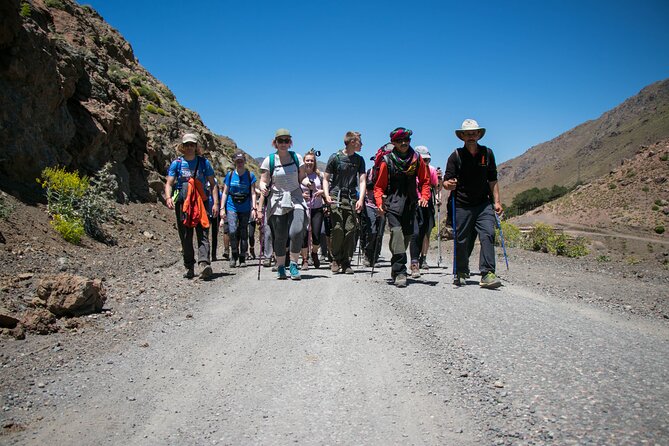
The road to Toubkal starts in Marrakech chaos. This 3-day climb takes you from the streets to high Atlas passes with a hotel pickup and a local guide who keeps the day moving from Imlil up to the refuge and then toward the summit. I like that you get meals and an overnight stay built in, so you can focus on trekking. The only real catch is Day 2, when scree and altitude make the summit push feel more like a workout than a walk.
What makes this trip feel practical is how the plan is paced around the mountain. You sleep at the refuge after a long Day 1 climb, then you make the summit attempt early on Day 2 for those big 360-degree views from the top. In guides I’ve seen named like Mohamed Tsiou and Ibrahim Agafay, the best thing is not speeches, it is the steady guidance and safety focus that helps you keep going.
In This Review
- Key things that make this Toubkal trek work
- Marrakech to Imlil: your Atlas start is handled
- Day 1: Mizane Valley climbing, shrines, and reaching the refuge at 3206m
- Day 2: Jebel Toubkal summit push, scree, altitude, and sunrise views
- Day 3: back down to Imlil, then onto Marrakech
- Meals, mules, and overnight stay: what you are paying for
- Pacing, fitness, and what to pack for a 3-day high-altitude climb
- Guide and cook make the climb feel safe, not just hard
- Price and value: is $337.31 fair for 3 days to the summit?
- Should you book this 3-day Toubkal climb?
- FAQ
- Where does the trek start in Marrakech?
- How long is the Mount Toubkal climb?
- What is included in the price?
- Do I need a certain fitness level?
- Is this a private group or shared with other people?
- What is the cancellation policy?
Key things that make this Toubkal trek work
- Hotel pickup and drop-off in Marrakech, plus a transfer to Imlil so you are not stuck figuring out logistics
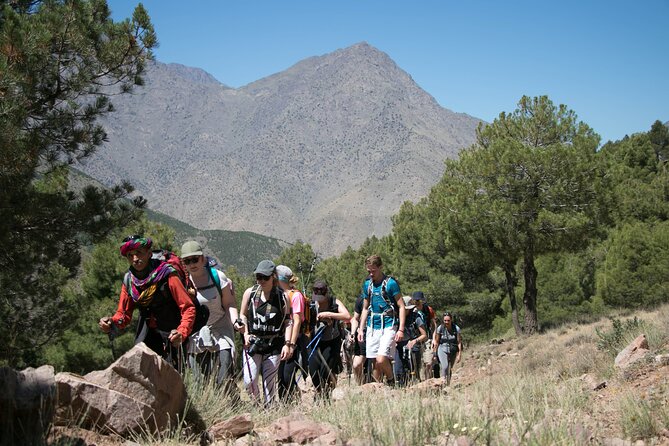
- Local guide the whole time, keeping your route, timing, and pace in hand
- Meals included (B/L/D), with a cook who can keep you fueled on the trail
- Mules carry your gear between refuges, so you carry less weight
- Sunrise summit timing, with early starts that turn the hardest hours into the best views
Marrakech to Imlil: your Atlas start is handled
You start at Jemaa el-Fna in Marrakech at 8:00 am, then you transfer up to the village of Imlil before the trek really begins. This matters more than it sounds. If you have ever tried to arrange transport into the Atlas on your own, you know it can eat up energy you need later on the trail.
The trip also runs as a private tour/activity, meaning it is just your group. That usually helps with pacing. Instead of waiting for a wide mix of walkers, your guide can set a rhythm that fits your people, especially on the ascent and the long return.
You will also have a mobile ticket, and since bottled water is included, you are not scrambling for basic supplies right away.
Other ways up into the Atlas
- Berber villages : Atlas Mountains Day Hike from Marrakech
★ 5.0 · 14,007 reviews - Atlas Mountains & 5 Valleys Tour from Marrakech – All inclusive –
★ 5.0 · 2,913 reviews - Atlas Mountains, Berber Villages and Three Valleys all inclusive
★ 5.0 · 2,471 reviews - Atlas Mountains Hot Air Balloon Ride from Marrakech with Berber Breakfast and Desert Camel Experience
★ 5.0 · 2,123 reviews
Day 1: Mizane Valley climbing, shrines, and reaching the refuge at 3206m
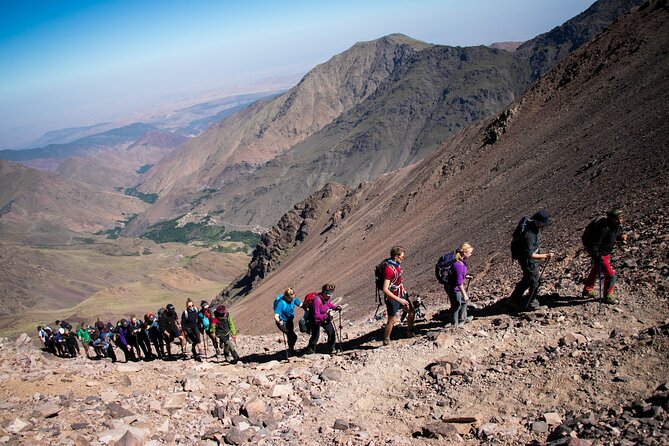
Day 1 is your “get your legs under you” day, but it still feels like climbing. You leave Imlil and head along the Mizane Valley, passing the village of Aremd and then moving toward the shrine of Sidi Chamarouch.
This is one of my favorite parts of the itinerary because it is not just trail time. You also get small cultural stops, like the shrine area that draws both tourists and pilgrims. It gives you a sense of how local life and the trekking route overlap in the High Atlas.
From there, the trail steadily climbs. The route crosses flood plains and follows mule tracks before it begins pushing up into higher, more rocky cliffs above the valley. You cross a river and continue on until you reach the refuge area at 3206m for the night.
The practical advantage on Day 1 is that your first big milestone is the refuge. That means you get your overnight rhythm established, and you come into Day 2 already “set up” for the summit attempt instead of starting cold.
Day 2: Jebel Toubkal summit push, scree, altitude, and sunrise views
Early on Day 2, you make your attempt for the summit of Jebel Toukbal, the highest peak in Northern Africa. Your route goes up the south cirque, crossing the stream above the refuge. The walking can be relatively straightforward, but the difficulty jumps when scree and altitude kick in.
This is the day where having a guide matters in a very real way. A good team keeps you from rushing the hard sections. You want steady breathing, consistent footing, and smart pauses. In the reviews I’ve come across, guides like Mohamed Tsiou and Ibrahim Agafay are repeatedly praised for exactly that kind of support, including safety and pacing.
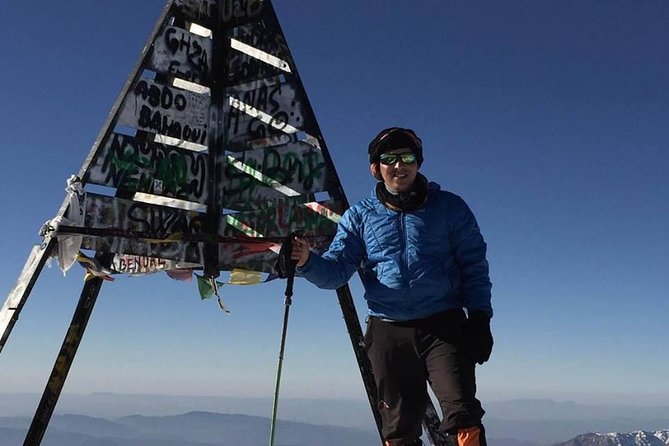
Once you reach the summit, the payoff is huge. The views are described as unrestricted, reaching from the Marrakesh Plain and the High Atlas to the Anti-Atlas, and even far enough south to the Sahara. It is the kind of top-of-the-world moment that makes the rough bits feel fair.
Then you return the same way down. You spend the night back at the refuge again, which is another smart choice. It keeps the plan simple, and it gives you the chance to recover instead of turning Day 2 into a second long descent in the dark.
Day 3: back down to Imlil, then onto Marrakech
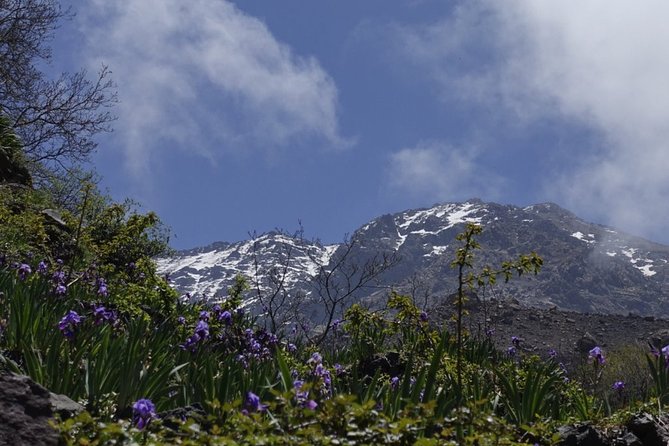
Day 3 is a return day, and that is good news for your body. You head back toward Imlil, arriving there and then transferring back to Marrakech.
This part is often where people realize how much the trek has taken out of them. Even when the climb is the dramatic headline, the descent is still work on tired legs. A structured route with your guide helps keep the walking smooth and predictable.
In terms of energy, Day 3 is also where you benefit from having had meals and overnight accommodation already handled. You are not thinking about where to sleep or what to eat after a near-4,000m day. It is simply, walk down, transfer, and you are back in Marrakech life.
Meals, mules, and overnight stay: what you are paying for
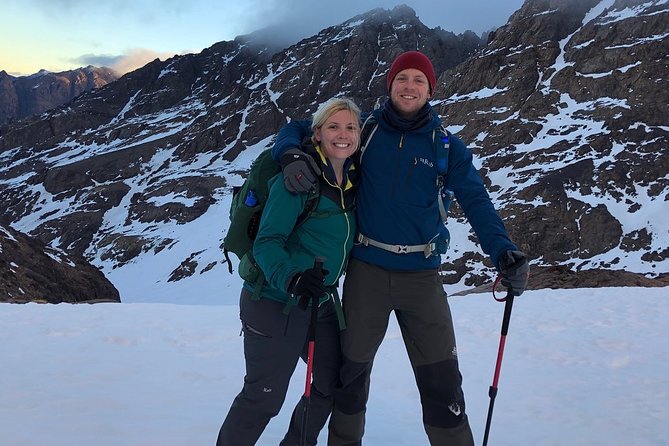
This trek is not cheap at first glance, but it is priced in the way mountain trips often are. At about $337.31 per person, you are not just paying for a hike. You are paying for the full support package: overnight accommodation, meals, a local guide, hotel pickup and drop-off, and bottled water.
The itinerary clearly includes breakfast, lunch, and dinner (B/L/D) across the days. That matters because on Toubkal, food timing affects how you perform. You need steady energy for the steep sections, especially the summit day.
One of the best value pieces is that mules carry your gear between the trekking portions and refuges. You still walk, but you do not have to haul everything. This also helps keep the group moving together. Less weight in your hands means you can focus on footwork.
Drinks are not included, so plan for that. If you prefer water that is not bottled or you want extra tea or sodas, budget separately.
Pacing, fitness, and what to pack for a 3-day high-altitude climb
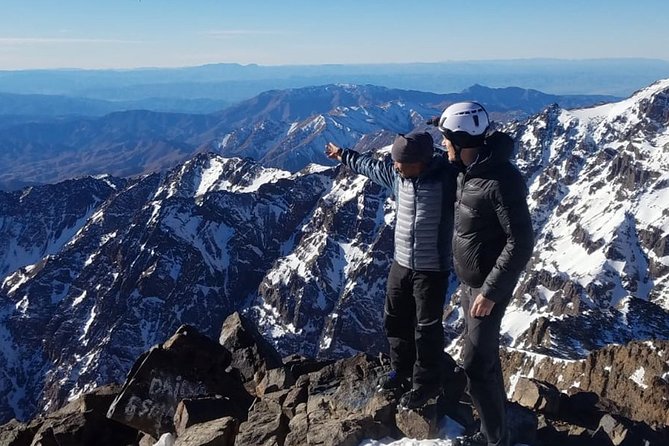
The tour asks for a moderate physical fitness level, with a minimum age of 12. That is a fair guideline for Toubkal, because the main challenge is not a technical scramble in the itinerary. The hard part is altitude and endurance, plus the scree on summit day.
Practical pacing tip: start conservatively on Day 2. If you go too hard too early, altitude punishes you fast. Your guide’s job is to help you find a rhythm that you can sustain. In the reviews, multiple guide names come up with the same pattern, supportive and attentive, and adjusting to the group when needed.
What to pack is not listed in the information you provided, so I will keep this general, but crucial. Bring layers for cold mornings, solid trekking shoes, a warm hat, sun protection, and a small daypack. If it is a season with snow, expect it can be colder at the top even if the lower valley feels comfortable.
Also, think about rain. In the mountains, weather can change quickly. Having a light rain layer is the difference between “fine” and “miserable,” even if the trail still runs.
Other routes with some height in them

Guide and cook make the climb feel safe, not just hard
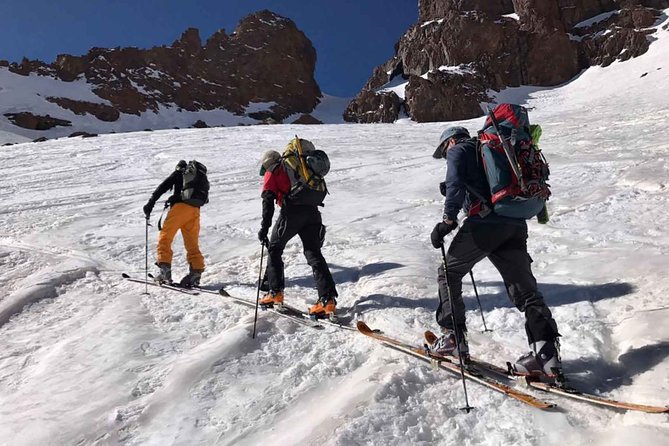
On Toubkal, the mountain sets the rules. Still, the experience can feel safe and well run or chaotic depending on the team. This operator is repeatedly associated with excellent on-the-ground support in the reviews, and the names come up again and again.
Mohamed Tsiou is mentioned for being great and very accommodating, with good knowledge of passes and safety in mind. Ibrahim Agafay is also highlighted for guiding novice trekkers step-by-step and keeping the group feeling secure. Other names I’ve seen linked with smooth trips include Hassan, Hamed, Mustafa, Karima, and Omar.
Then there is the cook. The food praise is consistent, with people mentioning standout local meals and the chef making sure nobody goes hungry. That is not fluff. Good meals at the right time can be the difference between finishing with energy and dragging yourself to the summit.
The team vibe seems to be another strength. You want motivation on summit day. When guides keep you moving with calm direction and sometimes even humor, the climb feels less like suffering and more like teamwork.
Price and value: is $337.31 fair for 3 days to the summit?
At $337.31 per person, you are paying for a compact, guided mountain operation. The big value pieces are not subtle: hotel pickup and drop-off, a local guide throughout, overnight accommodation, meals (B/L/D), and bottled water are included.
If you tried to assemble the same trip yourself, you would quickly lose money in the messy parts: transport, a reliable guide, and getting food and lodging sorted at the right points. You also would likely end up paying extra for the kinds of support that make Toubkal manageable, like mule hauling of gear.
The trip also benefits from group discounts and is scheduled as a set 3-day duration, which helps you avoid travel overhead. The mountain itinerary is doing the work for you. You show up, you follow the route, and you get the structure needed for altitude days.
One note on expectations: drinks are not included. Also, this is still a serious hike. If you expect an easy stroll, you might be surprised by how hard the summit day feels under altitude and scree conditions.
Should you book this 3-day Toubkal climb?
Book it if you want a guided, structured summit trek that handles the heavy logistics for you, with meals and overnight stay included. It is especially a good fit if you are active, comfortable with a long hike, and you want to get to the top without having to organize guides, meals, and transport yourself.
Consider skipping or upgrading your expectations if you are not comfortable with altitude. Even with a guide and a good pace, Day 2 includes scree and elevation, so you should take the moderate fitness requirement seriously.
If you want Morocco’s High Atlas at its most dramatic, this is one of the better ways to do it, because the plan focuses on the essentials: the route, the summit timing, and the support that keeps you moving.
FAQ
Where does the trek start in Marrakech?
The meeting point is Jemaa el-Fna in Marrakech. Pickup is included, and the start time is 8:00 am.
How long is the Mount Toubkal climb?
The experience runs for about 3 days. Day 1 climbs to the refuge at 3206m, Day 2 includes the summit attempt, and Day 3 returns to Imlil and then goes back to Marrakech.
What is included in the price?
Included are hotel pickup and drop-off, a local guide, overnight accommodation, meals as per the itinerary (breakfast, lunch, dinner), and bottled water. Drinks are not included.
Do I need a certain fitness level?
Yes. The tour states that travelers should have a moderate physical fitness level. It also notes that minimum age is 12 years.
Is this a private group or shared with other people?
It is listed as a private tour/activity, so only your group participates.
What is the cancellation policy?
You can cancel for a full refund if you cancel up to 24 hours in advance of the experience start time. If you cancel less than 24 hours before, the amount paid is not refunded.
Routes With Some Height
- Berber villages : Atlas Mountains Day Hike from Marrakech★ 5.0 · 14,007 reviews
- 3 Days Desert Tour From Marrakech To Merzouga Dunes & Camel Trek★ 5.0 · 10,125 reviews
- 3-Day Tour to Merzouga Erg Chebbi with Food & Camel Trek★ 5.0 · 1,770 reviews
- Ouzoud Waterfalls Guided Hike and Boat Trip from Marrakech★ 4.5 · 1,755 reviews
Higher Into the Atlas
- Berber villages : Atlas Mountains Day Hike from Marrakech★ 5.0 · 14,007 reviews
- Atlas Mountains & 5 Valleys Tour from Marrakech – All inclusive –★ 5.0 · 2,913 reviews
- Atlas Mountains, Berber Villages and Three Valleys all inclusive★ 5.0 · 2,471 reviews
- Atlas Mountains Hot Air Balloon Ride from Marrakech with Berber Breakfast and Desert Camel Experience★ 5.0 · 2,123 reviews
Added recently from around Marrakech
More Atlas Mountains and Berber Village Trips worth a look.
 ★ 4.8Marrakech: Atlas Mountains, Ourika Valley, Waterfall & LunchFrom $1615,834 reviews
 ★ 5.0Berber villages : Atlas Mountains Day Hike from MarrakechFrom $1514,007 reviews
 ★ 4.9Marrakesh: Ourika Waterfalls, Atlas Mountains, Guide + LunchFrom $179,986 reviews
 ★ 4.8From Marrakech: Atlas Mountains Full-Day Hiking Trip w LunchFrom $267,417 reviews
 ★ 4.8Marrakech: Atlas Mountains & Agafay Desert Tour w Camel RideFrom $145,080 reviews
 ★ 4.8From Marrakech: Atlas Mountains Day Trip with Camel RideFrom $174,709 reviews
 ★ 4.9Marrakech: Atlas Mountains, Waterfalls, Ourika Valley +LunchFrom $113,544 reviews
 ★ 5.0Atlas Mountains & 5 Valleys Tour from Marrakech – All inclusive –From $912,913 reviews
Where else this one sits