
REVIEW · ATLAS MOUNTAINS
Climb Mount Toubkal: 3-Day Trek from Marrakech
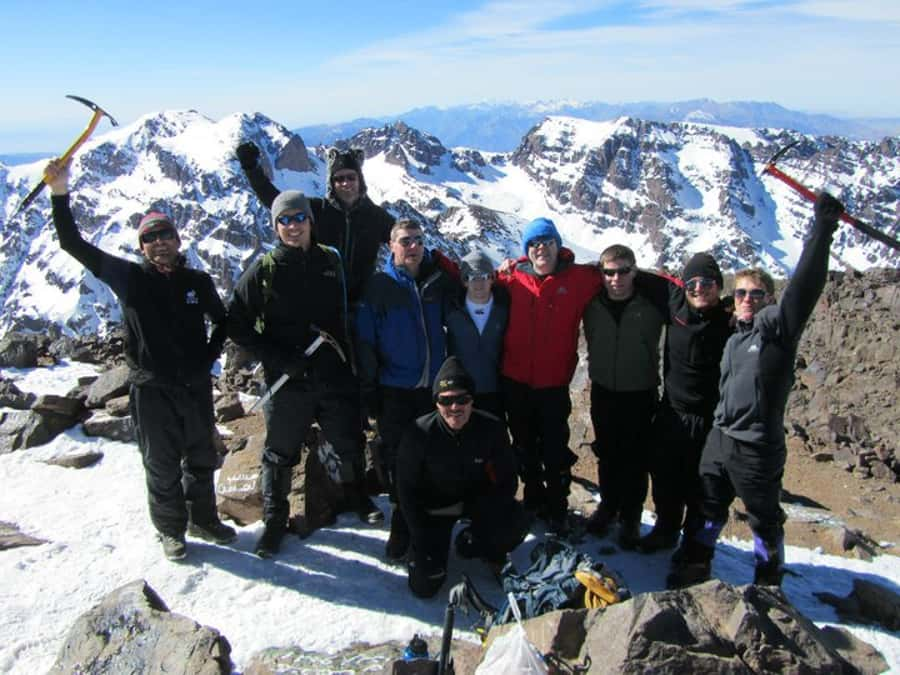
Jebel Toubkal turns early mornings into magic. This 3-day climb from Marrakech takes you from the foothills at Imlil up through the Toubkal Massif to the highest peak in Northern Africa, with big mountain scenery and a sunrise summit that feels earned. You start with a scenic ride, then spend time walking through valleys and villages, including a stop at the Sidi Chamarouch shrine.
I love the pacing and support. A first day in Imlil helps you settle in at altitude, and my favorite part is the way guides like Abdul (and others such as Abdulratif and Sabir) keep you moving at the right speed so the final push feels possible. I also love the food, with a cook preparing all meals, including traditional options that keep your energy steady for the steep sections.
One possible consideration: Toubkal Refuge sleep can be tough. It can be crowded, the rooms may be tight, and you are still expected to start very early on summit day, cold and steep from the first steps.
In This Review
- Key highlights that matter on this Mount Toubkal trek
- Why Jebel Toubkal sunrise is worth the 4 a.m. alarm
- Getting from Marrakech to Imlil without losing the day
- Day 1 in Imlil: rest, altitude prep, and real mountain hospitality
- Day 2 through Aremd and the Mizane Valley to Toubkal Refuge
- Sidi Chamarouch, waterfall views, and why your mid-trek stop matters
- Day 3 summit push: boulder fields, river crossings, and the descent
- Refuge reality: crowded rooms, tents in some weather, and what to expect
- Transport and support: why the guides, muleteers, and cook change everything
- Price and value at $294 per person
- What you should bring since crampons and ice axe are not included
- Who this 3-day Toubkal trek fits best
- Final verdict: should you book this 3-day Mount Toubkal trek from Marrakech?
- FAQ
- How long is the Mount Toubkal trek from Marrakech?
- What does the trek cost?
- What’s included in the price?
- What is not included that I should plan for?
- What languages are the guides?
- Can I get a refund if I cancel?
- How much do children pay?
Key highlights that matter on this Mount Toubkal trek
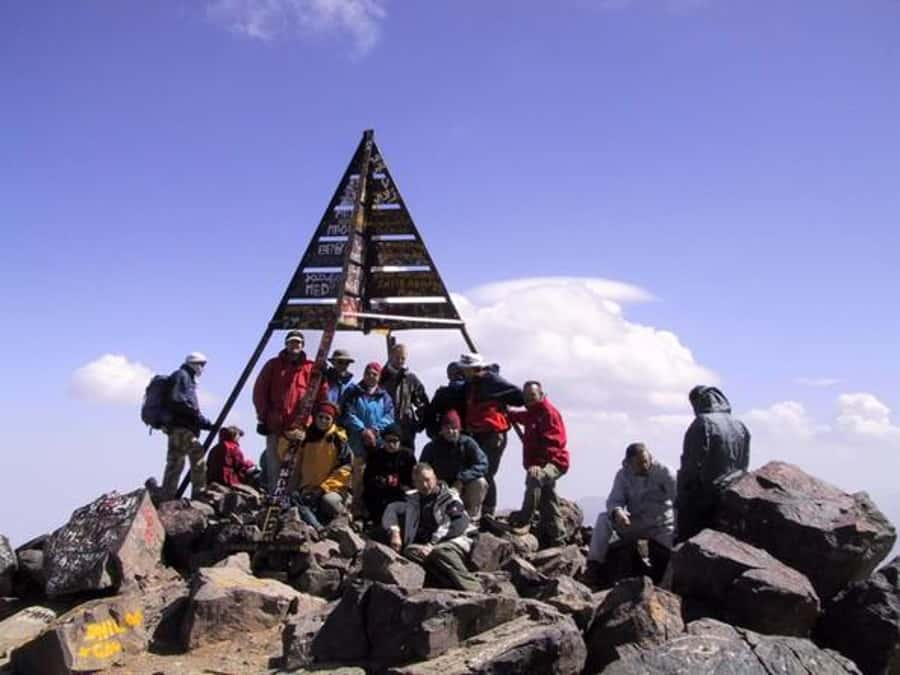
- Summit at sunrise on Jebel Toubkal, with wide views that stretch across Morocco
- Guides who manage your pace, including Abdul, Abdulratif, Sabir, Brahim, and others
- Support that lightens your pack, with muleteers helping carry belongings toward the refuge
- Mizane Valley walking that connects viewpoints, villages, and the mountain’s rhythm
- Sidi Chamarouch shrine and waterfall stop, a meaningful cultural break mid-trek
- Refuge conditions vary by weather, and sleep quality is not guaranteed
Why Jebel Toubkal sunrise is worth the 4 a.m. alarm
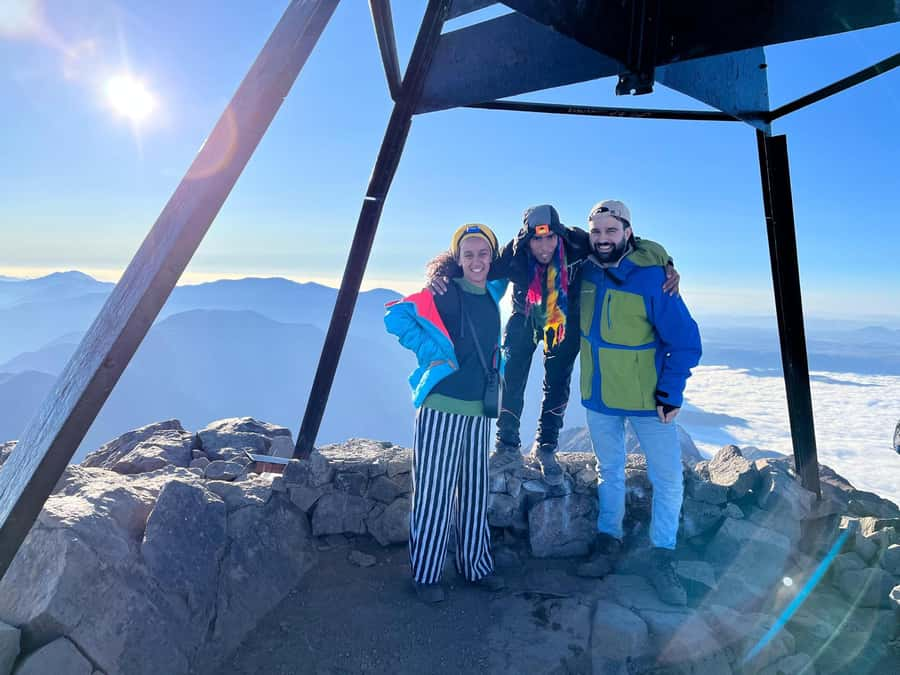
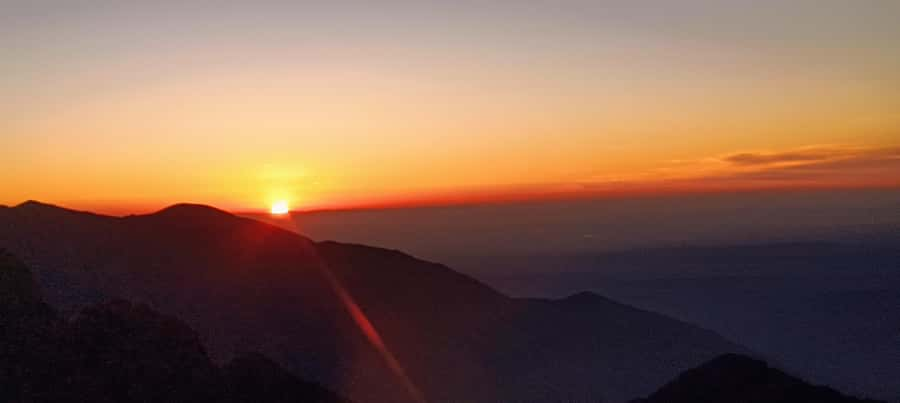
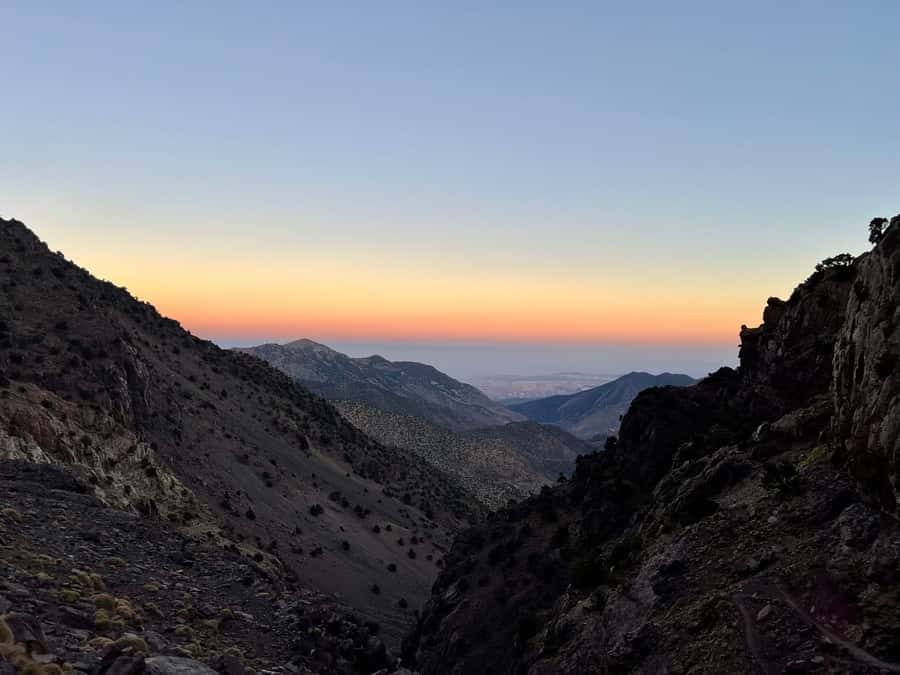
If you like your rewards quiet and cinematic, this is your trek. Summit day starts early, around 4 a.m., and the cold, steep walking gets your focus tight. When you finally crest into sunrise light, the payoff is a big open view over the High Atlas and beyond.
From the top, you can see far across the Marrakech Plain to the north and down toward the Anti-Atlas and even the Sahara to the south, weather permitting. That kind of horizon is not something you get from a city viewpoint. It is mountain scale, with the feeling that the world keeps going.
The part that surprised me is how much the sunrise changes the mood of the climb. The early darkness makes every step feel serious. Then light arrives and suddenly the rocks, ridges, and snowline look different, less like obstacles and more like a path you completed.
Other ways up into the Atlas
- Marrakech: Atlas Mountains, Ourika Valley, Waterfall & Lunch
★ 4.8 · 15,834 reviews - From Marrakech: Atlas Mountains Full-Day Hiking Trip w Lunch
★ 4.8 · 7,417 reviews - From Marrakech: Atlas Mountains Day Trip with Camel Ride
★ 4.8 · 4,709 reviews - Marrakesh: Ourika Valley & Atlas Mountains, Day Trip + Lunch
★ 4.9 · 1,865 reviews
Getting from Marrakech to Imlil without losing the day
You do not start this trek in a vacuum. Transfers bring you from Marrakech into the High Atlas foothills, with the ride to Imlil taking up to about four hours. That matters because it saves you from spending your first day figuring out logistics while your legs are stiff and your body is adjusting.
In Imlil, you get a chance to settle, rest, and reset before the walking ramps up. Many people also include a shorter acclimatization walk around the Imlil area before the main climb. Even if you keep it gentle, that kind of warm-up helps your body understand what altitude feels like before you commit to steeper terrain.
I like that the start feels grounded. Instead of jumping straight onto the mountain, you ease into it through a real village base where you can breathe, hydrate, and get your gear sorted with your guide.
Day 1 in Imlil: rest, altitude prep, and real mountain hospitality
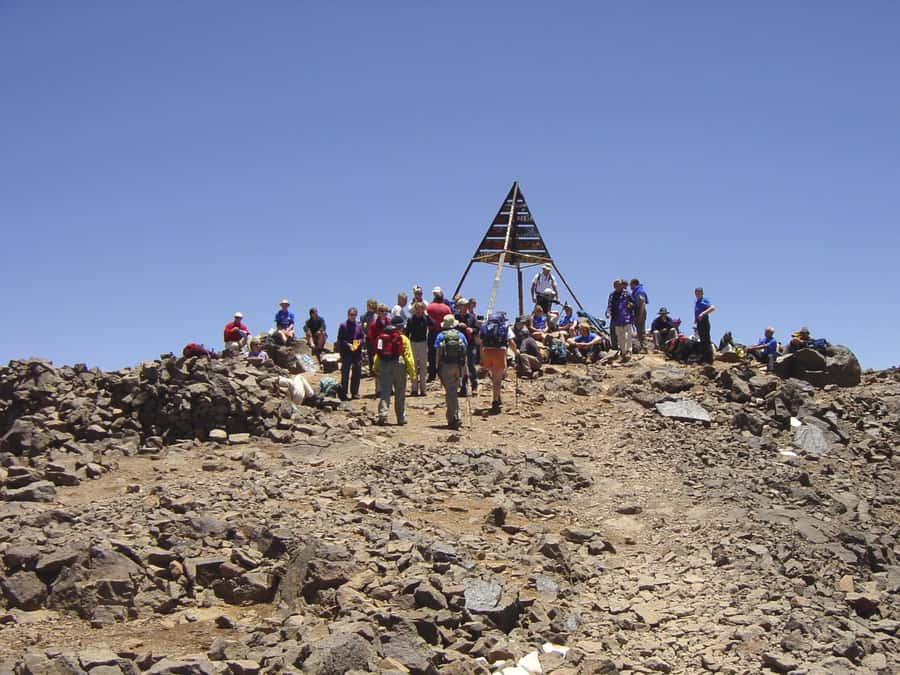
Day one is not a long hike day, it is a foundation day. You arrive in Imlil, settle into your accommodation for the night, and then you rest up for the next morning. If you are the type who panics when you pack late, you will probably appreciate having time to get everything in order.
What makes Imlil work well is the mix of comfort and authenticity. Guides and families run the support side of the experience, and you often stay in an environment that feels more personal than a big resort machine. In several cases, people described the hotel feel as warm and unique, with good meals served as part of the program.
Keep in mind: this is still the foothills of a real mountain trek. Even if you do not walk far on day one, your body will feel the altitude and temperature shift. Your job is simple, drink water, eat what is provided, and sleep like you want your summit legs to show up tomorrow.
Day 2 through Aremd and the Mizane Valley to Toubkal Refuge
Day two is where the trek really starts to feel like a climb. You leave Imlil and head into the Toubkal Massif, riding through dramatic valleys and steep terrain before you start walking. The route goes along the Mizane Valley, passing the kind of mountain views that keep pulling your eyes upward even when you are focused on foot placement.
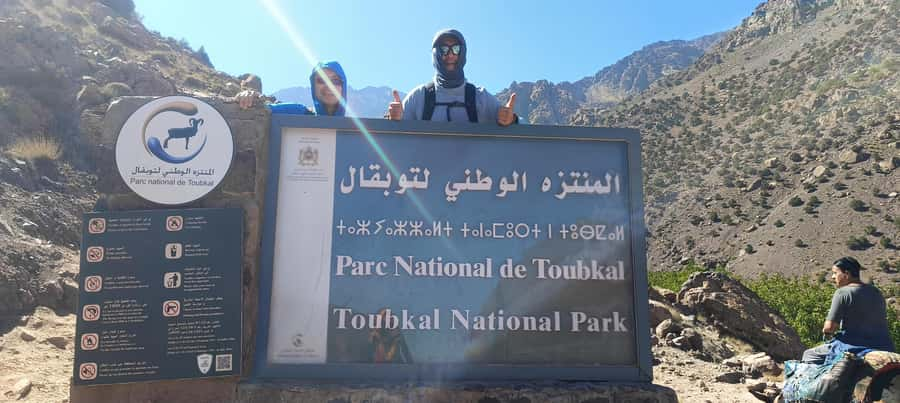
This is also the day of the meaningful breaks. You trek toward the village of Aremd, and you visit the shrine of Sidi Chamarouch. The shrine stop is more than a photo break. It is a cultural waypoint that helps you feel the mountain is not only a hike route, it is part of local life and tradition.
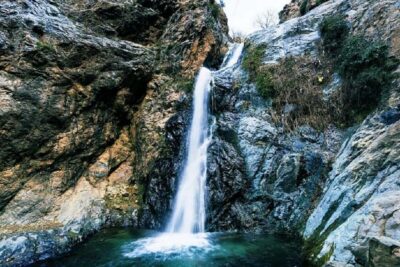
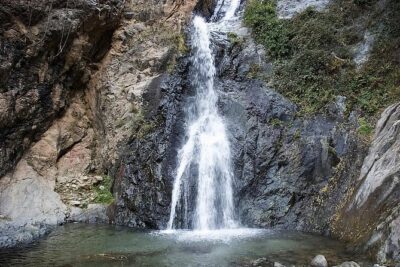
Right nearby is a waterfall by the shrine area. That moment is practical too. Water and shade make it easier to pause without feeling like you are just stopping to suffer. Then you move on, zigzagging up the slopes toward the snowline and continuing toward the Toubkal Refuge.
Walking time is roughly 4 to 5 hours on this day. The steady climbs here are not about speed. They are about rhythm, and this is exactly where a great guide matters. People praised guides such as Abdul for setting a pace that felt right for the group, helping you save energy without making you feel slow.
Sidi Chamarouch, waterfall views, and why your mid-trek stop matters
Some treks rush the countryside like it is a checklist. Here, the shrine and waterfall break gives you something that most people underestimate: a mental reset.
When you pause at the shrine of Sidi Chamarouch, it gives your brain a short, calm moment away from footwork and breath control. Then the waterfall area gives you a sensory reward, sound and moisture in a place that can feel dry and high. It turns the day from a pure uphill grind into a route with pauses that actually refresh you.
Also, those stops help you connect to the mountain in a more honest way. You see that your trek is moving through places with meaning for local communities, not only through wilderness. Even if you do not speak the language, you can feel the difference between a human waypoint and a random viewpoint.
Day 3 summit push: boulder fields, river crossings, and the descent
Summit day is the one everyone remembers, and it is memorable for good reason. After an early start, you climb through mixed terrain, including river streams and sections that feel like walking across boulders and rock. This part is not technical like a climbing route, but it is relentless, because the footing keeps demanding attention.
Around 4,000 m, some hikers feel the altitude more strongly. That is where your breathing strategy and pacing matter most. Guides often encourage simple techniques, like controlling your breath and not rushing the steep segments. If you feel yourself struggling, that is a normal moment on this mountain, not a sign you are doing something wrong.
When you reach the summit, the plateau feel and wide horizon are the prize. Sunrise makes it even better, and the view is not only pretty, it helps you understand the scale of what you climbed.
After you summit, you begin the descent back toward Imlil. The down part can feel tougher than people expect, especially if your quads get loaded early. You will likely use the same guide support here, adjusting pacing and footing so you protect your knees and keep balance on rock.
Other routes with some height in them

Refuge reality: crowded rooms, tents in some weather, and what to expect
The overnight at Toubkal Refuge is included, but your experience can vary with conditions. Depending on the weather, it may be a lodge style stop or tents. Either way, expect a tougher sleep situation than a hotel.
Some people described refuge conditions as very crowded and difficult for sleep. That matches what I think a high-demand mountain shelter usually feels like. You are tired, you are cold, and space is limited.
This is why your summit plan depends on you treating the refuge night seriously. You do not need perfect comfort, you need enough rest to function at 4 a.m. If you have a choice of layers, wear or pack smart. Keep water habits steady. Do not skip the food, either. Fuel helps your body manage the early climb and the altitude.
Transport and support: why the guides, muleteers, and cook change everything
On a trek like this, the hardest part is rarely only the distance. It is the combination of altitude, steep sections, and time on rock. This is exactly why I value the included support: local mountain guide, muleteers, and a cook.
Mules can carry belongings on the route toward the refuge. In practical terms, that means you can walk with a lighter pack, usually focusing on what you truly need during the hike, like water and small personal items. It is a huge relief when your legs are already doing extra work on uneven ground.
Meals are another major quality-of-life factor. The program includes all meals, and people specifically praised the cooking and traditional options. On day two and day three, predictable food is not fancy, it is functional. It keeps you from spending your trek thinking about what to eat instead of moving safely.
Guide quality showed up again and again in different names. Abdulratif was praised for professionalism and making solo travelers feel safe. Hassan as a manager was praised for responsiveness and smooth coordination. Other guides like Omar, Nourdin, Brahim, and Sabir were praised for guidance and safety. In other words, this is not a self-guided hike. It is a guided mountain experience with human backup.
Price and value at $294 per person
The cost of this 3-day Mount Toubkal climb is $294 per person, and the value depends on what you compare it to.
For this price, you get:
- Local mountain guide, plus muleteers and a cook
- Accommodation for one night at Toubkal Refuge (or tents when weather demands it) and one night in Imlil
- All meals
- Transport to and from the High Atlas by minibus or 4×4
When you add up what those pieces typically cost if you try to DIY it, the price looks more reasonable. The big savings is the support system. A guide for safety and pacing, plus mule assistance and meals, is exactly what makes a summit trek manageable for people who are not training for this every weekend.
One note on value: some hikers reported extra costs for equipment, since gear like crampons and an ice axe is not included. If you already own suitable cold-weather traction, you will probably feel better about the overall value. If you do not, budget for the possibility that you will need to rent or buy items somewhere along the way.
What you should bring since crampons and ice axe are not included
The program does not include crampons, ice axe, or a sleeping bag. That is not a small detail on a mountain that can reach snowline conditions.
At minimum, plan for:
- Cold-weather layers you can adjust during steep climbs and early starts
- Footwear appropriate for rocky, uneven trails
- A strategy for sleeping warmth if the refuge is in tough conditions or tents are used
If you do not own crampons or an ice axe, ask ahead of time what is expected for your exact dates and weather. Since the trek moves toward the snowline, you want to be ready before summit morning, not scrambling when your legs are already tired.
Soft drinks are not included either, and that is worth thinking about. You will be hydrating and eating what is provided, but if you like a specific drink style, bring it with you.
Who this 3-day Toubkal trek fits best
This trek fits best if you can handle a roughly 4 to 5 hour walking day and are ready for a very early summit push. It is challenging, but it is not presented as a technical climbing route. You just need mental stamina for steep sections and a willingness to go at the guide’s pace.
It is also a strong fit for:
- People who want a guided experience rather than self-navigating
- Solo travelers who value feeling safe and well looked after, especially since guides like Abdulratif were specifically praised for safety and professionalism
- Active travelers who can adapt during descent, since coming down can be harder than expected
If you are very new to hiking or fear altitude discomfort, consider whether you will be able to push through summit morning even if you feel winded around higher points. You can still do a trek like this with the right guide and pacing, but your best outcome comes from showing up with realistic expectations.
Final verdict: should you book this 3-day Mount Toubkal trek from Marrakech?
I think this is a smart booking if you want a classic Morocco mountain summit with real human support. The included guide team, mule assistance, and cook make a huge difference, and the sunrise summit on Jebel Toubkal is the kind of memory that sticks even after normal travel fades.
Book it if:
- You are excited by early starts and big views
- You prefer a structured, supported trek over DIY logistics
- You value cultural stops like the Sidi Chamarouch shrine and the waterfall break
Be careful before booking if:
- You hate crowded sleeping situations, because refuge sleep can be difficult
- You do not have cold-weather gear, since crampons, ice axe, and sleeping bag are not included
- You are not comfortable with altitude effects that can hit around 4,000 m
FAQ
How long is the Mount Toubkal trek from Marrakech?
It runs for 3 days.
What does the trek cost?
The price is $294 per person.
What’s included in the price?
You get a local mountain guide, muleteers, and a cook. It also includes accommodation for 1 night in Toubkal Refuge (or tents depending on weather) and 1 night in Imlil, plus all meals and transport to and from the High Atlas by minibus or 4×4.
What is not included that I should plan for?
Not included items are soft drinks, gratuity, personal travel insurance, crampons, ice axe, and a sleeping bag.
What languages are the guides?
The live tour guide speaks English, French, and Arabic.
Can I get a refund if I cancel?
Yes. You can cancel up to 24 hours in advance for a full refund.
How much do children pay?
Under 2 years old are free of charge. Ages 3 to 11 receive a 50% discount, and age 12 and up pay the full cost.
Routes With Some Height
- From Marrakech: Ouzoud Waterfalls Guided Hike and Boat Trip★ 4.7 · 33,630 reviews
- From Marrakech: Atlas Mountains Full-Day Hiking Trip w Lunch★ 4.8 · 7,417 reviews
- Marrakech: Ourika Valley Trip with Waterfall Hike★ 4.6 · 6,792 reviews
- Marrakech: ourika valley lunch & guided hike to waterfalls★ 4.9 · 3,737 reviews
Higher Into the Atlas
- Marrakech: Atlas Mountains, Ourika Valley, Waterfall & Lunch★ 4.8 · 15,834 reviews
- From Marrakech: Atlas Mountains Full-Day Hiking Trip w Lunch★ 4.8 · 7,417 reviews
- From Marrakech: Atlas Mountains Day Trip with Camel Ride★ 4.8 · 4,709 reviews
- Marrakesh: Ourika Valley & Atlas Mountains, Day Trip + Lunch★ 4.9 · 1,865 reviews
Added recently from around Marrakesh
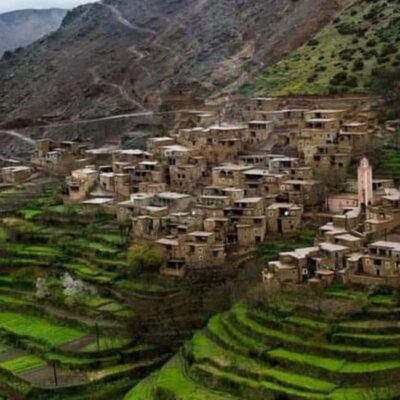
More Atlas Mountains and Berber Village Trips worth a look.
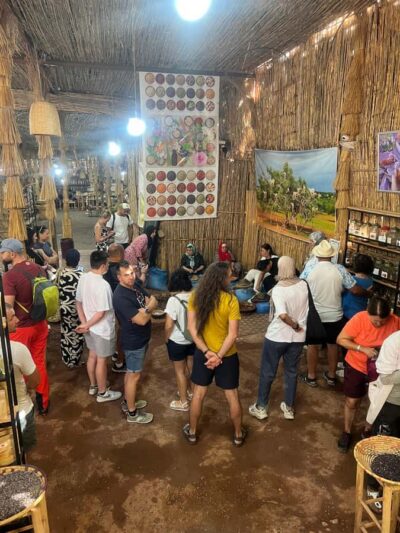 ★ 4.8Marrakech: Atlas Mountains, Ourika Valley, Waterfall & LunchFrom $1615,834 reviews
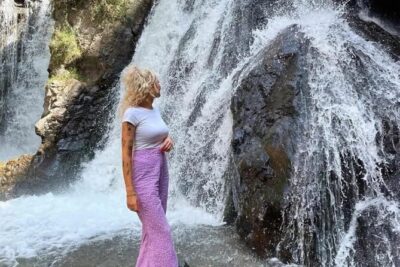 ★ 5.0Berber villages : Atlas Mountains Day Hike from MarrakechFrom $1514,007 reviews
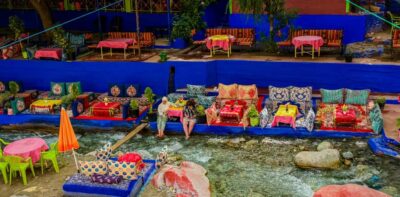 ★ 4.9Marrakesh: Ourika Waterfalls, Atlas Mountains, Guide + LunchFrom $179,986 reviews
 ★ 4.8From Marrakech: Atlas Mountains Full-Day Hiking Trip w LunchFrom $267,417 reviews
 ★ 4.8Marrakech: Atlas Mountains & Agafay Desert Tour w Camel RideFrom $145,080 reviews
 ★ 4.8From Marrakech: Atlas Mountains Day Trip with Camel RideFrom $174,709 reviews
 ★ 4.9Marrakech: Atlas Mountains, Waterfalls, Ourika Valley +LunchFrom $113,544 reviews
 ★ 5.0Atlas Mountains & 5 Valleys Tour from Marrakech – All inclusive –From $912,913 reviews
Where else this one sits