
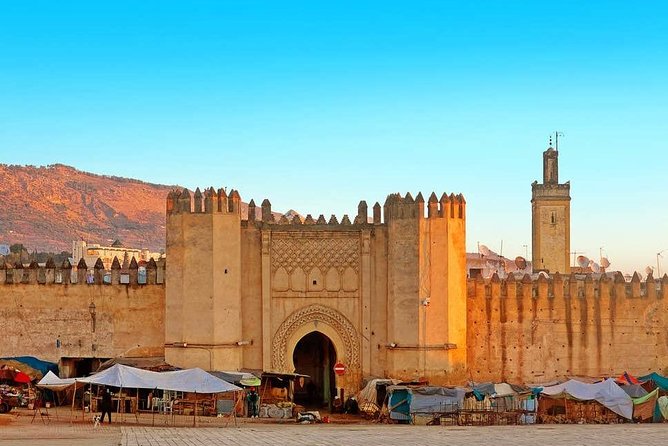
REVIEW · CASABLANCA
Big Morocco Tour 15 Days From Casablanca
Casablanca to the desert, with imperial cities in between. This 15-day Morocco route is designed for small-group travel (max 8) and includes the headline moment you came for: camel time plus a Sahara sunset. I like that the day-by-day plan stitches together beaches, canyons, forests, and desert scenery without making you guess what goes where.
I also like the way the itinerary builds in guided time where it matters most, especially in Fes and Marrakech, so you can actually read the streets instead of just walking them. One fair consideration: there are lots of driving days, and lunches and drinks are not included, so your total daily spend will depend on how you eat.
In This Review
- Key points to know before you set off
- The Morocco route that makes sense: Casablanca, imperial cities, desert, then the coast
- Price and value for 15 days: what you’re really buying at $3,019.78
- Day 1 in Casablanca: airport welcome and the Hassan II Mosque moment
- Rabat, Mechouar to the Kasbah of Oudayas: a calmer imperial-city day
- Asilah and Tangier, then Chefchaouen: Atlantic edges and that iconic blue town
- Meknes and Volubilis, then Fes: Roman ruins to the world’s oldest university
- Fes day-by-day: guided medina sights, Fes el-Jdid, and the view over it all
- Atlas and Middle Atlas drives: Ifrane, Azrou, Midelt, and the comfort of a plan
- Merzouga and Erg Chebbi: sunset dunes, Khamlia tea, and a desert-night rhythm
- Todra Gorges to Ouarzazate, via Boumalne Dades and the Rose Valley
- Taroudant and saffron country: Medina walls and real farming stops
- Essaouira at the end: Atlantic air, Skala sights, and goats on argan trees
- Marrakech highlights in one guided day: Bahia, Badi, Saadians, Koutoubia, and Djemaa el Fna
- Transportation, group size, and why a driver matters in Morocco
- Meals: what’s included, what to budget, and how to eat smart
- Who this 15-day Big Morocco Tour fits best
- Should you book it?
- FAQ
- Where does the tour start and end?
- How long is the tour?
- Is pickup offered from the airport or hotel?
- What is the group size?
- What meals are included?
- Does the tour include camel riding in the Sahara?
- Are local guides provided?
- Are admission tickets included for the sights listed in the schedule?
- Can I cancel for free?
Key points to know before you set off
- Max 8 people: easier conversations, fewer logistics headaches, and a calmer pace on crowded routes.
- Sahara camel ride and desert night elements: you get sunrise planning, dune time, and a desert camp experience built into the schedule.
- Guided coverage in Fes and Marrakech: focused, local-guided sightseeing in the places where context helps a lot.
- A route that mixes Morocco’s different faces: coastline, Atlantic towns, Roman ruins, Atlas mountain drives, and desert villages.
- Driver-guide focus in the real world: past experiences highlight practical, safety-minded driving and help when plans hit real life.
The Morocco route that makes sense: Casablanca, imperial cities, desert, then the coast
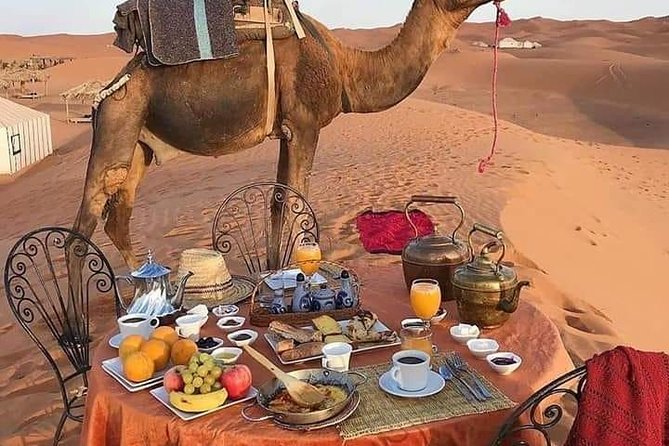
This tour is built like a long, scenic string of Morocco’s best-known regions. You start in Casablanca, work your way through the “imperial cities” corridor, then swing into Atlas mountains and desert territory before finishing on the Atlantic coast and ending back in Casablanca.
Why that matters for you is simple: you avoid the common mistake of staying in one style of Morocco too long. You get a city rhythm (mosques, medinas, palaces), then a nature shift (cedar forests and gorges), then the big emotional payoff of desert light, and finally a salty, breezy finish in Essaouira and Marrakech.
More of Casablanca, mosque visit included
- Casablanca: Hassan II Mosque Premium Tour with Entry Ticket
★ 4.5 · 2,971 reviews - Casablanca City Tour with Hassan II mosque ticket
★ 5.0 · 2,480 reviews - Casablanca: City Tour with Hassan II Mosque Entry Ticket
★ 4.6 · 1,137 reviews - Private Tour of Casablanca with Hassan II Mosque Entry Ticket
★ 5.0 · 1,102 reviews
Price and value for 15 days: what you’re really buying at $3,019.78
At $3,019.78 per person for about 15 days, you’re paying for more than sightseeing. You’re buying transport between cities, day-to-day coordination, and major included moments like desert camel time plus a set of meals.
If you do a rough per-day math, you’re in the ballpark of about $200 per day before you add lunches and drinks. That can feel high at first, but it’s often fair value in Morocco once you factor in the kind of route you’re doing: Casablanca to Rabat to Tangier, down through the Atlas and desert, then back to the Atlantic and Marrakech, all without you arranging every leg.
The key budget note: breakfasts and some dinners are included, but lunches and drinks are not. So your “real” daily cost depends on how you handle meals away from included times.
Day 1 in Casablanca: airport welcome and the Hassan II Mosque moment
You’re greeted on arrival, then taken to your hotel. If you arrive early and stay a few days before the tour starts, pickup from your hotel is offered so you can fold into the plan smoothly.
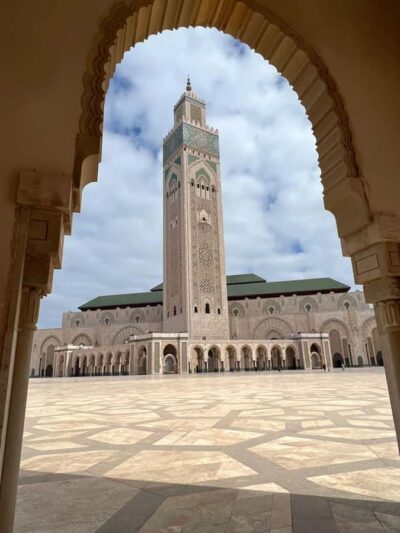
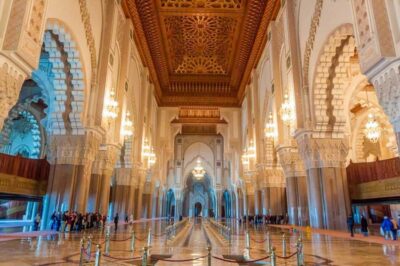
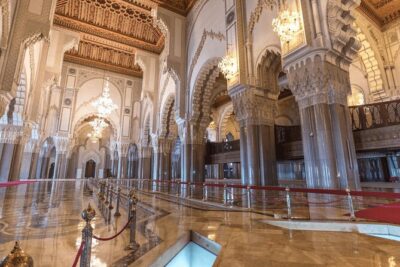
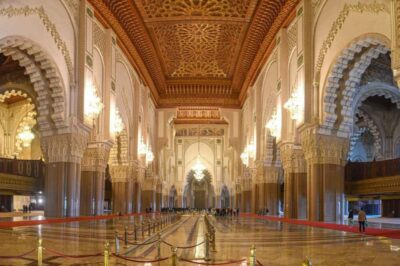
On day 2, the tour hits Hassan II Mosque, described as one of the most beautiful sights in Casablanca and the largest of its kind in Africa. This is a smart opener because it gives you a big visual anchor early. Morocco’s design language, scale, and symbolism are easier to notice once you’ve seen that kind of landmark up front.
Practical thought: Casablanca can feel fast and modern compared to the medinas you’ll see later. Use day 1 to rest up, then day 2 will feel like a proper start instead of a rushed sight list.
Rabat, Mechouar to the Kasbah of Oudayas: a calmer imperial-city day
After Casablanca, you drive to Rabat, Morocco’s capital. You visit Mechouar, tombs of Mohamed V and Hassan II, and the Kasbah of Oudayas.
This is the “slow down” stop in the middle of the trip. Rabat’s sites are less about maze-like wandering and more about orientation. If you like understanding why Morocco looks the way it does politically and artistically, Rabat helps.
Also, this is a good place for you if your trip needs a reset day. You’ll get history by the bucket, but with a calmer city layout than some other stops.
Asilah and Tangier, then Chefchaouen: Atlantic edges and that iconic blue town
Day 3 runs from Asilah to Tangier. In Asilah, you have a short visit to see the town highlight. Then you continue to Tangier for city sights, Cap Spartel, and Hercules caves.
I like how Tangier adds variety without demanding a full day of deep logistics. You get viewpoints and dramatic coastal context, which makes the next shift easier.
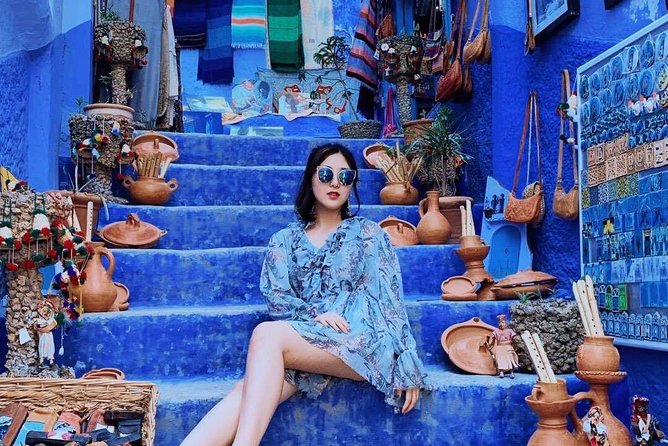
Day 4 moves to Chefchaouen, the white-blue town perched in a green spot crossed by a river. You’ll go by way of Tangier and the Hercules caves before heading in. Chefchaouen is one of those places where lighting and lane angles matter. If you can, dress for comfort and keep your camera ready, because the streets change character block by block.
Consideration: Chefchaouen is popular. Even with a small group, expect crowd energy at peak hours.
Meknes and Volubilis, then Fes: Roman ruins to the world’s oldest university
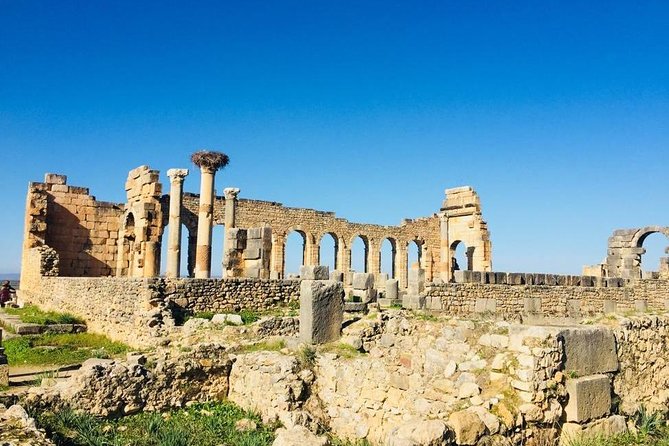
Day 5 is a packed day in a good way. You leave for Meknes through the Rif mountains, with a stop at Volubilis to see Roman ruins. Then you continue to Meknes for the old medina area and key monuments like the Moulay Ismail mausoleum, the green gate of Bab Mansour, and Lahdim Square.
Volubilis is a standout stop because it adds a different layer of time. Morocco is not only Islamic history and Berber traditions, it also has deep Roman-era traces. That blend helps you see the country as a place with many chapters, not one single story.
Then you continue to Fes and your riad in the city.


Fes day-by-day: guided medina sights, Fes el-Jdid, and the view over it all
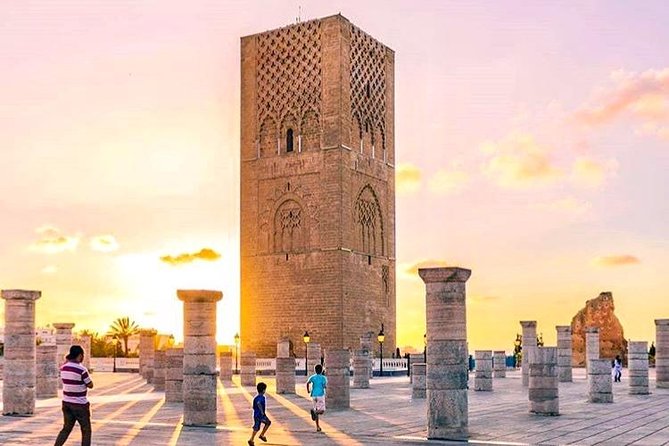
Day 6 is where the tour gets especially useful if you want more than photos. You take a trip around Fes old Medina, with named stops including Al-Attarine Madrasa, Ennajarine Fountain, Al-Qarawiyyine university (noted as founded in 859), Bou Inania Madrasa, and the Mausoleum of Moulay Idriss. Afterward, there’s breakfast in a restaurant, then time to visit Fes el-Jdid.
Then comes lunch and a panoramic view over the Medina of Fes, followed by a short visit in the new part.
This structure is valuable for you because Fes can overwhelm quickly if you’re trying to do it on your own. The guided route helps you understand what you’re seeing and makes it easier to orient later.
Atlas and Middle Atlas drives: Ifrane, Azrou, Midelt, and the comfort of a plan
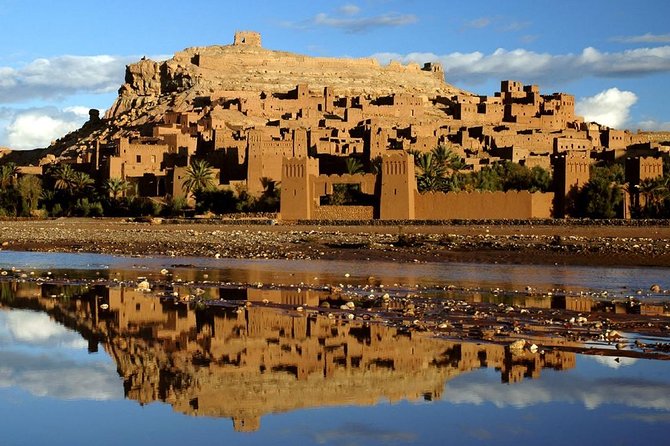
Day 7 shifts into mountain scenery. You leave Fes for Ifrane, nicknamed Little Switzerland, then pass Azrou and cedar forests, with Berber villages along the way. After that, you reach Midelt for an overnight hotel or kasbah.
Ifrane is a good “breather” after Fes. You get forests and road views, and you can catch your stride before the desert leg.
Day 8 continues the drive with the valley of Ziz, palm trees, and fossil shops near Erfoud before heading to Merzouga.
Merzouga and Erg Chebbi: sunset dunes, Khamlia tea, and a desert-night rhythm
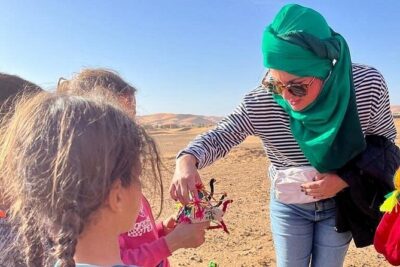
Merzouga is the entry point to the big dune region. You arrive before sunset on day 8, take a walk, then climb a sand dune to watch the sunset. This is the classic moment, and it’s scheduled at the right time of day when light actually works in your favor.
Day 9 deepens the experience. You start with sunrise timing and desert calm. You visit Khamlia for tea and traditional music, then see a desert lake area with birds. After that, you drive toward Rissani and Tafilalte, linked to the Alaouite dynasty, plus fortified villages and souks.
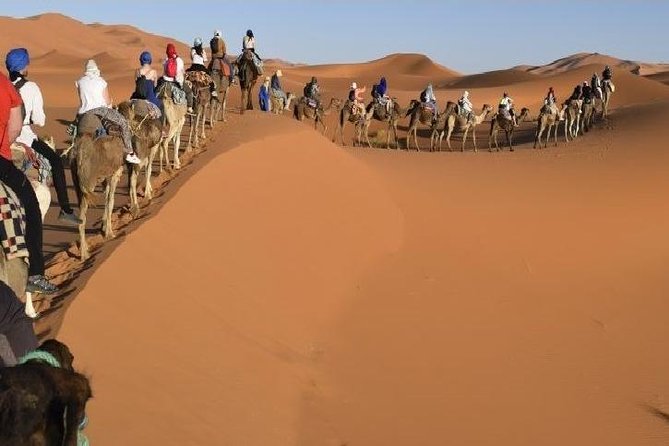
Then you head back to the hotel in the afternoon, and later you do camel trekking over the sand dunes, watch sunset again, and reach a desert camp. Dinner and camp atmosphere are built into this day, with campfire and Berber music by local guys.
Why this is worth it: the tour doesn’t treat the desert like a one-photo stop. It gives you a schedule that uses time of day well, including sunrise planning and dune trekking, which is where desert trips turn from okay to memorable.
Practical note for you: desert weather can swing fast. Plan on layers and comfortable footwear, since you’ll be walking dunes.
Todra Gorges to Ouarzazate, via Boumalne Dades and the Rose Valley
Day 10 starts early again for sunrise views, then breakfast before heading to Todra Gorges. You also pass by Rissani and Tafilalt on the way, and you’ll see the green valley running through the rocky mountains where water springs.
Then you drive toward Ouarzazate, with stops in places like Boumalne Dades and the Rose Valley, known for roses plus apples, figs, and corn. This road is described as the Road of a Thousand Kasbahs, because kasbahs decorate the route and hint at an older rhythm of life.
You overnight in a riad in Ouarzazate. A riad stay after long drives tends to feel restorative, because it’s calm and inward-focused compared to the road.
Taroudant and saffron country: Medina walls and real farming stops
Day 11 is a quieter city stop paired with a very Morocco-feeling agriculture moment. You pass Taznakht and Taliouine, then stop to visit saffron fields where local farms work in their fields. Then you drive to Taroudant and tour the Medina, surrounded by walls.
This is one of those days that breaks the pattern. After desert dunes and gorges, you get a different kind of scenery and a different kind of human scale.
If you like markets but also want to see where products actually come from, saffron fields add meaning. You won’t just eat a spice later, you’ll remember the fields that shaped it.
Essaouira at the end: Atlantic air, Skala sights, and goats on argan trees
Day 12 moves toward the Atlantic. You drive to Agadir for lunch, then take a quiet coastal road to Essaouira and see argan trees climbed by goats.
Then day 13 is the Essaouira day. You visit the seaport and the Medina area called Skala, see old structures and cannons, and visit the museum of Sidi Mohammed Ben Abd Llah. You also walk down the market and shop street for handmade crafts.
The tour also includes seafood for lunch on the day you head to Marrakech. After that, you drive east toward Marrakesh.
I like this placement: you’re finishing the trip with a coastal city that feels different from the inland imperial circuit. It also helps you recover from desert heat with sea air and flatter walking.
Marrakech highlights in one guided day: Bahia, Badi, Saadians, Koutoubia, and Djemaa el Fna
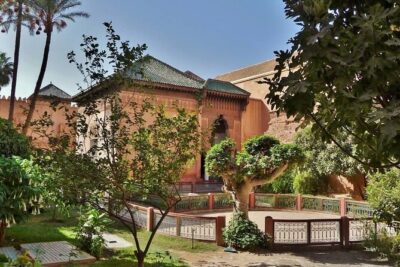
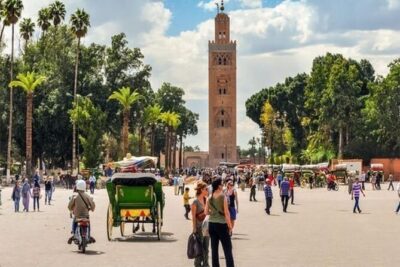
Marrakech gets a full day on day 14. You visit Menara, the Palaces of Bahia and Badi, and the Saadian mausoleums. Then you enjoy a traditional Moroccan lunch to reset, and later you visit Koutoubia Mosque and Djemaa el Fna.
Djemaa el Fna is the night-time hub, and the plan specifically calls out the square’s evening energy, with comedians, storytellers, and snake charmers.
What I like for you here is the pacing. Marrakech can feel like sensory overload. This itinerary gives you a structured circuit in the morning, then a release valve at night.
Also, it’s one of the places where having a local guide helps you get what you’re looking at, not just where to stand for a picture.
Transportation, group size, and why a driver matters in Morocco
You’ll travel with private transportation, and the group is capped at 8 travelers. This matters because long drives are part of the itinerary. With a good driver, those hours turn from exhausting to manageable.
Past experiences shared about drivers stand out for practical reasons: solid driving skills, staying calm, and helping in real situations. Names mentioned include Yassin, Karim, Tawfiq, Hassan, and Mostapha, and they’re credited with being friendly and keeping you feeling safe.
If you care about comfort, this is a tour where your driver becomes part of your day, not just a taxi service.
Also note: a mobile ticket is part of the experience features. That’s a small detail, but it can reduce last-minute stress.
Meals: what’s included, what to budget, and how to eat smart
The tour includes breakfasts (14) and dinners (4). It also says lunches are not included, and drinks are not included.
So you’re basically choosing your own lunch options most days. That can be fun because you get to stop where the area feels right, but you should budget for it. If you want to control costs, pick places that offer set menus or avoid buying drinks at the most tourist-marked spots.
For dinner days, you’ll likely be eating with the tour flow. That can save you time and energy after long travel days.
Who this 15-day Big Morocco Tour fits best
I think this works best if you want a full Morocco primer and you prefer not to plan every connection. You’ll get a strong cross-section: Casablanca and Rabat, Tangier and Chefchaouen, Meknes and Fes, Atlas mountains and cedar forests, desert dunes and desert camp vibe, then Essaouira and Marrakech.
It’s also a good fit if you like comfort and safety. With private transportation and a small group, your day has fewer unknowns.
If you hate long car days, or you want lots of free time to wander without structure, you may feel rushed. This tour is built as a “see it all” itinerary.
Should you book it?
If your goal is classic Morocco, plus the desert and a meaningful finish in Essaouira and Marrakech, I’d book this. The included desert camel moment, the guided time in Fes and Marrakech, and the private transport make it easier to enjoy the highlights instead of spending your energy on logistics.
Before you commit, check your personal tolerance for driving and remember that lunches and drinks are on you. If you can handle that, this 15-day route is a strong value way to hit Morocco’s big regions without scattering your planning across a dozen separate bookings.
FAQ
Where does the tour start and end?
The tour starts with a welcome in Casablanca, and on the final day there is a transfer to the airport of Casablanca.
How long is the tour?
It runs for about 15 days.
Is pickup offered from the airport or hotel?
Yes. You are welcomed in the airport of Mohamed 5 in Casablanca, and pickup is also offered if you arrive a few days before the tour starts, with the pickup from your hotel then.
What is the group size?
The tour has a maximum of 8 travelers.
What meals are included?
The tour includes breakfast (14) and dinner (4). Lunches and drinks are not included.
Does the tour include camel riding in the Sahara?
Yes. A camel ride in the Sahara Desert is included.
Are local guides provided?
Local guides are included in Fes and Marrakech.
Are admission tickets included for the sights listed in the schedule?
The schedule shows admission ticket free for the listed stops.
Can I cancel for free?
Yes, you can cancel for a full refund up to 24 hours in advance of the experience start time.
Casablanca and the Mosque
- Casablanca: Hassan II Mosque Premium Tour with Entry Ticket★ 4.5 · 2,971 reviews
- Casablanca City Tour with Hassan II mosque ticket★ 5.0 · 2,480 reviews
- Casablanca: City Tour with Hassan II Mosque Entry Ticket★ 4.6 · 1,137 reviews
- Private Tour of Casablanca with Hassan II Mosque Entry Ticket★ 5.0 · 1,102 reviews
Added recently from around Casablanca
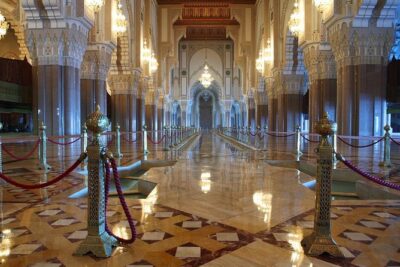

More Casablanca and the Hassan II Mosque worth a look.
 ★ 4.7From Marrakech: Casablanca Tour with Hassan II Mosque VisitFrom $284,756 reviews
 ★ 4.5Casablanca: Hassan II Mosque Premium Tour with Entry TicketFrom $162,971 reviews
 ★ 5.0Casablanca City Tour with Hassan II mosque ticketFrom $522,480 reviews
 ★ 4.8Casablanca Day Tour from Marrakech and Big Mosque VisitFrom $282,394 reviews
 ★ 4.6Casablanca: City Tour with Hassan II Mosque Entry TicketFrom $531,137 reviews
 ★ 5.0Private Tour of Casablanca with Hassan II Mosque Entry TicketFrom $521,102 reviews
 ★ 4.5Day Trip To Casablanca from MarrakechFrom $30972 reviews
 ★ 5.0Marrakech Day Trip with Camel Ride from CasablancaFrom $110740 reviews
Where else this one sits