
REVIEW · AGADIR
Agadir: Discover Argan Tree-Climbing Goats on a Morning Tour
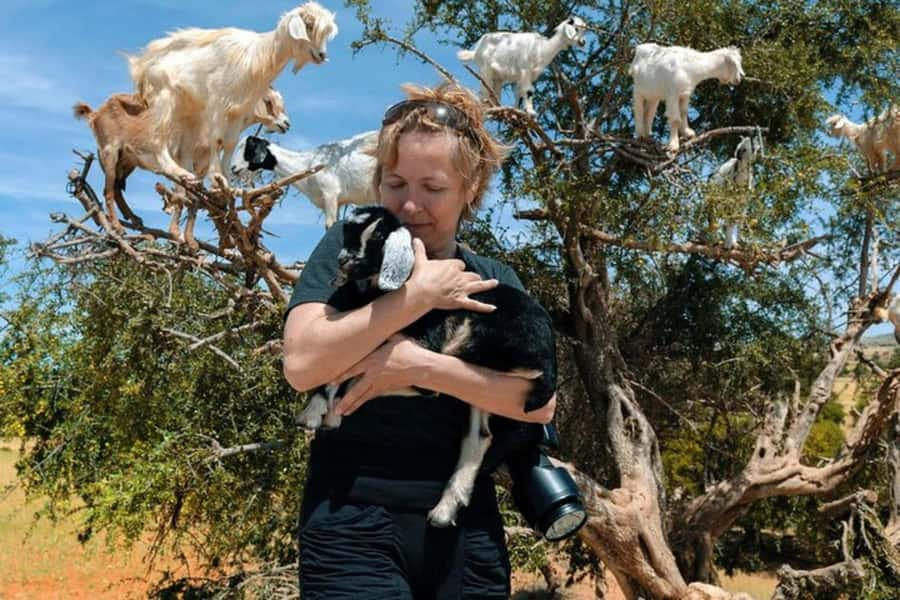
Goats climb Argan trees, and yes it is real. I love the rare spectacle of seeing the goats up in the branches, and I also like the hands-on stop at an argan oil cooperative where Berber women’s methods are shown. The one thing to think about is the final oil shop, which can feel a bit more sales-focused than the animal part.
This is a short, calm morning outing in Souss-Massa, starting with a 9:00 AM pickup and wrapping up around 11:30 AM. You get an air-conditioned vehicle, a live guide in English, French, German, Spanish, or Italian, and a relaxed pace that fits well before beach time.
If you want one different experience from Agadir that feels genuinely local, this is a strong pick. Just be ready for early countryside time, and bring a light layer for the cooler moments near the fields.
In This Review
- Key things to know before you go
- Argan-tree goats: the morning show you did not expect
- Hotel pickup and timing: exactly how a 150-minute tour works
- The goat spectacle: branches, shepherd help, and baby-goat moments
- The Argan oil cooperative: Berber women’s production in plain view
- The tea-and-shop phase: buying optional, pressure variable
- What you might see after the co-op: quick sights near the finish
- Getting the most from the morning: what to wear and photo tips
- Wear and bring
- Photo and interaction tips
- Price and value: is $26 worth your morning?
- Who this tour fits best, and who should skip it
- Should you book this Argan-goat morning tour?
- FAQ
- What time does the tour start and end?
- How long is the tour?
- Where does the tour go from Agadir?
- What is included in the price?
- Is pickup available only from certain hotels?
- Is there anything not included?
Key things to know before you go

- Tree-climbing goats are the headline, with goats moving through the argan branches to reach fruit.
- Short half-day timing keeps you from losing your entire morning.
- Argan co-op visit shows how oil is made using traditional Berber women’s methods.
- Hotel pickup and drop-off makes it easy if you are staying in Tamraght or Taghazout.
- Tea and a shop stop often follow the co-op visit, with shopping optional but encouraged.
- Photos and petting time can happen, including interactions with young goats.
Argan-tree goats: the morning show you did not expect
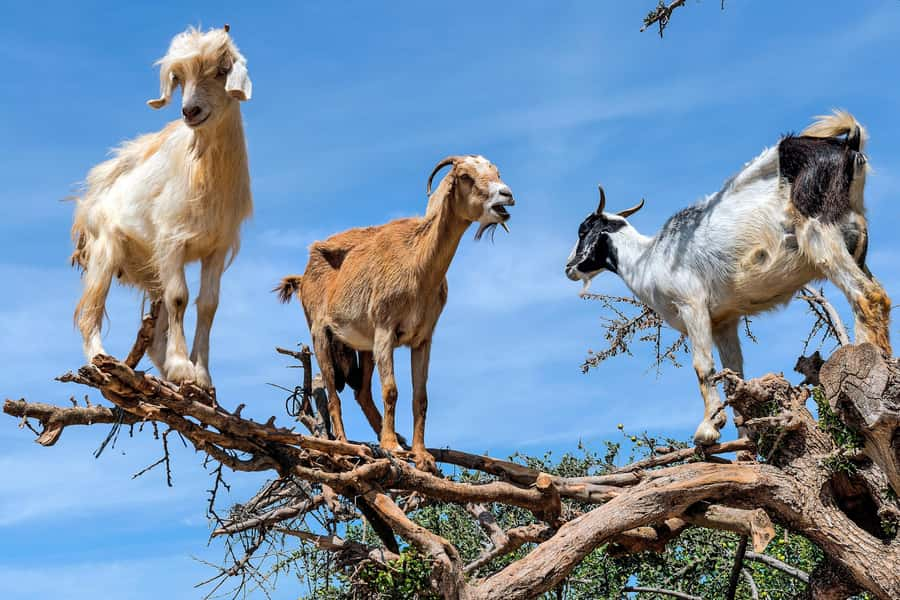
The main reason you book this tour is simple, and it is not a line you will hear at every destination. In this part of Morocco, you can watch goats that climb argan trees to eat or reach the fruit. It is a rare behavior, and the whole experience is built around it.
I like this kind of nature-meets-culture visit because it avoids the usual theme-park feeling. You are not just looking at goats from a fence. You are out in the field area, and the goats can feel close, curious, and surprisingly comfortable with the people around them.
The morning timing matters too. You start early enough that the day still feels mellow. That calm pace makes it easier to enjoy the spectacle and not rush through it. If you prefer your photos without harsh midday sun, this is the right window.
Other easy outings around Agadir
- Agadir: Crocoparc Skip-the-Line Entry Ticket
★ 4.8 · 1,268 reviews - Agadir: Crocoparc Entry Ticket with Transfers, Guide, & Tea
★ 4.8 · 596 reviews - Agadir: Cable Car Ticket and Guided City Tour
★ 4.5 · 467 reviews - From Agadir: Camel Ride and Flamingo Trek
★ 4.7 · 371 reviews
Hotel pickup and timing: exactly how a 150-minute tour works
This tour is designed as a compact half-day experience. You are picked up from your hotel at 9:00 AM, and you return by about 11:30 AM. The listed duration is 150 minutes, which lines up with that morning rhythm.
You travel about 15 km south of Agadir to reach the argan area. The short drive helps the day feel efficient. You are not waiting around for hours, and you are not spending the whole morning stuck in traffic.
Most people in Agadir want either a full excursion or a quick hit before lunch. This one fits the second category well. It also makes sense if you are planning a second activity the same day, or if you just want to get back to the beach without a late return.
The goat spectacle: branches, shepherd help, and baby-goat moments
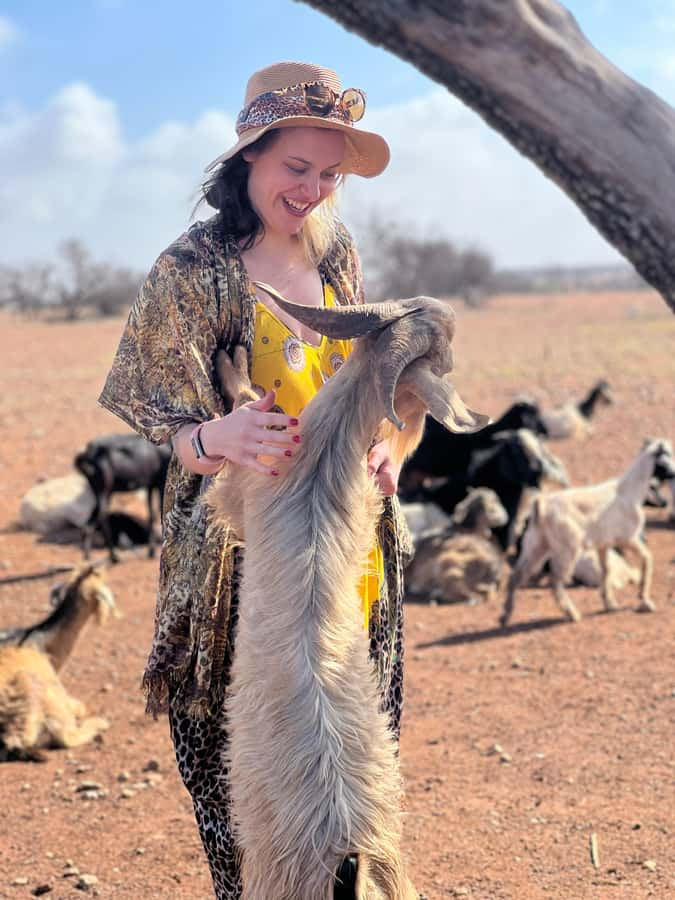
When you arrive for the goat viewing, the experience centers on watching the goats climb and balance on the branches. The whole point is that they are actually in the trees, not perched on a low platform.
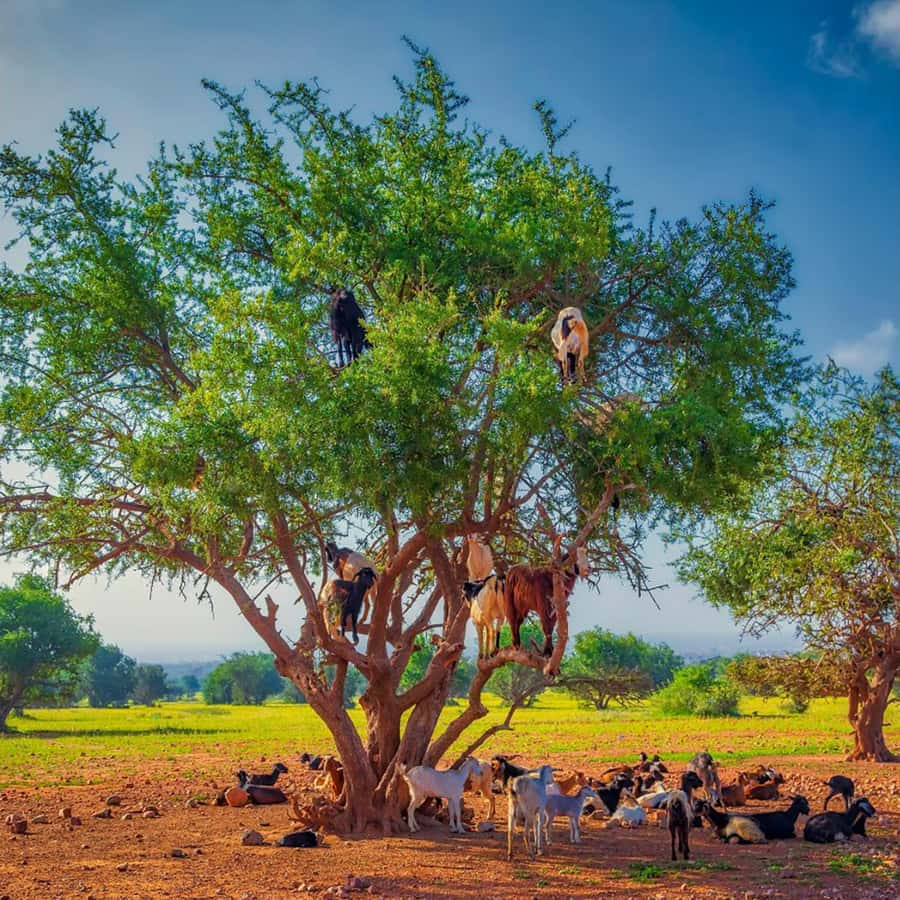
You should expect a field setting where goats can move around and roam. Some parts of the time you might see them up higher than you think possible, including goats reaching right up into the upper branches to access fruit. It is one of those scenes that looks staged until you are standing there watching them move.
A key part of the fun is how the shepherds and guides manage the interaction. In past tours, guides have helped with photos and videos, and they often explain what you are seeing while you take pictures. The shepherds can also be friendly and hands-on about making sure you get the moments you came for.
One of the more memorable details is the chance to interact with young goats. Several guests have described holding baby goats or cuddling them. If that kind of animal contact is your thing, you will likely enjoy this part more than you expect, as long as you stay gentle and follow the guide’s cues.
Practical note: if goats are in the trees and the area is a bit cooler than the beach, plan for that. I like the idea of wearing a light long-sleeve top so you are comfortable when you stop for photos and wait for the goats to move.
The Argan oil cooperative: Berber women’s production in plain view
After the goat time, you switch from animal spectacle to local craft. The next stop is a visit to an argan oil cooperative, where you learn the traditional methods used by Berber women to produce argan oil.
What makes this stop valuable is that it is not just a sales room. You get an explanation of the production process and a look at how the work is organized at a community level. The co-op setting also helps you understand why argan oil matters economically here, not just culturally.
In many tours like this, you will see a short presentation and you might also enjoy a practical experience like tea. Some guests have described a film or a guided explanation as part of the storytelling about how the oil is made. The process is usually presented clearly, aimed at helping you make sense of steps that can sound abstract if you only hear about them in passing.
Should you expect an advanced workshop? Not fully. The time is short, and the purpose is to give you the essentials: what argan oil is, why it is made, and how traditional methods work. You can leave understanding the basics, and you can ask questions if your guide has time.
The tea-and-shop phase: buying optional, pressure variable
The cooperative visit is typically followed by tea and time at the shop. This is where you need to stay smart and stay in control.
Here is what you can like: you usually get a chance to taste or sample, see the product range, and ask questions about what different oils and related goods are. Some guests have said the shop experience is interesting and that there is no hard push to buy.
Here is the consideration: other guests have felt the shop part can be a bit more sales-focused, or that the oil-production part felt short. That does not mean it is a bad stop, but it does mean you should go in with a plan so it does not eat your energy.
My practical advice:
- Decide before you arrive if you want to buy, yes or no.
- If you do buy, compare a couple of options and ask what you are actually getting (oil type, strength, how it is meant to be used).
- If you do not want to shop, just treat it as a viewing and keep your questions focused on learning.
If you do want to bring something home, this is also one of the most straightforward ways to do it without hunting around on your own later.
What you might see after the co-op: quick sights near the finish
The tour ends with your return to the hotel. Some guests have mentioned a short extra moment that can include walking around the outside area of a mosque close to the final stop.
Because this is not stated as a guaranteed main feature in the core description, I would treat it as a possible bonus rather than a must-see. Still, it is the kind of small local texture that makes a short morning feel more real, especially if you have not spent much time around neighborhoods away from the beach strip.


Getting the most from the morning: what to wear and photo tips
This is a field-and-countryside style outing. That means your comfort matters more than you might expect.
Wear and bring
- Bring a light layer or long-sleeve top, especially if the fields feel cooler than Agadir’s beach area.
- Closed-toe shoes help if you are walking on uneven ground while waiting for the goats to come closer.
- Have water on hand, even if the schedule is short. You are out long enough to feel dry on a warm morning.
Photo and interaction tips
- Plan to take photos early, then watch for movement. Goats do not always pose on schedule.
- If the guide offers help with pictures or video, take it. The people managing the situation often know where the action is about to happen.
- When baby goats are present, keep your movements calm and gentle. Follow the shepherd’s lead.
If you are traveling with kids, this is one of those rare tours where the animal interaction can be the highlight. And for adults, it is a good way to get memorable photos without needing a long day.
Price and value: is $26 worth your morning?
At $26 per person for a 150-minute half-day, the value is strongest if you want everything packaged. You are not just paying for a viewpoint. You are paying for:
- Hotel pickup and drop-off
- An air-conditioned vehicle
- The goat viewing experience
- The argan oil cooperative visit with explanation and tea-shop time
If you tried to do this alone, you would still need transportation, local direction to find the right areas, and a guide to interpret what you are seeing. For a short time commitment, the included structure matters.
This tour also wins if your goal is variety. You get nature (goats in trees), plus culture (Berber women’s oil craft), plus the practical ability to return to the beach by late morning.
One more value angle: the language options. Since the tour includes guides speaking English, French, German, Spanish, and Italian, you are more likely to get clear explanations than if you are stuck piecing things together on your own.
Who this tour fits best, and who should skip it
This is best for you if:
- You want something genuinely different from the usual beach-only Agadir routine.
- You like animals and do not mind being outdoors in the morning.
- You want a quick cultural stop tied to a real local product.
- You prefer a short tour that returns by around 11:30 AM.
You might skip it if:
- You hate any shopping situation, even a light one. The shop portion can be a little pushy depending on the day.
- You expect a long, detailed production workshop. The cooperative stop is informative, but it is not built to be an all-day deep training.
- You only want wildlife from a distance. This one often includes hands-on moments like petting or holding young goats.
Should you book this Argan-goat morning tour?
Yes, I would book it if you are looking for a half-day that feels specific to Souss-Massa and not copy-pasted. The goats climbing argan trees are the kind of experience you cannot easily replicate elsewhere, and the co-op visit gives you a reason to care about what you saw besides the photos.
Buy your time wisely: use this morning for your must-do memory, then keep the afternoon flexible. Wear a long-sleeve layer, set a clear shopping intention before you enter the shop, and you will get more out of the experience with less stress.
If you want one early excursion in Agadir that mixes nature, craft, and easy logistics, this is a solid, practical choice.
FAQ
What time does the tour start and end?
You are picked up at 9:00 AM and the tour wraps up with drop-off at your hotel by about 11:30 AM.
How long is the tour?
The duration is 150 minutes (about 2 to 3 hours).
Where does the tour go from Agadir?
The trip includes travel roughly 15 km south of Agadir to reach the goat viewing area, plus a stop at an argan oil cooperative.
What is included in the price?
The tour includes hotel pickup and drop-off, an air-conditioned vehicle, watching the goats on trees, and a visit to the Argan oil cooperative.
Is pickup available only from certain hotels?
Pickup is included from any location in Tamraght or Taghazout.
Is there anything not included?
Personal expenses are not included.
Easy Days Around Agadir
- Agadir: Crocoparc Skip-the-Line Entry Ticket★ 4.8 · 1,268 reviews
- Agadir: Crocoparc Entry Ticket with Transfers, Guide, & Tea★ 4.8 · 596 reviews
- Agadir: Cable Car Ticket and Guided City Tour★ 4.5 · 467 reviews
- From Agadir: Camel Ride and Flamingo Trek★ 4.7 · 371 reviews
Added recently from around Agadir



More Agadir Cable Car, Crocopark and Argan Goats worth a look.
 ★ 4.8Agadir: Crocoparc Skip-the-Line Entry TicketFrom $111,268 reviews
 ★ 4.8Agadir: Crocoparc Entry Ticket with Transfers, Guide, & TeaFrom $27596 reviews
 ★ 4.5Agadir: Cable Car Ticket and Guided City TourFrom $47467 reviews
 ★ 4.7From Agadir: Camel Ride and Flamingo TrekFrom $19371 reviews
 ★ 5.0Skip the Line Ticket to Crocoparc with Optional TransfertFrom $11240 reviews
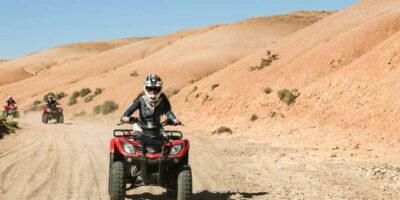 ★ 4.6Agadir: ATV Quad Biking and Goats On Argan Trees with TeaFrom $19209 reviews
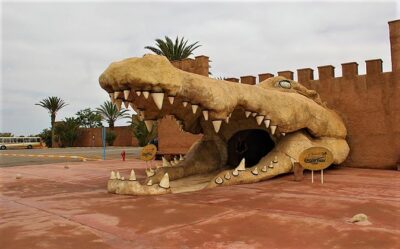 ★ 5.0Effortless Agadir Crocoparc Ticket and Transfer ServiceFrom $28196 reviews
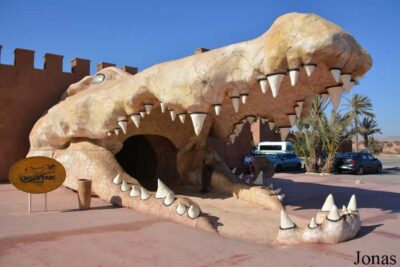 ★ 4.8Agadir or Taghazout: Goat on Trees and Crocoparc with PickupFrom $53100 reviews
Where else this one sits