
REVIEW · SAHARA
4 Day Sahara Desert Trip From Marrakech: Marrakesh – Sahara Desert – Marrakesh
Leaving Marrakech for the Sahara feels slow, in a good way. This 4-day route strings together big Moroccan scenes, with High Atlas passes, UNESCO kasbah walls, and an overnight camel safari into the Merzouga dunes, all while keeping the pace human. You also get included meals and lodging, which matters when you are doing a desert trip where details can go sideways fast.
I really like the private driver/guide setup, because it makes the whole day feel flexible, not crammed. I also love that the trip includes a real overnight in a luxury desert camp, not just a quick photo stop. One consideration: you should be ready for long car days, especially on Day 1 and Day 2, because the Sahara is far and the magic comes after the hours in the vehicle.
Key things I’d circle before booking
- UNESCO Ait Ben Haddou plus nearby film-linked stops gives you more than one “wow” moment.
- Tizi-n-Tichka Pass scenery on the way out sets the tone for the entire trip.
- Draa Valley stop-offs mean you travel through living Berber countryside, not just highways.
- Overnight Merzouga camel safari puts you in position for sunrise, stargazing, and real desert time.
- Todra Gorge and Dades Valley viewpoints deliver dramatic rock and kasbah texture between desert nights.
- Kelaa M’Gouna roses and Skoura palms add a different side of southern Morocco on the return.
In This Review
- From Marrakech to the Sahara, but with breathing room
- Price and what you’re really paying for
- Day 1: High Atlas passes, Telouet Kasbah, and Ait Ben Haddou
- Day 2: Draa Valley via Agdz Road, Rissani lunch, then Merzouga dunes
- Day 3: Sunrise dunes, Erfoud fossils, Todra Gorge cliffs, and Dades Valley night
- Day 4: Roses in Kelaa M’Gouna, palm oasis Skoura, and return to Marrakesh
- Who this trip suits best
- Guides, service style, and what you notice on the ground
- What to watch for during the Sahara night
- Final verdict: should you book this 4-day Sahara trip?
- FAQ
- What’s included in the tour price?
- Are lunch meals included?
- Does the trip include an overnight camel safari in the Sahara?
- Is hotel pickup offered?
- How long is the tour?
- Is this a private tour?
- Where does the trip start and end?
- Is there a child rate, and can children travel?
From Marrakech to the Sahara, but with breathing room
Most Sahara trips are built to check boxes in 3 days. This one is stretched to about 4 days, and that small timing change makes a big difference. You still cover serious distance, but you get more time at key places, more photo moments, and less of that rush feeling that can flatten the experience.
The backbone here is a private driver/guide and private transport in a modern, comfortable vehicle. That matters on Morocco road trips where the pace, stops, and navigation can change minute to minute. With your own guide, you can usually spend a little extra time when something grabs your attention, like a kasbah viewpoint or a canyon overlook.
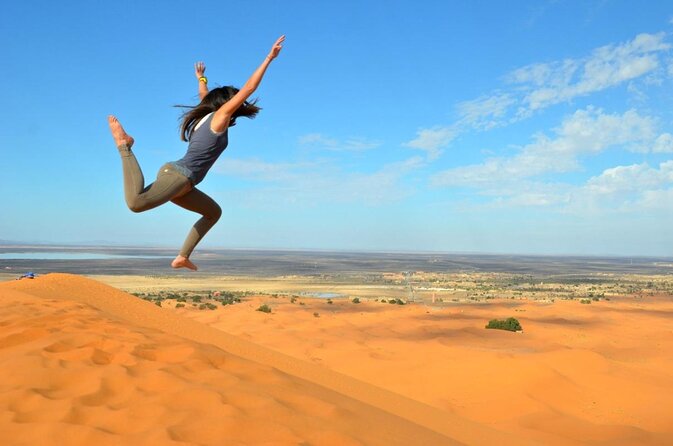
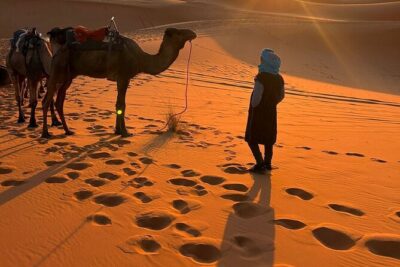
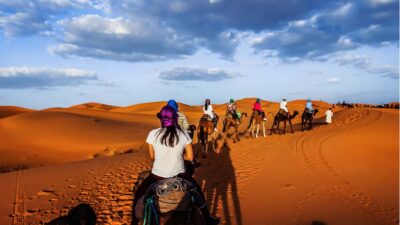
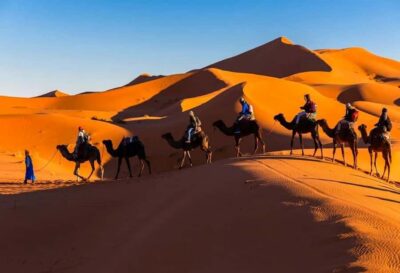
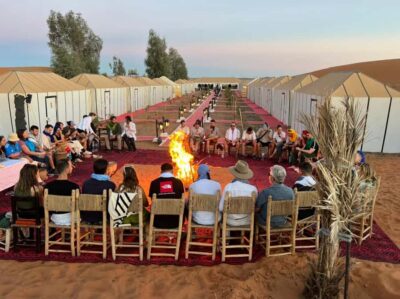
And then there is the desert part, the piece you actually came for. An overnight camel safari near Merzouga is not just transportation. It turns the dunes into a whole night with dinner, sleep, stargazing, and a calm, early start for sunrise.
If you want a trip that feels organized but not stiff, this one fits well.
Price and what you’re really paying for
At $550 per person, the price is not bargain-bin. It is also not just “transport plus a camel ride,” because the included items take up most of the budget.
What’s built in:
- All accommodation, including a night in the desert camp
- Breakfasts and dinners (three of each)
- Private transport and a guide/driver for your group
- A guided camel safari
- Taxes and VAT
What you do not get:
- Lunches
- Travel insurance
- Anything not clearly listed as included
Here is the practical way I’d think about the value. Sahara tours live and die by logistics: where you sleep, what meals you get, and how smoothly your driver times pickups and connections. By bundling lodging and some meals in the total price, you avoid the annoying add-ons that can pop up later, and you can plan your day with fewer unknowns.
If your alternative is booking a car, hotels, and a camp separately, you might find it costs similar money or even more once you price the desert night properly. This trip feels designed for travelers who want the “I did not have to manage this” experience.
Other Sahara routes on our list
- 3-Day Marrakech to Fes Sahara Desert Tour via Merzouga
★ 5.0 · 6,546 reviews - From Marrakech 4 Days Tour To Morocco Sahara Desert
★ 5.0 · 553 reviews - Marrakech to Fez via Merzouga Desert 3-Days Sahara Tour
★ 5.0 · 472 reviews - 3 Days 2 Nights Marrakech to Merzouga – Sahara Tour Adventure
★ 5.0 · 372 reviews
Day 1: High Atlas passes, Telouet Kasbah, and Ait Ben Haddou
Day 1 is a classic Moroccan road-trip opener with a serious payoff. You start with pickup from your hotel, then head toward Ouarzazate, crossing the High Atlas Mountains via the Tizi-n-Tichka Pass at about 2260m. This is the kind of climb that makes you slow down and look out the window. You get sweeping views of mountain ridges and Berber village textures that you just do not see when you fly over.
Along the drive, you stop at sites that connect Morocco’s kasbah culture with real history and media fame. Telouet Kasbah is one of those stops that helps you understand how regional power worked before modern borders and highways.
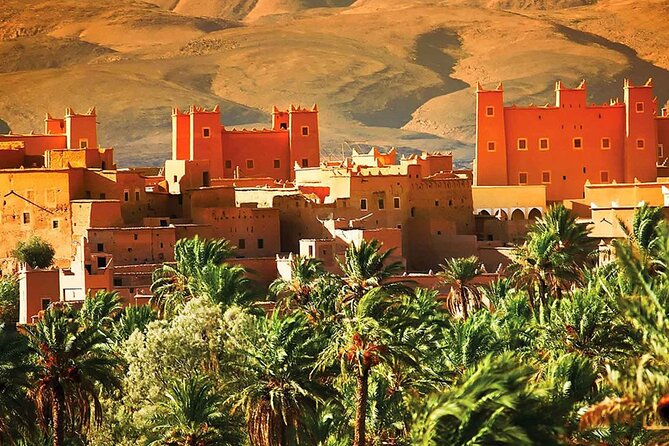
Then you arrive at Kasbah Ait Ben Haddou, often cited as Morocco’s most celebrated, best-preserved kasbah. It is also a UNESCO World Heritage Site. You can feel why it became a film location, but the real value for me is how it teaches you to read the place. Kasbahs are not just pretty buildings. They are built for defense, for controlling routes, and for surviving harsh climates.
After exploring, you reach Ouarzazate with time around the Atlas Film Studios area and additional kasbah stops such as Taourirt and Tiffoultoute. You end the day with an overnight stay in a hotel or riad in the Ouarzazate region.
What to expect on Day 1:
- A lot of scenic driving with meaningful stops
- A UNESCO-style sight that rewards walking and looking up
- An overnight in comfortable lodging, so you are not exhausted before desert night
Possible drawback to plan for: Day 1 is long. Bring water, keep your phone charged, and accept that you are trading convenience for distance.
Day 2: Draa Valley via Agdz Road, Rissani lunch, then Merzouga dunes
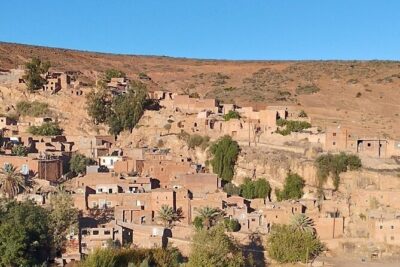
Day 2 starts after breakfast, with a drive along the Agdz road and through the Draa Valley, which is described as the longest in Morocco. This is one of those travel days where the road itself becomes part of the story. You pass mud-built Berber kasbahs and oases, and you see how the landscape supports life in pockets, not everywhere at once.
There is also a practical lunch stop in Rissani, where you can try traditionally baked Berber pizza. Even if food is not your top priority, these small pauses keep the day from feeling like one straight line to the desert.
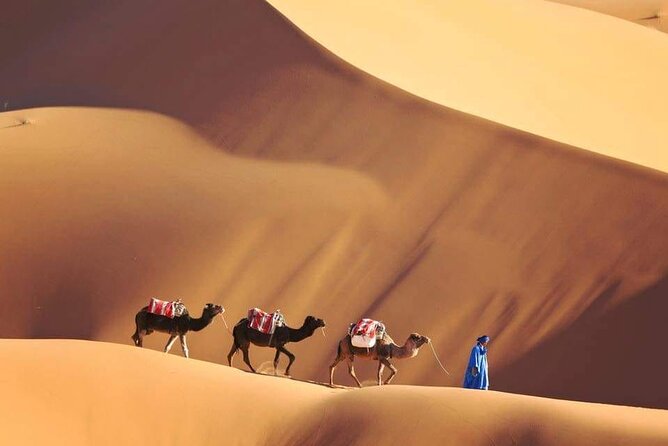
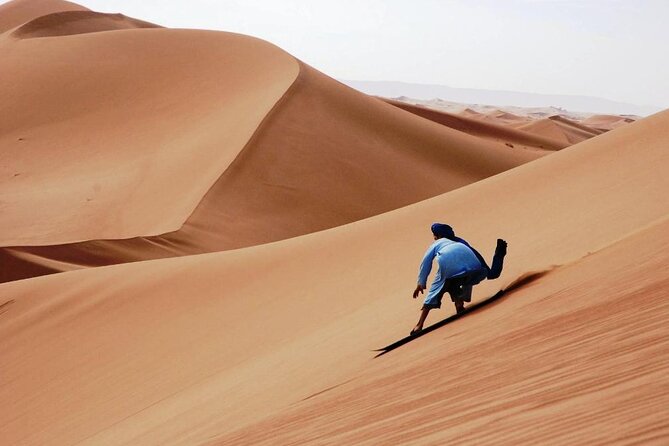
Later, in the late afternoon, you arrive in Merzouga. That is when the trip shifts gears. You meet your camel guide, then ride out across the sand dunes to a Bedouin luxury camp for the night.
This is where the 4-day format starts to make sense. The desert night is not rushed, and the camp experience becomes the emotional center of the trip.
In camp, you are set up for:
- Dinner and a full night on the dunes
- A chance to look up at the sky, often one of the most memorable parts of Morocco desert travel
- A more relaxed rhythm than day trips that return before dark
What to pack mentally for this day:
- You are moving from cultivated valley scenery to a very open desert world
- Your schedule tightens once you start dunes and camp time
- The camel ride is an activity, not just a transfer
Day 3: Sunrise dunes, Erfoud fossils, Todra Gorge cliffs, and Dades Valley night
Day 3 begins with desert time in the best way: sunrise. Waking up for sunrise in the dunes is often a highlight because it changes the lighting and makes the sand look almost alive.
After that, you have a more comfortable reset with a leisurely breakfast and a shower at the camp. This is not a small detail. After camel time, you want to feel clean and human again before the next long driving stretch.
Then you head toward Erfoud, a fossil town. This part of the route adds variety that most Sahara trips skip. You see stalls selling crystals and semi-precious stones, and there is mention of a workshop, Usine de Marmar, that is open to visitors.
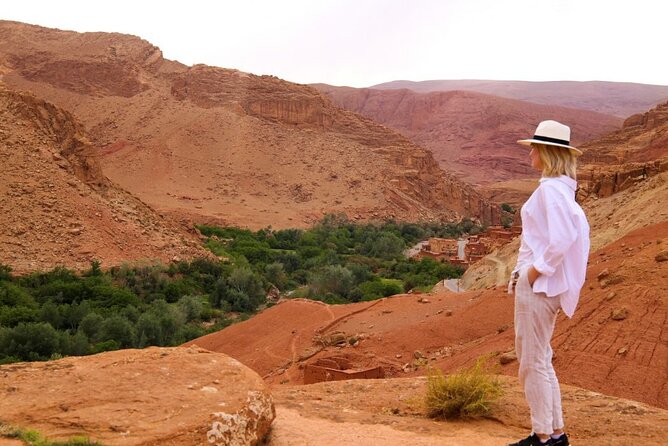
From Erfoud, the route moves into Todrra Gorge, where you face steep, dramatic cliffs rising about 300m on each side. If you like scenery that feels vertical and severe, this is the stop. It also feels like a natural “breather” between desert and mountains because it is so visually different.
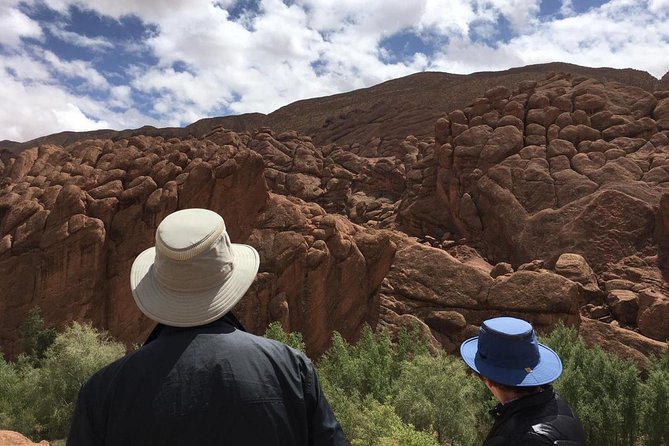
You get lunch in the gorge area, then continue to the Dades Valley. Here, you see rock formations locals call “monkey toes,” plus mud kasbahs and valley views.
You finish Day 3 with an overnight stay in a hotel or riad overlooking the Dades Valley. That viewpoint night is a good contrast to the desert camp. Same big sky, different terrain.
What makes Day 3 work:
- You get desert sunrise, then restore comfort with breakfast and shower
- You swap dune sand for canyon stone and cliff views
- The Dades Valley night gives you another evening to breathe
Day 4: Roses in Kelaa M’Gouna, palm oasis Skoura, and return to Marrakesh
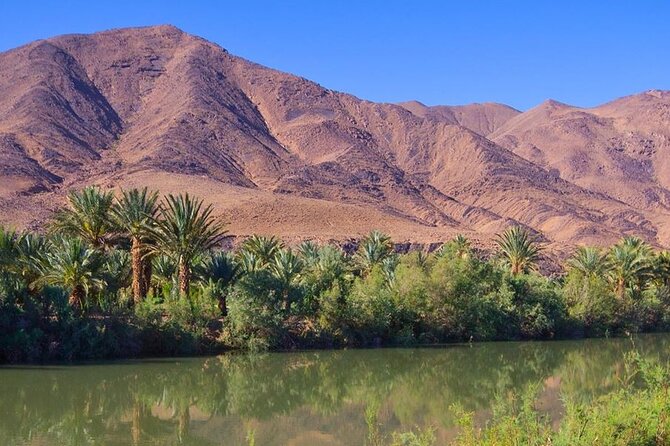
Day 4 is the “return with variety” day. You start at Kelaa M’Gouna, known for rose petals. The route notes that up to 4000 tonnes of rose petals are picked in spring to be processed into rosewater or exported for the perfume industry. There is also a Rose Festival in May.
Even if you are not traveling during May, this stop gives you a different Morocco flavor. Desert trips can become one-note if every day is sand and rock. Roses and rosewater production add a sensory change, and they break up the long road back toward Marrakech.
Next comes Skoura, with its palm grove and kasbahs in southern Morocco. It is a slower, greener-feeling contrast to the earlier desert and canyon sections, and it’s a nice way to reset your eyes before the final mountain crossing.
Then you cross the mountains again via the Tizi n Tichka pass and arrive back in Marrakesh to end the trip.
This is where I like the route logic. You end with a gentle cultural landing rather than just dropping you into the chaos of Marrakech without a transition.
Who this trip suits best
This is a great match if:
- You want a structured route with the Sahara night handled for you
- You care about seeing major Moroccan highlights, but you also want time to breathe
- You prefer private transport and guide flexibility over being stuck with a rigid group schedule
- You are okay with long drives in exchange for big scenery
It may feel less ideal if:
- You hate road time and want to minimize car hours as much as possible
- You are very sensitive to early starts, especially for sunrise in the dunes
Small practical note on food: the tour includes breakfasts and dinners, while lunches are not included. If you have dietary needs, you should tell the operator ahead of time so they can plan meals through the included dining.


Guides, service style, and what you notice on the ground
One thing that comes up again and again with this operator is how smoothly the human side runs. Names I’ve seen associated with successful trips include Said, Omar, Amar, Ibrahim, and Younes. When guides are strong, the trip feels less like a checklist and more like a story with good pacing.
I also like how service shows up in the details you feel day to day:
- Clear communication before you leave
- A flexible feel when your timing needs shift
- Comfortable vehicles that make the long drive tolerable
In Morocco, that balance matters. You can have great sights and still have a frustrating trip if logistics feel sloppy. Here, the repeated pattern is the opposite.
What to watch for during the Sahara night
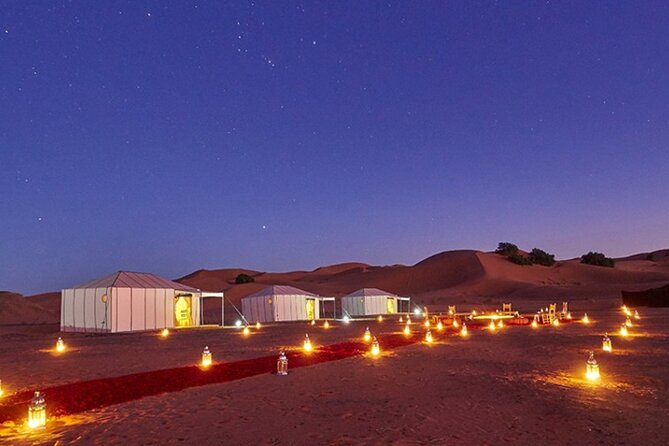
The overnight camel safari is the headline, but it comes with a few realities you should plan for.
- You will be riding camels in dunes and sleeping in a desert camp setting. Comfort levels are often described as luxury, but it is still the desert, not a city hotel.
- Temperatures can shift after sunset, so bring layers even if daytime felt warm.
- Photos are great, but give yourself time to just sit. The night sky is one of the main reasons people remember Merzouga.
Also, confirm what you are comfortable with regarding showers, timing, and what happens before and after the camel ride. The schedule generally includes a shower at camp on Day 3 after sunrise, but your comfort needs might vary.
Final verdict: should you book this 4-day Sahara trip?
If you want the Sahara and you want it to feel organized, this is an easy yes. The big reason is the pacing: 4 days instead of 3 gives you time for meaningful stops like Ait Ben Haddou, Todra Gorge, and the Dades Valley, while still keeping one full night inside the desert experience.
Book it if you value:
- Included lodging, including the desert camp
- Breakfasts and dinners that remove guesswork
- A private guide and driver style that keeps you from feeling herded
Think twice if:
- You dislike long car days
- You want lunches fully handled and already included, since lunches are not part of the package
If you’re choosing your one Morocco highlight trip, this is a strong contender. It hits the icons, but it also keeps enough space between them for the trip to feel like travel, not a hurried sprint.
If you want, tell me your travel month and how many people are in your group, and I’ll suggest the best packing priorities and what to plan around for the desert night timing.
FAQ
What’s included in the tour price?
The tour includes private transport, a guide/driver, all accommodation, a guided camel safari in the Sahara, an overnight in a desert camp with dinner and breakfast included, plus breakfasts and dinners (three of each) and taxes and VAT.
Are lunch meals included?
No. Lunches are not included.
Does the trip include an overnight camel safari in the Sahara?
Yes. You do a guided camel safari across the dunes and spend one night in a Bedouin luxury camp in the Merzouga area.
Is hotel pickup offered?
Yes, pickup from your hotel is included.
How long is the tour?
The duration is 4 days, approximately.
Is this a private tour?
Yes. It is described as a private tour/activity, with only your group participating.
Where does the trip start and end?
It starts in Marrakech and ends in Marrakesh.
Is there a child rate, and can children travel?
There is a child rate when sharing with 2 paying adults, and children must be accompanied by an adult.
Sahara Routes, Read Together
- 3-Day Marrakech to Fes Sahara Desert Tour via Merzouga★ 5.0 · 6,546 reviews
- From Marrakech 4 Days Tour To Morocco Sahara Desert★ 5.0 · 553 reviews
- Marrakech to Fez via Merzouga Desert 3-Days Sahara Tour★ 5.0 · 472 reviews
- 3 Days 2 Nights Marrakech to Merzouga – Sahara Tour Adventure★ 5.0 · 372 reviews
Added recently from around Marrakech
More Sahara Desert Tours worth a look.
 ★ 4.9From Marrakech: 3-Day Merzouga and Sahara Desert TourFrom $13415,308 reviews
 ★ 5.03-Day Marrakech to Fes Sahara Desert Tour via MerzougaFrom $2206,546 reviews
 ★ 4.4From Marrakech: 2-Day Sahara Tour to Zagora & Ait Ben HaddouFrom $841,925 reviews
 ★ 4.8From Fez: Sahara Desert 2-Day Tour with Merzouga Camp StayFrom $1141,716 reviews
 ★ 4.8From Marrakech: 3-Day Sahara Tour with Private tent & MealsFrom $1021,652 reviews
 ★ 4.5From Marrakech: 3-Day Sahara Desert Adventure to FesFrom $1381,405 reviews
 ★ 4.7From Fes to Marrakech: 3-Day Sahara Desert Discovery TourFrom $1821,158 reviews
 ★ 4.8Marrakech: 3-Day Merzouga Sahara Desert Tour with Quad Ride669 reviews
Where else this one sits