
REVIEW · MOROCCO
3-hour Horseback Ride Mountain and Beach Morocco
Three hours, two worlds: sand and mountains. You’ll ride out from Amazir Cheval for sweeping beach power, then trade salt air for arid Berber scenery and big views. It is lively, guided, and very focused on the fun parts of horseback riding.
I really like the small family-stable approach here. The project started from scratch, and the founders, Brahim and Manon, now run a set up that puts serious effort into caring for horses, including animal rescue. In plain terms: you feel like you’re not just buying a ride, you’re joining a working place that takes horse welfare seriously.
One thing to consider: the experience depends on good weather, and it expects at least moderate physical fitness. If you’re looking for something totally effortless, this is more active than that.
In This Review
- Key highlights you should care about
- Riding the Moroccan coast, then climbing into Berber country
- What makes Amazir Cheval feel different: family energy and horse welfare
- How the ride plays out hour by hour, without getting lost in details
- The practical side: gear you’ll borrow, and how that affects comfort
- Pacing and fitness: what moderate physical fitness really means here
- Price and value: why $68.53 can make sense for what you get
- Who this ride is best for (and who should pick another option)
- Weather, safety, and what to plan for on the day
- The basics on timing, hours, and confirmation
- Should you book the Amazir Cheval 3-hour ride?
- FAQ
- How long is the horseback ride?
- Where does the experience take place?
- What is included with the ride?
- What is not included in the price?
- Are gallops included?
- What should my fitness level be?
- How big are the groups?
- Are helmets and protective gear provided?
- What happens if the weather is poor?
- What are the opening hours?
- Do I get the ticket on my phone?
Key highlights you should care about
- Beach time with real speed options: you’ll have walking, trotting, and for good riders, full gallops.
- Mountain tracks for big panoramas: you climb with the horses and then enjoy views from higher ground.
- Palm groves and streams: you go from arid scenery to greener valley vibes as the ride moves along.
- A family-run equestrian center: founders Brahim and Manon lead a hands-on operation.
- Horse care is a core theme: animal rescue is part of the story, and the horses are described as lively and well kept.
- Gear support: you can borrow riding clothes, a helmet, and calf protectors.
Riding the Moroccan coast, then climbing into Berber country
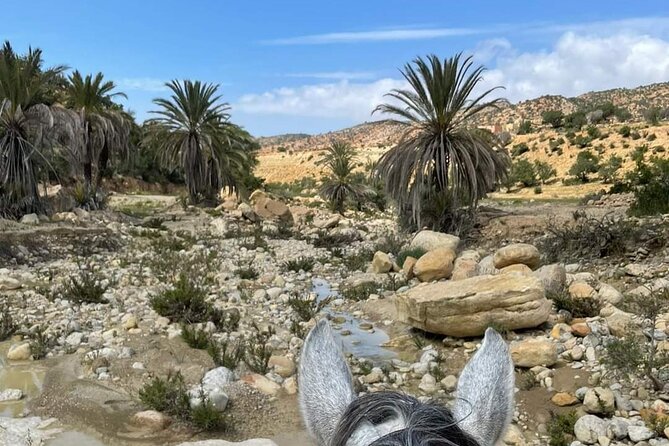
This 3-hour horseback ride is built like a mood switch. You start with the kind of scenery that makes you think of horizon lines and salt wind, then you move into drier mountain country with palm pockets and valley streams that feel like a reward for staying with it.
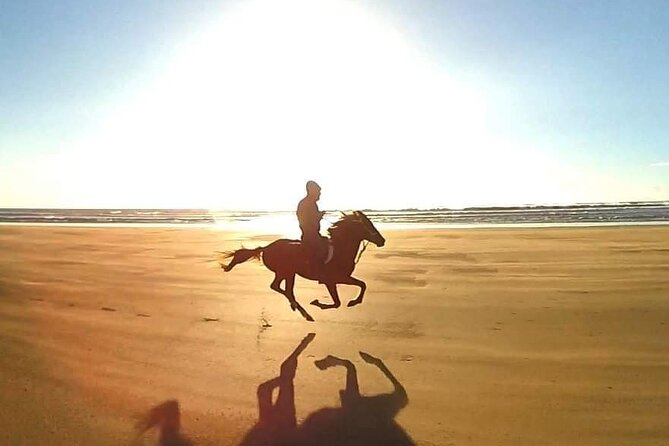
On the beach, the emphasis is not just on strolling. For riders who feel confident, you get moments of full gallop, which is where the experience turns from pretty into thrilling. Even if you are not the fastest rider in the group, you still get the rhythm of a proper ride with the team doing the pacing.
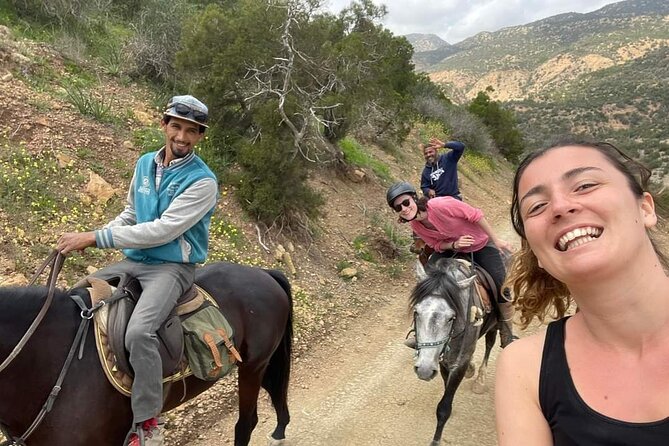
Then the trail starts to climb. You spend time with the horses on mountain tracks, working up toward breathtaking views. This is a different kind of enjoyment, less about speed and more about how wide the world looks from up there.
The route also includes a mix of scenery transitions that keep it interesting. One moment you’re on open beach lines. Next, you’re up and out in arid terrain, and later you’re passing through greener pockets with palm groves and water running through valleys.
What makes Amazir Cheval feel different: family energy and horse welfare
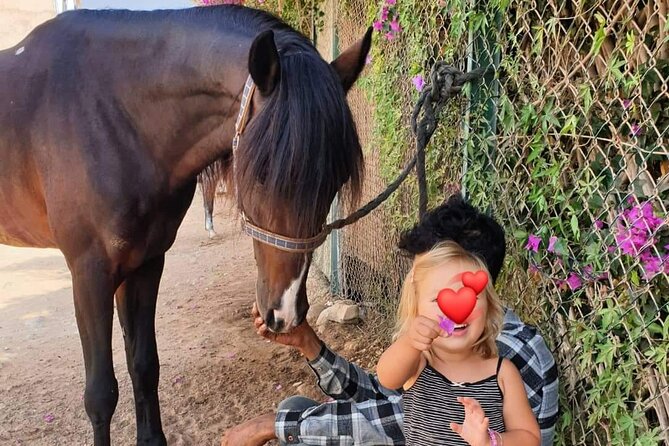
A lot of equestrian tours promise good care. Here, the story is more specific. Amazir Cheval is described as a small family stable, tied to a project that began with very little. The founders, Brahim and Manon, are part of that day-to-day identity, and it shows in how the experience is framed.
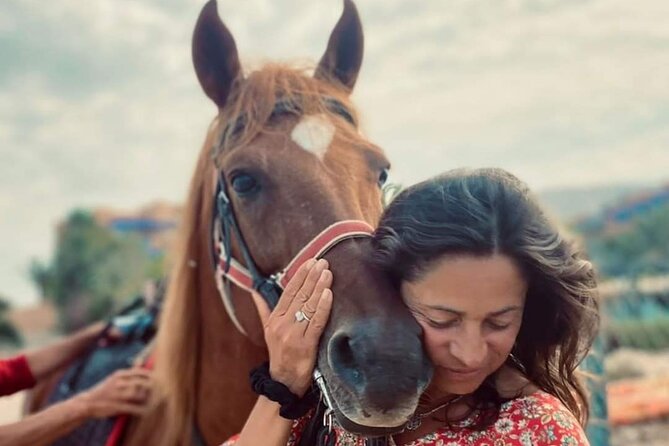
The horse welfare piece matters because it changes your riding experience. When horses are in good shape, you feel it in how they move, how attentive they seem, and how smoothly the ride transitions between gaits. In the feedback you’ll see repeated praise about the horses being in fantastic condition, lively, healthy, and well treated.
There’s also an explicit note about animal rescues. That doesn’t mean every second of the tour is a rescue documentary. It does mean the operation is built around the idea that these animals are not disposable. You can feel that attitude in the way riders describe feeling safe and looked after by the team.
How the ride plays out hour by hour, without getting lost in details
Even without stop-by-stop labeling, you can picture the flow. The ride includes a beach segment, a mountain segment, and then another return toward palms and more beach riding.
First, you spend time around the beach with options for swimming and/or walking. That’s a nice touch because it lets you ease into the day, not just mount and go. If you choose to swim, remember you’re still part of a guided riding schedule, so keep it quick and practical.
Then comes the riding portion that more confident riders will talk about later: beach stretches where you can walk, trot, and gallop. The description is clear that full gallops are for good riders, so don’t show up expecting every rider to be pushed into speed. This is normal and actually a good thing for safety and comfort.
After the beach energy, the ride shifts toward the mountains. You climb with the horses to reach viewpoints with real scale. This is where you get the “wow” scenery in a different way. Not the wide beach horizon, but the sense of height and distance over rugged arid terrain, with palm groves punctuating the view.
Once you’re on mountain tracks, you also get gallops on the trails. It’s the kind of contrast that keeps you from feeling like you’re repeating the same track all day. You’ll experience the stability of steady guidance while also getting the fun bursts that make horseback riding memorable.
As the route continues, you pass near accommodations and then move into the greener valley vibe described as a “valley of paradise.” This part is less about acceleration and more about atmosphere, as you cross through palm groves and streams.
Finally, you return to the beach and ride again. The last stretch includes a mix of walking, trotting, and galloping on the sand. It’s a satisfying wrap because it ends on a place with lots of open space, which naturally makes the final moments feel bigger.
The practical side: gear you’ll borrow, and how that affects comfort
You’re not going in completely empty-handed. Amazir Cheval provides coffee and/or tea and bottled water, plus they can lend riding clothes, a helmet, and calf protectors.
That lending feature is important. Getting the right basics can turn a stressful ride into a comfortable one, especially if you don’t travel with equestrian gear. You also avoid the hassle of trying to make do with random clothing that may not fit how a saddle ride feels.
From a comfort standpoint, I like that you can borrow the helmet. It signals they take rider safety seriously. Calf protectors are also a smart inclusion because they help with how your lower leg rests and moves while riding.
What’s not included is also worth knowing. Lunch, dinner, and breakfast are not part of the price. Soda or pop is also not included. So plan your meal timing around the 3-hour window. If you arrive hungry, grab something beforehand.
Pacing and fitness: what moderate physical fitness really means here
The tour sets a “moderate physical fitness” expectation. That usually translates into “you should be comfortable with riding time in the saddle, getting on and off, and handling some physical movement while the horse walks and trots.”
It also helps to know that the ride includes full gallops for good riders. That doesn’t mean you’ll be forced into it. It does mean the group dynamic may include riders who want speed, and the guide will adapt the pace accordingly.
As a practical tip, be honest about your ability level during preparation. The ride is designed for different levels of riders, and the best outcome comes when you match your expectations to what the team can safely offer.
The group size limit is small, with a maximum of 10 travelers. Smaller groups usually mean more attention per rider, and that matters on a mixed route like beach plus mountain tracks.
Price and value: why $68.53 can make sense for what you get
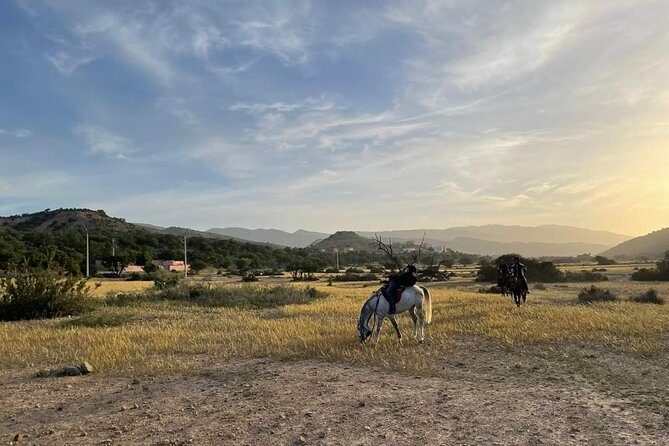
At $68.53 per person for about 3 hours, this is not a long-day tour. You are paying for focused time in the saddle and guided scenery transitions, not a full day of meals and sightseeing extras.
Here’s where the value shows up:
- You get refreshments (coffee/tea and bottled water).
- You get key gear (helmet, calf protectors, and riding clothes on loan).
- You get a variety ride: beach riding, mountain tracks, palm groves, and water running through valleys.
- The operation is described as horse welfare focused, with animal rescues part of their mission.
What you do not get is a meal plan. No lunch, no dinner, no breakfast, and no soda/pop. If you already plan to eat before or after, that’s fine. If you hoped the tour handled everything including lunch, you’ll need to adjust your expectations.
Private transportation is also not included. So you’ll want to arrange getting to the meeting area on your own. The good news is the activity is described as being near public transportation.
Who this ride is best for (and who should pick another option)
This tour fits best if you want:
- Real horseback time rather than a short photo session
- A mix of beach and mountain scenery
- A guided experience with a small group size
- A stable where horse care and safety are part of the culture
It also seems like a strong first-try option for people who are at least comfortable with moderate physical effort, because the guidance and equipment support help you feel set up correctly.
If you’re the type who wants a totally calm, slow scenic walk only, you may still enjoy it, but the ride is explicitly described as including trots and gallops. This is a more active equestrian outing.
Weather, safety, and what to plan for on the day
This experience requires good weather. If poor weather cancels the ride, you’re offered another date or a full refund. That matters because beach and mountain conditions can change fast.
Also note: the riding is outdoors and involves moving terrain. So wear sun-ready clothing and plan for heat, especially during the summer-season opening hours.
Service animals are allowed, and the activity is near public transportation. That can help if you are traveling without a rental car.
Finally, the ride ends back at the meeting point. That makes it easier to slot into a day. You won’t need to plan for a long return travel storyline after you finish riding.
The basics on timing, hours, and confirmation
The listed opening hours run from May 30 to August 30, Monday through Sunday, from 9:00 AM to 6:00 PM.
You should receive confirmation within 48 hours of booking, subject to availability. That is useful if your travel schedule is tight. Also, the experience uses a mobile ticket.
Should you book the Amazir Cheval 3-hour ride?
If you want an honest horseback experience with proper scenery variety and a team that treats horse welfare as part of the mission, I think this is an easy yes. The repeated emphasis on horse condition, the family-run feel, and the mix of beach gallops plus mountain views makes it a ride that feels worth your time, not just a box-check.
Book it if:
- You want beach speed plus mountain panoramas in one outing
- You appreciate small-group attention
- You like the idea of borrowing a helmet and getting basic gear handled
- You’re okay with moderate physical effort
Skip or consider another option if:
- You’re relying on perfect weather and cannot flex plans at all
- You want a fully low-activity ride with no gallop options
- You need the tour to include meals, since lunch and dinner are not included
If you can match your expectations to an active, guided ride and you’re flexible about weather, this one looks like the kind of Morocco memory you’ll keep repeating when you talk about the trip.
FAQ
How long is the horseback ride?
It lasts about 3 hours.
Where does the experience take place?
It takes place in the Morocco Sahara area of Morocco.
What is included with the ride?
Coffee and/or tea, bottled water, and lending of riding clothes, a helmet, and calf protectors.
What is not included in the price?
Lunch, dinner, breakfast, and soda/pop are not included. Private transportation is also not included.
Are gallops included?
The ride includes full gallops for good riders, plus walking and trotting depending on the section.
What should my fitness level be?
You should have a moderate physical fitness level.
How big are the groups?
The maximum group size is 10 travelers.
Are helmets and protective gear provided?
Yes. You can borrow a helmet and calf protectors.
What happens if the weather is poor?
If the ride is canceled due to poor weather, you’ll be offered a different date or a full refund.
What are the opening hours?
From May 30 to August 30, it runs Monday through Sunday, 9:00 AM to 6:00 PM.
Do I get the ticket on my phone?
Yes, it uses a mobile ticket.
More 3-Hour Experiences worth a look.
 ★ 3.8Marrakech Monuments & Souks 3-Hour TourFrom $231,540 reviews
 ★ 3.9Marrakech: 3H Traditional Hammam & Massage & Hotel TransferFrom $561,262 reviews
 ★ 5.03h Private Sidecar Ride / Secrets of MarrakechFrom $161478 reviews
 ★ 5.03 hours ride on camel at sunsetFrom $52326 reviews
 ★ 5.0Big Cap Sim dunes and forest 3 hours tour.From $74241 reviews
 ★ 5.03-hour camel ride at sunsetFrom $23153 reviews
 ★ 5.03h Private Walking Tour in Tangier Kasbah Medina & Colorful SouksFrom $58148 reviews
 ★ 4.7Marrakech: 3-Hour Monuments, Souks & Old Medina Walking TourFrom $21133 reviews
Where else this one sits