
REVIEW · MOROCCO
3 Days 2 nights Desert Tour from and back to Marrakech
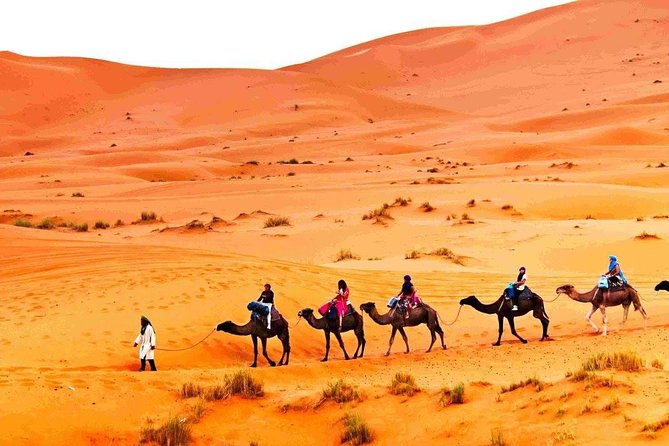
The desert starts on day one. This 3-day guided route mixes UNESCO mud-brick sights, dramatic canyon roads, and a camel sunset into Merzouga’s dunes. I especially like the stop at Aït Benhaddou, a standout fortified ksar, and the way the trip builds to an evening in a tented camp with dinner and breakfast included.
One thing to think about before you go: you’ll spend a lot of time in the car, and Day 3 is an extended drive back to Marrakech. Also, lunches and drinks are not included, so you’ll want to plan for that.
In This Review
- Key things that make this Marrakech desert tour worth it
- The run-up from Marrakech to Aït Benhaddou
- Ouarzazate: kasbah power, caravan history, and film-country vibes
- Dadès Gorges: where the road turns dramatic
- Todgha Gorges on Day 2, then straight toward Erg Chebbi
- Merzouga at sunset: camel ride into the dunes
- Sleep setup: hotel night first, then a tent at a luxury camp
- Day 3: the long return and what to do with it
- Price and value: what you really pay for
- Who this tour fits best (and who might want to think twice)
- A quick practical checklist before you go
- Should you book this Marrakech desert tour?
- FAQ
- What time does the tour start from Marrakech?
- Where does the tour meet in Marrakech?
- Is hotel pickup included?
- How long is the tour?
- What’s included for meals?
- Are lunches or drinks included?
- Do you ride camels on this tour?
- Where do you sleep during the trip?
- How big is the group?
- Can I cancel for a full refund?
Key things that make this Marrakech desert tour worth it
- Aït Benhaddou UNESCO stop that shows how caravan towns worked along the desert trade route
- Ouarzazate and Taourirt Kasbah ties the region to both history and famous film locations
- Gorge time that feels real, with Dadès and Todgha canyons along the High Atlas side
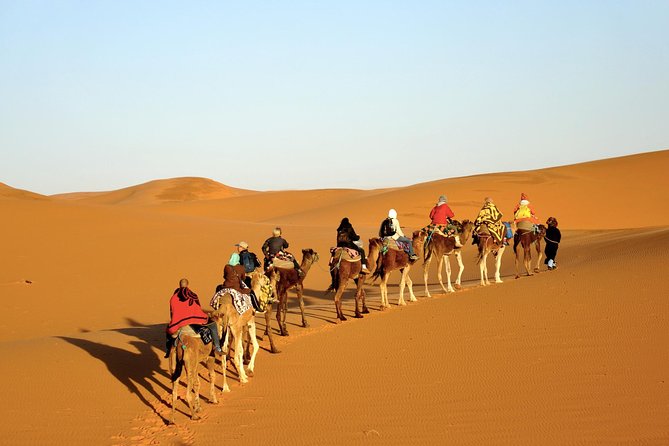
- Camel ride at Merzouga timed for sunset over the Erg Chebbi dunes
- One hotel night plus one luxury camp night, with breakfasts and dinners included
- Small group size (max 15) and an English-speaking guide in an A/C van
The run-up from Marrakech to Aït Benhaddou
Day 1 starts early, with pickup arranged from selected hotels or a meeting point at Carré Eden (Av. Mohammed V) at 7:00 am. Then the driving begins, and that matters, because this tour is built around a classic south-to-desert route.
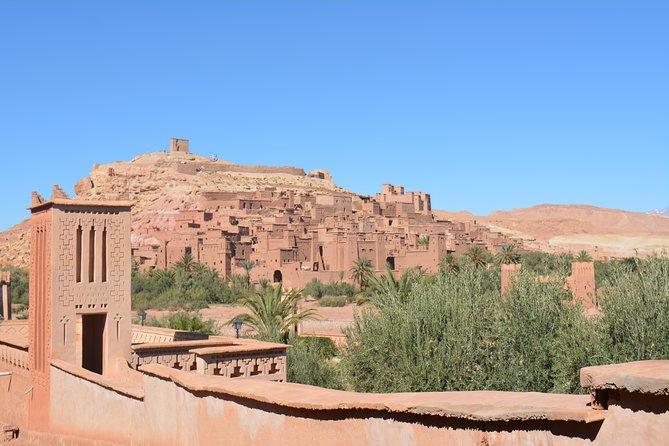
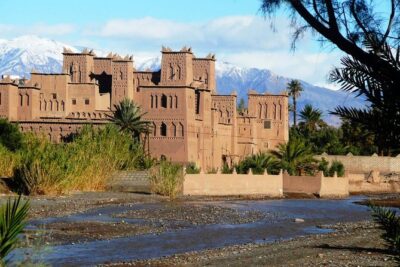
Your first major stop is Aït Benhaddou, a fortified village on the old caravan line between the Sahara region and Marrakech. The place is a masterclass in earthen clay architecture. Inside the walls you’ll see clusters of homes, known as kasbahs or merchants’ houses, packed into a defensive shape. It’s also the kind of site where you can understand the idea of a “trade hub” at a glance, because the layout is tied to protection and movement.
I like this stop because it’s not just scenic. You’re also learning how communities like this survived in a hard landscape, with buildings designed to handle heat, wind, and the rhythms of caravans. If you’re interested in how Morocco’s heritage traveled across centuries, this is one of the best early anchors on the trip.
Weighing the options? These are the Marrakech trips readers open next.
- Berber villages : Atlas Mountains Day Hike from Marrakech
★ 5.0 · 14,007 reviews - 3 Days Desert Tour From Marrakech To Merzouga Dunes & Camel Trek
★ 5.0 · 10,125 reviews - 3-Day Marrakech to Merzouga Desert Tour: Camel Rides & Overnights
★ 5.0 · 8,734 reviews - 3-Day Marrakech to Fes Sahara Desert Tour via Merzouga
★ 5.0 · 6,546 reviews
Ouarzazate: kasbah power, caravan history, and film-country vibes
After Aït Benhaddou, you’ll pass through Ouarzazate, a city that used to feel like a crossing point for traders moving north and south. Later, during the French period, it grew into a more formal garrison and administrative center.
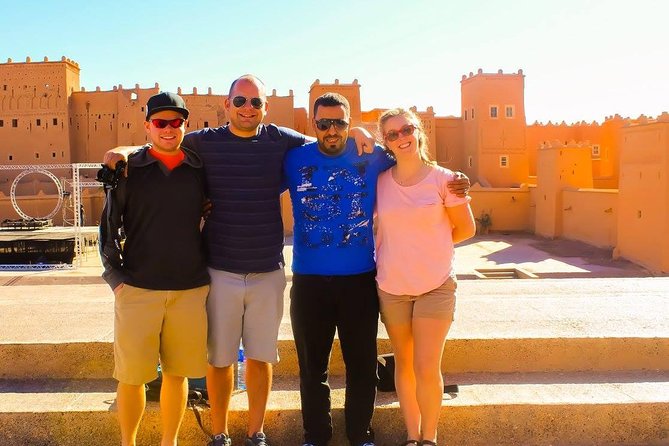
The key stop here is the kasbah of Taourirt. This is associated with T’hami El Glaoui, a name you’ll see repeatedly in stories about power in southern Morocco. The kasbah itself was the residence connected to that era, and there’s even a display of a Krupp field gun outside, linked to how authority was secured.
This is a good breather stop if you’re curious about how political power worked in the region. It’s also useful because you’ll get a sense of why Ouarzazate became such a film-friendly base: big backdrops, lots of open space, and a built environment that already looks like cinema.
Dadès Gorges: where the road turns dramatic
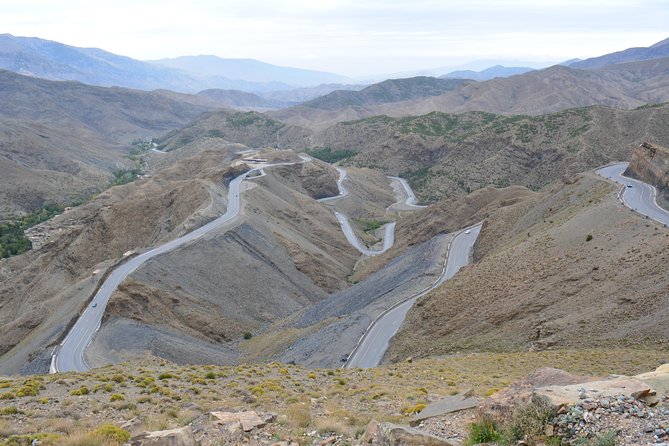
From there, the tour pushes toward the Dadès Gorges area. These gorges come from the Dadès River cutting through rugged terrain over a long time. Expect wadi cuts, steep rock edges, and a series of viewpoints that make the road feel alive.
I find gorge days are where you start feeling the “desert transition.” In one part of the journey you’re still in mountain rhythms, then gradually you’re heading toward the wide emptiness that defines the Sahara experience. It’s also where the driving stops feeling like transport and starts feeling like part of the story.
The tour notes time here as a longer segment on Day 1, which makes sense because once you’re in gorge country, you’ll want enough time to take photos, step out where safe, and really absorb the canyon scale.
Todgha Gorges on Day 2, then straight toward Erg Chebbi
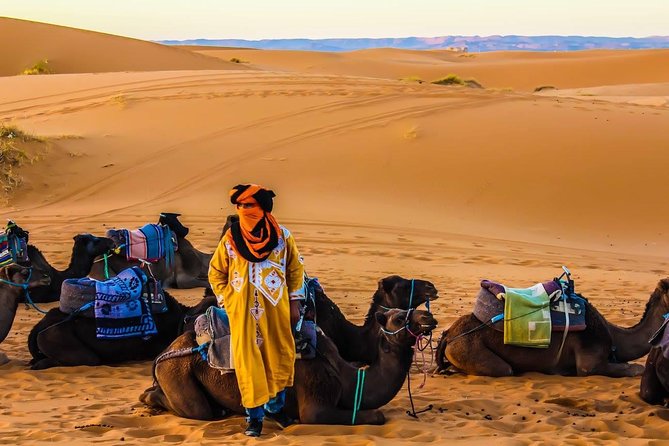
Day 2 begins with Todgha Gorges near Tinghir. Todgha and the nearby Dadès Rivers carved out these limestone canyons, especially over the final stretch of the river’s path through the mountains. The result is cliff-sided walls that feel both towering and oddly clean in their geometry.
This stop is shorter than Dadès, but it hits a strong visual payoff. If you’ve never seen a limestone canyon, this is a practical way to understand the difference between a gorge that’s mostly about color versus one that’s all about vertical structure.
After Todgha, the route continues toward Erfoud, an oasis town tied to the Drâa-Tafilalet region. You won’t spend a lot of time here, but it’s an important symbolic pivot point: you’re moving from mountains into the desert edge.
Then you reach Merzouga, the gateway to Erg Chebbi, the huge field of sand dunes north of town. This is the heart of the desert part of the tour, and it’s also the place where the schedule tightens toward sunset.
Merzouga at sunset: camel ride into the dunes
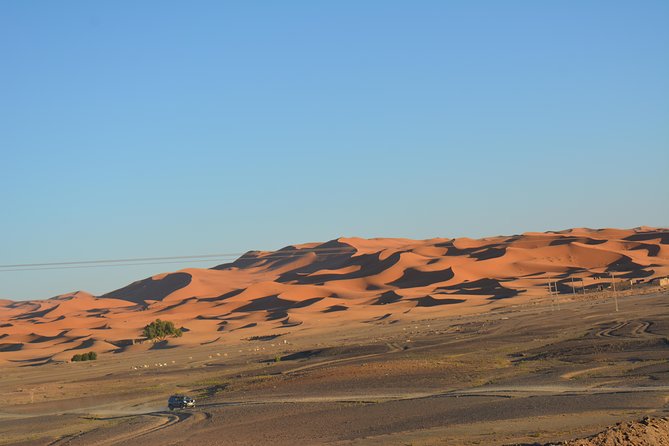
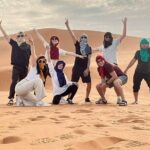
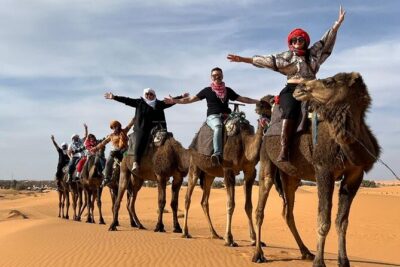
Merzouga is small, but it’s set up for the classic Sahara experience. Day 2 is where you get the standout moment: a camel ride timed for sunset.
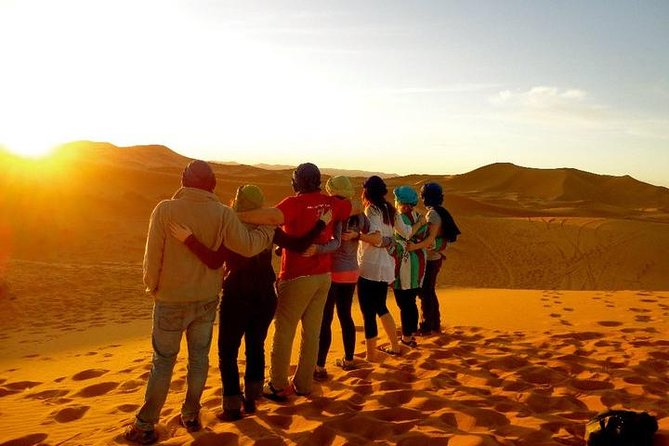
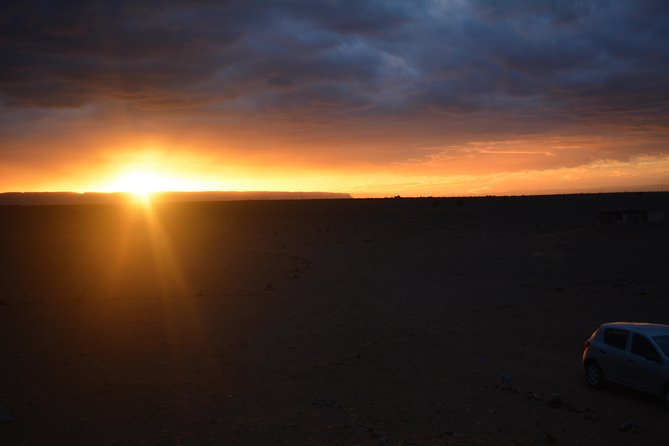
If you want the desert to feel like an event instead of a photo stop, this timing matters. The dunes and light shift quickly, and sunset gives you that long, slanting view over the sand. It’s also the moment when you can start understanding why this area is such a draw in Morocco.
You’ll ride before spending the night at a camp. The tour includes dinner that evening, so you’re not dealing with the logistics of finding food after a long day. That’s a big value factor on a trip like this, because desert experiences can turn expensive fast once you add meals and drinks on your own.
Sleep setup: hotel night first, then a tent at a luxury camp
Your sleeping plan is two nights total, spread across:
- First night accommodation in a hotel
- Night in a tent at a luxury camp
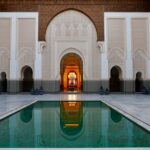
That split is practical. Starting with a hotel night helps you reset after the big Day 1 drive into gorge country. Then the tented camp night gives you the desert feel without leaving you with only survival-level arrangements.
What you can take advantage of, based on what’s included, is simple: you can pack for the activities, not for endless extra expenses. Breakfasts (2) and dinners (2) are included, so your main meals are already handled.
One more small but important point: the camp night implies cooler temperatures than you might expect in the day. The tour doesn’t spell out weather gear, so I’d plan to bring layers you can handle for evening.


Day 3: the long return and what to do with it
Day 3 is where you trade desert magic for the reality of distance. The third day includes an extended drive back to Marrakech. That’s not a flaw, but it is the tradeoff with a short 3-day format.
So think about how you’ll spend the time well. If you’re the type who likes taking a lot of photos, this is where it helps to be strategic. You’ll likely have less ability to linger on the road. If you’re more of a “watch the view and relax” person, the A/C van ride will feel like a relief.
The tour also lists Rissani as a stop point on this day. Rissani is in Errachidia Province near Erfoud and is the closest town of significant size to the Erg Chebbi dunes. Even if your time there feels brief, it’s a helpful reality check. You’re not just floating in pure desert. There’s a human geography here, with towns that support the dunes economy and the caravan legacy.
Then it’s back to Marrakech, finishing the circuit.
Price and value: what you really pay for
At $185.83 per person for a 3-day, 2-night experience, the cost makes more sense when you break it down.
You’re paying for:
- Transportation by A/C van
- An English speaking guide
- Pickup and drop-off from selected hotels
- Major sights across a packed route (Aït Benhaddou, Ouarzazate area, Dadès and Todgha gorges, Merzouga dunes)
- A camel ride
- Two dinners and two breakfasts
- One hotel night plus one luxury camp tent night
Where this becomes good value is the meal coverage. Once you’re traveling in Morocco and you’re adding desert-day food on your own, costs and hassle stack up. Here, dinner and breakfast are built in, and you can focus on enjoying each stop.
The flip side: lunches and drinks are not included. If you drink a lot of bottled water or want soda with lunch, budget for it. Also, because this is a fast-paced route with early mornings and long drives, you should expect a “see a lot” style itinerary.
Who this tour fits best (and who might want to think twice)
This tour is a strong match if you want:
- A guided, structured introduction to southern Morocco from Marrakech
- To see both gorges and Sahara dunes in one trip
- A desert night with a comfortable sleeping setup and included meals
- A relatively small group experience, with up to 15 people
It might be less ideal if you’re hoping for:
- A slow travel pace with long stays in each place
- A trip that’s mostly walking and exploring on foot
- A budget plan that already covers every meal and drink
One more personal note on the human side: service seems to matter on this route. One account highlighted a guide named Mustapha for getting people into the van smoothly and even onto the front seats quickly. That kind of organization can make a long day feel less stressful.
A quick practical checklist before you go
Because the schedule is driving heavy and includes outdoor time, I’d plan for these essentials:
- Layers for morning and evening, especially for the desert camp night
- Comfortable shoes for gorge stops and uneven walking areas
- Basic cash for lunches and drinks since they are not included
- A camera plan for sunset, because Erg Chebbi light changes fast
Also, remember this is a guided experience. The best results come when you follow the timing and don’t try to sprint ahead for extra photos.
Should you book this Marrakech desert tour?
I’d book it if you want a clear, well-supported route from Marrakech that hits the big icons: Aït Benhaddou, the Dadès and Todgha gorges, and a Merzouga sunset camel ride followed by a camp night with meals handled.
I’d think twice if you dislike long drives or if you’re the kind of traveler who needs long pauses to fully decompress between stops. Here, Day 3 is all about getting back, and that’s part of the deal for fitting the desert into 3 days.
If your priority is a high-impact desert first look with included comforts, this is a solid pick.
FAQ
What time does the tour start from Marrakech?
The start time is 7:00 am, and the meeting point is Carré Eden on Av. Mohammed V, Marrakech.
Where does the tour meet in Marrakech?
The meeting point is Carré Eden, Av. Mohammed V, Marrakech 40000, Morocco.
Is hotel pickup included?
Hotel pickup is offered for selected hotels. If not using pickup, you’ll meet at the Carré Eden starting point.
How long is the tour?
It runs for 3 days (approximately) with 2 nights.
What’s included for meals?
You get breakfast (2) and dinner (2).
Are lunches or drinks included?
No, lunches and drinks are not included.
Do you ride camels on this tour?
Yes. The itinerary includes a camel ride in Merzouga, timed for sunset.
Where do you sleep during the trip?
The first night is in a hotel, and the second night is in a tent at a luxury camp.
How big is the group?
The maximum group size is 15 travelers.
Can I cancel for a full refund?
Yes. You can cancel up to 24 hours in advance for a full refund. If you cancel within 24 hours of the start time, you do not receive a refund.
Added recently from around Marrakech
More 3-Day Experiences worth a look.
 ★ 4.9From Marrakech: 3-Day Merzouga and Sahara Desert TourFrom $13415,308 reviews
 ★ 4.7From Marrakech: Merzouga 3-Day Desert Safari with FoodFrom $12212,232 reviews
 ★ 5.03 Days Desert Tour From Marrakech To Merzouga Dunes & Camel TrekFrom $11510,125 reviews
 ★ 5.03-Day Marrakech to Merzouga Desert Tour: Camel Rides & OvernightsFrom $1158,734 reviews
 ★ 5.03-Day Marrakech to Fes Sahara Desert Tour via MerzougaFrom $2206,546 reviews
 ★ 4.6Marrakech: 3-Day Merzouga Desert Experience Camel & MealsFrom $1136,252 reviews
 ★ 4.9From Marrakech: Unforgettable 3-Day Desert Tour to FesFrom $2022,614 reviews
 ★ 5.03-Day Tour to Merzouga Erg Chebbi with Food & Camel TrekFrom $1331,770 reviews
Where else this one sits