
REVIEW · MERZOUGA
3-Day Tour from Marrakech to Merzouga Desert
Three days, and the desert pulls you in. This fast but thoughtful route from Marrakech takes you over the High Atlas, into UNESCO Ait Ben Haddou, and then down toward Merzouga for the iconic dunes. You also get time in places that feel made for walking, not just watching from a window.
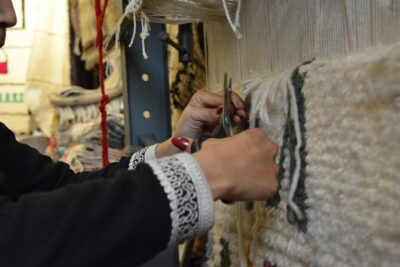
Two things I really like: the mix of major sights and hands-on stops (yes, you’ll see how objects like carpets and pottery get made), and the real desert payoff in Erg Chebbi, including a camel ride and a night in a fully equipped camp. A possible drawback is that it is a packed 3 days with early starts and lots of driving between valleys and gorge walls, so if you prefer slow travel, this one may feel rushed.
In This Review
- Key highlights you will actually care about
- The real value of a 3-day Marrakech to Merzouga route
- High Atlas mornings and Ait Ben Haddou’s walled city
- Ouarzazate film studios, Taourirt kasbah, and the Roses and Dades valleys
- Todra Gorges walk in Tinghir, plus Erfoud fossils before the dunes
- Erg Chebbi camel ride and a nomad camp night you will remember
- Leaving Merzouga, then Rissani, Tinejdad, and a panoramic river stop
- Price and value: is $209.38 a fair deal?
- What to bring for comfort, photos, and an easy desert night
- Who should book this tour, and who might prefer a different style
- Should you book the 3-Day Marrakech to Merzouga desert trip?
- FAQ
- Where does the tour start and end?
- What time do we meet in Marrakech?
- What are the main stops along the way?
- Is a camel ride included?
- What happens at the desert camp?
- What is the cancellation policy?
Key highlights you will actually care about
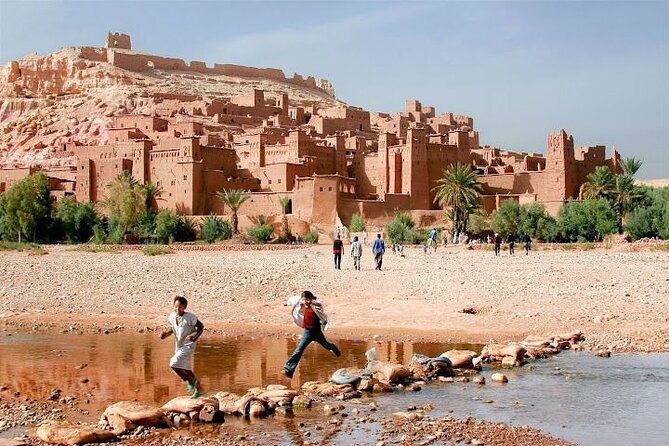
- Ait Ben Haddou UNESCO kasbah time, including lunch inside the walled city
- High Atlas pass timing, starting early so you get better light for mountain views
- Todra Gorges walk in Tinghir, plus a palm grove stop for a true pause
- Erfoud fossils, a practical detour that adds variety beyond desert photos
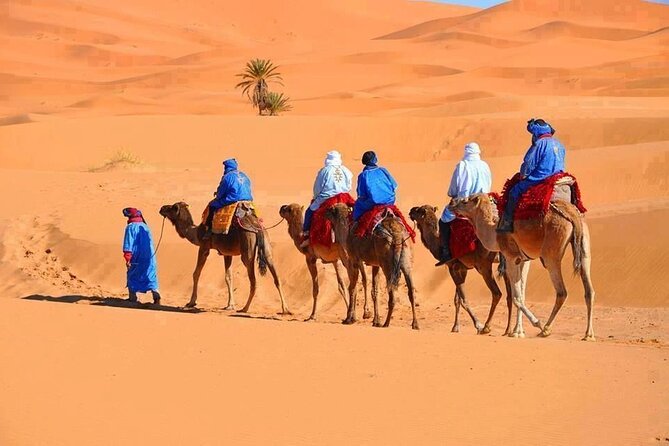
- Erg Chebbi camel ride to the camp, with dinner and drum sounds at night
- Small group feel, max 17 travelers, so you are not stuck in a sea of people
The real value of a 3-day Marrakech to Merzouga route
This tour is built for people who want the big desert moment without spending a week on the road. You cover Marrakech, Ait Ben Haddou, Ouarzazate, Skoura, the Dades and Roses valleys, Todra Gorges, Merzouga, and back. That is a lot of geography for 3 days, and it is why the logistics matter as much as the sights.
The sweet spot here is that you are not only driving past famous places. You get actual time: lunch at Ait Ben Haddou, walking time at Todra Gorges, free time near the dunes, and a desert night that is more than a quick photo stop. Plus, group size is capped at 17, which tends to make the experience feel more personal and easier to manage.
Compare the other Erg Chebbi runs we wrote up
- 3 Days Desert Tour From Marrakech To Merzouga Dunes & Camel Trek
★ 5.0 · 10,125 reviews - 3-Day Marrakech to Merzouga Desert Tour: Camel Rides & Overnights
★ 5.0 · 8,734 reviews - 3-Day Marrakech to Fes Sahara Desert Tour via Merzouga
★ 5.0 · 6,546 reviews - 3-Day Tour to Merzouga Erg Chebbi with Food & Camel Trek
★ 5.0 · 1,770 reviews
High Atlas mornings and Ait Ben Haddou’s walled city
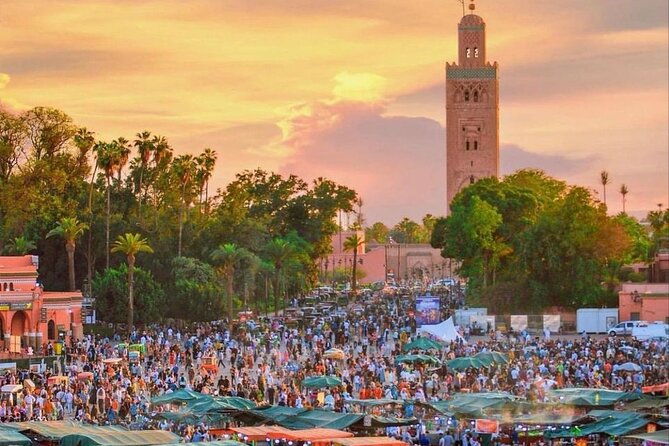
You start from Jemaa el-Fna, outside the square, and head out toward the High Atlas around 07:00. The climb includes the Tizi n’Tichka Pass area at about 2,260 m, which is one of those drives where your eyes keep moving because the scenery keeps changing.
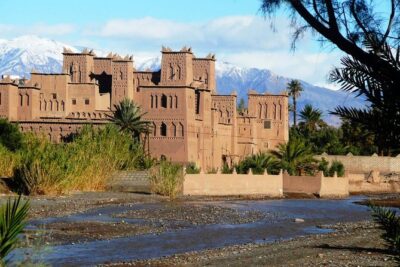
Then comes Ait Ben Haddou, the UNESCO walled city. You walk through a place that has appeared in big-name films like Gladiator, The Mummy, and Babel, but you do not need movie knowledge to enjoy it. The kasbahs, the old earthen walls, and the winding feel of the village make it easy to get your bearings fast, and the included lunch gives you a real break instead of a rushed stop.
Practical note: this is a historic site, so expect uneven surfaces and crowded pockets. If you like photos, go slow in the alleys and give yourself time at different angles. The light over the walls can look different hour to hour.
Ouarzazate film studios, Taourirt kasbah, and the Roses and Dades valleys
After Ait Ben Haddou, the route moves toward Ouarzazate. You will see the film studios area and the Taourirt kasbah, which helps explain why southern Morocco shows up so often on screen. Even if you are not a film person, the architecture and the sense of scale are what you will remember.
Next you head for the Skoura oasis area, then transition into the Valley of the Roses and onward through the Dades Valley. This is where the trip starts to feel like a string of “small worlds” connected by mountain roads: kasbahs scattered along the way, valley turns that open up new views, and a stop near the river where you can stretch your legs and cool down a bit.
One consideration: the Dades Valley stretch is long, and the roads are not always quick. If you are prone to motion sickness, take it seriously. A short period of patience here buys you a lot of scenery later.
Todra Gorges walk in Tinghir, plus Erfoud fossils before the dunes
Day two shifts from kasbahs and valleys to something more direct and physical. You continue toward Todra Gorges through the large palm grove of Tinghir. This is a big contrast after mountain passes and earthen villages, and you get free time to walk the canyon area, about 300 meters high, which is a favorite spot for mountaineers.
Then you head to Erfoud, known for fossils. You get to see how fossils are extracted from quarries and worked into different shapes. It is a bit unusual compared to the typical “desert only” detours, and I like it because it gives your brain a new topic on a day that could otherwise be all geology and sand.
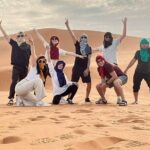
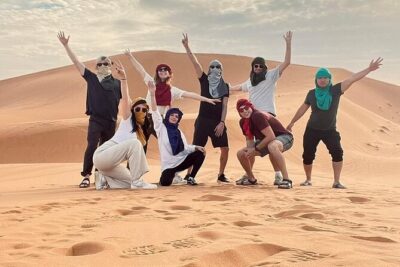
After lunch, the route continues toward Erg Chebbi sand dunes near Merzouga. You get free afternoon time to explore the Berber town and the dunes. This is an important part of the plan: you are not locked into a schedule every minute, so you can pace yourself and decide when you want to be out on the sand.
Erg Chebbi camel ride and a nomad camp night you will remember
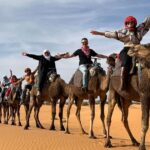
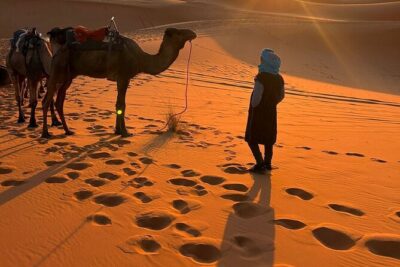
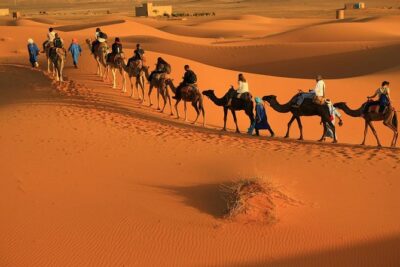
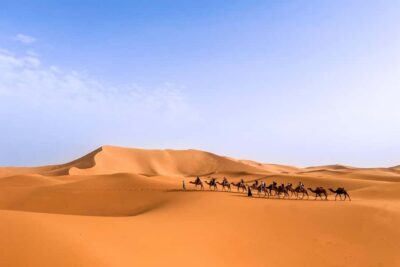
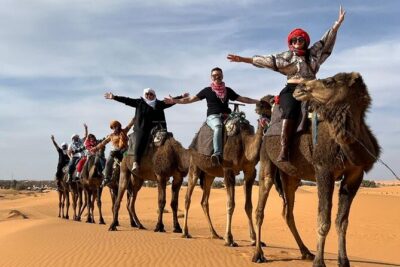
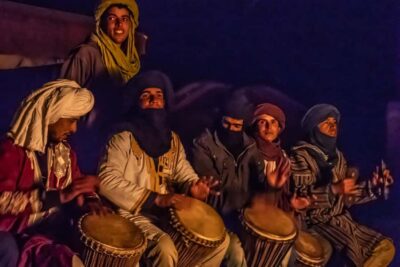
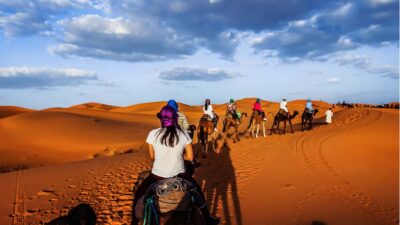
The heart of the desert experience is the camel ride through the Erg Chebbi dunes. This is the part that turns a road trip into a story you talk about later, because the dunes change look as the sun angle shifts. You ride to a fully equipped nomad camp tent, and the day wraps up with dinner and drum sounds in the desert night.
In the desert, small details matter. Having people around who keep things organized helps a lot, especially when you are tired from driving. Some guides named Mohamed and Jamal have been highlighted for being friendly and attentive, and that fits the vibe you want on a trip like this. You are more likely to enjoy the night when you do not feel like you are managing every little thing yourself.
For comfort, aim to bring a light layer for the evening. Desert nights can feel very different from daytime, and you will want to be able to adjust without thinking too hard.
Leaving Merzouga, then Rissani, Tinejdad, and a panoramic river stop
On day three, you leave Merzouga after a good shower and a good breakfast. That shower detail is not just a nice-to-have. It makes the second half of the trip feel like a reset instead of a straight line from dust to return travel.
You pass through Rissani, described as an important city for food, animals, and crafts. That stop works as a texture change, adding real-life market energy to a route that could otherwise feel like “sightseeing only.” Then you reach Tinejdad for a delicious meal.
After that, you stop for a panoramic view of the river, and you continue through Ouarzazate to arrive back in Marrakech. The final leg can feel bittersweet. You are tired, but the sense of moving from desert back to city life is part of what makes the trip feel complete.
Price and value: is $209.38 a fair deal?
At $209.38 per person, you are paying for more than a bus to the dunes. In this 3-day format, your money supports long-distance transport across multiple regions, guided activity stops, and the major desert components like the camel ride to the camp and the nomad camp experience with dinner.
You also get value from the “variety per day” effect. Ait Ben Haddou gives you UNESCO architecture. Todra Gorges gives you real walking. Erfoud gives you fossils and craft work. Then Erg Chebbi gives you the night in the desert. If you try to piece this together yourself, you often end up spending extra time coordinating rides, guides, and transport between places that are not convenient without planning.
Still, compare what you care about most. If you want a totally relaxed pace, you might prefer a longer itinerary with fewer transitions. But if you want the essentials plus a proper desert night, this pricing structure is hard to argue with.
What to bring for comfort, photos, and an easy desert night
Because you are moving between valleys, gorges, and sand, you want a simple system. I recommend packing layers you can adjust, plus a warm layer for the evening.
Comfort basics that matter here:
- Closed-toe shoes with grip for canyon walking and uneven stone areas
- A light jacket or sweater for early mornings and desert nights
- Sunscreen and a hat, since you can get strong sun during free time near the dunes
- A small day bag for water and your essentials while you walk
For photos, remember that you are not always on perfect “tourist pathways.” Slow down in Ait Ben Haddou and at Todra Gorges. Take your time in the alleys and near canyon edges, because the angle you choose will make the difference between a flat picture and a dramatic one.
Who should book this tour, and who might prefer a different style
This tour fits best if you want a classic southern Morocco circuit in a short time. It is also a good match if you like guided interpretation, because you learn how crafts and daily life themes show up in the region, including how things like carpets and pottery are made.
If you are traveling as a group who wants everything handled, the small cap of 17 travelers is a plus. You are less likely to feel lost, and you are more likely to have a guide keeping an eye on timing and comfort.
Consider a different option if you hate early starts or you get cranky when a day is mostly “moving between places.” This route is active, not lazy.
Should you book the 3-Day Marrakech to Merzouga desert trip?
I would book it if you want the desert without turning it into a logistics project. The mix of Ait Ben Haddou, Ouarzazate, Todra Gorges, and Erg Chebbi makes the trip feel like Morocco, not just one famous photo stop. The desert night in a fully equipped camp, plus the camel ride and evening drum sounds, is the kind of experience you do not replace easily.
But book with the right expectations: it is a structured 3 days, not slow wandering. If that pacing matches your travel style, this is a smart value way to see southern Morocco’s greatest hits, with enough time to actually enjoy them.
FAQ
Where does the tour start and end?
It starts outside Jemaa el-Fna square in Marrakech, and it returns to Jemaa el-Fna in Marrakech.
What time do we meet in Marrakech?
The plan starts with a 07:00 meeting in Marrakech to head toward the High Atlas Mountains.
What are the main stops along the way?
You pass through places including Ait Ben Haddou, Ouarzazate (including the Taourirt kasbah area and film studios), Skoura oasis, the Valley of the Roses, Dades Valley, Todra Gorges (via Tinghir palms), Erfoud fossils area, Merzouga and Erg Chebbi dunes, plus Rissani and Tinejdad on the return.
Is a camel ride included?
Yes. You ride camels through the Erg Chebbi dunes and reach the nomad camp tent.
What happens at the desert camp?
You sleep in fully equipped nomad camp tents. The plan includes dinner and drum sounds in the desert night.
What is the cancellation policy?
Free cancellation is available. You can cancel up to 24 hours in advance of the experience for a full refund. If you cancel less than 24 hours before, you will not receive a refund.
Erg Chebbi, Other Departures
- 3 Days Desert Tour From Marrakech To Merzouga Dunes & Camel Trek★ 5.0 · 10,125 reviews
- 3-Day Marrakech to Merzouga Desert Tour: Camel Rides & Overnights★ 5.0 · 8,734 reviews
- 3-Day Marrakech to Fes Sahara Desert Tour via Merzouga★ 5.0 · 6,546 reviews
- 3-Day Tour to Merzouga Erg Chebbi with Food & Camel Trek★ 5.0 · 1,770 reviews
Added recently from around Marrakech
More Merzouga and Erg Chebbi Desert Tours worth a look.
 ★ 4.9From Marrakech: 3-Day Merzouga and Sahara Desert TourFrom $13415,308 reviews
 ★ 4.7From Marrakech: Merzouga 3-Day Desert Safari with FoodFrom $12212,232 reviews
 ★ 5.03 Days Desert Tour From Marrakech To Merzouga Dunes & Camel TrekFrom $11510,125 reviews
 ★ 5.03-Day Marrakech to Merzouga Desert Tour: Camel Rides & OvernightsFrom $1158,734 reviews
 ★ 5.03-Day Marrakech to Fes Sahara Desert Tour via MerzougaFrom $2206,546 reviews
 ★ 4.6Marrakech: 3-Day Merzouga Desert Experience Camel & MealsFrom $1136,252 reviews
 ★ 5.03-Day Tour to Merzouga Erg Chebbi with Food & Camel TrekFrom $1331,770 reviews
 ★ 4.8From Fez: Sahara Desert 2-Day Tour with Merzouga Camp StayFrom $1141,716 reviews
Where else this one sits