
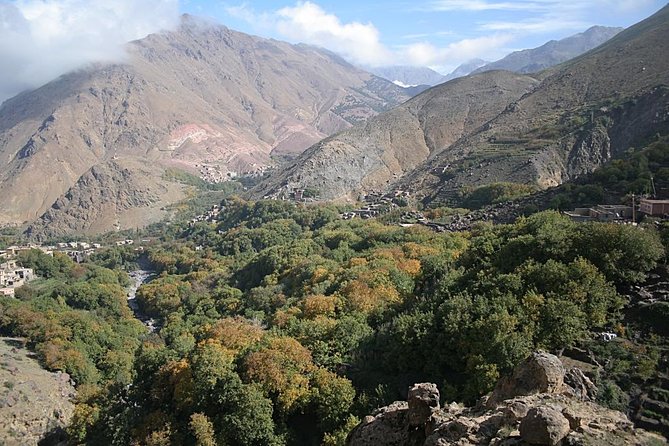
REVIEW · ATLAS MOUNTAINS
3-Day Mount Toubkal Climb from Marrakech
Breathing thinner air just outside Marrakech. I love the round-trip transport from a central meeting point, and I love the way you spend real time at Toubkal Basecamp before the summit push. You also get help carrying your load, since you leave luggage for the mules while you hike. The main drawback is that this is not a walk in the park, you need moderate physical fitness, and you’ll want a plan for what you carry since sleeping bags are not included.
The trip runs with strong coordination. Mustapha is the point of contact who keeps things organized, and guides like Youness and Noureddine have led groups up the mountain with a calm, practical focus. With a maximum of 15 travelers, you are not lost in a huge crowd, and that matters when the route narrows and the altitude starts doing its thing.
One more thing to note: the climb operates in all weather conditions, so dress for cold, wind, and changing mountain skies. If you are sensitive to altitude or prefer a slower itinerary, consider easing into the High Atlas with a less intense option first, because Toubkal’s schedule leaves little room for lingering.
In This Review
- Key highlights worth knowing before you go
- From Jemaa el-Fna to the Atlas: how the start sets the tone
- Day-by-day Mount Toubkal plan: what you actually do for 3 days
- Day 1: trekking toward basecamp, with a night at 3,207 meters
- Day 2: summit day, up to 4,167 meters, then the descent toward Imlil
- Day 3: finish the trek logistics and return to Marrakech
- Altitude reality check: what 3,207 to 4,167 meters feels like
- Mules, meals, and what included support means for your comfort
- The guide team and small-group feel that keeps things calm
- Price and value: is $340 a smart deal for Toubkal?
- Who this Mount Toubkal climb fits best
- Small extras you might appreciate in the real world
- Should you book this 3-day Mount Toubkal climb from Marrakech?
- FAQ
- What time does the Mount Toubkal climb start in Marrakech?
- Where does the tour begin and end?
- How long is the climb from Marrakech?
- What is included in the $340 price?
- What is not included?
- Do I need moderate fitness to join?
- Is there a vegetarian option?
- What information do I need to provide when booking?
- Will the trek run in bad weather?
Key highlights worth knowing before you go
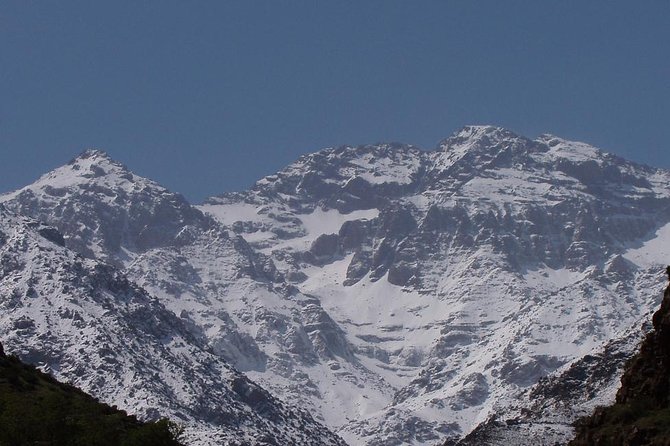
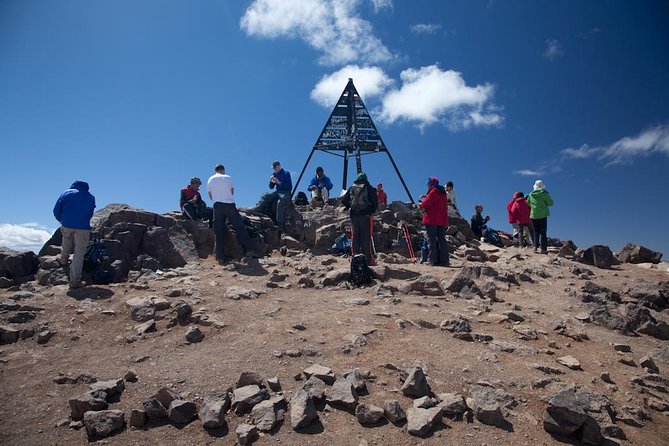
- Highest point in North Africa: Summit Mount Toubkal at 4,167 meters, right from the High Atlas.
- Basecamp overnight: You sleep at the foot of the peak (at 3,207 meters) before the long summit day.
- Luggage moves on mules: You focus on hiking, not hauling gear uphill.
- Meals and accommodation are included: Breakfast, lunch, and dinner are part of the package.
- Private transport from Marrakech: Pickup from Jamaa el-Fna, then you’re whisked to the trail area and back.
- Small group size: Maximum 15 travelers, which makes the trip feel controlled and personal.
From Jemaa el-Fna to the Atlas: how the start sets the tone
Your day begins in Marrakech at Jamaa el-Fna. The listed start time is 8:30 am, and the operator offers multiple departure times and locations, so you can often match the trek with the rest of your trip. The pickup is a practical perk, because you do not need to figure out intercity logistics or negotiate drivers while you are still waking up.
Then the trip moves you out of the city rhythm quickly. You go from street noise and market energy to the mountains, where the air feels different almost immediately. That contrast is part of the appeal. Even if you have been traveling for days, this start makes the trek feel like a real transition, not a last-minute detour.
I also like that the transport is by private vehicle. In a group up to 15, private transport helps everything stay on schedule. It’s one less thing to worry about when you are later climbing with layers on and fewer options for stopping mid-route.
Other ways up into the Atlas
- Berber villages : Atlas Mountains Day Hike from Marrakech
★ 5.0 · 14,007 reviews - Atlas Mountains & 5 Valleys Tour from Marrakech – All inclusive –
★ 5.0 · 2,913 reviews - Atlas Mountains, Berber Villages and Three Valleys all inclusive
★ 5.0 · 2,471 reviews - Atlas Mountains Hot Air Balloon Ride from Marrakech with Berber Breakfast and Desert Camel Experience
★ 5.0 · 2,123 reviews
Day-by-day Mount Toubkal plan: what you actually do for 3 days
This is a 3-day trip built around a 2-day climbing window. The big idea is simple: you hike up to basecamp, sleep near the mountain, then go for the summit and descend toward Imlil. After that, you ride back to Marrakech, ending where you started.
Day 1: trekking toward basecamp, with a night at 3,207 meters
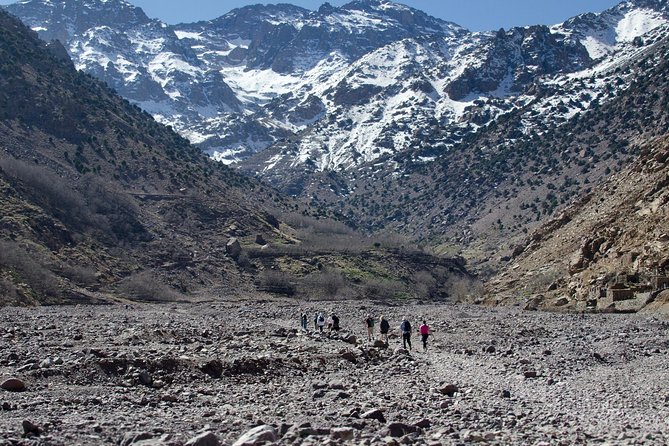
You start with the trekking segment that leads you up into Toubkal’s world. The plan is physically demanding, but it is paced by a local guide who sets the rhythm for your group. The package also includes mules, so you can leave much of your luggage to them and hike with a lighter load.
You are climbing from the basecamp altitude, listed at 3,207 meters. In practice, that means Day 1 is about getting your body used to higher elevation and changing terrain, not sprinting toward a top that you will only reach on the next day.
You also get an overnight stay in Toubkal Basecamp, which is a big deal. Sleeping near the peak gives you the psychological advantage of being already close, and it helps structure the summit morning.
Day 2: summit day, up to 4,167 meters, then the descent toward Imlil
The summit push is the main event. From basecamp, you ascend to 4,167 meters, topping the highest peak in North Africa. The altitude is the story here. Even if you are strong, you feel the thinner air. The goal is steady movement, controlled breathing, and listening to your guide rather than racing everyone else’s pace.
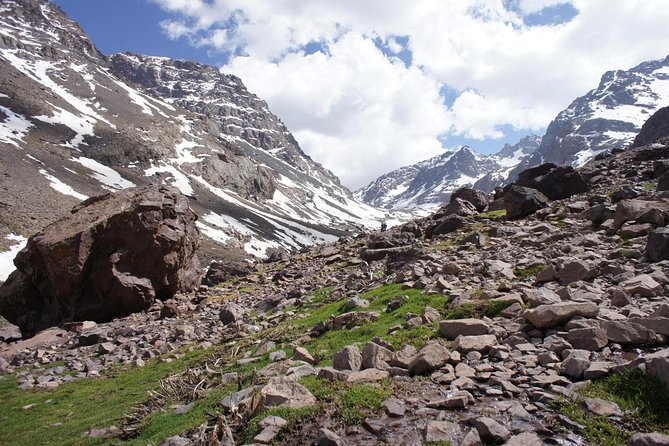
After the summit, the day turns practical fast. You begin the long descent toward Imlil. This is where trekking poles, solid shoes, and smart foot placement matter. Downhill can be harder than the ascent if your legs get tired.
Day 3: finish the trek logistics and return to Marrakech
The third day is for getting you back. Your activity ends back at the meeting point in Marrakech, so you do not need to plan transport on your own after a hard mountain day. This matters more than it sounds, because after a summit day, you often want a clean ending: eat, rest, ride, sleep, repeat.
Altitude reality check: what 3,207 to 4,167 meters feels like
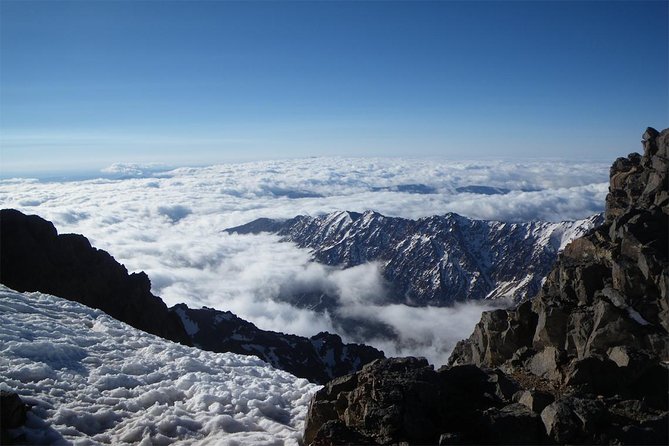
Mount Toubkal’s elevation numbers are impressive on paper. On your body, they are more than impressive, they are demanding.
You start sleeping at 3,207 meters at basecamp. Then you climb to a summit of 4,167 meters. That gap is large enough that even confident hikers can struggle with breath and stamina. It is not just about strength, it is about how your body handles reduced oxygen.
This is why the trip is described as requiring moderate physical fitness. You do not need to be an ultra-athlete, but you should be comfortable with multi-hour walking on uneven ground, and you should be willing to move at a slower pace than you would on flat trails.
Also, remember that you are told the trek operates in all weather conditions. Weather at altitude can shift quickly, and wind plus cold can make your effort feel harsher. That’s why dressing appropriately is emphasized. Pack layers you can adjust, and do not rely on one “perfect” outfit.
Mules, meals, and what included support means for your comfort
The climb works because the logistics reduce the everyday burden. You leave luggage with the mules, which is a major comfort win. It means you can pack less and hike more steadily without dragging everything on your back.
The overnight accommodation at basecamp plus meals as per itinerary are also a meaningful value. You are not paying extra for every meal stop. The package lists breakfast, lunch, and dinner, which you’ll want on mountain days when appetite and energy matter.
One more practical detail: soft drinks and mineral water are not included, and tips are not included. That is common, but it affects your spending. I recommend you budget for water and drinks you may need during the climb. Hydration can be a bigger issue at altitude than people expect.
Sleeping bags are also not included. If you do not already have one, you will need to arrange what you will use before departure. If you are traveling light, this is the part to handle early, because last-minute sourcing can be annoying.
And yes, the food tends to be a highlight. Multiple accounts note the meals are plentiful and delicious. You should treat that as a real quality signal, not marketing talk, because after a summit day, the difference between decent and good food is huge.
The guide team and small-group feel that keeps things calm
A climb like this is only partly about the peak. The rest is about how your day runs, how safely you move, how well the group stays together, and how quickly problems get handled.
This is where the operator shines. Communication is consistently described as easy and organized, especially with Mustapha handling the coordination side. Having one main point of contact usually makes logistics smoother, like knowing what time to meet and what to expect when the day starts early.
On the mountain, guides such as Youness and Noureddine have led groups through the hike. From what you can piece together, the guides focus on managing pace, keeping the group together, and maintaining good morale. That is exactly what you want when the air is thin and the route gets steep.
The group size limit of 15 travelers also matters. Smaller groups tend to move more efficiently, especially when there is a bottleneck on narrow paths or during photo stops. You spend less time waiting and more time progressing.
If you like order and clarity in your adventures, this setup fits. If you prefer total freedom to wander or stop whenever inspiration hits, note that guided trekking has structure. You follow the rhythm for safety and timing.
Price and value: is $340 a smart deal for Toubkal?
$340 per person sounds like a lot until you break down what’s covered.
You get:
- round-trip transport by private vehicle
- a local guide
- mules for luggage
- overnight accommodation at basecamp
- meals (breakfast, lunch, dinner)
- an admission ticket included for the trek and summit components
- a small-group cap of 15 travelers
Then you consider what you do not get:
- sleeping bags
- soft drinks and mineral water
- tips
For most people, the biggest value is that this price buys the heavy lifting of logistics. You are not arranging transport, guide services, mule handling, and basecamp lodging one piece at a time. You also do not have to be the planner for a 3-day schedule with an early start and a summit morning.
Could it be cheaper if you DIY it? Possibly, depending on your connections. But DIY often creates hidden costs, time, and stress. For Toubkal, the “stress cost” can be high because you are climbing at altitude and you want smooth coordination.
So my honest take on value: $340 is fair when you use what’s included. If you arrive unprepared and then have to rent gear or buy essential items at the last moment, the real cost can creep up. That’s not a dealbreaker, just a reason to plan ahead.
Who this Mount Toubkal climb fits best
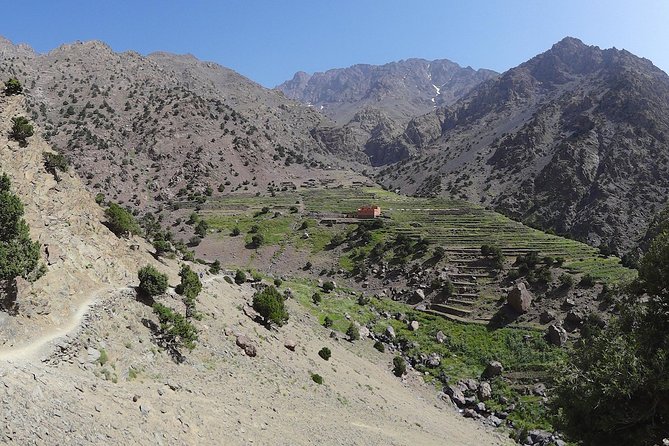
This trip is a great match if:
- you want a serious day away from Marrakech without giving up comfort on transport and meals
- you like having a guide manage the route and pacing
- you can handle multi-day walking and some steep terrain
- you are comfortable with altitude and moving slower than you might on easy hikes
- you want a structured itinerary with a basecamp night rather than doing it as an all-day grind
It may be a tough fit if:
- you have low stamina or struggle with steep climbs
- you hate cold weather and unpredictable mountain conditions
- you are not able to handle higher elevation breathing changes
- you do not have a plan for a sleeping bag
There’s also a vegetarian option. If you need it, you should advise at booking time. And if you have other dietary requirements, tell the operator ahead of time so they can adapt the meal plan.
Small extras you might appreciate in the real world
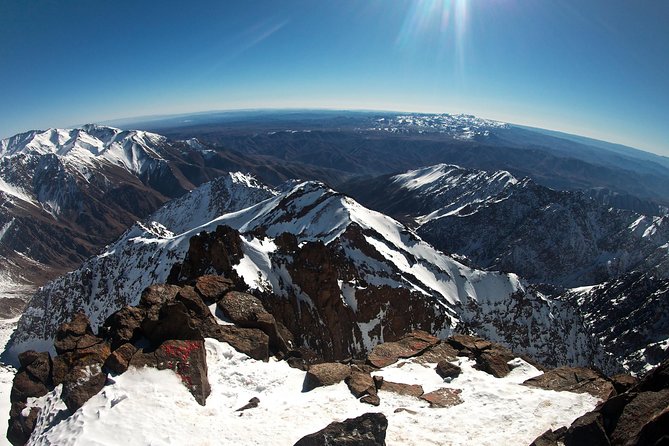
A common thing with guided mountain trips is the “small moments” that are hard to predict in a brochure. For example, one guest suggested setting aside time for an optional detour to see the remains of an airplane, for the history behind it. If your guide thinks it makes sense for your timing, it can be a fun break from climbing talk.
Also, people often mention the trip feels smooth from pickup to drop-off. That’s not luck. It usually comes from a team that keeps the schedule tight and manages the mountain details day by day.
There are also notes about handling illness. If someone in your group feels rough, you benefit from having an organized team rather than trying to improvise care on your own.
Should you book this 3-day Mount Toubkal climb from Marrakech?
Book it if you want a well-organized, guided way to summit North Africa’s highest peak with real support. The value is strongest when you use what is included, especially the basecamp overnight, meals, mule luggage help, and private transport.
Skip it, or switch to a gentler itinerary, if you are unsure about altitude, steep walking, and cold conditions. This is not meant to be easy. It is meant to be memorable, and it will test you in the best way if you show up prepared.
If you do book: plan your gear for cold nights, sort out your sleeping bag needs before arrival, and be honest with your fitness level. The people running this trip seem built for safe, smooth mountain days, and that makes the summit feel more achievable.
FAQ
What time does the Mount Toubkal climb start in Marrakech?
The start time is listed as 8:30 am, with pickup from Jamaa el-Fna (Marrakesh 40000).
Where does the tour begin and end?
It starts at Jamaa el-Fna in Marrakech and ends back at the same meeting point.
How long is the climb from Marrakech?
The duration is 3 days (approximately), with a 2-day climbing trip and a summit visit.
What is included in the $340 price?
The price includes overnight accommodation, meals as per itinerary (breakfast, lunch, dinner), a local guide, mules, and transport by private vehicle.
What is not included?
Not included items are soft drinks, mineral water, tips, and sleeping bags.
Do I need moderate fitness to join?
Yes. The tour says you should have a moderate physical fitness level.
Is there a vegetarian option?
Yes. A vegetarian option is available if you advise at the time of booking.
What information do I need to provide when booking?
You need the passport name, number, expiry, and country for all participants.
Will the trek run in bad weather?
Yes, it operates in all weather conditions. You should dress appropriately for mountain conditions.
Higher Into the Atlas
- Berber villages : Atlas Mountains Day Hike from Marrakech★ 5.0 · 14,007 reviews
- Atlas Mountains & 5 Valleys Tour from Marrakech – All inclusive –★ 5.0 · 2,913 reviews
- Atlas Mountains, Berber Villages and Three Valleys all inclusive★ 5.0 · 2,471 reviews
- Atlas Mountains Hot Air Balloon Ride from Marrakech with Berber Breakfast and Desert Camel Experience★ 5.0 · 2,123 reviews
Added recently from around Marrakech
More Atlas Mountains and Berber Village Trips worth a look.
 ★ 4.8Marrakech: Atlas Mountains, Ourika Valley, Waterfall & LunchFrom $1615,834 reviews
 ★ 5.0Berber villages : Atlas Mountains Day Hike from MarrakechFrom $1514,007 reviews
 ★ 4.9Marrakesh: Ourika Waterfalls, Atlas Mountains, Guide + LunchFrom $179,986 reviews
 ★ 4.8From Marrakech: Atlas Mountains Full-Day Hiking Trip w LunchFrom $267,417 reviews
 ★ 4.8Marrakech: Atlas Mountains & Agafay Desert Tour w Camel RideFrom $145,080 reviews
 ★ 4.8From Marrakech: Atlas Mountains Day Trip with Camel RideFrom $174,709 reviews
 ★ 4.9Marrakech: Atlas Mountains, Waterfalls, Ourika Valley +LunchFrom $113,544 reviews
 ★ 5.0Atlas Mountains & 5 Valleys Tour from Marrakech – All inclusive –From $912,913 reviews
Where else this one sits